
Which plants can be propagated in water?
Single, fun multiplication method
Contents
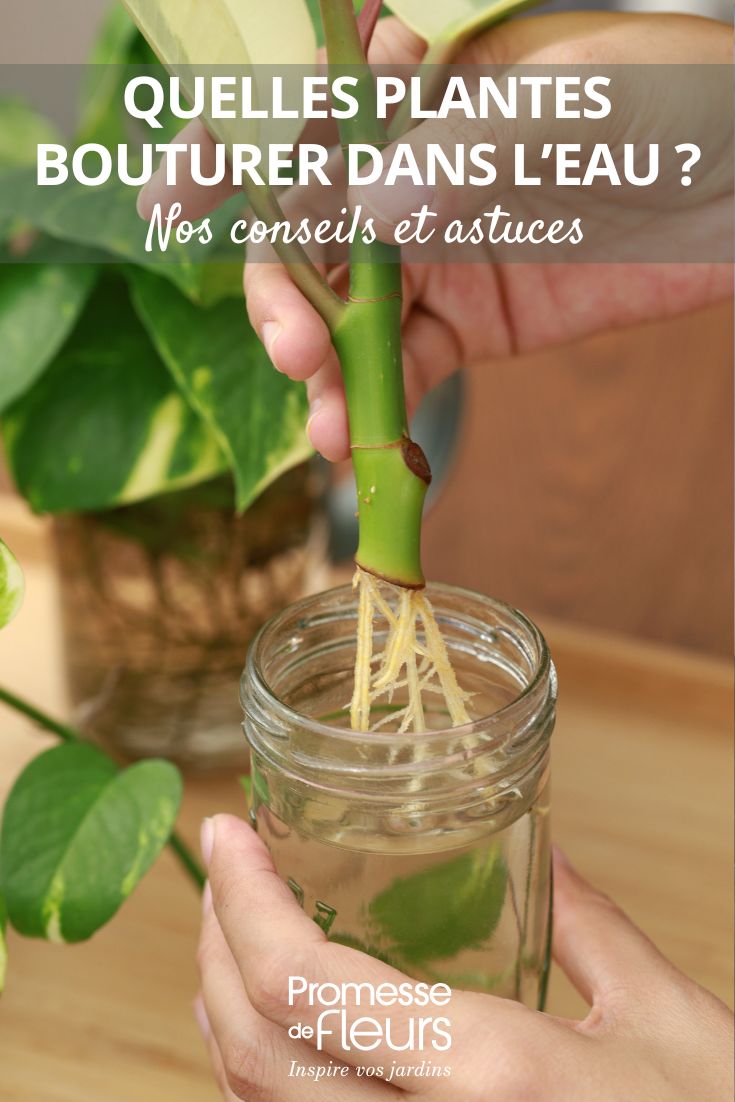
Propagation by cuttings in water is a simple, enjoyable and accessible method that appeals to many gardeners. In just a few weeks, it lets you observe the emergence of new roots from a single stem fragment. Not all species are suitable, but some plants are very easily propagated in a glass of water. Discover the most reliable ones, the steps to follow and the mistakes to avoid to succeed with your cuttings every time.

Summary table of best plants to propagate in water
| Plant | Latin name | Rooting speed | Particularities / Tips |
|---|---|---|---|
| Pothos | Epipremnum aureum | Fast (1 to 2 weeks) | Very tolerant, ideal for beginners |
| Philodendron | Philodendron spp. | Fast (2 to 3 weeks) | Cut below a node; vigorous cuttings |
| Syngonium | Syngonium podophyllum | Medium (3 weeks) | Prefer a bright position |
| Tradescantia / Wandering Jew | Tradescantia spp. | Very fast (1 week) | Almost instant propagation |
| Coleus | Plectranthus scutellarioides | Fast (1 to 2 weeks) | Take young colourful stems |
| Begonia | Begonia rex, B. maculata… | Medium (3 to 4 weeks) | Decorative leaves; avoid excess water |
| Mint | Mentha spp. | Fast (1 to 2 weeks) | Cuttings very easy; ideal for cooking |
| Basil | Ocimum basilicum | Very fast (1 week) | Propagate often; stems fragile |
| Fuchsia | Fuchsia hybrids | Medium (3 weeks) | Cut below a node; ideal in containers |
| Geranium / Pelargonium | Pelargonium spp. | Medium (2 to 3 weeks) | Avoid flowering stems |
| Verbena | Verbena hybrids | Fast (2 weeks) | Water lightly after potting on |
| Willow | Salix spp. | Very fast (1 to 2 weeks) | Propagation by cuttings almost foolproof, even outdoors |
| Forsythia | Forsythia x intermedia | Medium (3 weeks) | Propagate in late spring |
| Hydrangea | Hydrangea macrophylla | Slow (4 to 6 weeks) | Cuttings fragile; pot on quickly |
Read also
15 very easy plants to propagatePrinciple of propagation by cuttings in water
Propagation by cuttings in water involves placing a stem taken from a plant in a container of clear water until roots appear. This technique has several advantages: it allows monitoring of rooting in real time, requires no expensive equipment and works very well with plants that are suited to it. Its limitations lie in the fragility of the roots formed, which sometimes struggle to acclimatise to soil, and in the risk of rot if water stagnates for too long.
Some plants can be propagated in water because their tissues contain cells capable of rapidly differentiating into adventitious roots on contact with moisture. Others, especially woody species or perennials with rigid stems, require a firm, well-aerated substrate to stimulate root formation. Success therefore depends on the plant’s biology, the structure of its stems and its natural ability to produce roots above ground.
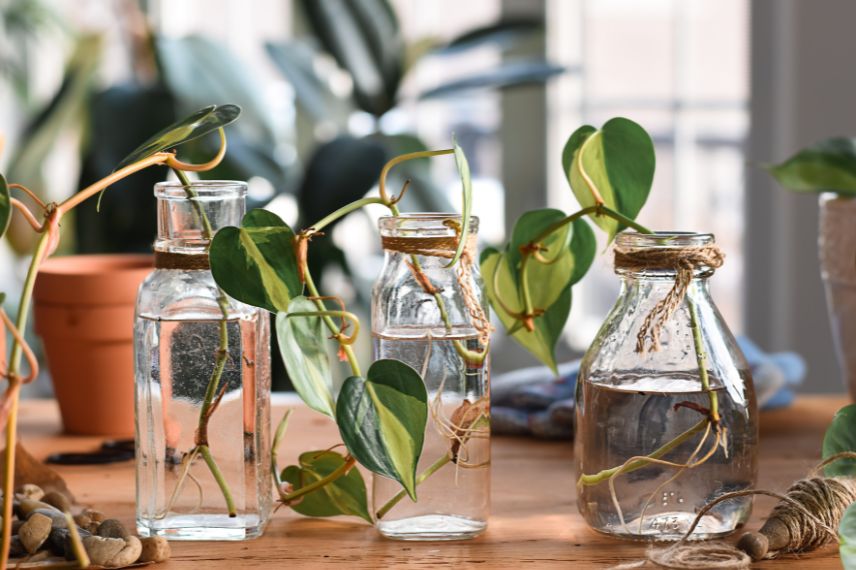
Lianas generally root well in water.
When can we propagate our plants in water?
Propagation by cuttings in water is best carried out in spring and summer, when plants are actively growing and their young tissues readily produce roots.
Some indoor cuttings, such as pothos or tradescantia, can however be started year-round, provided they receive sufficient light and a mild temperature. By contrast, autumn and winter greatly slow down rooting, unless cuttings benefit from artificial lighting and a temperate location.
Read also
15 perennials that are easy to propagateIndoor plants easy to propagate in water
Some houseplants are among the champions of propagation by cuttings in water.
Les green plants with decorative foliage such as pothos (Epipremnum aureum), philodendrons, chlorophytum (spider plant), syngonium, tradescantia and coleus quickly develop a network of roots in a simple glass of water. They make excellent choices for beginners.
Some culinary herbs grown indoors, such as basil, mint or common sage, also take root very easily in water, allowing rapid multiplication of stems to boost plant stock.
Les indoor flowering plants such as some begonias, impatiens or potted hibiscus also root well.
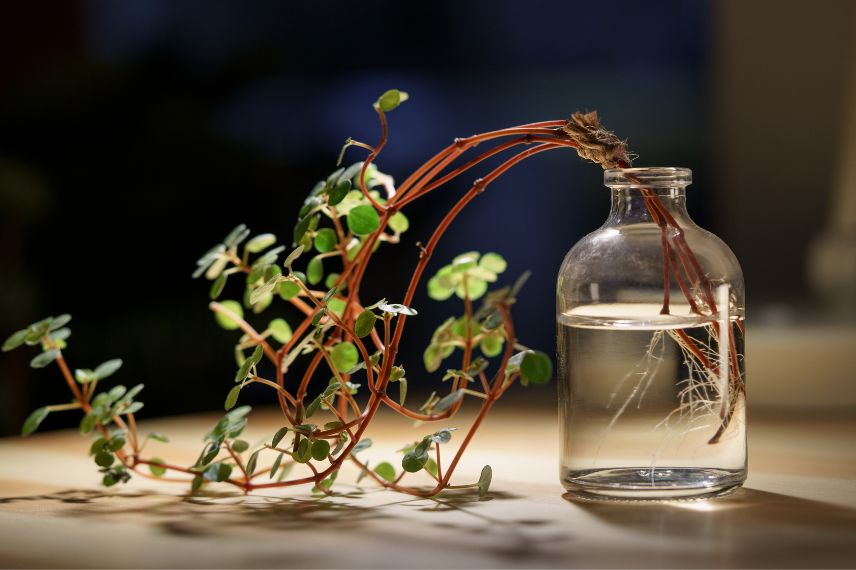
Many plants root well in water. Give it a try — it costs nothing.
Outdoor plants suitable for propagation by cuttings in water
While the technique is mainly associated with houseplants, it can also be applied to some perennials, container plants and garden shrubs.
With perennials and annuals, water cuttings are easy to take from fuchsias, anthemis, verbenas, marigolds or pelargoniums. These colourful plants offer rapid propagation to fill beds and planters.
With shrubs, a few species are particularly accommodating: willow, forsythia or even hydrangeas macrophylla develop vigorous roots in water before being potted on into soil.
How to successfully propagate your cuttings in water?
- To optimise your chances of success, always choose a healthy, young, non-flowering stem. Always take cuttings in spring or early summer, when tissues are young and more responsive.
- Remove lower leaves so that no plant part is submerged in water.
- Place cuttings in a clear glass container, which allows monitoring of root formation.
- Preferably use non-calcareous water at room temperature.
- Change water regularly (every 2–3 days) to prevent bacterial growth.
- Place the container in bright light, out of direct sun, in a warm room.
Good to know! : transparent containers (glasses, jars) make monitoring easier, but also expose roots to light: wrapping the container in dark paper can accelerate rooting.
When to transplant a cutting into soil?
Potting into soil should be done when roots reach 3 to 5 cm in length and have already developed a small network of root hairs.
Place the cutting in a light substrate made of fine potting soil mixed with sand or perlite (or a compost for sowing and pricking out), to encourage rooting.
Moving from water to soil causes slight stress to plant, so water sparingly and maintain a humid atmosphere for the first few days.
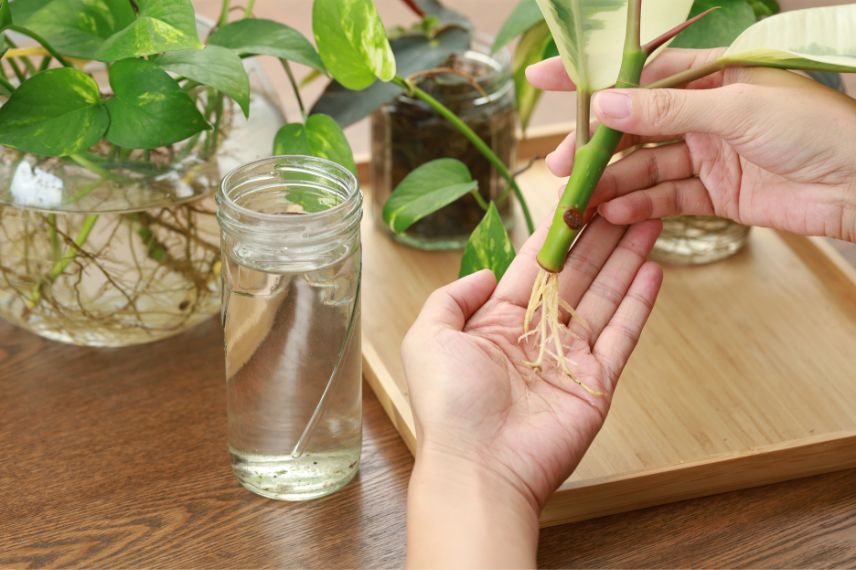
This cutting of Ficus elastica is ready to be potted.
If left too long in the glass, these roots adapt poorly to moving into soil.
Pot up your cuttings as soon as roots reach 3 to 5 cm in a light substrate, to encourage rapid establishment.
Tips and mistakes to avoid
- To avoid failures, do not leave your cuttings in water for too long. Fine, fragile roots develop there, but adapt poorly if they grow too long.
- Also make sure to change the water every 2 to 3 days to prevent rot.
- Finally, don’t try to propagate all your plants in water: some, such as most conifers or many woody perennials, require other techniques.
Oli’s little note: adding a small piece of willow branch to the water can stimulate rooting thanks to natural plant hormones (notably auxins) it releases.
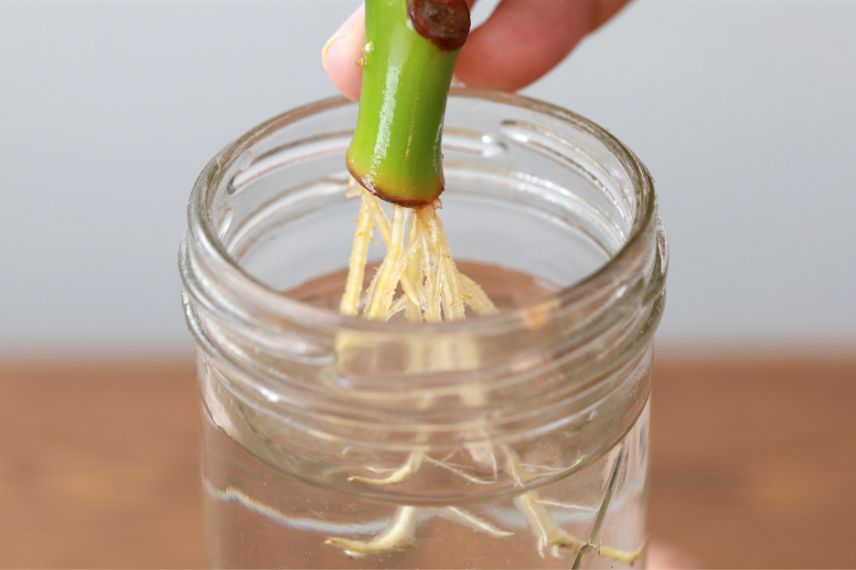
Do not let roots develop in water for too long.
Frequently asked questions
-
Can all plants be propagated in water?
No, only certain species are suitable. Others require propagation by cuttings in soil or in a more technical medium. -
How long does it take to see roots?
On average two to four weeks, depending on species and season. -
Why do some cuttings rot?
Most often, this is caused by stagnant water, a damaged stem or an environment that is too dark.
- Subscribe!
- Contents
This form is protected by reCAPTCHA - the Google Privacy Policy and Terms of Service apply.

































Comments