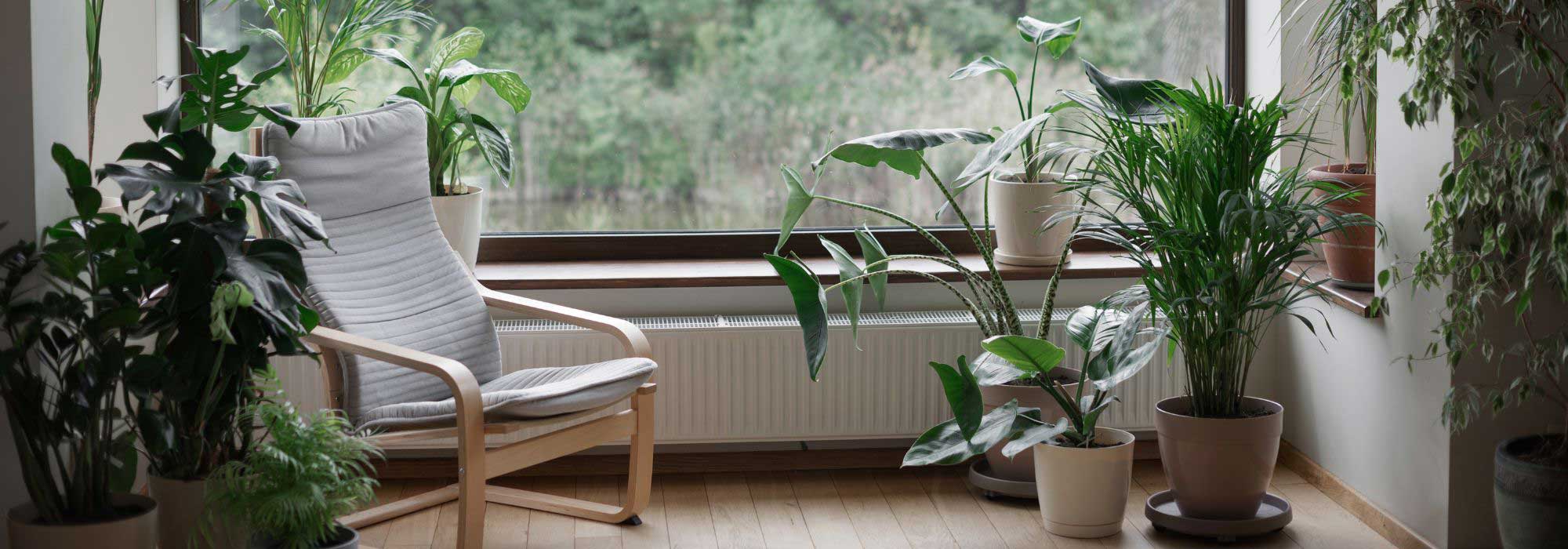
Heatwave: which houseplants can cool your home?
The best houseplants for hot conditions
Contents
With increasingly hot summers and recurring heatwaves, our homes, and flats in particular, can quickly become stifling. Closed shutters, airing the rooms at night, fans… every means is worth trying to keep things a little cooler. And houseplants can also make their own small contribution!
Thanks to evapotranspiration, some plants release water vapour through their foliage, helping to create a slightly cooler and more humid microclimate around them. Without replacing an air conditioner, large plants with lush foliage can therefore help make a room more comfortable during very hot weather. Discover which plants to choose and where to place them to make the most of this cooling effect.
Can houseplants really cool a room?
Plants absorb water through their roots and release some of it as vapour through their leaves. This plant transpiration helps to cool the foliage and locally increases air humidity.
The larger the leaf surface, the greater the potential for evapotranspiration. A large, leafy specimen will therefore be more effective than a collection of small succulent plants.
The effect in a home nevertheless remains modest: houseplants alone will not lower the temperature of a room by several degrees. They mainly create a slightly different microclimate around themselves, which is particularly welcome when the air is hot and dry.
Conversely, if the air is already very humid, increasing its humidity further can make the heat harder to tolerate.
How many plants does it take to cool a room?
There is no ideal number of houseplants for cooling a room: their size and the amount of foliage matter just as much as the number of pots. The species, watering, light, ambient humidity and ventilation also influence their evapotranspiration.
A few studies nevertheless provide some interesting guidelines. An experiment carried out over nine months in a 12 m² room (46.2 m³) showed that two large plants, approximately 1.40 m tall, could already alter the indoor microclimate. This figure should not, however, be taken as a rule applicable to every home.
Another study by the same author, comparing different plant densities, observed that a group of eight large plants had a greater effect on temperature and humidity than a group of three. It nevertheless highlights one essential point: opening a window had a greater effect on lowering the temperature than plant transpiration. Except during a heatwave, of course! There is no need to invite outdoor temperatures of 35 °C into your living room. Keep the windows closed during the hottest hours and air the room thoroughly in the evening, at night or early in the morning, when the outdoor air is cooler.
Above all, bear in mind that the amount of foliage matters more than the number of pots. Two or three well-developed large plants, complemented by a few smaller ones, will therefore be more effective than ten mini-plants scattered around the room. Hence the benefit of grouping them together in a plant island, mini-forest or green wall.
Sources: K.-T. Han, *Building and Environment* (2023) – study on the effect of plants on indoor air characteristics, and K.-T. Han (2023) – study on plant density, ventilation and the indoor microclimate
The Best Refreshing Houseplants
Rather than searching for a hypothetical “air-conditioning plant”, choose plants with plenty of foliage and large leaves.
To create a cooler, more humid microclimate, first and foremost choose jungle-style houseplants. Their appeal is not limited to their exotic appearance: many develop lush growth and a large leaf surface area, two characteristics that help promote evapotranspiration.
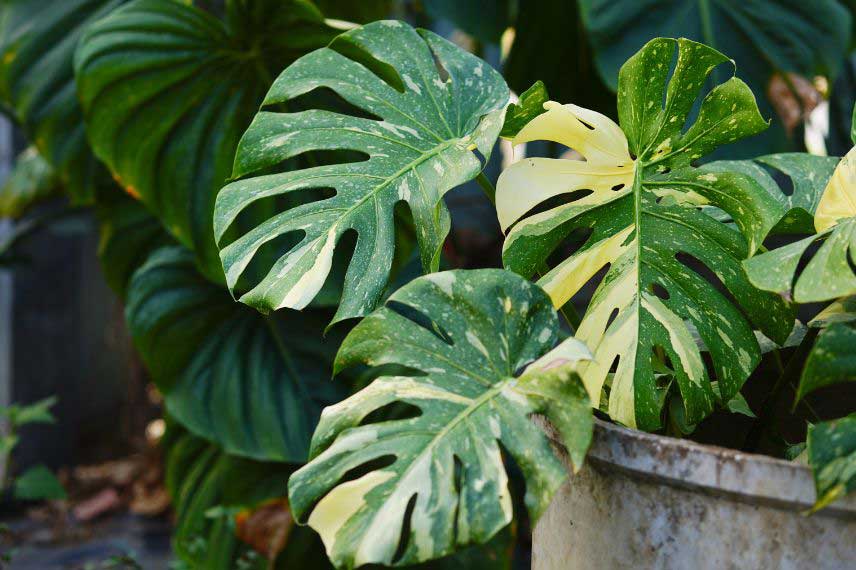
In particular, opt for Monstera, with their immense split leaves, large-growing Philodendrons or Alocasias, with their spectacular broad leaves. To add height and increase the mass of greenery, add a well-filled-out Areca palm or another well-filled-out indoor palm . Large Ficus and large indoor ferns can also fill out this mini-forest.
The ideal approach is therefore to think as you would when creating a small jungle: one or two large structural plants, medium-sized plants with generous foliage and a few smaller or trailing specimens to make the whole display denser.
However, not all tropical plants are equally suitable for this purpose. Focus first on the quantity and surface area of the foliage, rather than solely on the plant’s exotic appearance.
By contrast, cacti, Aloe vera, Sansevieria and other succulents are less suited to this purpose. They are remarkably resistant to heat precisely because they limit their water loss. Withstanding heat and cooling their surroundings are therefore two different things.
Here is a small selection:
- Monstera obliqua
- Monstera deliciosa
- Rhapis excelsa
- Alocasia ‘California’
- Spathiphyllum Sensation
- Ensete ventricosum ‘Maurelii’
- Philodendron goeldii
- Philodendron xanadu
- Fatsia japonica ‘Spider’s Web’
- Strelitzia reginae
- Livistona chinensis
- Phoenix roebelenii
- Ficus elastica ‘Abidjan’ (rubber plant)
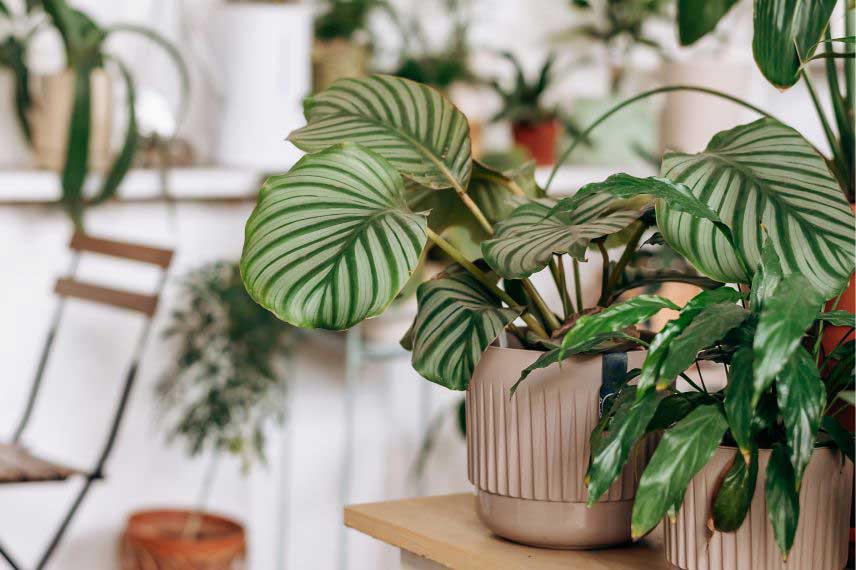
- Calathea orbifolia
- Alocasia ‘Black Velvet’
- Ficus pumila ‘Bellus’
Discover our complete selection of jungle-style houseplants!
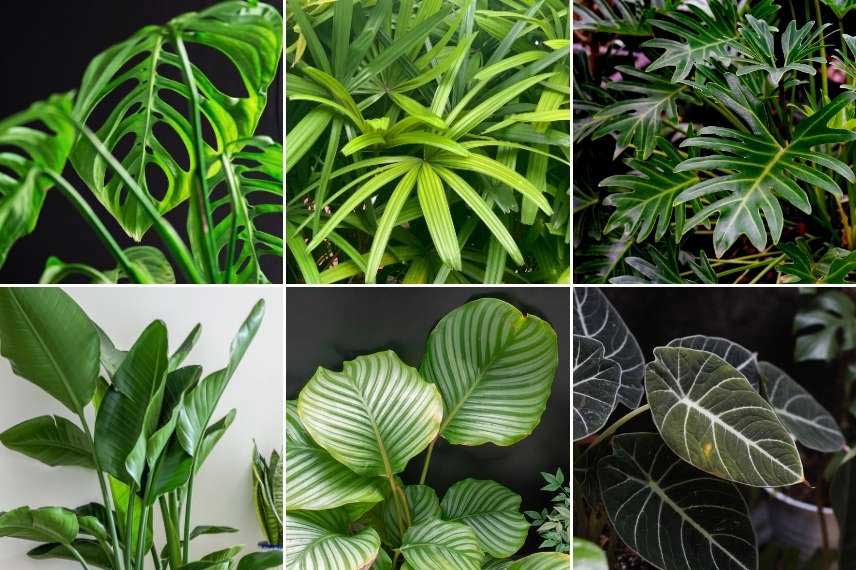
Monstera obliqua, Rhapis excelsa, Philodendron ‘Xanadu’, Strelitzia, Calathea orbifolia, Alocasia ‘Black Velvet’
How to position your houseplants to cool a room?
There is no need to turn your entire home into a jungle! The idea is instead to concentrate your houseplants in the room where you spend the most time, rather than scattering a few small pots throughout every room. As their effect is mainly local, grouping them together creates a more humid microclimate around the foliage.
Creating an indoor mini-forest
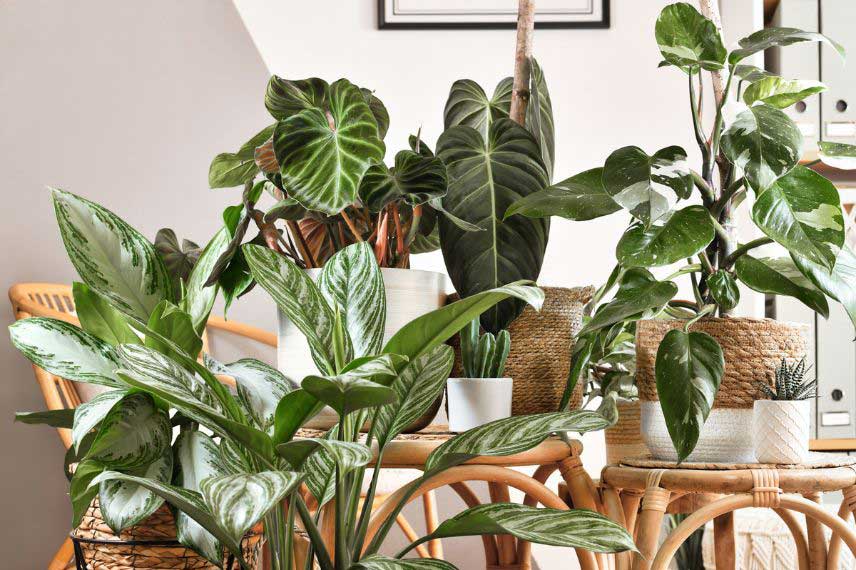
This is the simplest solution. Install one or two large plants, such as a Monstera, Ficus or Areca, then arrange plants of different heights around them: Philodendrons, ferns, Calatheas or trailing plants. Just like in a small forest, you create several vegetation zones and, above all, a much larger foliar surface.
Place this plant island near the area where you actually live: beside the sofa, near your desk or in a corner of the bedroom rather than at the back of a room where nobody spends time.
And why not a living wall?
In a small flat, a living wall or a large shelf covered with plants allows you to bring together plenty of foliage without taking up floor space. Choose species suited to indoor growing and to the light levels in the room.
A living wall does, however, require more care and, depending on the system chosen, precise watering management. A few large plants grouped together are therefore much easier to set up if your only aim is to create a plant island during the summer.
Beware of the greenhouse effect behind windows
For your mini-forest to thrive, it must obviously remain healthy. Install it in a sufficiently bright spot, but avoid placing the plants right up against a window exposed to full sun during a heatwave: the foliage is more likely to scorch behind the glass!
Close shutters or blinds during the hottest hours and move the plants away from the window if necessary. Finally, do not position the pots too close together: leave air circulating between the foliage to limit disease and allow the plants to breathe properly.
Discover our range of houseplants for the living room. Also consult our buying guide “The best houseplants for brightening up a living room”.
How can you enhance the cooling effect of houseplants?
To encourage evapotranspiration, plants must first and foremost be well hydrated and healthy. A plant that lacks water gradually closes its stomata to limit water loss: it then transpires much less.
During spells of hot weather, therefore, check the growing medium regularly, particularly that of plants with large foliage, ferns and small pots. Water as soon as necessary according to the needs of each species, without waterlogging the soil or allowing water to collect in the saucers.
Light also plays a role in transpiration. Keep your plants in a sufficiently bright position to maintain their activity, while protecting them from scorching sunlight. A plant placed in the dark simply to keep it ‘cool’ will not be any more effective.
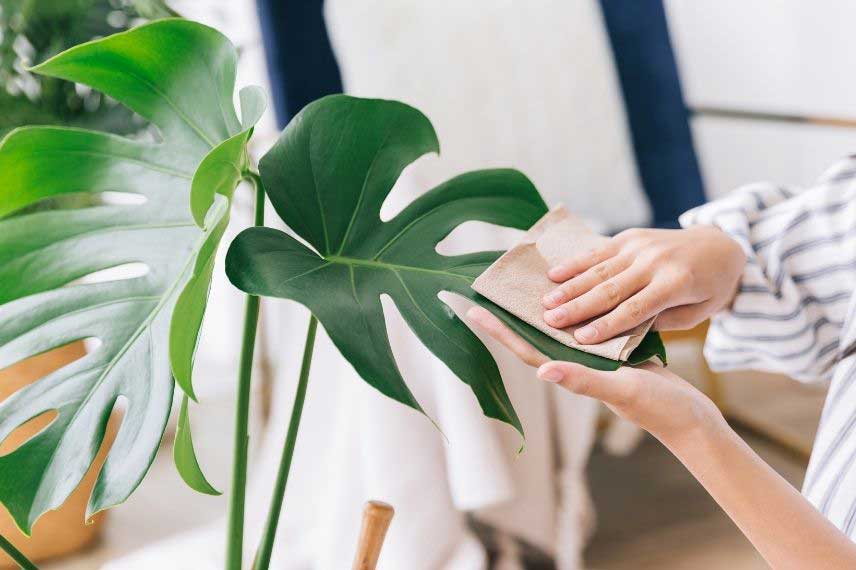
Also remember to regularly dust the large leaves of Monstera, Ficus and Philodendron plants with a damp cloth. A clean leaf benefits from better conditions for carrying out its exchanges with the atmosphere.
Should you mist plants to enhance their cooling effect?
Not really. Misting temporarily increases the humidity around the foliage, but its effect is very brief and is not enough to cool a room.
Some tropical plants appreciate high atmospheric humidity, but misting is no substitute for good watering. And when the air is already hot and humid, there is no point adding more: the aim is to make the room more pleasant, not to recreate the Amazon in August!
- Subscribe!
- Contents
This form is protected by reCAPTCHA - the Google Privacy Policy and Terms of Service apply.

































Comments