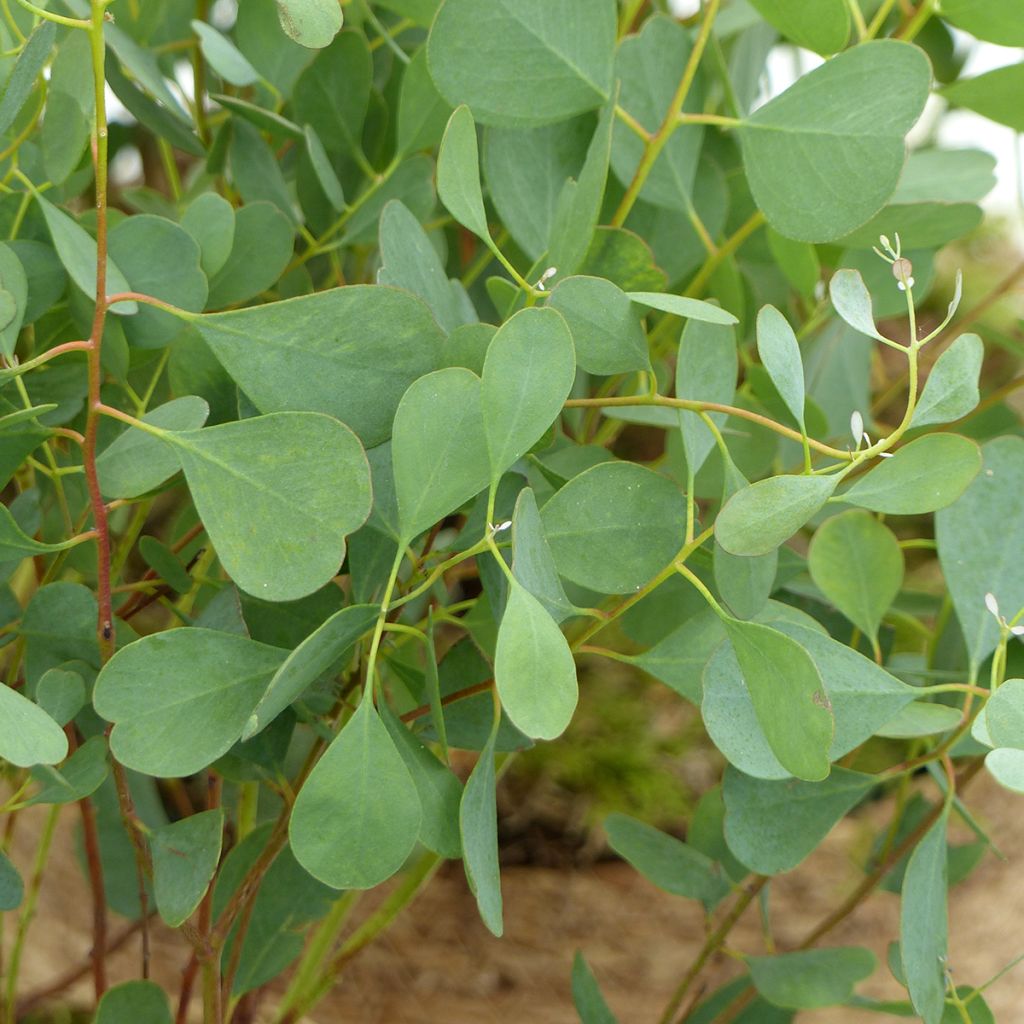
Eucalyptus websteriana seeds
Eucalyptus websteriana seeds
Eucalyptus websteriana
Back-to-school special offer!
Get €10 off for every €50 you spend! And get up to €40 off on a single order.
How does it work?
1. Shop your favourites
Add your favourite plants to your basket. For every €50 you spend (excluding delivery charges, store credit and the plastic-free option), you’ll receive a €10 voucher.
€50 spent = €10 voucher
€100 spent = €20 voucher
€150 spent = €30 voucher
€200 spent = €40 voucher
2. Place your order
Once your basket reaches one of the spending thresholds, place your order. You can even choose your delivery date!
3. Receive your voucher
As soon as your order has been shipped, you’ll receive an email containing your personal voucher code and its value.
4. Use it on your next order
Your voucher is valid for 90 days from the date you receive it. It can be used once only, on a new order worth at least the value of the voucher, excluding delivery charges.
Please note: Vouchers can be combined with other offers, but cannot be split or refunded.
Why not try an alternative variety in stock?
View all →
Available in 1 sizes
Available in 1 sizes
Available in 1 sizes
Available in 1 sizes
Available in 1 sizes
Available in 1 sizes
Available in 1 sizes
Available in 1 sizes
Available in 1 sizes
Available in 1 sizes
This plant carries a 6 months recovery warranty
More information
We guarantee the quality of our plants for a full growing cycle, and will replace at our expense any plant that fails to recover under normal climatic and planting conditions.
Does this plant fit my garden?
Set up your Plantfit profile →
Description
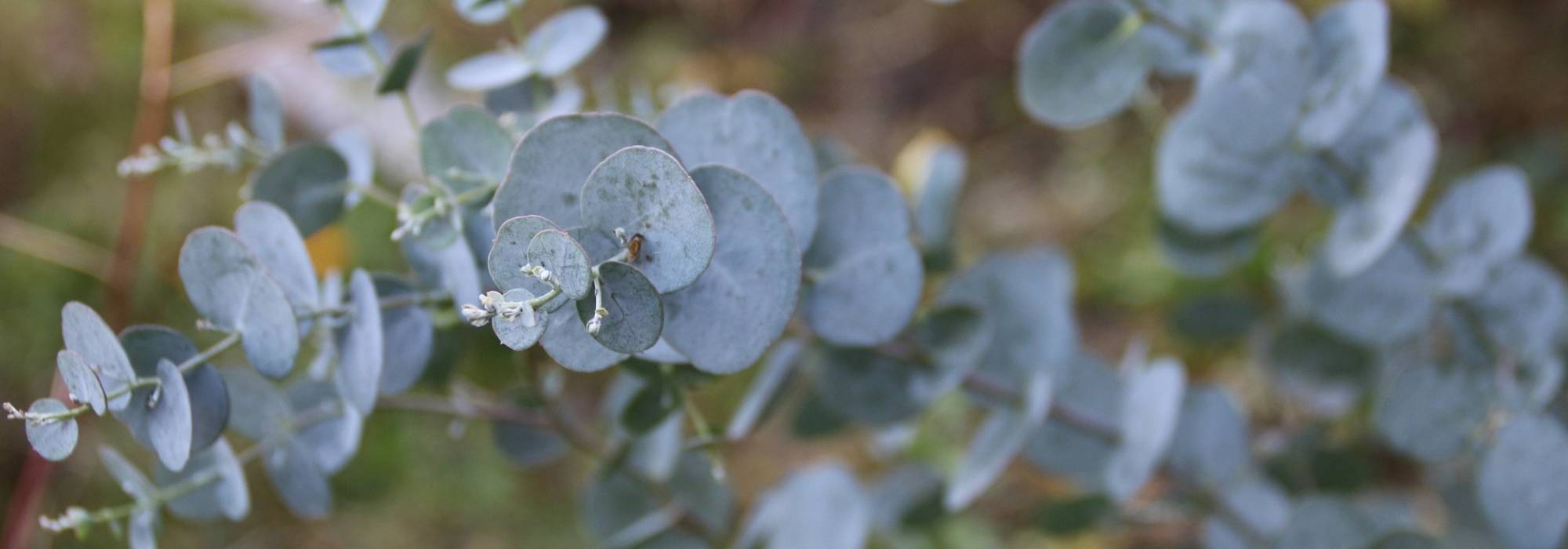
Eucalyptus websteriana is a low-growing species that rarely forms a small tree, but more often a multi-trunked shrub. Spreading as much in width as in height, it features highly ornamental, reddish bark. Its modest height, 5m at most, and its spreading habit allow you to fully appreciate its decorative, heart-shaped blue-green foliage when mature. In summer, it produces pleasant pale yellow flowers. It only tolerates very mild winters (hardy to around -5°C) and must be grown in a container in most regions. Sowing gives variable results but remains worthwhile, as growth is fairly rapid.
The Eucalyptus genus encompasses a vast group of plants comprising nearly 800 species. It includes both small shrubs and giant trees that can exceed 90 metres in height, such as Eucalyptus regnans or E. nitens. All these species belong to the Myrtaceae family, widely present in tropical regions and warm temperate zones, including the Mediterranean Myrtle or the superb Metrosideros.
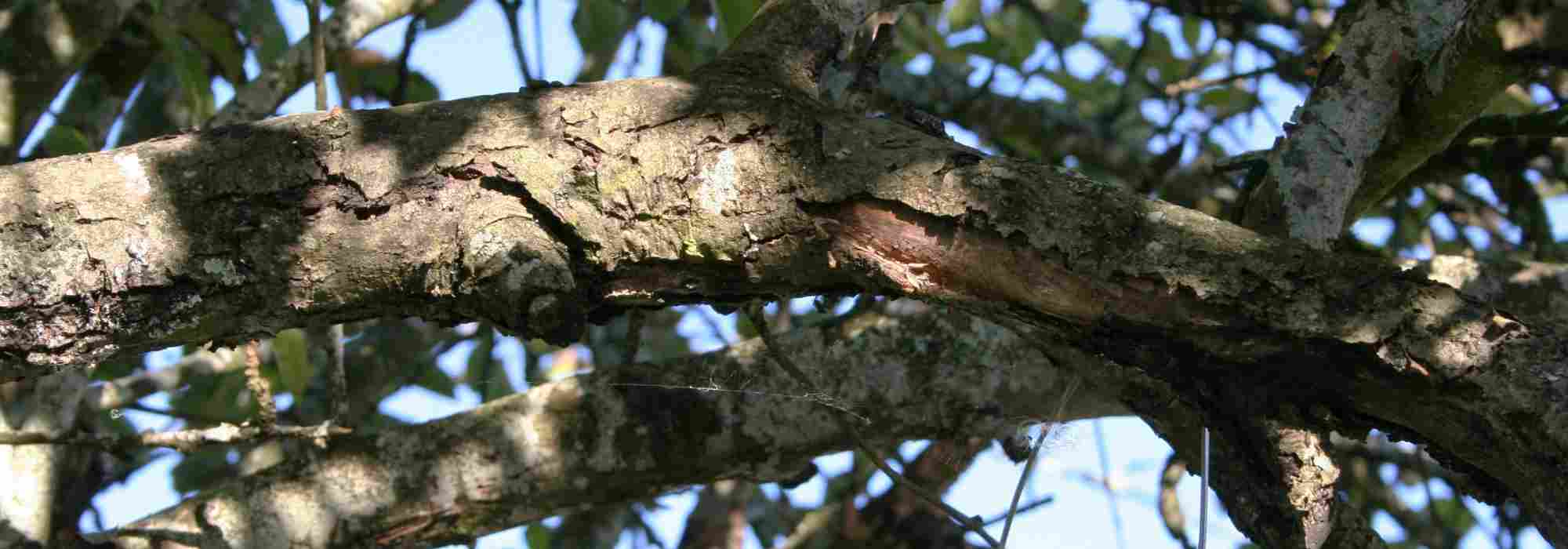
Eucalyptus websteriana belongs to the "mallee" group (pronounced "mauli"), shrubby species reaching 4 to 5m in height and spread, forming a lignotuber at their base. This swollen underground organ allows the plant to regrow when the above-ground part has been destroyed by fire, which is common in Australia, its native country. This species is more precisely endemic to south-western Western Australia, where it grows in a very restricted geographical area. It is a semi-arid region, characterised by well-drained rocky soils. There, the shrub rarely forms a small tree, more often a large bush with multiple stems giving it a spreading habit, as wide as it is tall. It frequently measures only 3 to 5m in height (at most 6m), with a comparable spread. The bark is particularly ornamental, a fairly bright reddish-brown colour, with peeling that enhances its aesthetic appeal. The young branches are also red, creating a very attractive contrast with the foliage. This foliage is in tones of green, grey and blue (when emerging). The leaves are alternate or sometimes almost opposite, and when mature adopt an original heart-shape, or can also be obovate. These variations are classic among Eucalyptus and contribute to their charm. They are small, reaching at most 3cm wide by 4.5cm long. Grown in a container, this Eucalyptus could easily pass for a pseudo-bonsai.
In our climates, flowering generally occurs between May and July, in the form of small flowers not exceeding 1.5cm in diameter. They are pale yellow, and it is the protruding stamens that catch the eye and create its beauty. Less spectacular than species with red flowers, it is nonetheless quite decorative, well showcased by the foliage and the plant's small size.
This evergreen Eucalyptus tolerates brief frosts and withstands dry conditions and rocky terrain well. It will thrive in Mediterranean areas with little frost.
With fairly rapid growth (40 to 50cm per year after two years), this Eucalyptus is worth sowing, as it will quickly produce a mature shrub. You can create a striking scene by pairing it with other woody plants with decorative features, such as Arbutus andrachne, which also produces charming small white bell-shaped flowers, followed by highly ornamental red fruits. To give your setting a truly exotic feel, opt for Callistemons, whose bottlebrush flowers are particularly spectacular. To complete the picture, nothing beats a Brachychiton rupestris, an Australian bottle tree with a strikingly swollen trunk.
Flowering
Foliage
Plant habit
Botanical data
Eucalyptus
websteriana
Myrtaceae
Australia
Planting and care
In this species, the seeds remain viable for a long time when stored in good conditions (dry and in the dark). Sowing can be done in early spring, or possibly in autumn.
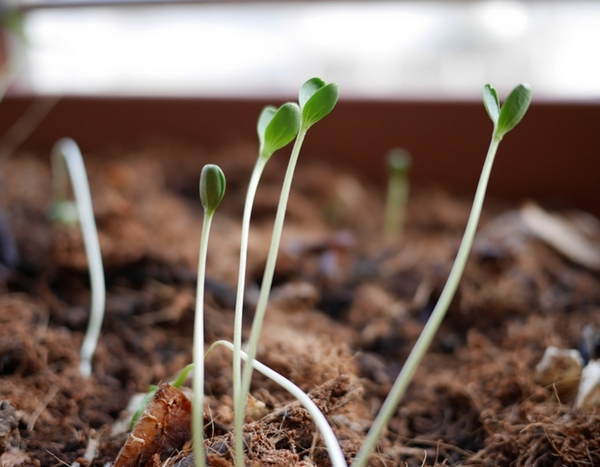
Sow the seeds on the surface of a porous seed compost (you can add perlite to a shop-bought seed compost). Once watered, they will settle into the pores of the compost. You can cover them very lightly (maximum 2-3 mm of substrate) to keep them in place, but above all, do not bury them deeply. Water gently with a fine mist sprayer so as not to disturb the seeds. Place the sowings in a warm, shaded or partially shaded spot to prevent them from drying out. You can use a propagator to maintain a temperature of between 18°C and 22°C; steady warmth encourages germination. Also maintain constant humidity, making sure the compost does not dry out and also that it is not waterlogged, which would cause damping-off, fatal to the seedlings. Germination generally takes place within 10 to 28 days under optimal conditions, but can stretch to six weeks.
The success rate is highly variable, ranging from 30 to 70% but sometimes approaching only 5%! It seems that soaking the seeds in water before sowing slightly improves the germination rate.
Once the seedlings have developed 3 to 4 true leaves, prick them out into pots to grow them on, then plant them out in open ground after the last frosts (if you live in an area with very mild winters, where frosts are brief and limited to -5°C/-6°C) or in containers everywhere else.
This species grows well in full sun and in well-drained soil, coping much better with dry conditions than with excess water. It also tolerates stony soils well, even slightly chalky ones if they are well-drained. The ideal, however, is a neutral or slightly acidic soil, within a range of 6 to 7.
Sowing period
Intended location
Planting & care advice
-
-
-

-
-

-

-
-
This item has not been reviewed yet - be the first to leave a review about it.
Recently viewed products
Haven't found what you were looking for?
Hardiness is the lowest winter temperature a plant can endure without suffering serious damage or even dying. However, hardiness is affected by location (a sheltered area, such as a patio), protection (winter cover) and soil type (hardiness is improved by well-drained soil).
In temperate climates, pruning of spring-flowering shrubs (forsythia, spireas, etc.) should be done just after flowering.
Pruning of summer-flowering shrubs (Indian Lilac, Perovskia, etc.) can be done in winter or spring.
In cold regions as well as with frost-sensitive plants, avoid pruning too early when severe frosts may still occur.
The harvesting period indicated on our website applies to countries and regions in USDA zone 8 (France, England, Ireland, the Netherlands).
In colder areas (Scandinavia, Poland, Austria...) fruit and vegetable harvests are likely to be delayed by 3-4 weeks.
In warmer areas (Italy, Spain, Greece, etc.), harvesting will probably take place earlier, depending on weather conditions.
The sowing periods indicated on our website apply to countries and regions within USDA Zone 8 (France, UK, Ireland, Netherlands).
In colder areas (Scandinavia, Poland, Austria...), delay any outdoor sowing by 3-4 weeks, or sow under glass.
In warmer climes (Italy, Spain, Greece, etc.), bring outdoor sowing forward by a few weeks.
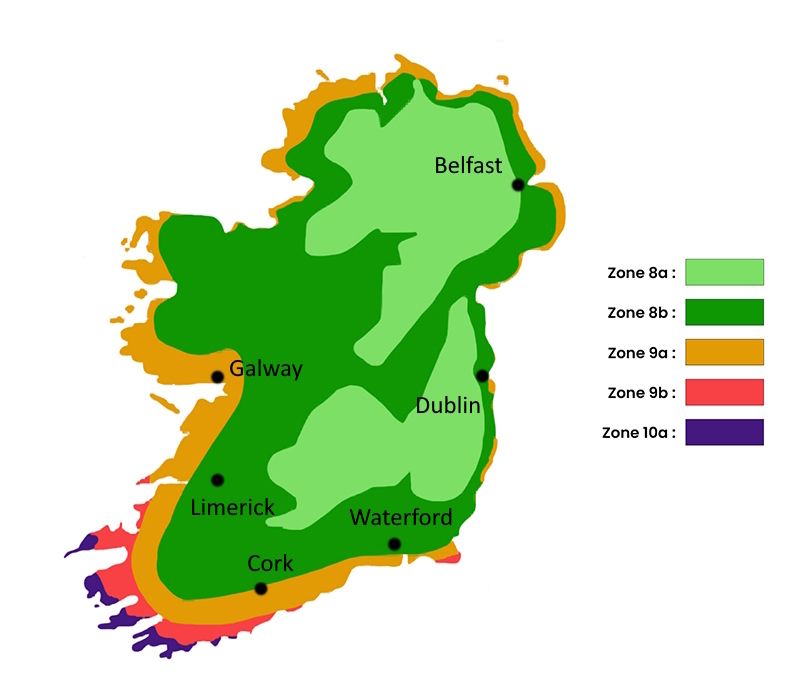
The planting period indicated on our website applies to regions in USDA Zone 9a (East Coast and Midlands: Dublin, Wexford, Waterford, Kilkenny, Portlaoise). It will vary depending on where you live:
- On the west coast and in the north-west (Galway, Limerick, Sligo, Donegal, Westport), delay planting by 1 to 2 weeks in spring and bring it forward by 1 to 2 weeks in autumn compared to the dates given, preferably choosing periods without strong winds.
- In the inland hills and plateaus (Wicklow Mountains, Macgillycuddy’s Reeks, Connemara, Killarney), it is best to plant in spring (April–May) or autumn (September–October), avoiding periods of waterlogged soil in winter and strong winds, which pose the main risk to newly planted trees in these areas.
The flowering period indicated on our website applies to regions in USDA Zone 9a, such as the East Coast and Midlands, including Dublin, Wexford, Waterford, Kilkenny and Portlaoise.
This will vary depending on where you live:
- On the west coast and in the northwest (Galway, Limerick, Sligo, Donegal and Westport), it will be delayed by one to two weeks compared to the given dates, due to stronger Atlantic winds and less spring sunshine.
- In the inland hills and plateaus (the Wicklow Mountains, the Macgillycuddy's Reeks, Connemara and Killarney), flowering will be delayed by two to three weeks. Flowering mainly occurs between May and July, with the limiting factors being less frost and more of the excessive humidity, strong winds and lack of sunshine that are characteristic of these areas.
Shipping country and language
Your country of residence may be:
Your country of residence is:
For a better user experience on our website, you can select:
Your shipping country:
-
 Austria
-
 Belgium
-
 Bosnia & Herzegovina
-
 Bulgaria
-
 Croatia
-
 Cyprus
-
 Czechia
-
 Denmark
-
 Estonia
-
 Finland
-
 France
-
 Germany
-
 Greece
-
 Hungary
-
 Iceland
-
 Ireland
-
 Italy
Italy
-
 Latvia
-
 Liechtenstein
-
 Lithuania
-
 Luxembourg
-
 Malta
Malta
-
 Netherlands
-
 Poland
-
 Portugal
-
 Romania
-
 Serbia
-
 Slovakia
-
 Slovenia
-
 Spain
Spain
-
 Sweden
-
 Switzerland
Language:
-
French
-
 English
-
Spanish
-
Italian
-
German
-
Portuguese
-
Dutch
-
Finnish
My Account
Hello
My wish lists
My cart
Log in / Register
Existing customer?
This form is protected by reCAPTCHA - the Google Privacy Policy and Terms of Service apply.
New customer?
Create an account to track your orders, access our customer service and, if you wish, make the most of our upcoming offers.