Tilia x europaea Wratislaviensis - Common Lime
Tilia x europaea Wratislaviensis - Common Lime
Tilia x europaea Wratislaviensis - Common Lime
Tilia x europaea Wratislaviensis
Common Lime, European Lime
Back-to-school special offer!
Get €10 off for every €50 you spend! And get up to €40 off on a single order.
How does it work?
1. Shop your favourites
Add your favourite plants to your basket. For every €50 you spend (excluding delivery charges, store credit and the plastic-free option), you’ll receive a €10 voucher.
€50 spent = €10 voucher
€100 spent = €20 voucher
€150 spent = €30 voucher
€200 spent = €40 voucher
2. Place your order
Once your basket reaches one of the spending thresholds, place your order. You can even choose your delivery date!
3. Receive your voucher
As soon as your order has been shipped, you’ll receive an email containing your personal voucher code and its value.
4. Use it on your next order
Your voucher is valid for 90 days from the date you receive it. It can be used once only, on a new order worth at least the value of the voucher, excluding delivery charges.
Please note: Vouchers can be combined with other offers, but cannot be split or refunded.
Why not try an alternative variety in stock?
View all →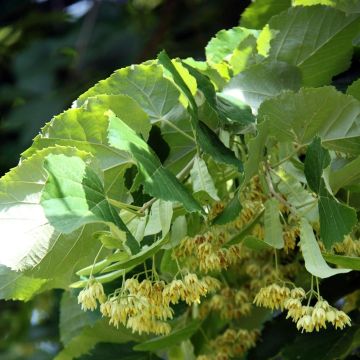
Available in 2 sizes
Available in 1 sizes
Available in 3 sizes
Available in 1 sizes
Available in 1 sizes
Available in 1 sizes
Available in 1 sizes
Available in 1 sizes

Available in 1 sizes

Available in 1 sizes
This plant carries a 24 months recovery warranty
More information
We guarantee the quality of our plants for a full growing cycle, and will replace at our expense any plant that fails to recover under normal climatic and planting conditions.
Does this plant fit my garden?
Set up your Plantfit profile →
Description
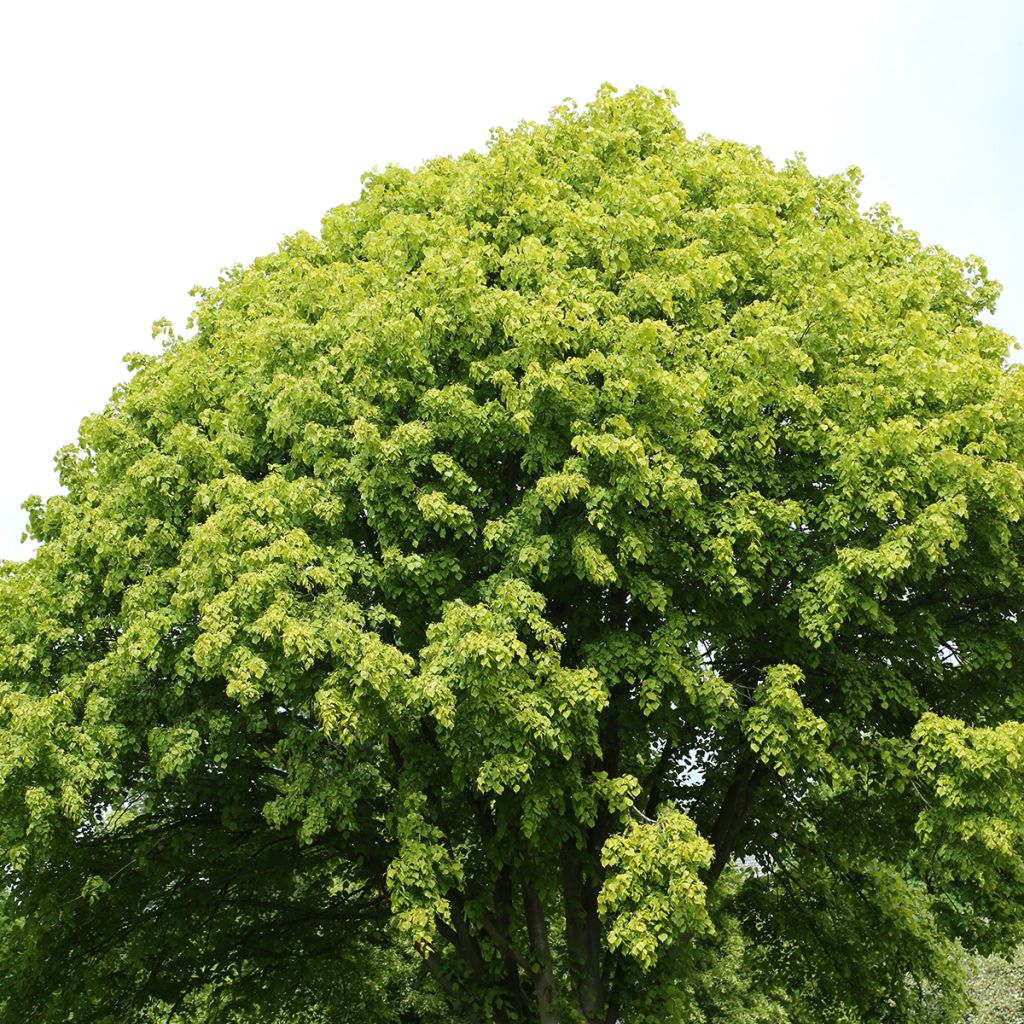
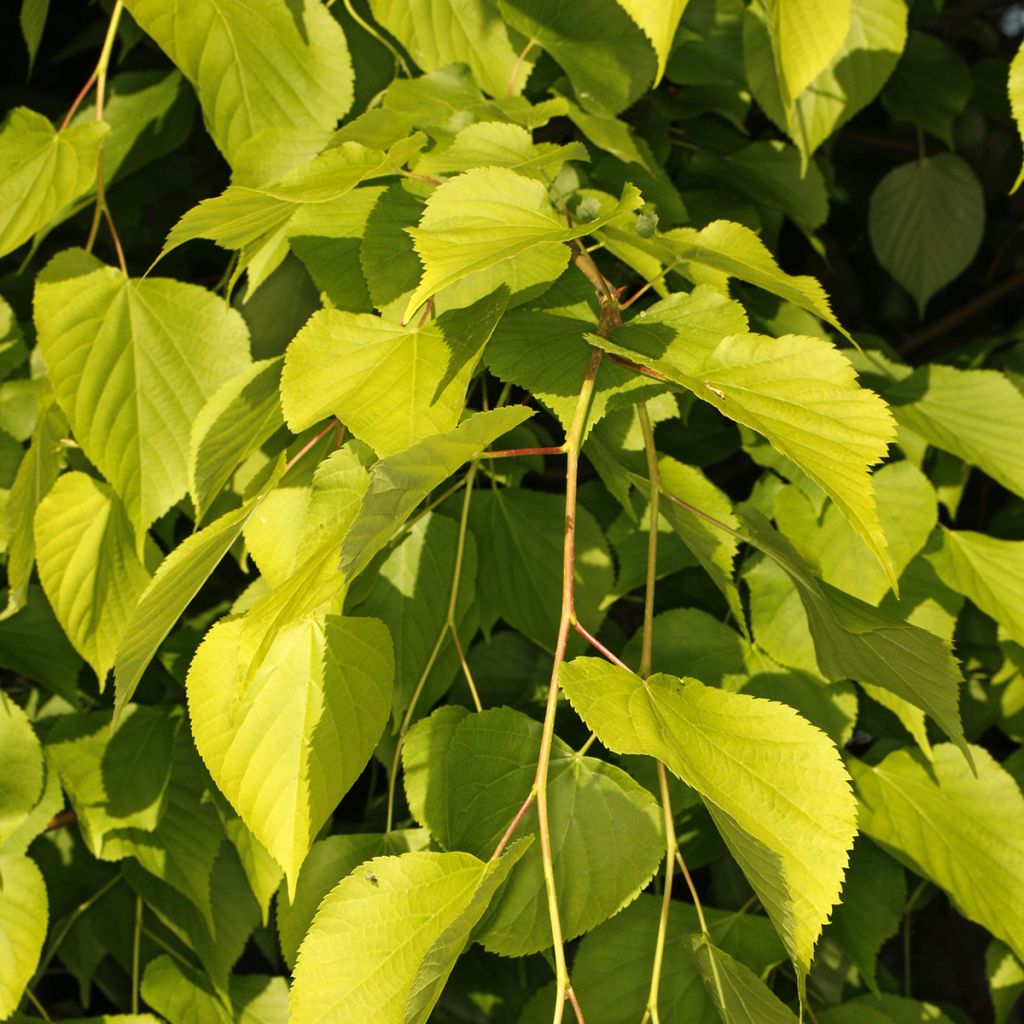
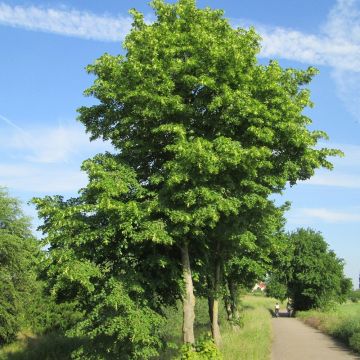
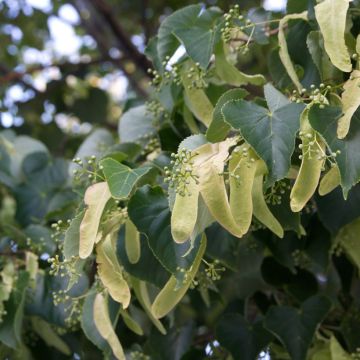
Tilia x europaea 'Wratislaviensis' is a more than a century-old variety of Common Lime tree native to Poland. This beautiful tree is of medium to large size, but it is more compact and better suited to today's gardens than the larger parent species. Its foliage is particularly decorative with its changing colours throughout the season. The young leaves emerge yellow in spring and gradually turn green. Young shoots continue to form in summer, starting off butter yellow and contrasting nicely with the now green foliage. In autumn, the tree turns yellow with hints of orange before the leaves fall to the ground. In June, this Lime tree produces the same fragrant white flowers as the botanical species, delighting bees.
The Lime tree is a representative member of the Tiliaceae family, and by far the most well-known, although this botanical family comprises around fifty genera and approximately 450 species! Tilia x europaea, European Lime or Common Lime, is a hybrid between T. cordata, a species with small leaves and T. platyphyllos, or Big-leafed Lime. The European Lime, a hybrid created hundreds of years ago and named by the famous botanist Linnaeus in 1751, is, like its parents, a tall tree capable of reaching heights of 30m or more.
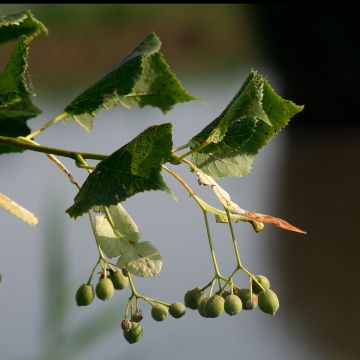
Wratislaviensis is probably a mutation of the 'Pallida' variety and was discovered in 1898 in Wroclaw, the third-largest city in the country, located in western Poland. Its growth is smaller than that of the botanical species, as 10 years after planting, it will reach approximately 6m in height and 4m in width, while its mature size will peak at 15m in height and 10m in width. It naturally takes on a pyramidal to conical shape, very regular and balanced, which closely resembles the shape of its leaves. These leaves are heart-shaped, with an acuminate (pointed) tip and a slightly asymmetrical cordate (heart-shaped) base (the lower part of the leaf forms two rounded lobes on either side of the petiole). The fairly large leaves measure from 7 to 10cm in length and 6 to 9cm in width, and their edges are finely toothed. They are especially remarkable for their colour, which changes throughout the season. In spring, yellow leaves emerge, giving the tree a very bright appearance, before turning green in summer. On this green foliage, new shoots appear in a butter-yellow colour, forming a halo around the Lime tree's crown. This visual effect is more pronounced in young, rapidly growing specimens, as mature trees produce fewer summer shoots. Finally, in autumn, the foliage turns yellow with hints of orange to end the season on a beautiful note before the leaves fall.
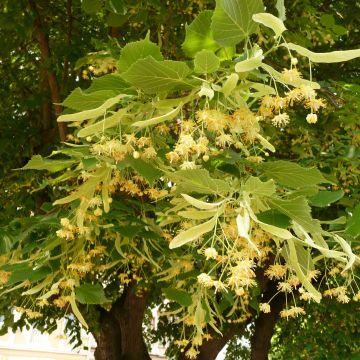
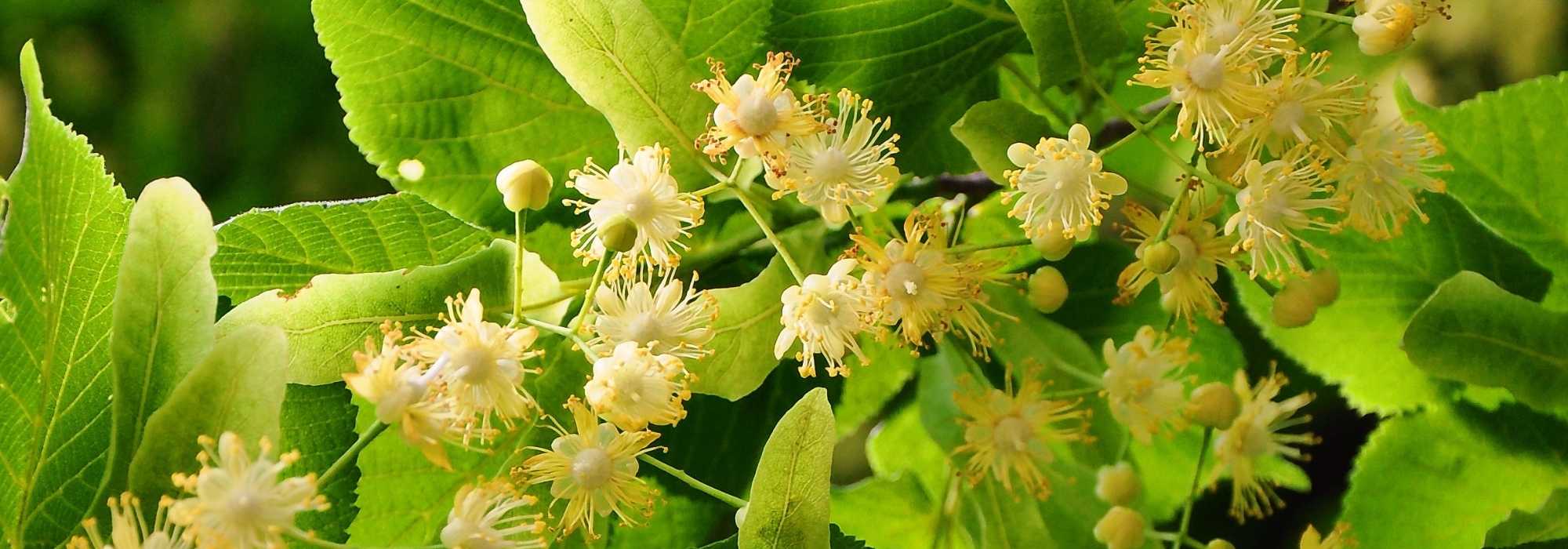
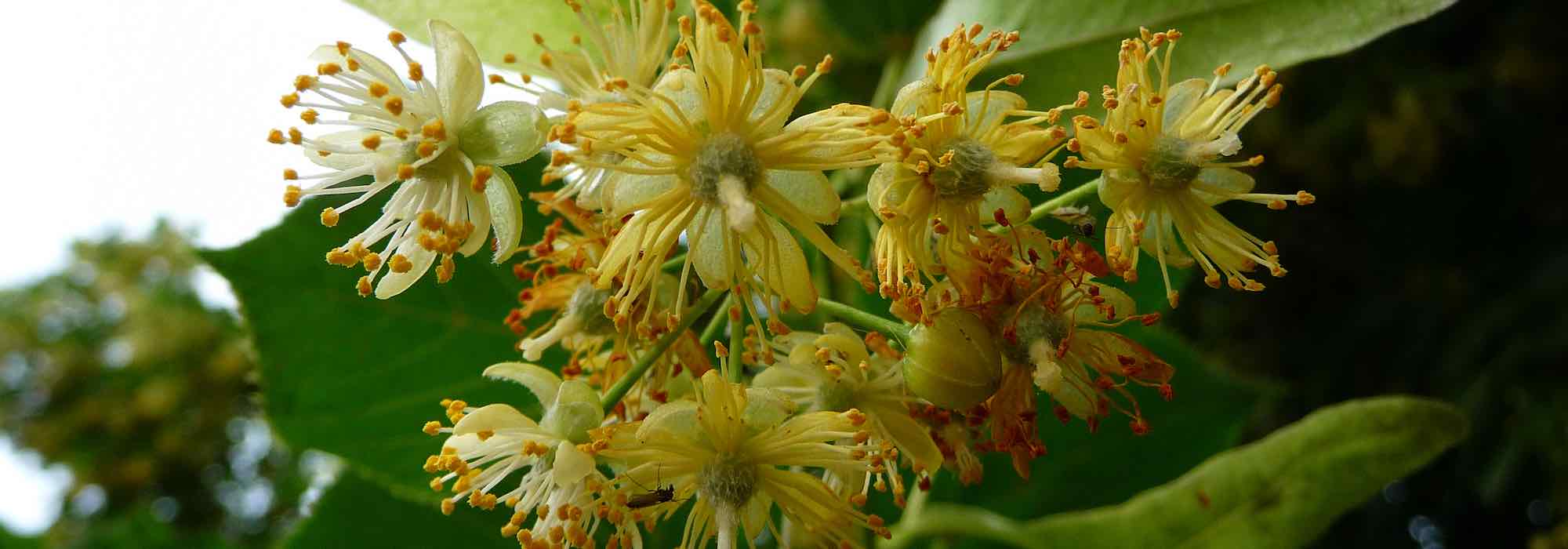
Like its counterparts, this Lime tree is also appreciated for its flowering. In June, it produces pendulous corymbs composed of 3 to 11 cream-white, fragrant flowers, which attract bees.
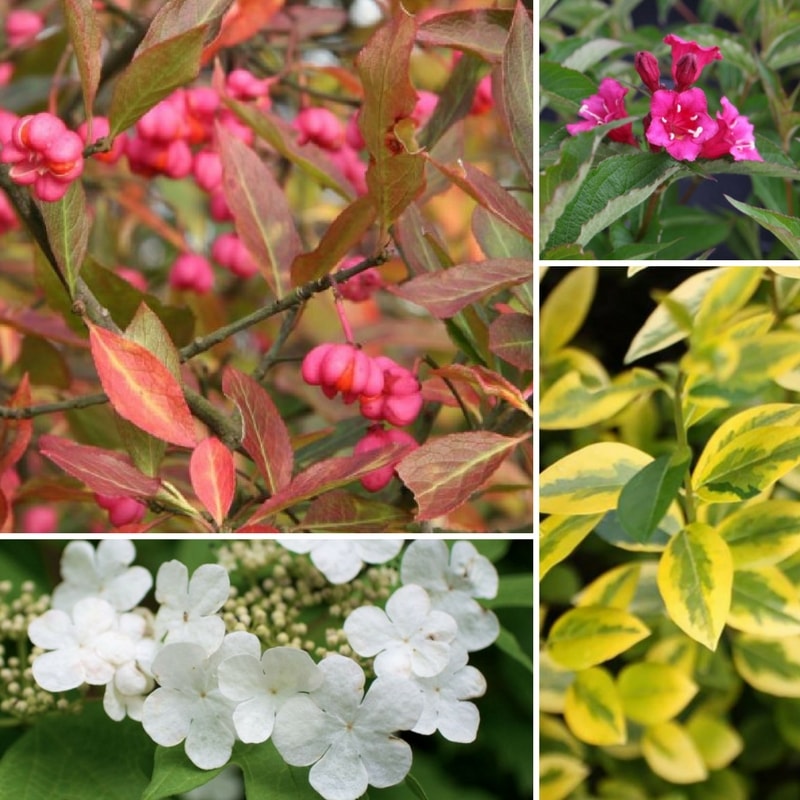
This beautiful tree, with its regular and attractive architecture, is appealing due to the brightness of its foliage, which can tolerate full sun. It is well-suited to medium to large gardens, being ornamental enough to justify being planted as a specimen tree on a lawn, and can also be the centrepiece of a mixed bed. Play with colour and form contrasts by planting Sambucus nigra Black Lace Eva at its base, an Elderberry with finely cut, almost black foliage that contrasts nicely with the Lime tree's yellow and produces beautiful pink flowers in May-June, which stand out against the dark foliage. A Cercis canadensis Eternal Flame will also create a surprise with its changing foliage, dark red in spring when the Lime tree is yellow, then turning orange and yellow to blend in with the Lime tree, before greening like it in summer and colouring again in autumn. Its pinkish-purple flowers, appearing directly on the wood before the leaves, are also a spectacle on their own, at the beginning of each season. And in the foreground, plant a Winged Spindle (Euonymus alatus) whose foliage will turn bright red in autumn, completing your colourful scene.
Plant habit
Flowering
Foliage
Planting and care
The Wratislaviensis Lime tree is best planted in autumn or spring. It is extremely cold-resistant, but it is best not to expose it to strong winds. A sunny exposure will suit it well or at most partially shaded. It adapts to most soils, except for really dry ones, with the ideal being a fertile, moist, well-drained soil, although it is capable of withstanding temporary water excesses. Soak the root ball in a bucket of water for fifteen minutes before planting and dig a hole 60 cm in width and depth. Mix planting compost with the existing soil, position the root ball, fill in around it, and water abundantly. Water regularly for the first two years to promote its establishment, and then only in hot and dry periods.
This tree requires little maintenance, but it can be attacked by aphids, which, by emitting honeydew, a sweet substance, create conditions for the development of sooty mould. This fungus darkens the leaves, which affects the aesthetics but is not harmful to the plant. Spray with black soap to get rid of it as long as the plant is not too tall to be treated.
Planting period
Intended location
Care
Planting & care advice
-
-

-
-
-

-
-
-

This item has not been reviewed yet - be the first to leave a review about it.
Recently viewed products
Haven't found what you were looking for?
Hardiness is the lowest winter temperature a plant can endure without suffering serious damage or even dying. However, hardiness is affected by location (a sheltered area, such as a patio), protection (winter cover) and soil type (hardiness is improved by well-drained soil).
In temperate climates, pruning of spring-flowering shrubs (forsythia, spireas, etc.) should be done just after flowering.
Pruning of summer-flowering shrubs (Indian Lilac, Perovskia, etc.) can be done in winter or spring.
In cold regions as well as with frost-sensitive plants, avoid pruning too early when severe frosts may still occur.
The harvesting period indicated on our website applies to countries and regions in USDA zone 8 (France, England, Ireland, the Netherlands).
In colder areas (Scandinavia, Poland, Austria...) fruit and vegetable harvests are likely to be delayed by 3-4 weeks.
In warmer areas (Italy, Spain, Greece, etc.), harvesting will probably take place earlier, depending on weather conditions.
The sowing periods indicated on our website apply to countries and regions within USDA Zone 8 (France, UK, Ireland, Netherlands).
In colder areas (Scandinavia, Poland, Austria...), delay any outdoor sowing by 3-4 weeks, or sow under glass.
In warmer climes (Italy, Spain, Greece, etc.), bring outdoor sowing forward by a few weeks.
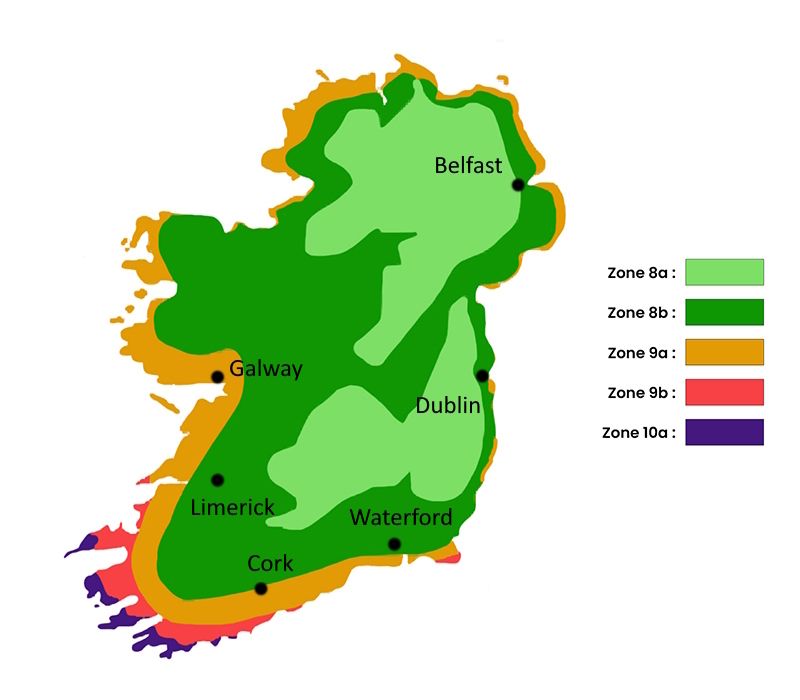
The planting period indicated on our website applies to regions in USDA Zone 9a (East Coast and Midlands: Dublin, Wexford, Waterford, Kilkenny, Portlaoise). It will vary depending on where you live:
- On the west coast and in the north-west (Galway, Limerick, Sligo, Donegal, Westport), delay planting by 1 to 2 weeks in spring and bring it forward by 1 to 2 weeks in autumn compared to the dates given, preferably choosing periods without strong winds.
- In the inland hills and plateaus (Wicklow Mountains, Macgillycuddy’s Reeks, Connemara, Killarney), it is best to plant in spring (April–May) or autumn (September–October), avoiding periods of waterlogged soil in winter and strong winds, which pose the main risk to newly planted trees in these areas.
The flowering period indicated on our website applies to regions in USDA Zone 9a, such as the East Coast and Midlands, including Dublin, Wexford, Waterford, Kilkenny and Portlaoise.
This will vary depending on where you live:
- On the west coast and in the northwest (Galway, Limerick, Sligo, Donegal and Westport), it will be delayed by one to two weeks compared to the given dates, due to stronger Atlantic winds and less spring sunshine.
- In the inland hills and plateaus (the Wicklow Mountains, the Macgillycuddy's Reeks, Connemara and Killarney), flowering will be delayed by two to three weeks. Flowering mainly occurs between May and July, with the limiting factors being less frost and more of the excessive humidity, strong winds and lack of sunshine that are characteristic of these areas.
Shipping country and language
Your country of residence may be:
Your country of residence is:
For a better user experience on our website, you can select:
Your shipping country:
-
 Austria
-
 Belgium
-
 Bosnia & Herzegovina
-
 Bulgaria
-
 Croatia
-
 Cyprus
-
 Czechia
-
 Denmark
-
 Estonia
-
 Finland
-
 France
-
 Germany
-
 Greece
-
 Hungary
-
 Iceland
-
 Ireland
-
 Italy
Italy
-
 Latvia
-
 Liechtenstein
-
 Lithuania
-
 Luxembourg
-
 Malta
Malta
-
 Netherlands
-
 Poland
-
 Portugal
-
 Romania
-
 Serbia
-
 Slovakia
-
 Slovenia
-
 Spain
Spain
-
 Sweden
-
 Switzerland
Language:
-
French
-
 English
-
Spanish
-
Italian
-
German
-
Portuguese
-
Dutch
-
Finnish
My Account
Hello
My wish lists
My cart
Log in / Register
Existing customer?
This form is protected by reCAPTCHA - the Google Privacy Policy and Terms of Service apply.
New customer?
Create an account to track your orders, access our customer service and, if you wish, make the most of our upcoming offers.