
Physocarpus opulifolius Darts Gold - Ninebark

Physocarpus opulifolius Darts Gold - Ninebark

Physocarpus opulifolius Darts Gold - Ninebark

Physocarpus opulifolius Darts Gold - Ninebark

Physocarpus opulifolius Darts Gold - Ninebark

Physocarpus opulifolius Darts Gold - Ninebark

Physocarpus opulifolius Darts Gold - Ninebark

Physocarpus opulifolius Darts Gold - Ninebark

Physocarpus opulifolius Darts Gold - Ninebark

Physocarpus opulifolius Darts Gold - Ninebark
Physocarpus opulifolius Darts Gold - Ninebark
Physocarpus opulifolius Dart's Gold
Ninebark, Eastern ninebark
Very small young plant in a pot, but it has taken well and is already producing lovely yellow leaves.
Bien, 31/03/2026
Back-to-school special offer!
Get €10 off for every €50 you spend! And get up to €40 off on a single order.
How does it work?
1. Shop your favourites
Add your favourite plants to your basket. For every €50 you spend (excluding delivery charges, store credit and the plastic-free option), you’ll receive a €10 voucher.
€50 spent = €10 voucher
€100 spent = €20 voucher
€150 spent = €30 voucher
€200 spent = €40 voucher
2. Place your order
Once your basket reaches one of the spending thresholds, place your order. You can even choose your delivery date!
3. Receive your voucher
As soon as your order has been shipped, you’ll receive an email containing your personal voucher code and its value.
4. Use it on your next order
Your voucher is valid for 90 days from the date you receive it. It can be used once only, on a new order worth at least the value of the voucher, excluding delivery charges.
Please note: Vouchers can be combined with other offers, but cannot be split or refunded.
Home or relay delivery (depending on size and destination)
Important: You may be charged customs duties by your country’s customs authorities upon delivery.
Schedule delivery date
and select date in basket
This plant carries a 24 months recovery warranty
More information
We guarantee the quality of our plants for a full growing cycle, and will replace at our expense any plant that fails to recover under normal climatic and planting conditions.


Does this plant fit my garden?
Set up your Plantfit profile →
Description
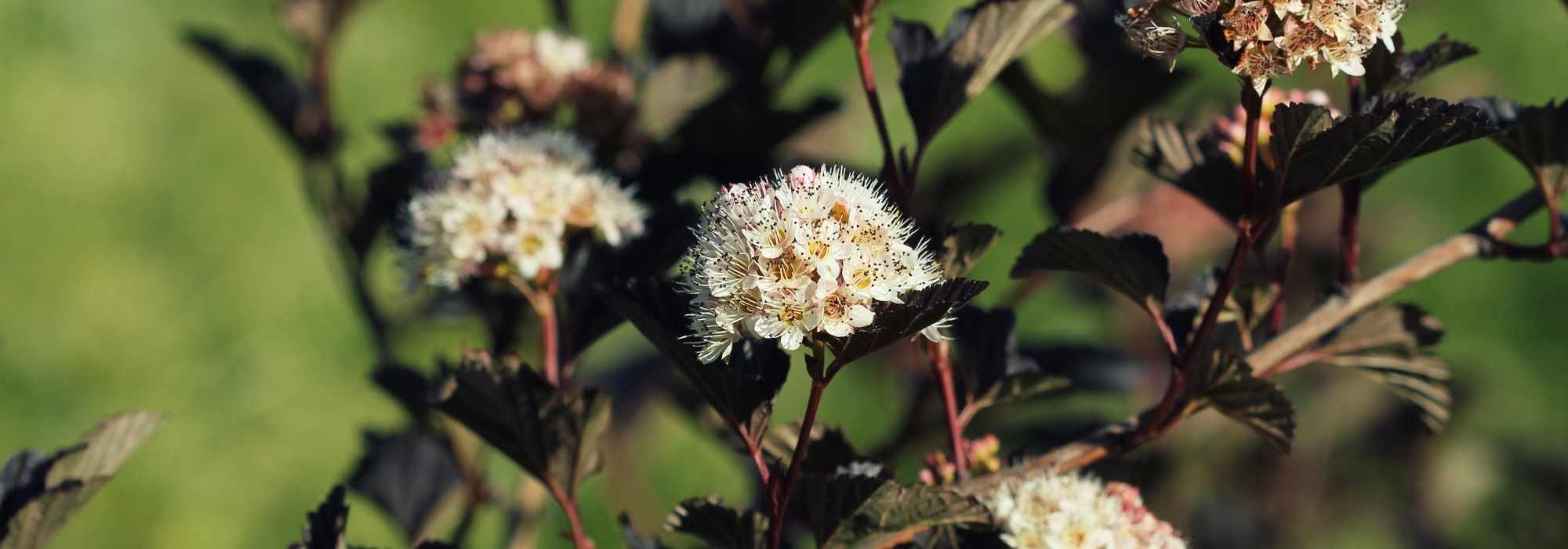
Le Physocarpus opulifolius ‘Dart’s Gold’ est l'un des meilleurs arbustes à feuillage doré. Ses jeunes feuilles jaune d’or deviennent jaune citron, puis jaune-vert au cours de l’été, avant de prendre des nuances orangées en automne. En fin de printemps, des bouquets de fleurs blanc crème, issus de boutons rosés, complètent ce décor changeant. Facile à cultiver, peu sensible aux maladies, adaptée aux hivers rigoureux, cette variété particulièrement décorative a reçu l’Award of Garden Merit de la Royal Horticultural Society.
Le Physocarpus opulifolius appartient à la famille des Rosacées. L’espèce type est originaire de l’est de l’Amérique du Nord, où elle pousse sur les pentes rocheuses, le long des cours d’eau et dans les fourrés frais. ‘Dart’s Gold’ a été obtenu en 1969 aux pépinières Darthuizer de Leersum, aux Pays-Bas. Il est issu d’un croisement entre le physocarpe doré ‘Luteus’ et la forme compacte autrefois nommée Physocarpus opulifolius var. nanus. De croissance assez rapide, cet arbuste atteint 1,50 à 2 m de hauteur pour une largeur comparable. Son port, d’abord dense et dressé, devient plus souple et légèrement arqué avec l’âge. Sa souche peut produire quelques rejets, faciles à supprimer lorsqu’ils sont indésirables. Les branches âgées présentent une écorce brun rougeâtre qui se détache en fines lanières, apportant un intérêt supplémentaire en hiver. Les feuilles caduques, découpées en trois à cinq lobes, rappellent celles de la viorne obier. Leur couleur est particulièrement vive au printemps et au début de l’été. Elle devient plus verte à mi-ombre ou au fil de la saison. Une exposition lumineuse renforce les teintes dorées, mais un soleil brûlant associé à un sol sec peut faire sécher le feuillage. La floraison a lieu en mai et juin. Les petites fleurs à cinq pétales sont réunies en corymbes arrondis de 5 à 7 cm de diamètre. D’abord rosés, les boutons s’ouvrent en blanc crème. Après pollinisation par les insectes, les fleurs donnent des petits fruits gonflés, rougeâtres puis bruns, réunis en grappes décoratives. Très rustique, ‘Dart’s Gold’ supporte des températures proches de –25 °C.
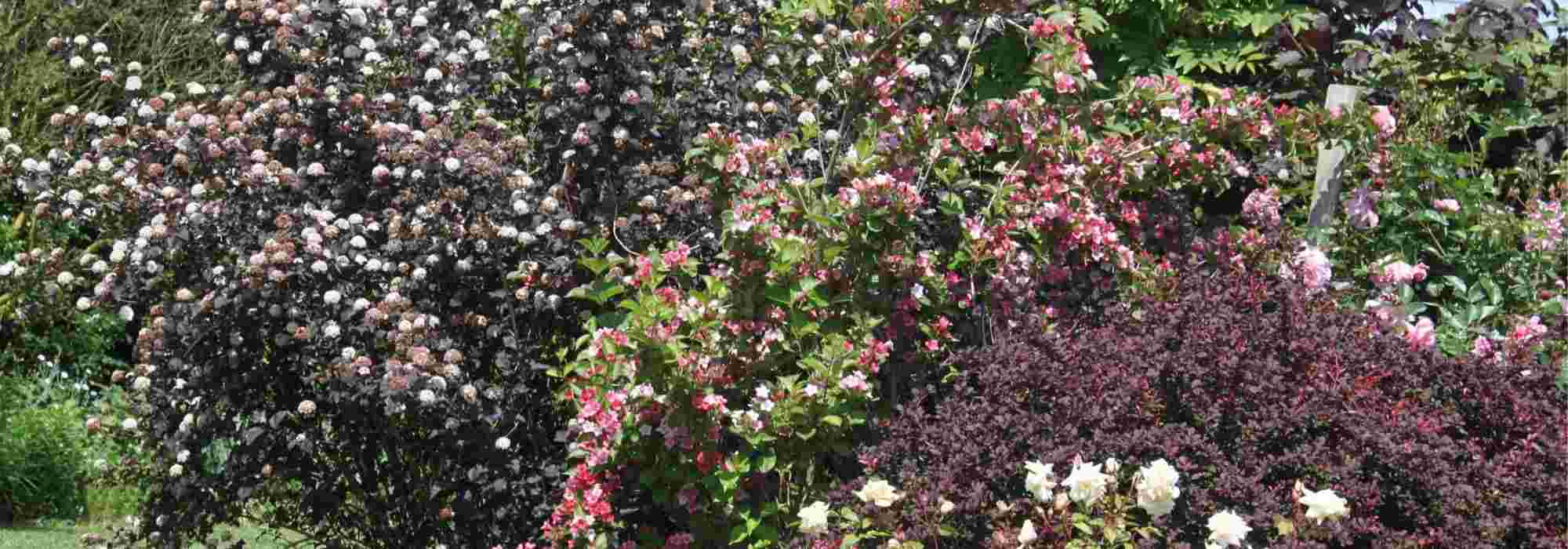
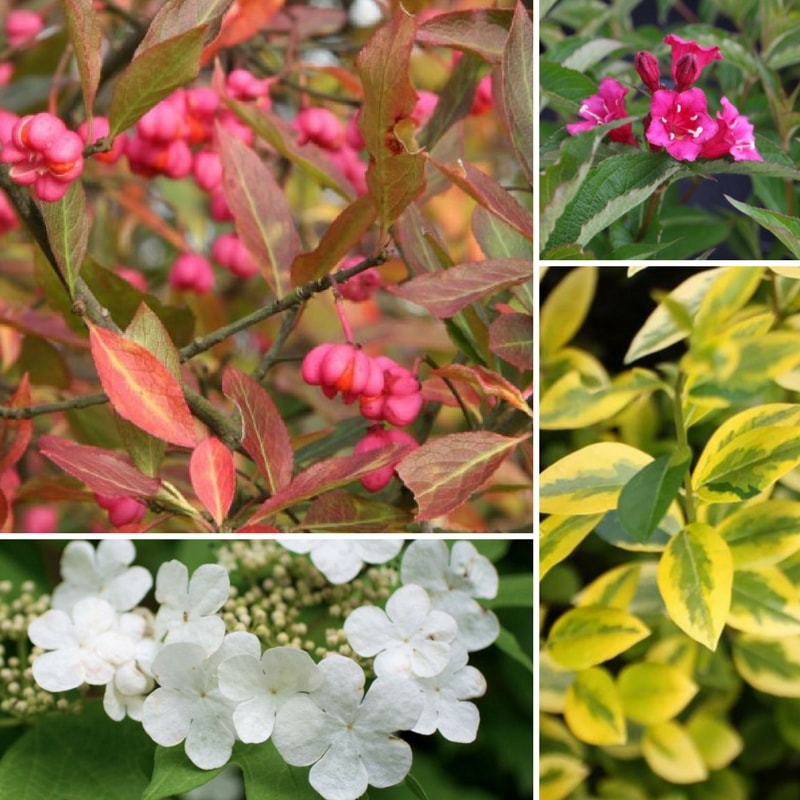
Dans une haie libre, un grand massif d’arbustes ou en sujet isolé, ce pysocarpe ‘Dart’s Gold’ est décoratif du printemps à l’automne. Il s’intègre aussi bien dans un jardin à l'anglaise que dans une composition plus champêtre. Il est superbe à côté du sureau noir ‘Black Lace’, du Viburnum plicatum ‘Watanabe’ et de l’Hydrangea paniculata ‘Kyushu’. Devant ces arbustes, on peut installer un massif composé de géraniums vivaces à longue floraison, d'asters d'été ou de campanules sauvages.
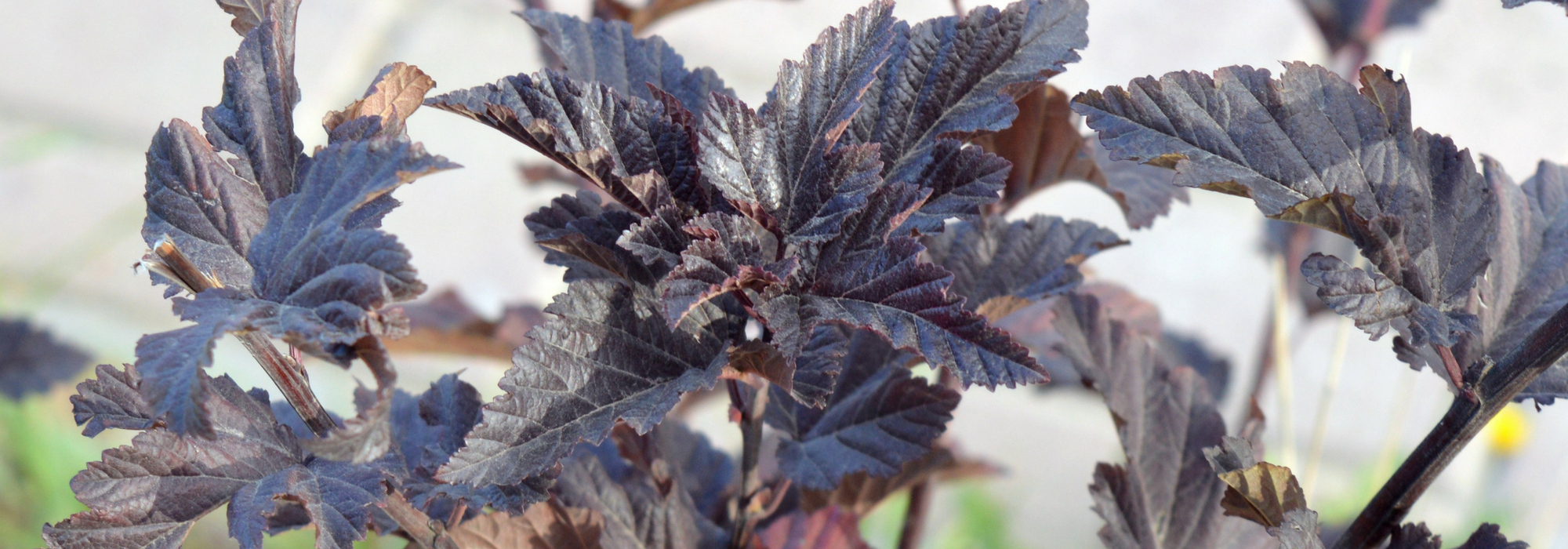
Physocarpus opulifolius Darts Gold - Ninebark in pictures


Plant habit
Flowering
Foliage
Botanical data
Physocarpus
opulifolius
Dart's Gold
Rosaceae
Ninebark, Eastern ninebark
Cultivar or hybrid
Planting and care
Physocarpus opulifolius ‘Dart’s Gold’ is preferably planted in autumn or early spring. A distance of 1.20 to 1.50 m between two specimens gives the shrubs enough space to grow. It grows in full sun or partial shade. Full sun enhances the golden colour of the foliage, while light shade limits scorching in hot regions. An ordinary, deep, humus-bearing soil that stays slightly moist suits it. It tolerates clay and slightly calcareous soils, but may suffer from chlorosis in very chalky, shallow and dry soil. Soils that remain waterlogged for long periods should also be avoided. Regular watering is beneficial during the first two summers. Once established, the shrub tolerates short dry spells. An organic mulch helps to keep the soil cool and moist.
Planting period
Intended location
Care
Planting & care advice
-
-
-

-
-

-

-
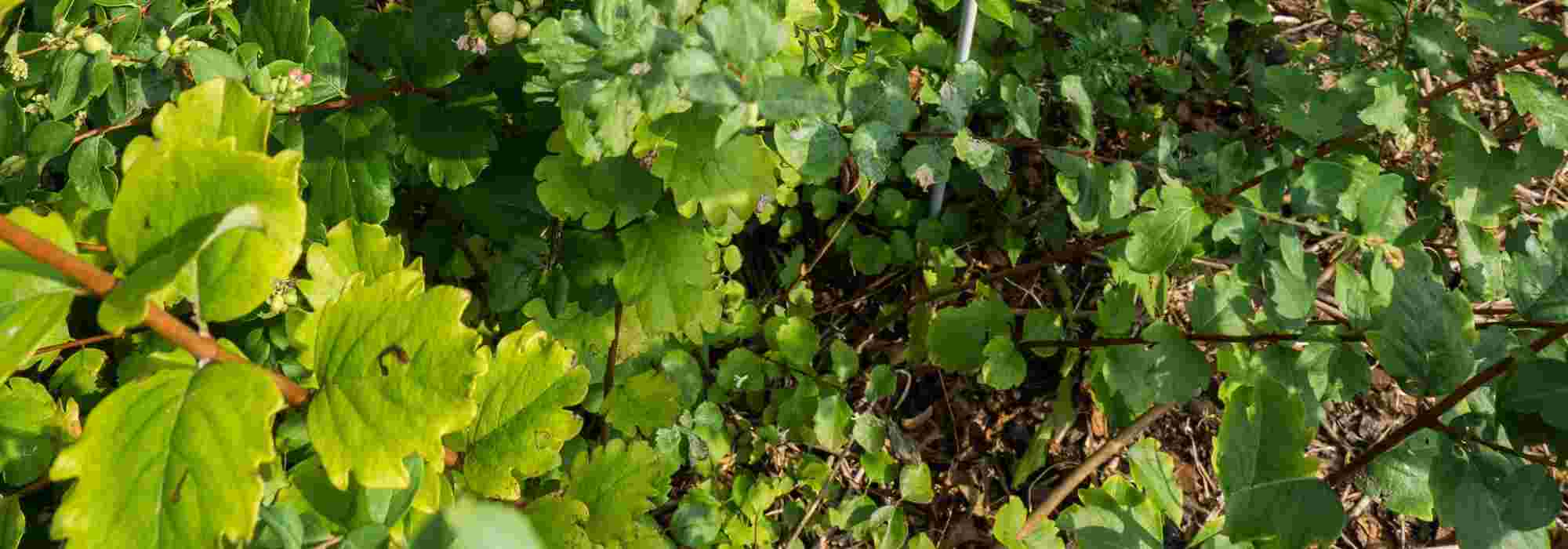
-
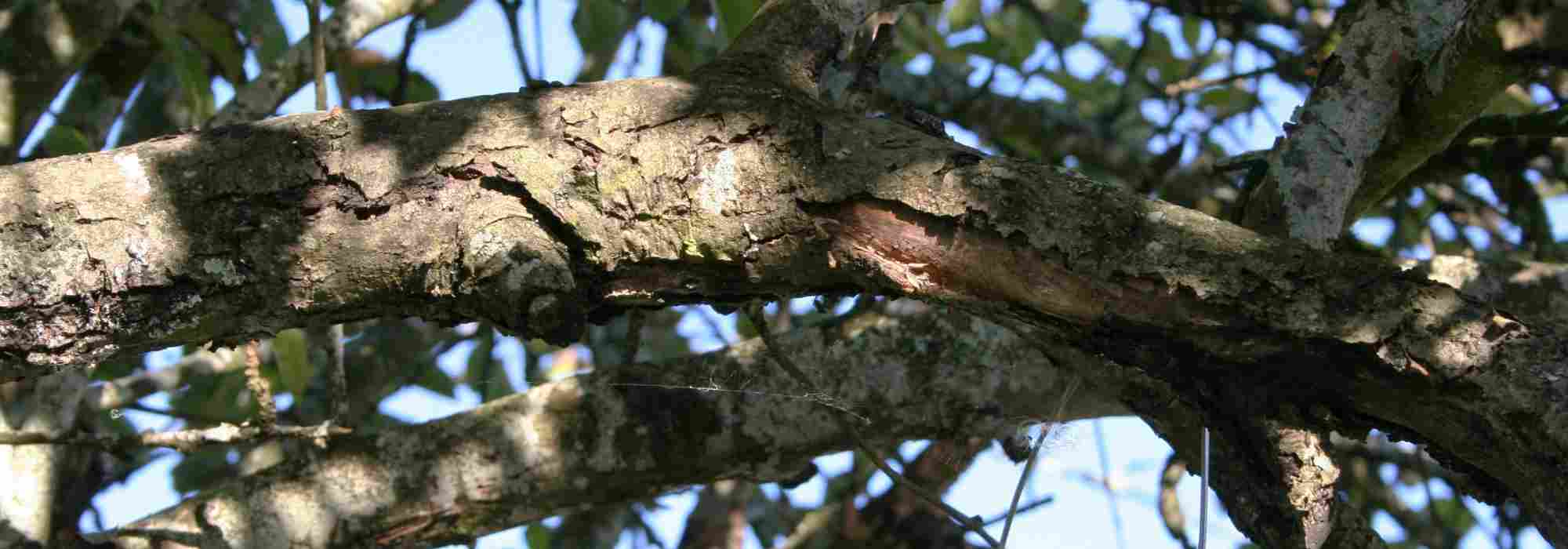
-
, onOrder confirmed
Reply from on Promesse de fleurs
Recently viewed products
Haven't found what you were looking for?
Hardiness is the lowest winter temperature a plant can endure without suffering serious damage or even dying. However, hardiness is affected by location (a sheltered area, such as a patio), protection (winter cover) and soil type (hardiness is improved by well-drained soil).
In temperate climates, pruning of spring-flowering shrubs (forsythia, spireas, etc.) should be done just after flowering.
Pruning of summer-flowering shrubs (Indian Lilac, Perovskia, etc.) can be done in winter or spring.
In cold regions as well as with frost-sensitive plants, avoid pruning too early when severe frosts may still occur.
The harvesting period indicated on our website applies to countries and regions in USDA zone 8 (France, England, Ireland, the Netherlands).
In colder areas (Scandinavia, Poland, Austria...) fruit and vegetable harvests are likely to be delayed by 3-4 weeks.
In warmer areas (Italy, Spain, Greece, etc.), harvesting will probably take place earlier, depending on weather conditions.
The sowing periods indicated on our website apply to countries and regions within USDA Zone 8 (France, UK, Ireland, Netherlands).
In colder areas (Scandinavia, Poland, Austria...), delay any outdoor sowing by 3-4 weeks, or sow under glass.
In warmer climes (Italy, Spain, Greece, etc.), bring outdoor sowing forward by a few weeks.
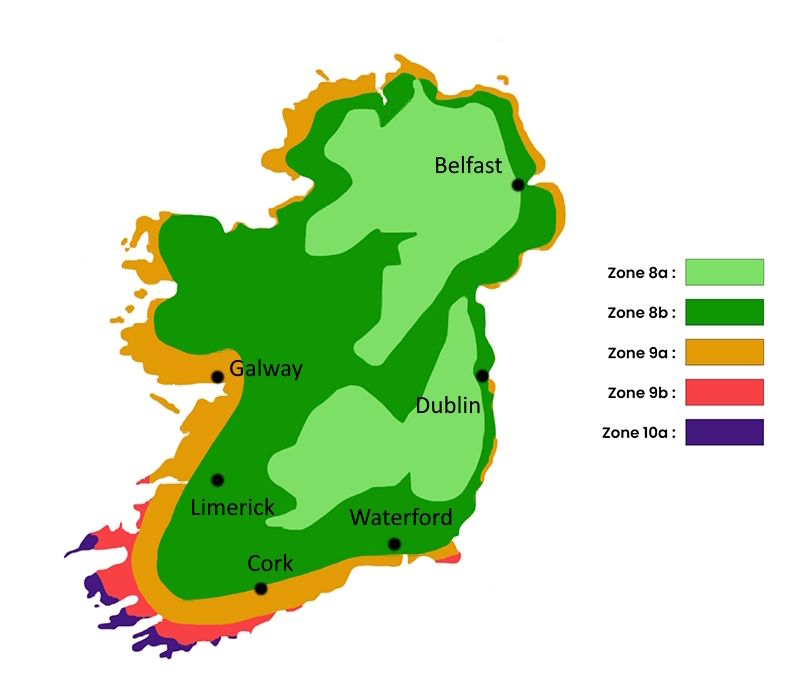
The planting period indicated on our website applies to regions in USDA Zone 9a (East Coast and Midlands: Dublin, Wexford, Waterford, Kilkenny, Portlaoise). It will vary depending on where you live:
- On the west coast and in the north-west (Galway, Limerick, Sligo, Donegal, Westport), delay planting by 1 to 2 weeks in spring and bring it forward by 1 to 2 weeks in autumn compared to the dates given, preferably choosing periods without strong winds.
- In the inland hills and plateaus (Wicklow Mountains, Macgillycuddy’s Reeks, Connemara, Killarney), it is best to plant in spring (April–May) or autumn (September–October), avoiding periods of waterlogged soil in winter and strong winds, which pose the main risk to newly planted trees in these areas.
The flowering period indicated on our website applies to regions in USDA Zone 9a, such as the East Coast and Midlands, including Dublin, Wexford, Waterford, Kilkenny and Portlaoise.
This will vary depending on where you live:
- On the west coast and in the northwest (Galway, Limerick, Sligo, Donegal and Westport), it will be delayed by one to two weeks compared to the given dates, due to stronger Atlantic winds and less spring sunshine.
- In the inland hills and plateaus (the Wicklow Mountains, the Macgillycuddy's Reeks, Connemara and Killarney), flowering will be delayed by two to three weeks. Flowering mainly occurs between May and July, with the limiting factors being less frost and more of the excessive humidity, strong winds and lack of sunshine that are characteristic of these areas.
Shipping country and language
Your country of residence may be:
Your country of residence is:
For a better user experience on our website, you can select:
Your shipping country:
-
 Austria
-
 Belgium
-
 Bosnia & Herzegovina
-
 Bulgaria
-
 Croatia
-
 Cyprus
-
 Czechia
-
 Denmark
-
 Estonia
-
 Finland
-
 France
-
 Germany
-
 Greece
-
 Hungary
-
 Iceland
-
 Ireland
-
 Italy
-
 Latvia
-
 Liechtenstein
-
 Lithuania
-
 Luxembourg
-
 Malta
-
 Netherlands
-
 Poland
-
 Portugal
-
 Romania
-
 Serbia
-
 Slovakia
-
 Slovenia
-
 Spain
-
 Sweden
-
 Switzerland
Language:
-
French
-
 English
-
Spanish
-
Italian
-
German
-
Portuguese
-
Dutch
-
Finnish
My Account
Hello
My wish lists
My cart
Log in / Register
Existing customer?
This form is protected by reCAPTCHA - the Google Privacy Policy and Terms of Service apply.
New customer?
Create an account to track your orders, access our customer service and, if you wish, make the most of our upcoming offers.