Hebe topiaria - Topiarist's hebe
Hebe topiaria - Topiarist's hebe
Hebe topiaria - Topiarist's hebe
Hebe topiaria - Topiarist's hebe
Hebe topiaria - Topiarist's hebe
Hebe topiaria
Box-leaved Hebe, Hebe Topiary, Shrubby Veronica
Back-to-school special offer!
Get €10 off for every €50 you spend! And get up to €40 off on a single order.
How does it work?
1. Shop your favourites
Add your favourite plants to your basket. For every €50 you spend (excluding delivery charges, store credit and the plastic-free option), you’ll receive a €10 voucher.
€50 spent = €10 voucher
€100 spent = €20 voucher
€150 spent = €30 voucher
€200 spent = €40 voucher
2. Place your order
Once your basket reaches one of the spending thresholds, place your order. You can even choose your delivery date!
3. Receive your voucher
As soon as your order has been shipped, you’ll receive an email containing your personal voucher code and its value.
4. Use it on your next order
Your voucher is valid for 90 days from the date you receive it. It can be used once only, on a new order worth at least the value of the voucher, excluding delivery charges.
Please note: Vouchers can be combined with other offers, but cannot be split or refunded.
Home or relay delivery (depending on size and destination)
Important: You may be charged customs duties by your country’s customs authorities upon delivery.
Schedule delivery date
and select date in basket
This plant carries a 24 months recovery warranty
More information
We guarantee the quality of our plants for a full growing cycle, and will replace at our expense any plant that fails to recover under normal climatic and planting conditions.
Does this plant fit my garden?
Set up your Plantfit profile →
Description
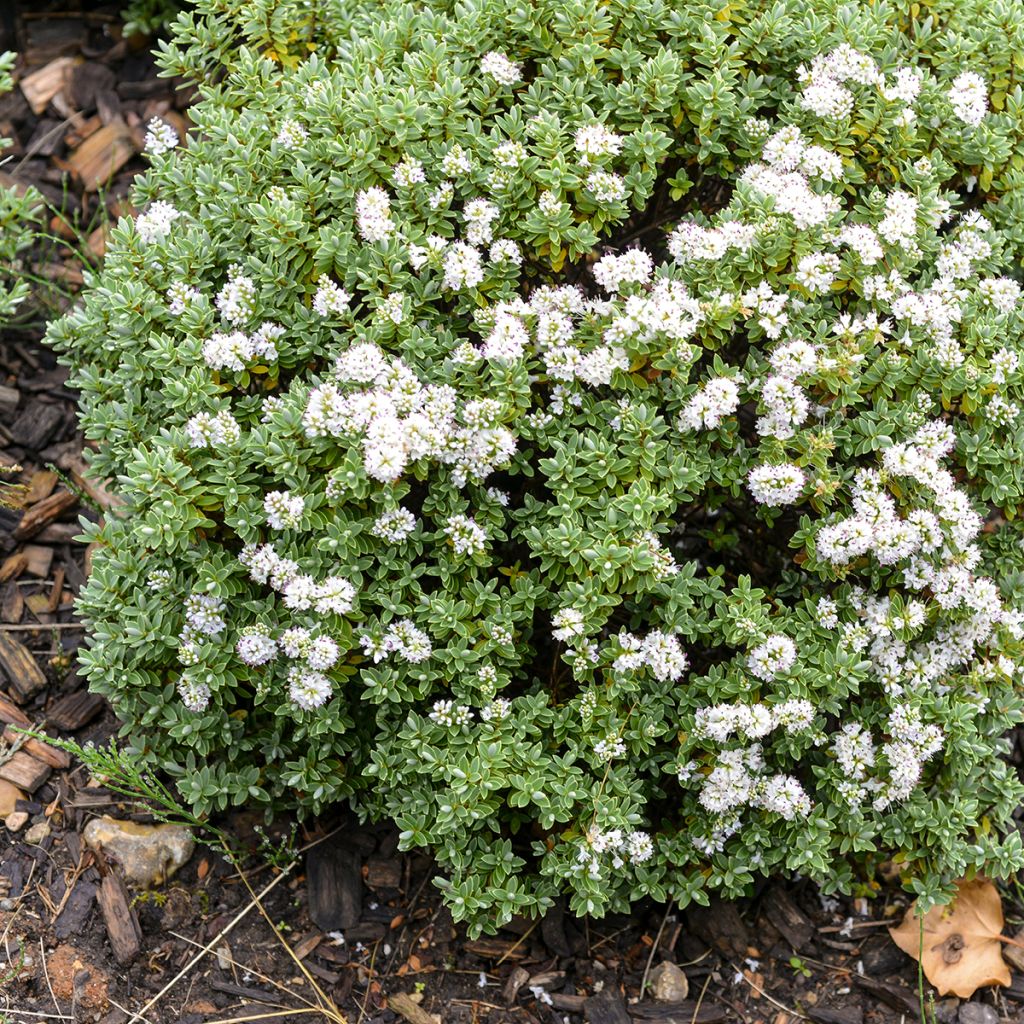
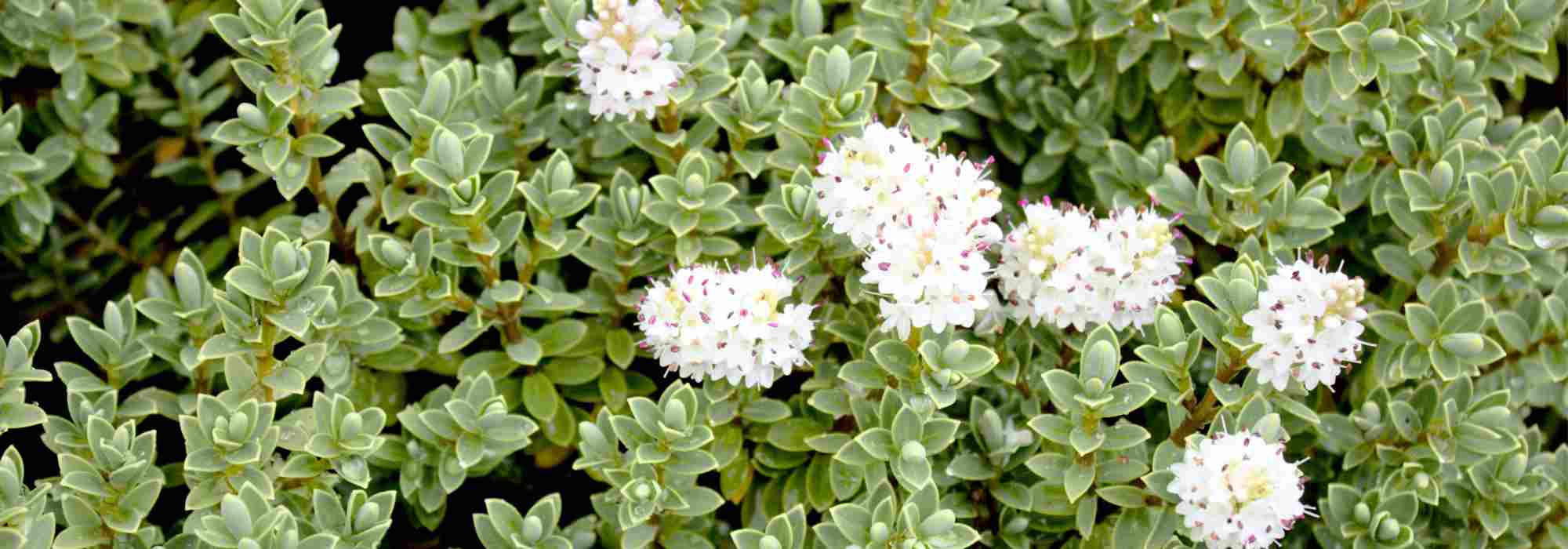
Hebe topiaria is a variety of bushy veronica attractive for its highly sculptural habit. It forms a small bush that naturally creates a dome of foliage, broader than it is tall. Its very fine and evergreen, grey-green folage, is ornamental in every season. At the end of spring, short spikes of small white flowers appear, well-matched to the vegetation. Easy to cultivate in most well-drained soils, this species is notably more resistant to cold than others and also tolerates coastal climates.
Bush veronicas were once part of the Veronica genus but are now grouped within the Hebe genus. This genus, long classified within the Scrophulariaceae, is now included in the Plantaginaceae family, alongside wild herbs like Plantain and also ornamental plants such as the magnificent Siberian Veronica (Veronicastrum sibiricum), with its oversized floral spikes.
There are around a hundred species of Hebe, the vast majority of which are native to New Zealand, with others coming from southern Australia or Tasmania. The first bush veronica (Hebe elliptica) was introduced to Europe in 1775 following an expedition by the famous Captain Cook.
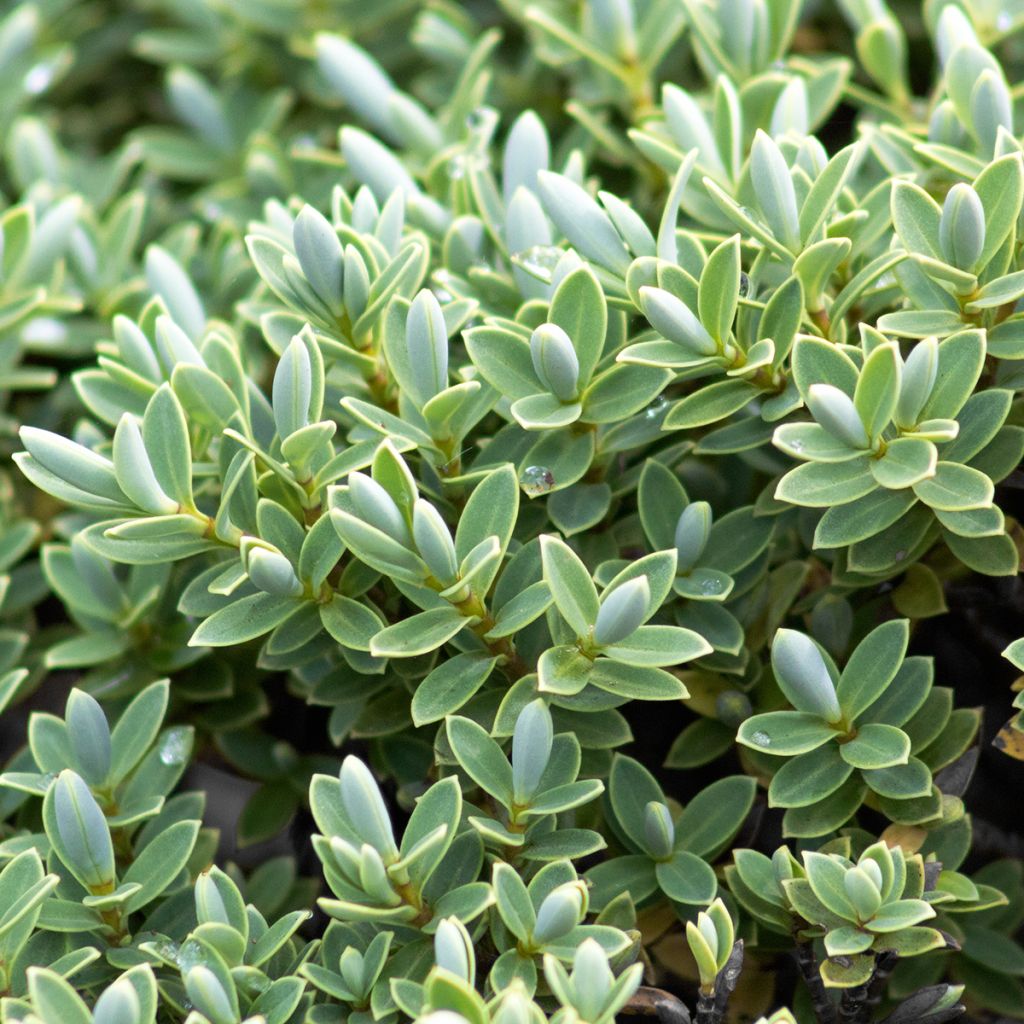
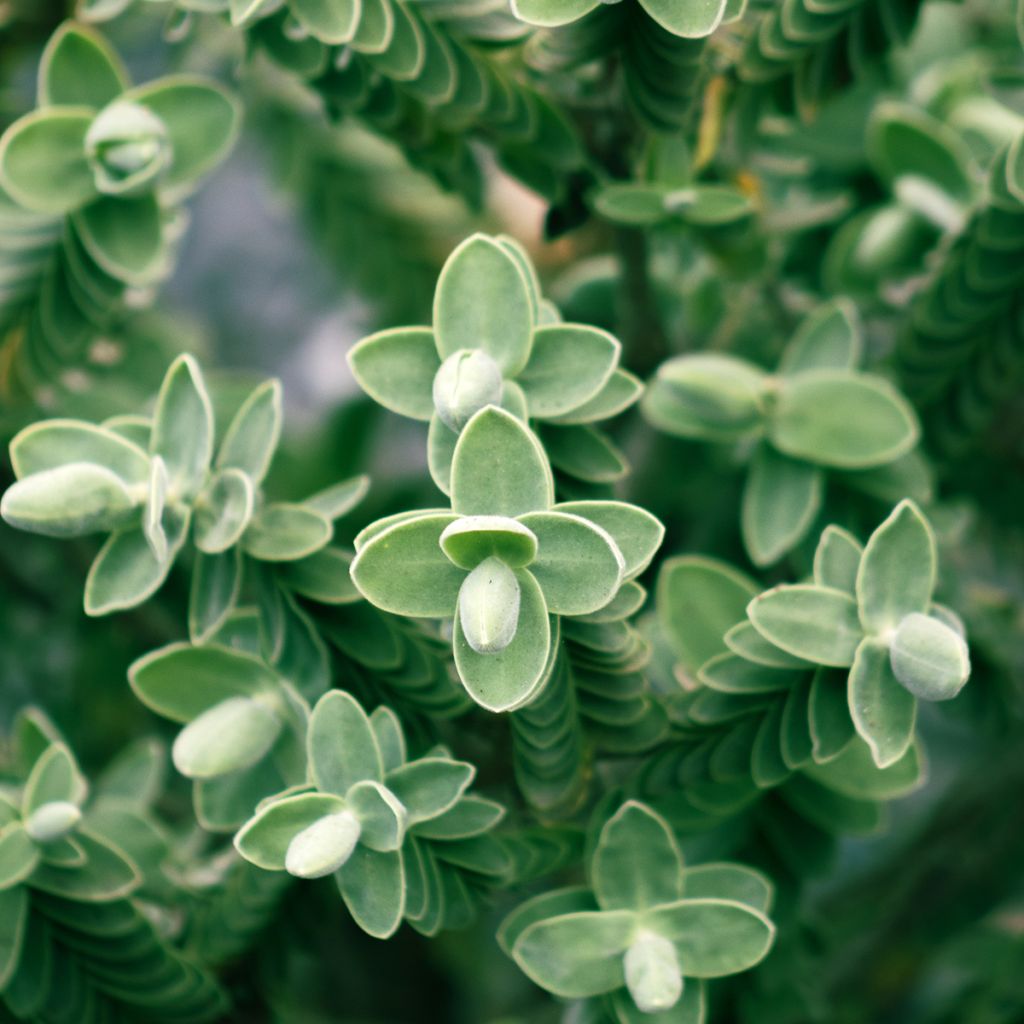
Originating from New Zealand, Hebe topiaria has been awarded a prestigious Award of Garden Merit by the Royal Horticultural Society (RHS) for its ornamental qualities. It is a botanical species of good hardiness (-12°C to -15°C) and has a relatively significant growth rate compared to others, as in 5 years of cultivation, it will reach approximately 1 m in height and 1.20 m in spread. At maturity, after 10 years, if the soil and climatic conditions are suitable, it could even grow to 1.20 m with a width of 1.50 m. The bush naturally adopts a very regular hemispherical habit, even without pruning. This highly geometric silhouette is particularly valued in contemporary gardens, where structure takes precedence over flowers. The fine stems of a chartreuse green are adorned with a multitude of small elliptical leaves, with pointed tips, measuring around one centimetre in length. Their colour is stunning, ranging between moss green and grey-green, enhancing the stylish appearance of the plant and exuding a sense of serenity. The leaves are opposite, decussate, meaning that each node rotates 90° relative to the previous one. When viewed from the front, the branches display leaves that form a cross. Aligned one behind the other, they appear almost overlapping due to the short internodes.
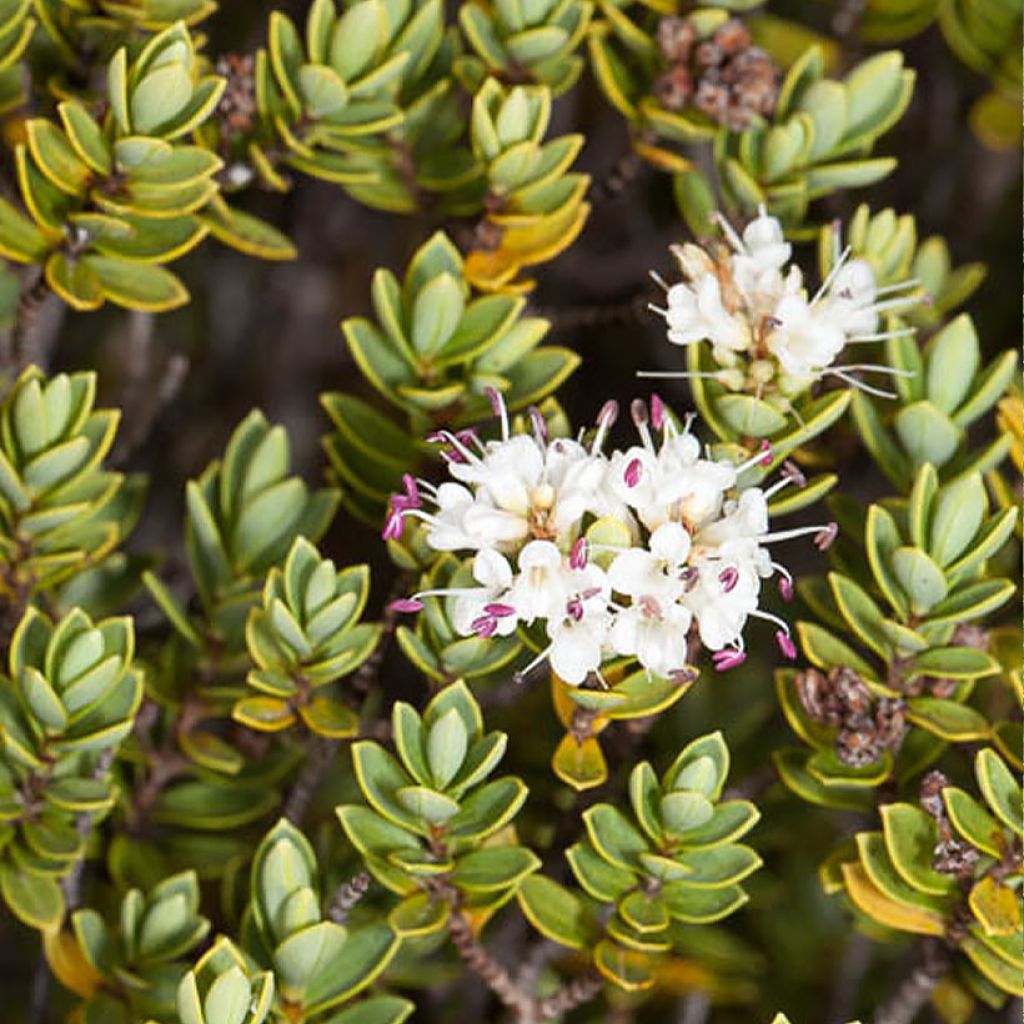
From June until July, the plant produces a charming flowering, albeit sometimes sparse. Spikes of 3 cm in length then form, made up of small pure white flowers. Their colour harmonises beautifully with that of the leaves, giving this Veronica a pleasant and tasteful romantic touch.
Hebe topiaria is a true botanical sculpture with an almost perfect design, ideal for dressing a border at the foot of a hedge, adding character to a large rockery or bringing a touch of distinction to a flowerbed. Its distinctive silhouette provides form contrasts when paired with columnar plants, such as Juniperus scopulorum 'Blue Arrow', a fastigiate Virginia Juniper, whose bluish foliage will perfectly complement that of your Hebe. A specimen of Viburnum tinus 'Spirit' will allow you to enjoy pale pink flowering throughout the winter. You can prune this Laurustinus into a cone or any shape you prefer to accentuate the geometric aspect of your scene. A topiary of Ilex crenata 'Convexa', a small holly with fine evergreen non-thorny foliage, will fit into the same spirit. And to animate these almost too perfect forms, add a different element with a specimen of Loropetalum chinense 'Pipa's Red', a superb bush with an irregular habit that you should not prune. Let it add a different form with its tousled appearance and its purple-bronze foliage that will create a subtle contrast of colours among the other plants.
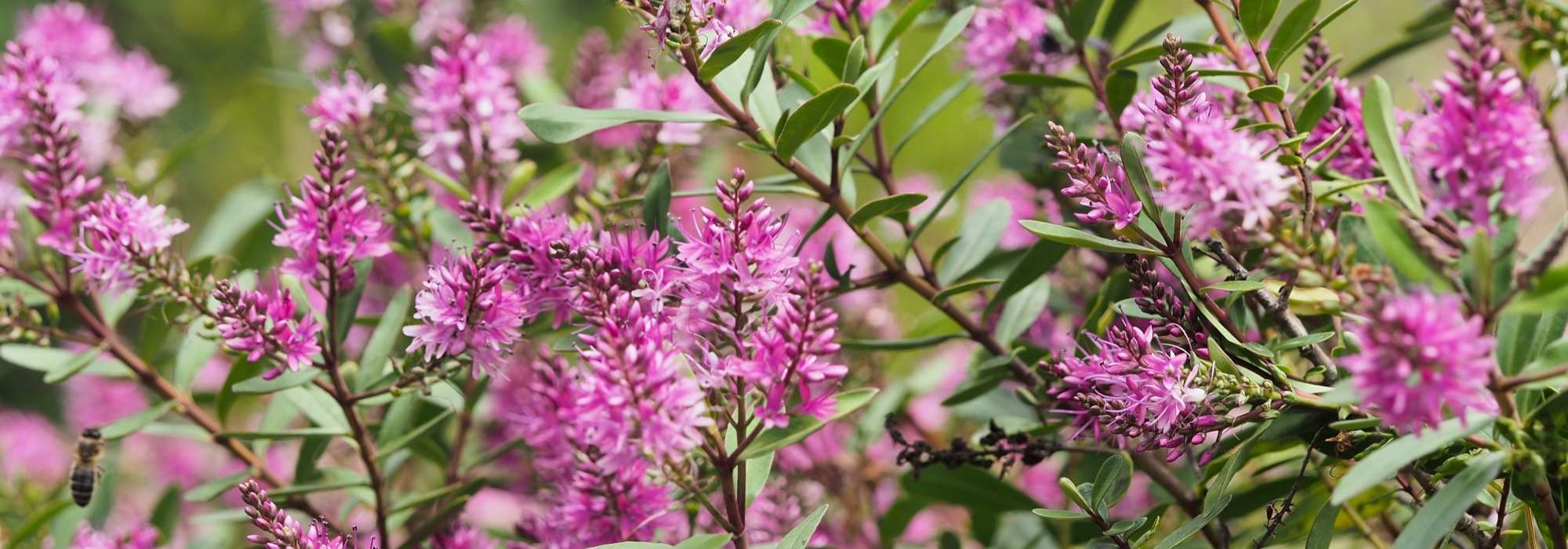
Hebe topiaria - Topiarist's hebe in pictures
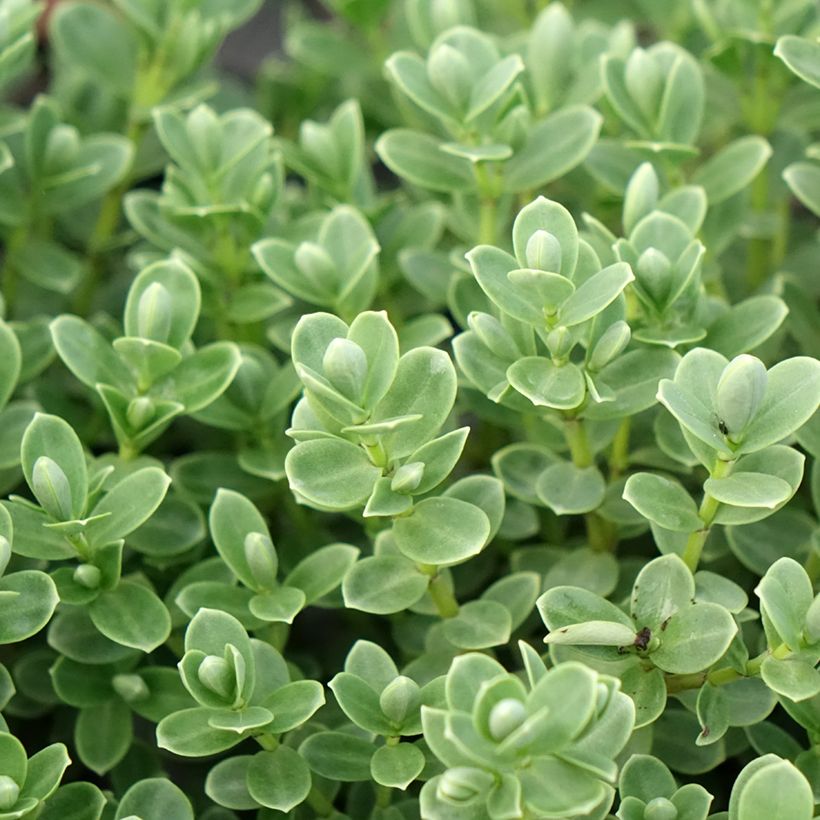
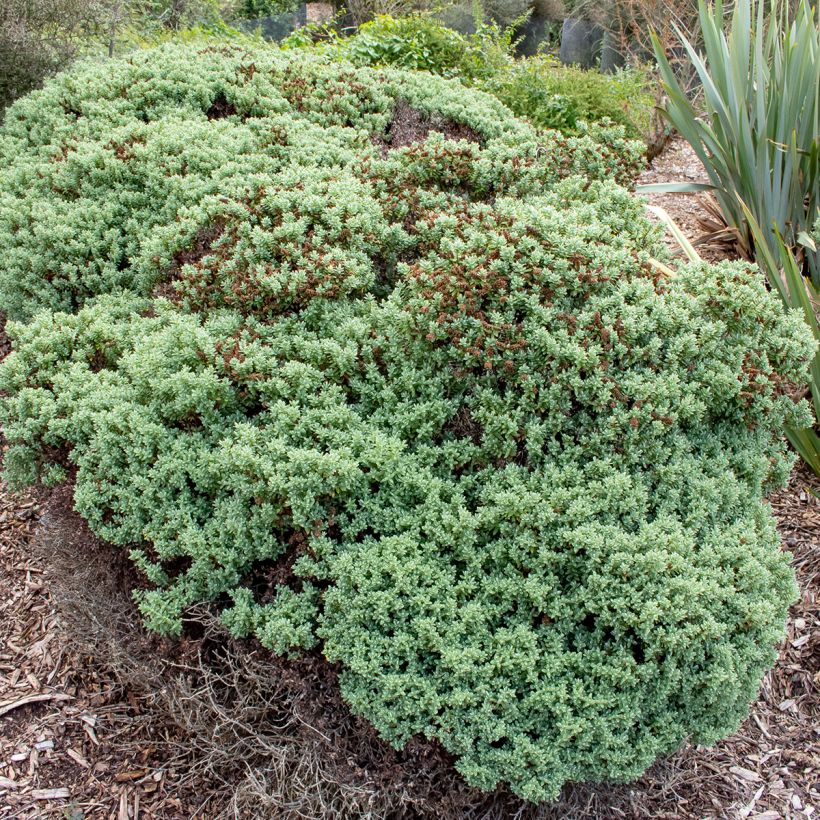
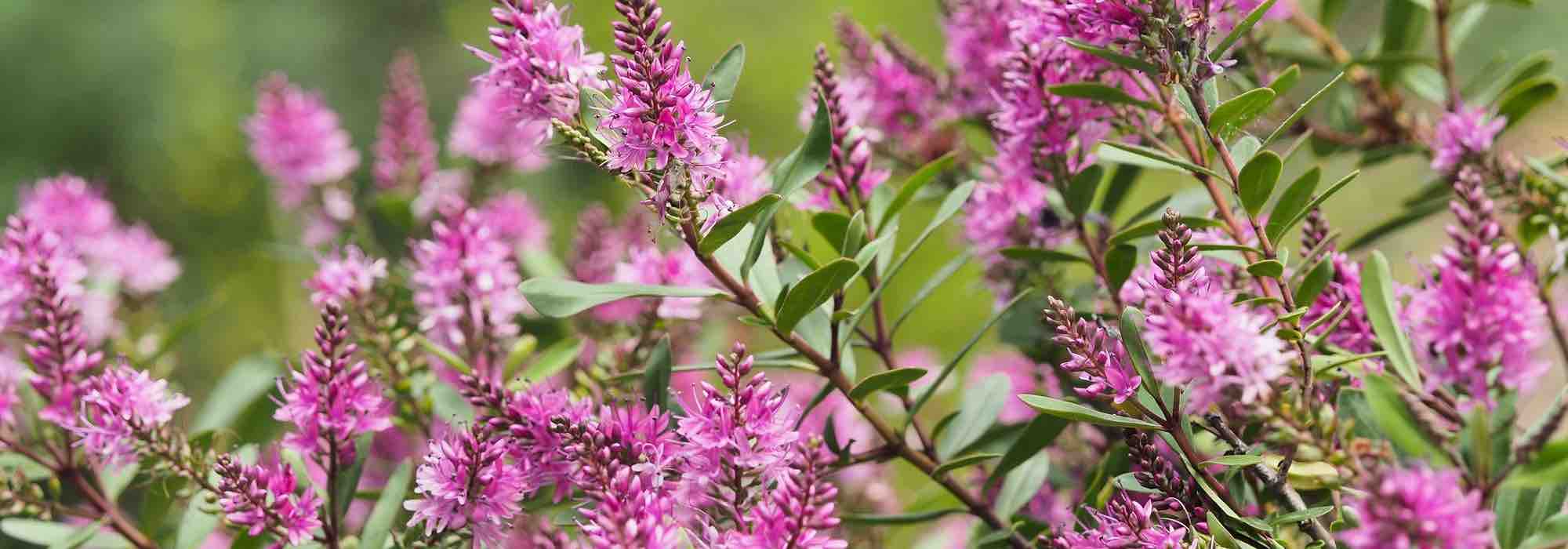
Plant habit
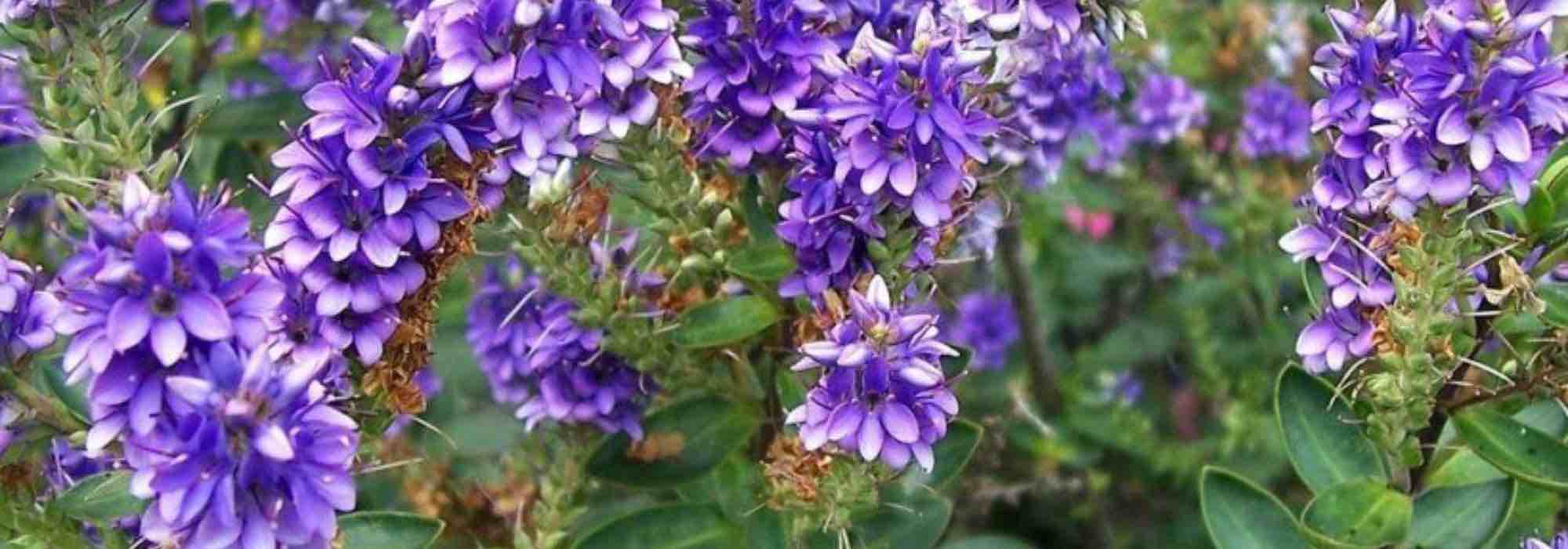
Flowering
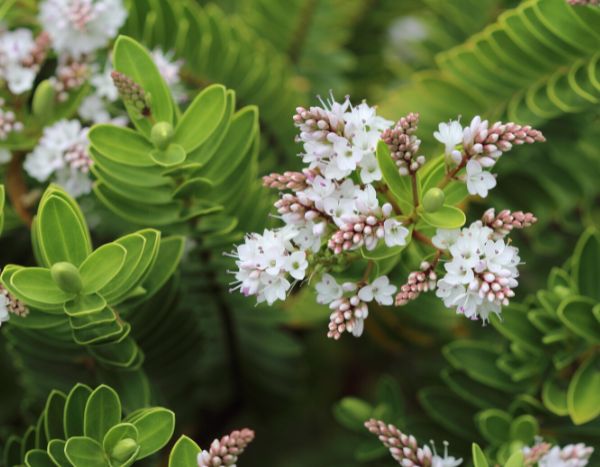
Foliage
Botanical data
Hebe
topiaria
Plantaginaceae
Box-leaved Hebe, Hebe Topiary, Shrubby Veronica
Veronica topiaria
Oceania
Planting and care
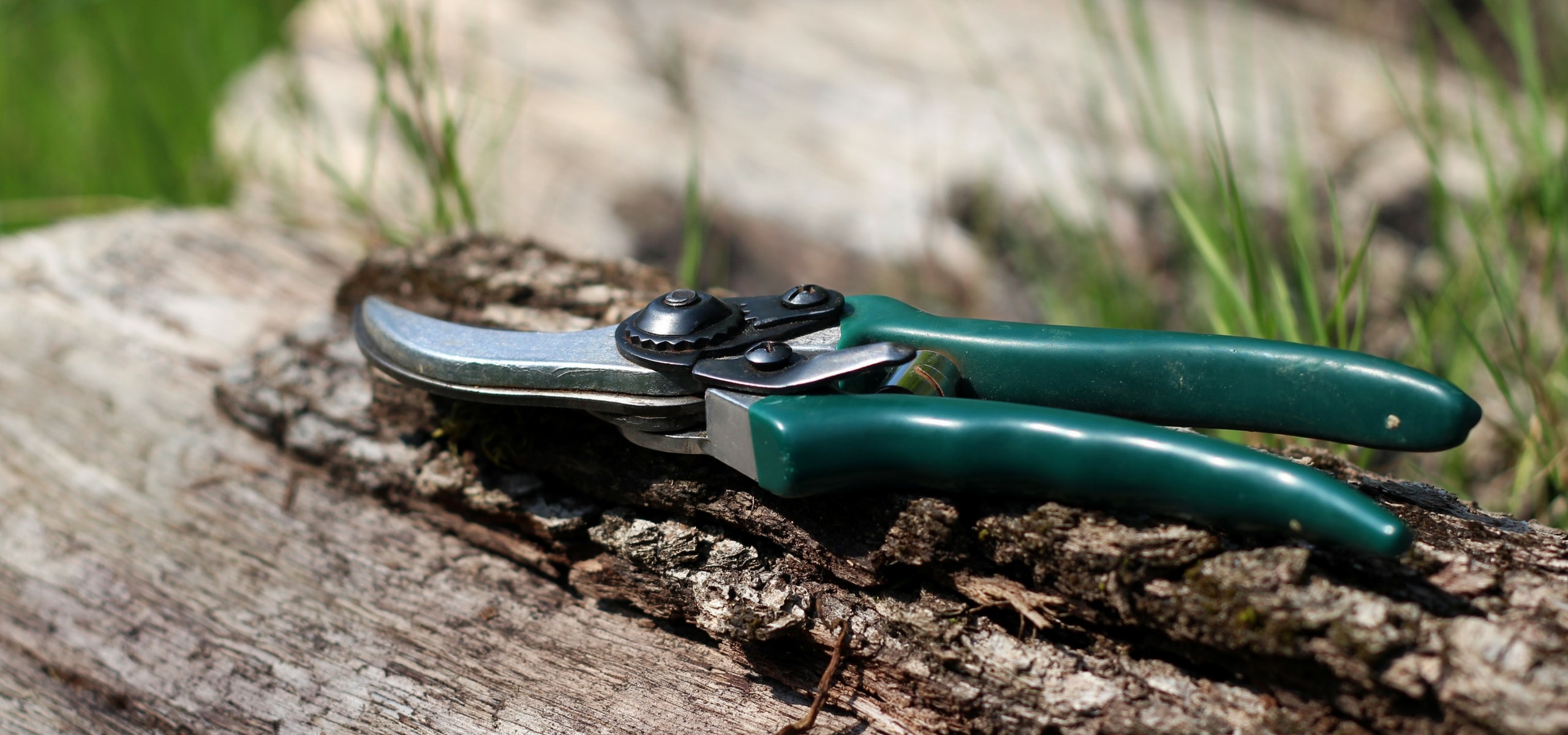
Easy to care for, Hebe topiaria prefers sunny situations and well-drained soils that do not retain too much water. It tolerates salt spray quite well and adapts very well to coastal gardens. Water it regularly during the first year to help it establish a strong root system, then in summer. Once established, it can withstand short periods of drought. Relatively hardy, it can resist temperatures down to -12°C / -15°C. In the coldest regions, it is advisable to protect it during winter with a breathable covering during periods of severe frost. After flowering, remove the faded inflorescences using pruning shears. This light trimming will help maintain a compact habit.
Planting period
Intended location
Care
Planting & care advice

This item has not been reviewed yet - be the first to leave a review about it.
Recently viewed products
Haven't found what you were looking for?
Hardiness is the lowest winter temperature a plant can endure without suffering serious damage or even dying. However, hardiness is affected by location (a sheltered area, such as a patio), protection (winter cover) and soil type (hardiness is improved by well-drained soil).
In temperate climates, pruning of spring-flowering shrubs (forsythia, spireas, etc.) should be done just after flowering.
Pruning of summer-flowering shrubs (Indian Lilac, Perovskia, etc.) can be done in winter or spring.
In cold regions as well as with frost-sensitive plants, avoid pruning too early when severe frosts may still occur.
The harvesting period indicated on our website applies to countries and regions in USDA zone 8 (France, England, Ireland, the Netherlands).
In colder areas (Scandinavia, Poland, Austria...) fruit and vegetable harvests are likely to be delayed by 3-4 weeks.
In warmer areas (Italy, Spain, Greece, etc.), harvesting will probably take place earlier, depending on weather conditions.
The sowing periods indicated on our website apply to countries and regions within USDA Zone 8 (France, UK, Ireland, Netherlands).
In colder areas (Scandinavia, Poland, Austria...), delay any outdoor sowing by 3-4 weeks, or sow under glass.
In warmer climes (Italy, Spain, Greece, etc.), bring outdoor sowing forward by a few weeks.
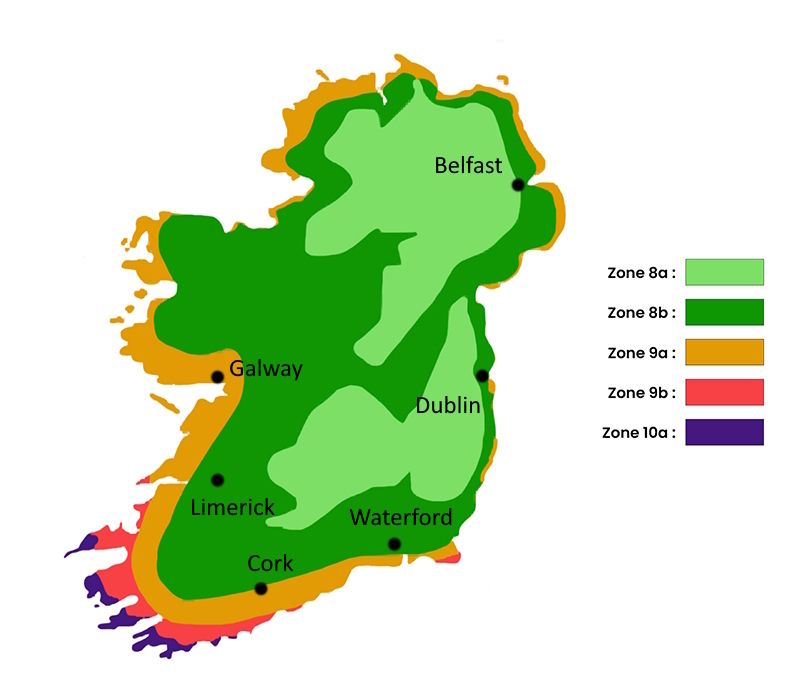
The planting period indicated on our website applies to regions in USDA Zone 9a (East Coast and Midlands: Dublin, Wexford, Waterford, Kilkenny, Portlaoise). It will vary depending on where you live:
- On the west coast and in the north-west (Galway, Limerick, Sligo, Donegal, Westport), delay planting by 1 to 2 weeks in spring and bring it forward by 1 to 2 weeks in autumn compared to the dates given, preferably choosing periods without strong winds.
- In the inland hills and plateaus (Wicklow Mountains, Macgillycuddy’s Reeks, Connemara, Killarney), it is best to plant in spring (April–May) or autumn (September–October), avoiding periods of waterlogged soil in winter and strong winds, which pose the main risk to newly planted trees in these areas.
The flowering period indicated on our website applies to regions in USDA Zone 9a, such as the East Coast and Midlands, including Dublin, Wexford, Waterford, Kilkenny and Portlaoise.
This will vary depending on where you live:
- On the west coast and in the northwest (Galway, Limerick, Sligo, Donegal and Westport), it will be delayed by one to two weeks compared to the given dates, due to stronger Atlantic winds and less spring sunshine.
- In the inland hills and plateaus (the Wicklow Mountains, the Macgillycuddy's Reeks, Connemara and Killarney), flowering will be delayed by two to three weeks. Flowering mainly occurs between May and July, with the limiting factors being less frost and more of the excessive humidity, strong winds and lack of sunshine that are characteristic of these areas.
Shipping country and language
Your country of residence may be:
Your country of residence is:
For a better user experience on our website, you can select:
Your shipping country:
-
 Austria
-
 Belgium
-
 Bosnia & Herzegovina
-
 Bulgaria
-
 Croatia
-
 Cyprus
-
 Czechia
-
 Denmark
-
 Estonia
-
 Finland
-
 France
-
 Germany
-
 Greece
-
 Hungary
-
 Iceland
-
 Ireland
-
 Italy
Italy
-
 Latvia
-
 Liechtenstein
-
 Lithuania
-
 Luxembourg
-
 Malta
Malta
-
 Netherlands
-
 Poland
-
 Portugal
-
 Romania
-
 Serbia
-
 Slovakia
-
 Slovenia
-
 Spain
Spain
-
 Sweden
-
 Switzerland
Language:
-
French
-
 English
-
Spanish
-
Italian
-
German
-
Portuguese
-
Dutch
-
Finnish
My Account
Hello
My wish lists
My cart
Log in / Register
Existing customer?
This form is protected by reCAPTCHA - the Google Privacy Policy and Terms of Service apply.
New customer?
Create an account to track your orders, access our customer service and, if you wish, make the most of our upcoming offers.