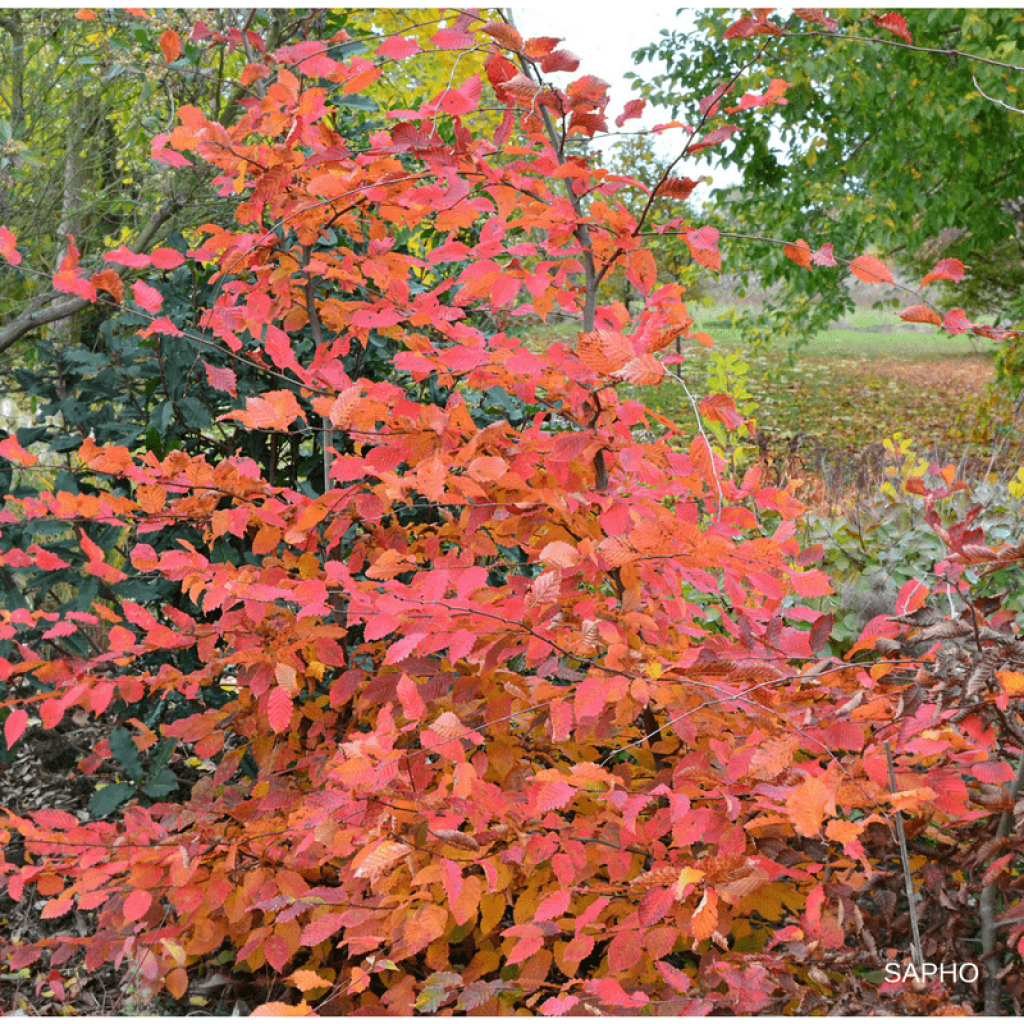
Carpinus betulus Rockhampton Red Lochglow - Hornbeam
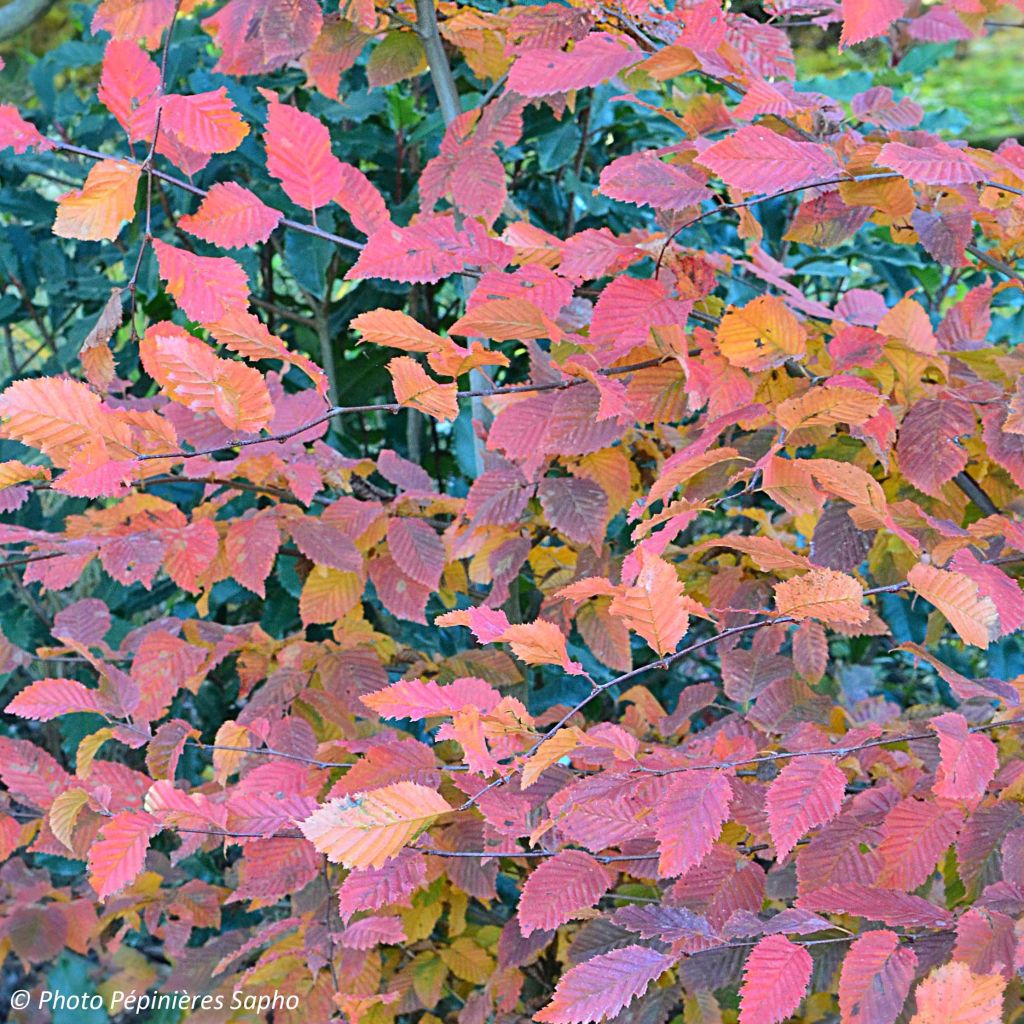
Carpinus betulus Rockhampton Red Lochglow - Hornbeam
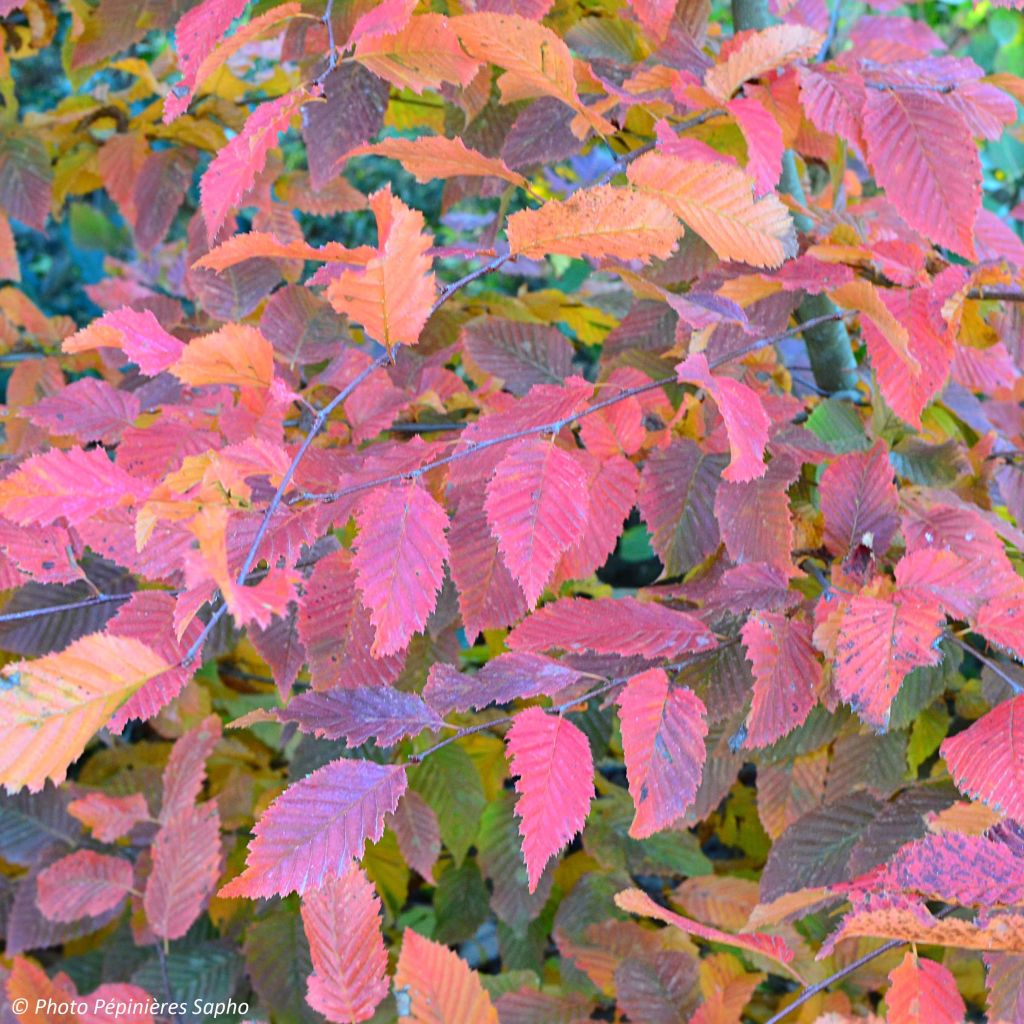
Carpinus betulus Rockhampton Red Lochglow - Hornbeam
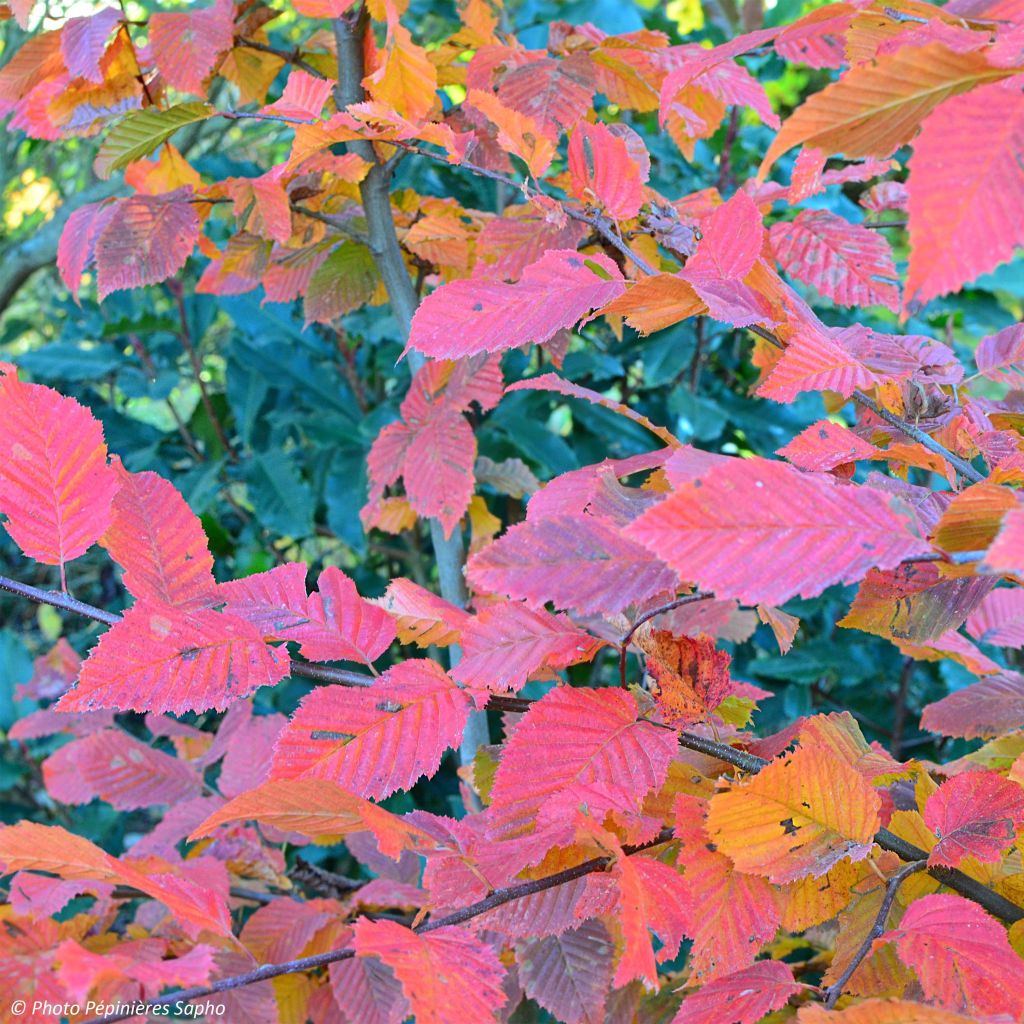
Carpinus betulus Rockhampton Red Lochglow - Hornbeam
Carpinus betulus Rockhampton Red Lochglow - Hornbeam
Carpinus betulus Rockhampton® 'Lochglow'
Common Hornbeam
Bought in the spring, I was eagerly awaiting autumn and here I discover a classic carpinus, yellow/brown, a single hedge, bought for nearly £50 with delivery. Curious effect, none are for sale anymore, perhaps a labeling mistake. Continuing my research, for £50 I could have gotten 5/6 of the same size at my local pruning.
Stéphane, 29/10/2020
Back-to-school special offer!
Get €10 off for every €50 you spend! And get up to €40 off on a single order.
How does it work?
1. Shop your favourites
Add your favourite plants to your basket. For every €50 you spend (excluding delivery charges, store credit and the plastic-free option), you’ll receive a €10 voucher.
€50 spent = €10 voucher
€100 spent = €20 voucher
€150 spent = €30 voucher
€200 spent = €40 voucher
2. Place your order
Once your basket reaches one of the spending thresholds, place your order. You can even choose your delivery date!
3. Receive your voucher
As soon as your order has been shipped, you’ll receive an email containing your personal voucher code and its value.
4. Use it on your next order
Your voucher is valid for 90 days from the date you receive it. It can be used once only, on a new order worth at least the value of the voucher, excluding delivery charges.
Please note: Vouchers can be combined with other offers, but cannot be split or refunded.
Why not try an alternative variety in stock?
View all →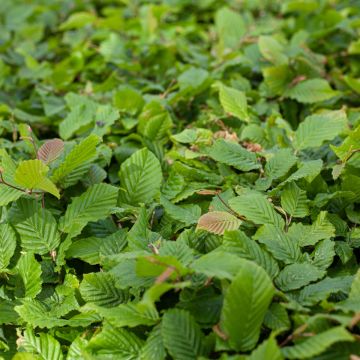
Available in 5 sizes
Available in 1 sizes
Available in 2 sizes
Available in 1 sizes
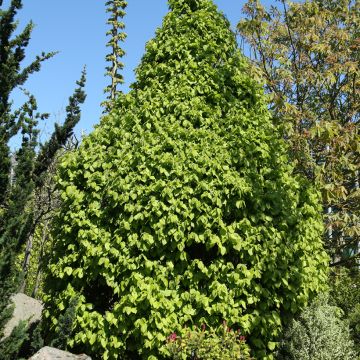
Available in 1 sizes
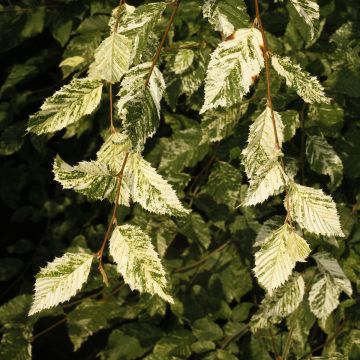
Available in 1 sizes
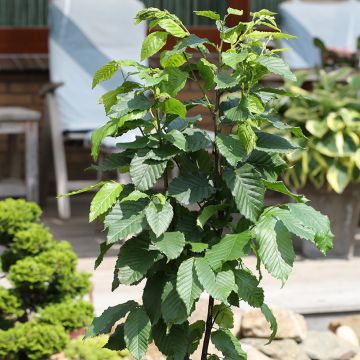
Available in 1 sizes
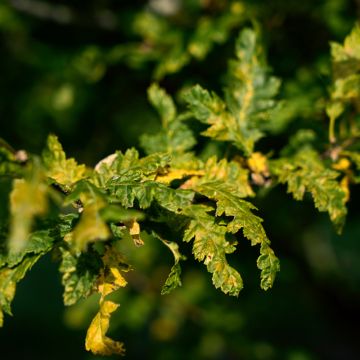
Available in 2 sizes
Available in 1 sizes
Available in 1 sizes
This plant carries a 24 months recovery warranty
More information
We guarantee the quality of our plants for a full growing cycle, and will replace at our expense any plant that fails to recover under normal climatic and planting conditions.
Does this plant fit my garden?
Set up your Plantfit profile →
Description
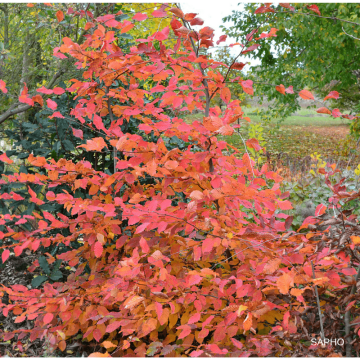
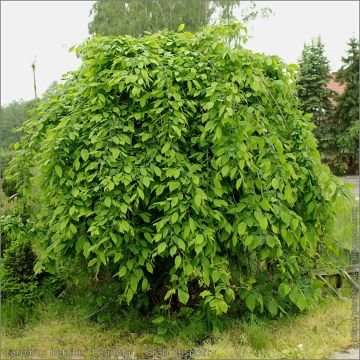
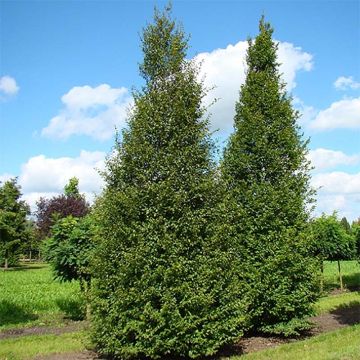
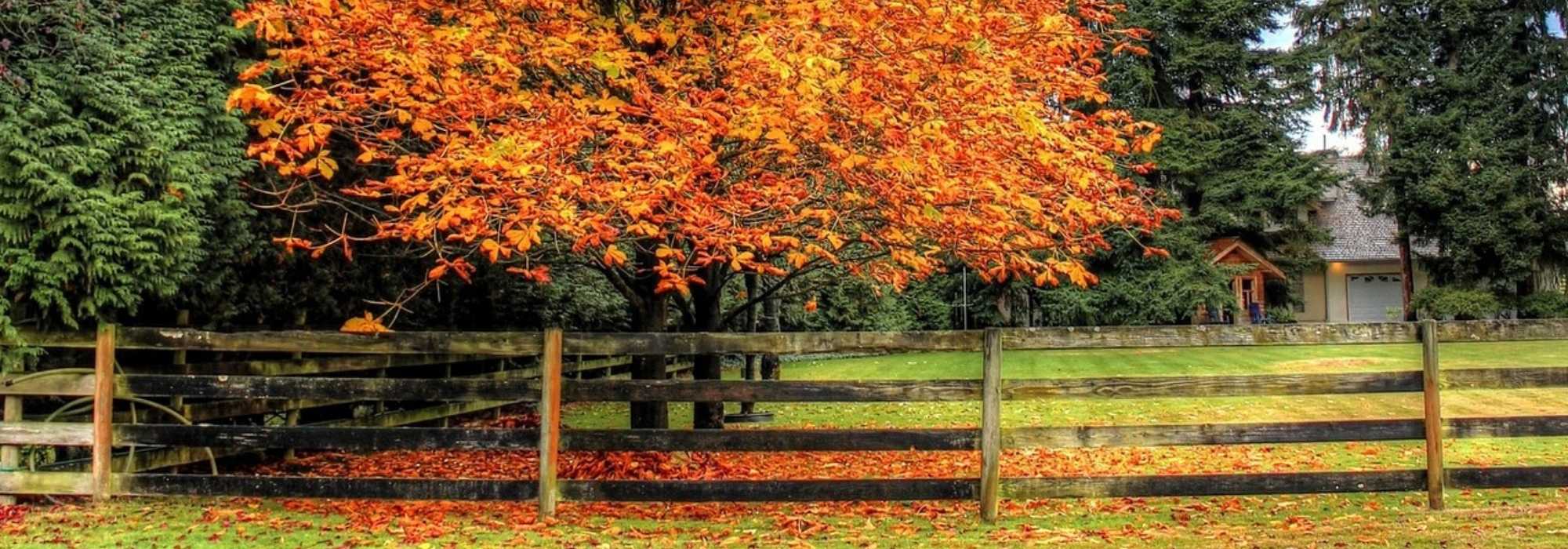
Carpinus betulus Rockhampton Red is an exceptional common hornbeam. It was noticed in autumn because its sumptuous foliage continued to blaze in bright orange and red, surrounded by the already-browned foliage of the hornbeam. If this pyramidal tree is often relegated to a supporting role, Rockhampton Red, with its unique autumn foliage, deserves to be honoured in a beautiful bocage hedge that it will liven up until late in the season, just as much as a Parrotia, a maple or a Liquidambar. Its wavy leaves retain their splendour for a long time before browning. Marcescent, they persist for a long time on almost black branches before falling. This hornbeam is as vigorous and resistant as the species type and truly easy to cultivate. It tolerates pruning well and bends to all whims.
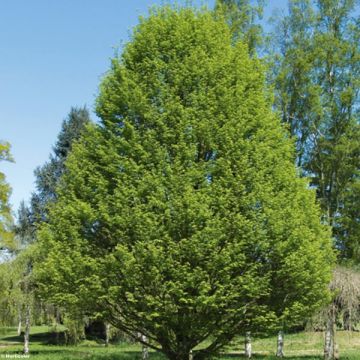
Carpinus betulus, sometimes called hornbeam, is a tree native to the forests of Europe and Asia Minor (Turkey and Ukraine) with a pyramidal habit that rounds off over time. Its straight trunk is covered with a pale grey to greenish-grey bark. It is smooth in young hornbeams and cracks as it ages. Its flowers are monoecious, either male or female, with a slightly different appearance and appearing in autumn (male catkins) and spring (female catkins). Carpinus betulus produces fruits in pendulous clusters, 3 to 6 cm (1.2 to 2.4 in) long, green in colour and turning yellow-brown when fully mature in late September. These fruits are called "samaras" and are toxic.
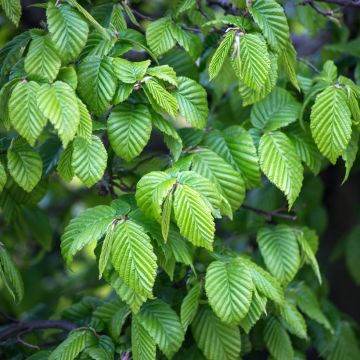
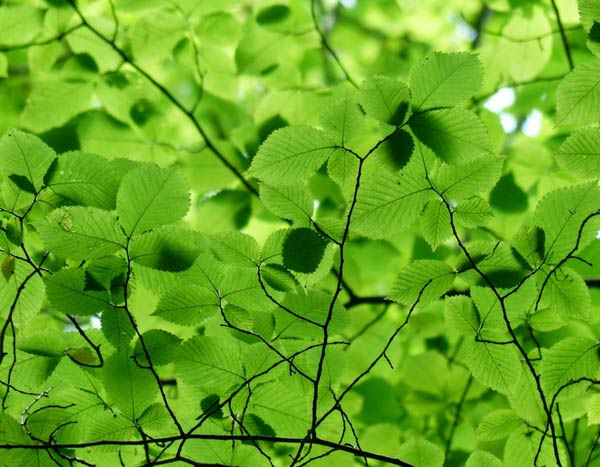
The Rockhampton Red 'Loch Glow' variety received a Special Mention from the jury at the Salon du Végétal in 2016. It stands out with its magnificent red and orange autumn foliage, which is very long-lasting. At maturity, this well-branched tree reaches a height of 20 m (65 ft 7 in) with a spread of 15 m (49 ft 2 in). Its slow growth allows it to achieve an annual growth of 50 cm (19.7 in) to 1 m (3 ft 4 in) under good growing conditions. Its very dark, grey-brown-black branches bear compound leaves that are ovate and doubly toothed, measuring 7 to 12 cm (2.8 to 4.7 in) long. Its colour is a bright green from spring to summer, turning to shades of red and vibrant orange from the end of September to November, which give it all its charm and uniqueness.
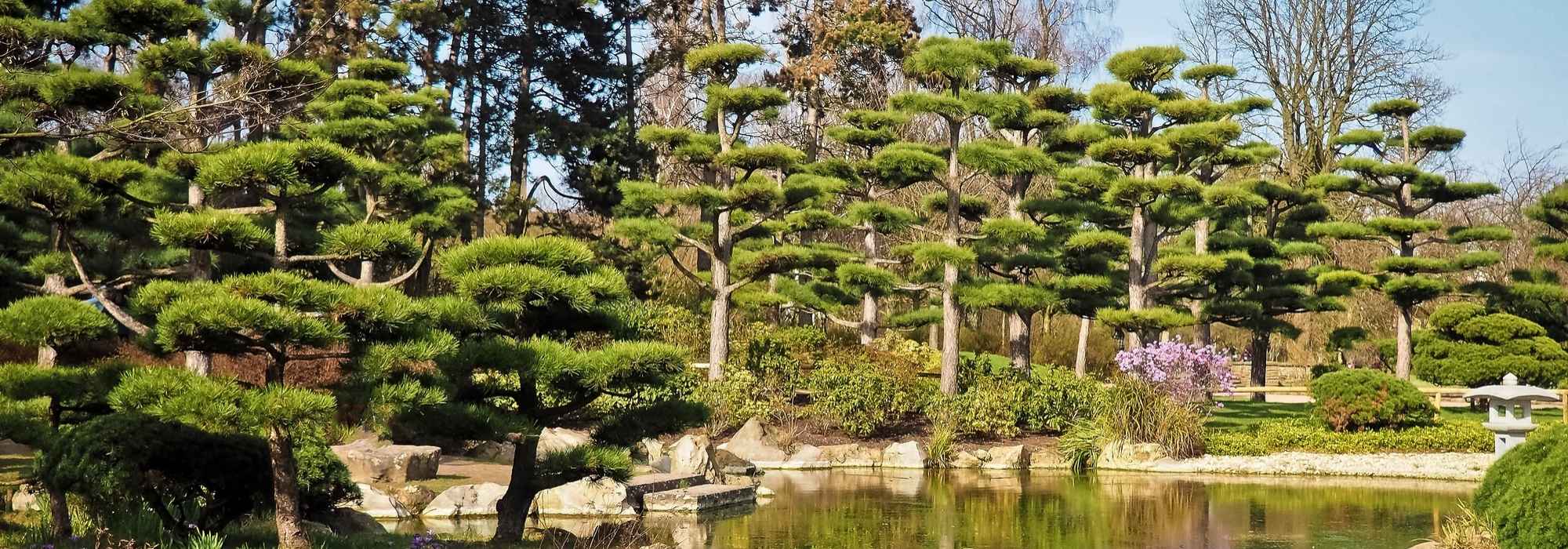
Rockhampton Red is a very hardy and undemanding tree, adapting to any soil that is sufficiently deep, even limestone and occasionally dry soil. It is most commonly used in hedges, whether trimmed or free, as a windbreak, for example, as well as in isolated gardens. It can be combined with other shrubs and trees with autumn foliage, such as smoke bushes, deciduous euonymus, Persian ironwood, or Montpellier maple. The orange hips of English roses Morning Mist or Fighting Temeraire should accompany its flamboyant branches until the first frost.
The wood of the common hornbeam is used for heating and papermaking, as well as tools and toys for children. It is a plant whose lifespan rarely exceeds 100 years in the wild.
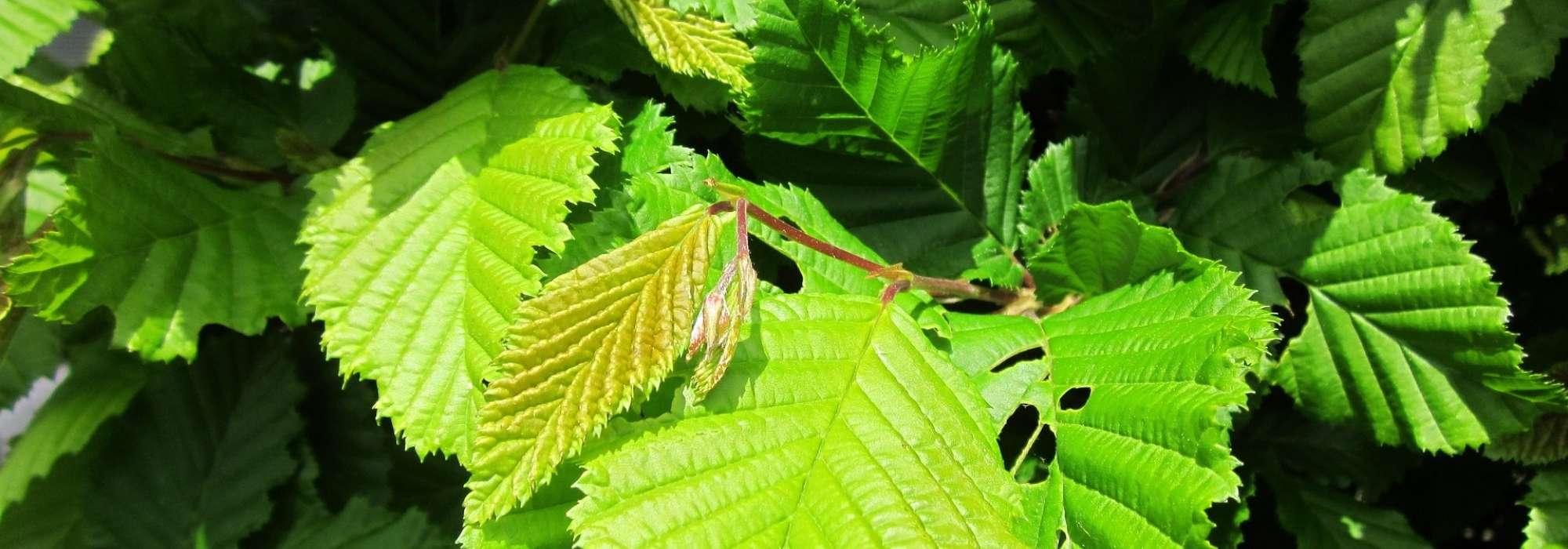
Carpinus betulus Rockhampton Red Lochglow - Hornbeam in pictures
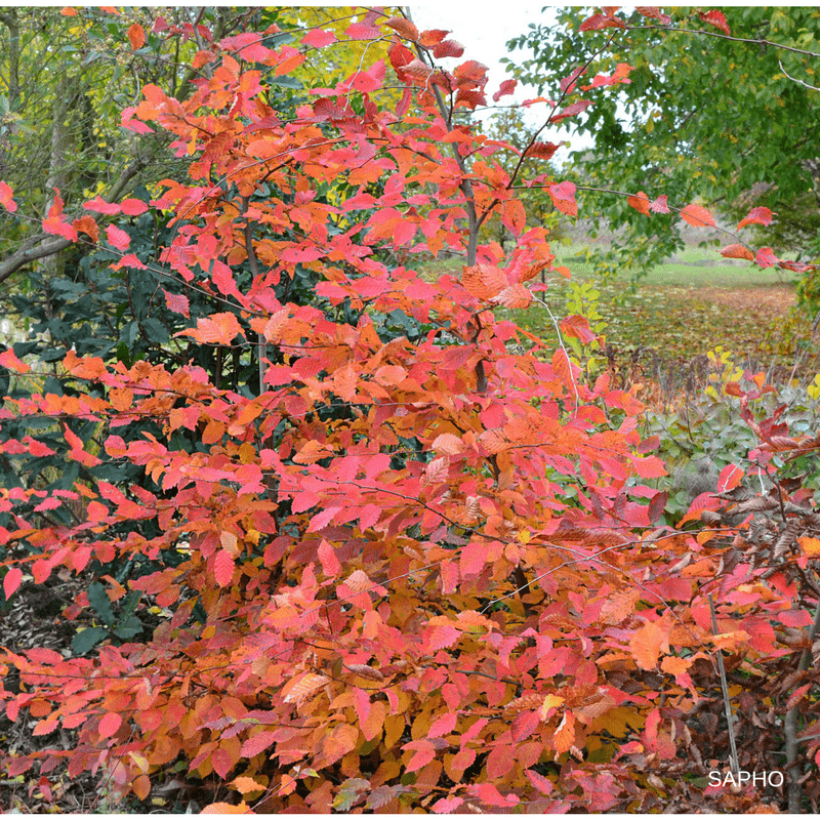
Plant habit
Flowering
Foliage
Safety measures
Botanical data
Carpinus
betulus
Rockhampton® 'Lochglow'
Betulaceae
Common Hornbeam
Cultivar or hybrid
atteinterespiratoire
Cette plante peut entraîner des symptômes allergiques.
Evitez de la planter si vous ou vos proches souffrez de rhinite saisonnière ("rhume des foins").
Davantage d'informations sur https://plantes-risque.info
Planting and care
The Rockhampton Red Hornbeam particularly enjoys cool, semi-shaded areas but can also thrive in gentle sunlight. Place it sheltered from cold and drying winds in any type of soil as long as it is well drained. However, it dislikes acidic soils. The Common Hornbeam withstands cold and heat well but cannot tolerate summer heatwaves, especially when the soil lacks depth. It thrives in a continental climate. It may be susceptible to coral disease and can be invaded by caterpillars and aphids.
Planting period
Intended location
Care
Planting & care advice
-
-
-

-
-
-
-
-
-
, onOrder confirmed
Reply from on Promesse de fleurs
Recently viewed products
Haven't found what you were looking for?
Hardiness is the lowest winter temperature a plant can endure without suffering serious damage or even dying. However, hardiness is affected by location (a sheltered area, such as a patio), protection (winter cover) and soil type (hardiness is improved by well-drained soil).
In temperate climates, pruning of spring-flowering shrubs (forsythia, spireas, etc.) should be done just after flowering.
Pruning of summer-flowering shrubs (Indian Lilac, Perovskia, etc.) can be done in winter or spring.
In cold regions as well as with frost-sensitive plants, avoid pruning too early when severe frosts may still occur.
The harvesting period indicated on our website applies to countries and regions in USDA zone 8 (France, England, Ireland, the Netherlands).
In colder areas (Scandinavia, Poland, Austria...) fruit and vegetable harvests are likely to be delayed by 3-4 weeks.
In warmer areas (Italy, Spain, Greece, etc.), harvesting will probably take place earlier, depending on weather conditions.
The sowing periods indicated on our website apply to countries and regions within USDA Zone 8 (France, UK, Ireland, Netherlands).
In colder areas (Scandinavia, Poland, Austria...), delay any outdoor sowing by 3-4 weeks, or sow under glass.
In warmer climes (Italy, Spain, Greece, etc.), bring outdoor sowing forward by a few weeks.
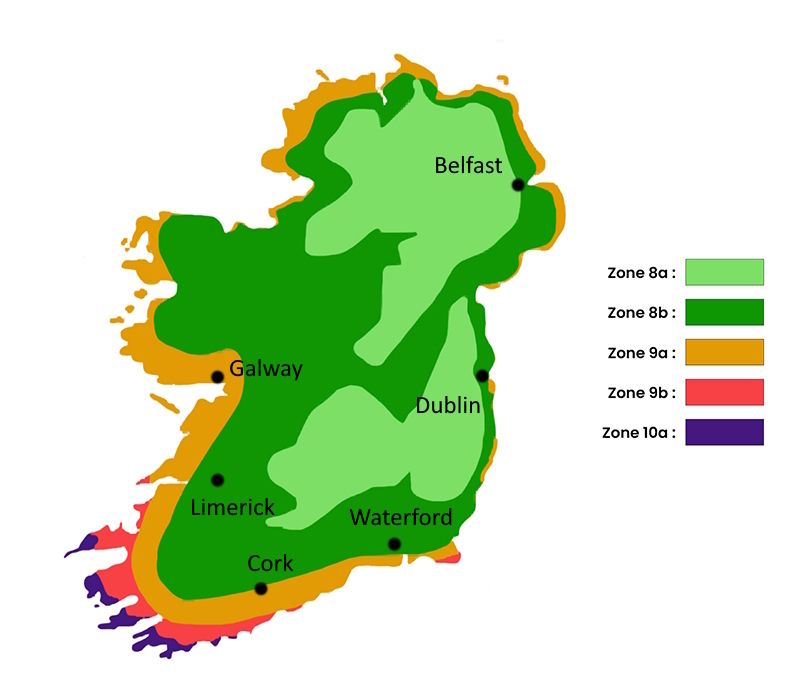
The planting period indicated on our website applies to regions in USDA Zone 9a (East Coast and Midlands: Dublin, Wexford, Waterford, Kilkenny, Portlaoise). It will vary depending on where you live:
- On the west coast and in the north-west (Galway, Limerick, Sligo, Donegal, Westport), delay planting by 1 to 2 weeks in spring and bring it forward by 1 to 2 weeks in autumn compared to the dates given, preferably choosing periods without strong winds.
- In the inland hills and plateaus (Wicklow Mountains, Macgillycuddy’s Reeks, Connemara, Killarney), it is best to plant in spring (April–May) or autumn (September–October), avoiding periods of waterlogged soil in winter and strong winds, which pose the main risk to newly planted trees in these areas.
The flowering period indicated on our website applies to regions in USDA Zone 9a, such as the East Coast and Midlands, including Dublin, Wexford, Waterford, Kilkenny and Portlaoise.
This will vary depending on where you live:
- On the west coast and in the northwest (Galway, Limerick, Sligo, Donegal and Westport), it will be delayed by one to two weeks compared to the given dates, due to stronger Atlantic winds and less spring sunshine.
- In the inland hills and plateaus (the Wicklow Mountains, the Macgillycuddy's Reeks, Connemara and Killarney), flowering will be delayed by two to three weeks. Flowering mainly occurs between May and July, with the limiting factors being less frost and more of the excessive humidity, strong winds and lack of sunshine that are characteristic of these areas.
Shipping country and language
Your country of residence may be:
Your country of residence is:
For a better user experience on our website, you can select:
Your shipping country:
-
 Austria
-
 Belgium
-
 Bosnia & Herzegovina
-
 Bulgaria
-
 Croatia
-
 Cyprus
-
 Czechia
-
 Denmark
-
 Estonia
-
 Finland
-
 France
-
 Germany
-
 Greece
-
 Hungary
-
 Iceland
-
 Ireland
-
 Italy
Italy
-
 Latvia
-
 Liechtenstein
-
 Lithuania
-
 Luxembourg
-
 Malta
Malta
-
 Netherlands
-
 Poland
-
 Portugal
-
 Romania
-
 Serbia
-
 Slovakia
-
 Slovenia
-
 Spain
Spain
-
 Sweden
-
 Switzerland
Language:
-
French
-
 English
-
Spanish
-
Italian
-
German
-
Portuguese
-
Dutch
-
Finnish
My Account
Hello
My wish lists
My cart
Log in / Register
Existing customer?
This form is protected by reCAPTCHA - the Google Privacy Policy and Terms of Service apply.
New customer?
Create an account to track your orders, access our customer service and, if you wish, make the most of our upcoming offers.