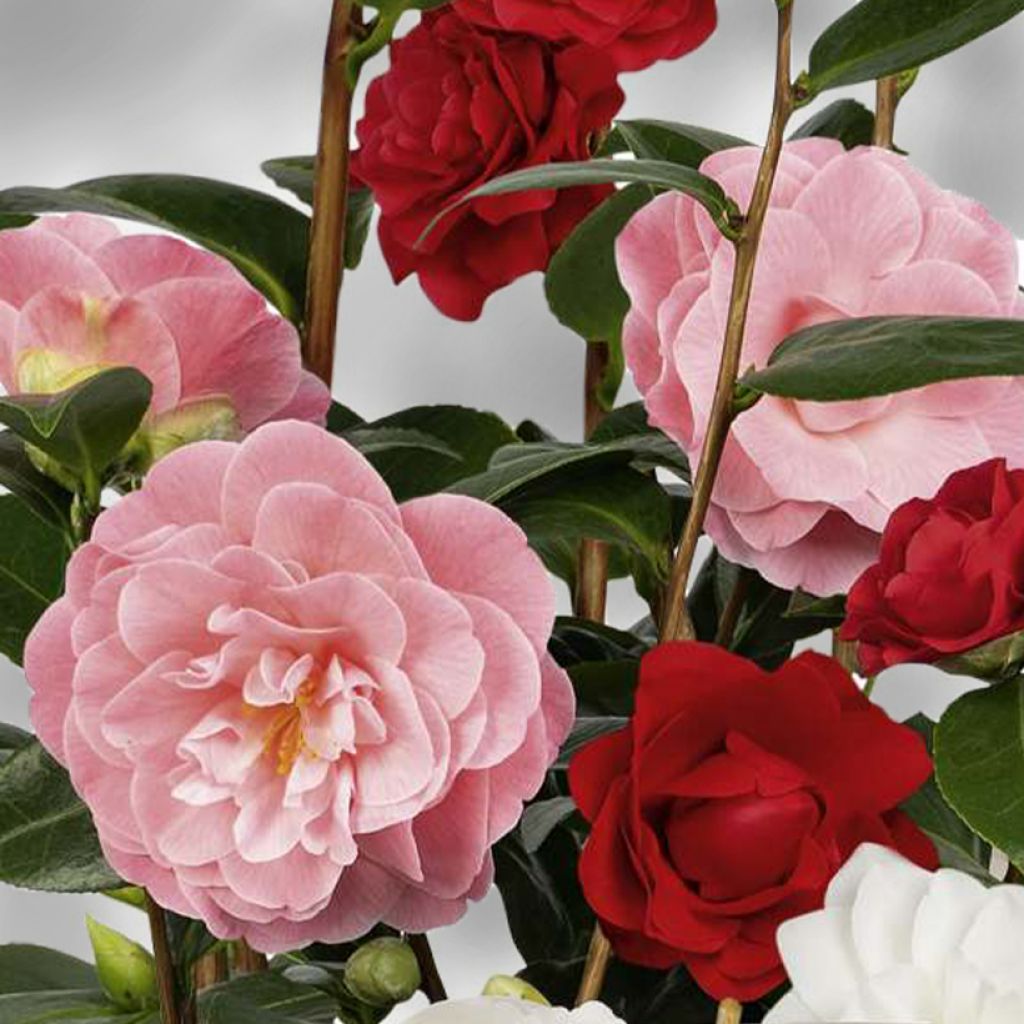
Camellia japonica Three Sisters (Red, Pink White)
Camellia japonica Three Sisters (Red, Pink White)
Camellia japonica Three Sisters ® (Red, Pink White)
Japanese Camellia, Rose of winter
Back-to-school special offer!
Get €10 off for every €50 you spend! And get up to €40 off on a single order.
How does it work?
1. Shop your favourites
Add your favourite plants to your basket. For every €50 you spend (excluding delivery charges, store credit and the plastic-free option), you’ll receive a €10 voucher.
€50 spent = €10 voucher
€100 spent = €20 voucher
€150 spent = €30 voucher
€200 spent = €40 voucher
2. Place your order
Once your basket reaches one of the spending thresholds, place your order. You can even choose your delivery date!
3. Receive your voucher
As soon as your order has been shipped, you’ll receive an email containing your personal voucher code and its value.
4. Use it on your next order
Your voucher is valid for 90 days from the date you receive it. It can be used once only, on a new order worth at least the value of the voucher, excluding delivery charges.
Please note: Vouchers can be combined with other offers, but cannot be split or refunded.
Home or relay delivery (depending on size and destination)
Important: You may be charged customs duties by your country’s customs authorities upon delivery.
Schedule delivery date,
and select date in basket
This plant carries a 24 months recovery warranty
More information
We guarantee the quality of our plants for a full growing cycle, and will replace at our expense any plant that fails to recover under normal climatic and planting conditions.
Does this plant fit my garden?
Set up your Plantfit profile →
Description
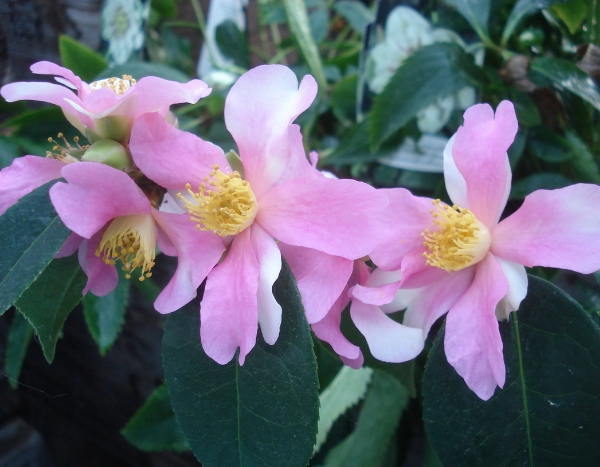
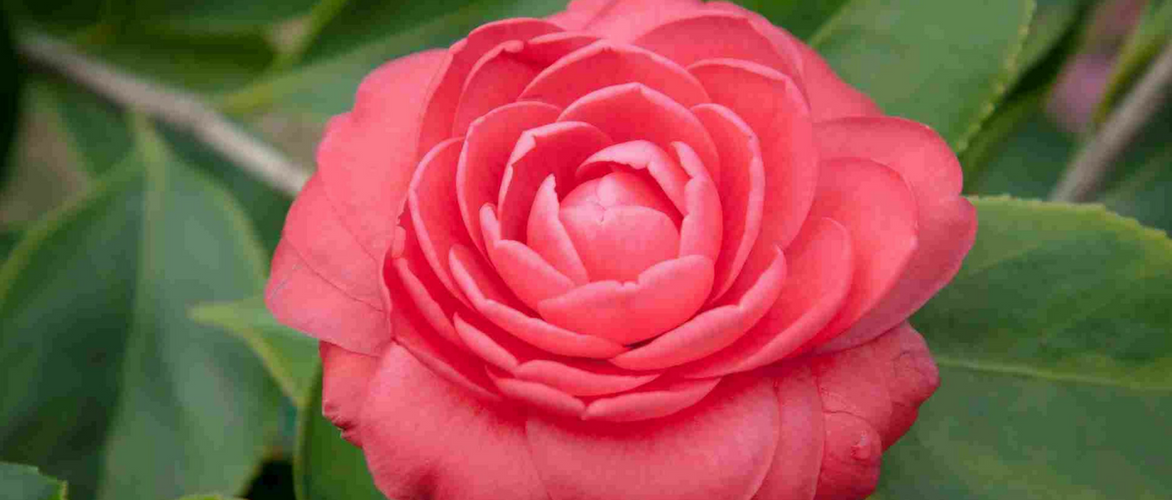
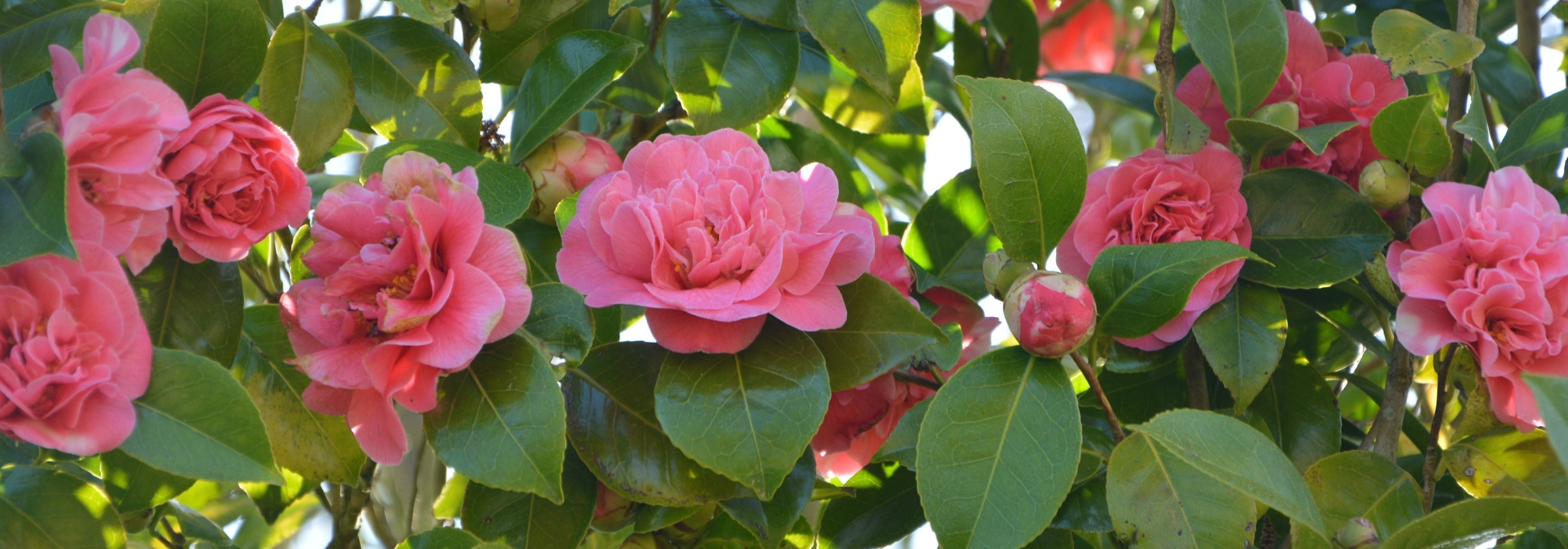
Camellia japonica 'Three Sisters' is a selection of three Camellia varieties that are as aesthetically pleasing as they are complementary. Grouped together in the same pot, where their dark green glossy foliage blends together, they offer a stunning display in spring when their flower buds open to reveal refined double flowers. The intense red of one variety is matched by the soft pink of another, while the pure white of the third subtly balances this contrast of colours. A beautiful slow-growing composition that can be kept in a container for many years. It can also be planted in the garden, for example near a shaded entrance.
Camellia japonica belongs to the family Theaceae, which includes around ten or twenty genera depending on the classification, the most well-known in ornamental gardening being Camellia, and the most economically important species being Camellia sinensis, which produces tea. Native to Japan, Korea, and China, Camellia japonica forms small trees 6 to 9 metres (19 to 29 feet) high in these regions, producing 5-petaled flowers, usually red in colour. Selected for hundreds of years in Japan, where single flowers are favoured, and in China where they have focused on double flowers, Camellia japonica was introduced to Europe around 1745 and then spread worldwide, sparking the passion of collectors as well as enthusiasts and selective nurserymen. The species now has countless cultivars, with single, semi-double, or highly double flowers, monochrome or bicoloured, to the point where choosing becomes difficult because space is limited!
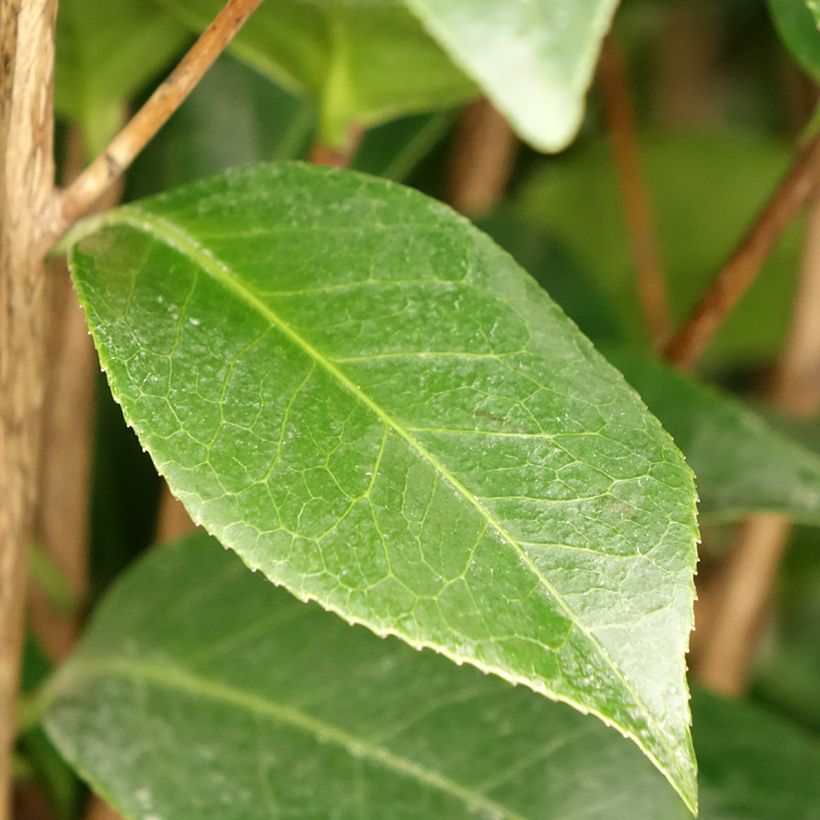
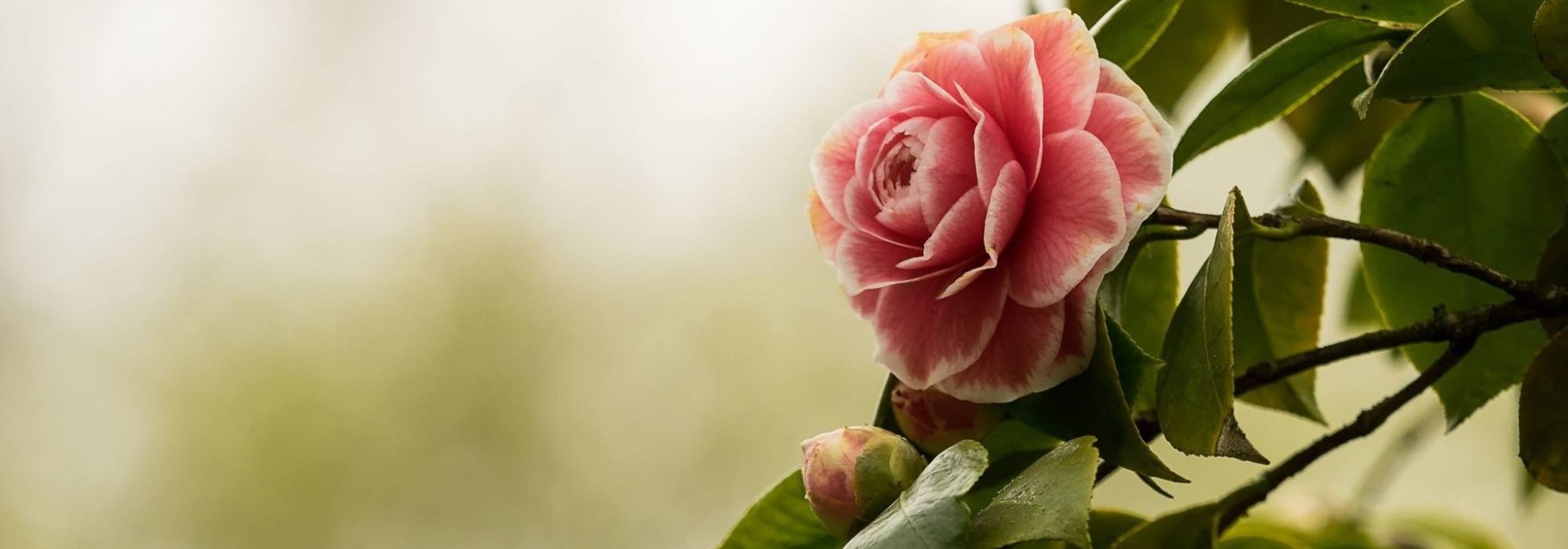
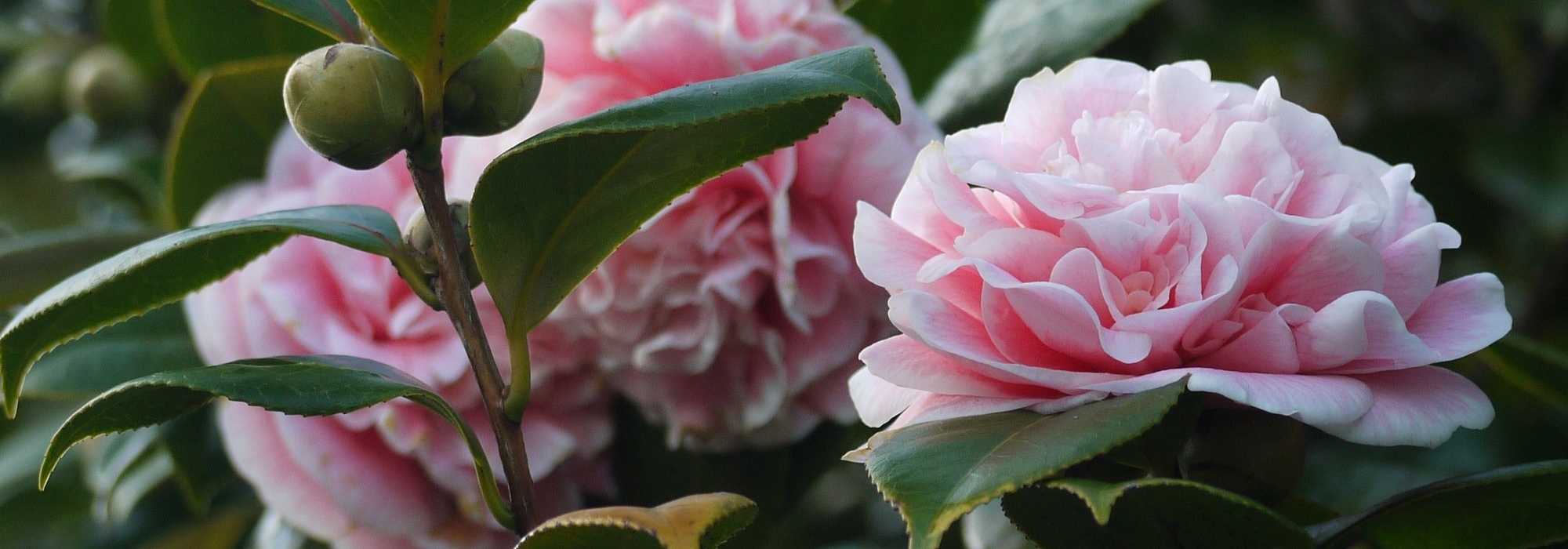
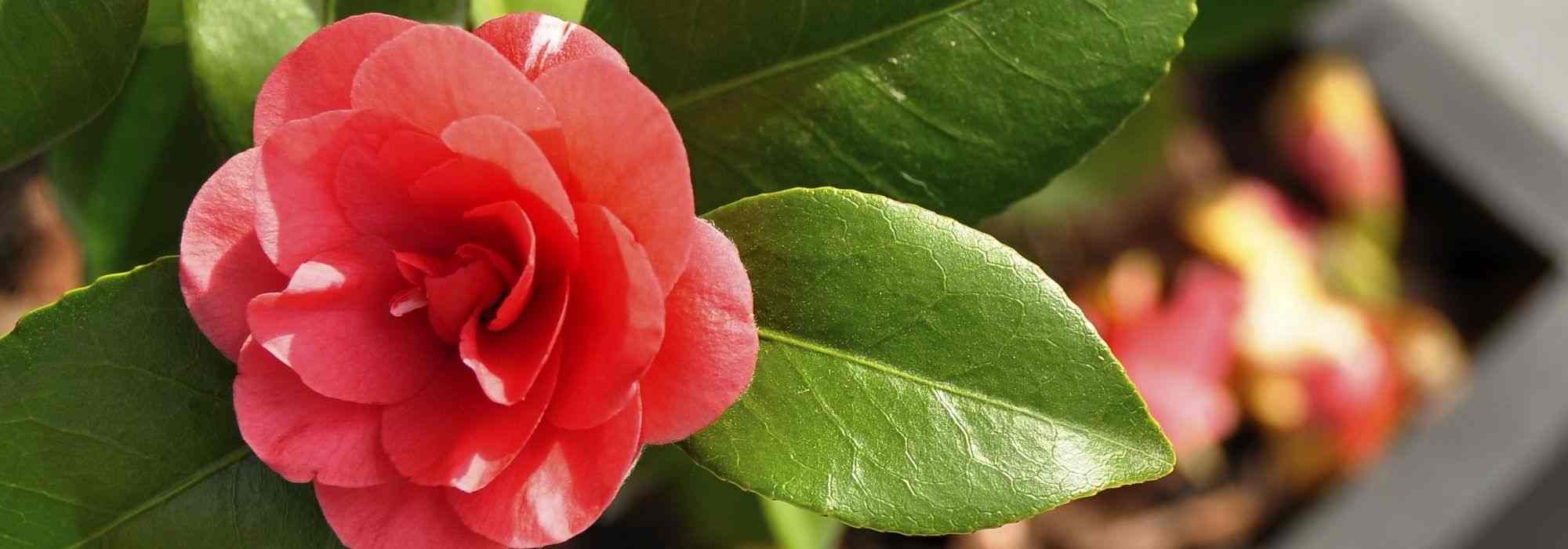
'Three Sisters' simplifies the choice by offering three particularly decorative varieties in the same pot. Each one offers flowers of a different colour: a vibrant red, a tender pink, and a pure white, which are the three main colours of this species. In March and April this composition is adorned with magnificent double flowers, with a somewhat geometric design, reminiscent of certain old roses or peonies. With a diameter of about 7 to 8 cm (3 in), they enchant the budding spring for several weeks, beautifully decorating a terrace or balcony. The foliage of these varieties consists of medium-sized elliptical leaves with pointed tips, of a beautiful dark green colour with a glossy appearance. This dark background provides a perfect setting for the flowers, and when they have disappeared it continues to be ornamental throughout the rest of the year.
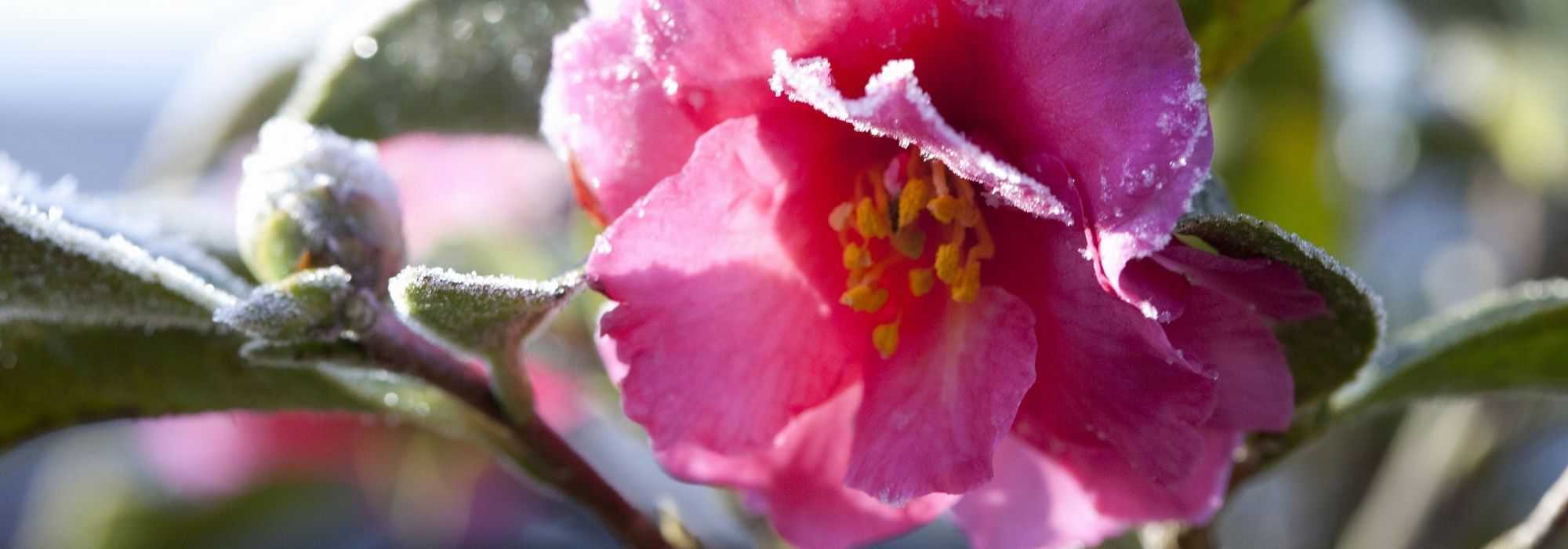
These varieties have been carefully selected for their good resistance to diseases or insects, as well as their compatibility with each other. Comfortable in a coastal climate, Japanese Camellia suffers in drought and heatwaves. It can withstand cold temperatures down to -10°C (14 °F) without any problems, even -15°C, but the flower buds can be damaged in subzero temperatues, so be careful of late frosts.
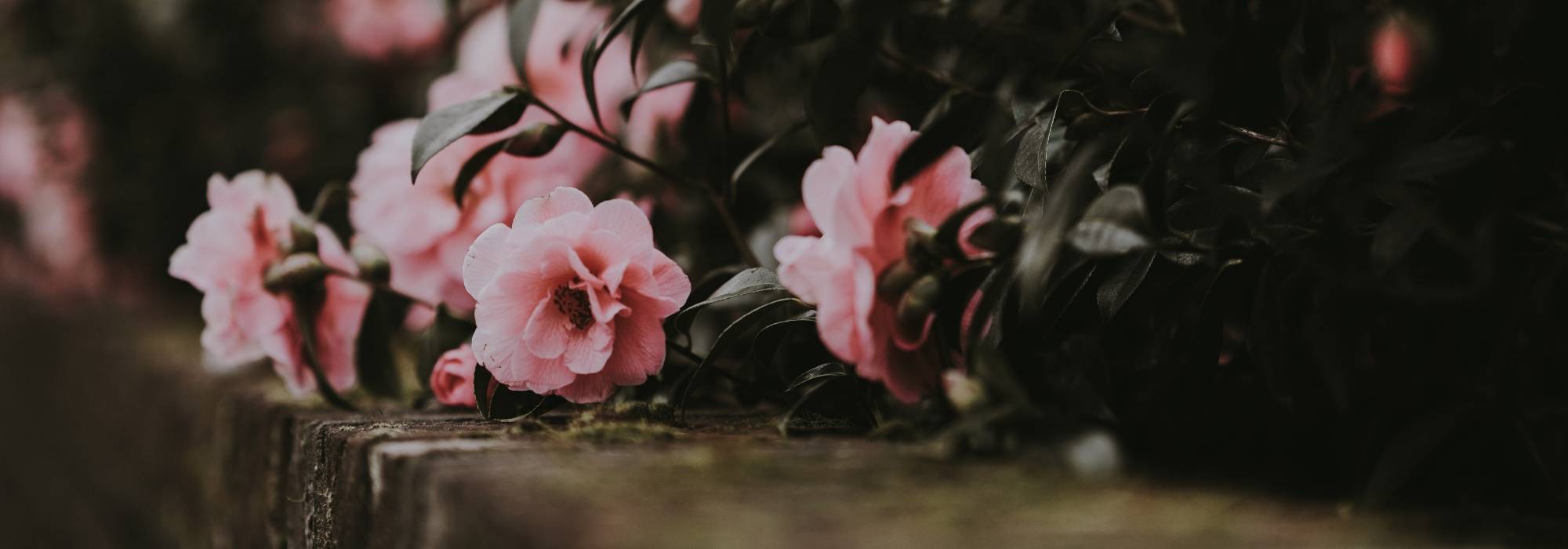
The 'Three Sisters' Japanese Camellia will be perfect for enhancing a living space such as a terrace or large balcony. You can keep it in reasonable proportions by lightly pruning after flowering once it reaches about 2 m (6 ft) in height. Alternatively plant it in open ground in the garden, where it can then reach its mature size (4 to 5 m (13 to 16 ft) provided you are patient). Plant it in a bed of acid-loving plants, such as Rhododendrons, which offer different colours such as purple or orange, or alongside the colourful and finely cut foliage of Japanese Maples to create a Japanese-style scene. If you keep it on the terrace, play with your options by adding dwarf fruit trees. As well as the aesthetics you can enjoy delicious fruits, and even combine both with the Dwarf Griotella Cherry Tree, which will delight you with its light white flowers, in bloom at the same time as your camellias, and then with its red fruits that are both decorative and succulent!
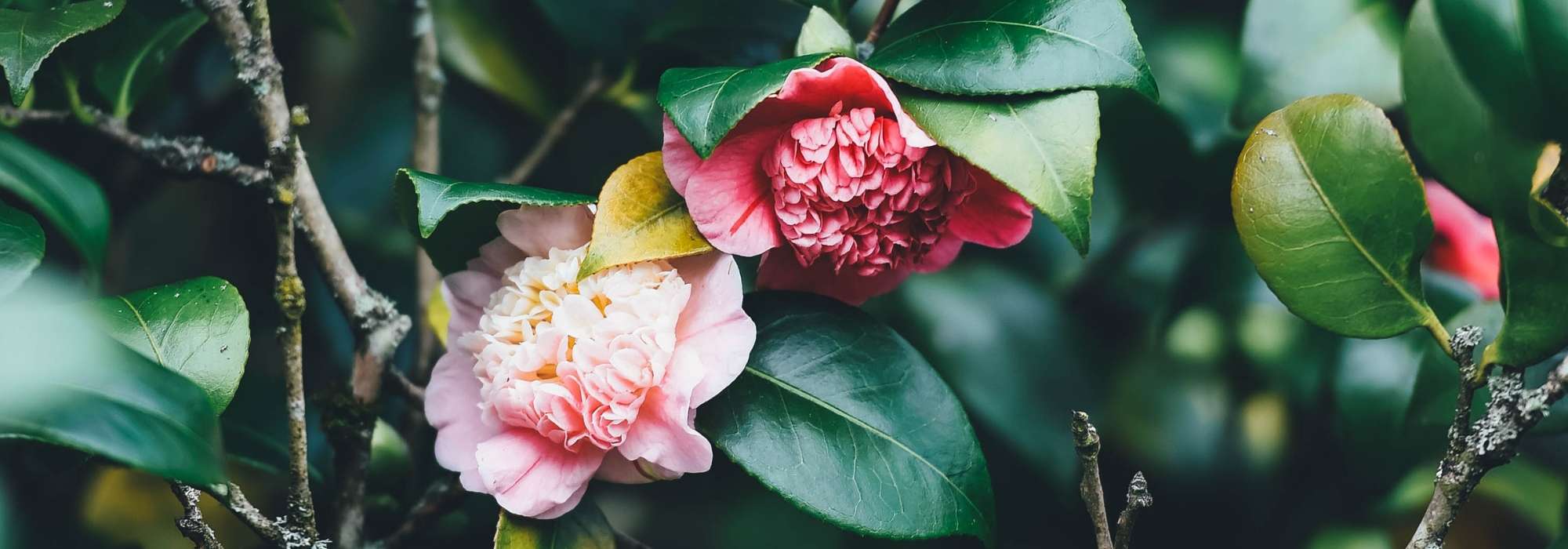
Camellia japonica Three Sisters (Red, Pink White) in pictures
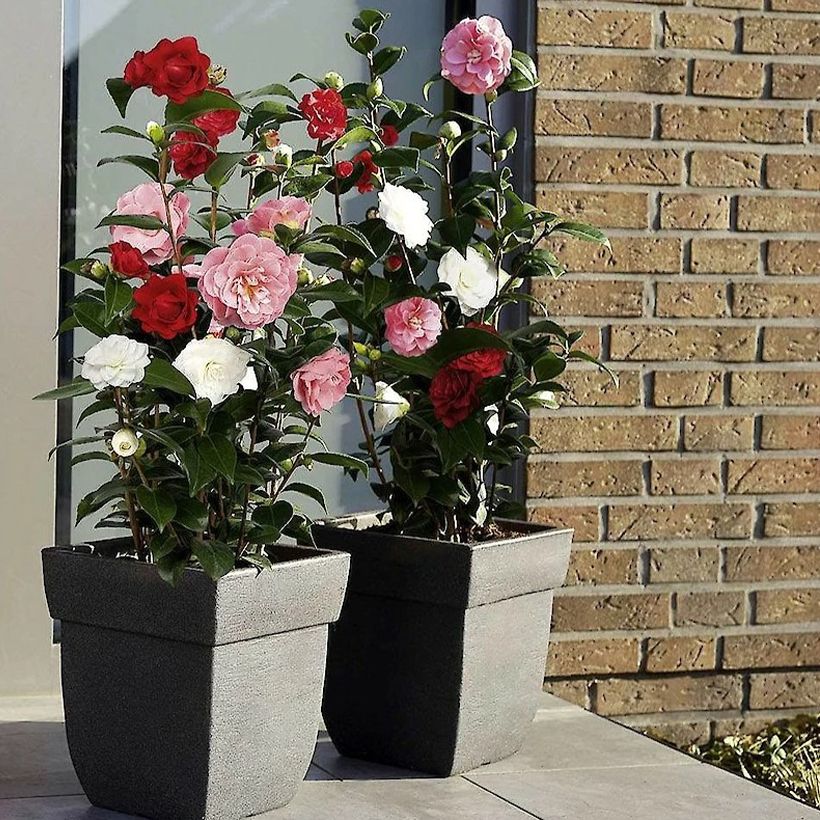
Plant habit
Flowering
Foliage
Planting and care
Camellia japonica tolerates the sun in a favourable climate, such as moderately warm coastal regions, but it is in partial shade, protected from the scorching sun and sheltered from strong winds, that it will thrive best. This plant dreads dry and windy atmospheres and does not tolerate heatwaves. Pot cultivation brings a greater risk of dryness than in open ground, since the roots cannot penetrate deeply while the temperature inside the pot can heat up in summer and harm the roots.
It is therefore advisable to install your Three Sisters selection in a thick-walled terracotta pot to ensure thermal insulation, or in a "double skin" plastic container (i.e. with a double wall separated by an air gap). Watering must be regular to prevent the soil from drying out. At the end of winter it may be wise to protect your plants from late frosts with a non-woven fleece cover. Camellia japonica is moderately hardy and can be damaged by temperatures below -10°C (14 °F).
They can also be planted in a moist, humus-rich, acidic, and well-drained soil. Do not plant too deeply: the top of the root ball should be covered with a maximum of 3 cm (1.2 in) of soil. In winter, cover with a 5 to 7 cm (2 to 3 in) thick layer of leaf compost and shredded bark. Beware of late frosts that can damage flowers and buds. During dry periods, water the bush to prevent it dropping its flower buds. It is recommended to plant camellias in autumn to promote good root establishment and better flowering from the first year. Possible diseases include chlorosis caused by excess limestone, brown spots caused by burns on leaves exposed to full sun, sooty mould, scale insects, and weevils.
Pruning is not necessary but if required should be done sparingly just after flowering, before the emergence of new spring shoots. Most camellia hybrids do not recover from hard pruning.
Planting period
Intended location
Care
Planting & care advice
-
-
-
-
-
-
-
-
This item has not been reviewed yet - be the first to leave a review about it.
Recently viewed products
Haven't found what you were looking for?
Hardiness is the lowest winter temperature a plant can endure without suffering serious damage or even dying. However, hardiness is affected by location (a sheltered area, such as a patio), protection (winter cover) and soil type (hardiness is improved by well-drained soil).
In temperate climates, pruning of spring-flowering shrubs (forsythia, spireas, etc.) should be done just after flowering.
Pruning of summer-flowering shrubs (Indian Lilac, Perovskia, etc.) can be done in winter or spring.
In cold regions as well as with frost-sensitive plants, avoid pruning too early when severe frosts may still occur.
The harvesting period indicated on our website applies to countries and regions in USDA zone 8 (France, England, Ireland, the Netherlands).
In colder areas (Scandinavia, Poland, Austria...) fruit and vegetable harvests are likely to be delayed by 3-4 weeks.
In warmer areas (Italy, Spain, Greece, etc.), harvesting will probably take place earlier, depending on weather conditions.
The sowing periods indicated on our website apply to countries and regions within USDA Zone 8 (France, UK, Ireland, Netherlands).
In colder areas (Scandinavia, Poland, Austria...), delay any outdoor sowing by 3-4 weeks, or sow under glass.
In warmer climes (Italy, Spain, Greece, etc.), bring outdoor sowing forward by a few weeks.
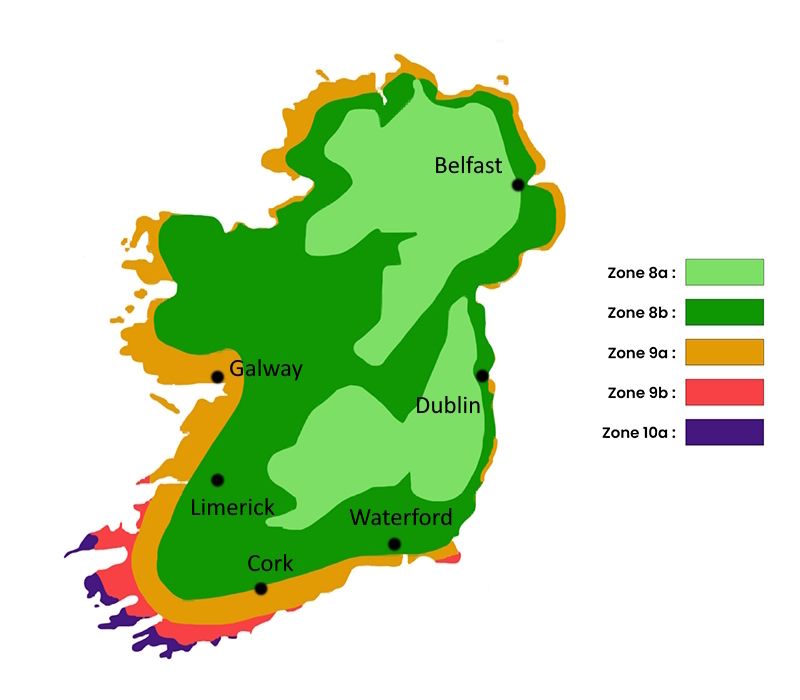
The planting period indicated on our website applies to regions in USDA Zone 9a (East Coast and Midlands: Dublin, Wexford, Waterford, Kilkenny, Portlaoise). It will vary depending on where you live:
- On the west coast and in the north-west (Galway, Limerick, Sligo, Donegal, Westport), delay planting by 1 to 2 weeks in spring and bring it forward by 1 to 2 weeks in autumn compared to the dates given, preferably choosing periods without strong winds.
- In the inland hills and plateaus (Wicklow Mountains, Macgillycuddy’s Reeks, Connemara, Killarney), it is best to plant in spring (April–May) or autumn (September–October), avoiding periods of waterlogged soil in winter and strong winds, which pose the main risk to newly planted trees in these areas.
The flowering period indicated on our website applies to regions in USDA Zone 9a, such as the East Coast and Midlands, including Dublin, Wexford, Waterford, Kilkenny and Portlaoise.
This will vary depending on where you live:
- On the west coast and in the northwest (Galway, Limerick, Sligo, Donegal and Westport), it will be delayed by one to two weeks compared to the given dates, due to stronger Atlantic winds and less spring sunshine.
- In the inland hills and plateaus (the Wicklow Mountains, the Macgillycuddy's Reeks, Connemara and Killarney), flowering will be delayed by two to three weeks. Flowering mainly occurs between May and July, with the limiting factors being less frost and more of the excessive humidity, strong winds and lack of sunshine that are characteristic of these areas.
Shipping country and language
Your country of residence may be:
Your country of residence is:
For a better user experience on our website, you can select:
Your shipping country:
-
 Austria
-
 Belgium
-
 Bosnia & Herzegovina
-
 Bulgaria
-
 Croatia
-
 Cyprus
-
 Czechia
-
 Denmark
-
 Estonia
-
 Finland
-
 France
-
 Germany
-
 Greece
-
 Hungary
-
 Iceland
-
 Ireland
-
 Italy
Italy
-
 Latvia
-
 Liechtenstein
-
 Lithuania
-
 Luxembourg
-
 Malta
Malta
-
 Netherlands
-
 Poland
-
 Portugal
-
 Romania
-
 Serbia
-
 Slovakia
-
 Slovenia
-
 Spain
Spain
-
 Sweden
-
 Switzerland
Language:
-
French
-
 English
-
Spanish
-
Italian
-
German
-
Portuguese
-
Dutch
-
Finnish
My Account
Hello
My wish lists
My cart
Log in / Register
Existing customer?
This form is protected by reCAPTCHA - the Google Privacy Policy and Terms of Service apply.
New customer?
Create an account to track your orders, access our customer service and, if you wish, make the most of our upcoming offers.