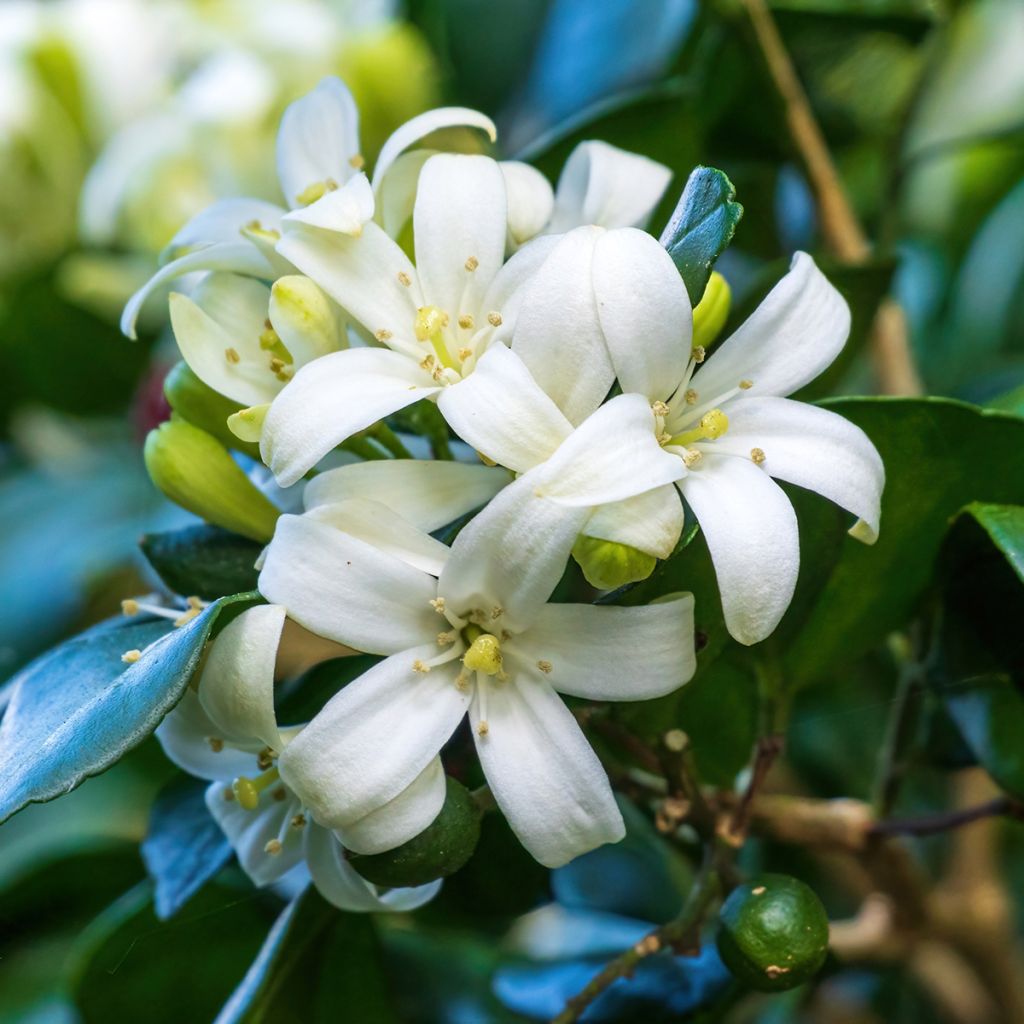
Murraya paniculata
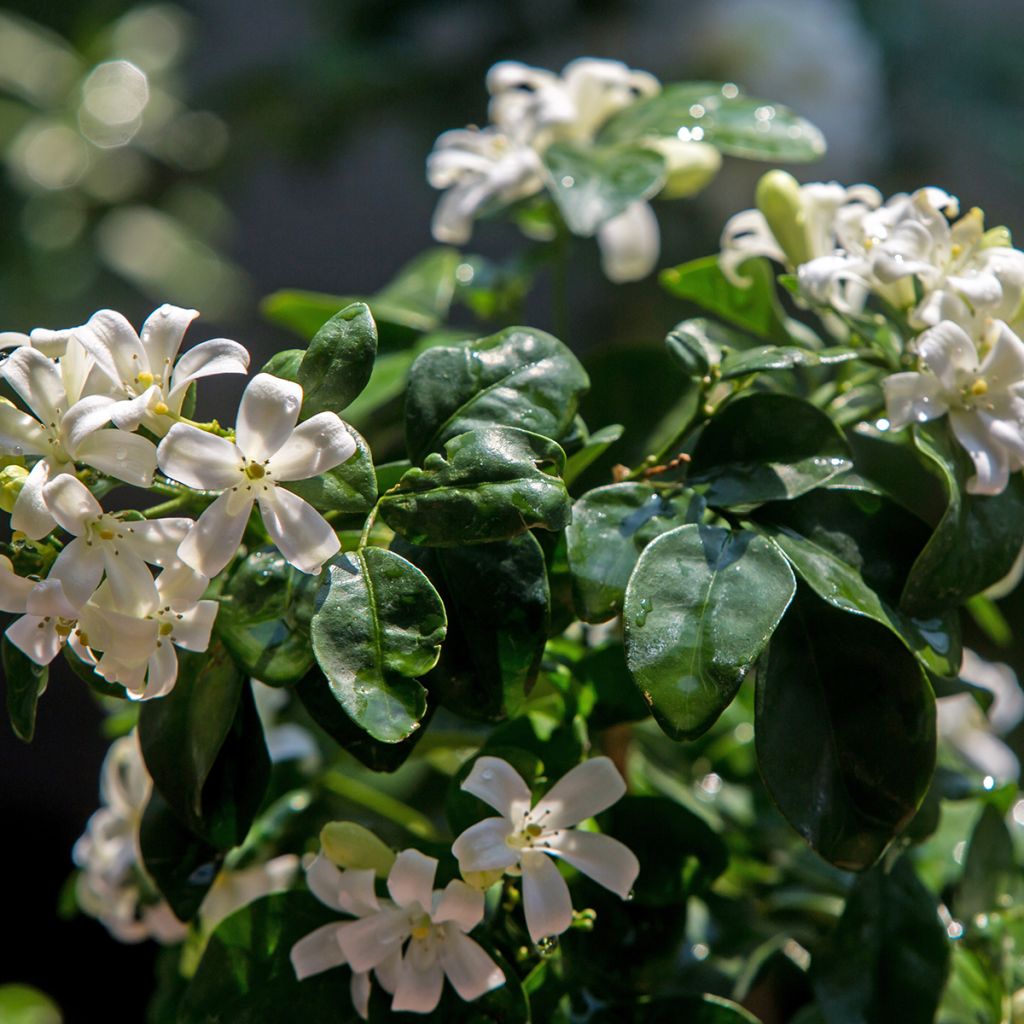
Murraya paniculata
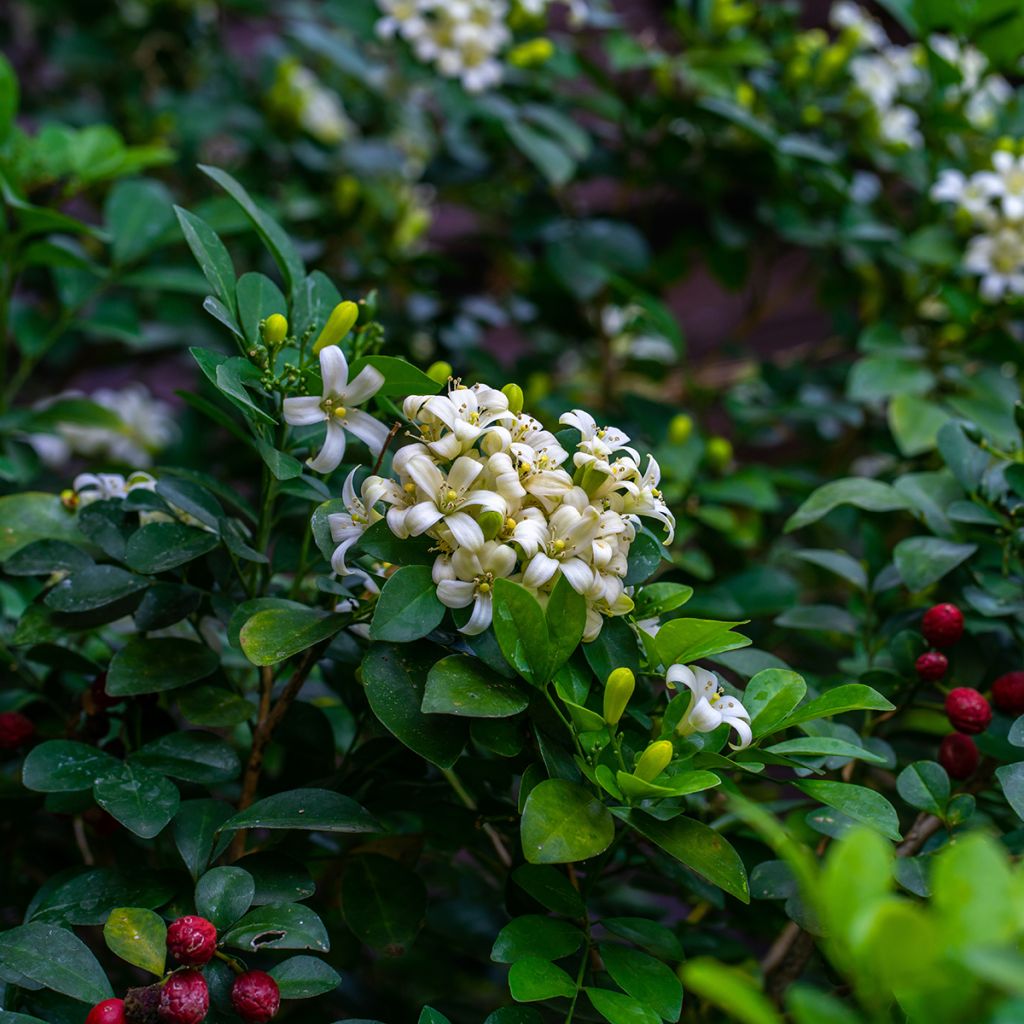
Murraya paniculata
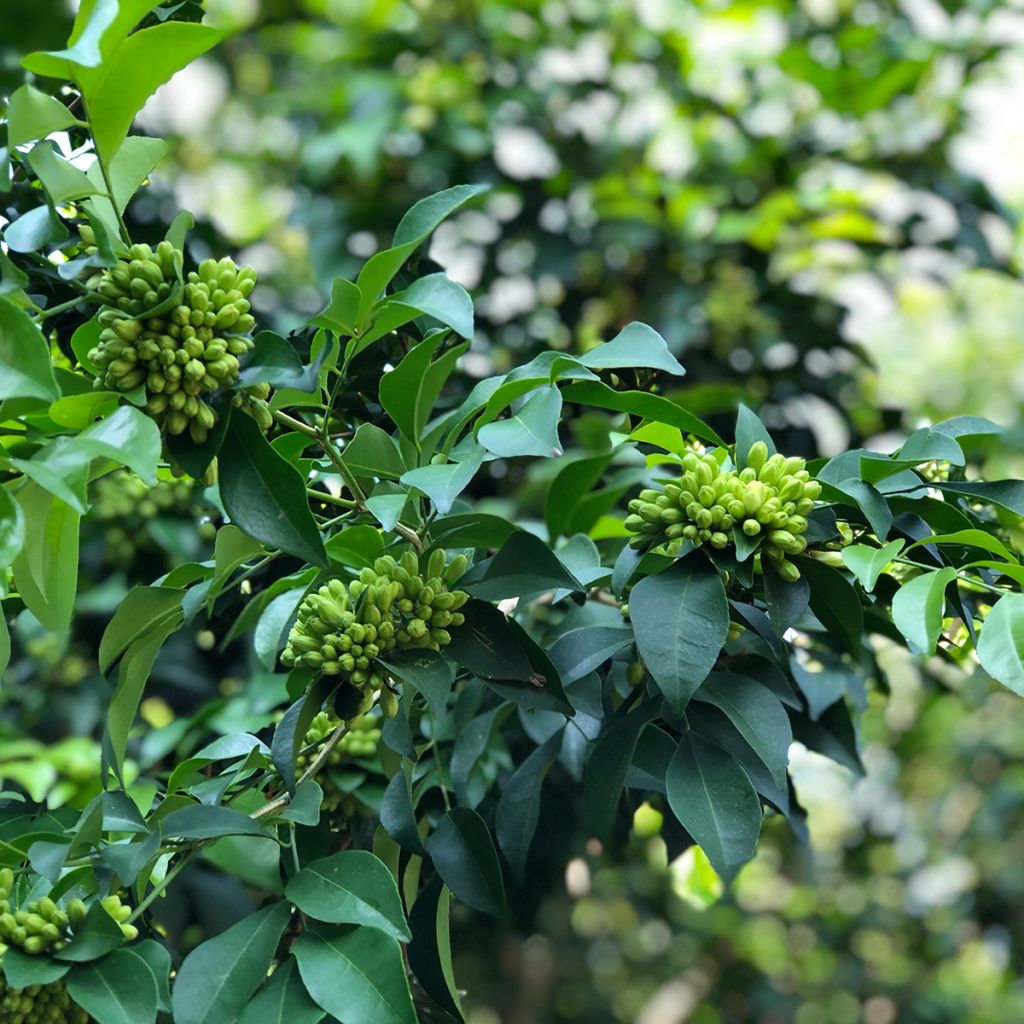
Murraya paniculata
Murraya paniculata
Murraya paniculata
Murraya paniculata
Chinese Box, Cosmetic Bark Tree, Orange Jasmine, Orange Jessamine, Satinwood
Back-to-school special offer!
Get €10 off for every €50 you spend! And get up to €40 off on a single order.
How does it work?
1. Shop your favourites
Add your favourite plants to your basket. For every €50 you spend (excluding delivery charges, store credit and the plastic-free option), you’ll receive a €10 voucher.
€50 spent = €10 voucher
€100 spent = €20 voucher
€150 spent = €30 voucher
€200 spent = €40 voucher
2. Place your order
Once your basket reaches one of the spending thresholds, place your order. You can even choose your delivery date!
3. Receive your voucher
As soon as your order has been shipped, you’ll receive an email containing your personal voucher code and its value.
4. Use it on your next order
Your voucher is valid for 90 days from the date you receive it. It can be used once only, on a new order worth at least the value of the voucher, excluding delivery charges.
Please note: Vouchers can be combined with other offers, but cannot be split or refunded.
Why not try an alternative variety in stock?
View all →
Available in 2 sizes
Available in 1 sizes
Available in 1 sizes
Available in 1 sizes
Available in 1 sizes
Available in 1 sizes
Available in 1 sizes
Available in 1 sizes
Available in 1 sizes
Available in 1 sizes
This plant carries a 24 months recovery warranty
More information
We guarantee the quality of our plants for a full growing cycle, and will replace at our expense any plant that fails to recover under normal climatic and planting conditions.
Does this plant fit my garden?
Set up your Plantfit profile →
Description
Murraya paniculata, also known as Chinese boxwood, is a highly floriferous evergreen shrub of Asian origin, belonging to the citrus family, from which it owes the powerful fragrance of its flowers. In tropical regions, it forms a large shrub with a rounded habit, but it will remain smaller in gardens of the most protected areas. Not very hardy, it is sensitive to frost and can be grown in containers almost everywhere. Its small, highly fragrant flowers have a short lifespan but bloom repeatedly over a long period. It should be grown in full sun and regularly watered, and should be brought indoors before the first frost.
The Chinese boxwood belongs to the Rutaceae family, which includes more than 150 genera, including the large group of citrus trees, as well as common ornamental plants such as Choisya ternata (Mexican orange blossom). Murraya paniculata is native to tropical Asia, and its natural range has expanded via Malaysia to Australia and the southwestern Pacific islands. In these regions, it grows in mountain forests from sea level up to 1300m (4265ft) altitude. It forms a large shrub up to 6m (20ft) tall, or even taller, and commonly blooms from April to October in successive waves. The extremely fragrant flowers only last for one day; the petals fall in the early morning.
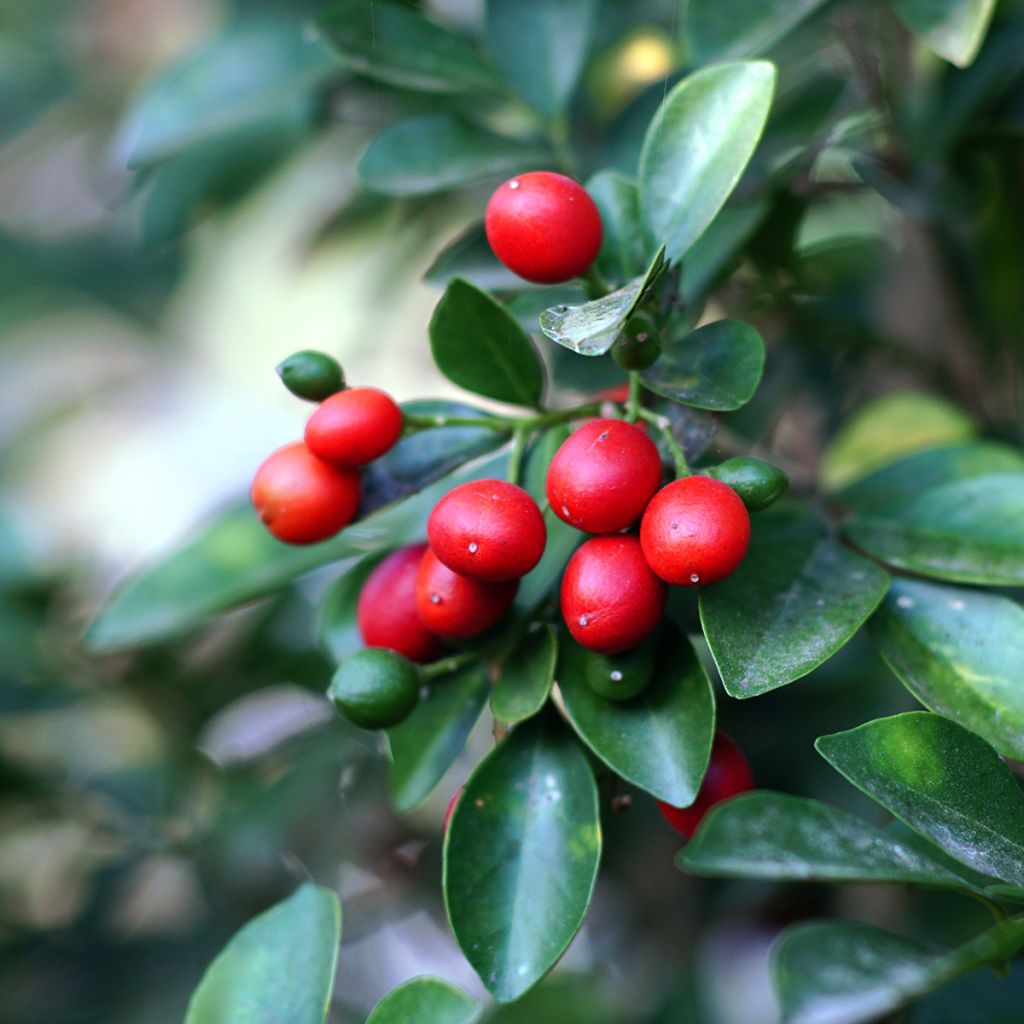
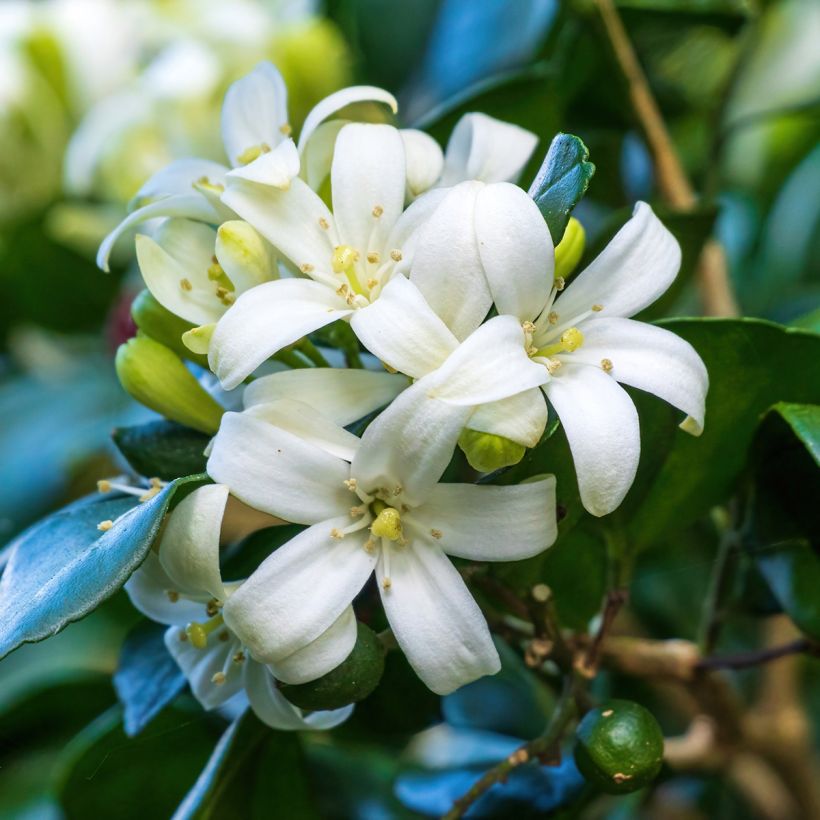
Murraya paniculata is a beautiful evergreen plant with highly decorative foliage all year round. Its growth is quite rapid at first, but slows down in the following years. The branches have a pale grey to grey-white bark, which tends to peel off on the main axis as it ages. The compound leaves are alternate and odd-pinnate, with 3 to 7 or 9 ovate to elliptical leaflets, measuring up to 10cm (4in) in length. Dark green in colour, their surface is glossy, as is the case with many other Rutaceae. This dark mass of vegetation provides a backdrop for the pure white flowers, which stand out clearly. The small flowers, about 3cm (1in) in diameter, have corollas composed of 5 oval to lanceolate petals, resembling those of citrus trees. They are of the 5-type, and have 5 small sepals and 10 white-yellow stamens. The flowering lasts for several months, from spring to summer, with successive waves of blooms. Highly fragrant, they diffuse a delicious citrus scent. They then develop into small pear-shaped fruits that are orange to red in colour.
Its tropical origin makes it less hardy. It can withstand brief cold spells of around -2°C (28.4°F), which limits its outdoor cultivation to the mildest areas. It will then form a much smaller shrub, only 2 to 3m (7 to 10ft) tall, with a slightly narrower width, and a rounded and somewhat erect habit, well suited for hedges.
In the garden, Murraya paniculata can be paired, for example, with Boronia heterophylla 'Carousel', a charming Australian shrub with bright pink flowers, or with Galvezia speciosa, a shrub with bright red tubular flowers. On the patio or balcony, it can be surrounded by Plumbago auriculata, which has a long flowering period and stunning sky blue flowers, or by Solanum rantonetti, with its long-lasting violet flowers with yellow centres. It is also possible to train this plant as a bonsai, as its leaves and flowers lend themselves well to a reduced size.
Report an error about the product description
Murraya paniculata in pictures
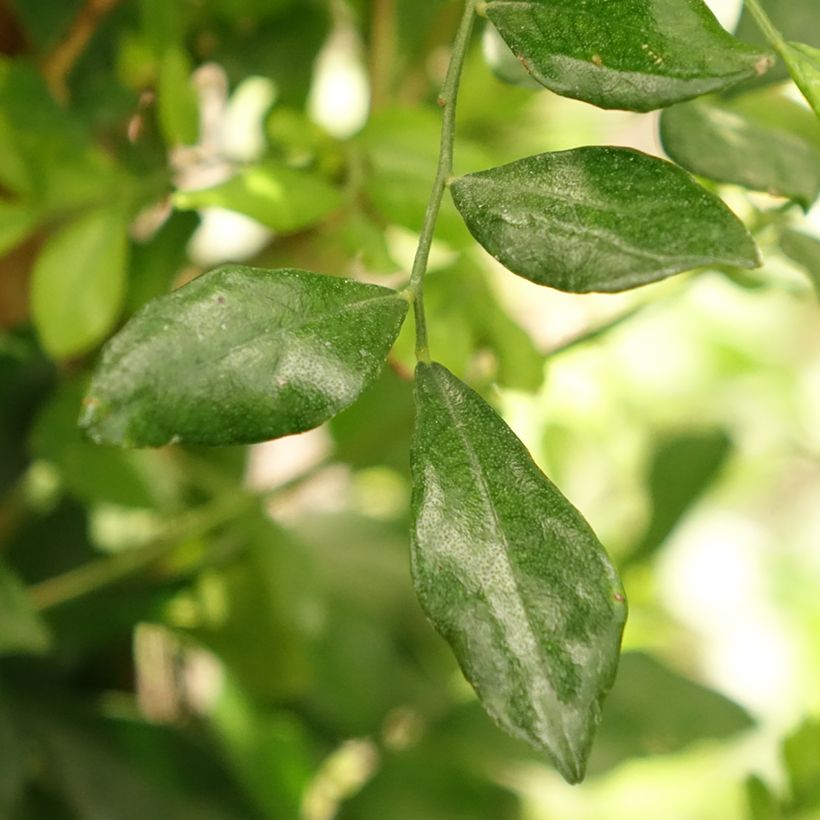
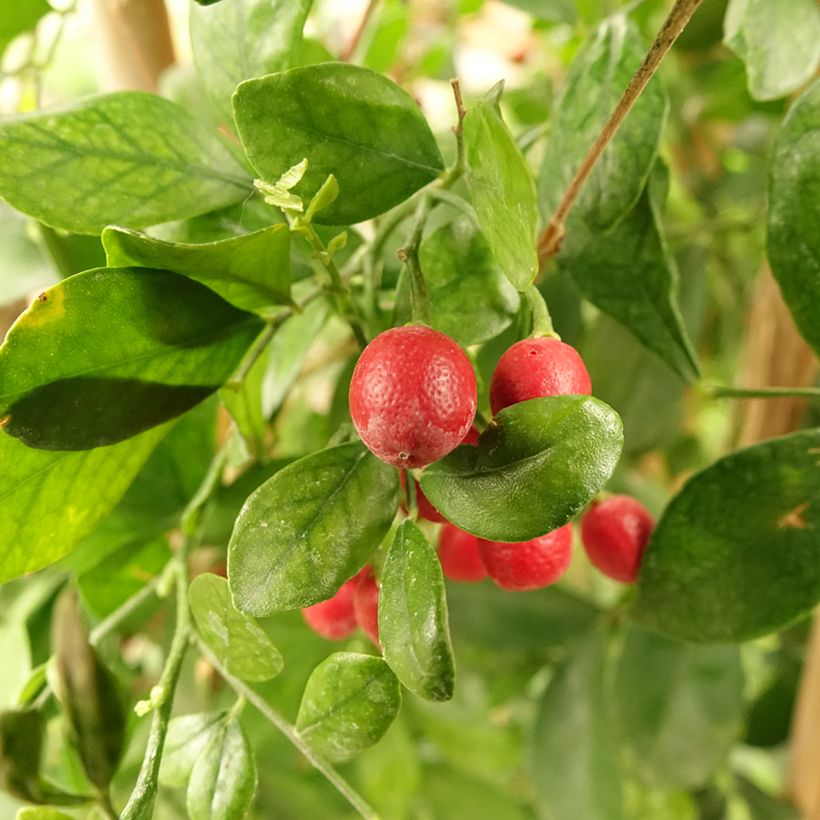
Plant habit
Flowering
Foliage
Botanical data
Murraya
paniculata
Rutaceae
Chinese Box, Cosmetic Bark Tree, Orange Jasmine, Orange Jessamine, Satinwood
Southeast Asia
Planting and care
Murraya paniculata is hardy to -2°C (28.4°F) in very well-drained soil. Therefore, it can only be planted in open ground in the mildest areas. Relatively indifferent to soil type, its growth is nevertheless faster in loose and rich, moist but well-drained soil. Choose a sunny location or possibly partial shade. Plant it in spring so that it has time to develop its root system before winter. Water regularly to promote growth during the growing season, then space out in autumn and stop in winter.
In most regions, it will need to be grown in a container to be overwintered indoors. It can then be taken outside as soon as frost is no longer a concern. Choose a large volume container, as the planting substrate should always retain some moisture. Proper drainage should be ensured to avoid any harmful water accumulation for the roots. A regular planting compost with a layer of gravel at the bottom of the container will do the trick. Choose a terracotta pot to limit the heating of the compost or, if necessary, a "double skin" plastic pot (with an air gap between the inner and outer wall). Water regularly during the growing season, allowing the substrate to dry out between waterings, bring the pot inside to a cool and bright room before the first frost, and then reduce watering. Preferably place it in the sun, which will promote flowering.
Pruning is not necessary, except to remove dead branches or rebalance the habit. But to make it denser, you can slightly shorten the tips of the branches after flowering.
Planting period
Intended location
Care
Planting & care advice
-
-
-
-

-
-
-

-
This item has not been reviewed yet - be the first to leave a review about it.
Recently viewed products
Haven't found what you were looking for?
Hardiness is the lowest winter temperature a plant can endure without suffering serious damage or even dying. However, hardiness is affected by location (a sheltered area, such as a patio), protection (winter cover) and soil type (hardiness is improved by well-drained soil).
In temperate climates, pruning of spring-flowering shrubs (forsythia, spireas, etc.) should be done just after flowering.
Pruning of summer-flowering shrubs (Indian Lilac, Perovskia, etc.) can be done in winter or spring.
In cold regions as well as with frost-sensitive plants, avoid pruning too early when severe frosts may still occur.
The harvesting period indicated on our website applies to countries and regions in USDA zone 8 (France, England, Ireland, the Netherlands).
In colder areas (Scandinavia, Poland, Austria...) fruit and vegetable harvests are likely to be delayed by 3-4 weeks.
In warmer areas (Italy, Spain, Greece, etc.), harvesting will probably take place earlier, depending on weather conditions.
The sowing periods indicated on our website apply to countries and regions within USDA Zone 8 (France, UK, Ireland, Netherlands).
In colder areas (Scandinavia, Poland, Austria...), delay any outdoor sowing by 3-4 weeks, or sow under glass.
In warmer climes (Italy, Spain, Greece, etc.), bring outdoor sowing forward by a few weeks.
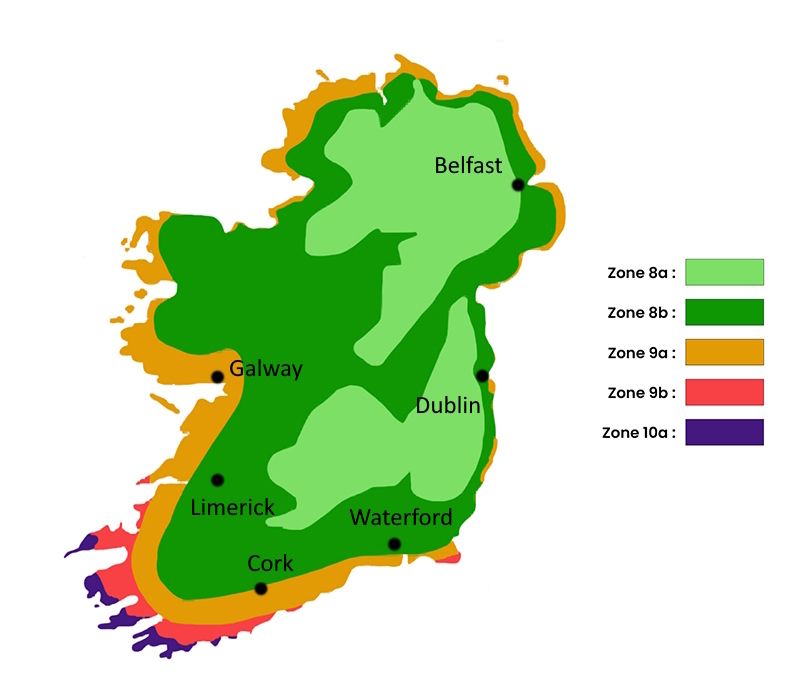
The planting period indicated on our website applies to regions in USDA Zone 9a (East Coast and Midlands: Dublin, Wexford, Waterford, Kilkenny, Portlaoise). It will vary depending on where you live:
- On the west coast and in the north-west (Galway, Limerick, Sligo, Donegal, Westport), delay planting by 1 to 2 weeks in spring and bring it forward by 1 to 2 weeks in autumn compared to the dates given, preferably choosing periods without strong winds.
- In the inland hills and plateaus (Wicklow Mountains, Macgillycuddy’s Reeks, Connemara, Killarney), it is best to plant in spring (April–May) or autumn (September–October), avoiding periods of waterlogged soil in winter and strong winds, which pose the main risk to newly planted trees in these areas.
The flowering period indicated on our website applies to regions in USDA Zone 9a, such as the East Coast and Midlands, including Dublin, Wexford, Waterford, Kilkenny and Portlaoise.
This will vary depending on where you live:
- On the west coast and in the northwest (Galway, Limerick, Sligo, Donegal and Westport), it will be delayed by one to two weeks compared to the given dates, due to stronger Atlantic winds and less spring sunshine.
- In the inland hills and plateaus (the Wicklow Mountains, the Macgillycuddy's Reeks, Connemara and Killarney), flowering will be delayed by two to three weeks. Flowering mainly occurs between May and July, with the limiting factors being less frost and more of the excessive humidity, strong winds and lack of sunshine that are characteristic of these areas.
Shipping country and language
Your country of residence may be:
Your country of residence is:
For a better user experience on our website, you can select:
Your shipping country:
-
 Austria
-
 Belgium
-
 Bosnia & Herzegovina
-
 Bulgaria
-
 Croatia
-
 Cyprus
-
 Czechia
-
 Denmark
-
 Estonia
-
 Finland
-
 France
-
 Germany
-
 Greece
-
 Hungary
-
 Iceland
-
 Ireland
-
 Italy
Italy
-
 Latvia
-
 Liechtenstein
-
 Lithuania
-
 Luxembourg
-
 Malta
Malta
-
 Netherlands
-
 Poland
-
 Portugal
-
 Romania
-
 Serbia
-
 Slovakia
-
 Slovenia
-
 Spain
Spain
-
 Sweden
-
 Switzerland
Language:
-
French
-
 English
-
Spanish
-
Italian
-
German
-
Portuguese
-
Dutch
-
Finnish
My Account
Hello
My wish lists
My cart
Log in / Register
Existing customer?
This form is protected by reCAPTCHA - the Google Privacy Policy and Terms of Service apply.
New customer?
Create an account to track your orders, access our customer service and, if you wish, make the most of our upcoming offers.