
Phyllostachys vivax MacClure - Golden Chinese Timber Bamboo
Phyllostachys vivax MacClure - Golden Chinese Timber Bamboo
Phyllostachys vivax MacClure
Golden Chinese Timber Bamboo
Super young plant! ????
Artur Biernacki , 30/05/2024
Back-to-school special offer!
Get €10 off for every €50 you spend! And get up to €40 off on a single order.
How does it work?
1. Shop your favourites
Add your favourite plants to your basket. For every €50 you spend (excluding delivery charges, store credit and the plastic-free option), you’ll receive a €10 voucher.
€50 spent = €10 voucher
€100 spent = €20 voucher
€150 spent = €30 voucher
€200 spent = €40 voucher
2. Place your order
Once your basket reaches one of the spending thresholds, place your order. You can even choose your delivery date!
3. Receive your voucher
As soon as your order has been shipped, you’ll receive an email containing your personal voucher code and its value.
4. Use it on your next order
Your voucher is valid for 90 days from the date you receive it. It can be used once only, on a new order worth at least the value of the voucher, excluding delivery charges.
Please note: Vouchers can be combined with other offers, but cannot be split or refunded.
Home or relay delivery (depending on size and destination)
Important: You may be charged customs duties by your country’s customs authorities upon delivery.
Schedule delivery date
and select date in basket
This plant carries a 24 months recovery warranty
More information
We guarantee the quality of our plants for a full growing cycle, and will replace at our expense any plant that fails to recover under normal climatic and planting conditions.

Does this plant fit my garden?
Set up your Plantfit profile →
Description
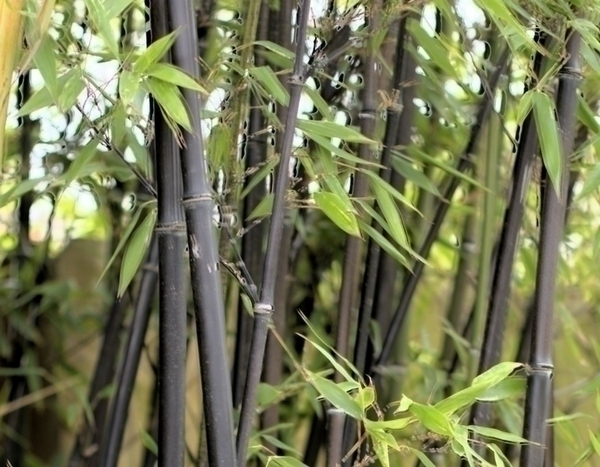
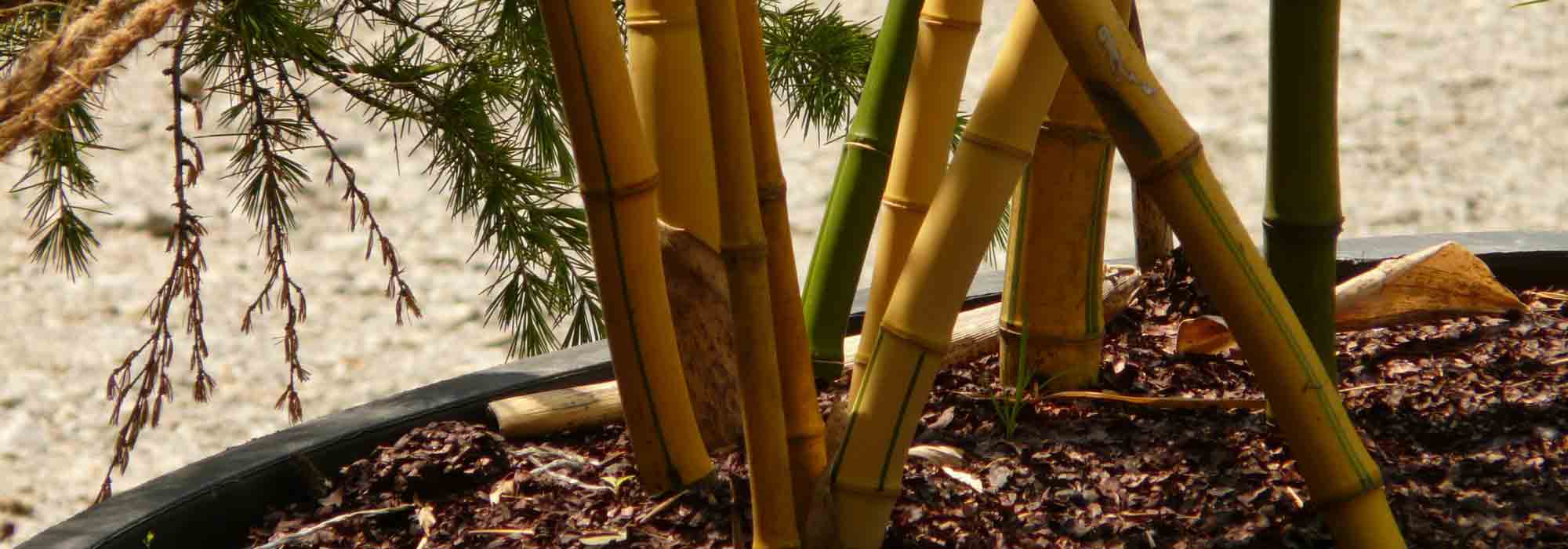
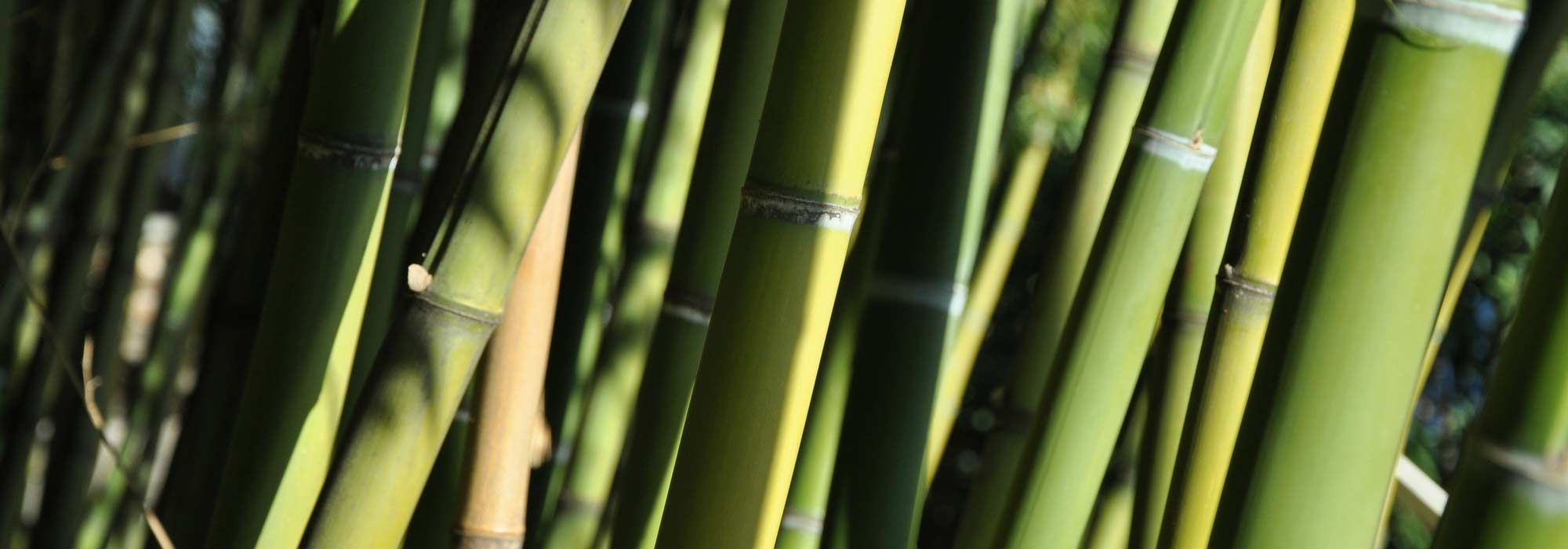
Phyllostachys vivax 'MacClure' is a giant bamboo that is rarely found in cultivation where it is often confused with other clones. This one, recognizable by its almost black young shoots, appears to be the most cold-resistant. With remarkable vigour, it develops culms as wide as poles adorned with a beautiful emerald green colour highlighted by white rings, and lush, flexible, and well-furnished evergreen foliage. This trailing variety allows for the rapid establishment of a remarkable bamboo forest or hedge. This wonderful bamboo thrives in moist soil, in the sun, in a sheltered location away from strong winds because its thin-walled culms are brittle.
Native to eastern China, in the Henan and Zhejiang provinces, as well as Japan, Phyllostachys vivax is a vigorous bamboo with a highly rapid growth even in cold climates. It belongs to the family of Poaceae (or grasses), it is a kind of giant grass with woody stems.
The 'MacClure' cultivar was introduced to Europe in 1981. It is endemic to Chinese provinces, specifically the south of Zhejiang, Jiangxi, Henan, Hunan, Jiangsu, Shandong, and the south of Yunnan province. Its hardiness is estimated at -18/-20°C for a short period.
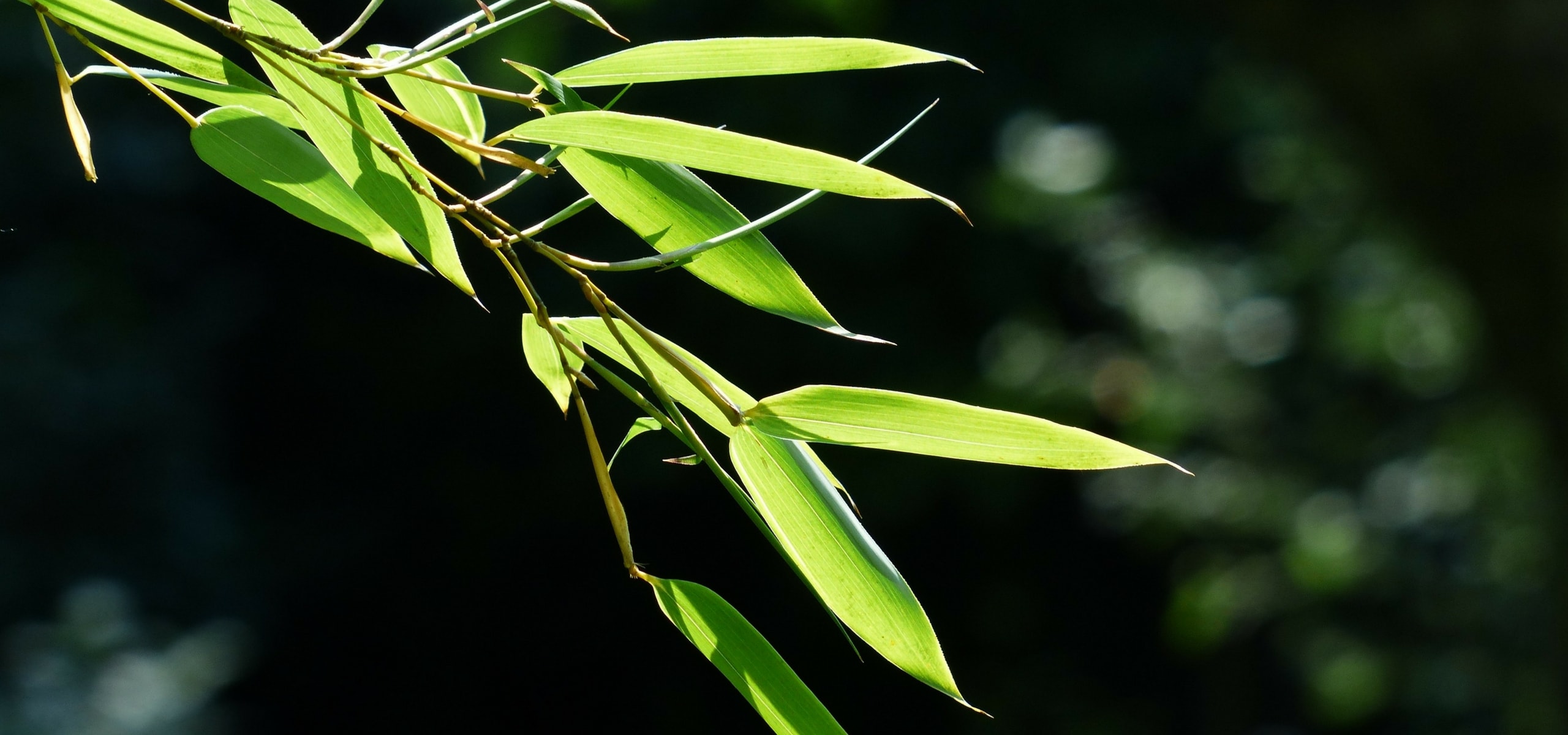
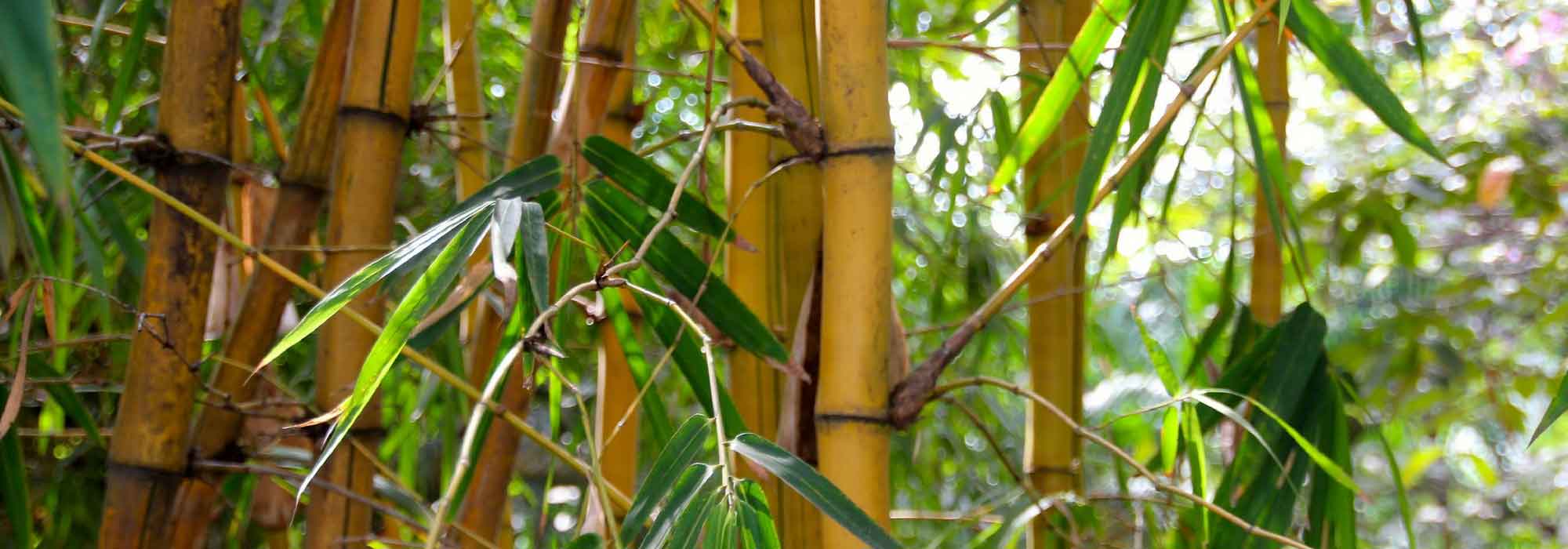
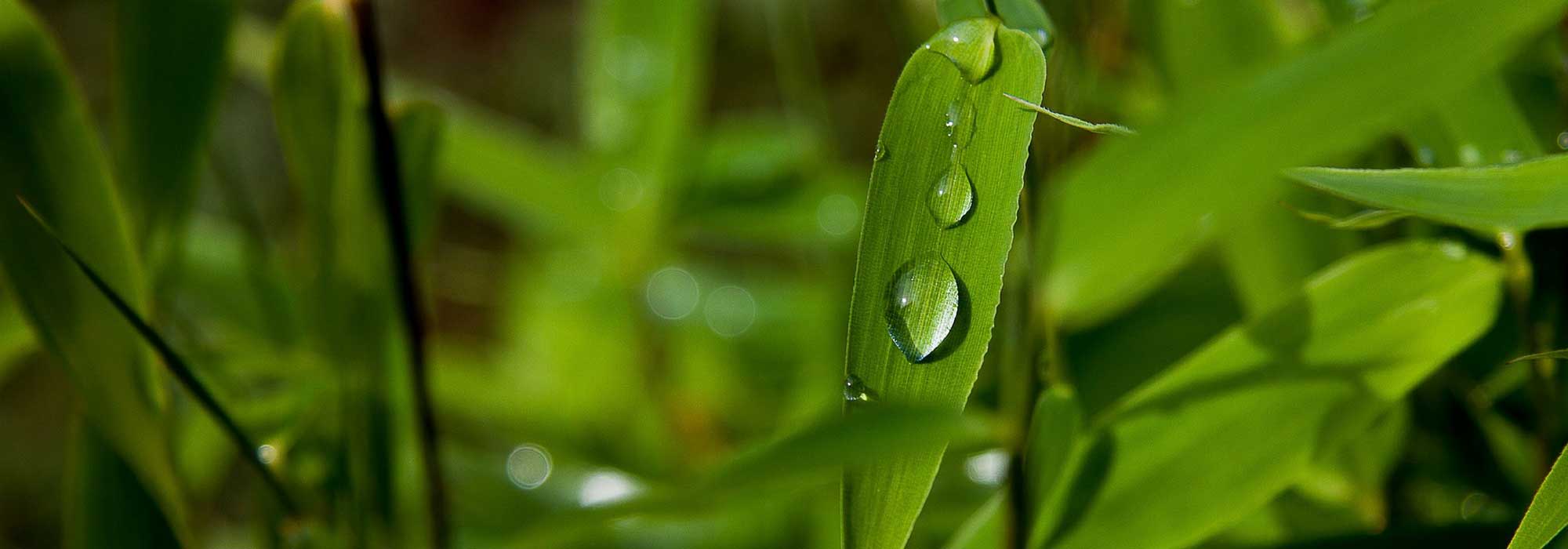
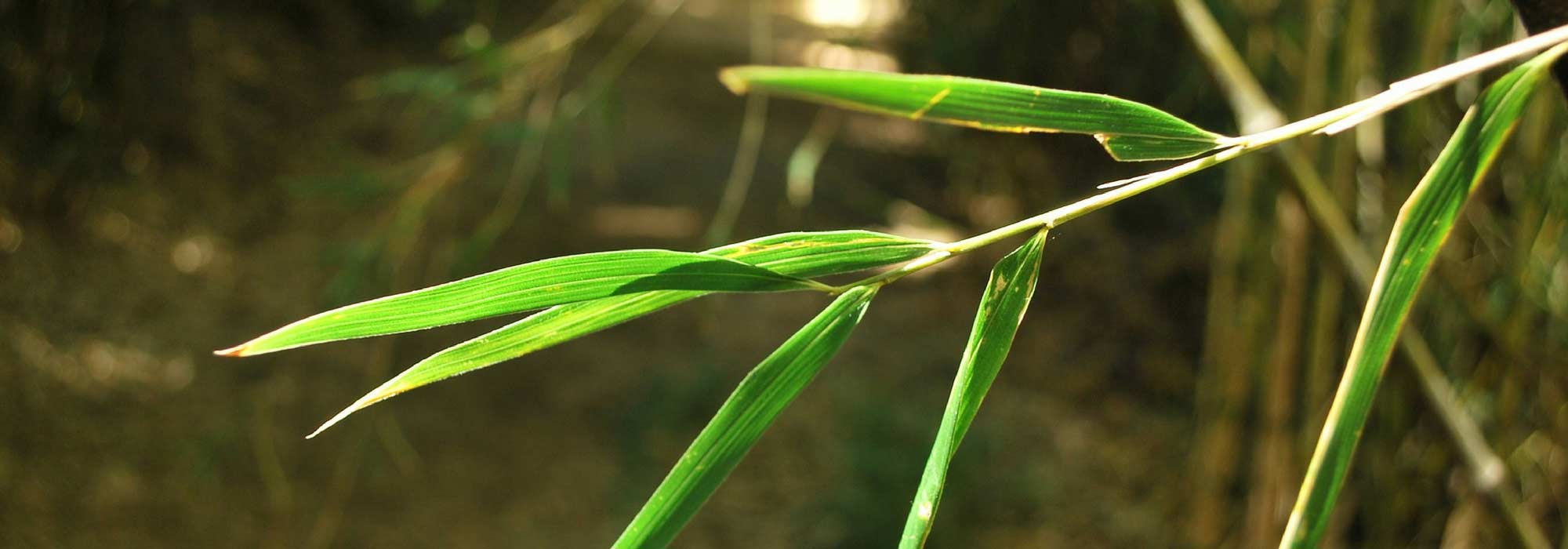
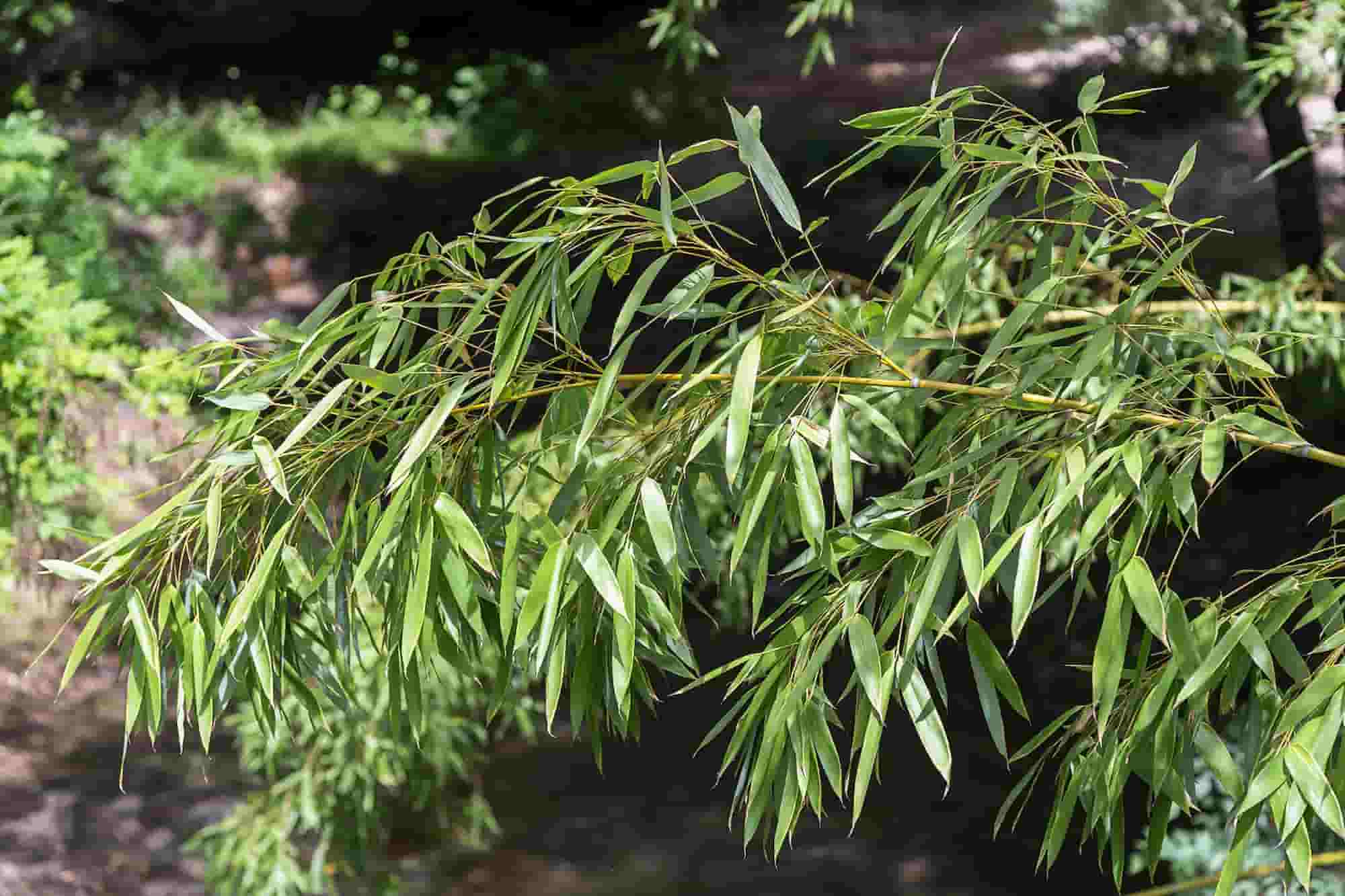
This bamboo shows an initially arched and then upright habit over time, and its canes bear beautifully trailing leafy branches. The stump produces numerous shoots covered with a strongly marbled black sheath. These shoots release culms or canes with a diameter of 6 to 8cm (2 to 3in), with a relatively thin and not very resistant wall to strong winds and the weight of vegetation when laden with snow. They are capable of growing several centimetres per day to reach a height of 7, 12 or even 15m. Each culm is slightly channelled, emerald green in colour, marked by white bloom rings just below the nodes. Older culms take on a grey, rusty, or yellow-green colouration. The evergreen foliage is composed of beautiful, pendant lanceolate leaves, tapering at their tips, 16cm (6in) long and 1.5cm (1in) wide. Their colour evolves from bluish-green to bright and vibrant green, slightly glossy. In case of snowfall, remember to clear the culms by shaking them, as the weight could cause them to bend and break at ground level.
A true star of Asian-inspired gardens, giant bamboo suits many styles, from contemporary to exotic, including natural gardens or water gardens. Planted en masse, it allows for the rapid creation of very exotic forests, and its graphic design brings verticality to the decor. Its fast growth makes it an excellent candidate for concealing an unsightly view, especially when planted in fertile and moist soil. It is so striking that you can plant it as a solitary clump. However, its unique style can sometimes be difficult to blend in a mass planting. For example, try combining it in an exotic setting with Gunnera manicata or Hosta 'Big Daddy', or certain palms in a more well-drained soil. Bamboos complement each other very well, so choose varieties with differently coloured culms. They are always perfect near water features as they seek coolness. A large avenue lined on both sides with 'MacClure' giant bamboos will simply become a royal avenue.
The young shoots of this bamboo are edible and highly prized by gastronomes. However, it is necessary to boil them for a long time to remove bitterness before consuming.

Phyllostachys vivax MacClure - Golden Chinese Timber Bamboo in pictures
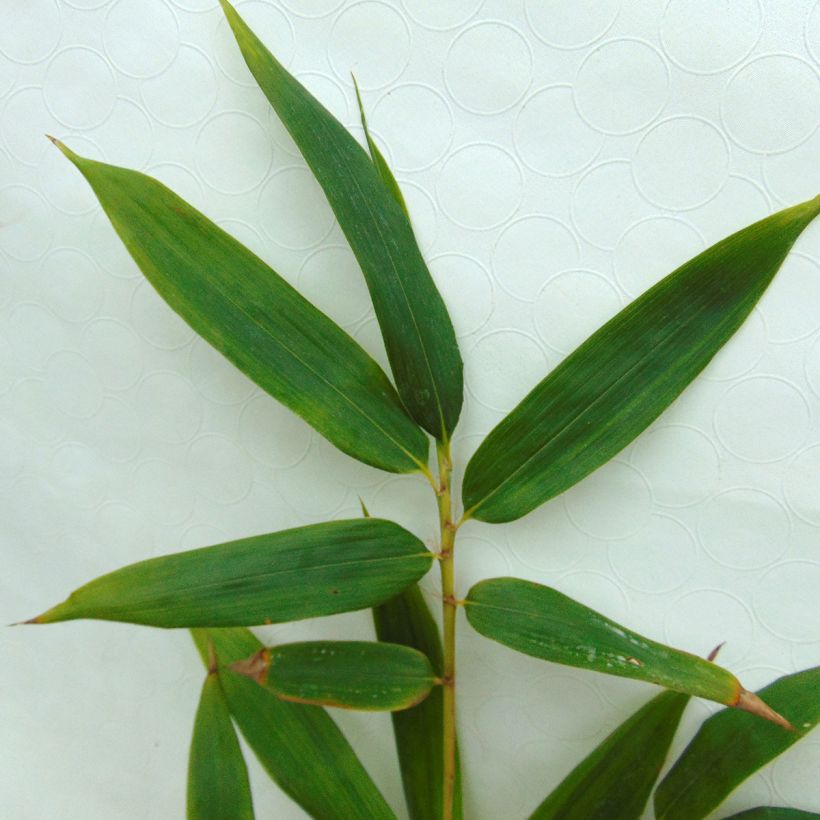
Plant habit
Foliage
Botanical data
Phyllostachys
vivax
MacClure
Poaceae
Golden Chinese Timber Bamboo
China
Planting and care
Grown in containers, bamboo can be planted at any time of the year, except during frost. Nevertheless, the best planting period is late summer and autumn, when the soil is warm and rainfall is more frequent. The planting distance depends on how you will use your bamboo: for a mass planting, allow a gap of 3 to 4 metres (10 to 13 feet) between each plant. For a hedge, this distance is reduced to 1.6 to 2 metres (5 to 7 feet).
In general, bamboo prefers rich, deep, well-drained soil that remains moist, acidic, or neutral. They can tolerate slightly calcareous soil, depending on the variety. Phyllostachys vivax 'MacClure' appreciates the sun but tolerates partial shade.
During planting, do not hesitate to loosen the soil and moisten the root ball well by soaking it. You can add well-decomposed compost that you will scratch into the surface. Watering should be followed for at least the first year in open ground and continuously if your bamboo is grown in a pot. The establishment period may sometimes seem a little long, but don't panic!
For running bamboo, the installation of a rhizome barrier (thick and resistant polypropylene film) is essential because these varieties, which do not care about property boundaries, can quickly colonize large areas. The rhizome barrier should be buried vertically, leaving a height of 10cm (4in) exposed, which should be tilted 15° towards the plant.
As for maintenance, bamboo is not demanding: remember to weed around the base at least in the beginning until the dead leaves on the ground form a natural mulch. An application of nitrogen fertilizer (well-decomposed manure or liquid fertilizer) in spring and autumn can be beneficial. Water regularly during bamboo establishment, especially during abnormally dry weather. Bamboo may take some time to establish, but in the long run, they prove to be true forces of nature that will be difficult to remove.
Planting period
Intended location
Care
Planting & care advice
-
-
-
-
-
-
-
-
-
, onOrder confirmed
Reply from on Promesse de fleurs
Recently viewed products
Haven't found what you were looking for?
Hardiness is the lowest winter temperature a plant can endure without suffering serious damage or even dying. However, hardiness is affected by location (a sheltered area, such as a patio), protection (winter cover) and soil type (hardiness is improved by well-drained soil).
In temperate climates, pruning of spring-flowering shrubs (forsythia, spireas, etc.) should be done just after flowering.
Pruning of summer-flowering shrubs (Indian Lilac, Perovskia, etc.) can be done in winter or spring.
In cold regions as well as with frost-sensitive plants, avoid pruning too early when severe frosts may still occur.
The harvesting period indicated on our website applies to countries and regions in USDA zone 8 (France, England, Ireland, the Netherlands).
In colder areas (Scandinavia, Poland, Austria...) fruit and vegetable harvests are likely to be delayed by 3-4 weeks.
In warmer areas (Italy, Spain, Greece, etc.), harvesting will probably take place earlier, depending on weather conditions.
The sowing periods indicated on our website apply to countries and regions within USDA Zone 8 (France, UK, Ireland, Netherlands).
In colder areas (Scandinavia, Poland, Austria...), delay any outdoor sowing by 3-4 weeks, or sow under glass.
In warmer climes (Italy, Spain, Greece, etc.), bring outdoor sowing forward by a few weeks.
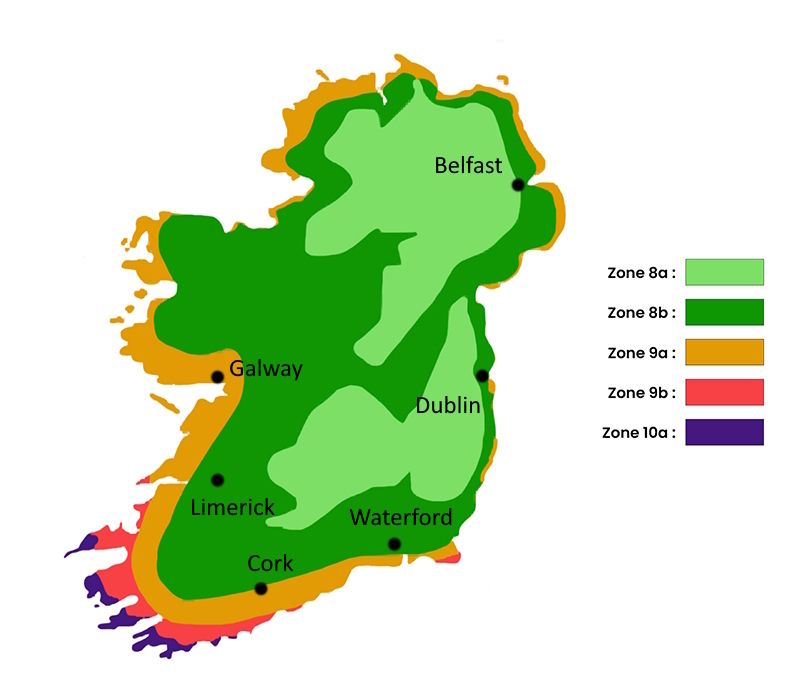
The planting period indicated on our website applies to regions in USDA Zone 9a (East Coast and Midlands: Dublin, Wexford, Waterford, Kilkenny, Portlaoise). It will vary depending on where you live:
- On the west coast and in the north-west (Galway, Limerick, Sligo, Donegal, Westport), delay planting by 1 to 2 weeks in spring and bring it forward by 1 to 2 weeks in autumn compared to the dates given, preferably choosing periods without strong winds.
- In the inland hills and plateaus (Wicklow Mountains, Macgillycuddy’s Reeks, Connemara, Killarney), it is best to plant in spring (April–May) or autumn (September–October), avoiding periods of waterlogged soil in winter and strong winds, which pose the main risk to newly planted trees in these areas.
The flowering period indicated on our website applies to regions in USDA Zone 9a, such as the East Coast and Midlands, including Dublin, Wexford, Waterford, Kilkenny and Portlaoise.
This will vary depending on where you live:
- On the west coast and in the northwest (Galway, Limerick, Sligo, Donegal and Westport), it will be delayed by one to two weeks compared to the given dates, due to stronger Atlantic winds and less spring sunshine.
- In the inland hills and plateaus (the Wicklow Mountains, the Macgillycuddy's Reeks, Connemara and Killarney), flowering will be delayed by two to three weeks. Flowering mainly occurs between May and July, with the limiting factors being less frost and more of the excessive humidity, strong winds and lack of sunshine that are characteristic of these areas.
Shipping country and language
Your country of residence may be:
Your country of residence is:
For a better user experience on our website, you can select:
Your shipping country:
-
 Austria
-
 Belgium
-
 Bosnia & Herzegovina
-
 Bulgaria
-
 Croatia
-
 Cyprus
-
 Czechia
-
 Denmark
-
 Estonia
-
 Finland
-
 France
-
 Germany
-
 Greece
-
 Hungary
-
 Iceland
-
 Ireland
-
 Italy
Italy
-
 Latvia
-
 Liechtenstein
-
 Lithuania
-
 Luxembourg
-
 Malta
Malta
-
 Netherlands
-
 Poland
-
 Portugal
-
 Romania
-
 Serbia
-
 Slovakia
-
 Slovenia
-
 Spain
Spain
-
 Sweden
-
 Switzerland
Language:
-
French
-
 English
-
Spanish
-
Italian
-
German
-
Portuguese
-
Dutch
-
Finnish
My Account
Hello
My wish lists
My cart
Log in / Register
Existing customer?
This form is protected by reCAPTCHA - the Google Privacy Policy and Terms of Service apply.
New customer?
Create an account to track your orders, access our customer service and, if you wish, make the most of our upcoming offers.