Iris germanica Dracula's Kiss - Bearded Iris
Iris germanica Dracula's Kiss - Bearded Iris
Iris germanica Dracula's Kiss
German Iris, Bearded Iris
Back-to-school special offer!
Get €10 off for every €50 you spend! And get up to €40 off on a single order.
How does it work?
1. Shop your favourites
Add your favourite plants to your basket. For every €50 you spend (excluding delivery charges, store credit and the plastic-free option), you’ll receive a €10 voucher.
€50 spent = €10 voucher
€100 spent = €20 voucher
€150 spent = €30 voucher
€200 spent = €40 voucher
2. Place your order
Once your basket reaches one of the spending thresholds, place your order. You can even choose your delivery date!
3. Receive your voucher
As soon as your order has been shipped, you’ll receive an email containing your personal voucher code and its value.
4. Use it on your next order
Your voucher is valid for 90 days from the date you receive it. It can be used once only, on a new order worth at least the value of the voucher, excluding delivery charges.
Please note: Vouchers can be combined with other offers, but cannot be split or refunded.
Why not try an alternative variety in stock?
View all →
Available in 1 sizes
Available in 2 sizes
Available in 2 sizes
Available in 2 sizes

Available in 2 sizes
Available in 2 sizes
Available in 2 sizes
Available in 2 sizes
Available in 2 sizes
Available in 2 sizes
This plant carries a 12 months recovery warranty
More information
We guarantee the quality of our plants for a full growing cycle, and will replace at our expense any plant that fails to recover under normal climatic and planting conditions.
Does this plant fit my garden?
Set up your Plantfit profile →
Description
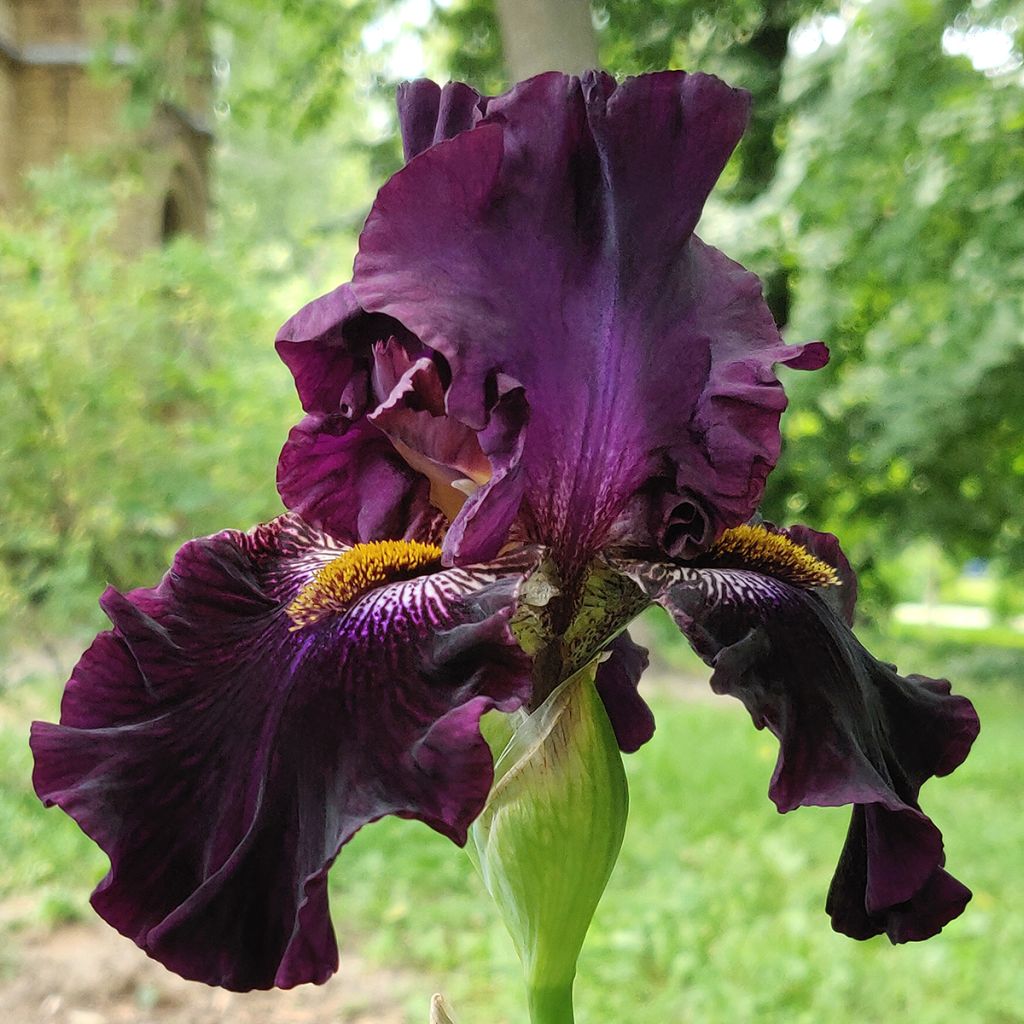
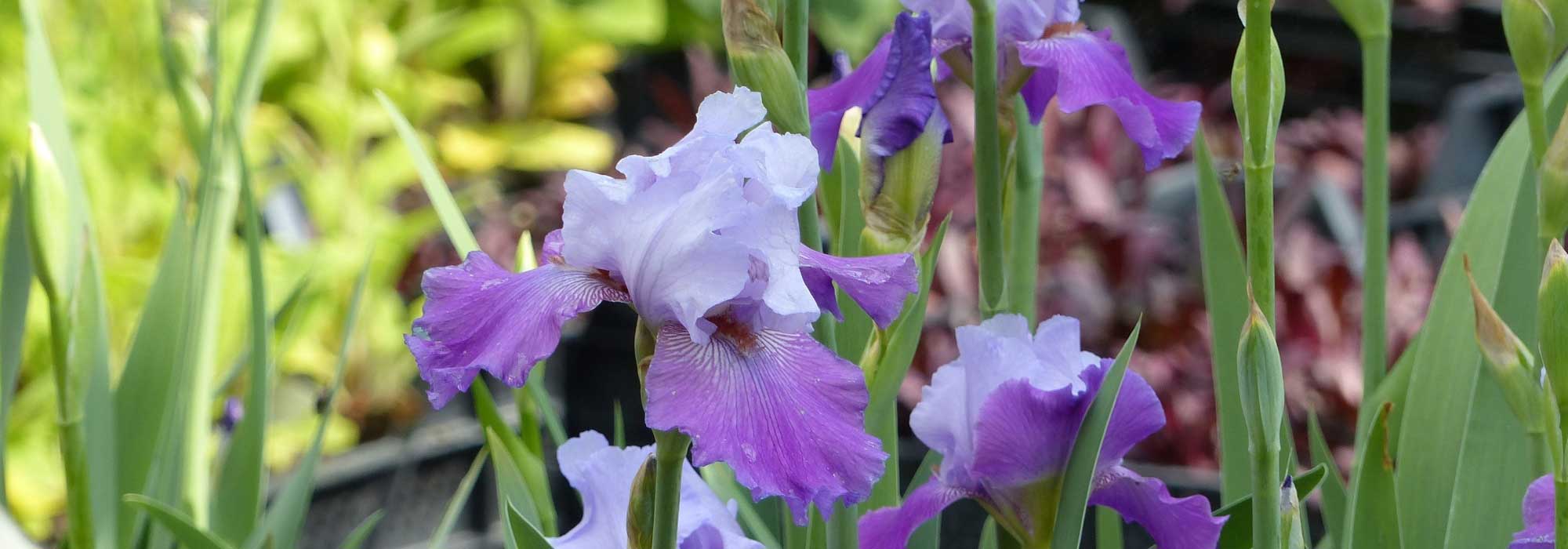
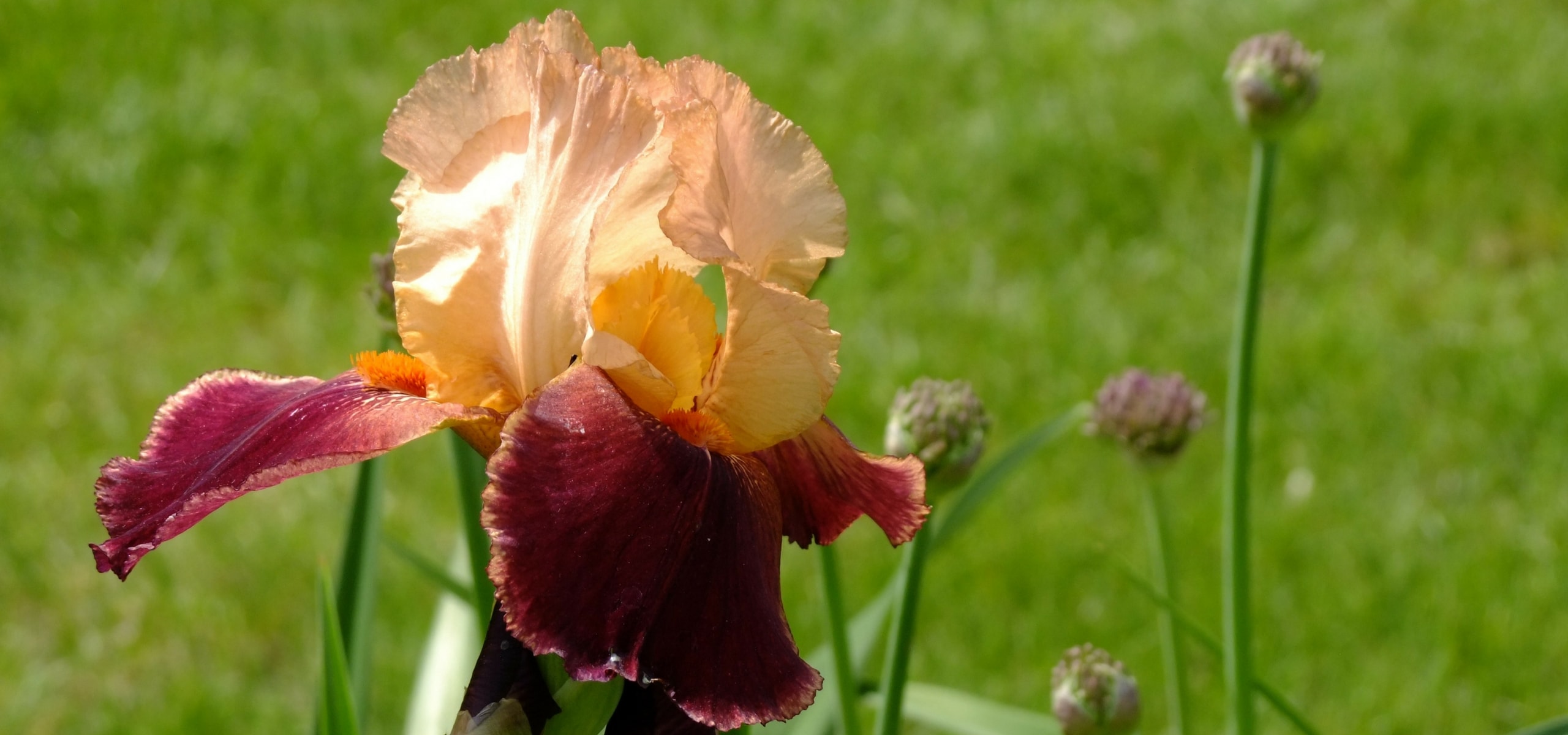
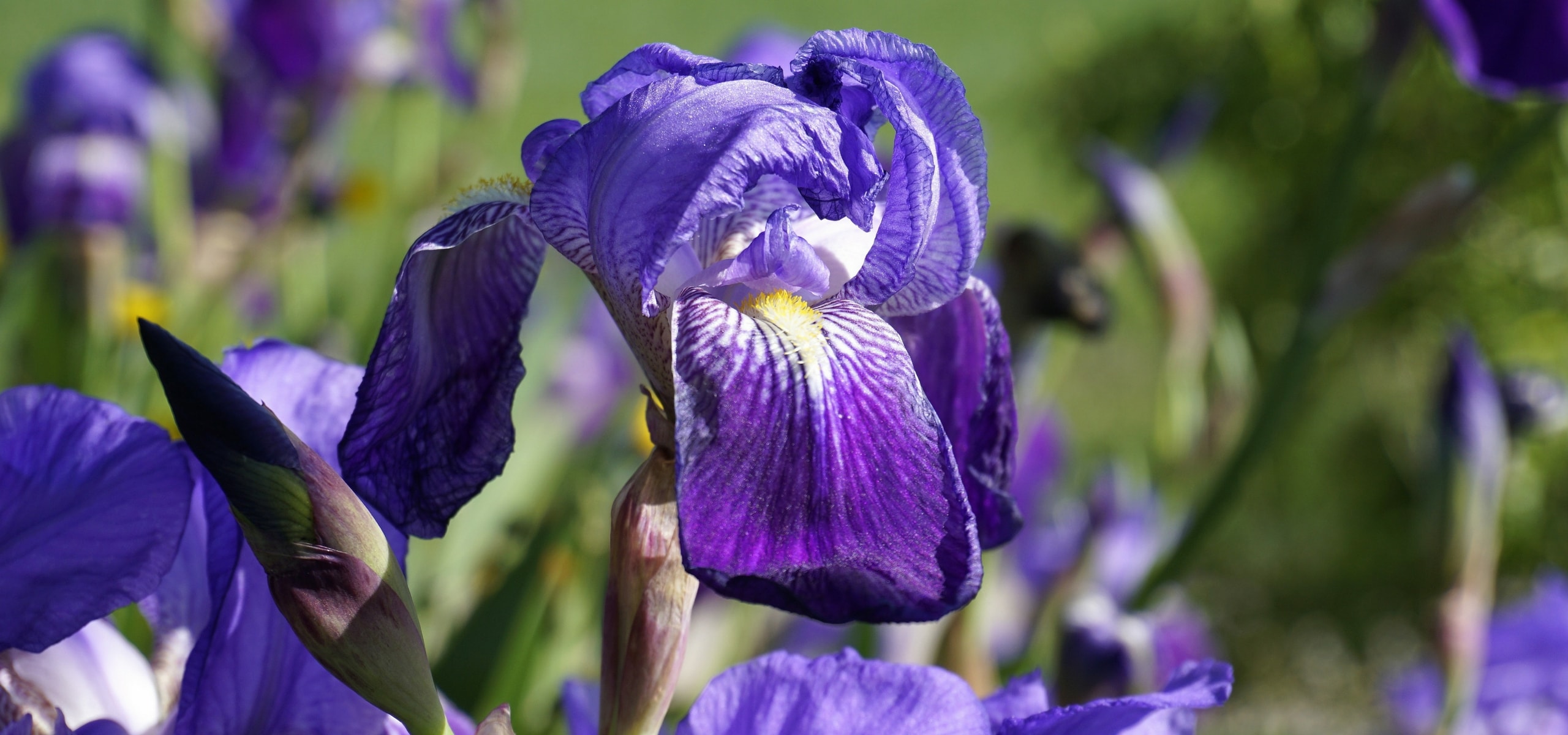
The Iris germanica Dracula's Kiss is one of the bearded iris varieties that comes closest to black, a mythical colour among flowering plants. Blooming in mid-season, this tall Iris exceeding 90 cm in height at its peak produces numerous flowers with fascinating graphic beauty, enhanced by its very deep violet-purple colour. Even darker than the upright petals, the delicately downward-curving sepals feature an orange-mandarin beard that creates a striking contrast. Easy to grow in well-drained soil and full sun, it will pair with almost all other flower colours.
The Iris is the flagship member of the Iridaceae family, which it gave its name to. This botanical family, rich with 1800 species spread across several dozen genera, mainly plants with rootstocks or bulbs, includes many ornamental representatives. From popular Crocuses or Gladioli to the less common but equally charming Ixias or the tender Tritonia laxifolia, the choice is wide for flower enthusiasts. The Iris genus was discovered in Egypt around 3000 BC and includes over 200 species. The number of horticultural varieties is almost countless as this plant inspires professional and amateur collectors worldwide. The Iris germanica, a wild species native to Syria, is considered the ancestor of modern bearded Irises, following a long history of successive hybridisations.
The 'Dracula's Kiss' is the result of cross-breeding between several varieties such as the 'Old Black Magic', an almost black variety, and the dark violet 'Satin Satan'. It was introduced to the market in 2009 by the American grower Schreiner. The quest for flowers ever closer to absolute black is an obsession among horticulturists, and this variety is well positioned in this endless pursuit. It has received several horticultural awards recognising its ornamental qualities, an Honours in 2011 followed by an Award of Merit in 2013 and the Nelson Award in 2022. This bearded iris produces clumps of long, slightly glaucous green, very slender leaves often arranged in a fan shape. In spring, well-established plants develop 3 to 4 flower stems. The variety being very floriferous, each stem can carry 9 to 12 buds! In May, these buds open into flowers with three petals pointing skyward, with undulate edges and a dark violet-purple hue. More rounded and broad with equally wavy borders, the three sepals start horizontally at the base of the petals before elegantly curling downward. Even darker than the petals, they are almost black and have a slightly velvety surface of great beauty. The orange-mandarin beard that adorns them is particularly striking against this dark background.
With its provocative name ('Dracula's kiss') the bearded iris 'Dracula's Kiss' leaves no one indifferent. Its enchanting colour pairs perfectly with almost all shades of the vegetation palette. Its magnificent flowering, which only lasts three to four weeks, encourages planting the iris alongside other plants that will hide its foliage once it becomes uninteresting once the flowers have faded. Create strong contrasts by pairing it with yellow flowers like Alyssum montanum 'Berggold', a Basket of Gold that will form a low carpet at its feet. If you prefer white, the Arabis caucasica 'Snowcap' can be used in the same way. However, consider extending the flowering period by adding early- and late-flowering plants. A clump of Euphorbia characias ssp. wulfenii will be ideal to start the show with its bright yellow-green flowers from March, and its very graphic appearance. In summer, bet on the robust Blanket Flowers which will open their sun-like flowers, and for the end of the season, nothing beats Autumn Asters to illuminate your flowerbed with a thousand starry flowers...
Flowering
Foliage
Plant habit
Botanical data
Iris
germanica
Dracula's Kiss
Iridaceae
German Iris, Bearded Iris
Cultivar or hybrid
Planting and care
The Iris germanica 'Dracula's Kiss' should be planted shallowly, with the rootstock just showing at ground level. Add sand if the soil is too heavy or too wet and place the rootstocks on small mounds. Ensure the soil is well-drained to avoid the risk of rot in winter. The Iris germanica prefer limy soils: add lime to your soil if it is acidic. In summer, this Iris should be watered once or twice a month. At the end of flowering, prune by cutting the flower stems down to 10 cm from the ground. Damaged leaves should only be removed in autumn. It is not advisable to add too much nitrogen as this weakens the plant and increases the number of leaves at the expense of flowers. Taller flower stems then become brittle.
Irises can be susceptible to heterosporiosis, a disease recognisable by oval brown spots. To prevent it, treat them with a Bordeaux mixture at the start of the growing season. Every 3 to 4 years, in summer after flowering, divide the clumps by lifting the entire plant. Transplanting should be done to an area where no Iris has grown for a year. Select the most attractive plants from the rootstock, usually those from the outer edge, and discard the weak shoots that will not produce anything good.
Planting period
Intended location
Care
Planting & care advice
-
-
-
-
-
-
-
-
This item has not been reviewed yet - be the first to leave a review about it.
Recently viewed products
Haven't found what you were looking for?
Hardiness is the lowest winter temperature a plant can endure without suffering serious damage or even dying. However, hardiness is affected by location (a sheltered area, such as a patio), protection (winter cover) and soil type (hardiness is improved by well-drained soil).
In temperate climates, pruning of spring-flowering shrubs (forsythia, spireas, etc.) should be done just after flowering.
Pruning of summer-flowering shrubs (Indian Lilac, Perovskia, etc.) can be done in winter or spring.
In cold regions as well as with frost-sensitive plants, avoid pruning too early when severe frosts may still occur.
The harvesting period indicated on our website applies to countries and regions in USDA zone 8 (France, England, Ireland, the Netherlands).
In colder areas (Scandinavia, Poland, Austria...) fruit and vegetable harvests are likely to be delayed by 3-4 weeks.
In warmer areas (Italy, Spain, Greece, etc.), harvesting will probably take place earlier, depending on weather conditions.
The sowing periods indicated on our website apply to countries and regions within USDA Zone 8 (France, UK, Ireland, Netherlands).
In colder areas (Scandinavia, Poland, Austria...), delay any outdoor sowing by 3-4 weeks, or sow under glass.
In warmer climes (Italy, Spain, Greece, etc.), bring outdoor sowing forward by a few weeks.
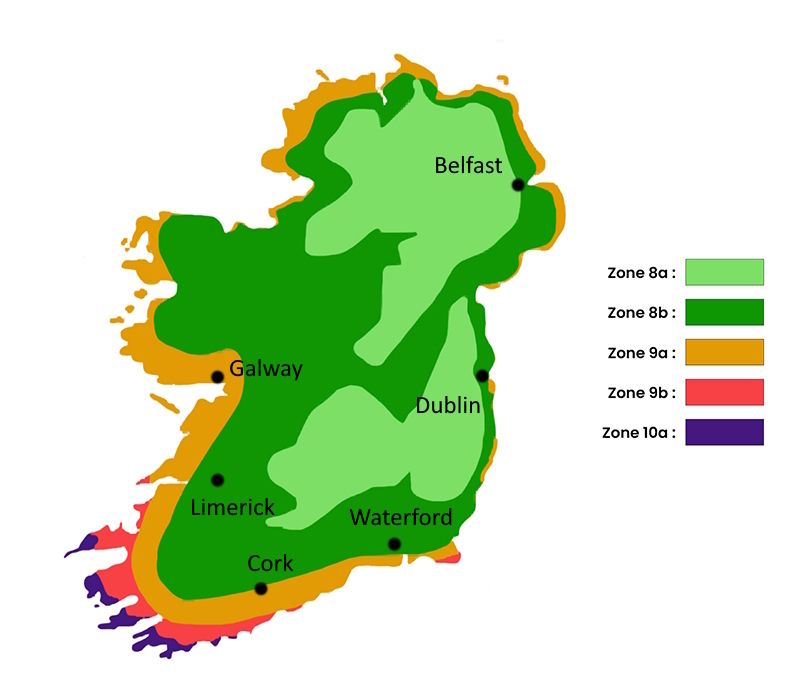
The planting period indicated on our website applies to regions in USDA Zone 9a (East Coast and Midlands: Dublin, Wexford, Waterford, Kilkenny, Portlaoise). It will vary depending on where you live:
- On the west coast and in the north-west (Galway, Limerick, Sligo, Donegal, Westport), delay planting by 1 to 2 weeks in spring and bring it forward by 1 to 2 weeks in autumn compared to the dates given, preferably choosing periods without strong winds.
- In the inland hills and plateaus (Wicklow Mountains, Macgillycuddy’s Reeks, Connemara, Killarney), it is best to plant in spring (April–May) or autumn (September–October), avoiding periods of waterlogged soil in winter and strong winds, which pose the main risk to newly planted trees in these areas.
The flowering period indicated on our website applies to regions in USDA Zone 9a, such as the East Coast and Midlands, including Dublin, Wexford, Waterford, Kilkenny and Portlaoise.
This will vary depending on where you live:
- On the west coast and in the northwest (Galway, Limerick, Sligo, Donegal and Westport), it will be delayed by one to two weeks compared to the given dates, due to stronger Atlantic winds and less spring sunshine.
- In the inland hills and plateaus (the Wicklow Mountains, the Macgillycuddy's Reeks, Connemara and Killarney), flowering will be delayed by two to three weeks. Flowering mainly occurs between May and July, with the limiting factors being less frost and more of the excessive humidity, strong winds and lack of sunshine that are characteristic of these areas.
Shipping country and language
Your country of residence may be:
Your country of residence is:
For a better user experience on our website, you can select:
Your shipping country:
-
 Austria
-
 Belgium
-
 Bosnia & Herzegovina
-
 Bulgaria
-
 Croatia
-
 Cyprus
-
 Czechia
-
 Denmark
-
 Estonia
-
 Finland
-
 France
-
 Germany
-
 Greece
-
 Hungary
-
 Iceland
-
 Ireland
-
 Italy
Italy
-
 Latvia
-
 Liechtenstein
-
 Lithuania
-
 Luxembourg
-
 Malta
Malta
-
 Netherlands
-
 Poland
-
 Portugal
-
 Romania
-
 Serbia
-
 Slovakia
-
 Slovenia
-
 Spain
Spain
-
 Sweden
-
 Switzerland
Language:
-
French
-
 English
-
Spanish
-
Italian
-
German
-
Portuguese
-
Dutch
-
Finnish
My Account
Hello
My wish lists
My cart
Log in / Register
Existing customer?
This form is protected by reCAPTCHA - the Google Privacy Policy and Terms of Service apply.
New customer?
Create an account to track your orders, access our customer service and, if you wish, make the most of our upcoming offers.