How to care for Madagascar palms indoors?
Its care throughout the seasons
Contents
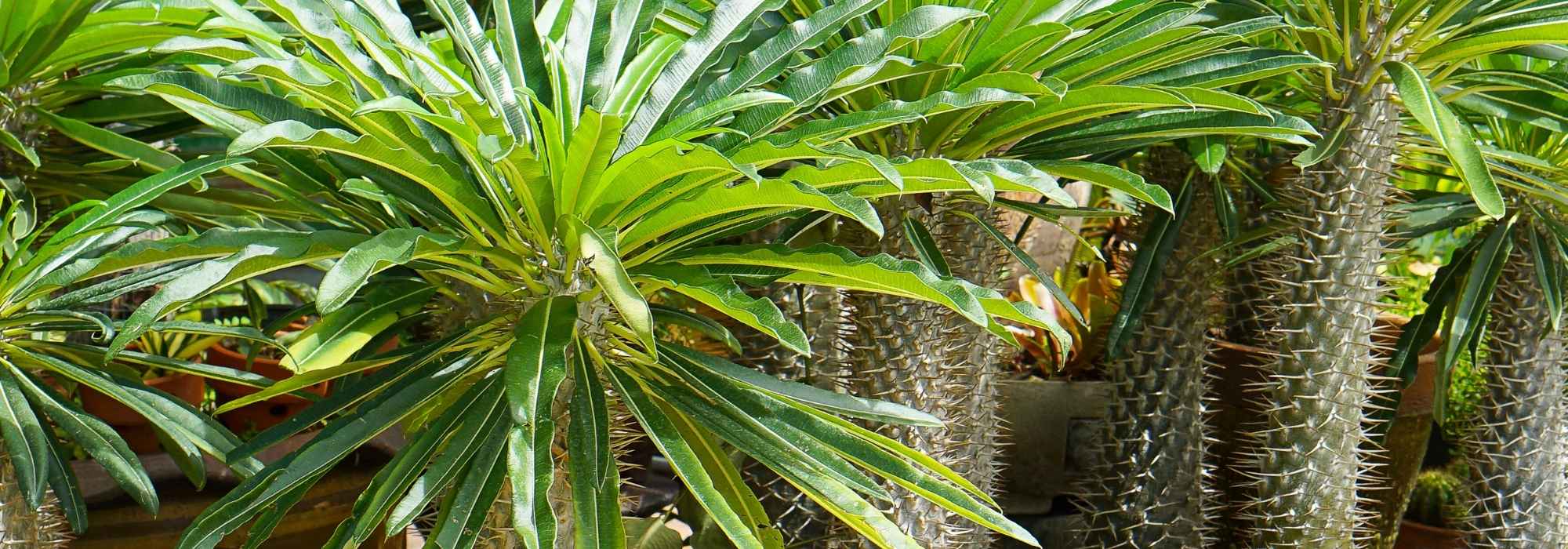
With its thick trunk covered in thorns and crown of long leaves, the Madagascar palm immediately attracts attention with its unusual appearance. Despite its name, Pachypodium lamerei is not a palm, but a semi-succulent plant from the Apocynaceae family, native to Madagascar. Indoors, it is fairly accommodating as long as you meet its need for light and, above all, avoid overwatering. Discover how to care for a Madagascar palm in a pot throughout the seasons.

Spring: the Madagascar palm awakens
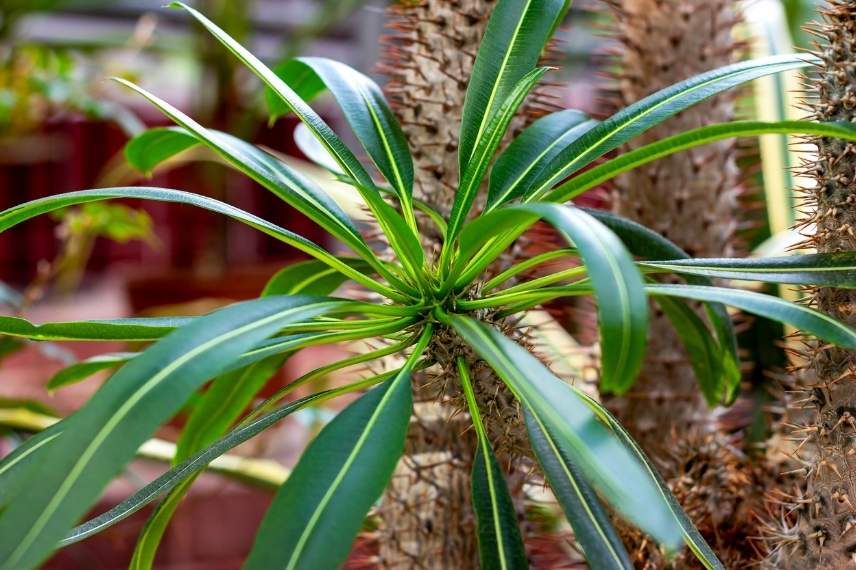
As the days grow longer, the Madagascar palm gradually emerges from dormancy. New leaves appear at the top of the trunk, and the plant starts to use more water again.
This is the time to gradually resume watering. Start with moderate watering, then slightly increase the amount as growth becomes more active. Always allow the potting compost to dry out thoroughly between waterings, as your Madagascar palm does not like excess moisture.
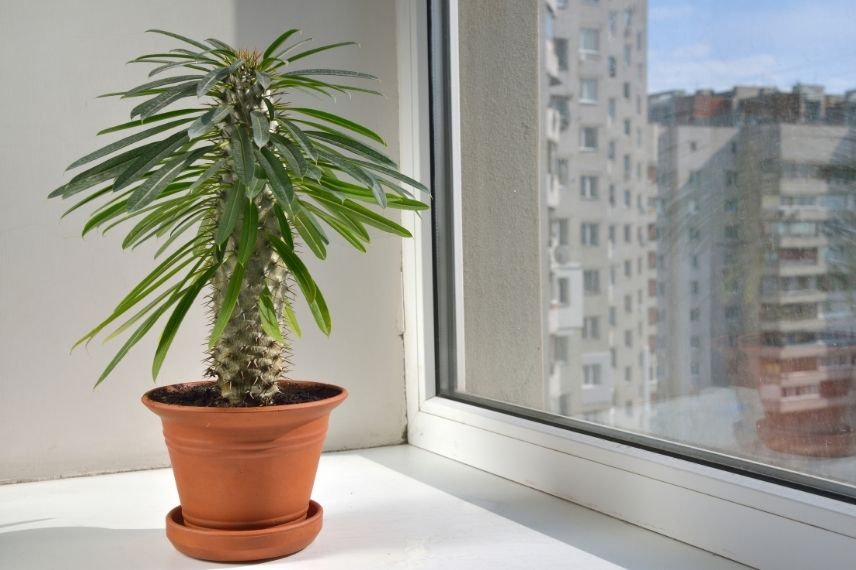
Take advantage of the return of brighter days to give it more light. Place your Madagascar palm very close to a bright window, ideally facing south or west. If it has spent the winter in gentler light, or if you have just bought it, move it closer to the sunlight in stages. Young leaves are more tender and can become marked if they suddenly go from low winter light to several hours of scorching sunshine through a pane of glass.
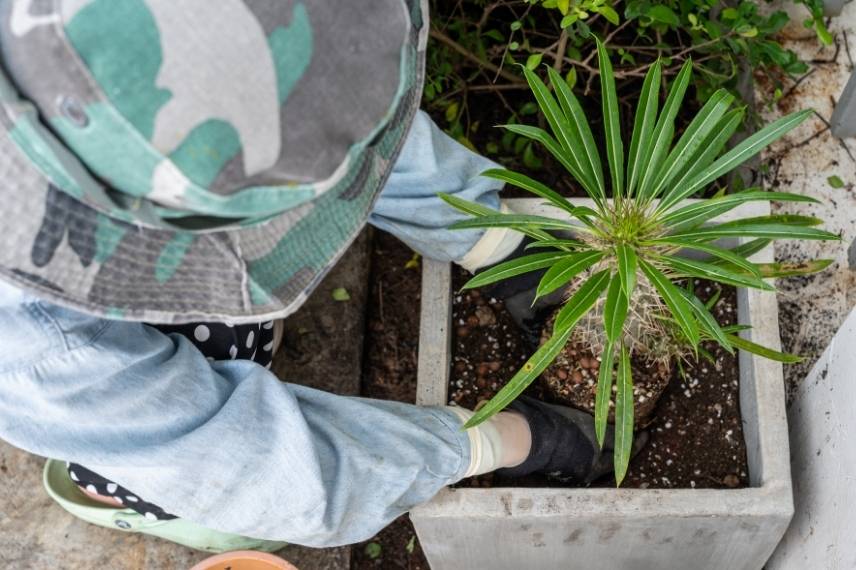
This is also the right season to take a closer look at the pot. Roots emerging from the bottom, a plant that tips over easily or a rootball that has become very compact indicate that repotting may be useful. Ideally, repot every 2 to 3 years. Choose a pot with drainage holes that is slightly wider, and use very free-draining potting compost for cacti and succulent plants. You can also lighten the potting compost with a handful of horticultural sand or pumice. Wear thick gloves when repotting: the thorns are particularly sharp, and Pachypodium sap is toxic.
When new leaves are developing regularly, apply a liquid fertiliser for cacti and succulent plants, low in nitrogen, about once a month. There is no need to fertilise more often: Pachypodium is not a heavy feeder, and feeding should stop when its growth slows in autumn.
Read also
Madagascar palm: to grow and care forIn summer: managing watering and light effectively
In summer, the Madagascar palm continues to produce new leaves at the top of the trunk and makes the most of the warmth and intense light. This is generally the season when it is most active!
With the heat, the growing medium dries out naturally more quickly. It can be tempting to water more often. Not so fast! Even in summer, always let the growing medium dry out between waterings. When the time comes, water thoroughly until the water runs out through the bottom of the pot, empty the saucer, then let the growing medium dry out again undisturbed. Pachypodium much prefers this routine to a succession of small amounts of water that keep its roots damp.
To know when to water again, lift the pot: with practice, the difference in weight between a freshly watered rootball and a dry one becomes very noticeable. You can also push a finger a few centimetres into the growing medium. If it is still damp, leave the watering can aside for a few more days.
If you have a balcony, patio or light-filled courtyard, your Madagascar palm can also spend the summer outdoors. It will benefit from levels of light that are difficult to match indoors. However, do not place it in full sun straight away on the first day: acclimatise it gradually over several days, especially if it has been growing in a less brightly lit interior. Once acclimatised, it will appreciate a very sunny position.
Simply keep an eye on the weather. A few showers will not necessarily cause problems in a well-drained pot, but avoid allowing the rootball to become waterlogged during repeated rainfall.
Finally, as long as the plant is growing well, continue applying a low-nitrogen liquid fertiliser every four to five weeks. There is no need to give it more: with light, warmth and carefully controlled watering, the Madagascar palm already has everything it needs to make the most of summer.
In autumn: gradually reduce watering
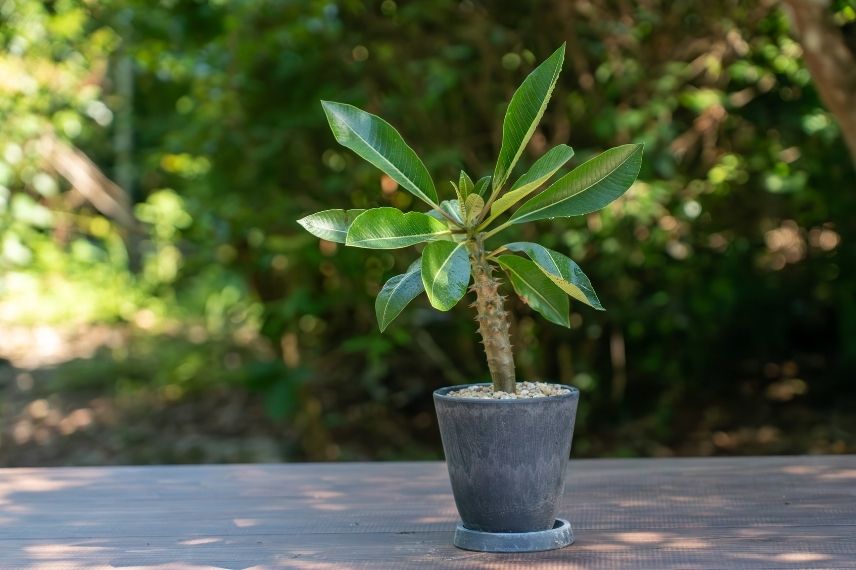
In autumn, Pachypodium does not stop growing overnight. As long as the days remain bright and mild, it can continue to grow. Then, little by little, fewer new leaves appear and the potting compost takes longer to dry. This is the time to adapt your care to the plant’s actual rhythm, rather than following the calendar to the letter.
Start by gradually spacing out the waterings. Before getting the watering can out again, push a finger into the potting compost: if it is still cool or damp a few centimetres down, wait. In autumn, the same pot that dried out quickly in summer may retain moisture for several extra days.
When growth slows down noticeably, stop feeding. There is no point stimulating a plant that is naturally preparing to slow down. Resume feeding in spring, when new leaves begin to appear regularly.
If your Madagascar palm has spent the summer outdoors, bring it inside before the cold nights arrive. Take the opportunity to check the leaves, the top of the trunk and the pot. A quick inspection before placing it among your other houseplants can reveal any pests (red spider mites, scale insects, aphids, etc.) and prevent them from being brought into the house.
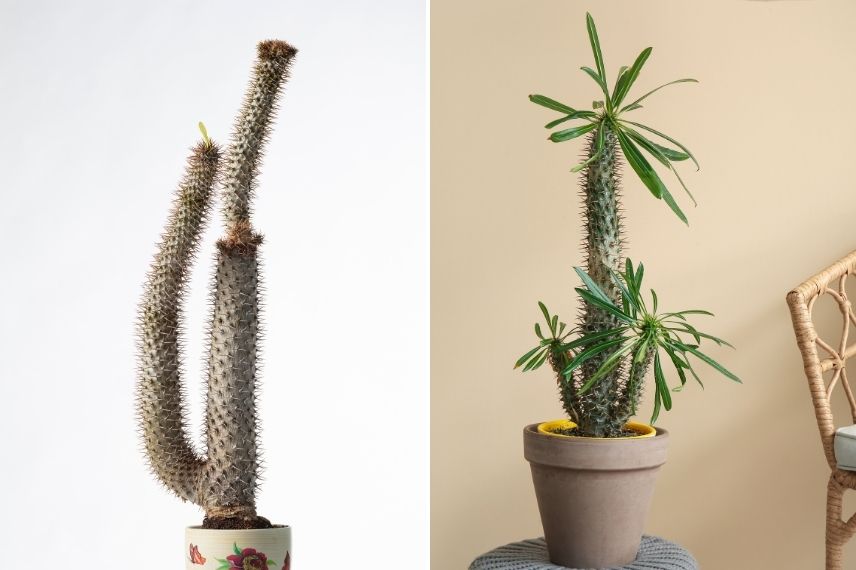
A few leaves starting to turn yellow or fall? This is not necessarily a bad sign. Reduced light can lead to a gradual loss of foliage as winter approaches. As long as the plant remains healthy, simply support this change by reducing watering: it is telling you that it is time to switch to its winter routine.
Read also
How to propagate the Madagascar palm?In winter: helping the Madagascar palm through dormancy
In winter, the days grow shorter, light levels drop and the plant enters a much quieter period. The Madagascar palm may retain some of its leaves, lose many of them, or even become almost bare for a while. There is no need to worry, however: if the trunk remains healthy and the plant shows no signs of rot, this seasonal dormancy is perfectly normal.
It is mainly the watering can that you need to learn to put aside for a while. Space out watering considerably and allow the growing medium to dry out almost completely between waterings. The more leaves the plant has lost, the less it grows and the less water it uses. In winter, it is better to wait a little too long before watering than to keep the roots permanently in damp soil.
Nevertheless, keep your Madagascar palm in a very bright spot, as close to a window as possible, in a sufficiently warm room, ideally above 15 °C. Simply avoid direct contact with a cold windowpane, draughts, and placing it right next to a radiator or fireplace. Even while dormant, it appreciates light, so there is no point banishing it to the back of a room just because it has stopped growing.
Do not feed it during this period. Then, monitor the top of the trunk at the end of winter: the appearance of new leaves will be your best indication that you can gradually resume watering and support its spring growth.
- Subscribe!
- Contents
This form is protected by reCAPTCHA - the Google Privacy Policy and Terms of Service apply.

































Comments