Eriobotrya japonica Argelino - Japanese Loquat
Eriobotrya japonica Argelino - Japanese Loquat
Eriobotrya japonica Argelino - Japanese Loquat
Eriobotrya japonica Argelino - Japanese Loquat
Eriobotrya japonica Argelino
Japanese Loquat
Back-to-school special offer!
Get €10 off for every €50 you spend! And get up to €40 off on a single order.
How does it work?
1. Shop your favourites
Add your favourite plants to your basket. For every €50 you spend (excluding delivery charges, store credit and the plastic-free option), you’ll receive a €10 voucher.
€50 spent = €10 voucher
€100 spent = €20 voucher
€150 spent = €30 voucher
€200 spent = €40 voucher
2. Place your order
Once your basket reaches one of the spending thresholds, place your order. You can even choose your delivery date!
3. Receive your voucher
As soon as your order has been shipped, you’ll receive an email containing your personal voucher code and its value.
4. Use it on your next order
Your voucher is valid for 90 days from the date you receive it. It can be used once only, on a new order worth at least the value of the voucher, excluding delivery charges.
Please note: Vouchers can be combined with other offers, but cannot be split or refunded.
Why not try an alternative variety in stock?
View all →
Available in 5 sizes
Available in 3 sizes
This plant carries a 12 months recovery warranty
More information
We guarantee the quality of our plants for a full growing cycle, and will replace at our expense any plant that fails to recover under normal climatic and planting conditions.
Description
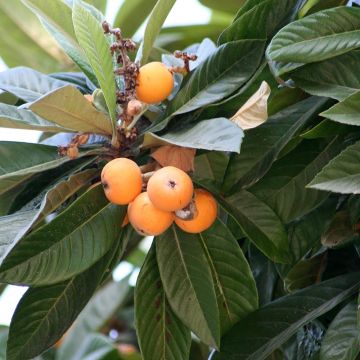
Japanese Loquat 'Argelino' (Eriobotrya japonica) is a variety renowned for its abundant production of deliciously refreshing golden-orange fruits. Native to Algeria and highly prized in the Mediterranean, this fruit tree is characterised by its beautiful evergreen foliage, elegant habit, and honey-producing, fragrant autumn flowering. Bountiful harvests can be enjoyed in mild climates, even those that are very dry in summer. Elsewhere, it will add a touch of exoticism to the garden throughout the year.
Japanese Loquat 'Argelino' belongs to the Rosaceae family. Native to Japan and China, the species has become naturalised in many subtropical and temperate regions around the world. The 'Argelino' variety was developed in Algeria before being introduced to Spain in the early 20th century. It is the most widely cultivated variety in Spain today. It is also known as 'Algar', named after a valley in the municipality of Callosa d'en Sarrià (in Valencian...) in the province of Alicante, home to the largest loquat production in southern Europe. The 'Argelino' loquat is susceptible to scab. It is a self-fertile variety, but production will be greater when another Japanese loquat is planted nearby.
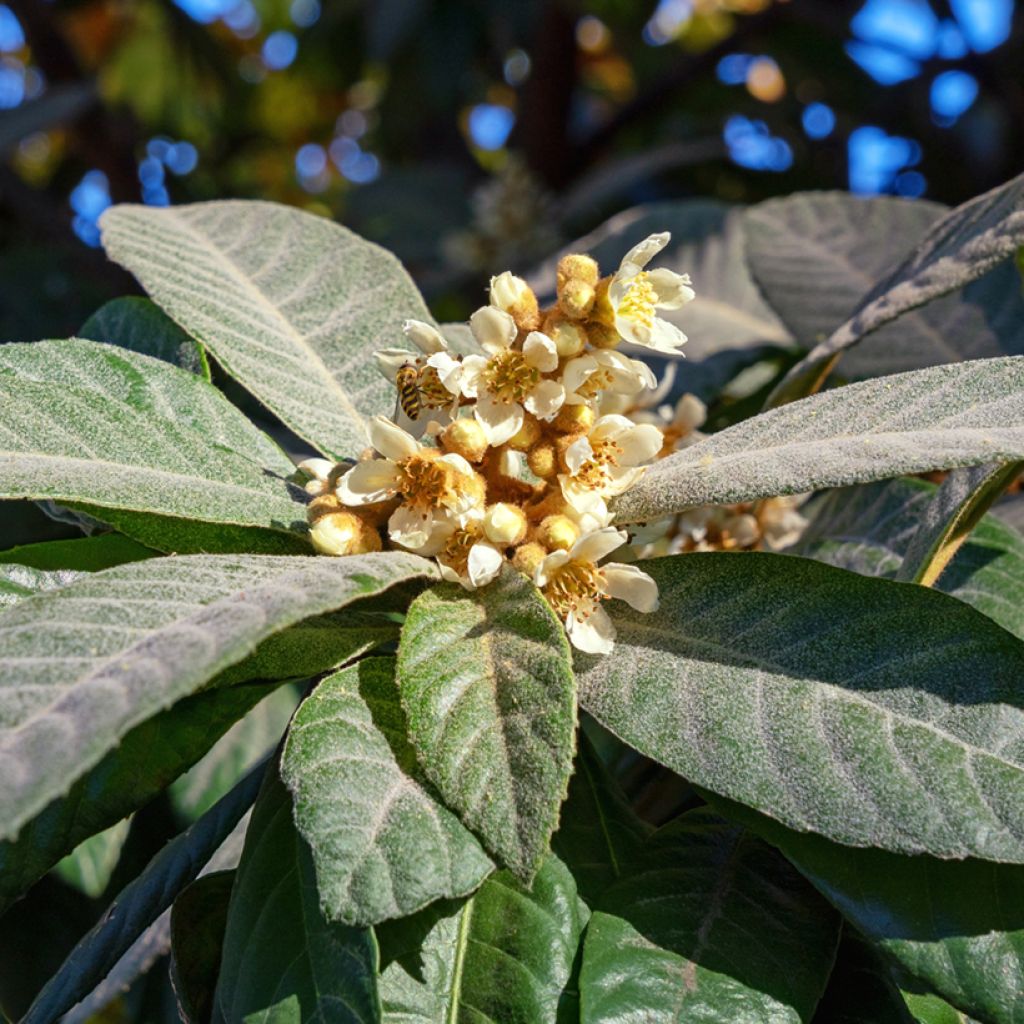
This fruit tree has an upright habit with a spreading crown and can reach a height of 6 to 8 m. Its foliage is evergreen in winter, with large, dark green leaves deeply veined and measuring between 20 and 25 cm in length. The leaves are alternate, oblong, with spaced serrations, and their underside is densely hairy, with a downy texture. Young shoots and buds are also cottony, hence the genus name Eriobotrya, meaning "woolly cluster" in Greek.
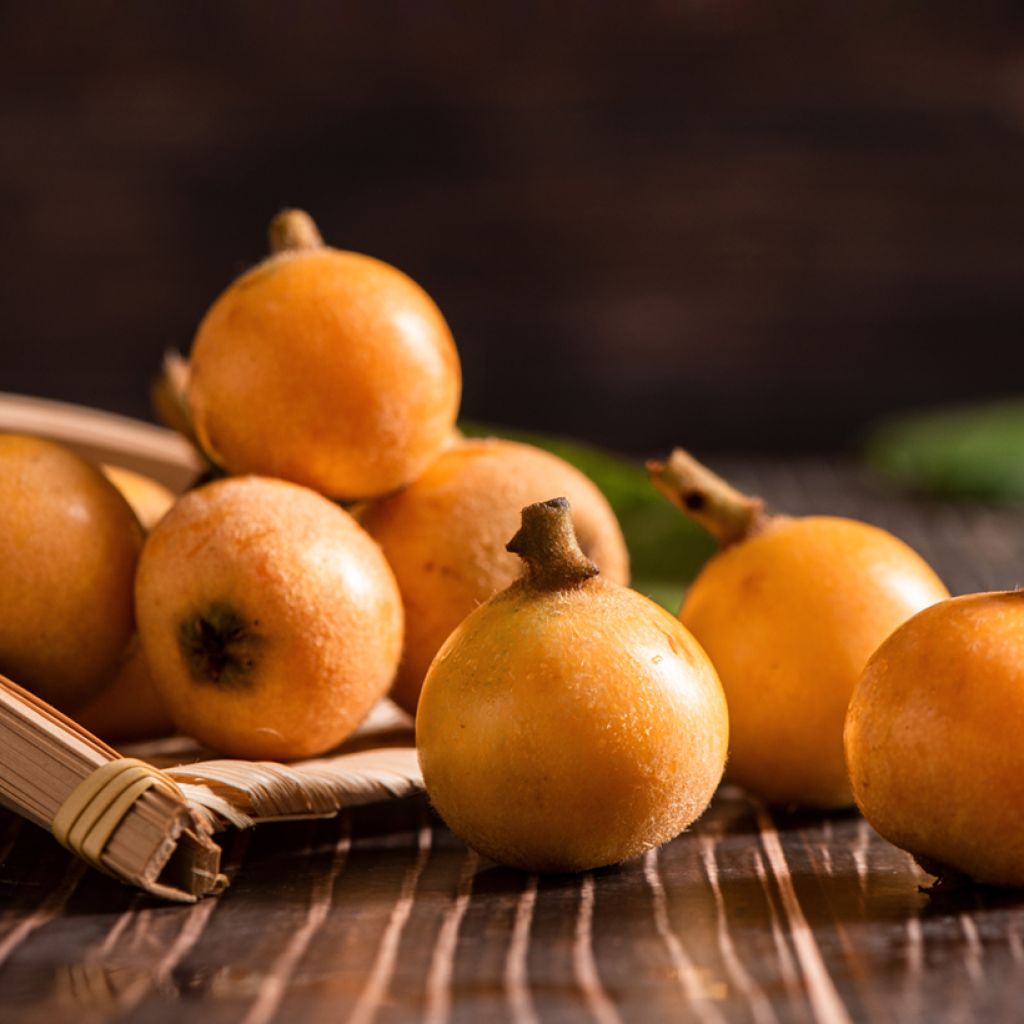
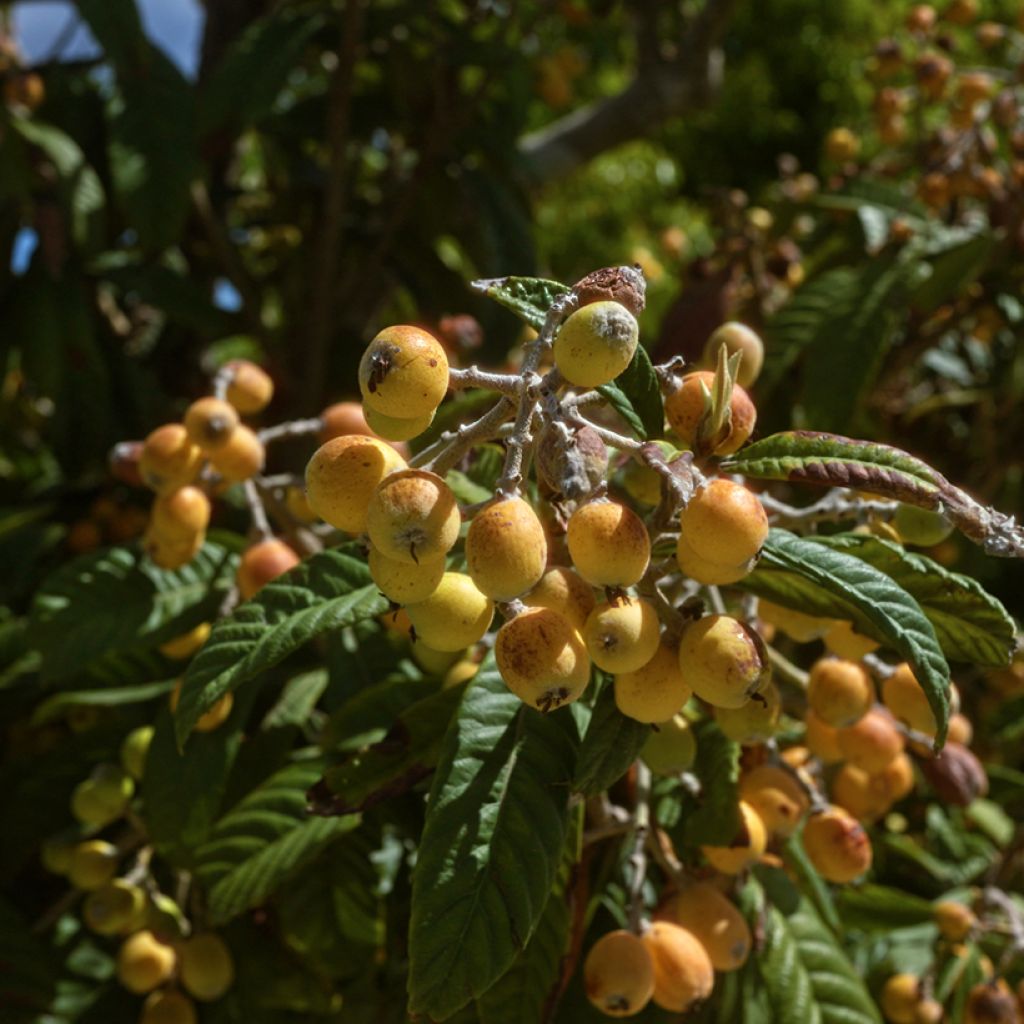
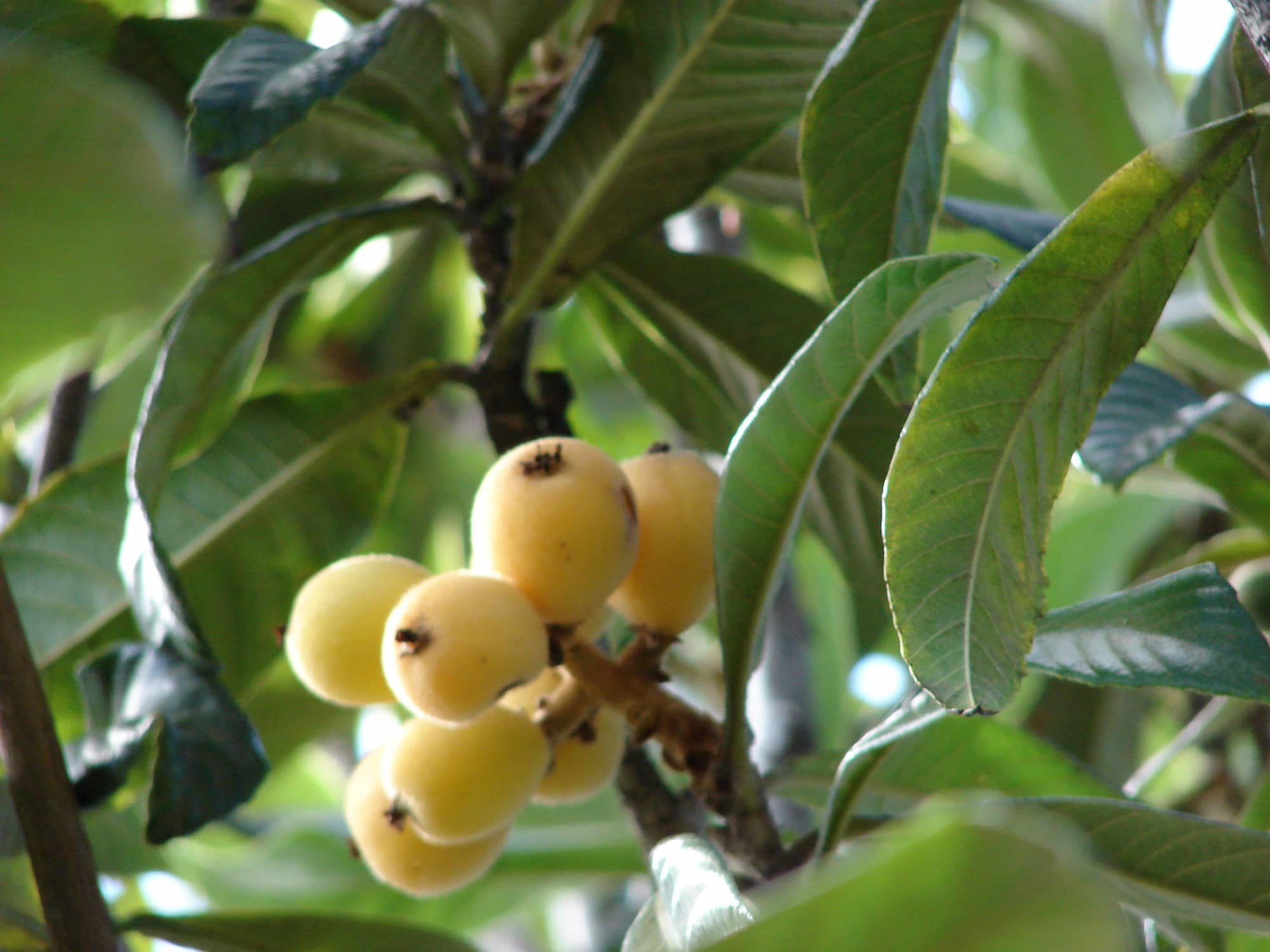
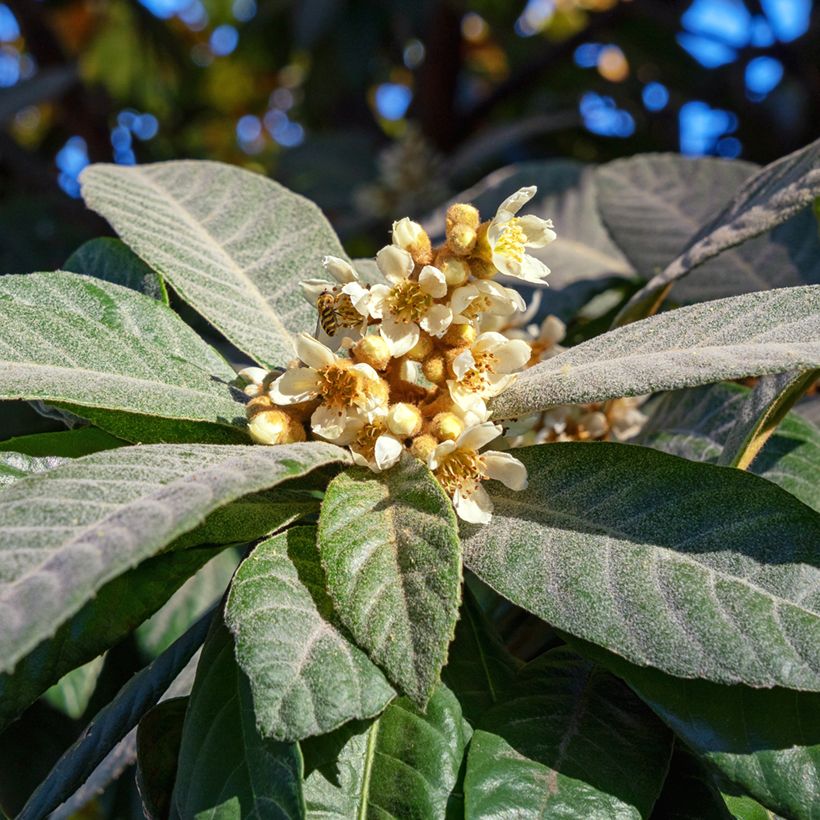
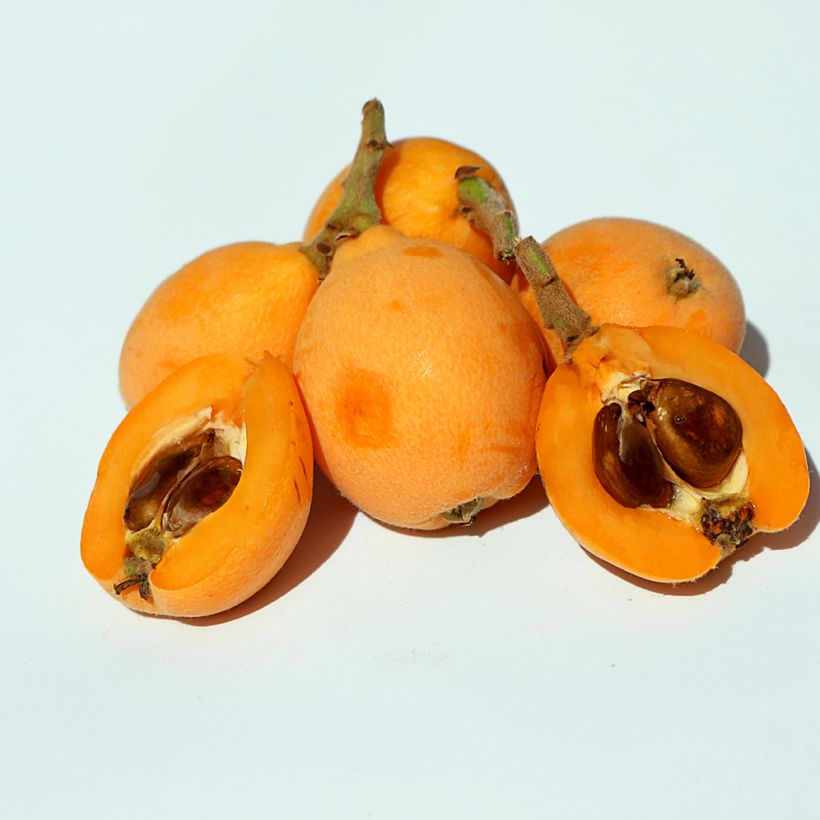
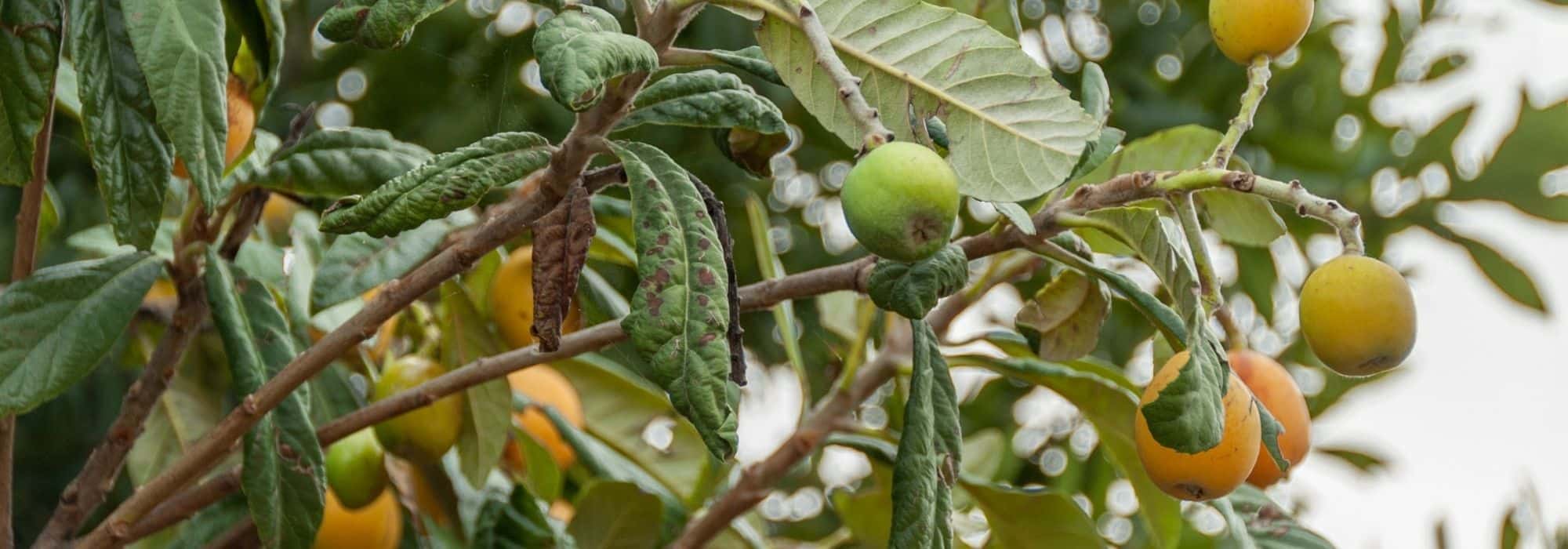
Flowering typically occurs in October-November. The flowers, arranged in downy pyramidal clusters, are creamy white and emit a pleasant scent of bitter almond. They measure about 2 cm in diameter and have five petals. The loquats ripen from May to June. They are ovoid, yellow-orange to golden-orange, with an average size of 4 cm and a weight of around 65 g. The orange flesh is juicy, sweet, and slightly tangy. They contain 1 to 4 inedible stones.
Harvesting Japanese Loquats 'Argelino' takes place in spring, when the fruits turn orange and become slightly soft to the touch. They detach easily from the tree and should be consumed quickly, as they are fragile and perishable.
In cooking, loquats can be enjoyed fresh, simply peeled and stoned. They are also ideal for making jams, compotes, sorbets, and pastries. In some regions, they are used to prepare artisanal liqueurs or chutneys to accompany meats and cheeses. The fruits are rich in vitamins A and C.
Eriobotrya japonica Argelino - Japanese Loquat in pictures
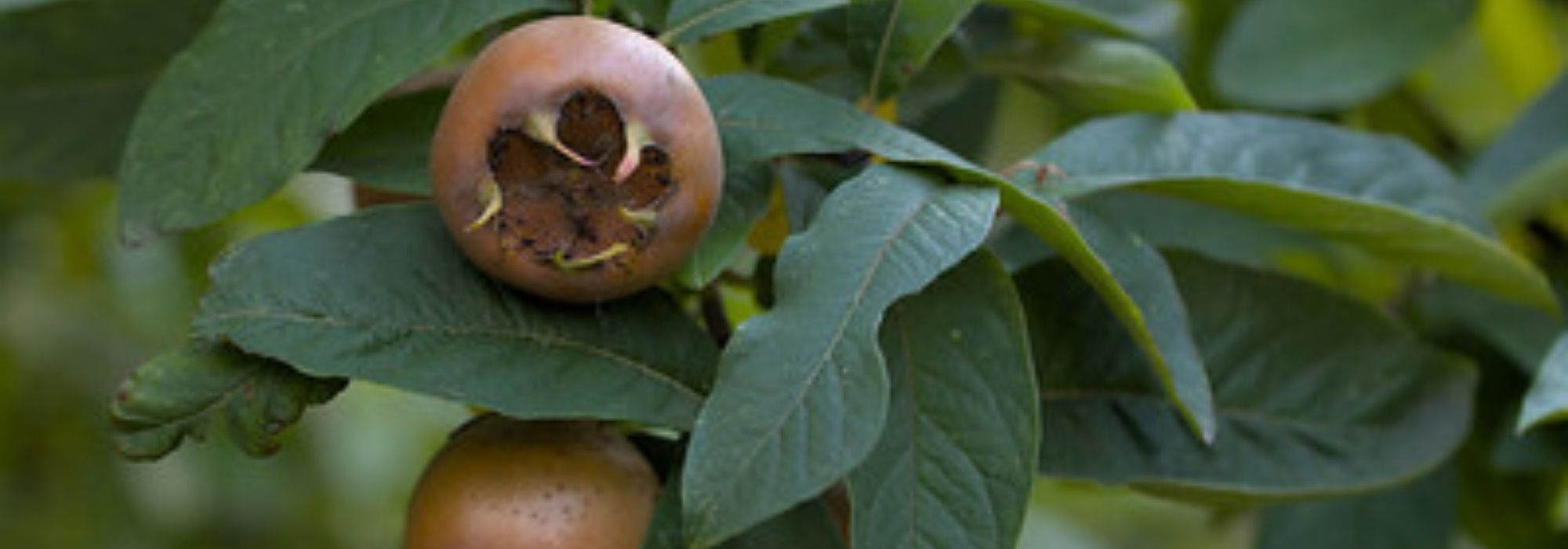
Plant habit
Fruit
Flowering
Foliage
Botanical data
Eriobotrya
japonica
Argelino
Rosaceae
Japanese Loquat
Eriobotrya japonica Algar, Mespilus japonica
Cultivar or hybrid
Planting and care
Eriobotrya japonica 'Argelino' is ideal for coastal areas with relatively mild winters. It tolerates heat and summer drought well once established, but appreciates regular watering during the growth period. This fruit tree particularly enjoys mild and temperate climates, with a Mediterranean or subtropical influence. It thrives in regions with moderate winters, as although it can withstand temperatures down to -12°C, temperatures below -4/-5°C will destroy its flowers and compromise fruiting.
To cultivate the Japanese Loquat 'Argelino' in the ground, choose a sunny spot sheltered from cold winds, preferably against a south-facing wall in areas with harsher winters. It adapts to various soil types but prefers rich, well-drained, and slightly acidic to neutral soil. Plant in autumn or spring, by digging a hole at least 60 cm deep and incorporating well-rotted compost to encourage good root development. Mulching around the base helps retain moisture and protects the roots from cold in winter.
Container cultivation is possible, especially in colder climates where the tree can be overwintered under shelter. Opt for a large container (at least 50 cm in diameter) with good drainage, using a mix of potting compost, well-rotted compost, and sand. Repot every 3 to 4 years to ensure healthy growth.
Pruning is not essential, but can be carried out in late winter (February-March) to control height, thin out the centre of the tree, and remove dead or diseased wood. After fruiting, you can also shorten the branches that bore fruit to stimulate new shoots.
The Japanese Loquat is fairly resistant to diseases but may be susceptible to fire blight, aphid attacks, or scale insects in warm climates. Preventive treatment with insecticidal soap for aphids, along with regular leaf inspection, helps limit infestations. Good foliage aeration and well-drained soil help prevent fungal diseases such as scab.
Planting period
Intended location
Care
Planting & care advice
-
-
-
-
-
-
-
-
This item has not been reviewed yet - be the first to leave a review about it.
Recently viewed products
Haven't found what you were looking for?
Hardiness is the lowest winter temperature a plant can endure without suffering serious damage or even dying. However, hardiness is affected by location (a sheltered area, such as a patio), protection (winter cover) and soil type (hardiness is improved by well-drained soil).
In temperate climates, pruning of spring-flowering shrubs (forsythia, spireas, etc.) should be done just after flowering.
Pruning of summer-flowering shrubs (Indian Lilac, Perovskia, etc.) can be done in winter or spring.
In cold regions as well as with frost-sensitive plants, avoid pruning too early when severe frosts may still occur.
The harvesting period indicated on our website applies to countries and regions in USDA zone 8 (France, England, Ireland, the Netherlands).
In colder areas (Scandinavia, Poland, Austria...) fruit and vegetable harvests are likely to be delayed by 3-4 weeks.
In warmer areas (Italy, Spain, Greece, etc.), harvesting will probably take place earlier, depending on weather conditions.
The sowing periods indicated on our website apply to countries and regions within USDA Zone 8 (France, UK, Ireland, Netherlands).
In colder areas (Scandinavia, Poland, Austria...), delay any outdoor sowing by 3-4 weeks, or sow under glass.
In warmer climes (Italy, Spain, Greece, etc.), bring outdoor sowing forward by a few weeks.
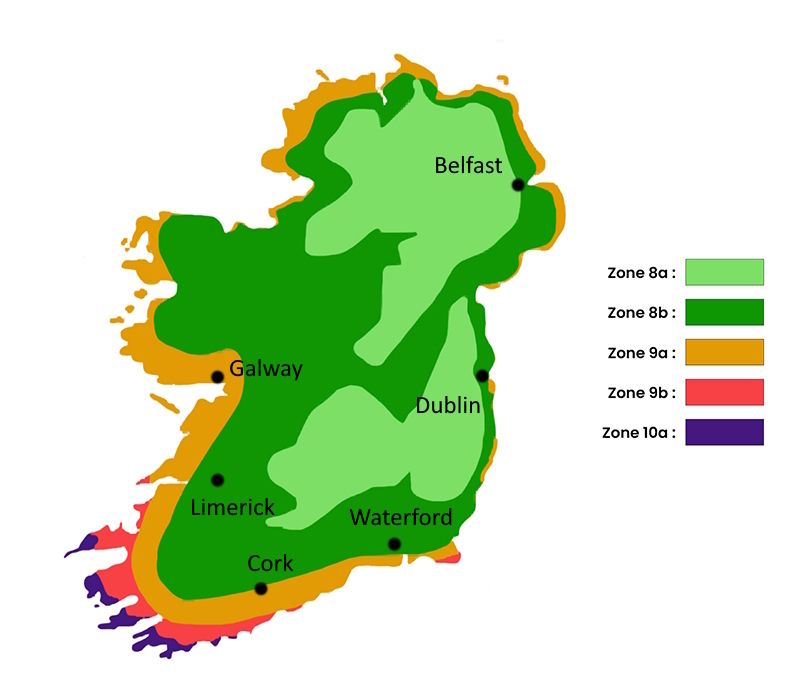
The planting period indicated on our website applies to regions in USDA Zone 9a (East Coast and Midlands: Dublin, Wexford, Waterford, Kilkenny, Portlaoise). It will vary depending on where you live:
- On the west coast and in the north-west (Galway, Limerick, Sligo, Donegal, Westport), delay planting by 1 to 2 weeks in spring and bring it forward by 1 to 2 weeks in autumn compared to the dates given, preferably choosing periods without strong winds.
- In the inland hills and plateaus (Wicklow Mountains, Macgillycuddy’s Reeks, Connemara, Killarney), it is best to plant in spring (April–May) or autumn (September–October), avoiding periods of waterlogged soil in winter and strong winds, which pose the main risk to newly planted trees in these areas.
The flowering period indicated on our website applies to regions in USDA Zone 9a, such as the East Coast and Midlands, including Dublin, Wexford, Waterford, Kilkenny and Portlaoise.
This will vary depending on where you live:
- On the west coast and in the northwest (Galway, Limerick, Sligo, Donegal and Westport), it will be delayed by one to two weeks compared to the given dates, due to stronger Atlantic winds and less spring sunshine.
- In the inland hills and plateaus (the Wicklow Mountains, the Macgillycuddy's Reeks, Connemara and Killarney), flowering will be delayed by two to three weeks. Flowering mainly occurs between May and July, with the limiting factors being less frost and more of the excessive humidity, strong winds and lack of sunshine that are characteristic of these areas.
Shipping country and language
Your country of residence may be:
Your country of residence is:
For a better user experience on our website, you can select:
Your shipping country:
-
 Austria
-
 Belgium
-
 Bosnia & Herzegovina
-
 Bulgaria
-
 Croatia
-
 Cyprus
-
 Czechia
-
 Denmark
-
 Estonia
-
 Finland
-
 France
-
 Germany
-
 Greece
-
 Hungary
-
 Iceland
-
 Ireland
-
 Italy
Italy
-
 Latvia
-
 Liechtenstein
-
 Lithuania
-
 Luxembourg
-
 Malta
Malta
-
 Netherlands
-
 Poland
-
 Portugal
-
 Romania
-
 Serbia
-
 Slovakia
-
 Slovenia
-
 Spain
Spain
-
 Sweden
-
 Switzerland
Language:
-
French
-
 English
-
Spanish
-
Italian
-
German
-
Portuguese
-
Dutch
-
Finnish
My Account
Hello
My wish lists
My cart
Log in / Register
Existing customer?
This form is protected by reCAPTCHA - the Google Privacy Policy and Terms of Service apply.
New customer?
Create an account to track your orders, access our customer service and, if you wish, make the most of our upcoming offers.