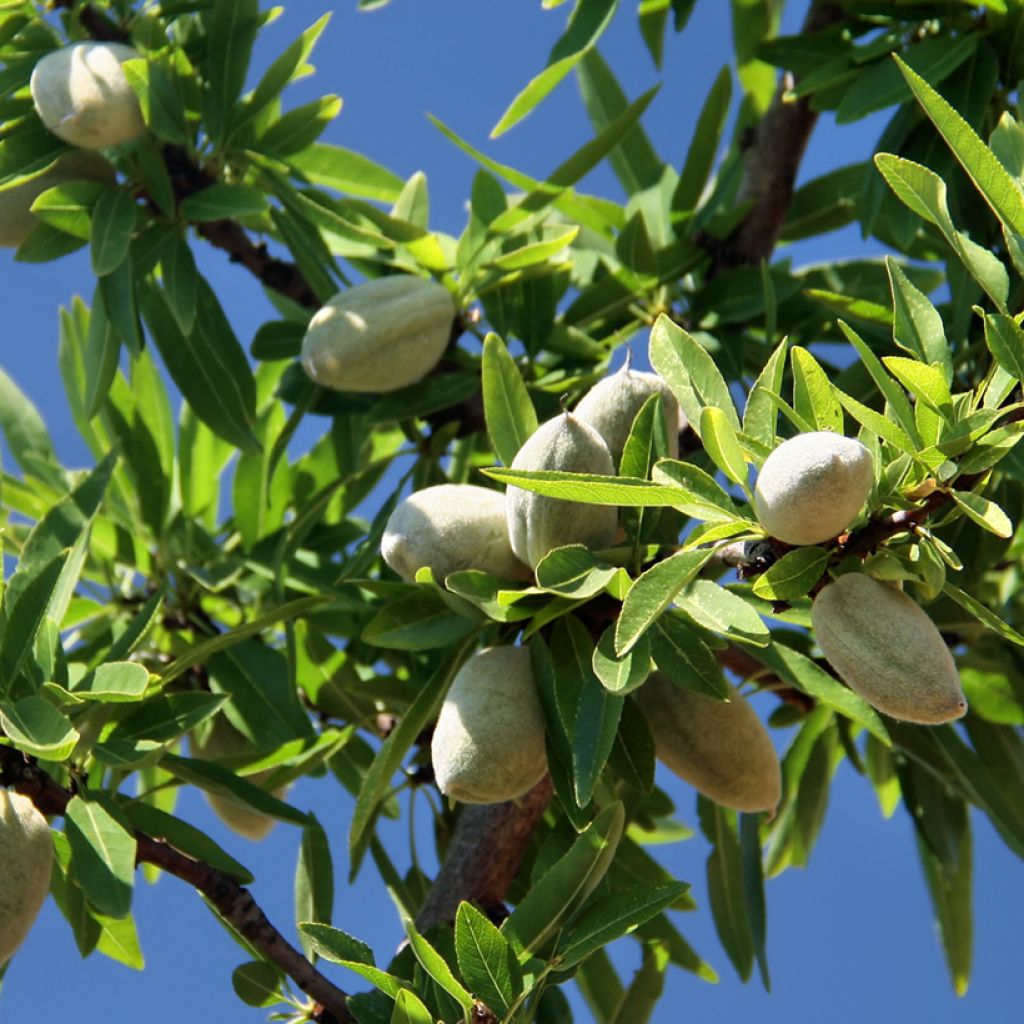
Prunus dulcis Aï - Almond Tree
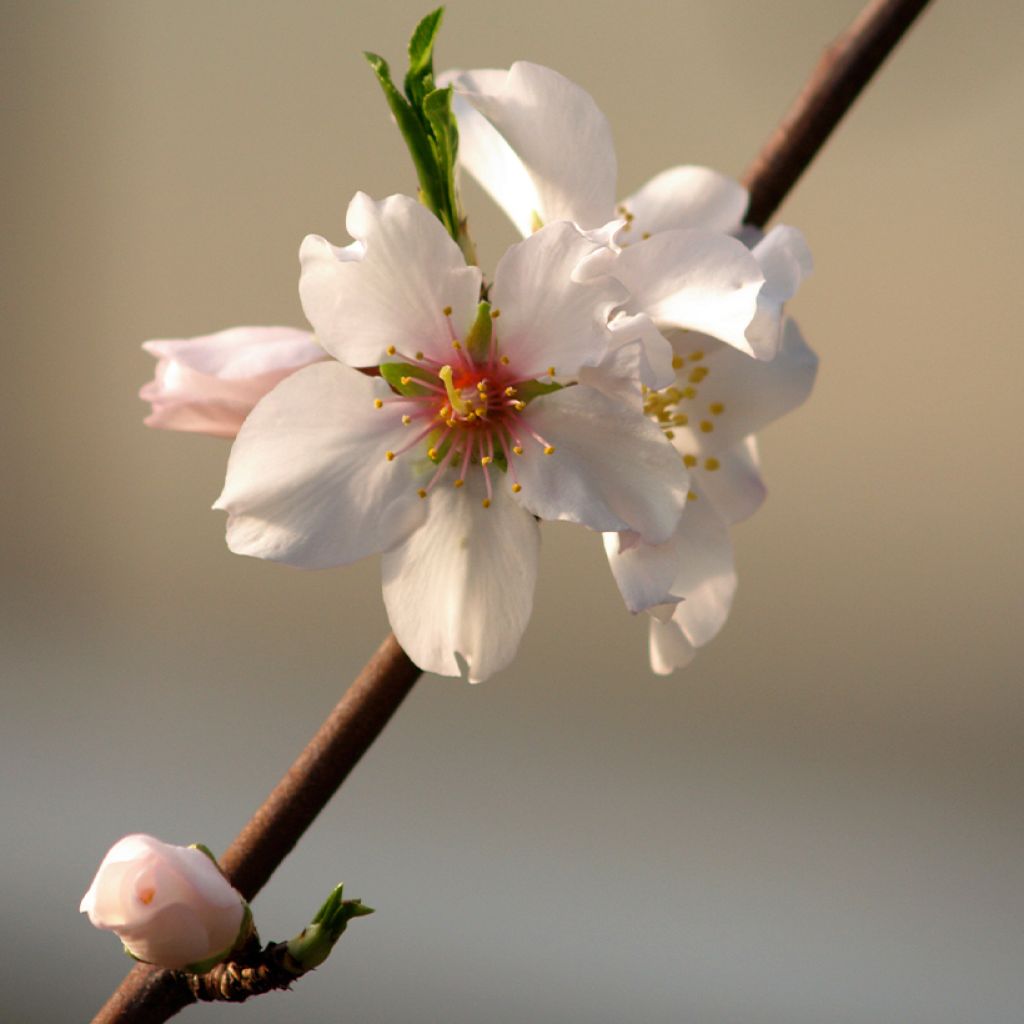
Prunus dulcis Aï - Almond Tree
Prunus dulcis Aï - Almond Tree
Prunus dulcis Aï
Almond
Back-to-school special offer!
Get €10 off for every €50 you spend! And get up to €40 off on a single order.
How does it work?
1. Shop your favourites
Add your favourite plants to your basket. For every €50 you spend (excluding delivery charges, store credit and the plastic-free option), you’ll receive a €10 voucher.
€50 spent = €10 voucher
€100 spent = €20 voucher
€150 spent = €30 voucher
€200 spent = €40 voucher
2. Place your order
Once your basket reaches one of the spending thresholds, place your order. You can even choose your delivery date!
3. Receive your voucher
As soon as your order has been shipped, you’ll receive an email containing your personal voucher code and its value.
4. Use it on your next order
Your voucher is valid for 90 days from the date you receive it. It can be used once only, on a new order worth at least the value of the voucher, excluding delivery charges.
Please note: Vouchers can be combined with other offers, but cannot be split or refunded.
Home or relay delivery (depending on size and destination)
Important: You may be charged customs duties by your country’s customs authorities upon delivery.
Schedule delivery date
and select date in basket
This plant carries a 12 months recovery warranty
More information
We guarantee the quality of our plants for a full growing cycle, and will replace at our expense any plant that fails to recover under normal climatic and planting conditions.
Description
Prunus dulcis Ai, from Organic Agriculture, is a fruit-bearing and ornamental tree, highly valued for its fruit and its exceptional blossom in late winter. It produces elongated, flattened, fuzzy, green fruits which turn beige when ripe and are approximately 5 cm (2in) long. Under the flesh is a woody stone with a soft shell that contains the almond. The 'Ai' variety produces a wide and flat almond (kernel), of excellent sweet flavour, which can be consumed fresh in July. It is more commonly consumed dried, after harvesting, from mid-September, when the green and fuzzy fleshy envelope, called the hull, opens. The almond has a very long shelf life when dried. It has a multitude of culinary uses. Its nutritional qualities are remarkable. The tree is hardy but its early flowering, from late February to mid-March, does not tolerate frost. To obtain a good fruit set, it will need to be given a prime location. In addition to its splendid flowering, the flowers produce a high-quality nectar, sought after by bees. This vigorous variety of almond tree with fairly rapid fruiting and slow growth, has a lifespan of between 50 and 80 years. It is sensitive to frost and prefers a warm, sunny, and sheltered location. It is resistant to fungal diseases, particularly brown rot, but susceptible to scab.
Prunus dulcis or amygdalus (Common Almond) is a fruit tree belonging to the Rosaceae family that originated in Central or Western Asia. The almond tree was cultivated early on in the Greek islands and then throughout southern Europe and North Africa. It was introduced to the Midi region in the 5th century BC, but its development only took off in the Middle Ages. The almond tree was introduced to the United States in the 19th century, and California has become the world's leading producer. In the Prunus genus, it is closely related to cherry, apricot, and peach trees. The fruit is commonly called an "almond" just like the edible seed contained within the shell, which is also called a kernel.
The Ai variety has been cultivated since the 19th century in the Aix-en-Provence region and in Vaucluse. It forms a tree with an upright frame and spreading branches, reaching 5 to 7 metres (16 to 23 feet) high with a diameter of about 4 to 6 metres (13 to 20 feet). Its habit is suited to free forms on half-standards or low goblet forms. Its deciduous foliage is composed of lanceolate, finely toothed, 8 to 12 cm (3 to 5in) long and 3 to 4 cm (1 to 2in) wide, often pendulous, dark green leaves which take on autumnal yellow-brown hues before falling. Flowering occurs in February-March. The nectar-rich, white, 3 to 4 cm (1 to 2in) diameter flowers, appear singly or in pairs before the leaves, on the previous year's branches. They can be destroyed by frost at temperatures of -2 to -3°C. This early flowering makes it less viable further north. The flowers cover the entire tree and give the almond tree a remarkable elegance in late winter. It is hardy down to -20°C. This variety is self-sterile or self-incompatible, the flowers cannot self-pollinate. This is why the presence of other almond varieties flowering at the same time nearby is necessary. For example, the Texas, Ferragnes, and Ferraduel varieties are suitable for cross-pollination, thus increasing the number of fruits.
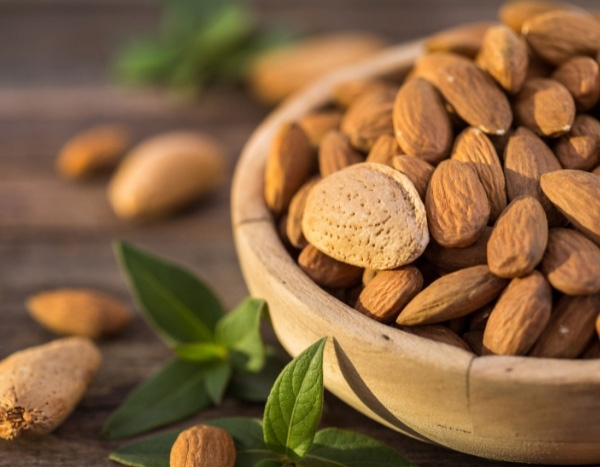
Only the almond (kernel) contained in the shell is edible. The fruits of Prunus dulcis Ai are harvested either milky, from July for consumption as fresh almonds, or from mid-September when the case cracks and begins to open, for use as dried almonds. Fresh almonds are hand-picked. They will only keep for a few days. In the mouth, they are juicy, astringent, and slightly milky. Eaten plain, they have a delicate and distinct taste. They can be used to make plant-based milk. In cooking, they pair very well with savoury dishes such as tagines, salads, or pastries. To harvest dried almonds, simply collect the shells from the ground, if necessary shake the tree branches to help the operation, then dry them in the sun for several days. Once removed from its case, the woody shell, which contains the almond, can be stored for up to a year in a well-ventilated, cool place. In cooking, almonds can be used in various forms: whole, roasted, sliced, crushed, as a paste, in milk or cream, for many culinary uses. They are an oily nut, which can sometimes cause allergic reactions. Almonds are used in cosmetics, particularly for their soothing and moisturising oil.
Almons are rich in fatty acids, vegetable proteins and fibre and offer a complete nutritional profile with the presence of vitamins (B and E) and minerals (calcium, magnesium, manganese, copper, phosphorus, iron, and potassium). They are a healthy choice to include in a varied and balanced diet.
Like many fruit trees, almond trees prefer light, deep, and well-drained soils, even limestone. They do not tolerate excess water or heavy, compact soils. They prefer full sun and shelter from drafts and cold winds. A south or southwest exposure is ideal. To obtain fruits, it is imperative that the blossom does not freeze, which limits almond cultivation to climatic zones governed by a Mediterranean climate with short winters like southern China, southwestern North America (California), South America (central Chile), South Africa, and Australia. With a wide range of almond varieties, it is easy to find one that suits.
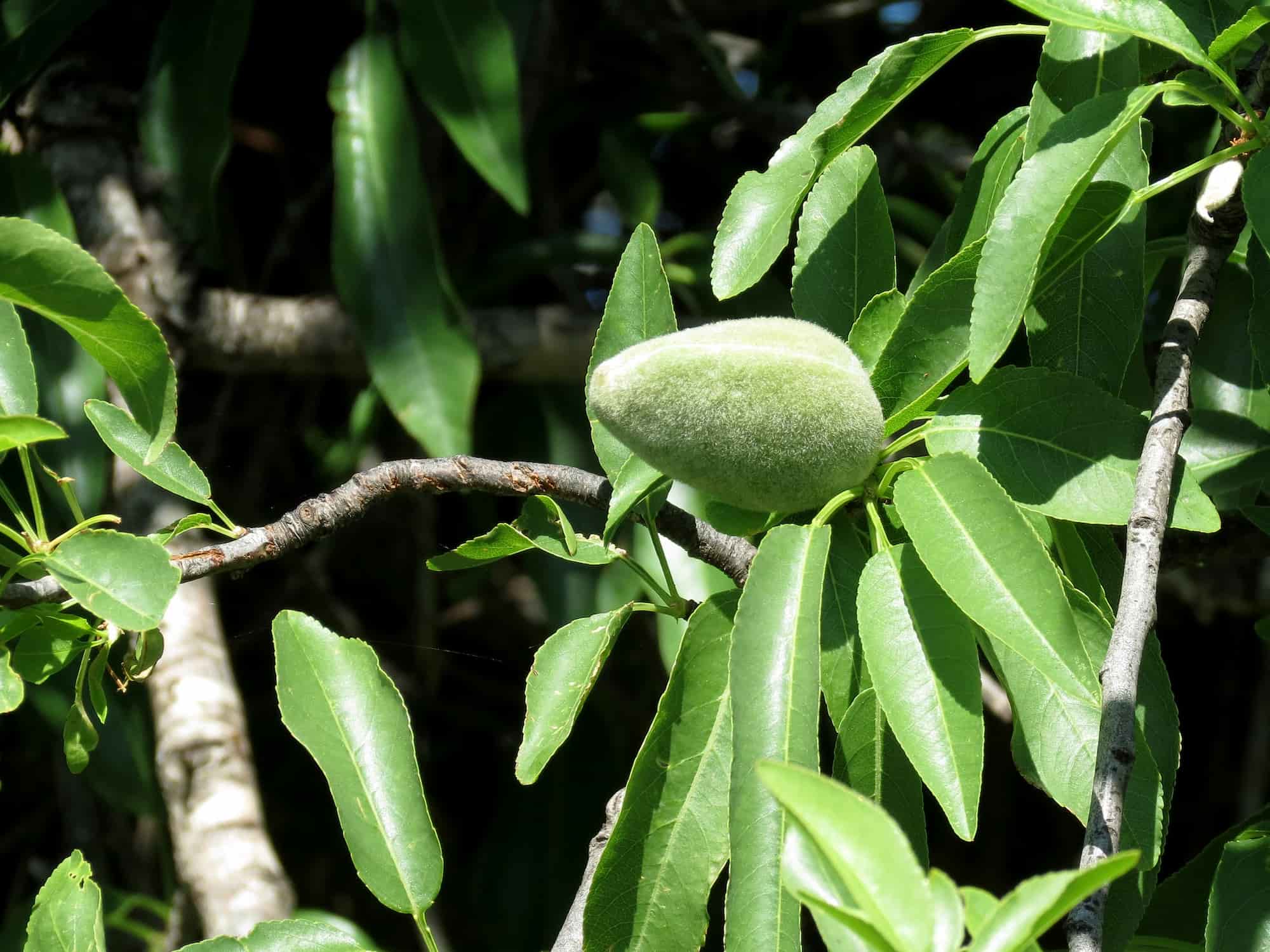
Prunus dulcis Aï - Almond Tree in pictures
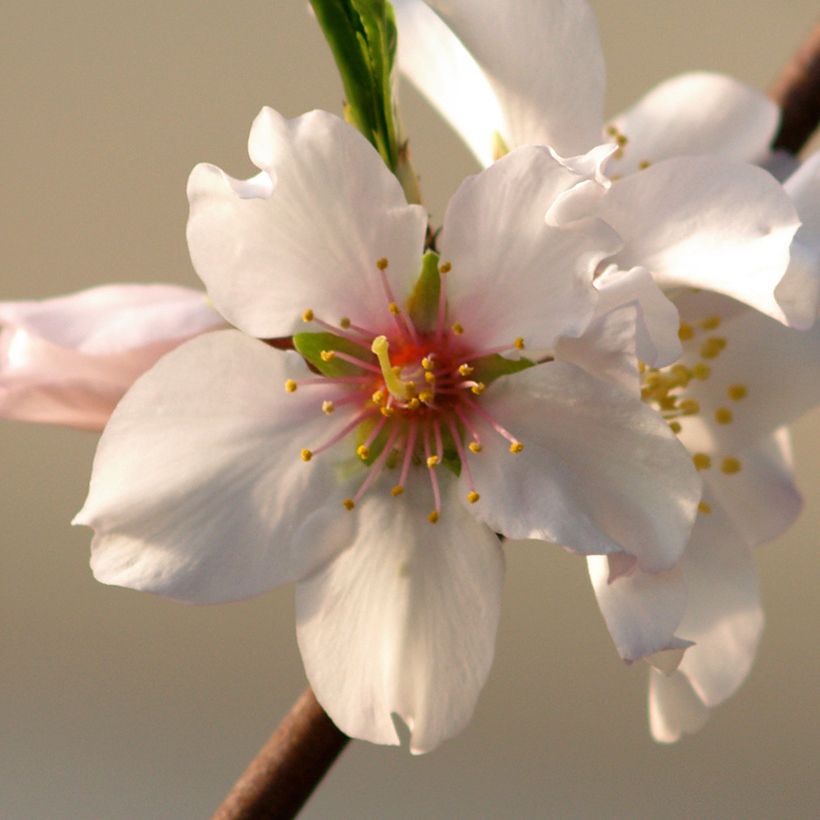
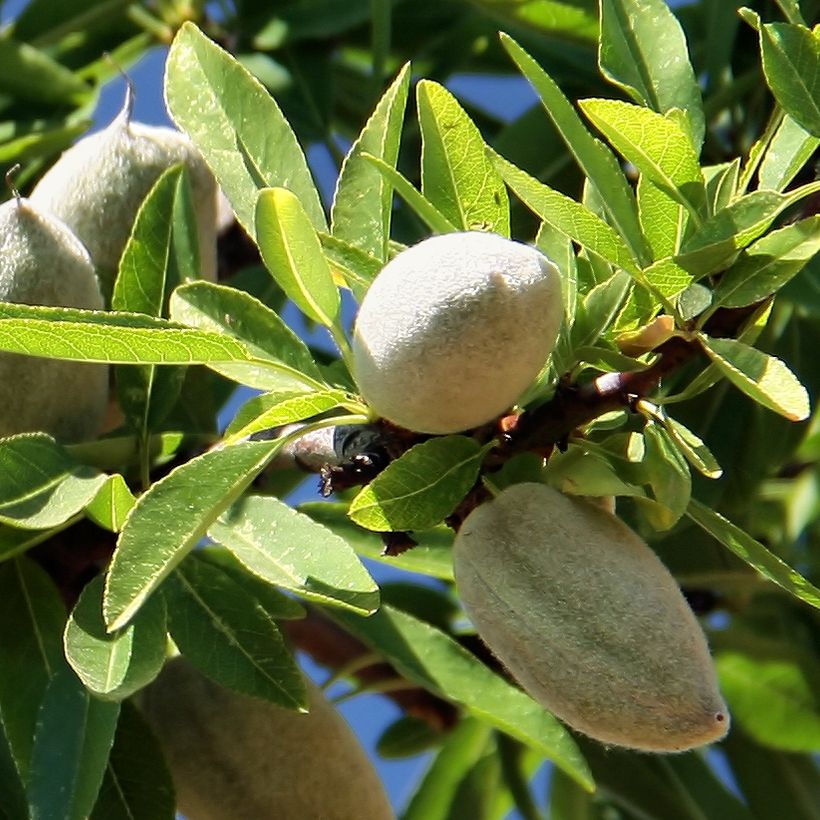
Plant habit
Fruit
Flowering
Foliage
Botanical data
Prunus
dulcis
Aï
Rosaceae
Almond
Central Asia
Planting and care
The trees are best planted in autumn to allow your Ai almond to establish itself before spring since it is very early flowering and starts growing very early. Choose a sunny and sheltered location. It likes all types of soils, including rocky and slightly chalky soils, preferring well-drained and light soils. If you plant multiple plants, space them 8 to 12 m (26 to 39ft) apart.
Almond trees are sold bare-rooted or in containers. Weed carefully and remove stones from the designated location. Loosen the soil deeply with a fork. Add some sand if you find the soil too heavy. Dig a hole 50 to 60 cm (20 to 24in) deep and 80 cm (32in) wide. Throw a handful of bonemeal at the bottom of the hole and mix it with the soil. Add some extracted soil mixed with well-decomposed manure. Place a stake to keep the tree straight. Plant the almond tree so that the collar is at ground level. Fill in the planting hole and firm down. Water abundantly.
If your almond tree is bare-rooted, remember to prune and praline the roots before planting. Pruning involves cutting the ends of the roots, and pralining means soaking them in a mixture consisting of one-third garden soil, one-third compost, and one-third rainwater. Pralining helps eliminate air pockets between the roots and the soil.
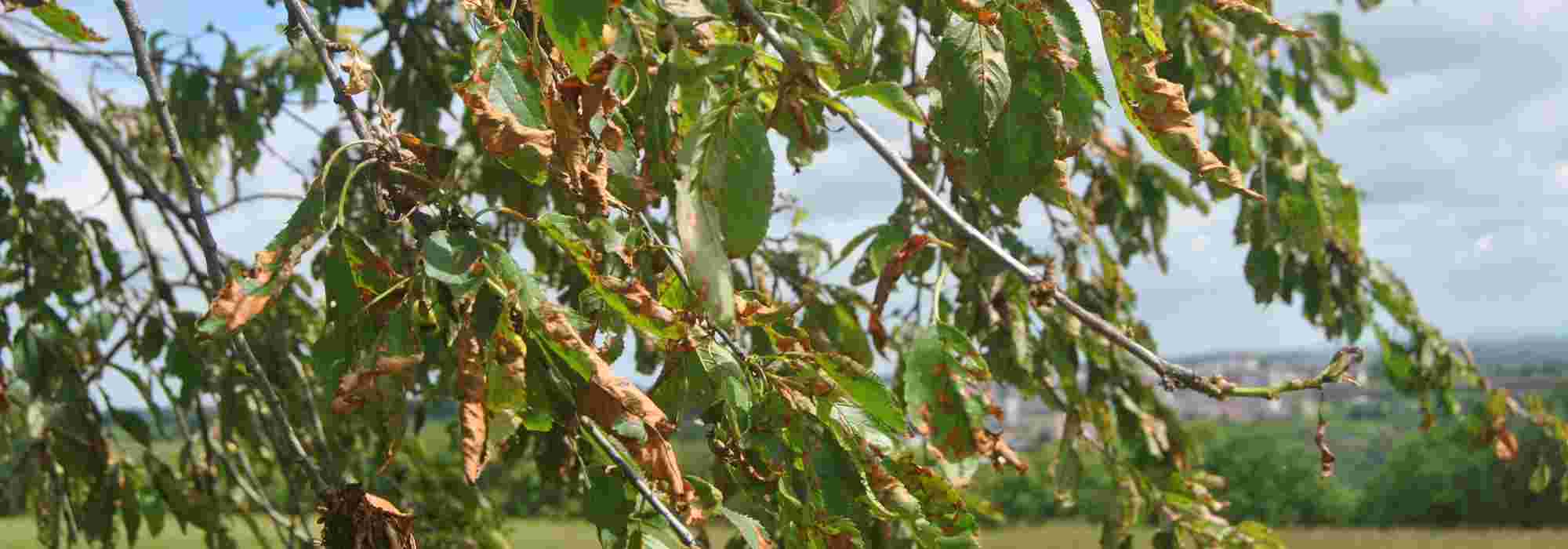
Almond trees are susceptible to many fungal or bacterial diseases and a number of pests can attack them. Among the diseases, the most common are moniliosis, which causes the flowers to wither and cankers to appear on the branches, and peach leaf curl, characterised by leaf deformation and discolouration. Another fungal disease that affects almond trees is Coryneum blight or shot hole disease. This fungus attacks the leaves, branches, and fruits at the same time, causing the almond tree to wither. Verticillium wilt can also affect almond trees, as well as other fruit trees. It manifests as browning and curling of the leaves. You may also encounter fruit tree rust, scab, anthracnose, and red spot disease.
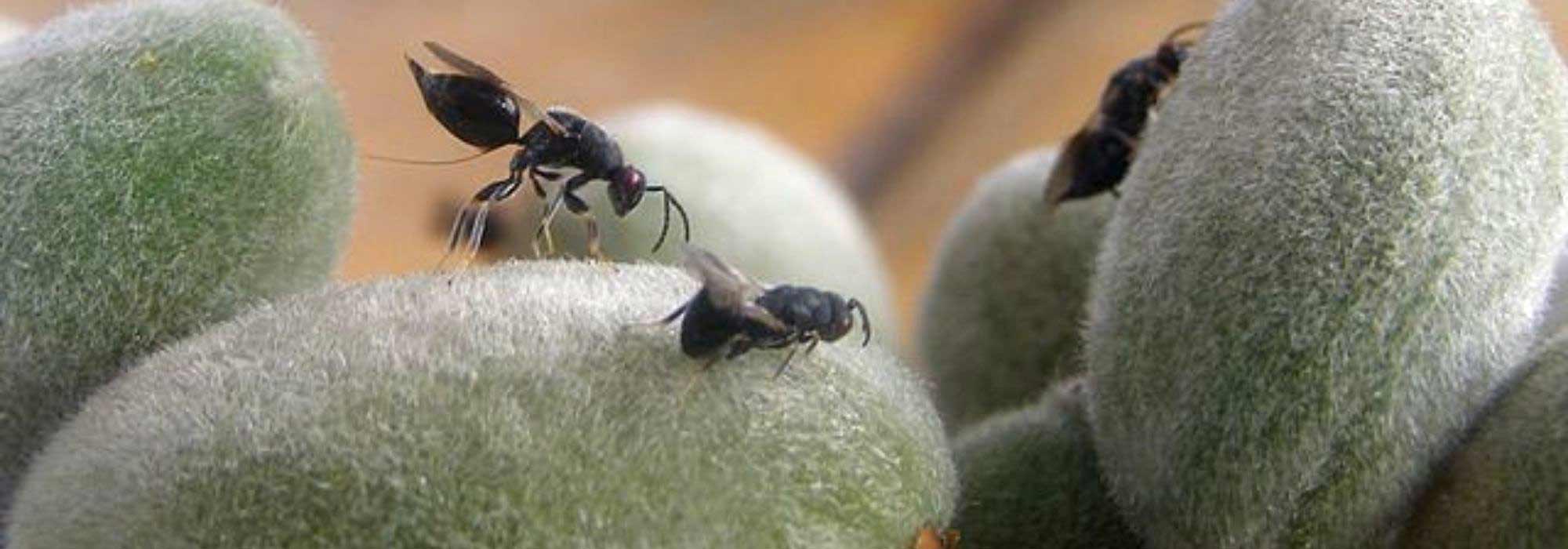
The pests mainly include red spider mites and almond rust mites, peach leaf miners, and green aphids.
Planting period
Intended location
Care
Planting & care advice
-
-
-
-
-
-
-
-
This item has not been reviewed yet - be the first to leave a review about it.
Recently viewed products
Haven't found what you were looking for?
Hardiness is the lowest winter temperature a plant can endure without suffering serious damage or even dying. However, hardiness is affected by location (a sheltered area, such as a patio), protection (winter cover) and soil type (hardiness is improved by well-drained soil).
In temperate climates, pruning of spring-flowering shrubs (forsythia, spireas, etc.) should be done just after flowering.
Pruning of summer-flowering shrubs (Indian Lilac, Perovskia, etc.) can be done in winter or spring.
In cold regions as well as with frost-sensitive plants, avoid pruning too early when severe frosts may still occur.
The harvesting period indicated on our website applies to countries and regions in USDA zone 8 (France, England, Ireland, the Netherlands).
In colder areas (Scandinavia, Poland, Austria...) fruit and vegetable harvests are likely to be delayed by 3-4 weeks.
In warmer areas (Italy, Spain, Greece, etc.), harvesting will probably take place earlier, depending on weather conditions.
The sowing periods indicated on our website apply to countries and regions within USDA Zone 8 (France, UK, Ireland, Netherlands).
In colder areas (Scandinavia, Poland, Austria...), delay any outdoor sowing by 3-4 weeks, or sow under glass.
In warmer climes (Italy, Spain, Greece, etc.), bring outdoor sowing forward by a few weeks.
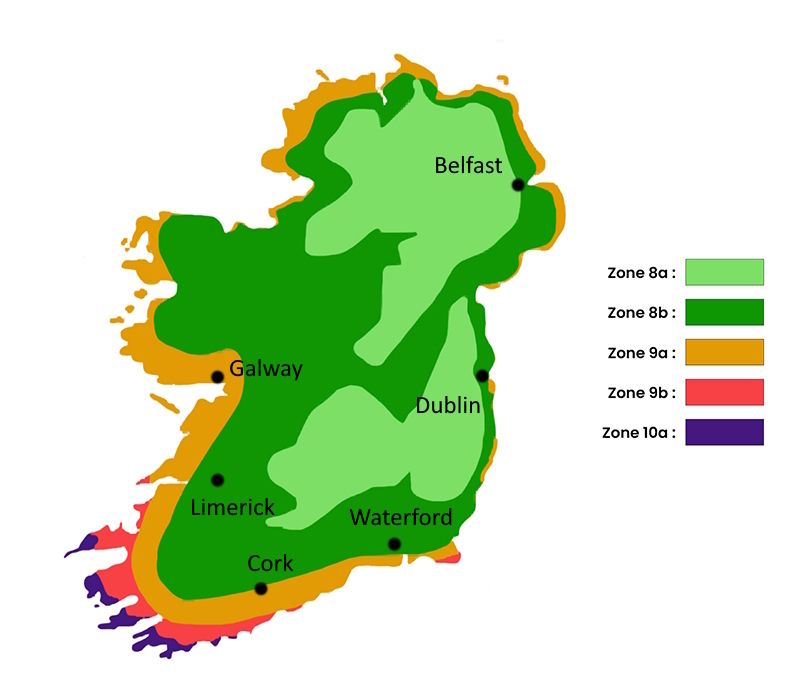
The planting period indicated on our website applies to regions in USDA Zone 9a (East Coast and Midlands: Dublin, Wexford, Waterford, Kilkenny, Portlaoise). It will vary depending on where you live:
- On the west coast and in the north-west (Galway, Limerick, Sligo, Donegal, Westport), delay planting by 1 to 2 weeks in spring and bring it forward by 1 to 2 weeks in autumn compared to the dates given, preferably choosing periods without strong winds.
- In the inland hills and plateaus (Wicklow Mountains, Macgillycuddy’s Reeks, Connemara, Killarney), it is best to plant in spring (April–May) or autumn (September–October), avoiding periods of waterlogged soil in winter and strong winds, which pose the main risk to newly planted trees in these areas.
The flowering period indicated on our website applies to regions in USDA Zone 9a, such as the East Coast and Midlands, including Dublin, Wexford, Waterford, Kilkenny and Portlaoise.
This will vary depending on where you live:
- On the west coast and in the northwest (Galway, Limerick, Sligo, Donegal and Westport), it will be delayed by one to two weeks compared to the given dates, due to stronger Atlantic winds and less spring sunshine.
- In the inland hills and plateaus (the Wicklow Mountains, the Macgillycuddy's Reeks, Connemara and Killarney), flowering will be delayed by two to three weeks. Flowering mainly occurs between May and July, with the limiting factors being less frost and more of the excessive humidity, strong winds and lack of sunshine that are characteristic of these areas.
Shipping country and language
Your country of residence may be:
Your country of residence is:
For a better user experience on our website, you can select:
Your shipping country:
-
 Austria
-
 Belgium
-
 Bosnia & Herzegovina
-
 Bulgaria
-
 Croatia
-
 Cyprus
-
 Czechia
-
 Denmark
-
 Estonia
-
 Finland
-
 France
-
 Germany
-
 Greece
-
 Hungary
-
 Iceland
-
 Ireland
-
 Italy
Italy
-
 Latvia
-
 Liechtenstein
-
 Lithuania
-
 Luxembourg
-
 Malta
Malta
-
 Netherlands
-
 Poland
-
 Portugal
-
 Romania
-
 Serbia
-
 Slovakia
-
 Slovenia
-
 Spain
Spain
-
 Sweden
-
 Switzerland
Language:
-
French
-
 English
-
Spanish
-
Italian
-
German
-
Portuguese
-
Dutch
-
Finnish
My Account
Hello
My wish lists
My cart
Log in / Register
Existing customer?
This form is protected by reCAPTCHA - the Google Privacy Policy and Terms of Service apply.
New customer?
Create an account to track your orders, access our customer service and, if you wish, make the most of our upcoming offers.