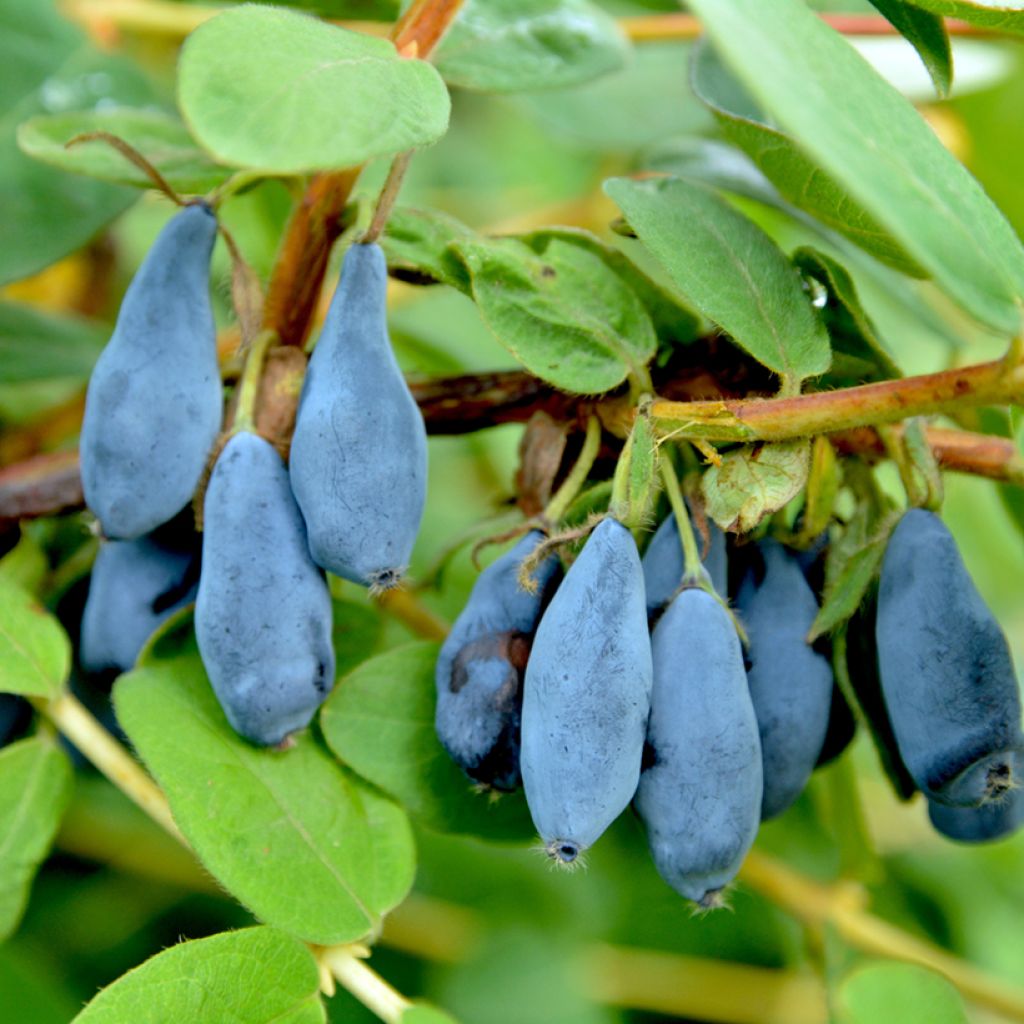
Honeyberry Regina - Lonicera caerulea var. kamtschatica
Honeyberry Regina - Lonicera caerulea var. kamtschatica
Lonicera caerulea var. kamtschatica Regina
Honeyberry, Haskap, Blue Honeysuckle
Back-to-school special offer!
Get €10 off for every €50 you spend! And get up to €40 off on a single order.
How does it work?
1. Shop your favourites
Add your favourite plants to your basket. For every €50 you spend (excluding delivery charges, store credit and the plastic-free option), you’ll receive a €10 voucher.
€50 spent = €10 voucher
€100 spent = €20 voucher
€150 spent = €30 voucher
€200 spent = €40 voucher
2. Place your order
Once your basket reaches one of the spending thresholds, place your order. You can even choose your delivery date!
3. Receive your voucher
As soon as your order has been shipped, you’ll receive an email containing your personal voucher code and its value.
4. Use it on your next order
Your voucher is valid for 90 days from the date you receive it. It can be used once only, on a new order worth at least the value of the voucher, excluding delivery charges.
Please note: Vouchers can be combined with other offers, but cannot be split or refunded.
Why not try an alternative variety in stock?
View all →
Available in 0 sizes
Available in 1 sizes
Available in 0 sizes
Available in 0 sizes
Available in 1 sizes
Available in 1 sizes
Available in 1 sizes
Available in 1 sizes
Available in 1 sizes
Available in 1 sizes
This plant carries a 12 months recovery warranty
More information
We guarantee the quality of our plants for a full growing cycle, and will replace at our expense any plant that fails to recover under normal climatic and planting conditions.
Description
The Lonicera caerulea var. kamtschatica 'Regina' is a honeysuckle with edible fruits renowned for its high productivity and early ripening. Its pruinose blue berries offer a sour-sweet taste, slightly acidic and fragrant. Hardy up to -40°C, it easily withstands extreme temperatures. The honey berries are disease-resistant and low-maintenance. Its bushy habit makes it adaptable to the garden or in a pot on a terrace. The fragrant flowering in March announces a bountiful harvest starting in early June, favoured by the presence of pollinators. Easy to grow and disease-resistant, it is ideal for a small fruit hedge, combined with other varieties of small fruits.
The Lonicera caerulea var. kamtschatica, commonly known as Blue Honeysuckle, Honeyberry, Mayberry, Siberian Blueberries, Edible Honeysuckle, Maibeere, or Haskap, is a shrub species belonging to the Caprifoliaceae family, like all honeysuckles. It originates from Eastern Europe, particularly from Russia and Siberian Asia, from Kamchatka to Magadan and Sakhalin Island. The edible honeysuckle has been known and consumed for a long time by indigenous populations. It thrives in cold regions, as it can withstand -40°C, but only -7°C for its flowers. It is an interesting shrub for high-altitude gardens.
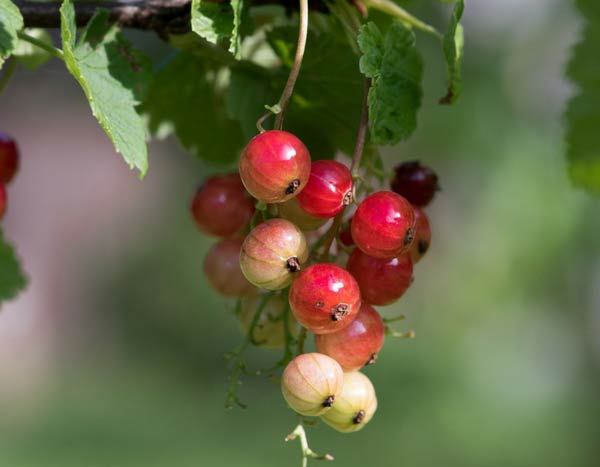
The 'Regina' variety is an early and high-yielding selection. Sturdy and robust, it takes the form of a dense and rounded bush, measuring 1.50 m in height with a spread of 1.20 m. The foliage is deciduous, composed of opposite, ovate, dark green leaves, slightly greyish-blue, measuring 3 to 8 cm in length. The flowering occurs from March, in the form of tubular flowers, blooming in pairs, greenish-yellow, quite discreet, intensely visited by bees. The fruiting mainly occurs on one and two-year-old branches. The bush then becomes covered with almost round, oval-shaped, pruinose blue berries, measuring 1 to 1.5 cm in length, 0.7 to 0.8 cm in diameter, weighing approximately 1 gram, with a honey-like scent. They contain very small seeds that are not noticeable when eaten. Reaching ripeness in early June, the drupe is filled with greenish-yellow, juicy, sweet, and slightly acidic pulp, similar to that of blueberries in both flavour and appearance. The harvest is staggered as the fruits ripen, when their flesh turns red. The productivity of a Honeyberry is approximately 2.5 to 4 kg of fruits per plant, depending on the age and growing conditions of the plant. To improve fruiting, it is preferable to plant at least two plants. The varieties 'Morena', 'Nimfa', and 'Silginka' can be good pollinating partners. The flowers are attractive to bees for good pollination. The fruits are rich in vitamins B and C, fibre, minerals, and antioxidants.
In the kitchen: Once harvested, Mayberries can only be stored for 2 to 3 days in the refrigerator, preferably in the vegetable drawer. The fruits of the 'Regina' Honeyberry can be enjoyed fresh, and for added indulgence, they can be sprinkled with a little granulated sugar. Excellent in jellies or jams, they can also be used to make fruit salads, muffins or smoothies, and tarts... And also very fruity, slightly acidic juices. When dried, the berries retain all their nutritional value. To extend the enjoyment, the fruits can be easily frozen.
Transform your garden into a gourmet paradise with the Honeyberry. Ideal for a rustic or gourmet hedge, choose a sunny location, but sheltered from excessive heat, in a cool, fertile, and non-calcareous soil. Combine it with other delights such as raspberries, redcurrants, blackberries, blueberries, or even goji berries (Lycium barbarum) for tasty harvests. You can also grow it in a pot on a terrace for a natural immersion. For a burst of colours, combine it with ornamental shrubs such as Fragrant Osmanthus, Lilacs, Mock Oranges, abelias, Mexican Orange Blossom or Kolkwitzia, taking care to respect the space requirements of the honeysuckle. You can even plant it in a container on a terrace to appreciate the beauty of this shrub up close. From spring onwards, let yourself be enchanted by the intoxicating fragrance of the Honeyberry!
Plant habit
Fruit
Flowering
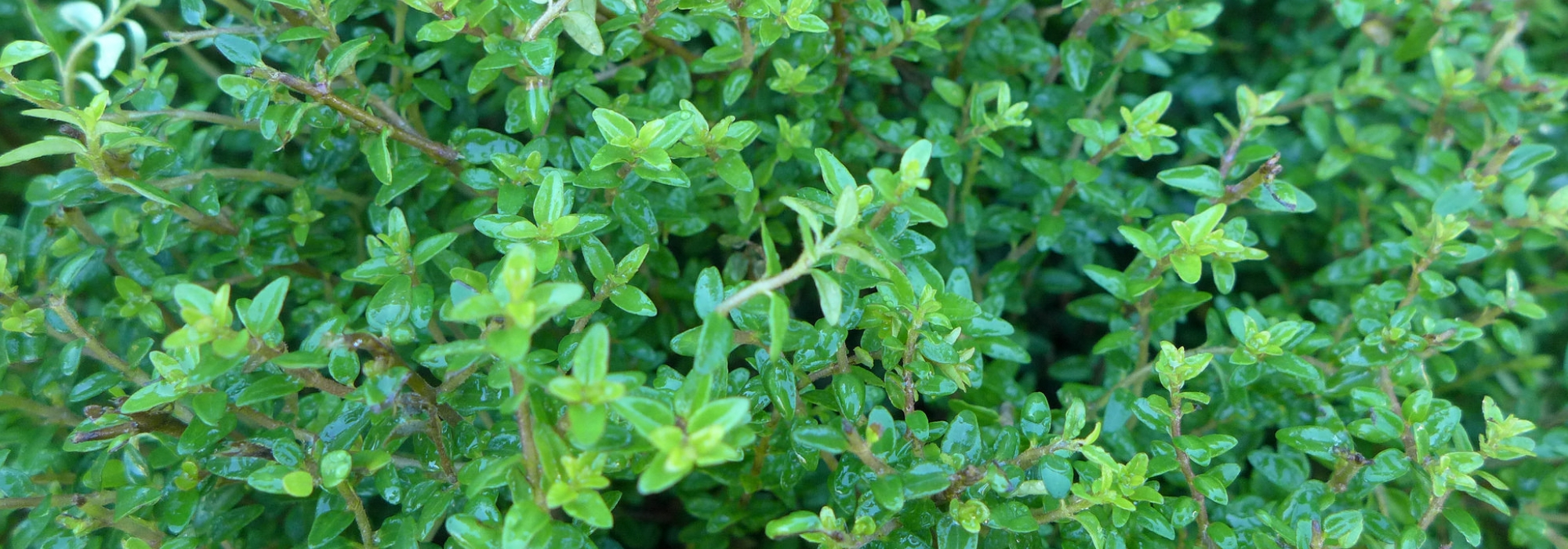
Foliage
Planting and care
Plant Lonicera caerulea var. kamtschatica Regina in moist, damp soil, it dislikes dry and very chalky soils (optimum pH of 5 to 7). Choose a sunny or partially shaded exposure in warmer regions. It appears to be adaptable to a wide range of soil textures, from sandy to clayey soils, but prefers soils rich in organic matter that remain moist in summer. Conversely, it struggles and eventually declines in shallow and dry soils. Planting can be done in autumn or spring, outside of the frost period. Space the plants 0.80 to 1.20 m apart.
Soak the root ball briefly before planting. Compost should be added at planting and once a year thereafter. Since the May berry dislikes dry soils, add a mixture of water and compost to the bottom of the planting hole. Place the plant, cover with soil, and firm the soil to create a small watering basin. Water.
During summer, water regularly during dry periods, and apply a mulch at the base to retain moisture and freshness. In case of aphid infestation, spray with black soap.
Pot cultivation is possible by ensuring a good level of humidity through regular watering.
Planting period
Intended location
Care
Planting & care advice
-
-
-
-
-
-
-
-
This item has not been reviewed yet - be the first to leave a review about it.
Recently viewed products
Haven't found what you were looking for?
Hardiness is the lowest winter temperature a plant can endure without suffering serious damage or even dying. However, hardiness is affected by location (a sheltered area, such as a patio), protection (winter cover) and soil type (hardiness is improved by well-drained soil).
In temperate climates, pruning of spring-flowering shrubs (forsythia, spireas, etc.) should be done just after flowering.
Pruning of summer-flowering shrubs (Indian Lilac, Perovskia, etc.) can be done in winter or spring.
In cold regions as well as with frost-sensitive plants, avoid pruning too early when severe frosts may still occur.
The harvesting period indicated on our website applies to countries and regions in USDA zone 8 (France, England, Ireland, the Netherlands).
In colder areas (Scandinavia, Poland, Austria...) fruit and vegetable harvests are likely to be delayed by 3-4 weeks.
In warmer areas (Italy, Spain, Greece, etc.), harvesting will probably take place earlier, depending on weather conditions.
The sowing periods indicated on our website apply to countries and regions within USDA Zone 8 (France, UK, Ireland, Netherlands).
In colder areas (Scandinavia, Poland, Austria...), delay any outdoor sowing by 3-4 weeks, or sow under glass.
In warmer climes (Italy, Spain, Greece, etc.), bring outdoor sowing forward by a few weeks.
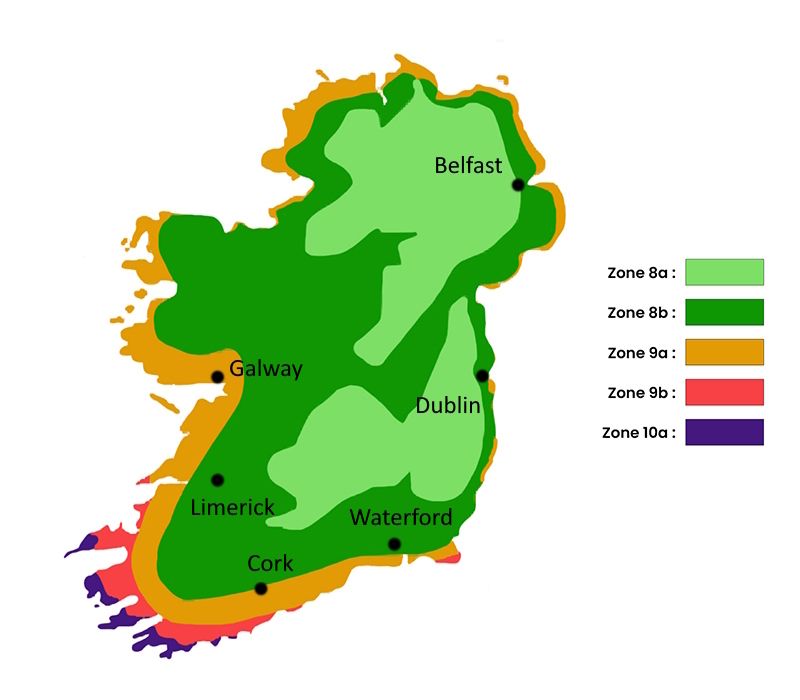
The planting period indicated on our website applies to regions in USDA Zone 9a (East Coast and Midlands: Dublin, Wexford, Waterford, Kilkenny, Portlaoise). It will vary depending on where you live:
- On the west coast and in the north-west (Galway, Limerick, Sligo, Donegal, Westport), delay planting by 1 to 2 weeks in spring and bring it forward by 1 to 2 weeks in autumn compared to the dates given, preferably choosing periods without strong winds.
- In the inland hills and plateaus (Wicklow Mountains, Macgillycuddy’s Reeks, Connemara, Killarney), it is best to plant in spring (April–May) or autumn (September–October), avoiding periods of waterlogged soil in winter and strong winds, which pose the main risk to newly planted trees in these areas.
The flowering period indicated on our website applies to regions in USDA Zone 9a, such as the East Coast and Midlands, including Dublin, Wexford, Waterford, Kilkenny and Portlaoise.
This will vary depending on where you live:
- On the west coast and in the northwest (Galway, Limerick, Sligo, Donegal and Westport), it will be delayed by one to two weeks compared to the given dates, due to stronger Atlantic winds and less spring sunshine.
- In the inland hills and plateaus (the Wicklow Mountains, the Macgillycuddy's Reeks, Connemara and Killarney), flowering will be delayed by two to three weeks. Flowering mainly occurs between May and July, with the limiting factors being less frost and more of the excessive humidity, strong winds and lack of sunshine that are characteristic of these areas.
Shipping country and language
Your country of residence may be:
Your country of residence is:
For a better user experience on our website, you can select:
Your shipping country:
-
 Austria
-
 Belgium
-
 Bosnia & Herzegovina
-
 Bulgaria
-
 Croatia
-
 Cyprus
-
 Czechia
-
 Denmark
-
 Estonia
-
 Finland
-
 France
-
 Germany
-
 Greece
-
 Hungary
-
 Iceland
-
 Ireland
-
 Italy
Italy
-
 Latvia
-
 Liechtenstein
-
 Lithuania
-
 Luxembourg
-
 Malta
Malta
-
 Netherlands
-
 Poland
-
 Portugal
-
 Romania
-
 Serbia
-
 Slovakia
-
 Slovenia
-
 Spain
Spain
-
 Sweden
-
 Switzerland
Language:
-
French
-
 English
-
Spanish
-
Italian
-
German
-
Portuguese
-
Dutch
-
Finnish
My Account
Hello
My wish lists
My cart
Log in / Register
Existing customer?
This form is protected by reCAPTCHA - the Google Privacy Policy and Terms of Service apply.
New customer?
Create an account to track your orders, access our customer service and, if you wish, make the most of our upcoming offers.