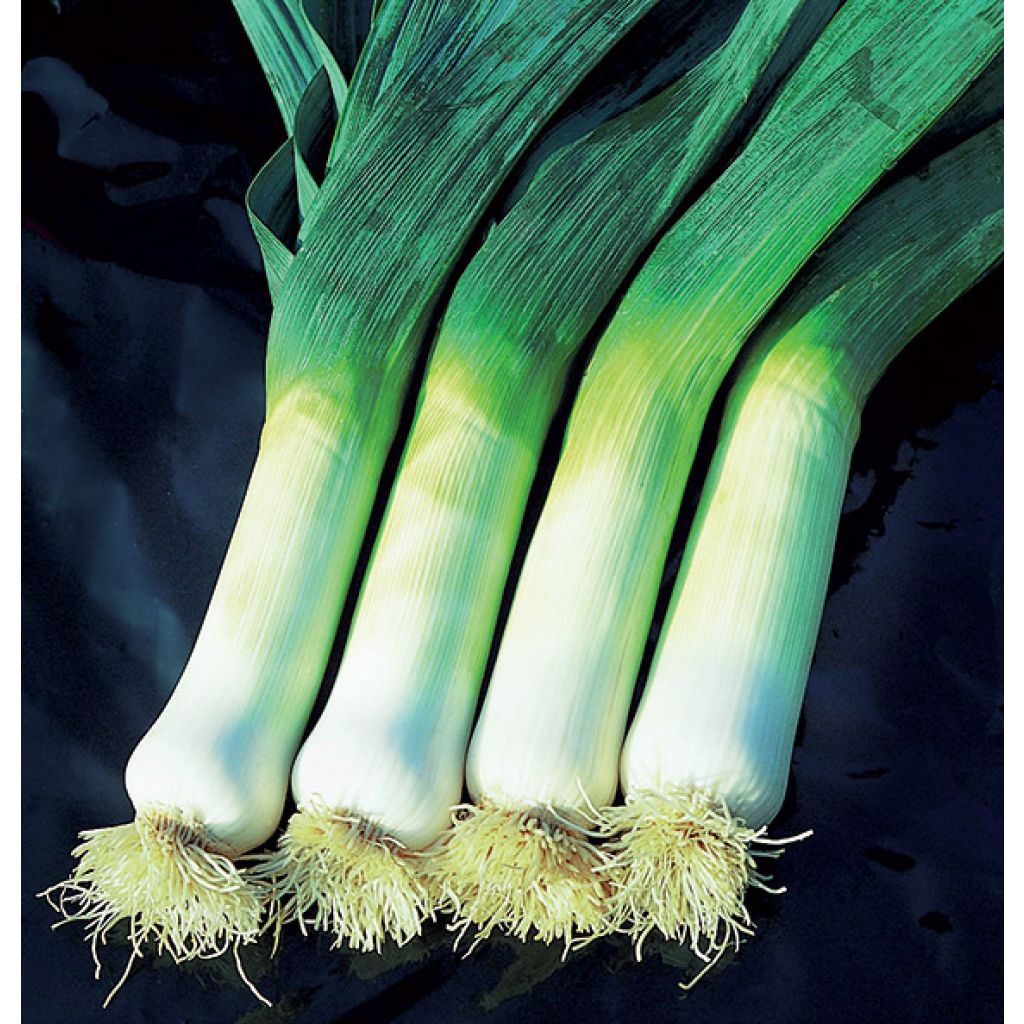
Giant Organic Autumn Leek 2 Hannibal - Allium porrum
Giant Organic Autumn Leek 2 Hannibal - Allium porrum
Allium porrum Géant d’automne 2 Hannibal
Leek
Perfect, sown and sprouted, the stems are 15 cm (6in) long. Container 1m (3ft) x 1m (3ft) x 40cm (16in), 200L of potting soil and 25kg of coarse sand for cultivation.
82, 01/04/2021
Back-to-school special offer!
Get €10 off for every €50 you spend! And get up to €40 off on a single order.
How does it work?
1. Shop your favourites
Add your favourite plants to your basket. For every €50 you spend (excluding delivery charges, store credit and the plastic-free option), you’ll receive a €10 voucher.
€50 spent = €10 voucher
€100 spent = €20 voucher
€150 spent = €30 voucher
€200 spent = €40 voucher
2. Place your order
Once your basket reaches one of the spending thresholds, place your order. You can even choose your delivery date!
3. Receive your voucher
As soon as your order has been shipped, you’ll receive an email containing your personal voucher code and its value.
4. Use it on your next order
Your voucher is valid for 90 days from the date you receive it. It can be used once only, on a new order worth at least the value of the voucher, excluding delivery charges.
Please note: Vouchers can be combined with other offers, but cannot be split or refunded.
Home or relay delivery (depending on size and destination)
Important: You may be charged customs duties by your country’s customs authorities upon delivery.
Schedule delivery date
and select date in basket
This plant carries a 6 months recovery warranty
More information
We guarantee the quality of our plants for a full growing cycle, and will replace at our expense any plant that fails to recover under normal climatic and planting conditions.

Description
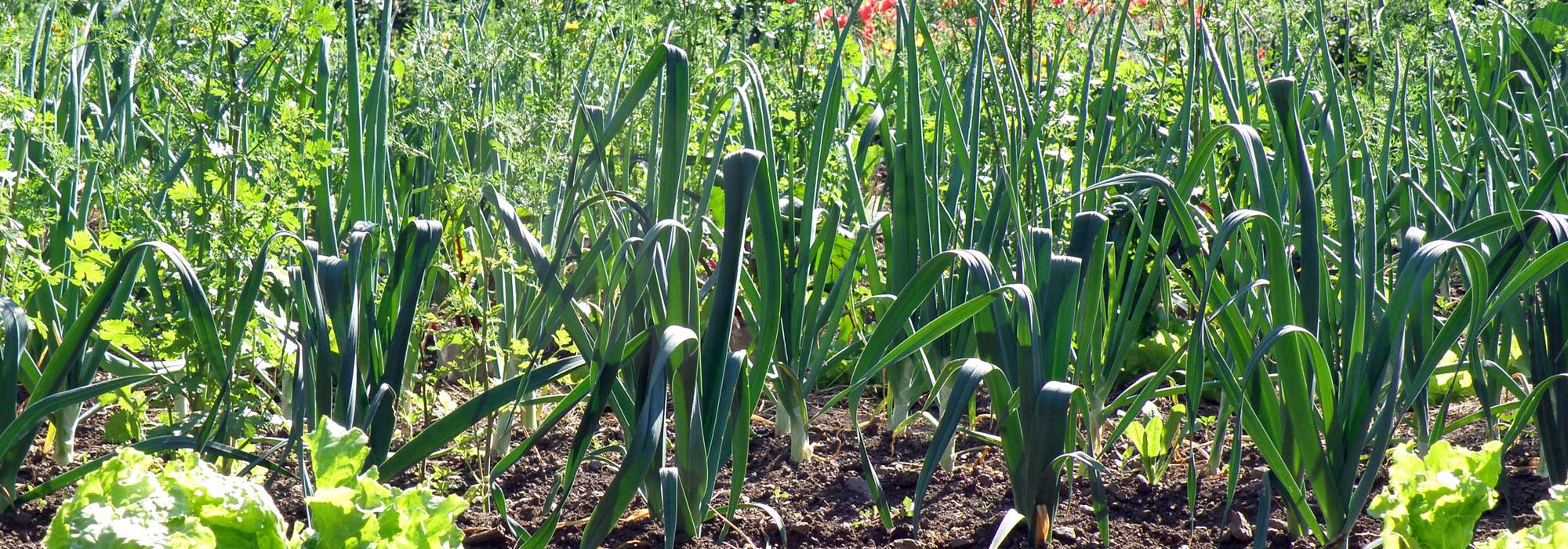
Giant Organic Autumn Leek 2 Hannibal is a productive autumn and winter variety that produces huge, thick, long stems, and flared, semi-upright blue-green leaves. The leeks have a delicious, slightly pungent flavour, and are wonderful in winter soups, pies, and quiches. Sow the seeds from February to June and harvest from September to December.
The leek or Allium porrum is a biennial herbaceous plant belonging to the Alliaceae family. Originally from the Middle East, it was consumed by the Ancient Egyptians as far back as 1500 BC. It was also a popular food in Ancient Rome. Its appearance was similar to that of its cousin the onion, with a very thin shaft and a swollen bulb. By the Middle Ages, leeks were commonly grown throughout Europe with Wales even making the leek its national emblem.
Allium porrum is a biennial herbaceous plant belonging to the Amaryllidaceae family. Originally from Central Asia, it was known to the Egyptians as early as 1500 BC. Its foliage was long and very thin at that time. The Romans also appreciated it. Its appearance then resembled that of its cousin, the onion, with a very slender stem and a well-rounded bulb. It was introduced throughout Europe in the Middle Ages.
The leek has long, blue-green or dark green leaves that are wide and sheathing, forming what is called the stem, which is the white part that resembles a stalk. This stem is the most prized part. When white, its taste is very delicate and corresponds to the part that has not received light. At the end of the second year, it produces a stem topped with a spherical mauve umbel the size of a tennis ball, which has become the emblem of Wales.
Leeks are not only good for health but also have a pleasant taste: their flavour is somewhere between that of an onion and an asparagus, which has led to one of their nicknames, "the poor man's asparagus". The white stem and the rootlets are mainly consumed. They are used in the preparation of many local dishes around the world. They are a key ingredient in traditional pot-au-feu, and can be eaten in soups, quiches, cold with vinaigrette, or even thinly sliced raw in salads, etc. The Japanese particularly appreciate them: they can be found in many recipes such as sushi and sashimi or delicious sesame leeks.
Some winter varieties can withstand temperatures below -15°C (5°F) or even -20°C (-4°F). The seeds can be sown between February and August. Considered a winter vegetable, it can be harvested in almost all seasons. Leeks are rich in dietary fibre, which aids digestion. They are also rich in vitamins C and B, as well as sulphur compounds with antioxidant properties. They are also reputed, like onions, to lower cholesterol levels in the blood, among other benefits.
Harvesting: harvest your leeks as you need them. The harvest usually takes place 5 to 8 months after sowing. Gently pull the leek to avoid injuring or cutting the stem. If you encounter difficulties in this operation, use a small spade a few centimetres away from the desired leek and lever it out.
Storage: you can store them for two weeks in the vegetable compartment of your refrigerator. They can be kept for almost 3 months in the freezer. Bag them after blanching them for a few minutes, rinsing them under cold water, and then drying them carefully.
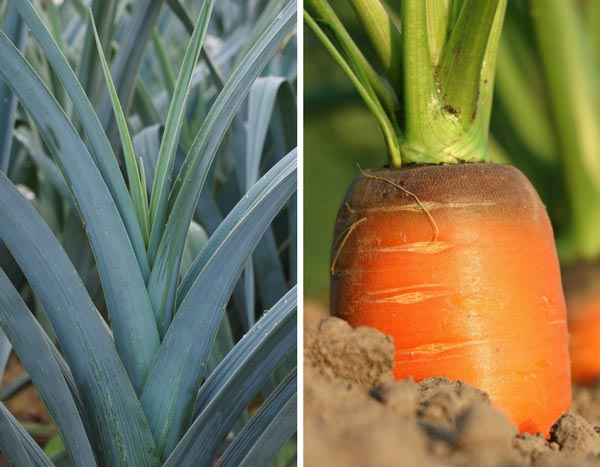
Gardener's tip: pair leeks with carrots. Carrot flies dislike leeks, and leek flies are not fond of carrots! Tomatoes, lettuces, and strawberries are also good companion plants for leeks. However, leeks dislike the presence of onions, beets, and beans.
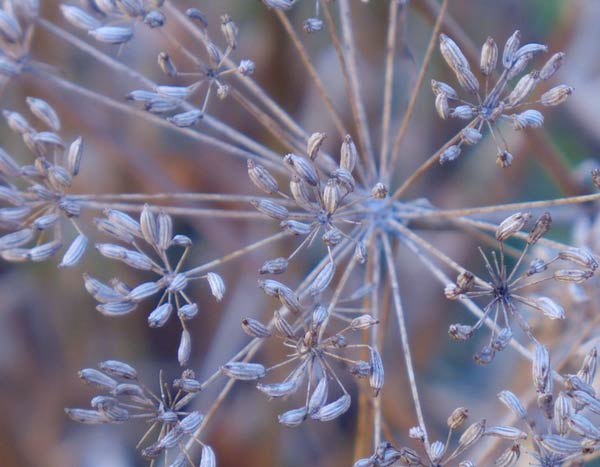
Harvest
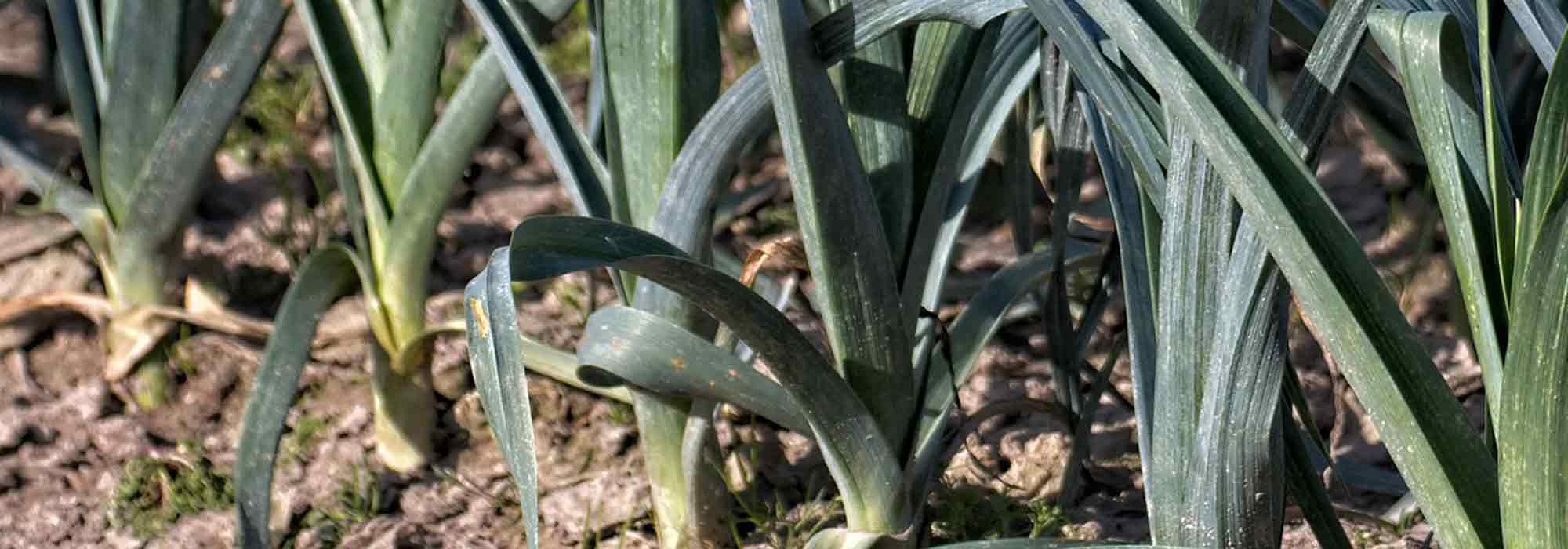
Plant habit
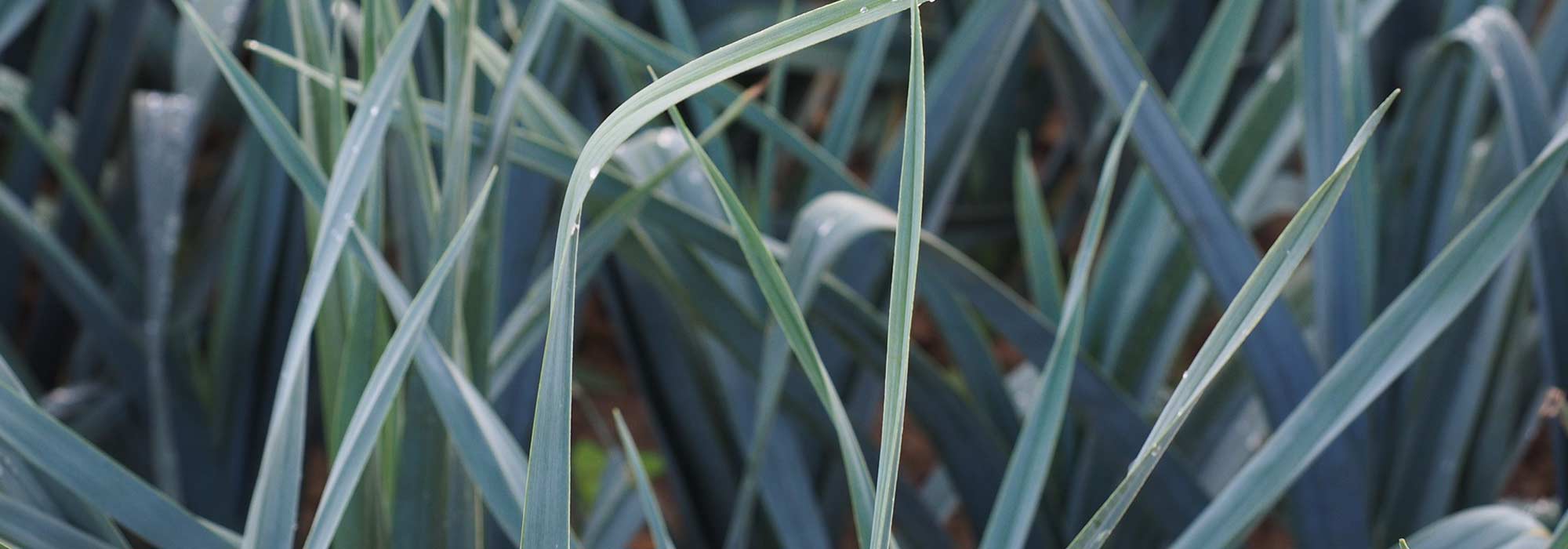
Foliage
Botanical data
Allium
porrum
Géant d’automne 2 Hannibal
Amaryllidaceae
Leek
Central Asia
Biennial
Planting and care
The leek is often thought of as a winter vegetable, although summer varieties do also exist. It has a fairly long growth period that consists of several phases.
Soil preparation
Leeks prefer rich and deep soils that are highly enriched with organic matter. However, be careful as the soil must have been enriched several months in advance, as it is sensitive to recent amendments. It is best to choose a location that is exposed to sunlight in generally moist soil that has been loosened beforehand.
Sowing
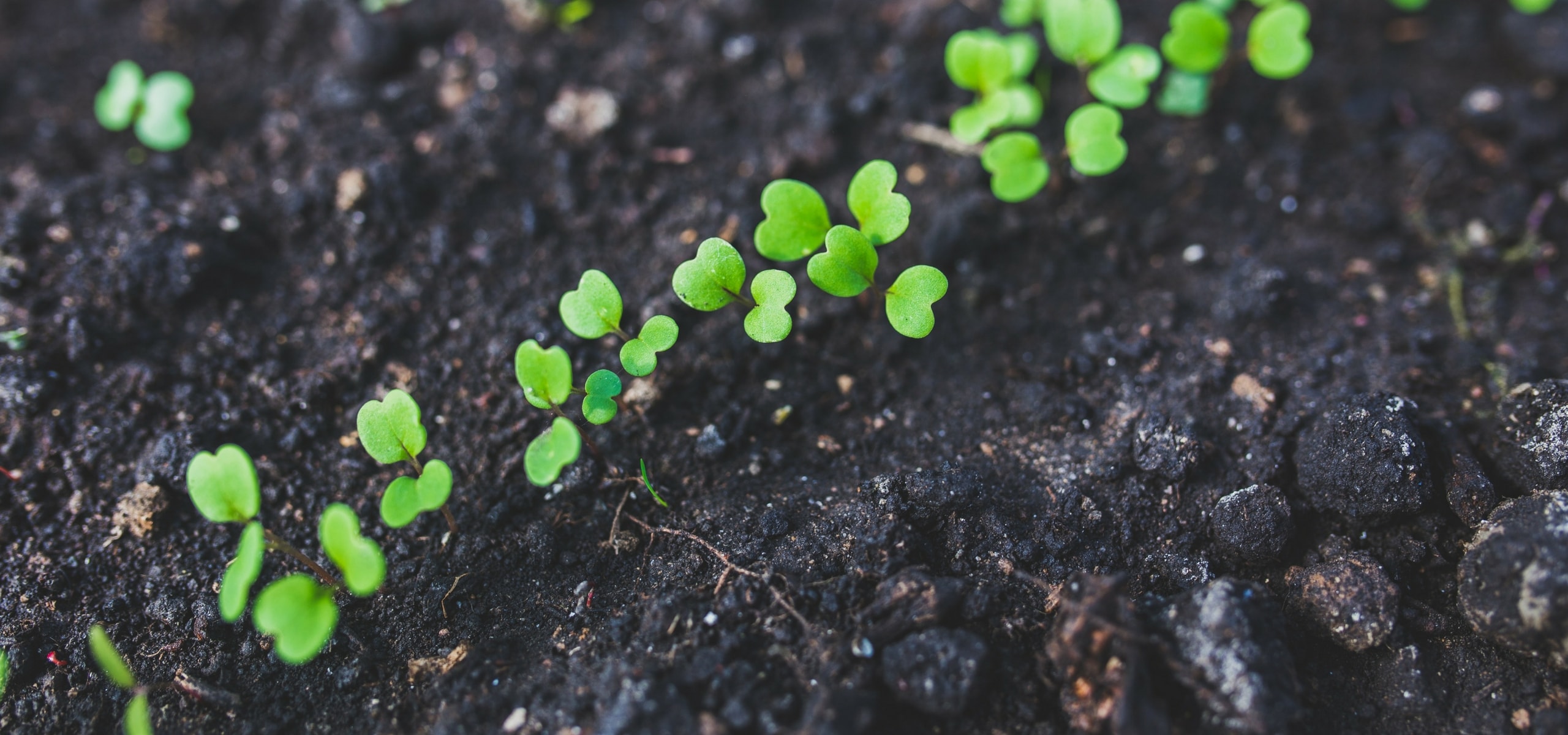
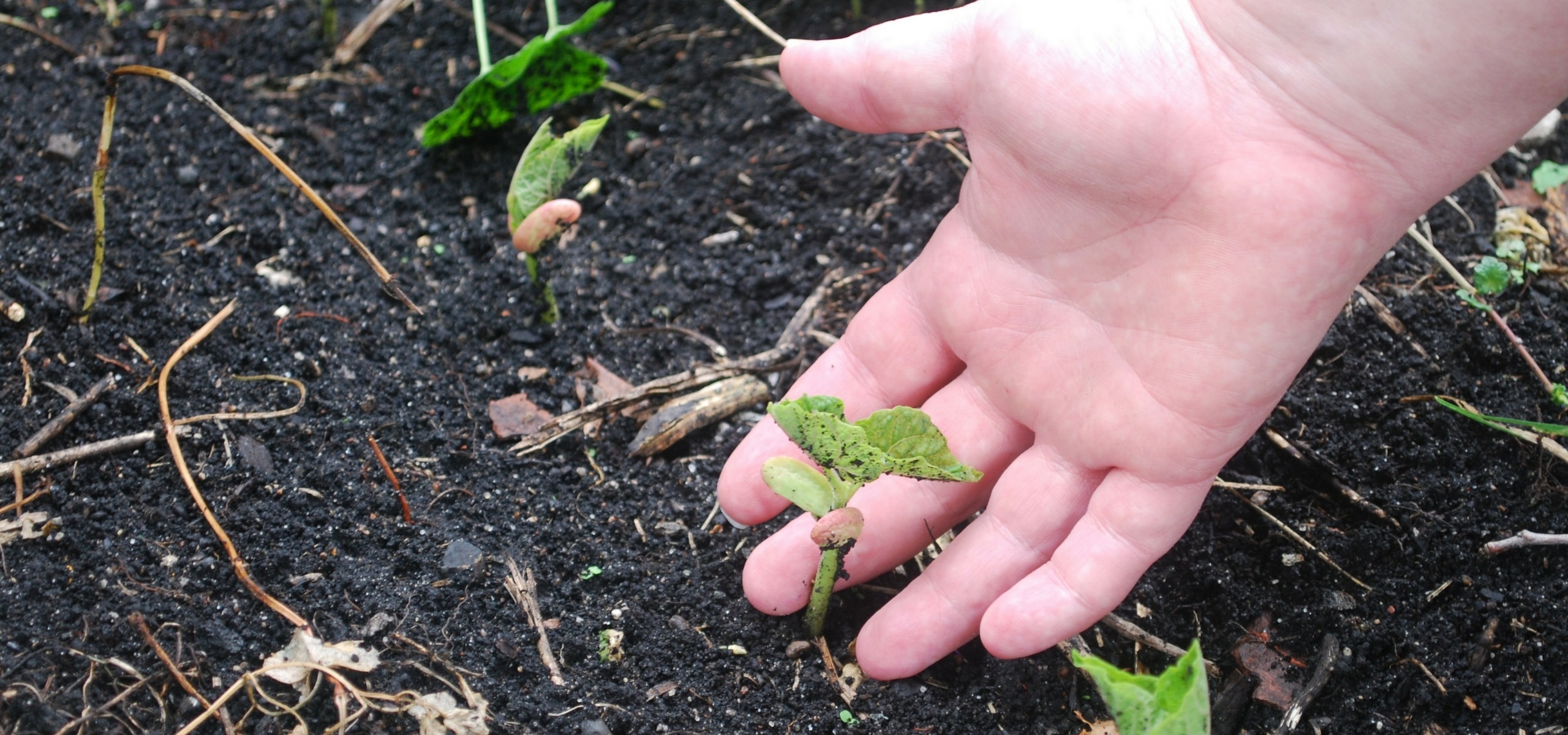
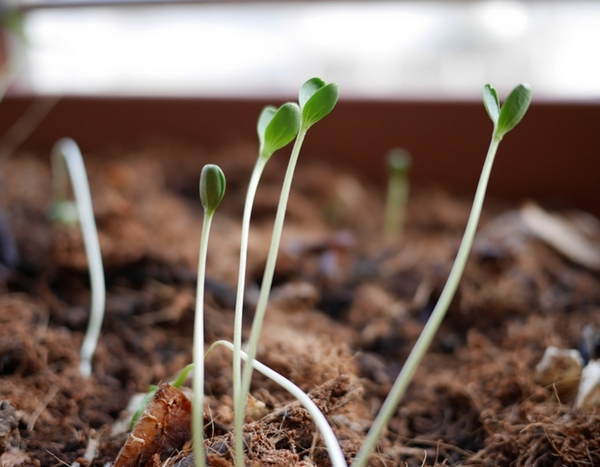
Dig a furrow that is 2cm (1in) deep and sow a small number of seeds about every centimetre. Cover the furrow with special seed compost and lightly press down with a rake. Sow from February to May under shelter, depending on the climate (greenhouse, tunnel, etc.). Germination will take between fifteen days and three weeks. Transplant the seedlings once they reach a height of about 15cm (6in) and the thickness of a pencil. Before doing so, gently remove the young plants and let them dry in the soil and shade for two days. This aims to remove the leek's odour and thus avoid attacks from the onion fly.
Transplanting
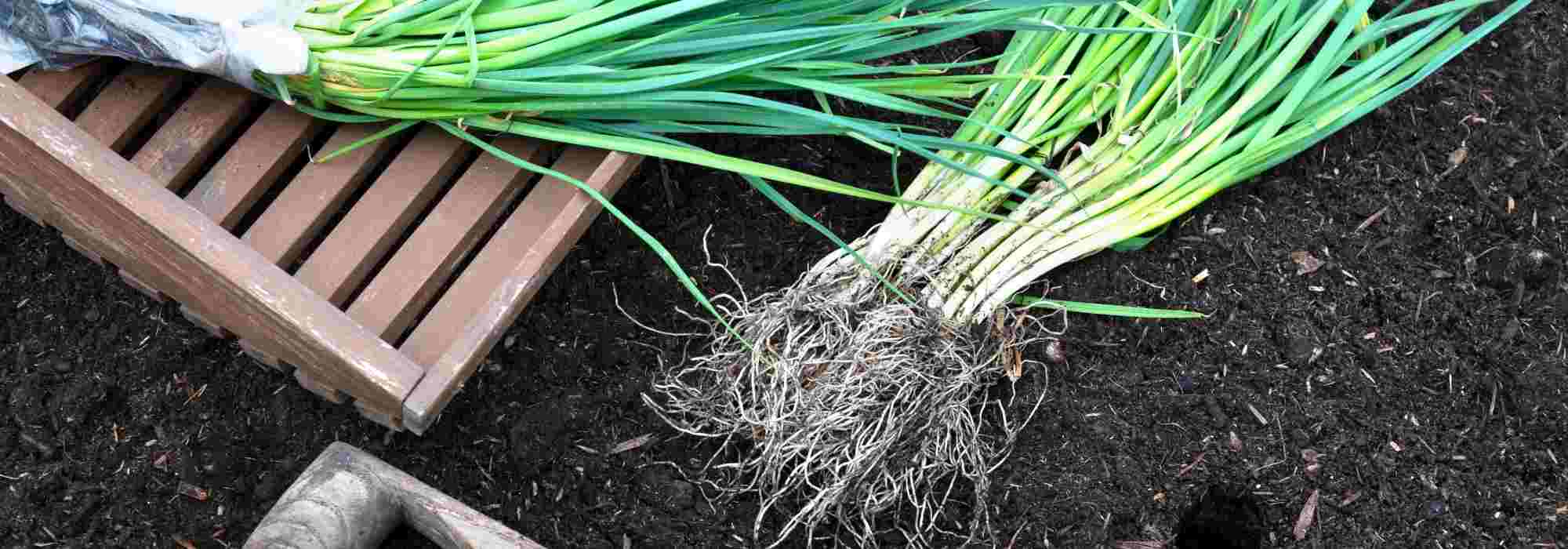
Trim the leek before transplanting. "Trimming" means cutting the roots 2 to 3cm (1in) below the bulb and at the same time cutting the young leaves a few centimetres above the stem. Removing the roots aids rooting, and cutting the leaves prevents rapid evaporation.
Next, prepare holes about 15cm (6in) deep, spaced 15 to 20cm (6 to 8in) apart in all directions. Position your young plants into them. The white part should be completely buried. Water generously with a watering can, which will close the holes around the leek stems. They need nitrogen-rich soil. You can also place freshly mowed grass between the rows. After a period ranging from fifteen days to a month, the plants grow and strengthen. Then, it is advisable to mound soil around the stems to protect them from light, so they remain white and tender.
Seedlings
Care
Intended location
Planting & care advice
-
-
-
-
-
-
-
-
-
, onOrder confirmed
Reply from on Promesse de fleurs
Recently viewed products
Haven't found what you were looking for?
Hardiness is the lowest winter temperature a plant can endure without suffering serious damage or even dying. However, hardiness is affected by location (a sheltered area, such as a patio), protection (winter cover) and soil type (hardiness is improved by well-drained soil).
In temperate climates, pruning of spring-flowering shrubs (forsythia, spireas, etc.) should be done just after flowering.
Pruning of summer-flowering shrubs (Indian Lilac, Perovskia, etc.) can be done in winter or spring.
In cold regions as well as with frost-sensitive plants, avoid pruning too early when severe frosts may still occur.
The harvesting period indicated on our website applies to countries and regions in USDA zone 8 (France, England, Ireland, the Netherlands).
In colder areas (Scandinavia, Poland, Austria...) fruit and vegetable harvests are likely to be delayed by 3-4 weeks.
In warmer areas (Italy, Spain, Greece, etc.), harvesting will probably take place earlier, depending on weather conditions.
The sowing periods indicated on our website apply to countries and regions within USDA Zone 8 (France, UK, Ireland, Netherlands).
In colder areas (Scandinavia, Poland, Austria...), delay any outdoor sowing by 3-4 weeks, or sow under glass.
In warmer climes (Italy, Spain, Greece, etc.), bring outdoor sowing forward by a few weeks.
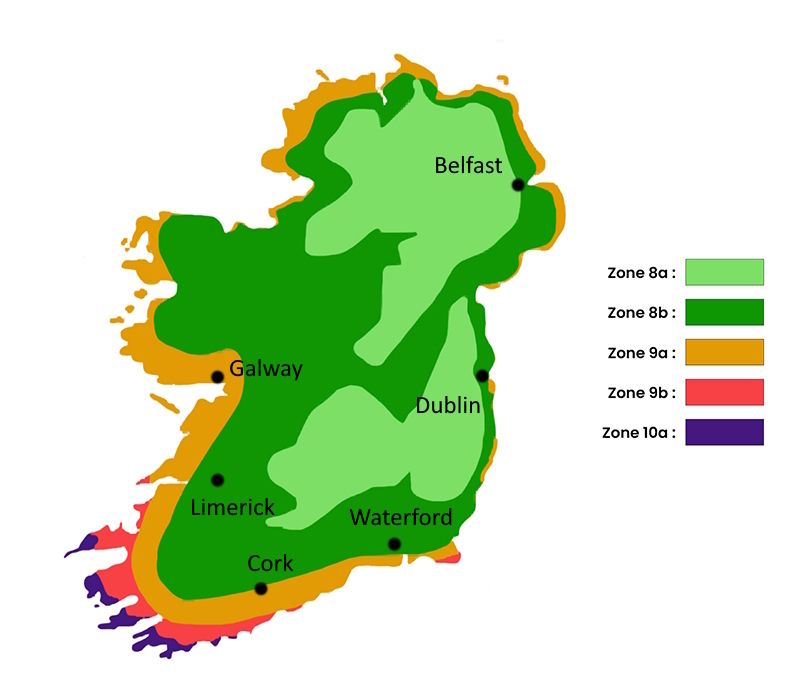
The planting period indicated on our website applies to regions in USDA Zone 9a (East Coast and Midlands: Dublin, Wexford, Waterford, Kilkenny, Portlaoise). It will vary depending on where you live:
- On the west coast and in the north-west (Galway, Limerick, Sligo, Donegal, Westport), delay planting by 1 to 2 weeks in spring and bring it forward by 1 to 2 weeks in autumn compared to the dates given, preferably choosing periods without strong winds.
- In the inland hills and plateaus (Wicklow Mountains, Macgillycuddy’s Reeks, Connemara, Killarney), it is best to plant in spring (April–May) or autumn (September–October), avoiding periods of waterlogged soil in winter and strong winds, which pose the main risk to newly planted trees in these areas.
The flowering period indicated on our website applies to regions in USDA Zone 9a, such as the East Coast and Midlands, including Dublin, Wexford, Waterford, Kilkenny and Portlaoise.
This will vary depending on where you live:
- On the west coast and in the northwest (Galway, Limerick, Sligo, Donegal and Westport), it will be delayed by one to two weeks compared to the given dates, due to stronger Atlantic winds and less spring sunshine.
- In the inland hills and plateaus (the Wicklow Mountains, the Macgillycuddy's Reeks, Connemara and Killarney), flowering will be delayed by two to three weeks. Flowering mainly occurs between May and July, with the limiting factors being less frost and more of the excessive humidity, strong winds and lack of sunshine that are characteristic of these areas.
Shipping country and language
Your country of residence may be:
Your country of residence is:
For a better user experience on our website, you can select:
Your shipping country:
-
 Austria
-
 Belgium
-
 Bosnia & Herzegovina
-
 Bulgaria
-
 Croatia
-
 Cyprus
-
 Czechia
-
 Denmark
-
 Estonia
-
 Finland
-
 France
-
 Germany
-
 Greece
-
 Hungary
-
 Iceland
-
 Ireland
-
 Italy
Italy
-
 Latvia
-
 Liechtenstein
-
 Lithuania
-
 Luxembourg
-
 Malta
Malta
-
 Netherlands
-
 Poland
-
 Portugal
-
 Romania
-
 Serbia
-
 Slovakia
-
 Slovenia
-
 Spain
Spain
-
 Sweden
-
 Switzerland
Language:
-
French
-
 English
-
Spanish
-
Italian
-
German
-
Portuguese
-
Dutch
-
Finnish
My Account
Hello
My wish lists
My cart
Log in / Register
Existing customer?
This form is protected by reCAPTCHA - the Google Privacy Policy and Terms of Service apply.
New customer?
Create an account to track your orders, access our customer service and, if you wish, make the most of our upcoming offers.