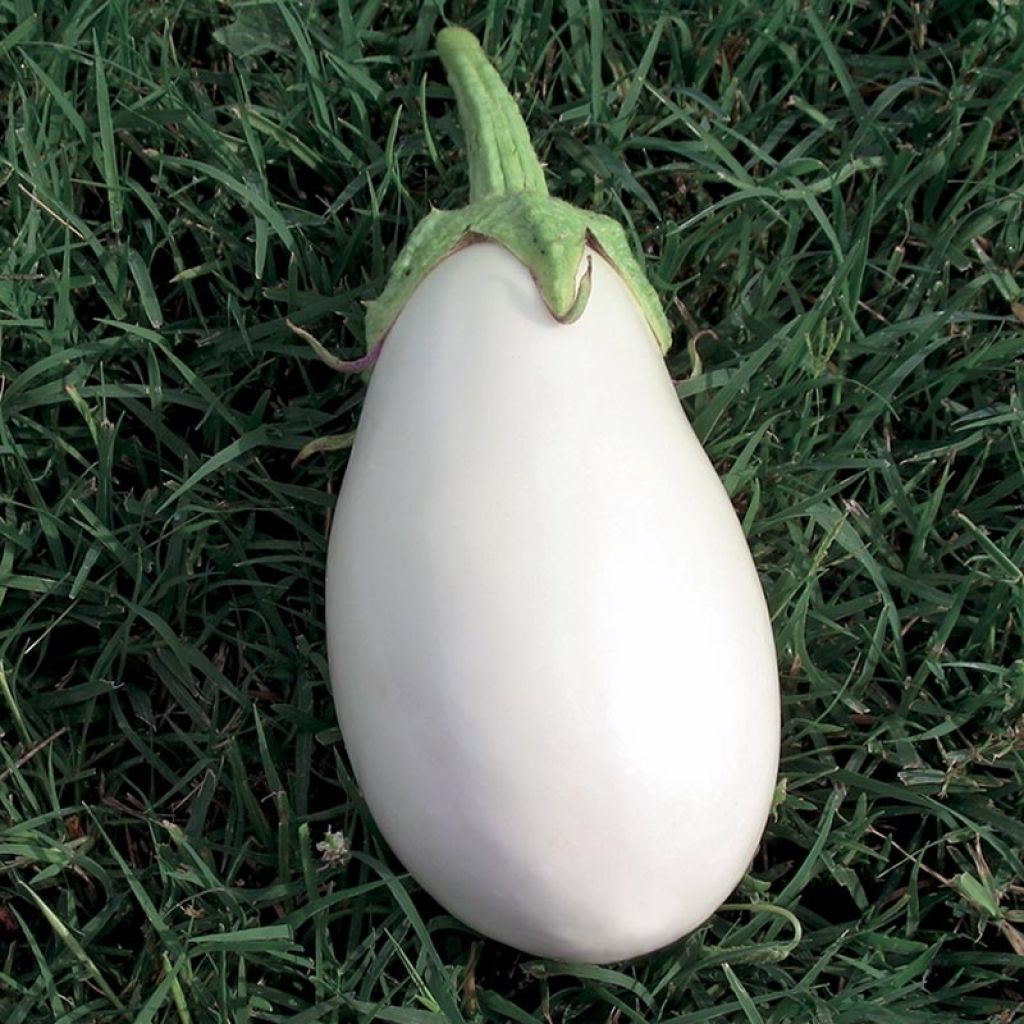
Aubergine Clara F1 in GRAFTED plants
Aubergine Clara F1 in GRAFTED plants
Solanum Clara F1
Nightshade, Eggplant, Bittersweet tomato
The plants (vegetables and flowers) arrived without any problems. Unfortunately, the temperature dropped (sometimes just 2°C in the morning) and my plug plants have hardly grown in my greenhouse, apart from a little growth in the Cherokee tomatoes and especially in the lobelias; my tomato sowings are catching up with them at the moment. The aubergines aren't growing at all, nor is the celery. But I think it's a temperature issue, even though they are in my greenhouse. The temperature drops too low at night. It looks like it's going to be nice (and warmer), so I hope everything will finally start growing.
Christine Roux, 24/05/2025
Back-to-school special offer!
Get €10 off for every €50 you spend! And get up to €40 off on a single order.
How does it work?
1. Shop your favourites
Add your favourite plants to your basket. For every €50 you spend (excluding delivery charges, store credit and the plastic-free option), you’ll receive a €10 voucher.
€50 spent = €10 voucher
€100 spent = €20 voucher
€150 spent = €30 voucher
€200 spent = €40 voucher
2. Place your order
Once your basket reaches one of the spending thresholds, place your order. You can even choose your delivery date!
3. Receive your voucher
As soon as your order has been shipped, you’ll receive an email containing your personal voucher code and its value.
4. Use it on your next order
Your voucher is valid for 90 days from the date you receive it. It can be used once only, on a new order worth at least the value of the voucher, excluding delivery charges.
Please note: Vouchers can be combined with other offers, but cannot be split or refunded.
Why not try an alternative variety in stock?
View all →
Available in 2 sizes

Available in 2 sizes
This plant carries a 6 months recovery warranty
More information
We guarantee the quality of our plants for a full growing cycle, and will replace at our expense any plant that fails to recover under normal climatic and planting conditions.
Description
The 'Clara' F1 Eggplant is an early and unique hybrid variety that produces beautiful white fruits with a more delicate flavour than dark varieties. Oval and about 18-20 cm (7-8in) long, they weigh an average of 450 to 550 grams and have fleshy, sweet, and fine flesh with few seeds. Productive and disease-resistant, moderately vigorous, it bears fruit from July to October. Eggplants are cooked and consumed in various ways: in ratatouilles, gratins, or stuffed. Eggplants are a heat-demanding plant and are grown as annuals in our climate. The plug plants of the 'Clara' Eggplant are planted from April to June, after the last frost. Harvesting takes place from July to October. Grafting allows for a quicker and more abundant harvest.
The grafting technique consists of giving a desired variety (here 'Clara') the root system of another specially selected variety called the rootstock. This rootstock has excellent resistance to soil parasites and diseases, which provides the plant with extra vigour: it is then more resistant to difficult external conditions (such as cold climates) and will yield significantly more than a non-grafted plant. Fruit production in grafted plants starts earlier and lower on the main stem.
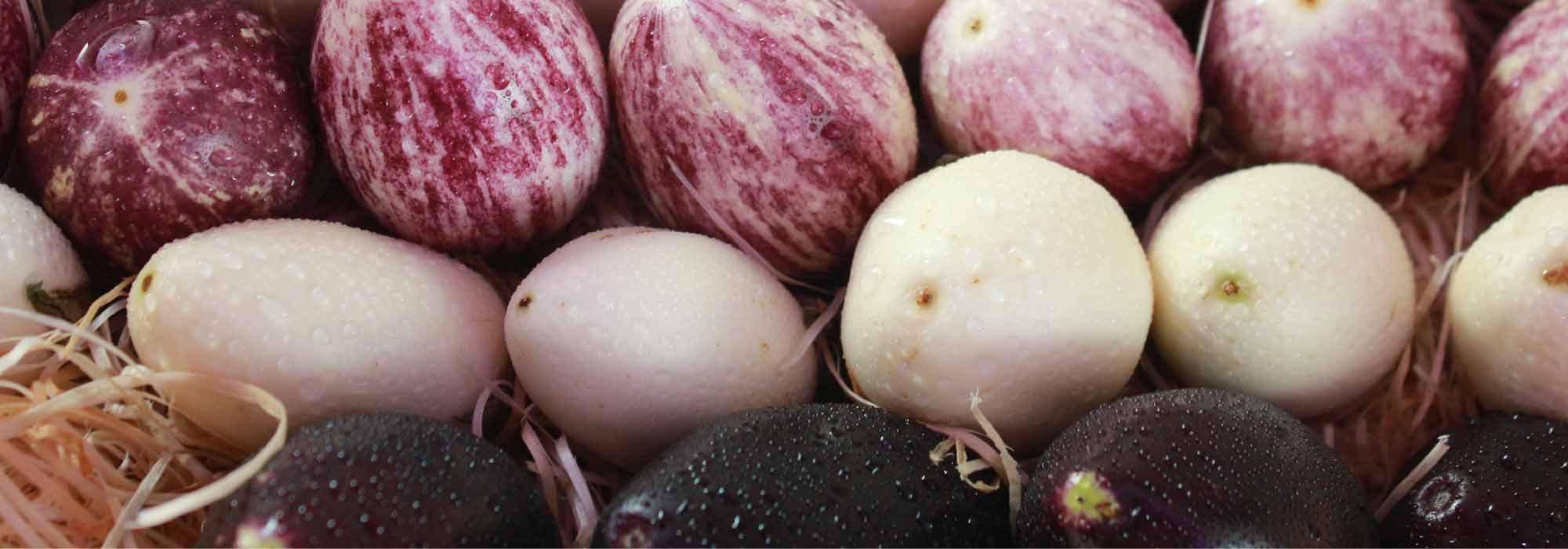
The Eggplant belongs to the Solanaceae family, like tomatoes, peppers, and potatoes. This perennial plant in warm countries is grown as an annual in our climate. It has oval, fuzzy leaves and produces small purple flowers from June to September. Depending on the variety, Eggplants can be round or long and come in different colours: from dark purple-black to white, and even yellow, sometimes with a solid colour, sometimes striated, a beautiful diversity to discover!
In the vegetable garden, this sun-loving vegetable needs warmth to grow. It will appreciate the presence of flowers to attract insects and promote pollination.
In the kitchen, Eggplant is cooked and consumed in various ways: in ratatouilles, gratins, stuffed etc.
Harvesting: Pick the fruits with secateurs from August to October (or from July for early varieties). The fruits are harvested slightly before ripeness.
Storage: Eggplants are best consumed quickly and can be stored for a few days in the bottom of the refrigerator.
Gardener's tip: We recommend mulching the soil with thin successive layers of grass clippings, preferably mixed with dead leaves. This protection, which keeps the soil moist, also limits weed growth. You can also opt for a mineral mulch (bricks, slate, gravel) to accumulate heat.
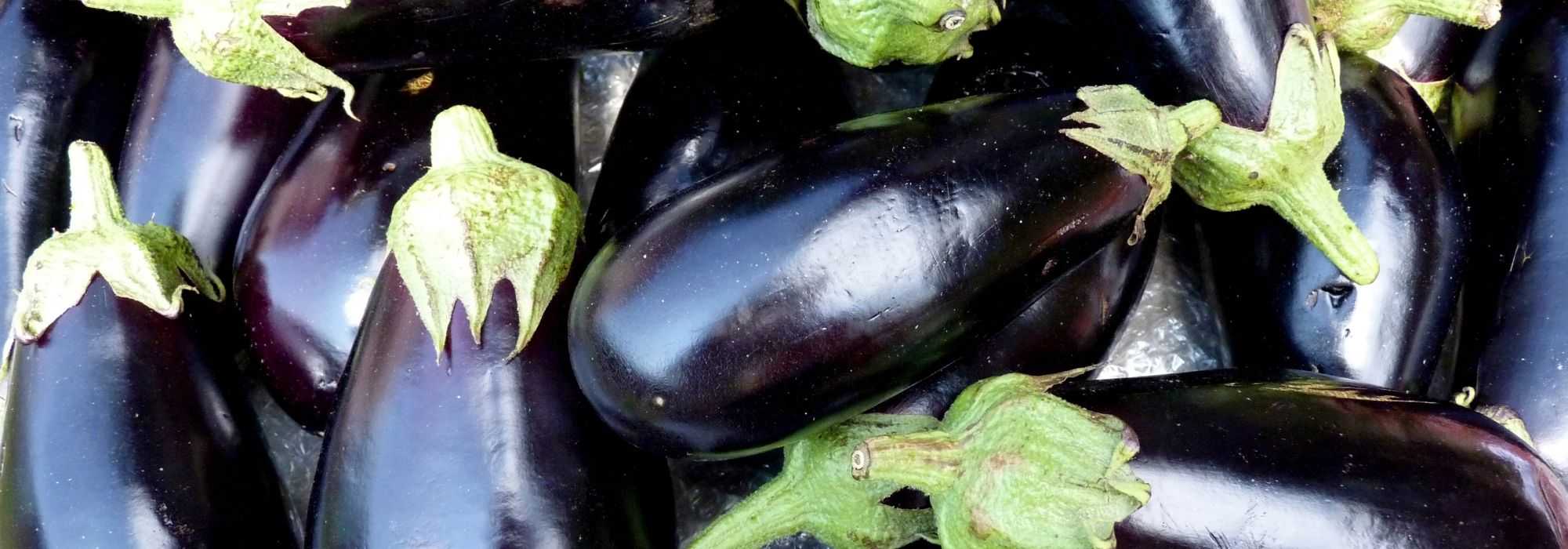
Aubergine Clara F1 in GRAFTED plants in pictures
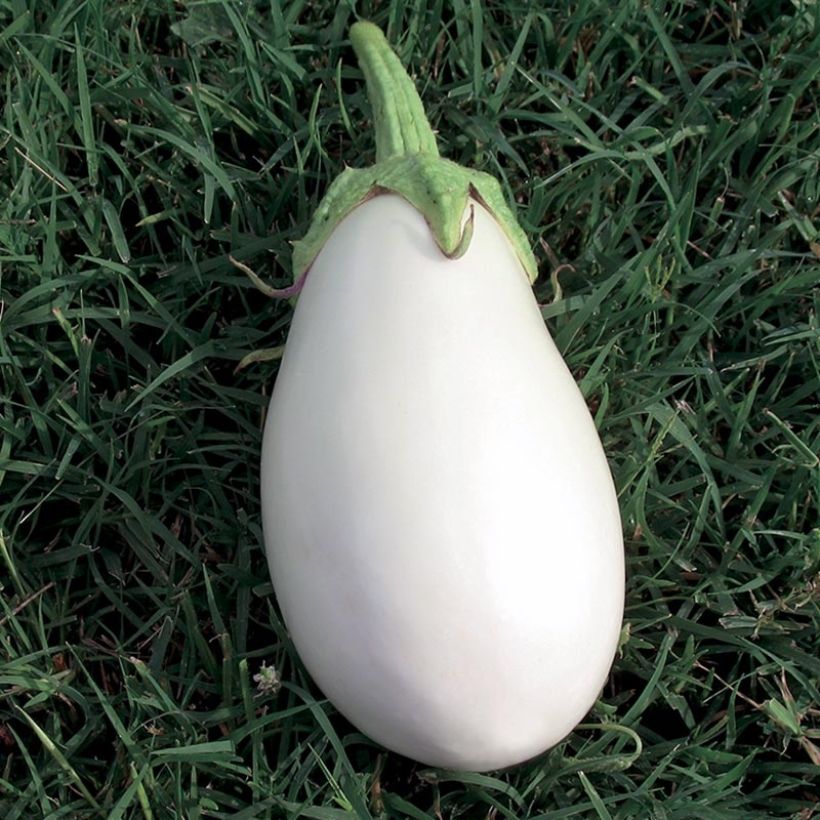
Harvest
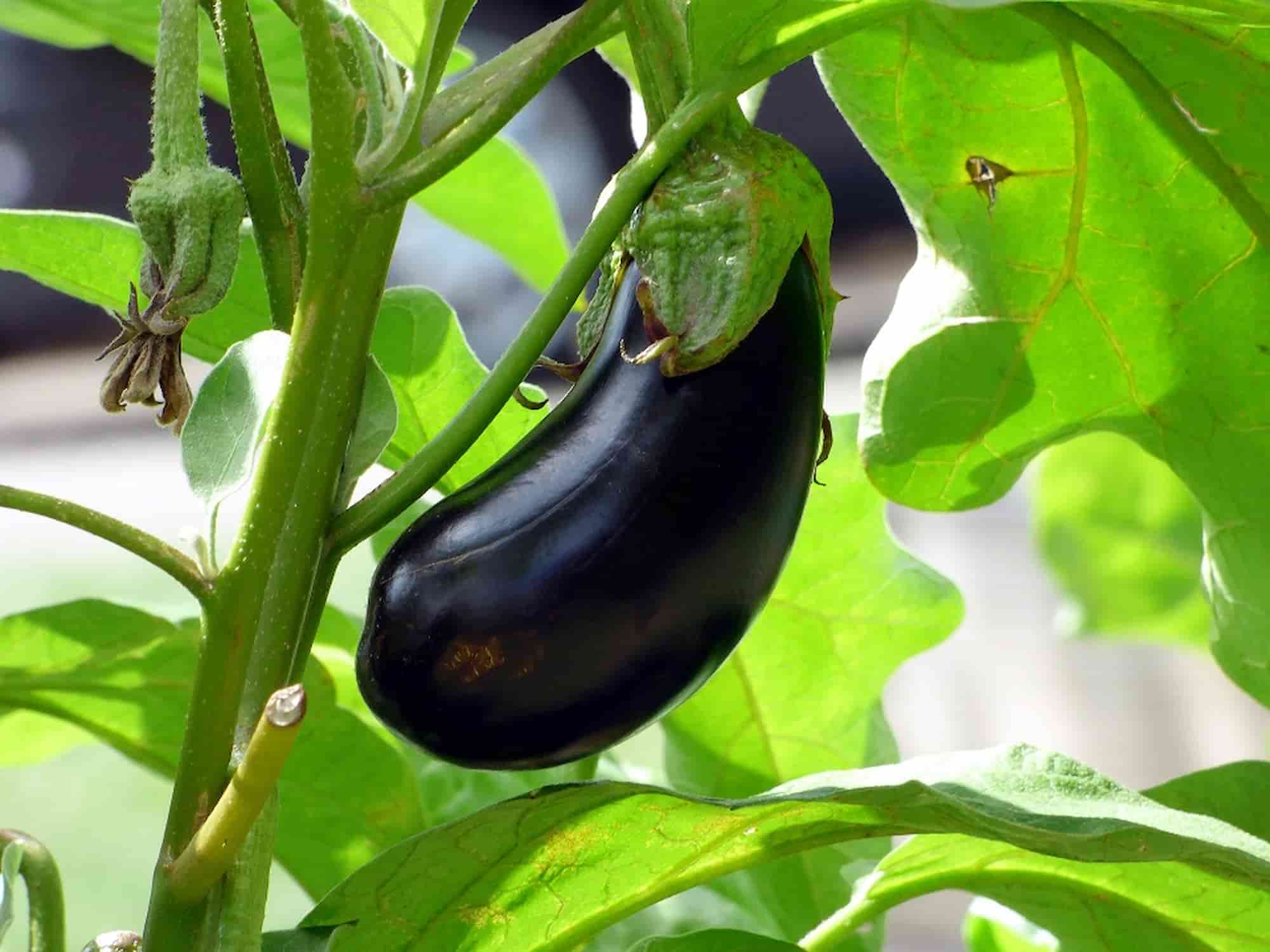
Plant habit
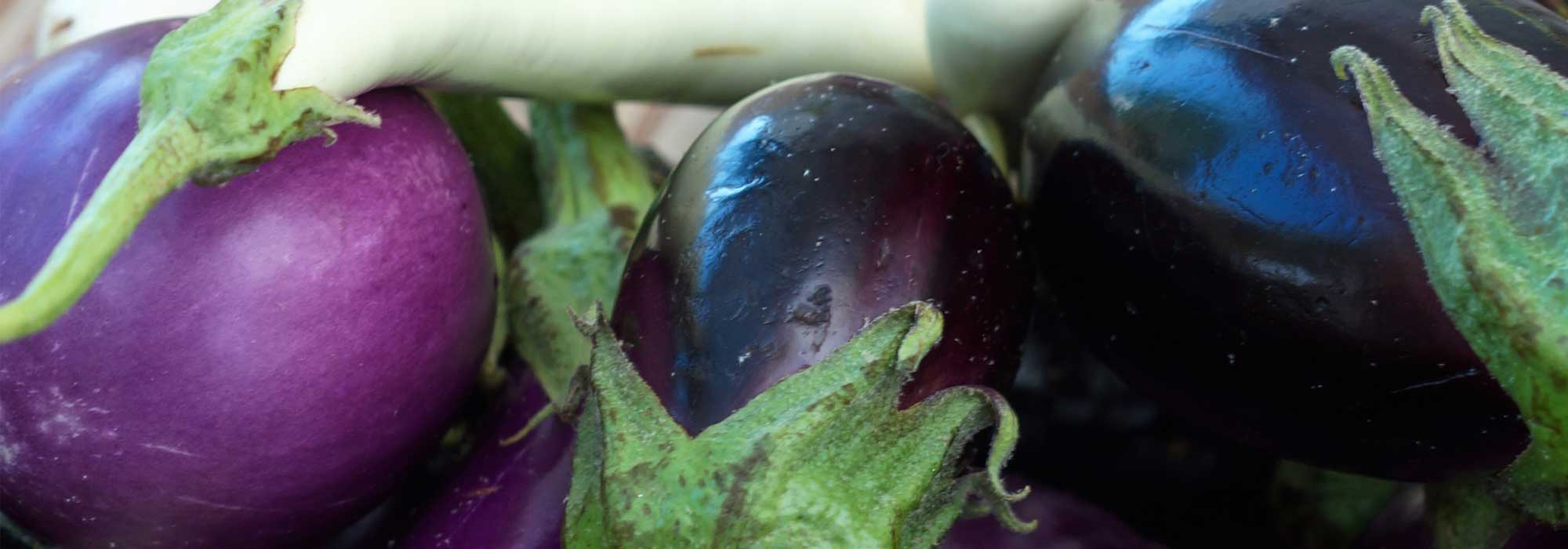
Foliage
Planting and care
Planting:
Grow the plants by transplanting the plug plants into trays or pots with a diameter of 8 to 13 cm (3 to 5in), filled with compost. Attention: When transplanting grafted plants, do not bury the graft point! Place the plants in a warm and bright location. Water regularly.
Planting in open ground should be done around mid-May or in June, when the risk of frost has passed. Plant the Eggplant in full sun, in a sheltered spot. It thrives in well-drained and fertile soils. Since Eggplant is a heavy feeder, it is necessary to add well-rotted compost in the previous autumn. In cooler regions, it is advisable to plant Eggplant in a greenhouse.
Soak the root ball in water for a few moments before planting. Space the plants 50 cm (20in) apart in all directions. Dig a hole, place your plant with the graft point at ground level, then cover with fine soil. Water thoroughly.
At the beginning of the cultivation, protect the plants with a mini tunnel or a frame to gain a few degrees.
Eggplant can also be grown in pots, as long as it is placed in the sun. In this case, you can plant the plug plants directly into the pot.
Maintenance:
Regularly hoe and weed. Remove the suckers that develop at the base of the plant.
Water regularly, making sure not to wet the foliage to prevent the onset of fungal diseases such as mildew. Drip irrigation is well suited.
Pruning will be necessary to promote fruit development. In July, cut the main stem above the 2nd flower. Repeat this operation on the new shoots that develop. This way, you can expect to harvest an average of 7 to 8 fruits per plant.
Diseases and pests:
Eggplant is susceptible, just like tomatoes, to mildew. This is a fungal disease caused by the Phytophthora infestans fungus. Mildew develops in warm and humid weather. Small spots appear, white on the underside of the leaves and green-grey on the top. To limit the risks, space the plants sufficiently and do not water the foliage. In terms of rotation, wait 4 years before cultivating a plant from the Solanaceae family in the same location and do not cultivate them in neighbouring rows. If necessary, spray with Bordeaux mixture or preparations such as horsetail decoction or garlic purin.
The harvest can also be affected by the Colorado potato beetle, an insect from the order Coleoptera. You will recognise it by its yellow head and its yellow and black striped body. The best solution, although a bit time-consuming, is to remove them as they appear. As a preventive measure, sow blue flax seeds between your rows of Eggplants. Sow from April to June in shallow furrows. In addition to its repellent effect on Colorado potato beetles, flax will brighten up your vegetable garden with its pretty little blue flowers.
Finally, you can protect young plants from slugs and snails by placing ash or coffee grounds nearby, to be renewed after rain.
Cultivation
Care
Intended location
Planting & care advice
-

-
-

-
-
-

-

-

-
, onOrder confirmed
Reply from on Promesse de fleurs
Recently viewed products
Haven't found what you were looking for?
Hardiness is the lowest winter temperature a plant can endure without suffering serious damage or even dying. However, hardiness is affected by location (a sheltered area, such as a patio), protection (winter cover) and soil type (hardiness is improved by well-drained soil).
In temperate climates, pruning of spring-flowering shrubs (forsythia, spireas, etc.) should be done just after flowering.
Pruning of summer-flowering shrubs (Indian Lilac, Perovskia, etc.) can be done in winter or spring.
In cold regions as well as with frost-sensitive plants, avoid pruning too early when severe frosts may still occur.
The harvesting period indicated on our website applies to countries and regions in USDA zone 8 (France, England, Ireland, the Netherlands).
In colder areas (Scandinavia, Poland, Austria...) fruit and vegetable harvests are likely to be delayed by 3-4 weeks.
In warmer areas (Italy, Spain, Greece, etc.), harvesting will probably take place earlier, depending on weather conditions.
The sowing periods indicated on our website apply to countries and regions within USDA Zone 8 (France, UK, Ireland, Netherlands).
In colder areas (Scandinavia, Poland, Austria...), delay any outdoor sowing by 3-4 weeks, or sow under glass.
In warmer climes (Italy, Spain, Greece, etc.), bring outdoor sowing forward by a few weeks.
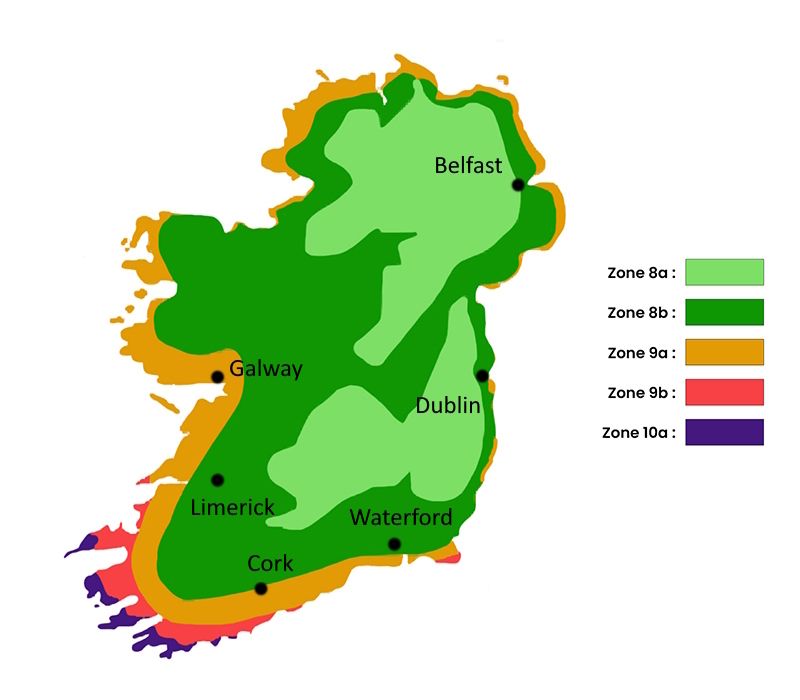
The planting period indicated on our website applies to regions in USDA Zone 9a (East Coast and Midlands: Dublin, Wexford, Waterford, Kilkenny, Portlaoise). It will vary depending on where you live:
- On the west coast and in the north-west (Galway, Limerick, Sligo, Donegal, Westport), delay planting by 1 to 2 weeks in spring and bring it forward by 1 to 2 weeks in autumn compared to the dates given, preferably choosing periods without strong winds.
- In the inland hills and plateaus (Wicklow Mountains, Macgillycuddy’s Reeks, Connemara, Killarney), it is best to plant in spring (April–May) or autumn (September–October), avoiding periods of waterlogged soil in winter and strong winds, which pose the main risk to newly planted trees in these areas.
The flowering period indicated on our website applies to regions in USDA Zone 9a, such as the East Coast and Midlands, including Dublin, Wexford, Waterford, Kilkenny and Portlaoise.
This will vary depending on where you live:
- On the west coast and in the northwest (Galway, Limerick, Sligo, Donegal and Westport), it will be delayed by one to two weeks compared to the given dates, due to stronger Atlantic winds and less spring sunshine.
- In the inland hills and plateaus (the Wicklow Mountains, the Macgillycuddy's Reeks, Connemara and Killarney), flowering will be delayed by two to three weeks. Flowering mainly occurs between May and July, with the limiting factors being less frost and more of the excessive humidity, strong winds and lack of sunshine that are characteristic of these areas.
Shipping country and language
Your country of residence may be:
Your country of residence is:
For a better user experience on our website, you can select:
Your shipping country:
-
 Austria
-
 Belgium
-
 Bosnia & Herzegovina
-
 Bulgaria
-
 Croatia
-
 Cyprus
-
 Czechia
-
 Denmark
-
 Estonia
-
 Finland
-
 France
-
 Germany
-
 Greece
-
 Hungary
-
 Iceland
-
 Ireland
-
 Italy
Italy
-
 Latvia
-
 Liechtenstein
-
 Lithuania
-
 Luxembourg
-
 Malta
Malta
-
 Netherlands
-
 Poland
-
 Portugal
-
 Romania
-
 Serbia
-
 Slovakia
-
 Slovenia
-
 Spain
Spain
-
 Sweden
-
 Switzerland
Language:
-
French
-
 English
-
Spanish
-
Italian
-
German
-
Portuguese
-
Dutch
-
Finnish
My Account
Hello
My wish lists
My cart
Log in / Register
Existing customer?
This form is protected by reCAPTCHA - the Google Privacy Policy and Terms of Service apply.
New customer?
Create an account to track your orders, access our customer service and, if you wish, make the most of our upcoming offers.