Yucca filifera
Yucca filifera
Yucca filifera
Yucca filifera
Yucca filifera
Yucca filifera
Yucca filifera
St Peter's Palm, Tree Yucca
Back-to-school special offer!
Get €10 off for every €50 you spend! And get up to €40 off on a single order.
How does it work?
1. Shop your favourites
Add your favourite plants to your basket. For every €50 you spend (excluding delivery charges, store credit and the plastic-free option), you’ll receive a €10 voucher.
€50 spent = €10 voucher
€100 spent = €20 voucher
€150 spent = €30 voucher
€200 spent = €40 voucher
2. Place your order
Once your basket reaches one of the spending thresholds, place your order. You can even choose your delivery date!
3. Receive your voucher
As soon as your order has been shipped, you’ll receive an email containing your personal voucher code and its value.
4. Use it on your next order
Your voucher is valid for 90 days from the date you receive it. It can be used once only, on a new order worth at least the value of the voucher, excluding delivery charges.
Please note: Vouchers can be combined with other offers, but cannot be split or refunded.
Home or relay delivery (depending on size and destination)
Important: You may be charged customs duties by your country’s customs authorities upon delivery.
Schedule delivery date
and select date in basket
This plant carries a 24 months recovery warranty
More information
We guarantee the quality of our plants for a full growing cycle, and will replace at our expense any plant that fails to recover under normal climatic and planting conditions.
Does this plant fit my garden?
Set up your Plantfit profile →
Description
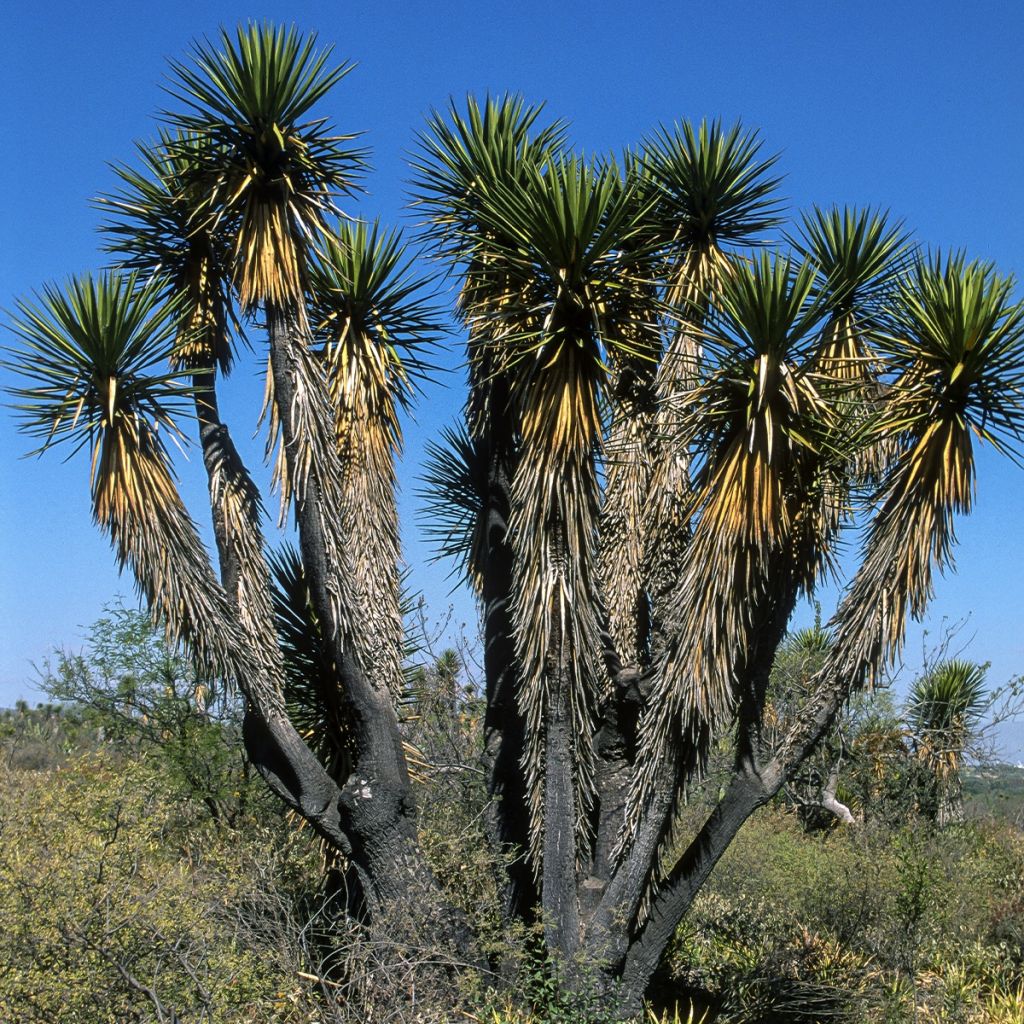
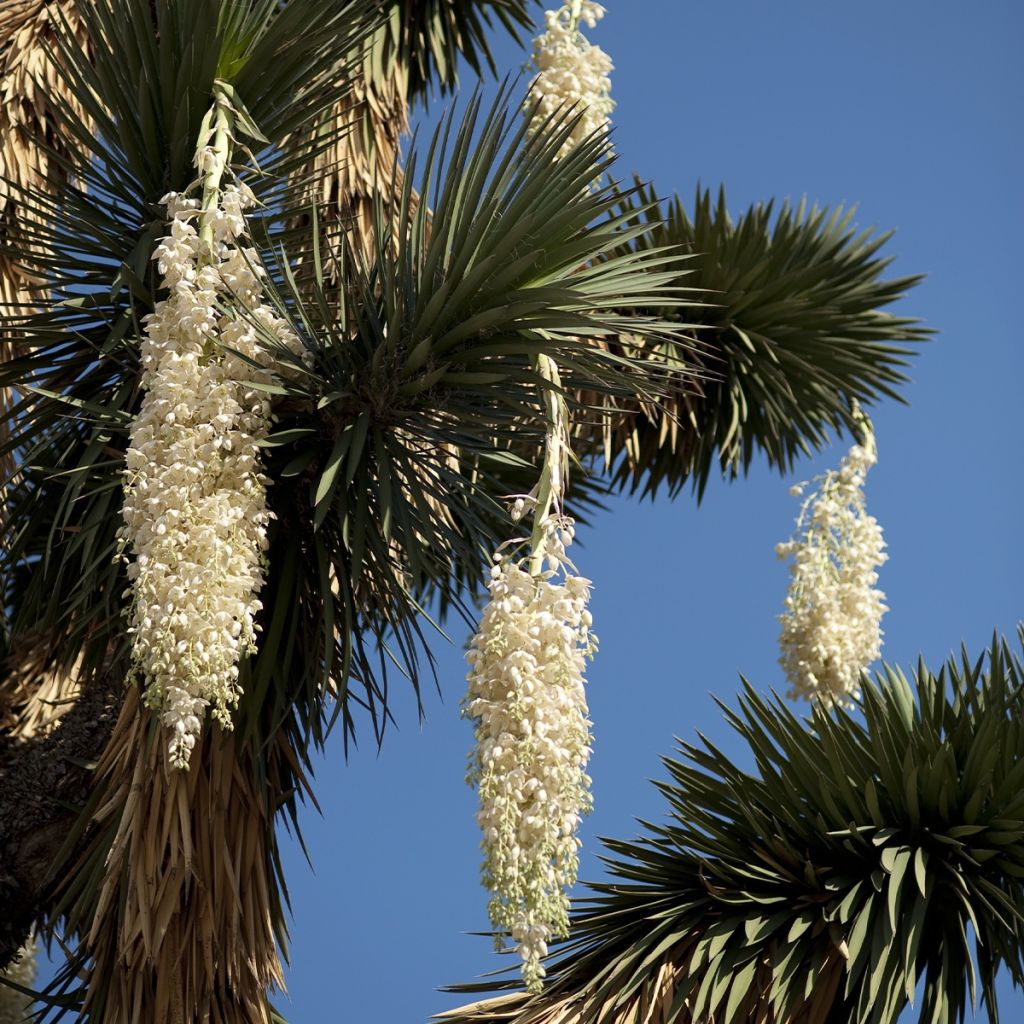
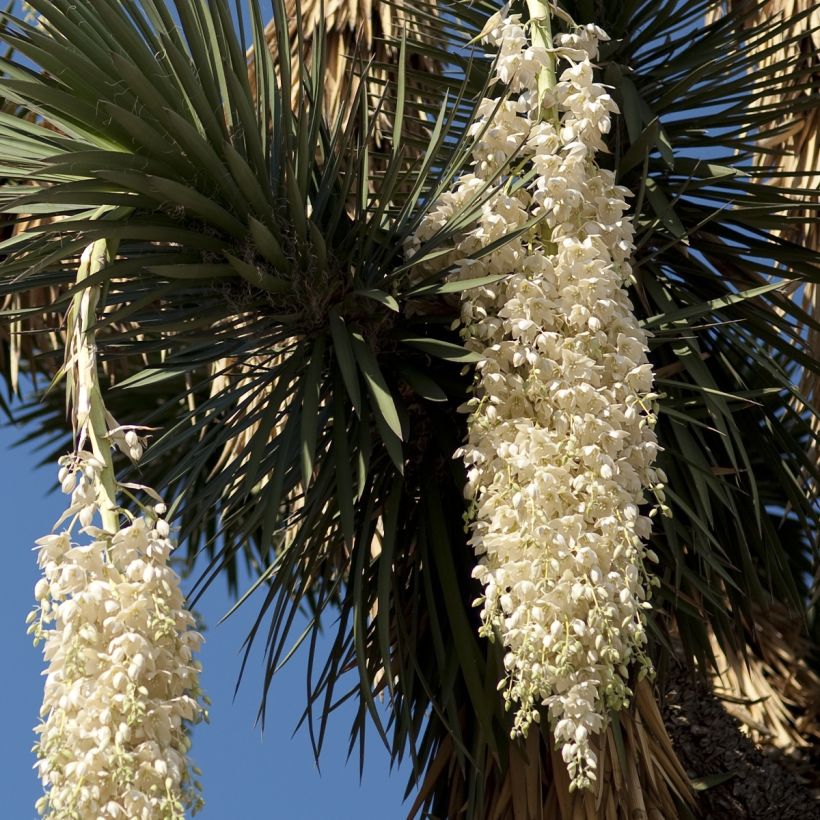
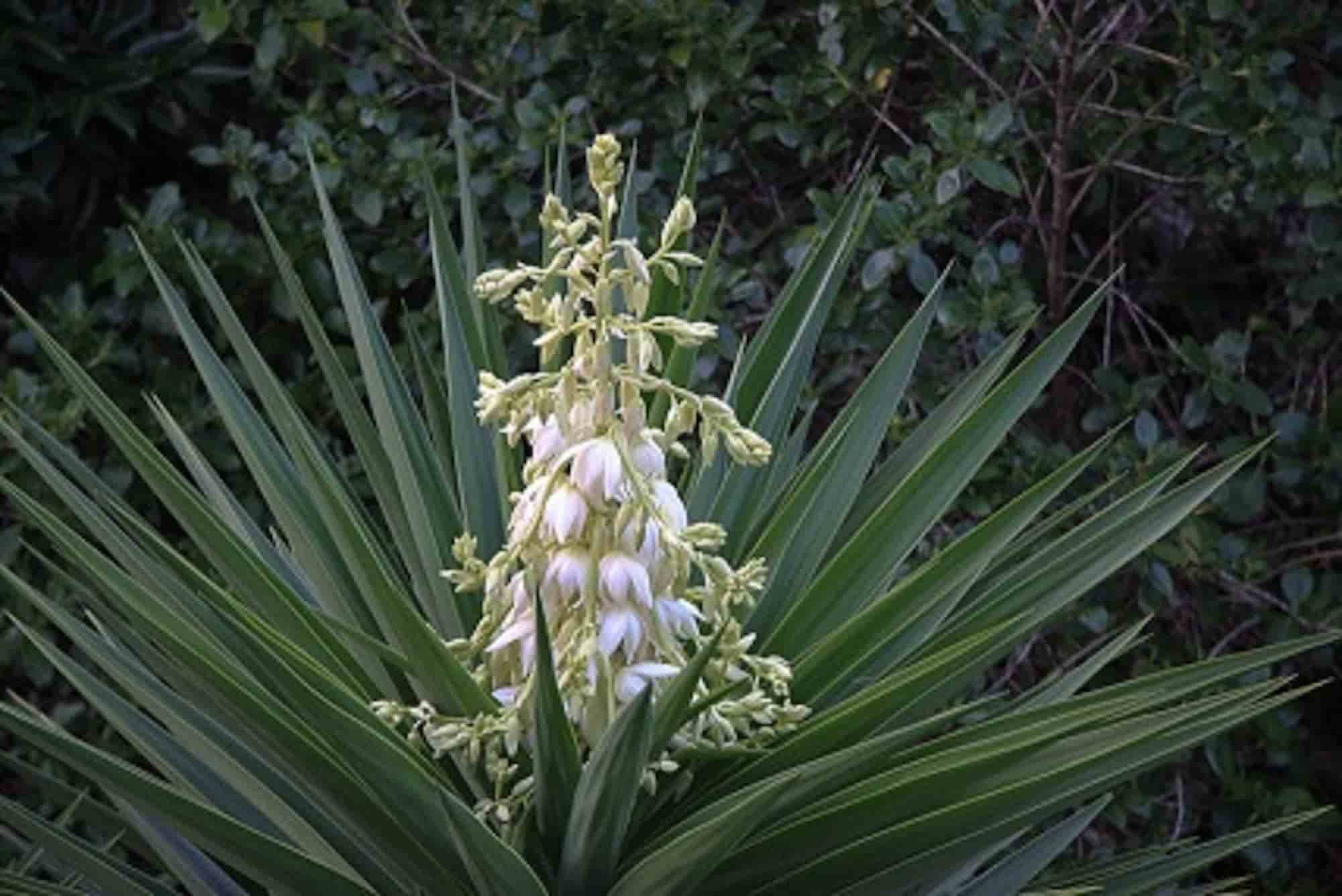
Yucca filifera, sometimes mistakenly called Yucca australis, forms over time a true small tree with a ramified trunk adorned with stiff leaves gathered in rounded rosettes. This large plant then draws the characteristic silhouette of arborescent yuccas that punctuate the desert landscapes of Mexico. While the foliage of this species is quite classic, its monumental summer flowering, with a trailing and non-upright panicle, allows it to be identified with certainty. The flowers of Yucca filifera resemble large, fully open cream-white tulips and give off a slight lemon scent. Seven years of patience are required to obtain a beautiful specimen in open ground, which is reasonable for this type of plant. Its hardiness (-10 °C (14 °F) in well-drained soil) allows it to be grown inland.
Yucca filifera is a plant of the agave family that should not be confused with Yucca australis, a synonym for Yucca faxoniana, which has broader leaves and grows more slowly. Yucca filifera is endemic to the arid regions of northern and central Mexico, notably the Chihuahua Desert. It thrives at altitudes between 1,000 and 1,500 m (3280 and 4920 ft) in rocky or sandy, well-drained soils. Frosts are occasional, but can drop below -10 °C (14 °F) at times.
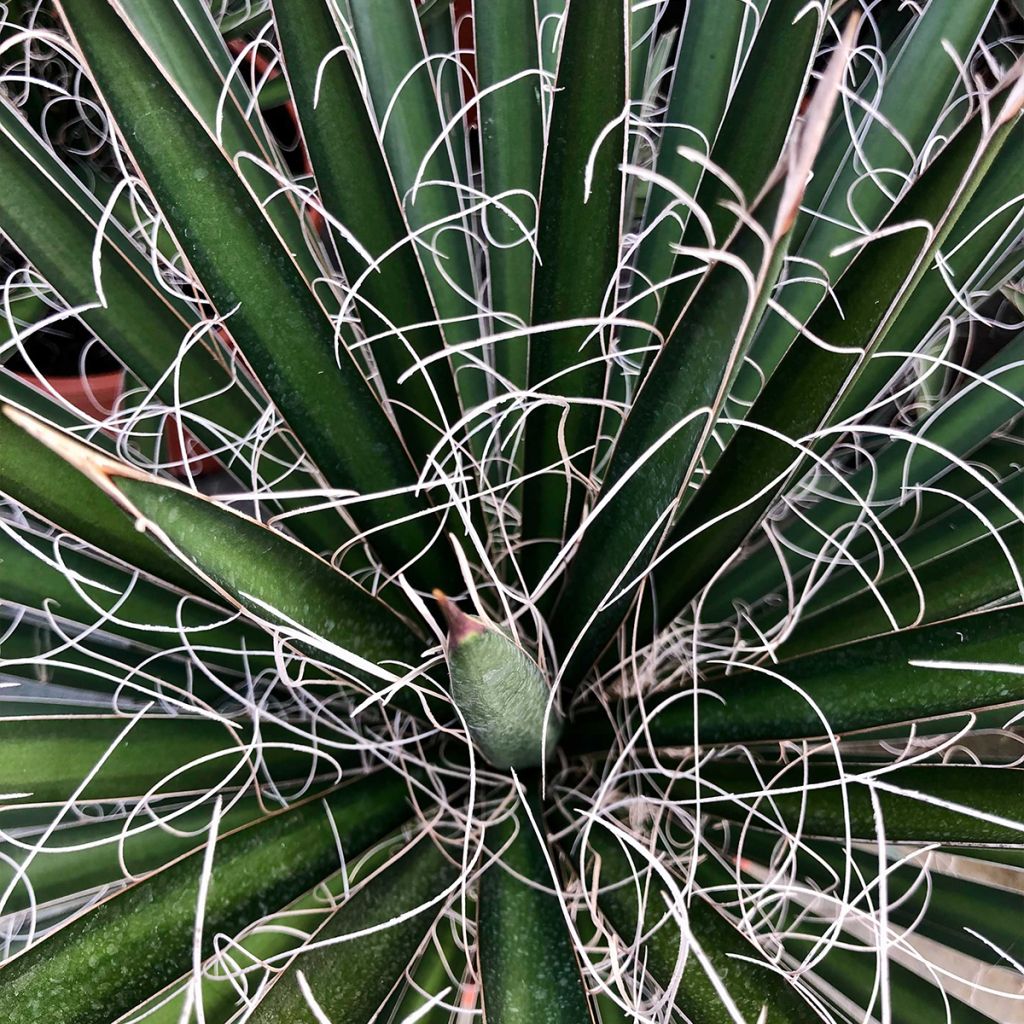
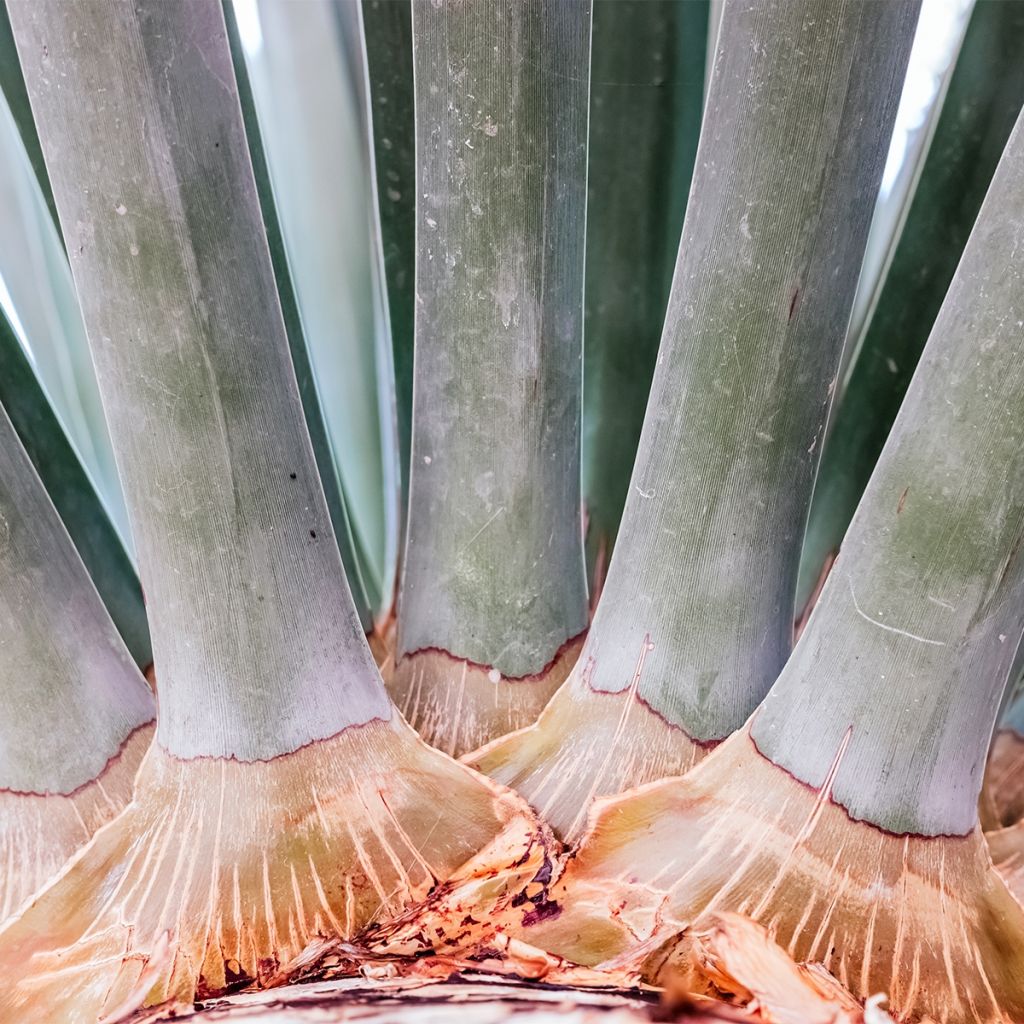
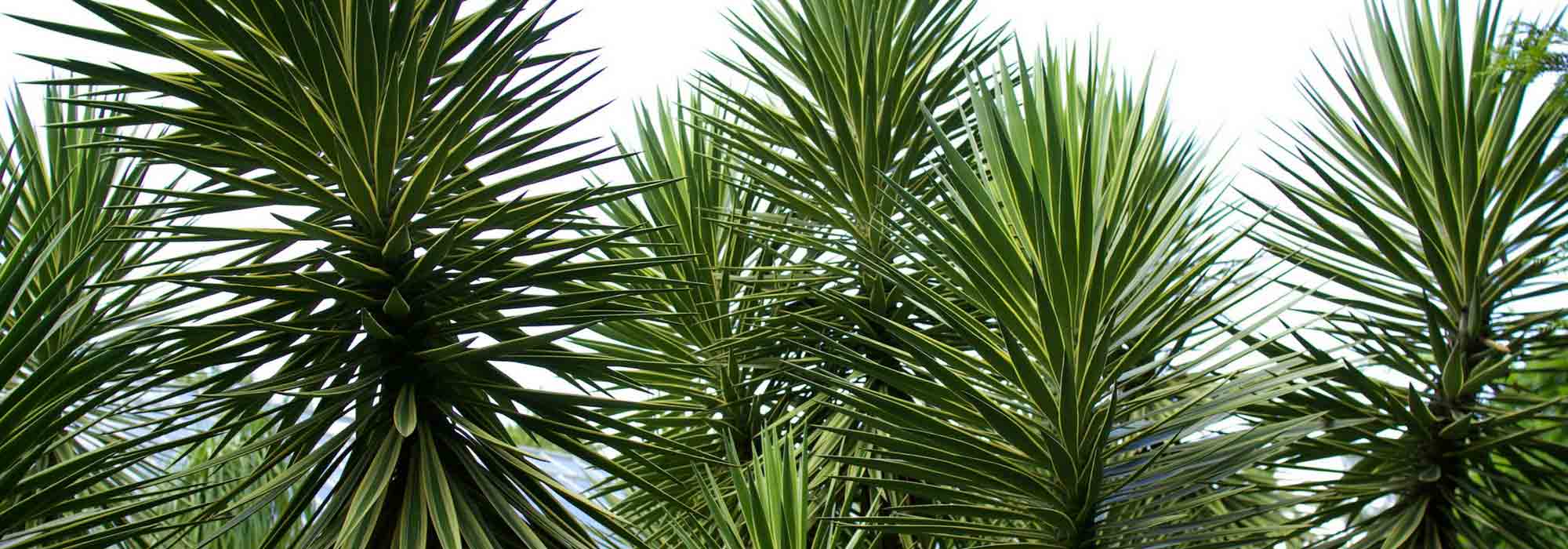
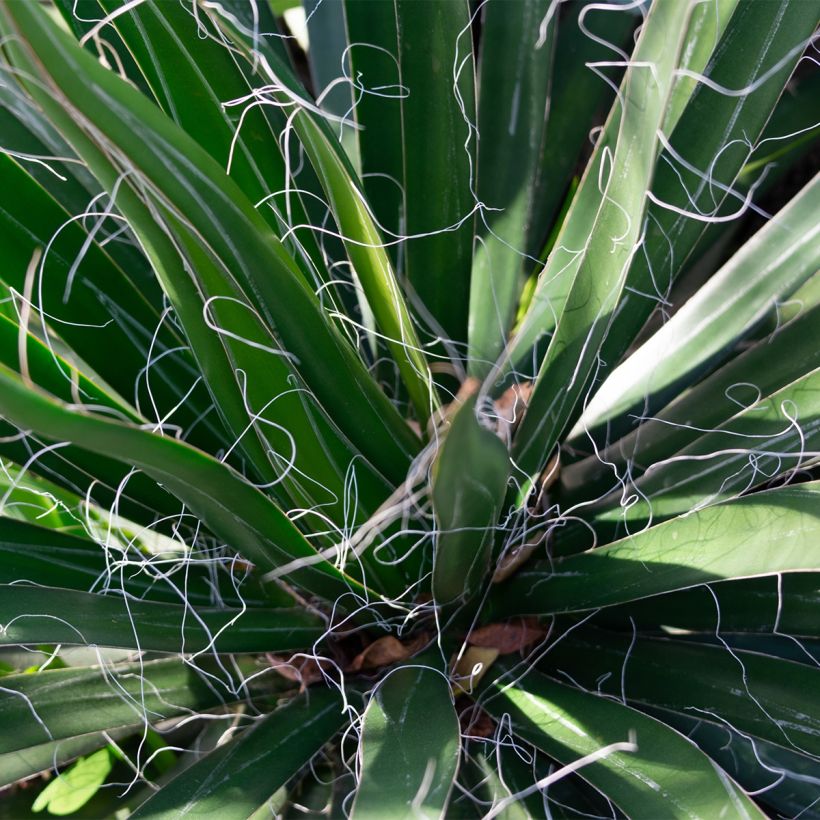
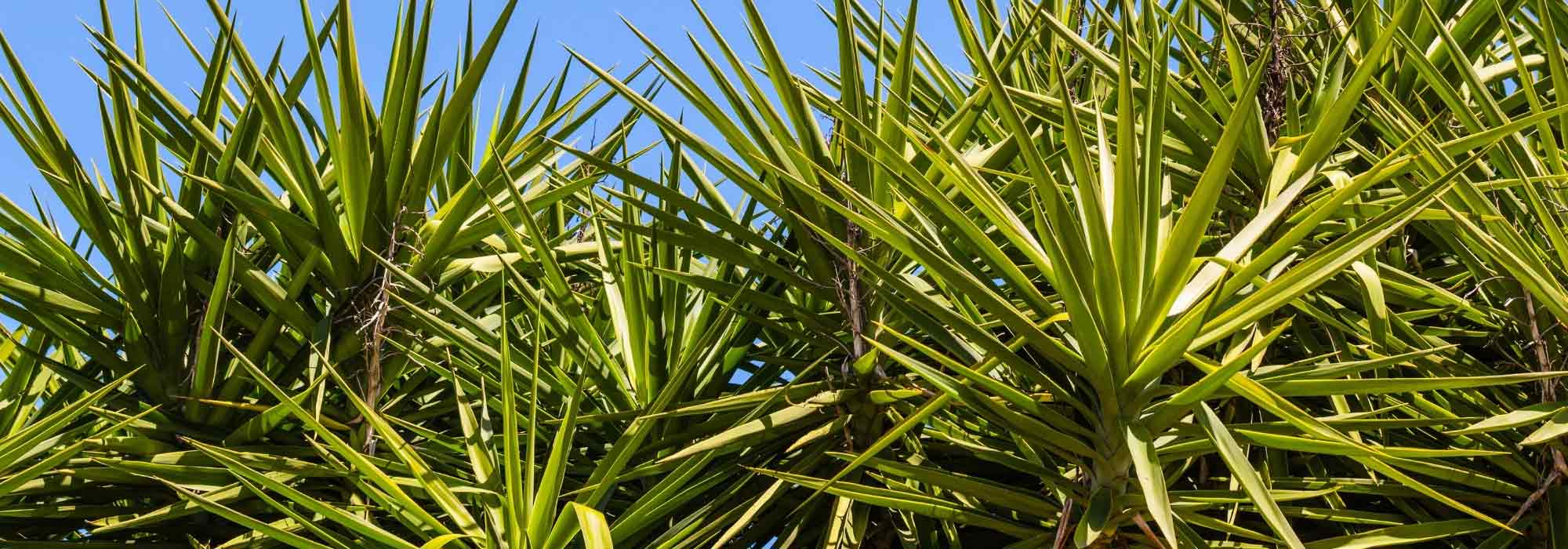
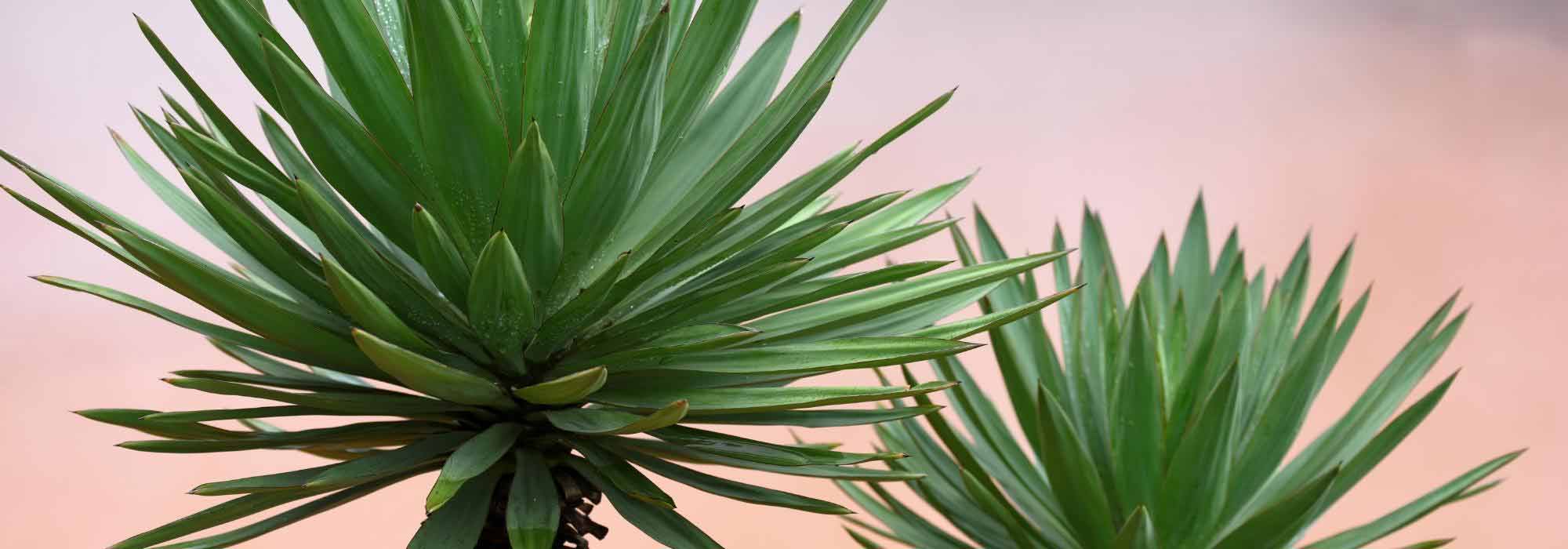
Young Yucca filifera plants resemble a rosette of stiff, linear leaves, 2 cm (1 in) wide, with curled filamentous margins, bluish-green in colour, terminated by a sturdy spine. The entire structure measures approximately 90 cm (35 in) in all directions and this vegetation persists throughout winter. After 7 to 8 years, the plant begins to form a trunk, and it grows about 20 cm (8 in) per year under good conditions. The terminal rosette eventually gives rise to a few branches, each carrying a rosette of leaves. Ultimately, this yucca forms a small tree with a chandelier-like silhouette, reaching a height of 10 m (33 ft) and a spread of 4 m (13 ft). The trunks of mature plants have a well-enlarged, swollen base. The fantastic flowering occurs in July-August on mature plants. It takes the form of a large panicle applied along the trunk, sometimes exceeding 2 m (7 ft) in length, directed towards the ground. This spectacular inflorescence carries up to 60 branches, each 70 cm (28 in) long, forming a magnificent panicle. Each branch bears 30 to 50 large, white, star-shaped, slightly fragrant flowers. In Mexico, yucca is pollinated by a nocturnal moth that does not live in Europe. To obtain fruits and seeds, manual pollination will be necessary.
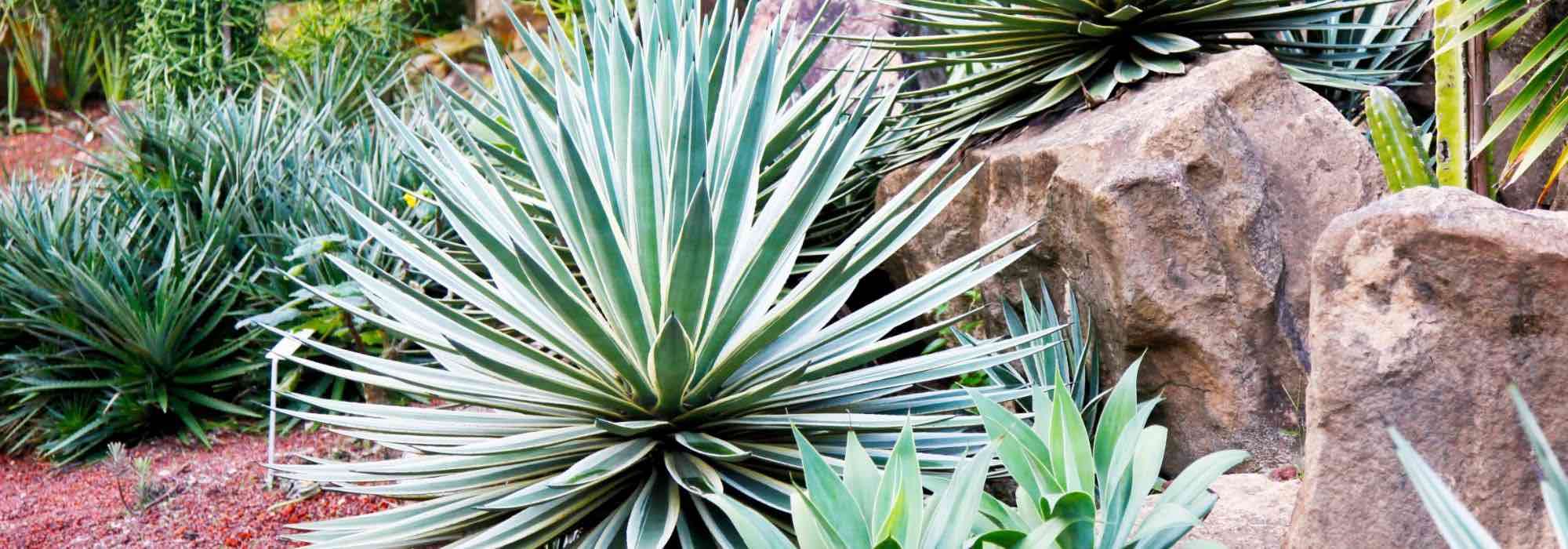
Yucca filifera is an easy-going exotic plant in a rather dry climate and well-drained, but deep soil (it has a developed root system). It is adapted to arid situations and tolerates dry cold well. It is advisable to keep it away from walkways and young children due to its pointed leaves. This plant is perfect for structuring a large rock garden or for brilliantly occupying the centre of an exotic bed. It can be planted alone or associated with Puya, Agave americana, prickly pear cacti, Beschorneria, and other hardy candelabra cacti (Cleistocactus strausii, Cylindropuntia imbricata), all equally undemanding. Cultivating it in pots is quite disappointing as it does not allow this yucca to reach its full potential.
Yucca filifera in pictures
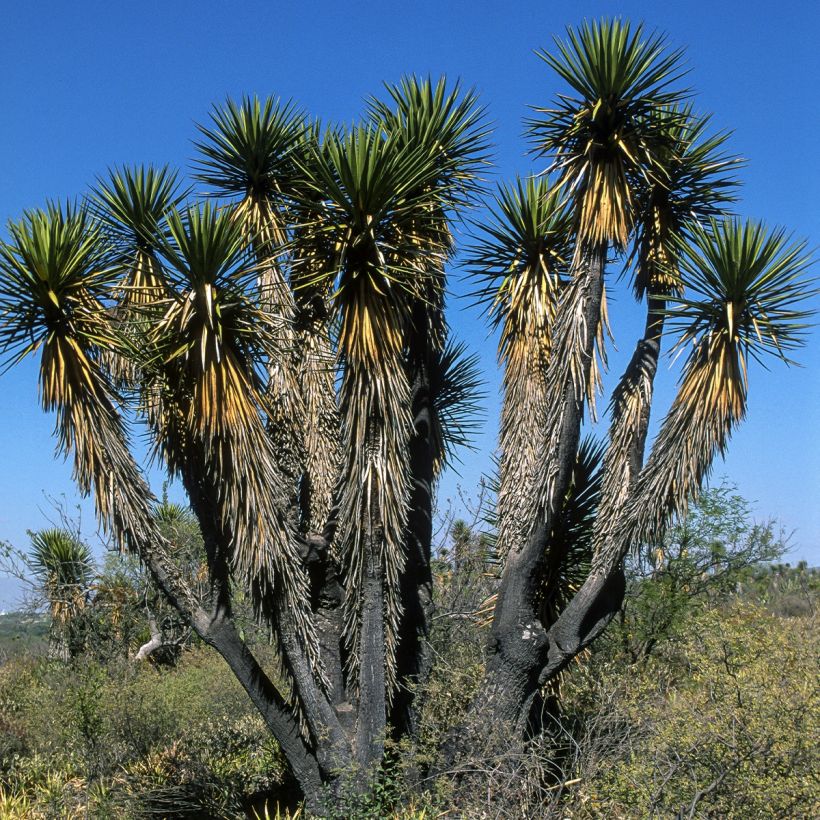
Plant habit
Flowering
Foliage
Botanical data
Yucca
filifera
Agavaeae
St Peter's Palm, Tree Yucca
North America
Planting and care
Plant Yucca filifera in spring in a very sunny location. In hot and dry climates, it is preferable to plant it in early autumn. An adult specimen can withstand brief freezes of around -10 °C (14 °F). This species does not tolerate excess humidity, especially when combined with cold temperatures: plant it in a very well-drained soil, but deep and loose enough to accommodate its developing root system. However, it is not very picky about the soil pH, which can be slightly acidic or slightly alkaline. This plant can tolerate poor soil, but its growth will be slightly faster in soil that is somewhat fertile. Monitor watering during the first 2 years, especially during hot and dry periods. Remove faded stems.
If your Yucca looks beautiful but it does not flower, it is probably too young. Indeed, it seems that this plant takes time to establish itself and only blooms after many years. Then, depending on the sunlight and climate, it will flower every year, or even every 2 or 3 years.
Propagation:
Yucca can be easily propagated by stem cuttings. It should be noted that plants from cuttings produce fewer roots than plants from seeds, making them susceptible to strong winds and less resistant to drought in hot climates.
Fertilisation in yuccas:
In their countries of origin, Yucca flowers are pollinated only by a few species of tiny primitive moths without proboscises that live in symbiosis with the plant, such as Prodoxus. The female of these moths carries pollen grains from one flower to the pistil of another. She lays a few eggs at the base of the flower. The young caterpillars feed on some of the seeds. Since Prodoxus is not part of our native fauna, most yuccas grown in our gardens never produce fruits. Only Yucca aloifolia is capable of doing so, because its pollination does not depend on the presence of these micromoths.
Planting period
Intended location
Care
Planting & care advice



This item has not been reviewed yet - be the first to leave a review about it.
Recently viewed products
Haven't found what you were looking for?
Hardiness is the lowest winter temperature a plant can endure without suffering serious damage or even dying. However, hardiness is affected by location (a sheltered area, such as a patio), protection (winter cover) and soil type (hardiness is improved by well-drained soil).
In temperate climates, pruning of spring-flowering shrubs (forsythia, spireas, etc.) should be done just after flowering.
Pruning of summer-flowering shrubs (Indian Lilac, Perovskia, etc.) can be done in winter or spring.
In cold regions as well as with frost-sensitive plants, avoid pruning too early when severe frosts may still occur.
The harvesting period indicated on our website applies to countries and regions in USDA zone 8 (France, England, Ireland, the Netherlands).
In colder areas (Scandinavia, Poland, Austria...) fruit and vegetable harvests are likely to be delayed by 3-4 weeks.
In warmer areas (Italy, Spain, Greece, etc.), harvesting will probably take place earlier, depending on weather conditions.
The sowing periods indicated on our website apply to countries and regions within USDA Zone 8 (France, UK, Ireland, Netherlands).
In colder areas (Scandinavia, Poland, Austria...), delay any outdoor sowing by 3-4 weeks, or sow under glass.
In warmer climes (Italy, Spain, Greece, etc.), bring outdoor sowing forward by a few weeks.
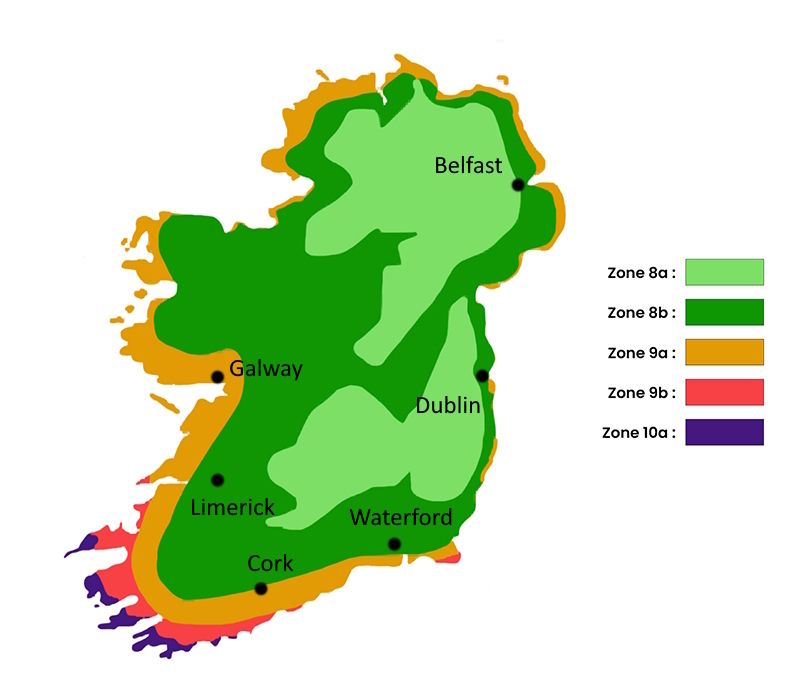
The planting period indicated on our website applies to regions in USDA Zone 9a (East Coast and Midlands: Dublin, Wexford, Waterford, Kilkenny, Portlaoise). It will vary depending on where you live:
- On the west coast and in the north-west (Galway, Limerick, Sligo, Donegal, Westport), delay planting by 1 to 2 weeks in spring and bring it forward by 1 to 2 weeks in autumn compared to the dates given, preferably choosing periods without strong winds.
- In the inland hills and plateaus (Wicklow Mountains, Macgillycuddy’s Reeks, Connemara, Killarney), it is best to plant in spring (April–May) or autumn (September–October), avoiding periods of waterlogged soil in winter and strong winds, which pose the main risk to newly planted trees in these areas.
The flowering period indicated on our website applies to regions in USDA Zone 9a, such as the East Coast and Midlands, including Dublin, Wexford, Waterford, Kilkenny and Portlaoise.
This will vary depending on where you live:
- On the west coast and in the northwest (Galway, Limerick, Sligo, Donegal and Westport), it will be delayed by one to two weeks compared to the given dates, due to stronger Atlantic winds and less spring sunshine.
- In the inland hills and plateaus (the Wicklow Mountains, the Macgillycuddy's Reeks, Connemara and Killarney), flowering will be delayed by two to three weeks. Flowering mainly occurs between May and July, with the limiting factors being less frost and more of the excessive humidity, strong winds and lack of sunshine that are characteristic of these areas.
Shipping country and language
Your country of residence may be:
Your country of residence is:
For a better user experience on our website, you can select:
Your shipping country:
-
 Austria
-
 Belgium
-
 Bosnia & Herzegovina
-
 Bulgaria
-
 Croatia
-
 Cyprus
-
 Czechia
-
 Denmark
-
 Estonia
-
 Finland
-
 France
-
 Germany
-
 Greece
-
 Hungary
-
 Iceland
-
 Ireland
-
 Italy
Italy
-
 Latvia
-
 Liechtenstein
-
 Lithuania
-
 Luxembourg
-
 Malta
Malta
-
 Netherlands
-
 Poland
-
 Portugal
-
 Romania
-
 Serbia
-
 Slovakia
-
 Slovenia
-
 Spain
Spain
-
 Sweden
-
 Switzerland
Language:
-
French
-
 English
-
Spanish
-
Italian
-
German
-
Portuguese
-
Dutch
-
Finnish
My Account
Hello
My wish lists
My cart
Log in / Register
Existing customer?
This form is protected by reCAPTCHA - the Google Privacy Policy and Terms of Service apply.
New customer?
Create an account to track your orders, access our customer service and, if you wish, make the most of our upcoming offers.