
Hydrangea serrata Blue Deckle - Mountain Hydrangea

Hydrangea serrata Blue Deckle - Mountain Hydrangea
Hydrangea serrata Blue Deckle - Mountain Hydrangea
Hydrangea serrata Blue Deckle
Mountain Hydrangea, Tea of Heaven
Magnificent, it completely matches my expectations. Planted along a wall in an open, partially shaded position where it will be trained, it is in the company of hostas, ferns, astilbe and heucheras.
Marie-Claude, 22/04/2025
Back-to-school special offer!
Get €10 off for every €50 you spend! And get up to €40 off on a single order.
How does it work?
1. Shop your favourites
Add your favourite plants to your basket. For every €50 you spend (excluding delivery charges, store credit and the plastic-free option), you’ll receive a €10 voucher.
€50 spent = €10 voucher
€100 spent = €20 voucher
€150 spent = €30 voucher
€200 spent = €40 voucher
2. Place your order
Once your basket reaches one of the spending thresholds, place your order. You can even choose your delivery date!
3. Receive your voucher
As soon as your order has been shipped, you’ll receive an email containing your personal voucher code and its value.
4. Use it on your next order
Your voucher is valid for 90 days from the date you receive it. It can be used once only, on a new order worth at least the value of the voucher, excluding delivery charges.
Please note: Vouchers can be combined with other offers, but cannot be split or refunded.
Home or relay delivery (depending on size and destination)
Important: You may be charged customs duties by your country’s customs authorities upon delivery.
Schedule delivery date
and select date in basket
This plant carries a 24 months recovery warranty
More information
We guarantee the quality of our plants for a full growing cycle, and will replace at our expense any plant that fails to recover under normal climatic and planting conditions.

Does this plant fit my garden?
Set up your Plantfit profile →
Description
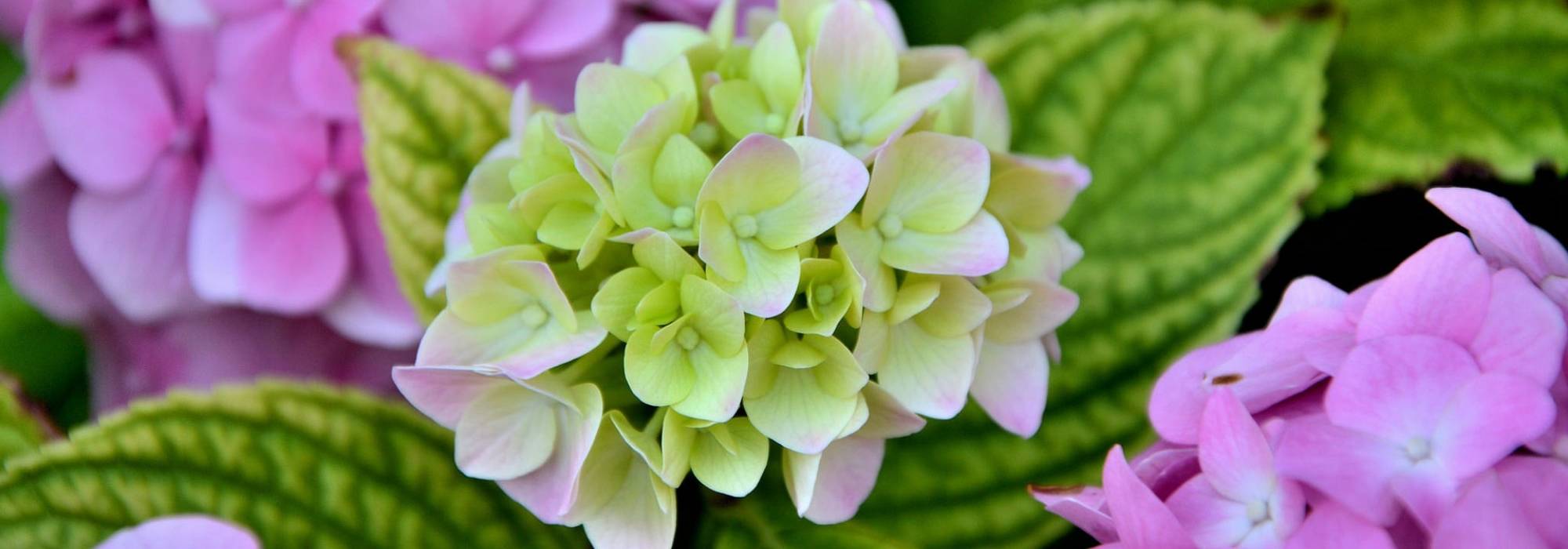
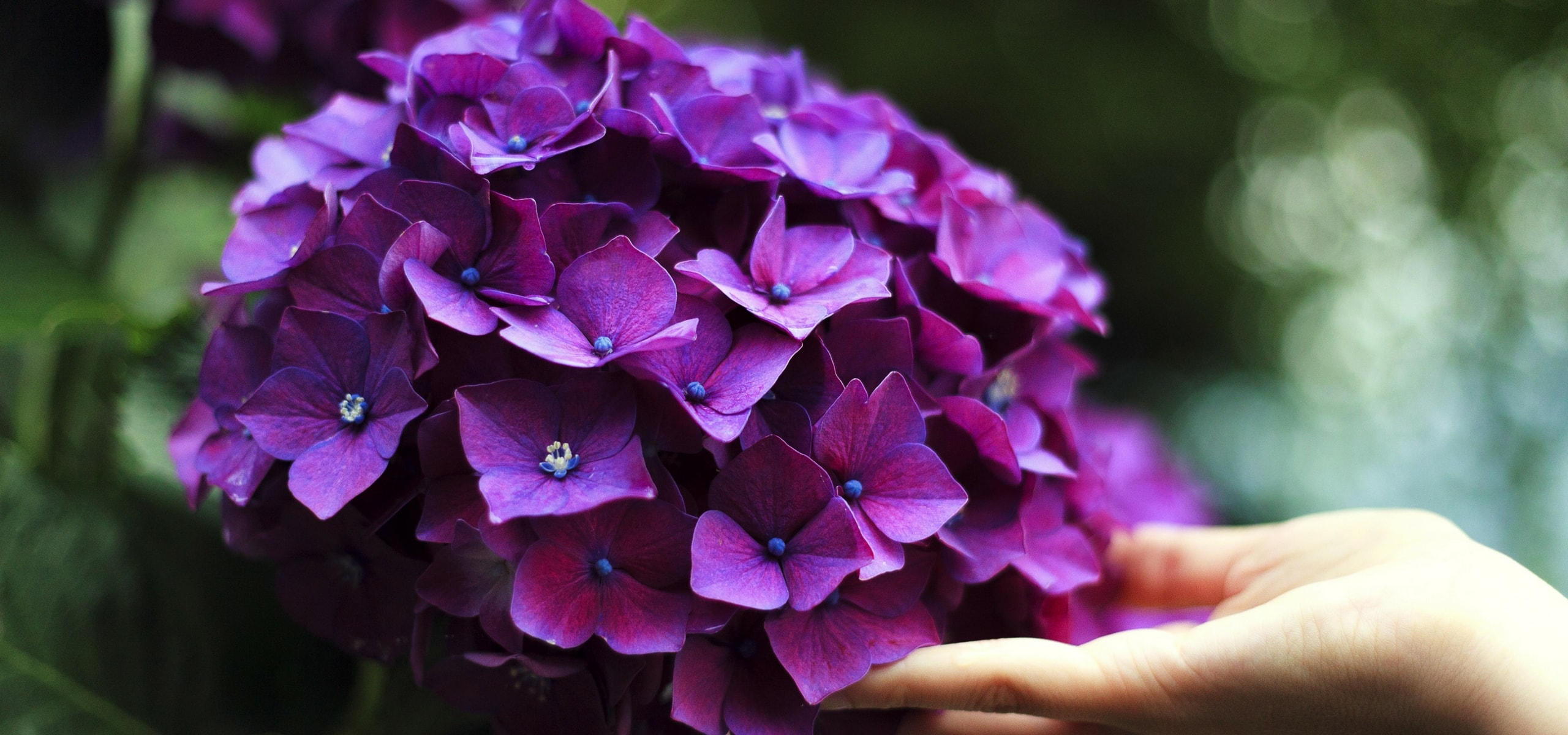
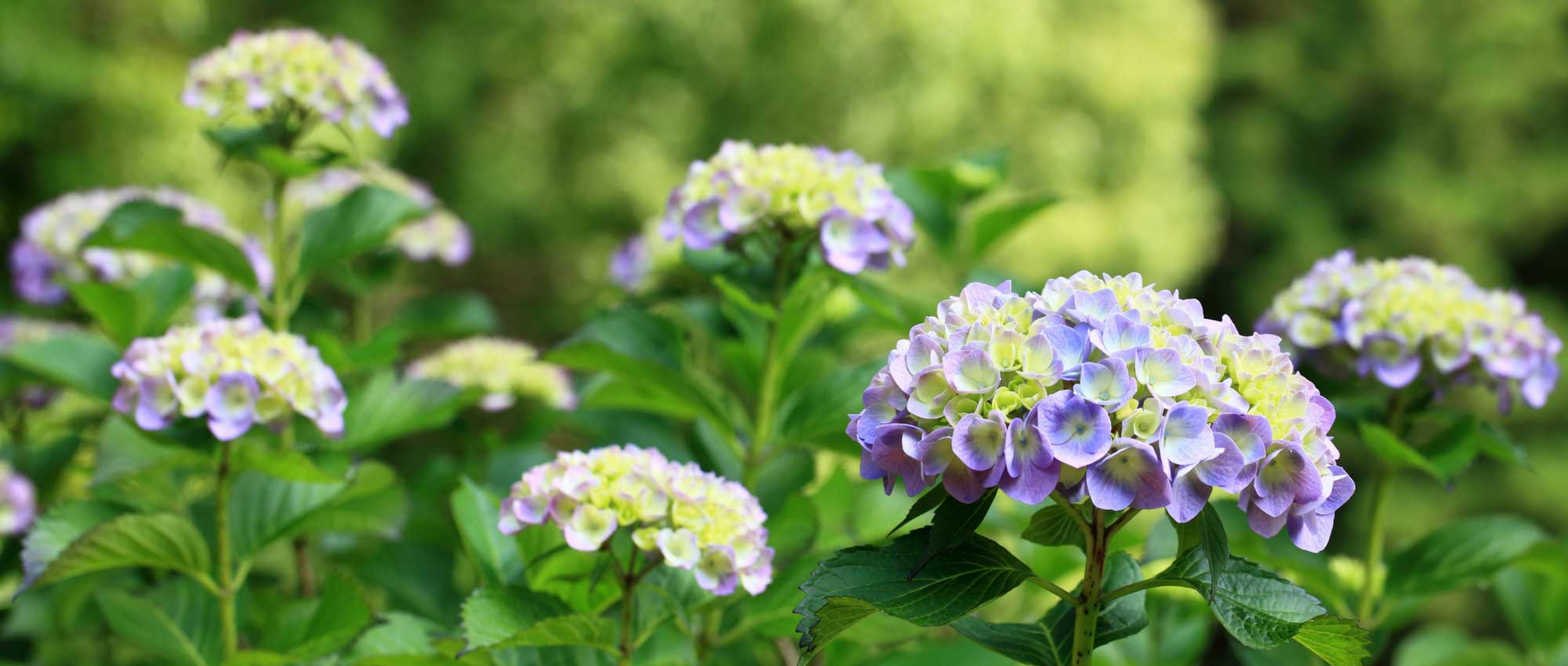
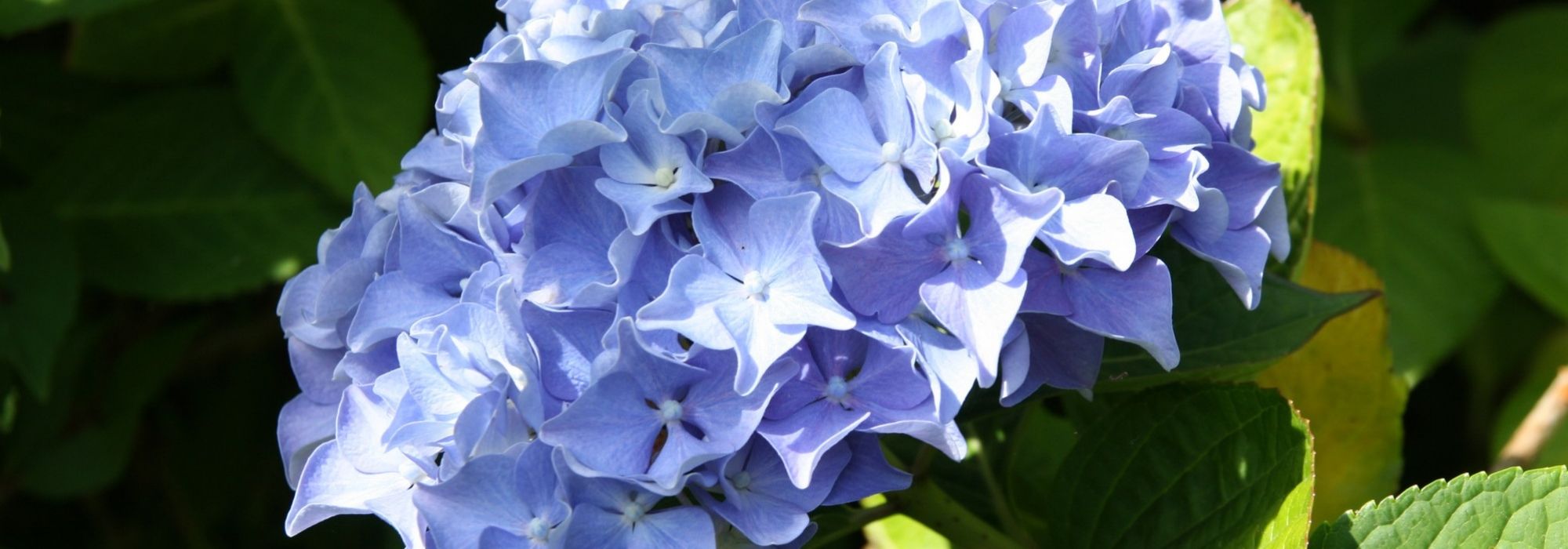
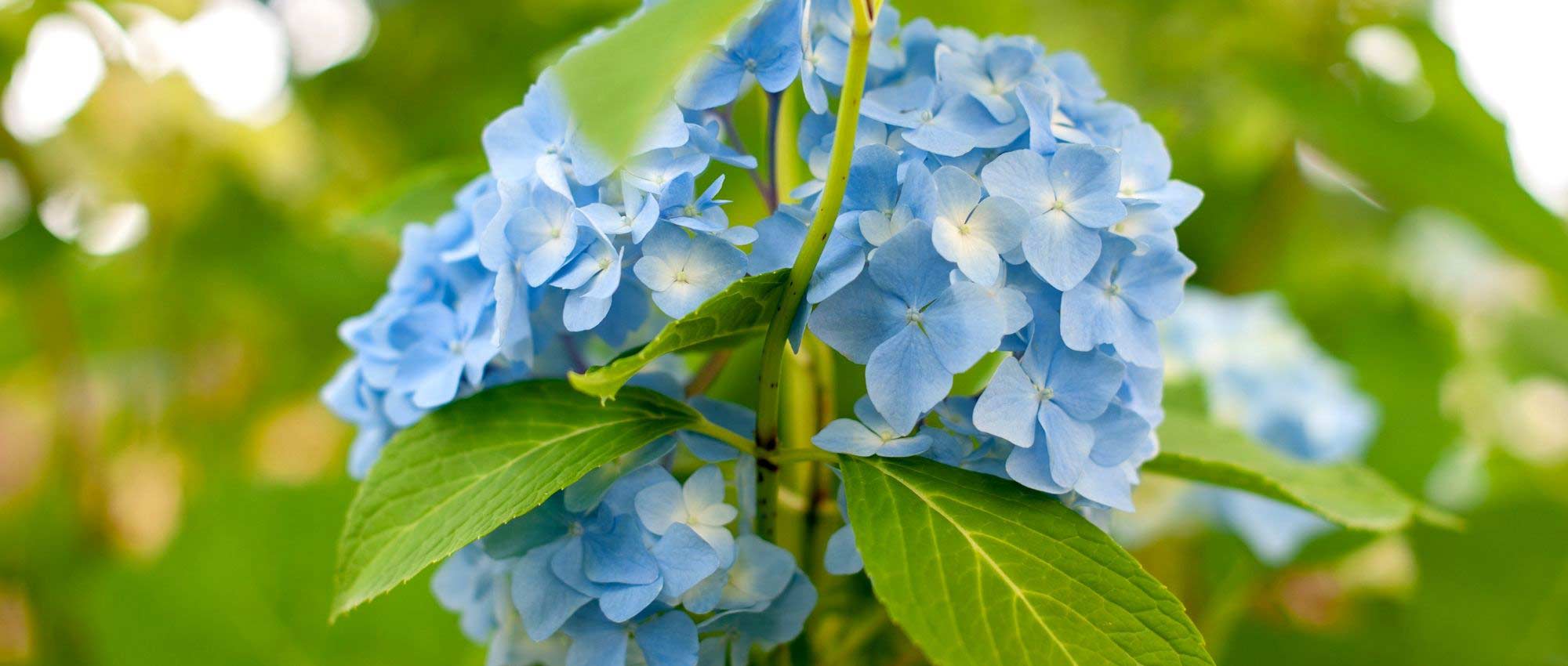
Hydrangea serrata 'Blue Deckle' is a heritage variety of mountain hydrangea with magnificent repeat flowering. Forming a compact, rounded shrub, it produces fairly dark green foliage that sets off the paler flowers. From June onwards, flat-topped inflorescences open in abundance. In acidic soil with a good supply of aluminium, they take on a superb, almost metallic light blue colour, while in neutral soil their colour ranges from pale pink to mauve pink. Flowering commonly repeats in late summer, and sometimes even in autumn, further enhancing this shrub's appeal. At the end of the season, its foliage also develops beautiful colours ranging from bronze to purplish red, before eventually falling to the ground. Suited to non-calcareous, humus-rich, moist soils, it thrives in light or even deeper shade in hot climates.
Hydrangeas belong to the Hydrangeaceae family, of which they form the principal genus. This family includes only 17 genera, among them the popular Philadelphus, commonly known as mock oranges, and the less well-known Carpenteria. The genus Hydrangea includes shrubs and climbing plants, generally deciduous, although some species, such as Hydrangea seemanii, retain their foliage all year round. Its name comes from the Greek words hydro, meaning "water", and aggeion, "vessel", referring to the shape of its fruits. Hydrangea serrata is a species closely related to H. macrophylla, from which the garden hydrangeas with large spherical inflorescences originate. However, it is hardier, thanks to its natural habitat. Native to the mountainous regions of Japan and Korea, where it can grow at altitudes of up to 1,500 metres, it tolerates temperatures of around -20 °C. This hydrangea forms a small shrub approximately 1.50 m in height and spread. Deciduous, it develops slender stems, often tinged with black, bearing foliage that disappears in winter.
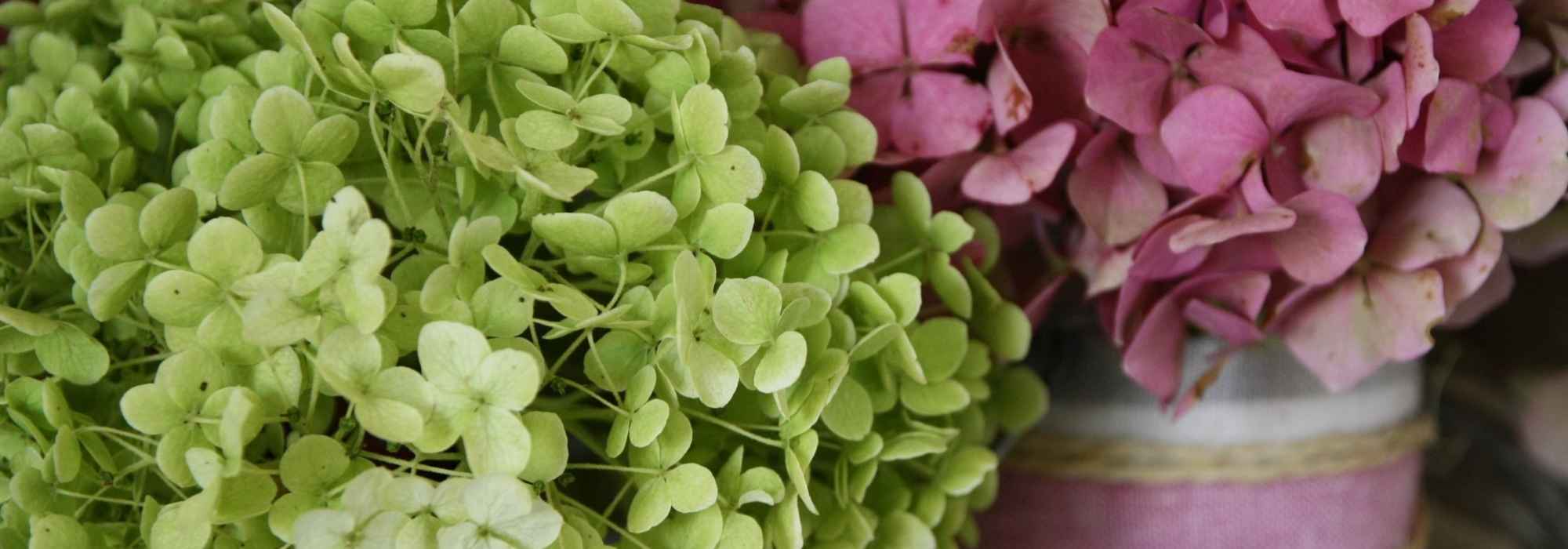
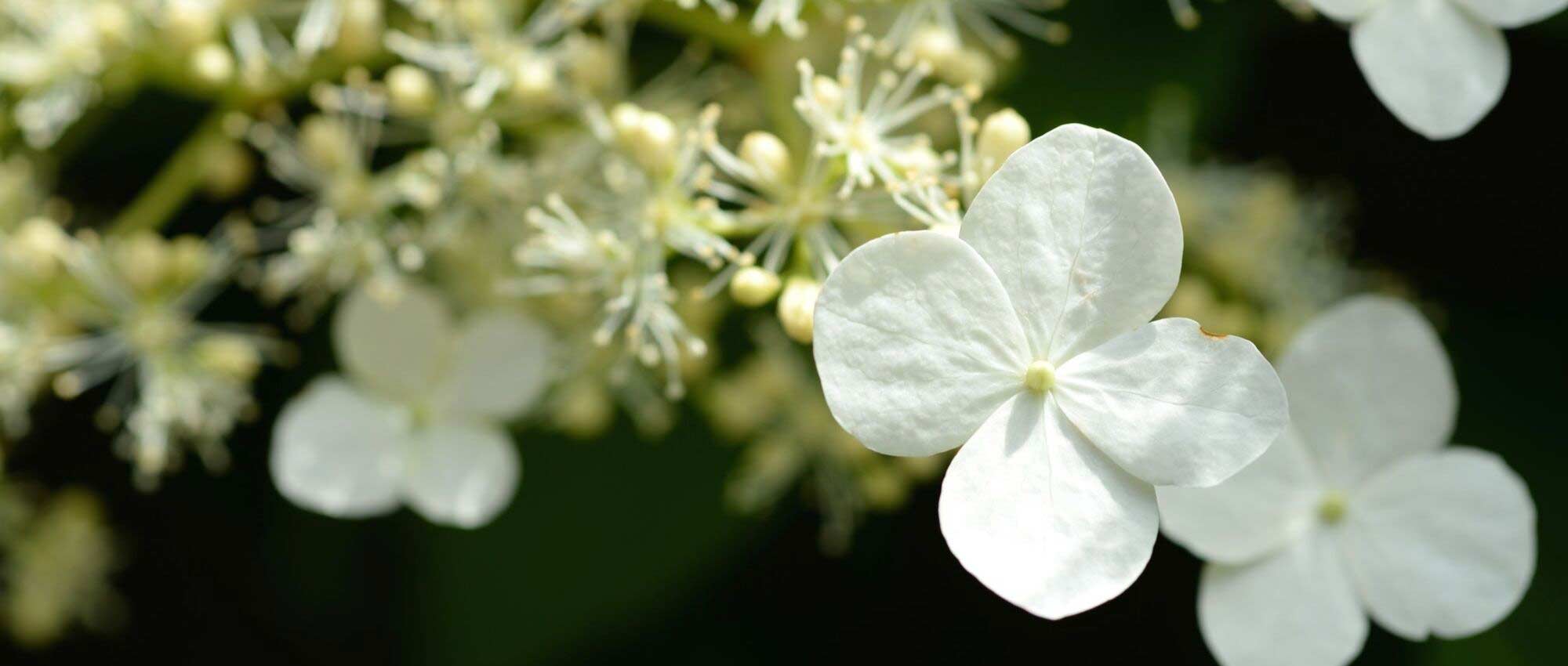
Hydrangea serrata Blue Deckle was selected by British breeder Michael Haworth-Booth before 1950. The exact date on which it was introduced to the market, as well as its precise parentage, is unknown, although it is thought quite probably to be a hybrid between H. serrata and H. macrophylla. In any case, it received an award in spring 1992 at the Courson Plant Days, a major French event for plant enthusiasts and collectors. It develops into a densely vegetated shrub, with an irregular but more or less rounded habit, generally reaching 1.20 to 1.50 m in height and slightly more in width. If grown in a container, particularly because the soil in the garden is calcareous, its size will most often be limited to 1 m in height and spread. Its deciduous leaves are opposite and decussate (that is, positioned face to face and offset by 90° from the pair below). They are oval-lanceolate in shape, with a pointed (acuminate) tip and a finely toothed margin. Their colour ranges from medium to dark green depending on the aspect and soil, and they measure on average 10 cm long and 5 cm wide. In June, inflorescences approximately 10 cm in diameter appear. They consist of sterile flowers around the outside, reaching 2.5 to 3.5 cm in diameter, which surround much smaller fertile central flowers, only a few millimetres across. English gardeners call these inflorescences "lacecaps", because of their flat to slightly domed shape. The particularly generous main flowering is beautifully set off by the dark foliage, although it largely eclipses it, and lasts until July. In September and sometimes October, one or even two further flushes appear, extending the shrub's overall flowering period, much to everyone's delight. As with hydrangeas in general, the nature of the soil determines the colour of the flowers. In acidic soil with a good supply of aluminium, 'Blue Deckle', as its name suggests, turns blue: an original and remarkable light blue with metallic tones. If the soil is neutral (pH between 6.5 and 7), the inflorescences will be pink, ranging from pale pink to mauve. At the end of the season, shortly after the last flowers have faded, the foliage develops its autumn colours, generally an especially attractive purplish red.
Mountain hydrangea 'Blue Deckle' is a heritage variety that remains highly ornamental, offering a beautiful display in summer and autumn. Plant it in a bed alongside other ornamental plants that share its need for moisture and filtered light. Plant Andromeda polifolia 'Compacta' at its base, a low-growing variety of bog rosemary whose small white-pink bell-shaped flowers, appearing from April onwards, will precede those of your hydrangea. Mountain laurels will enliven the second half of spring with their highly original and extremely decorative flowers. To enjoy an immense choice of colours, also explore the range of dwarf rhododendrons, which will dazzle you in spring!
Hydrangea serrata Blue Deckle - Mountain Hydrangea in pictures


Plant habit
Flowering
Foliage
Botanical data
Hydrangea
serrata
Blue Deckle
Hydrangeaceae
Mountain Hydrangea, Tea of Heaven
Cultivar or hybrid
Planting and care
Choose a position sheltered from the strong afternoon sun, especially in the south of France. Light shade will benefit this hydrangea, or even deeper shade in hot, very sunny regions. The soil must not be chalky; otherwise, plant it in a large container with potting compost for acid-loving plants. When planting your Hydrangea serrata 'Blue Deckle', use geranium potting compost rather than ericaceous compost, as it retains water very effectively and has a pH below 7. Use an organic liquid feed for geraniums and, every three or four years, well-rotted cow manure mixed with leaves, to avoid attracting moles or encouraging honey fungus. For good growth, mulch around the base. Grass clippings spread in thin layers are suitable. They also provide welcome acidity. Water sparingly but frequently with lime-free water. Watch out for slugs from February onwards, as they attack young buds. Avoid planting your hydrangea beneath a birch, hazel or ash, as root competition could hinder its growth. At the end of winter, cut completely dry stems back to the base. For the rest, carry out only light maintenance pruning on the oldest stems, cutting them back to half their height just above young shoots.
Planting period
Intended location
Care
Planting & care advice

-
, onOrder confirmed
Reply from on Promesse de fleurs
Recently viewed products
Haven't found what you were looking for?
Hardiness is the lowest winter temperature a plant can endure without suffering serious damage or even dying. However, hardiness is affected by location (a sheltered area, such as a patio), protection (winter cover) and soil type (hardiness is improved by well-drained soil).
In temperate climates, pruning of spring-flowering shrubs (forsythia, spireas, etc.) should be done just after flowering.
Pruning of summer-flowering shrubs (Indian Lilac, Perovskia, etc.) can be done in winter or spring.
In cold regions as well as with frost-sensitive plants, avoid pruning too early when severe frosts may still occur.
The harvesting period indicated on our website applies to countries and regions in USDA zone 8 (France, England, Ireland, the Netherlands).
In colder areas (Scandinavia, Poland, Austria...) fruit and vegetable harvests are likely to be delayed by 3-4 weeks.
In warmer areas (Italy, Spain, Greece, etc.), harvesting will probably take place earlier, depending on weather conditions.
The sowing periods indicated on our website apply to countries and regions within USDA Zone 8 (France, UK, Ireland, Netherlands).
In colder areas (Scandinavia, Poland, Austria...), delay any outdoor sowing by 3-4 weeks, or sow under glass.
In warmer climes (Italy, Spain, Greece, etc.), bring outdoor sowing forward by a few weeks.
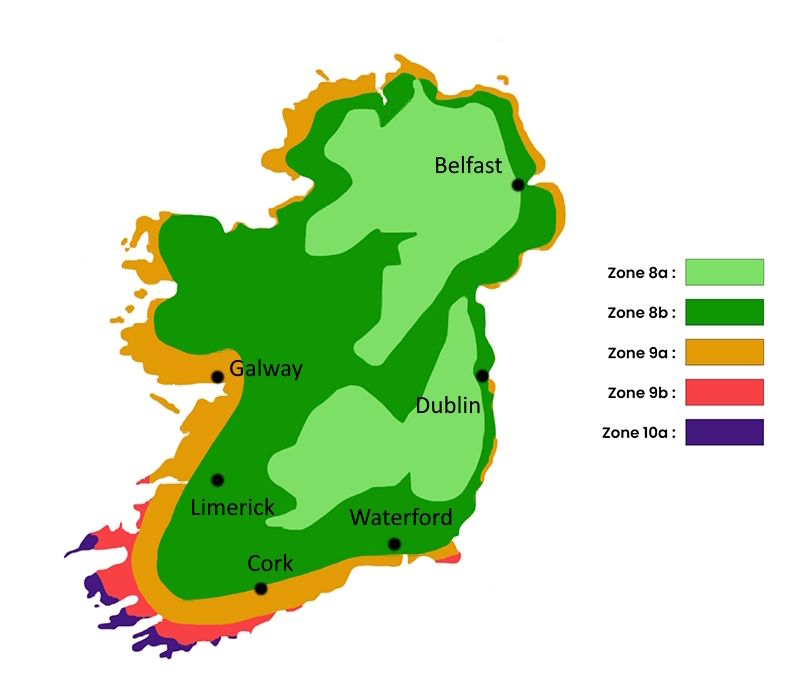
The planting period indicated on our website applies to regions in USDA Zone 9a (East Coast and Midlands: Dublin, Wexford, Waterford, Kilkenny, Portlaoise). It will vary depending on where you live:
- On the west coast and in the north-west (Galway, Limerick, Sligo, Donegal, Westport), delay planting by 1 to 2 weeks in spring and bring it forward by 1 to 2 weeks in autumn compared to the dates given, preferably choosing periods without strong winds.
- In the inland hills and plateaus (Wicklow Mountains, Macgillycuddy’s Reeks, Connemara, Killarney), it is best to plant in spring (April–May) or autumn (September–October), avoiding periods of waterlogged soil in winter and strong winds, which pose the main risk to newly planted trees in these areas.
The flowering period indicated on our website applies to regions in USDA Zone 9a, such as the East Coast and Midlands, including Dublin, Wexford, Waterford, Kilkenny and Portlaoise.
This will vary depending on where you live:
- On the west coast and in the northwest (Galway, Limerick, Sligo, Donegal and Westport), it will be delayed by one to two weeks compared to the given dates, due to stronger Atlantic winds and less spring sunshine.
- In the inland hills and plateaus (the Wicklow Mountains, the Macgillycuddy's Reeks, Connemara and Killarney), flowering will be delayed by two to three weeks. Flowering mainly occurs between May and July, with the limiting factors being less frost and more of the excessive humidity, strong winds and lack of sunshine that are characteristic of these areas.
Shipping country and language
Your country of residence may be:
Your country of residence is:
For a better user experience on our website, you can select:
Your shipping country:
-
 Austria
-
 Belgium
-
 Bosnia & Herzegovina
-
 Bulgaria
-
 Croatia
-
 Cyprus
-
 Czechia
-
 Denmark
-
 Estonia
-
 Finland
-
 France
-
 Germany
-
 Greece
-
 Hungary
-
 Iceland
-
 Ireland
-
 Italy
-
 Latvia
-
 Liechtenstein
-
 Lithuania
-
 Luxembourg
-
 Malta
-
 Netherlands
-
 Poland
-
 Portugal
-
 Romania
-
 Serbia
-
 Slovakia
-
 Slovenia
-
 Spain
-
 Sweden
-
 Switzerland
Language:
-
French
-
 English
-
Spanish
-
Italian
-
German
-
Portuguese
-
Dutch
-
Finnish
My Account
Hello
My wish lists
My cart
Log in / Register
Existing customer?
This form is protected by reCAPTCHA - the Google Privacy Policy and Terms of Service apply.
New customer?
Create an account to track your orders, access our customer service and, if you wish, make the most of our upcoming offers.