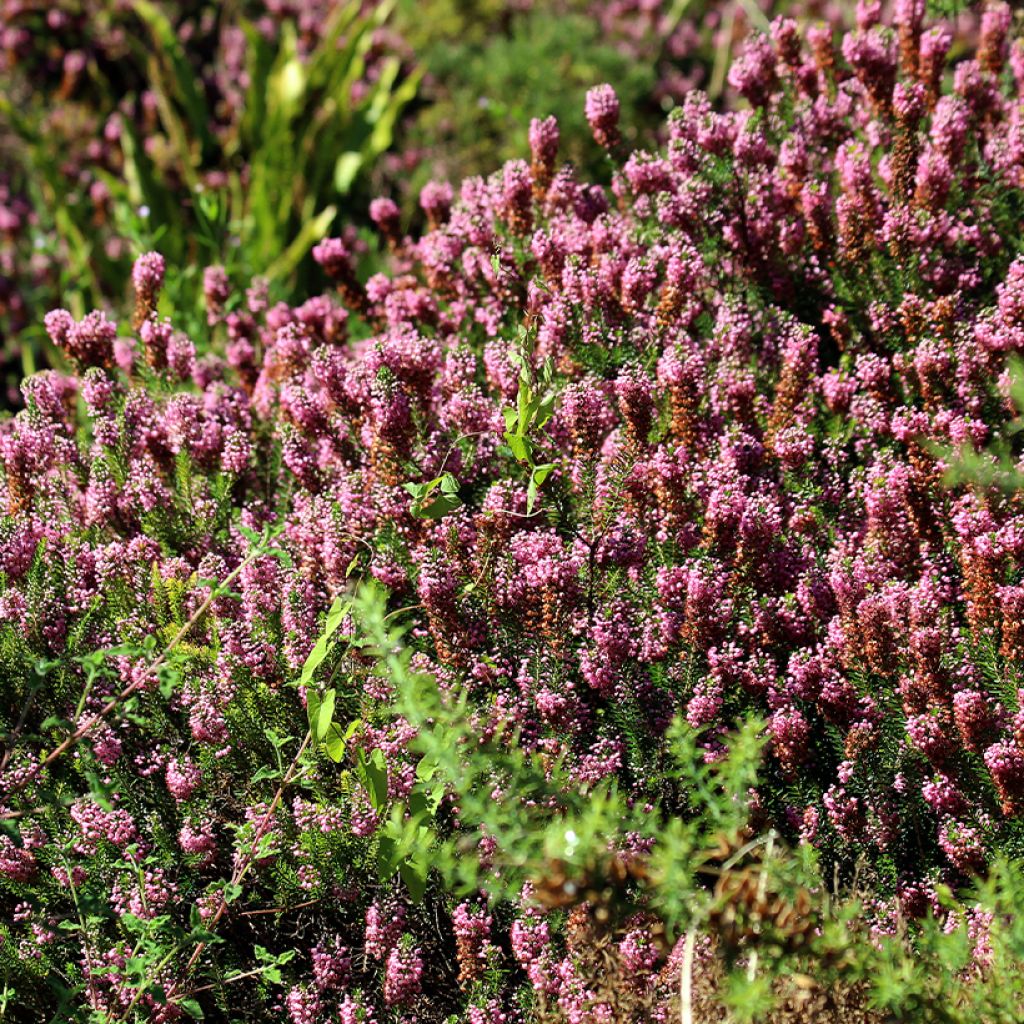
Erica vagans 'Diana Hornibrook'
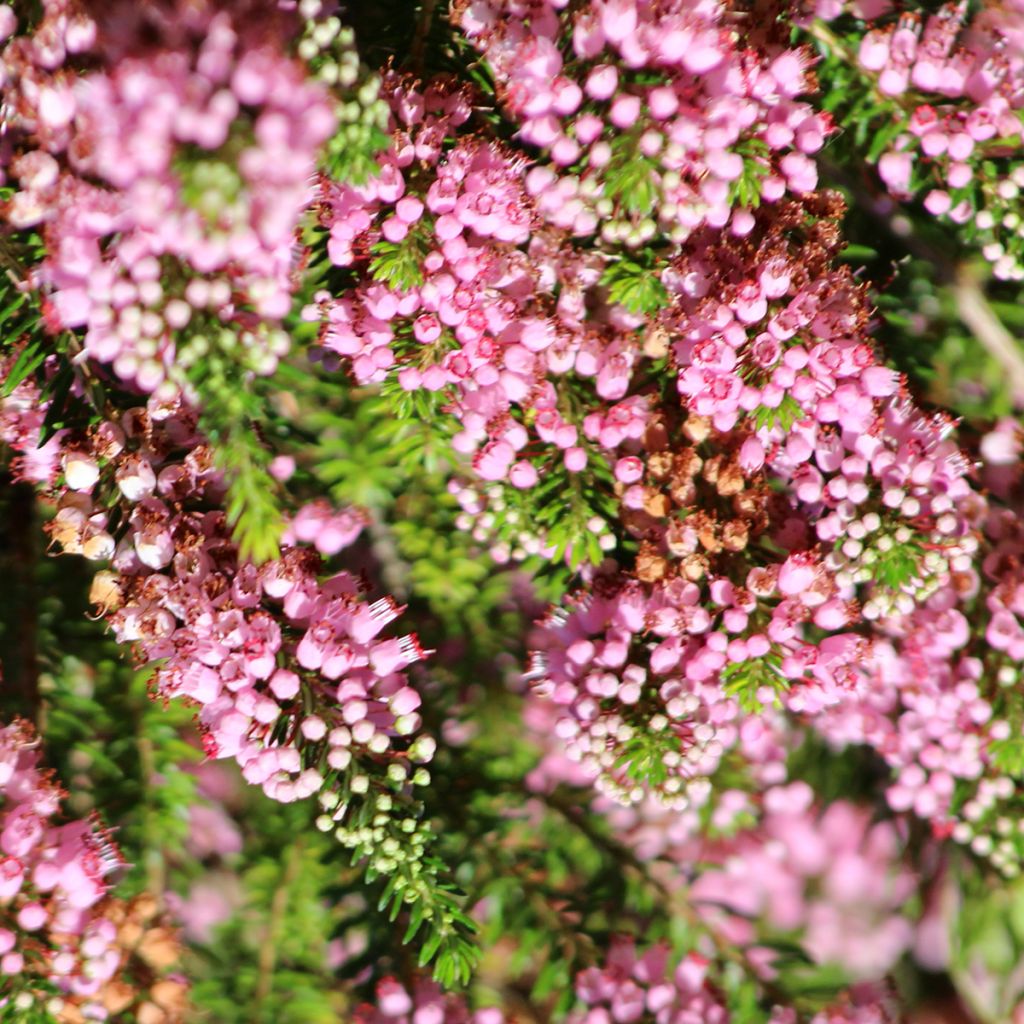
Erica vagans 'Diana Hornibrook'
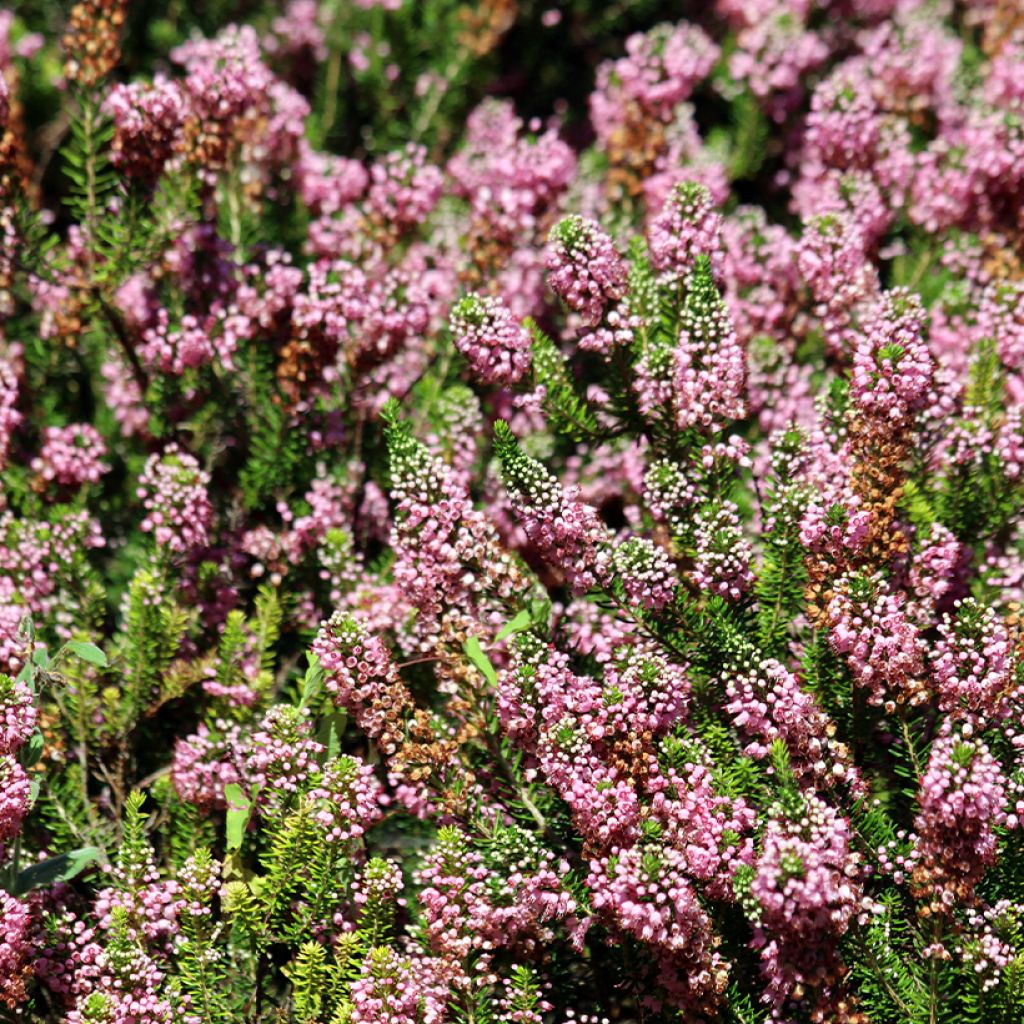
Erica vagans 'Diana Hornibrook'
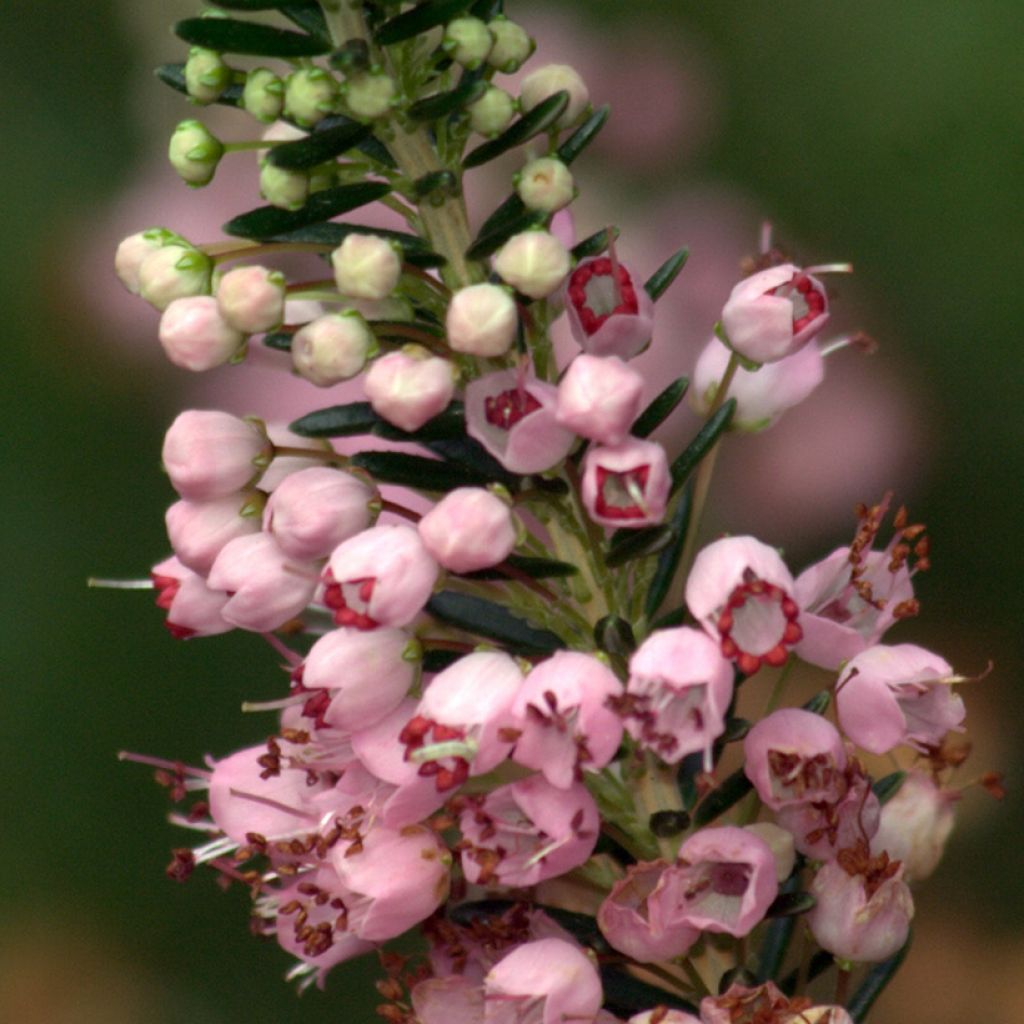
Erica vagans 'Diana Hornibrook'
Erica vagans 'Diana Hornibrook'
Erica vagans Diana Hornibrook
Cornish Heath
Back-to-school special offer!
Get €10 off for every €50 you spend! And get up to €40 off on a single order.
How does it work?
1. Shop your favourites
Add your favourite plants to your basket. For every €50 you spend (excluding delivery charges, store credit and the plastic-free option), you’ll receive a €10 voucher.
€50 spent = €10 voucher
€100 spent = €20 voucher
€150 spent = €30 voucher
€200 spent = €40 voucher
2. Place your order
Once your basket reaches one of the spending thresholds, place your order. You can even choose your delivery date!
3. Receive your voucher
As soon as your order has been shipped, you’ll receive an email containing your personal voucher code and its value.
4. Use it on your next order
Your voucher is valid for 90 days from the date you receive it. It can be used once only, on a new order worth at least the value of the voucher, excluding delivery charges.
Please note: Vouchers can be combined with other offers, but cannot be split or refunded.
Why not try an alternative variety in stock?
View all →
Available in 0 sizes
Available in 0 sizes

Available in 1 sizes
Available in 0 sizes
Available in 3 sizes
Available in 1 sizes

Available in 2 sizes
Available in 3 sizes
Available in 3 sizes
Available in 3 sizes
This plant carries a 24 months recovery warranty
More information
We guarantee the quality of our plants for a full growing cycle, and will replace at our expense any plant that fails to recover under normal climatic and planting conditions.
Does this plant fit my garden?
Set up your Plantfit profile →
Description
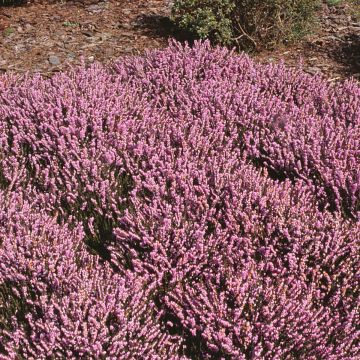
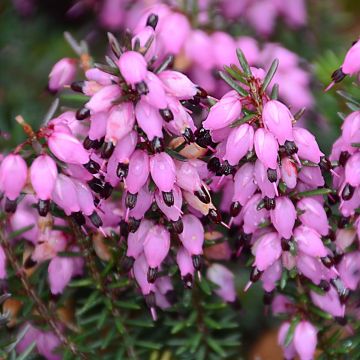
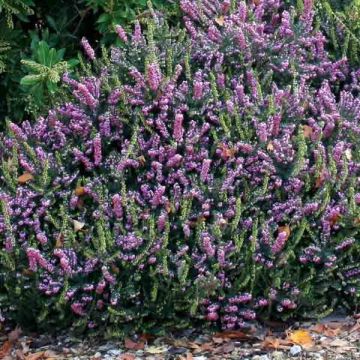
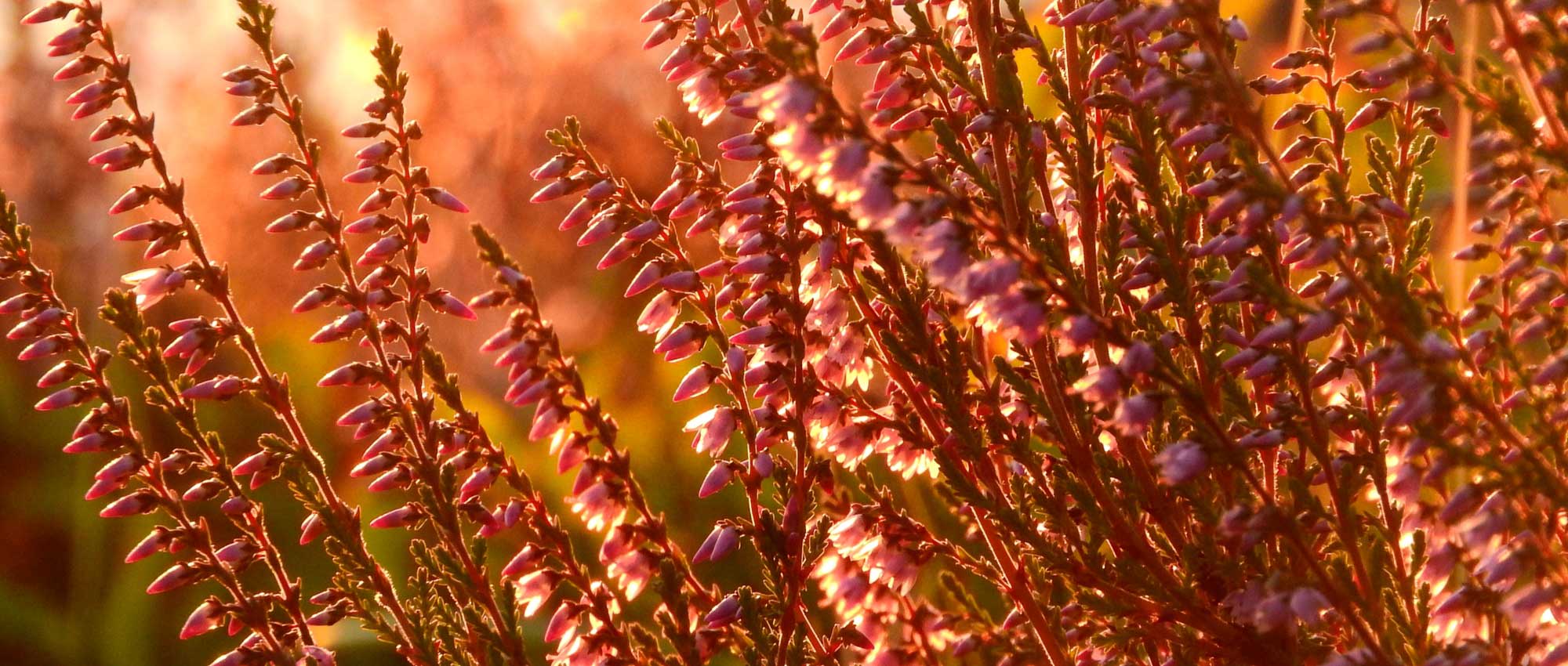
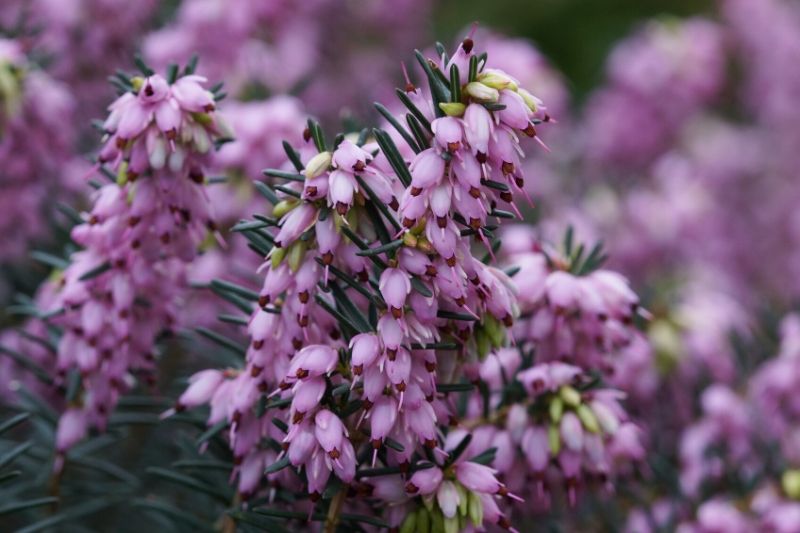
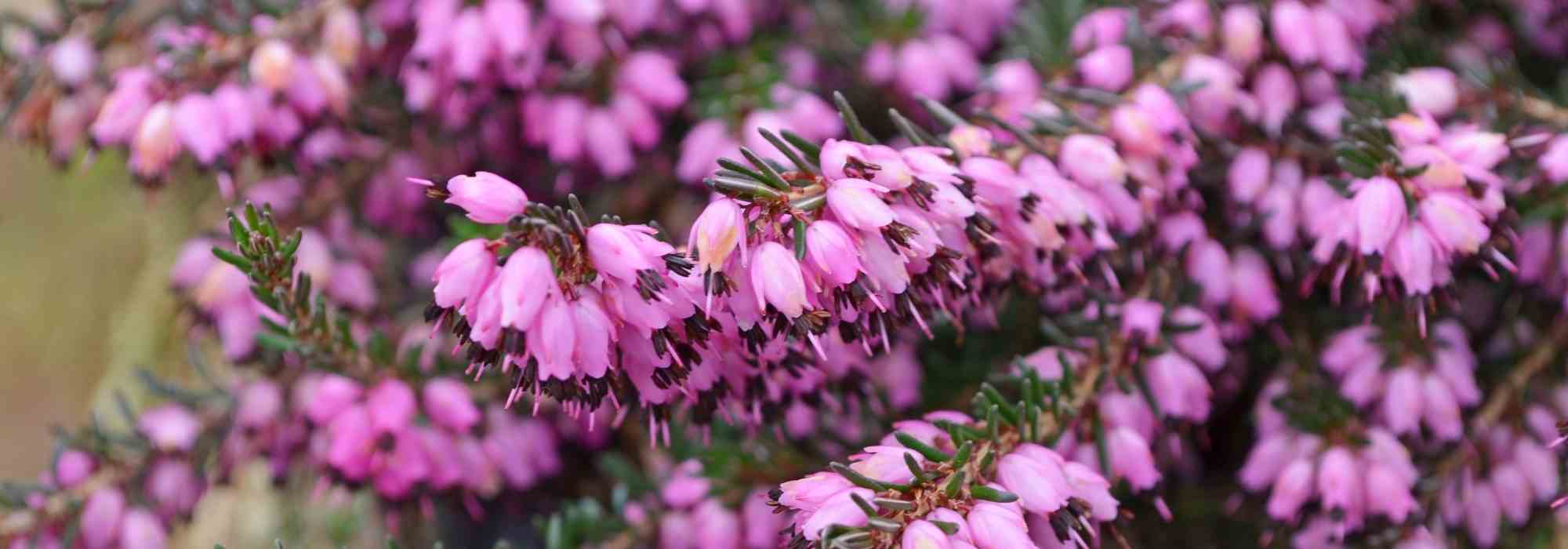
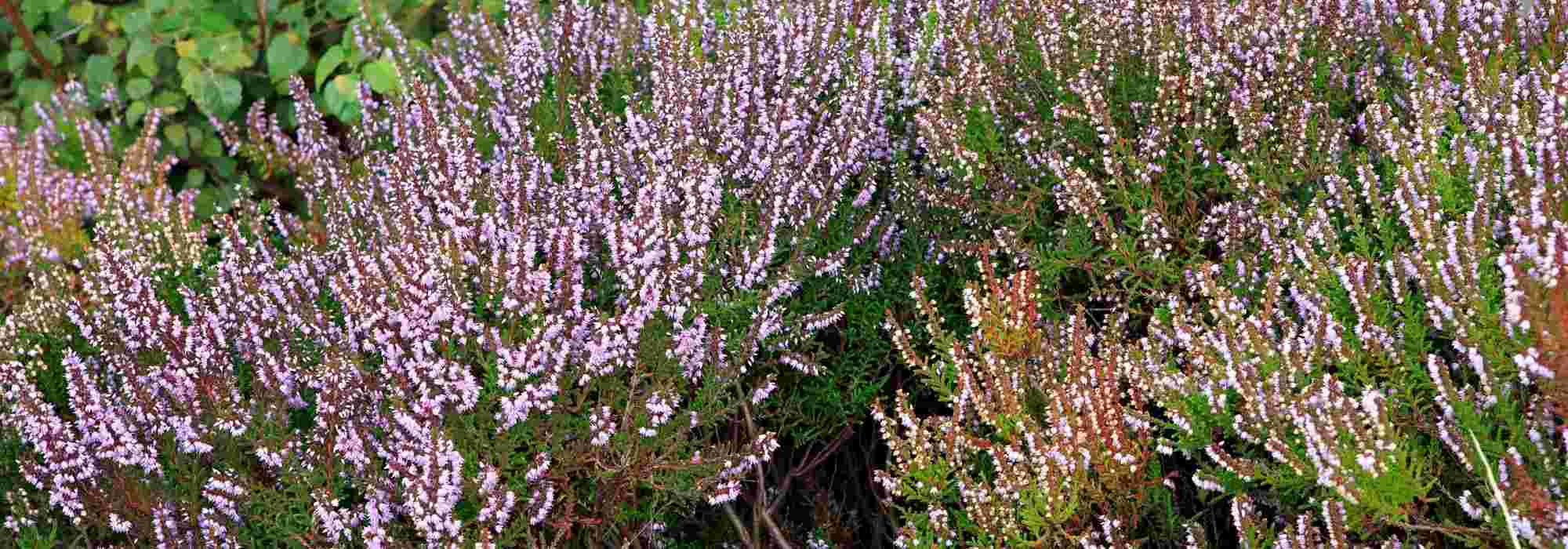
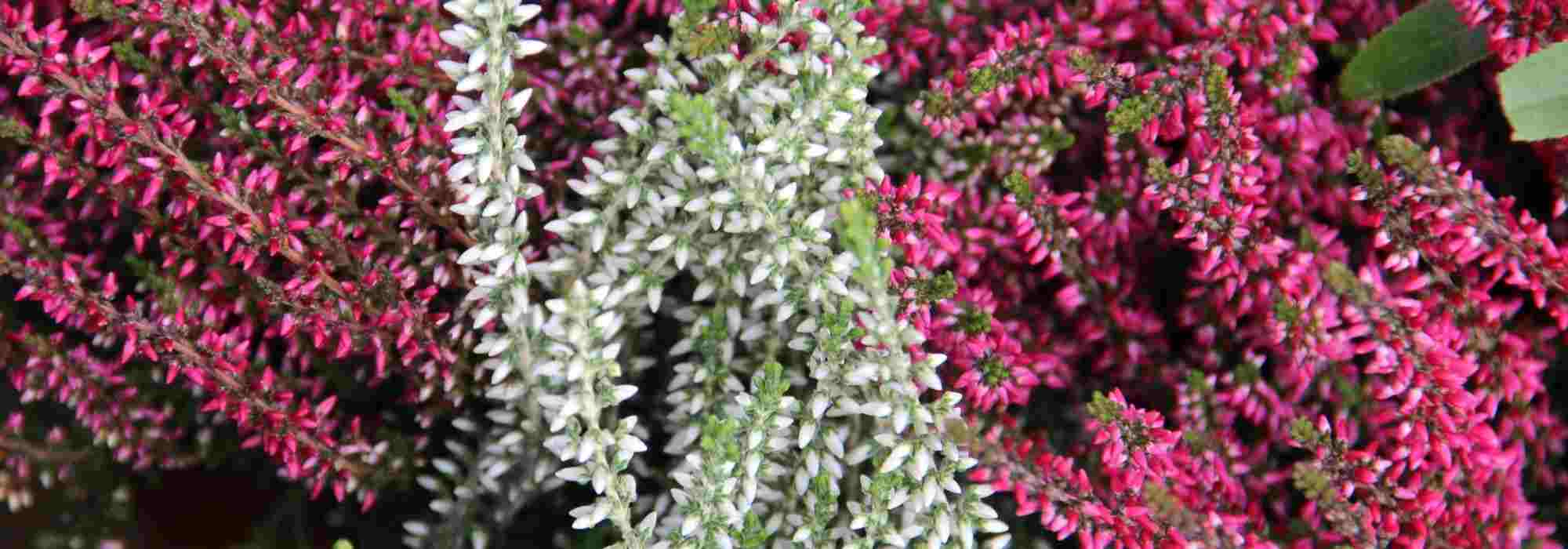
Erica vagans 'Diana Hornibrook' is a variety of wandering heather with a beautiful salmon pink summer flowering. Resembling a carpet, it stands out with its dense and compact vegetation, spreading growth, and dark green foliage all year round. Between July and October, the plant is covered in numerous dark pink spikes, adding brilliance to its flowering. When planted in mass, it will enhance a rockery or the edge of an acidophilous plant bed. An acidic, moderately moist and well-drained soil is optimal for its development. Amateur gardeners will appreciate the simplicity of maintaining this generous and robust heather.
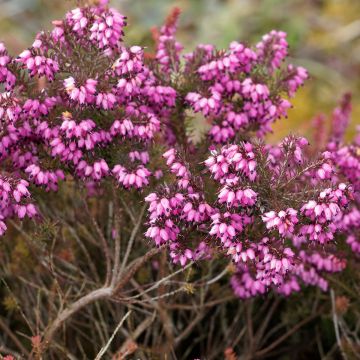
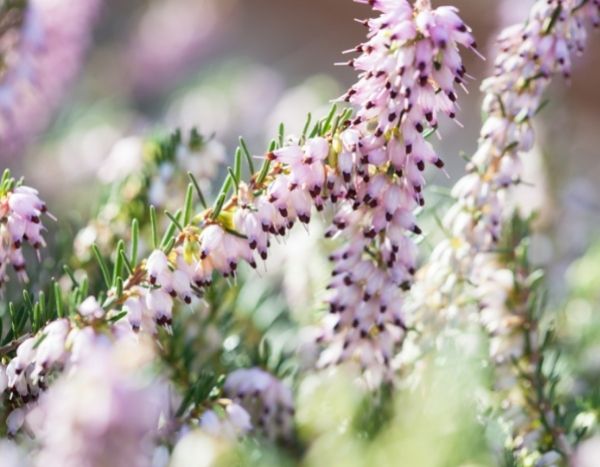
Erica vagans belongs to the Ericaceae family, like all heathers, as well as strawberry trees, heaths, azaleas, and blueberries. This heather, with its late summer flowering, is also known as wandering heather or Cornish heather or even traveling heather. It can be found in Western Europe from Portugal to England. In its natural habitat, Erica vagans thrives in heathland areas (acidic, poor, and siliceous soils) and mountain slopes. The 'Diana Hornibrook' cultivar was discovered by Murray Hornibrook and introduced to Great Britain in 1946, named after his daughter. With a healthy and robust vegetation, it forms a small evergreen shrub with a spreading habit, reaching about 0.20m (1ft) to 0.25m (1ft) in height and 0.30m (1ft) to 0.45m (1ft) in spread at maturity. It grows slowly and has a lifespan of about 12 to 15 years. On thin and twisted branches, small needles, 7 to 10mm (0in) long, grow in whorls of 4 or 5, with a furrow underneath. The spring shoots are a lovely tender green, and the foliage remains dark green throughout the year. This cultivar usually blooms between July and October depending on the climate, for several weeks. Its small dark pink bell-shaped flowers, measuring 5 to 6mm (0.25in) in length, are arranged in spikes 5 to 10cm (2 to 4in) long and are scattered along the branches. The flower has a corolla shaped like a urn or bell with 4 small lobes and 8 free stamens. The purple anthers protrude, giving the flowers an elegant appearance. They are highly attractive to bees.
The wandering heather 'Diana Hornibrook' has all the qualities one would expect from a heather: Long and remarkable flowering combined with evergreen foliage. Its bushy, dense, and compact vegetation allows for use in ground cover beds, borders of shrub beds, terracing or rockeries, and dressing around the base of trees and large shrubs. From its mountain origins, it retains good adaptability to poor soils subjected to harsh climatic conditions (cold, wind, heatwaves, etc.). Its ability to withstand salt-laden winds also makes it suitable for coastal gardens. It prefers full sun but tolerates partial shade very well.
Hardy to -20°C (-4°F), wandering heather 'Diana Hornibrook' is a sturdy and robust small shrub. It prefers an acidic to neutral soil, but it may adapt to slightly alkaline soil. In any case, a well-drained soil without stagnant moisture is necessary. It does not tolerate prolonged periods of drought well and appreciates moist soils. Mulching is a solution to maintain relative soil moisture. Almost maintenance-free, this heather only requires light pruning after flowering, in October-November. It can easily be planted alongside other heathers whose flowering will take over, with similar growth and development, such as Erica x darleyensis, Erica carnea, or Calluna vulgaris. Its long late summer flowering adds bright colours to shaded areas. It brings whimsy and cheerfulness to low-growing grass beds such as sedges, Ophiopogon, Molinia, Uncinia, Hakonechloa, Pennisetum, etc. It can also be mixed in a low and shaded bed with Andromedas, heaths, Pachysandra, or Lithodora fruticosa. In acidic soil, heathers form beautiful carpets at the base of larger shrubs, dressing their bases: mountain laurel, rhododendrons, camellias, deciduous azaleas, Andromedas, etc. Cultivated in pots or containers, it enriches balconies, terraces, or patios with its intense flowering.
Plant habit
Flowering
Foliage
Botanical data
Erica
vagans
Diana Hornibrook
Ericaceae
Cornish Heath
Erica decipiens
Cultivar or hybrid
Planting and care
Erica vagans 'Diana Hornibrook' prefers a fairly fertile soil, even though it can adapt to poor terrain. However, it should be peaty, light, sandy, very acidic (pH between 4 and 6), moist, and well-drained. To allow heathers to be planted in the ground or in containers, it is possible to recreate a soil mixture with 1/3 heather soil, 1/3 non-calcareous vegetal soil, and 1/3 sand. Plant preferably in autumn to benefit from winter rooting or in spring, without burying the collar too much. This plant appreciates non-burning full sun or partial shade. In northern regions, it is possible to plant them in full sun, whereas in hot climates, a partially shaded exposure is preferable. A well-established plant will tolerate some drought for a short period. In heavy and poorly drained soil, it will disappear, as this plant is susceptible to root rot.
During the first two years, carefully weed around the base. Adapted to dry environments, the summer roots are highly branched in the soil and, once well-established, prevent the establishment of other species nearby. In case of prolonged drought, mulch around the base to retain some moisture. Prune the clumps to half-height, just after flowering, from an early age, which will allow the clumps to remain dense while producing fresh foliage. A blanket of shredded bark or peat is not superfluous in the coldest regions.
Planting period
Intended location
Care
Planting & care advice


This item has not been reviewed yet - be the first to leave a review about it.
Recently viewed products
Haven't found what you were looking for?
Hardiness is the lowest winter temperature a plant can endure without suffering serious damage or even dying. However, hardiness is affected by location (a sheltered area, such as a patio), protection (winter cover) and soil type (hardiness is improved by well-drained soil).
In temperate climates, pruning of spring-flowering shrubs (forsythia, spireas, etc.) should be done just after flowering.
Pruning of summer-flowering shrubs (Indian Lilac, Perovskia, etc.) can be done in winter or spring.
In cold regions as well as with frost-sensitive plants, avoid pruning too early when severe frosts may still occur.
The harvesting period indicated on our website applies to countries and regions in USDA zone 8 (France, England, Ireland, the Netherlands).
In colder areas (Scandinavia, Poland, Austria...) fruit and vegetable harvests are likely to be delayed by 3-4 weeks.
In warmer areas (Italy, Spain, Greece, etc.), harvesting will probably take place earlier, depending on weather conditions.
The sowing periods indicated on our website apply to countries and regions within USDA Zone 8 (France, UK, Ireland, Netherlands).
In colder areas (Scandinavia, Poland, Austria...), delay any outdoor sowing by 3-4 weeks, or sow under glass.
In warmer climes (Italy, Spain, Greece, etc.), bring outdoor sowing forward by a few weeks.
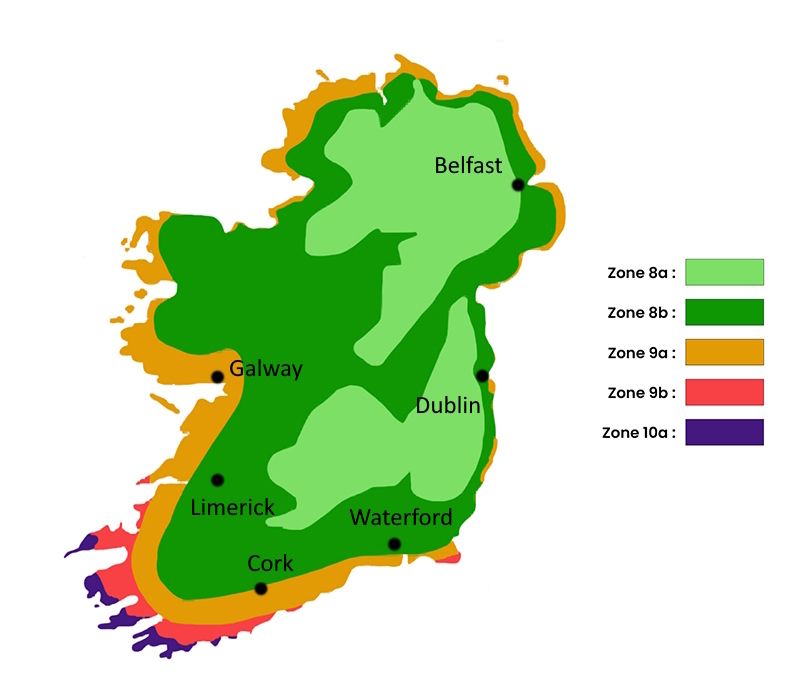
The planting period indicated on our website applies to regions in USDA Zone 9a (East Coast and Midlands: Dublin, Wexford, Waterford, Kilkenny, Portlaoise). It will vary depending on where you live:
- On the west coast and in the north-west (Galway, Limerick, Sligo, Donegal, Westport), delay planting by 1 to 2 weeks in spring and bring it forward by 1 to 2 weeks in autumn compared to the dates given, preferably choosing periods without strong winds.
- In the inland hills and plateaus (Wicklow Mountains, Macgillycuddy’s Reeks, Connemara, Killarney), it is best to plant in spring (April–May) or autumn (September–October), avoiding periods of waterlogged soil in winter and strong winds, which pose the main risk to newly planted trees in these areas.
The flowering period indicated on our website applies to regions in USDA Zone 9a, such as the East Coast and Midlands, including Dublin, Wexford, Waterford, Kilkenny and Portlaoise.
This will vary depending on where you live:
- On the west coast and in the northwest (Galway, Limerick, Sligo, Donegal and Westport), it will be delayed by one to two weeks compared to the given dates, due to stronger Atlantic winds and less spring sunshine.
- In the inland hills and plateaus (the Wicklow Mountains, the Macgillycuddy's Reeks, Connemara and Killarney), flowering will be delayed by two to three weeks. Flowering mainly occurs between May and July, with the limiting factors being less frost and more of the excessive humidity, strong winds and lack of sunshine that are characteristic of these areas.
Shipping country and language
Your country of residence may be:
Your country of residence is:
For a better user experience on our website, you can select:
Your shipping country:
-
 Austria
-
 Belgium
-
 Bosnia & Herzegovina
-
 Bulgaria
-
 Croatia
-
 Cyprus
-
 Czechia
-
 Denmark
-
 Estonia
-
 Finland
-
 France
-
 Germany
-
 Greece
-
 Hungary
-
 Iceland
-
 Ireland
-
 Italy
Italy
-
 Latvia
-
 Liechtenstein
-
 Lithuania
-
 Luxembourg
-
 Malta
Malta
-
 Netherlands
-
 Poland
-
 Portugal
-
 Romania
-
 Serbia
-
 Slovakia
-
 Slovenia
-
 Spain
Spain
-
 Sweden
-
 Switzerland
Language:
-
French
-
 English
-
Spanish
-
Italian
-
German
-
Portuguese
-
Dutch
-
Finnish
My Account
Hello
My wish lists
My cart
Log in / Register
Existing customer?
This form is protected by reCAPTCHA - the Google Privacy Policy and Terms of Service apply.
New customer?
Create an account to track your orders, access our customer service and, if you wish, make the most of our upcoming offers.