Eucalyptus obliqua
Eucalyptus obliqua
Eucalyptus obliqua
Eucalyptus obliqua
Messmate
Back-to-school special offer!
Get €10 off for every €50 you spend! And get up to €40 off on a single order.
How does it work?
1. Shop your favourites
Add your favourite plants to your basket. For every €50 you spend (excluding delivery charges, store credit and the plastic-free option), you’ll receive a €10 voucher.
€50 spent = €10 voucher
€100 spent = €20 voucher
€150 spent = €30 voucher
€200 spent = €40 voucher
2. Place your order
Once your basket reaches one of the spending thresholds, place your order. You can even choose your delivery date!
3. Receive your voucher
As soon as your order has been shipped, you’ll receive an email containing your personal voucher code and its value.
4. Use it on your next order
Your voucher is valid for 90 days from the date you receive it. It can be used once only, on a new order worth at least the value of the voucher, excluding delivery charges.
Please note: Vouchers can be combined with other offers, but cannot be split or refunded.
Why not try an alternative variety in stock?
View all →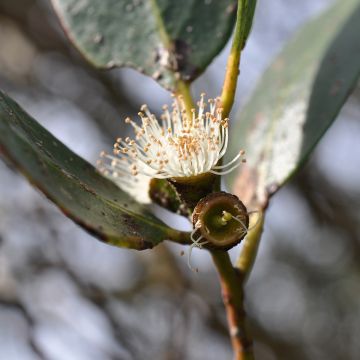
Available in 1 sizes
Available in 5 sizes
Available in 1 sizes
Available in 1 sizes
Available in 3 sizes
Available in 1 sizes
Available in 1 sizes
Available in 3 sizes
Available in 2 sizes
Available in 1 sizes
This plant carries a 24 months recovery warranty
More information
We guarantee the quality of our plants for a full growing cycle, and will replace at our expense any plant that fails to recover under normal climatic and planting conditions.
Does this plant fit my garden?
Set up your Plantfit profile →
Description
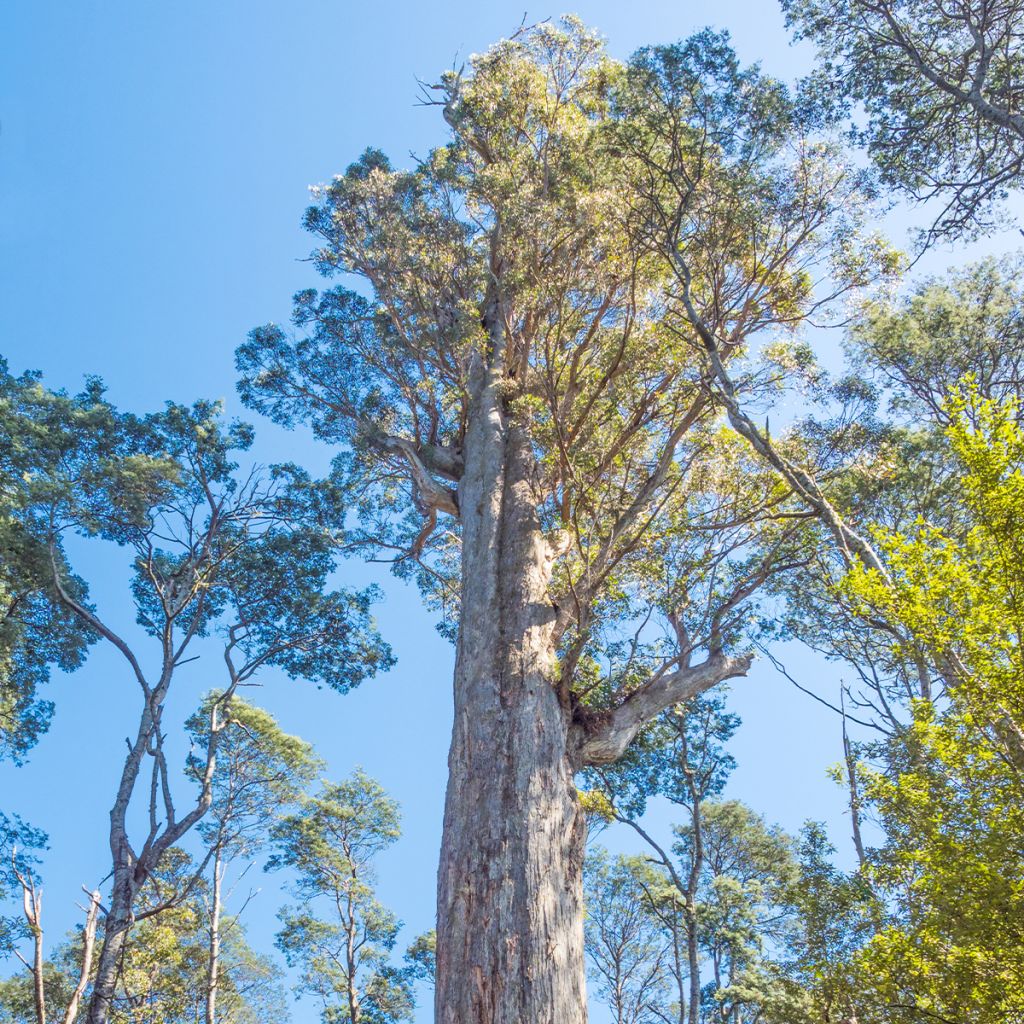
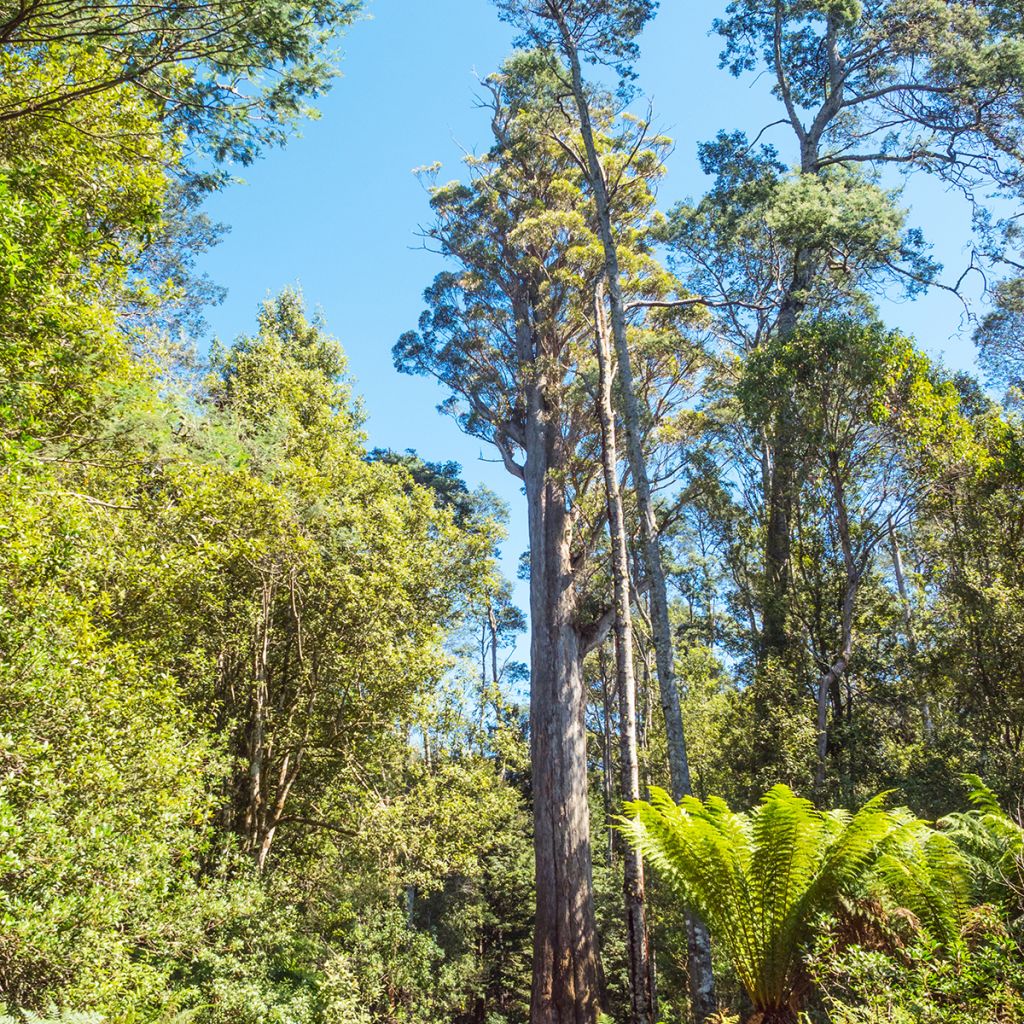
Eucalyptus obliqua is among the giants of the genus, capable of reaching nearly 90 m (295 ft 4 in) in height in its native regions. Forming a tree with a relatively narrow and very erect habit, this imposing tree is adorned with a thick and rough, brown or greying bark. Its evergreen foliage of a beautiful shiny green is decorative all year round. In spring, small white pompom-like flowers appear, but this flowering remains quite discreet given the dimensions of the tree. Resistant to wind, it requires a neutral to acidic, well-drained soil, and grows well in a humid climate. Its low hardiness limits the possibilities of acclimatising it.
Eucalyptus obliqua belongs to the large family of Myrtaceae, like the Callistemon (Bottlebrush), the Feijoa or of course the Myrtle. The Eucalyptus genus includes more than 800 species, almost all native to Australia, except for a few from Southeast Asia. Some form small bushes, while E. regnans is the giant of the genus, closely followed by E. obliqua.
This species originates from a wide area extending from southern to eastern Australia (States of South Australia, Victoria, New South Wales, to southern Queensland), as well as almost all of Tasmania. It grows just as well in coastal areas, on hillsides or in cool mountainous situations, up to 1200 m (3937 ft) in altitude. It develops on various types of soil, always well-drained, in humid forests, along with other large Eucalyptus species, such as E. nitens. Over such a vast geographical area, this tree is confronted with different climates, including warm summer temperatures, light but frequent frosts in winter, and annual rainfall from 500 mm (19.7 in) to over 2 m (6 ft 7 in).
This monumental tree, the largest living specimen currently measures 86 m (282 ft 2 in) in height (in the past, subjects approaching 100 m (328 ft 1 in) in height have been identified...) forms an endless trunk whose diameter can reach 3 m (9 ft 10 in). It also has the quite common characteristic among Eucalyptus, of developing a lignotuber, an underground formation rich in starch intended to rebuild the above-ground part in case of destruction (especially by fire). It thus has the ability to regrow from the stump, with many axillary buds developing in all directions.
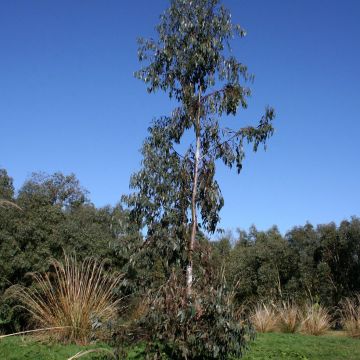
Growing in a forest, this tree generally has a rather erect habit due to the competition between individuals. Planted alone, its crown opens and takes on a more spreading aspect. The massive trunk is covered with thick and rough bark, fibrous or stringy in appearance (hence its English name of stringybark). This bark extends to the branches, although sometimes those of small diameter have smooth bark.
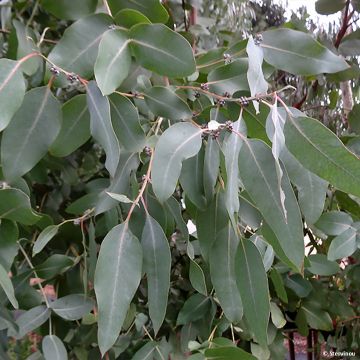
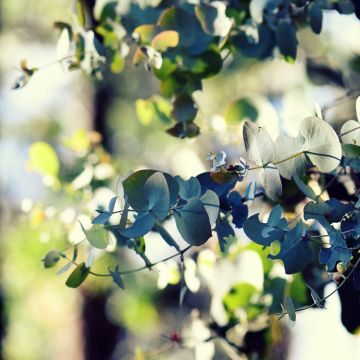
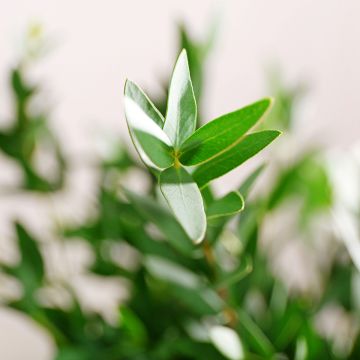
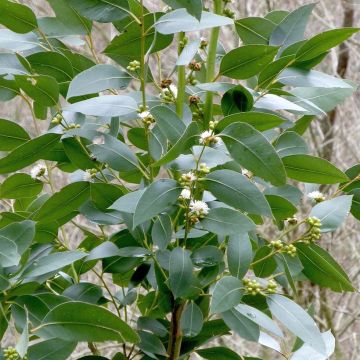
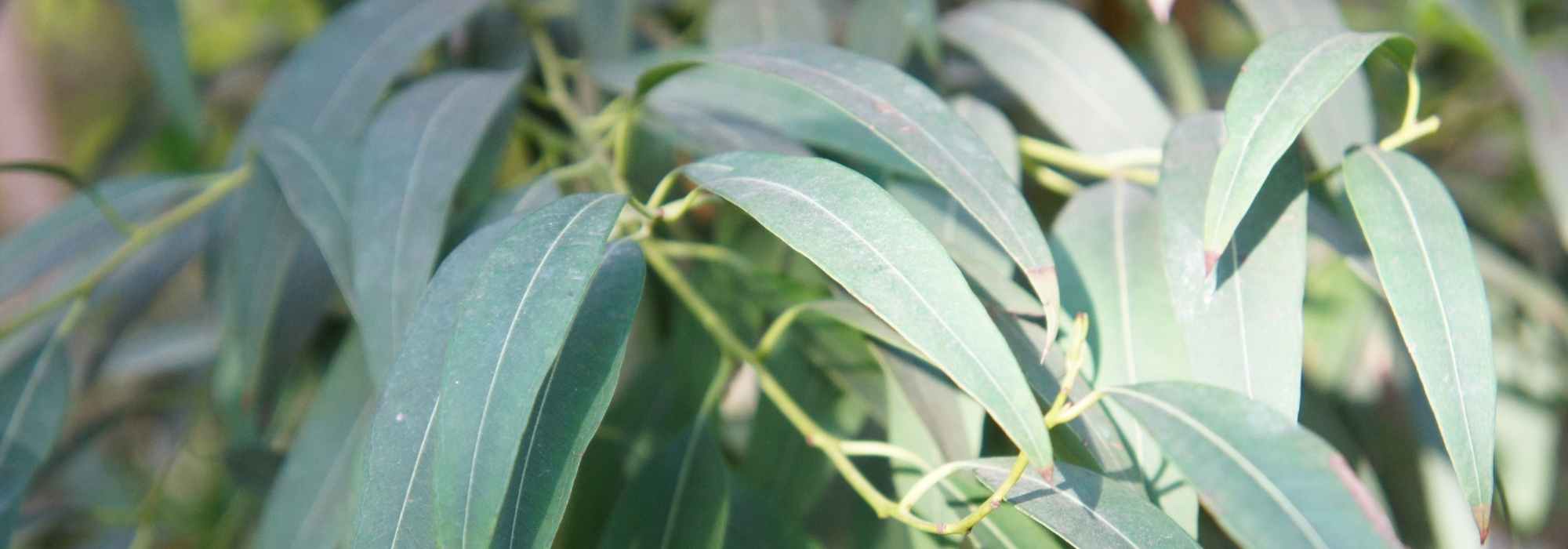
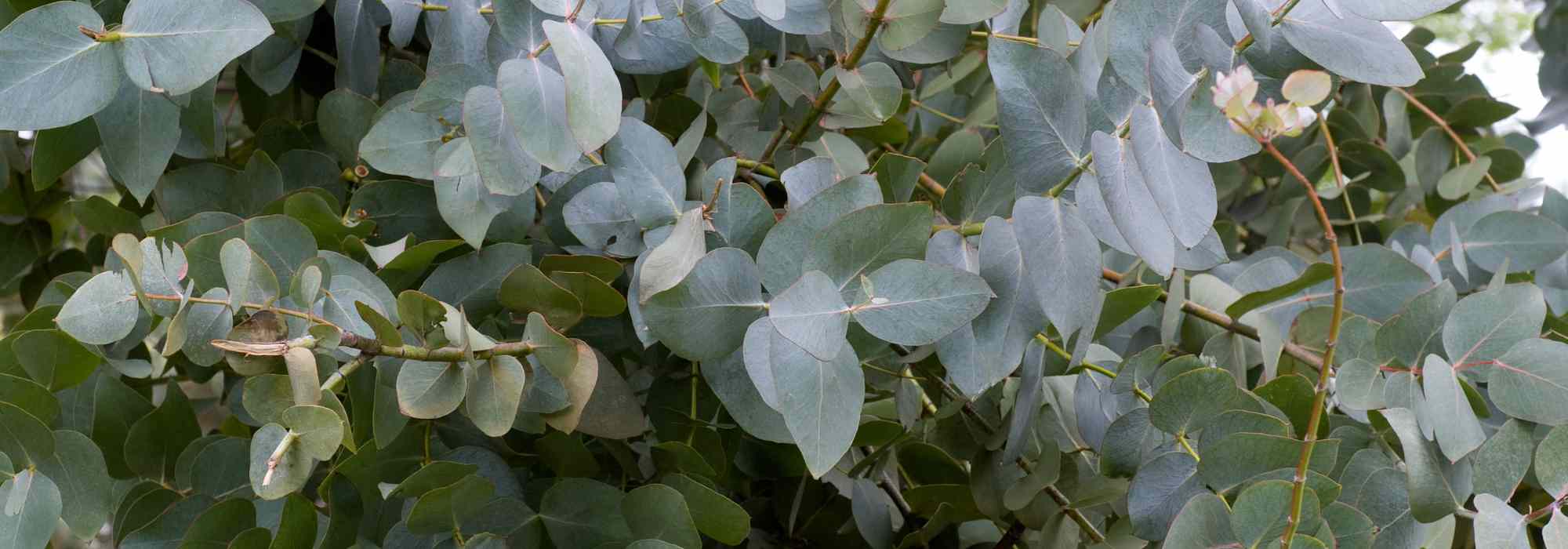
The juvenile foliage has more or less ovate leaves, with a slightly wider base and a refined tip, measuring from 6 to 21 cm (2.4 to 8.3 in) long and 2.3 to 8.5 cm (0.9 to 3.3 in) wide. The green leaves carried by short petioles are opposite. Adult leaves have roughly the same format, albeit slightly narrower, lanceolate to slightly crescent in shape. Green with a shiny surface, they are easily recognised by their asymmetrical base, one of the edges of the lamina descending lower than the other, which gave this species its scientific name (from the Latin obliquus). This foliage is appreciated by koalas who are fond of it.
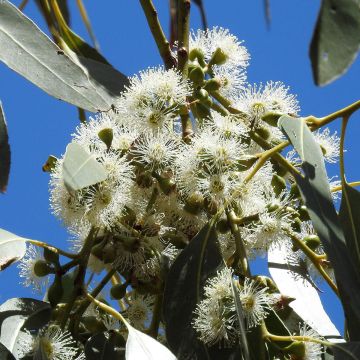
Flowering can occur almost all year round in Australia and is spread between March and June in our climates. Small white flowers, formed by the stamens (the petals are absent) are grouped in umbels of 11 to 15, thus forming pompoms in the axil of the leaves. They then evolve into fruits, brown urn-shaped capsules, without ornamental interest.
This giant tree appreciates humid, moist climates, but also accepts hot summers, provided it does not suffer from long drought. It withstands some cold, down to about -5°C, which restricts the possibility of acclimatising it.
Eucalyptus obliqua will mainly interest collectors in areas with high rainfall. It will form a monumental subject planted alone on a lawn or in the background of a group. It is estimated that it could then reach 45 m (147 ft 7 in) in height for 15 to 20 m (49 ft 2 in to 65 ft 7 in) in width, which requires having a large plot for it. You can plant tree ferns at its foot, also lovers of humidity, to create a beautiful exotic scene. To further enhance this effect, why not be tempted by Wollemia nobilis, a rare Australian conifer with superb branches reminiscent of this distant continent.
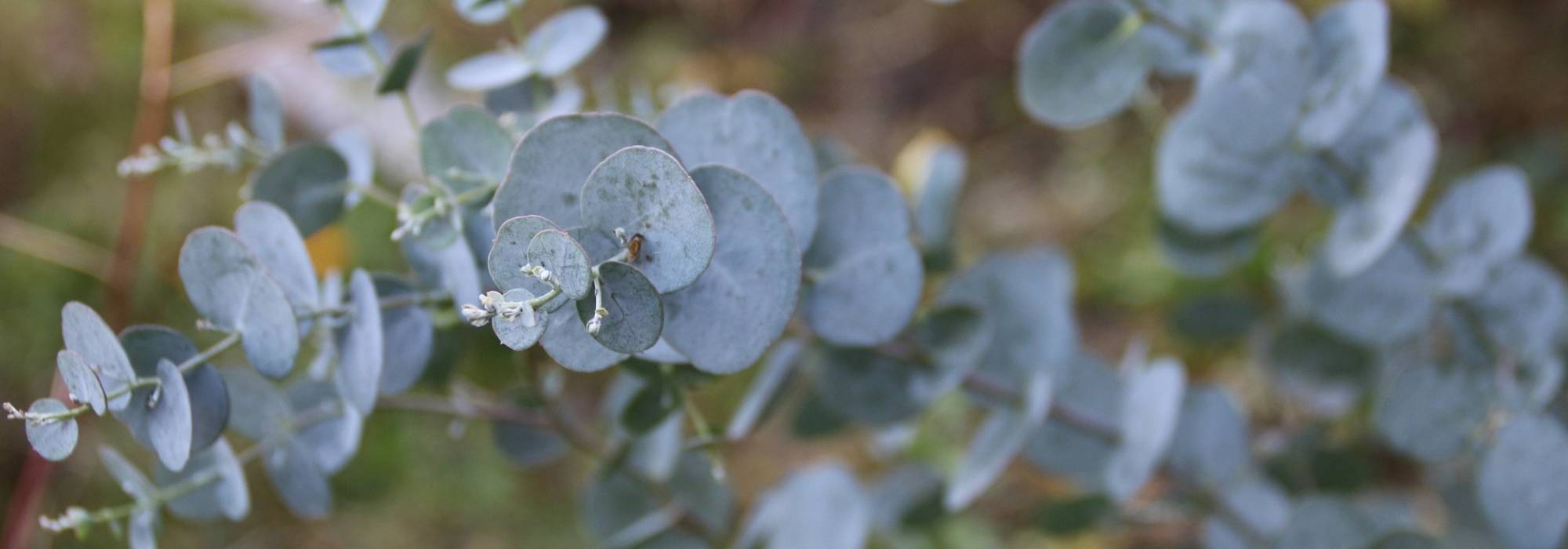
Eucalyptus obliqua in pictures
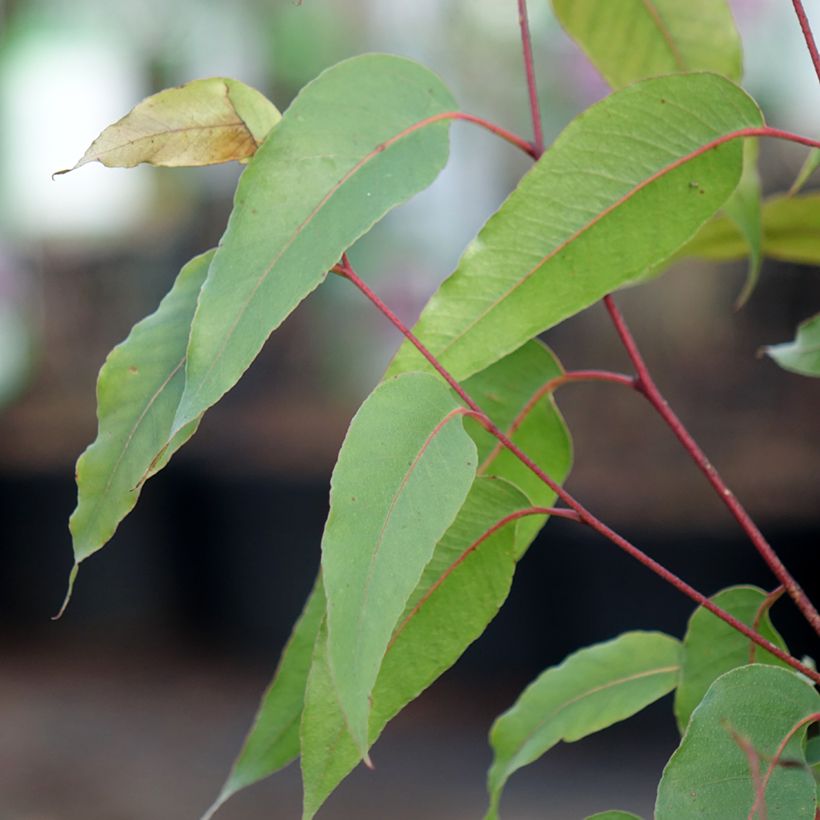
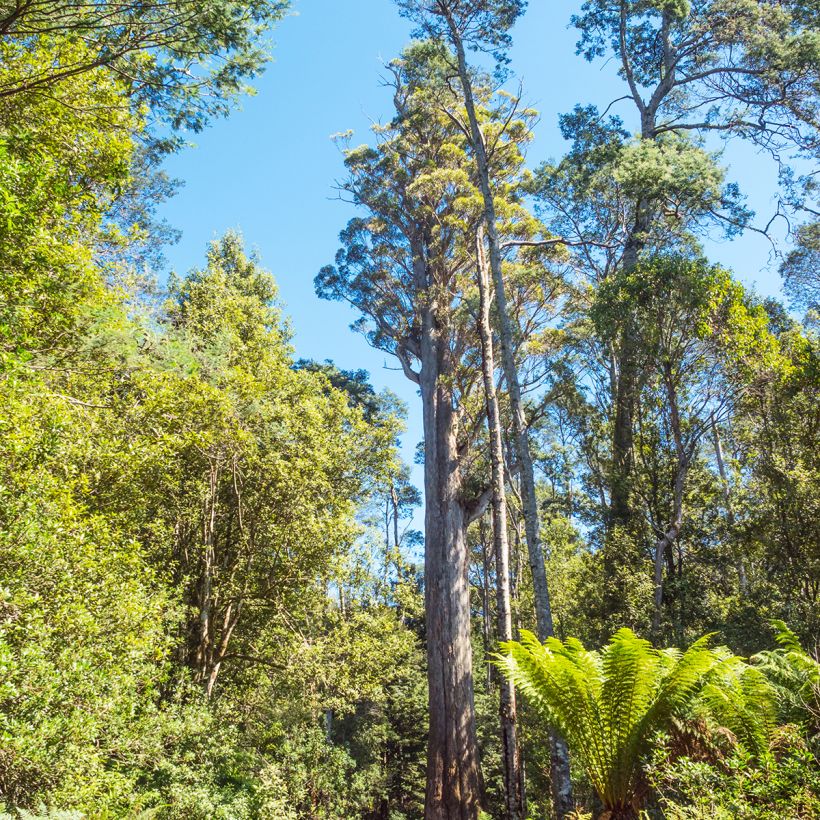
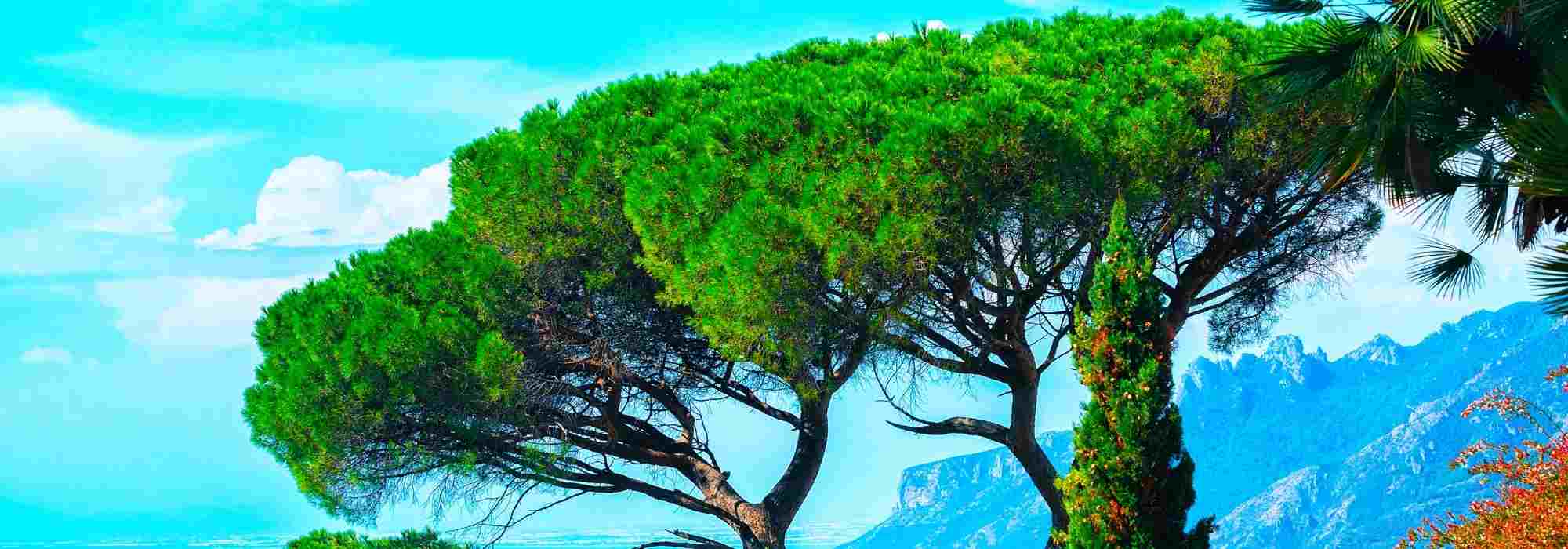
Plant habit
Flowering
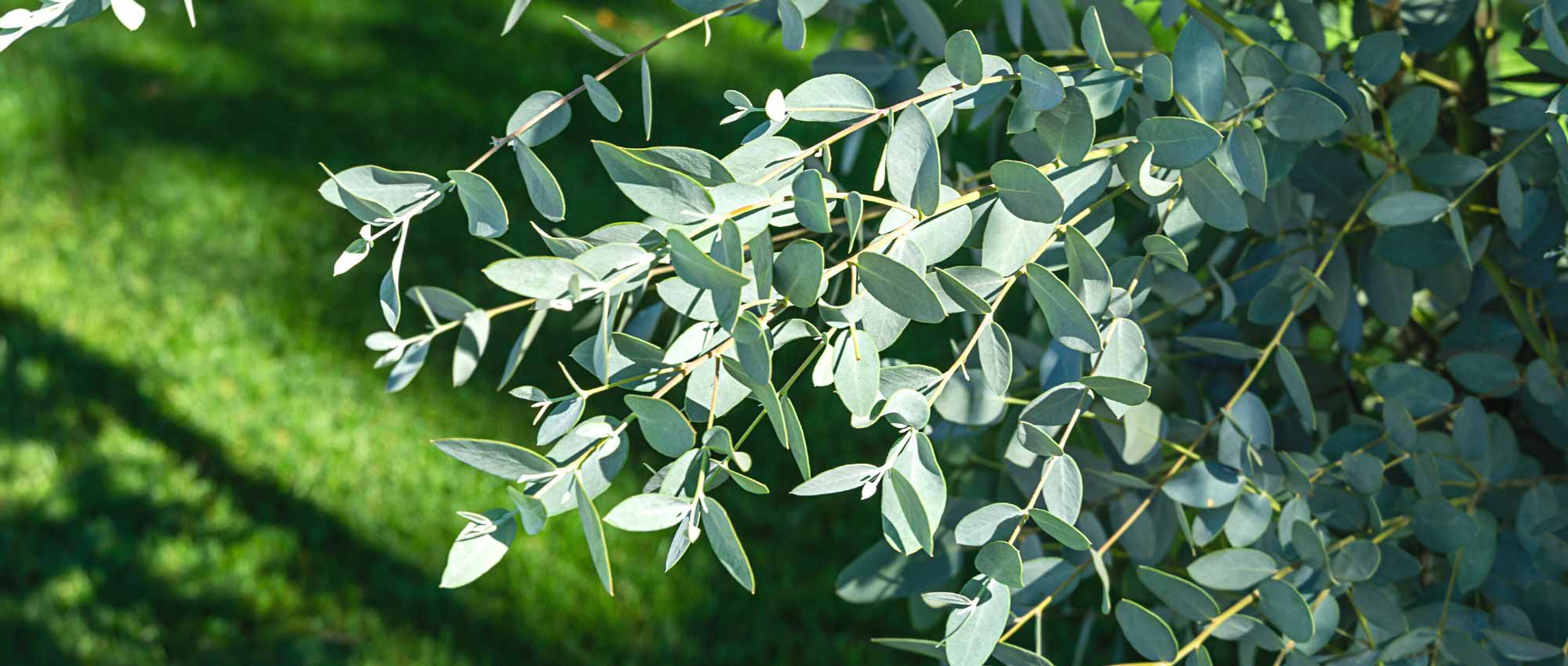
Foliage
Planting and care
Eucalyptus obliqua can be planted in the mildest areas where frosts are light and rainfall generous. It should be kept in mind that it prefers humidity to drought, which it cannot tolerate if it lasts. It needs a neutral or slightly acidic soil, moderately fertile and especially well drained. Choose a location where it will have room to develop without competition for sunlight. Therefore, a solitary planting on a lawn is recommended, or possibly in the background of a group of shrubs.
Plant it in the spring after the last frosts so that it has time to root well before the following winter. Water regularly for 2 or 3 years. The first year, it will devote its energy to sending a deep pivot into the soil, then lateral roots, in order to anchor itself well. It is from the second year that it will really start to shoot. A lover of humidity, it is nonetheless able to withstand short dry spells, occasional watering will always be welcome. It is also a tree that is not averse to wind.
Planting period
Intended location
Care
Planting & care advice

This item has not been reviewed yet - be the first to leave a review about it.
Recently viewed products
Haven't found what you were looking for?
Hardiness is the lowest winter temperature a plant can endure without suffering serious damage or even dying. However, hardiness is affected by location (a sheltered area, such as a patio), protection (winter cover) and soil type (hardiness is improved by well-drained soil).
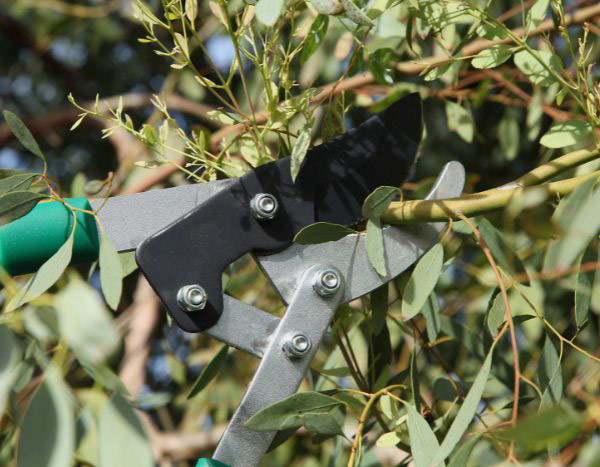
In temperate climates, pruning of spring-flowering shrubs (forsythia, spireas, etc.) should be done just after flowering.
Pruning of summer-flowering shrubs (Indian Lilac, Perovskia, etc.) can be done in winter or spring.
In cold regions as well as with frost-sensitive plants, avoid pruning too early when severe frosts may still occur.
The harvesting period indicated on our website applies to countries and regions in USDA zone 8 (France, England, Ireland, the Netherlands).
In colder areas (Scandinavia, Poland, Austria...) fruit and vegetable harvests are likely to be delayed by 3-4 weeks.
In warmer areas (Italy, Spain, Greece, etc.), harvesting will probably take place earlier, depending on weather conditions.
The sowing periods indicated on our website apply to countries and regions within USDA Zone 8 (France, UK, Ireland, Netherlands).
In colder areas (Scandinavia, Poland, Austria...), delay any outdoor sowing by 3-4 weeks, or sow under glass.
In warmer climes (Italy, Spain, Greece, etc.), bring outdoor sowing forward by a few weeks.
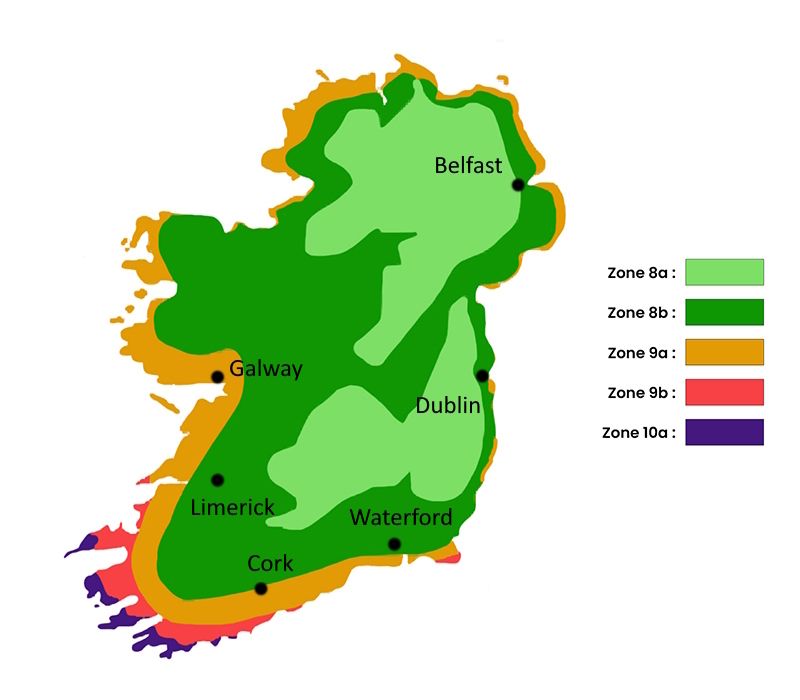
The planting period indicated on our website applies to regions in USDA Zone 9a (East Coast and Midlands: Dublin, Wexford, Waterford, Kilkenny, Portlaoise). It will vary depending on where you live:
- On the west coast and in the north-west (Galway, Limerick, Sligo, Donegal, Westport), delay planting by 1 to 2 weeks in spring and bring it forward by 1 to 2 weeks in autumn compared to the dates given, preferably choosing periods without strong winds.
- In the inland hills and plateaus (Wicklow Mountains, Macgillycuddy’s Reeks, Connemara, Killarney), it is best to plant in spring (April–May) or autumn (September–October), avoiding periods of waterlogged soil in winter and strong winds, which pose the main risk to newly planted trees in these areas.
The flowering period indicated on our website applies to regions in USDA Zone 9a, such as the East Coast and Midlands, including Dublin, Wexford, Waterford, Kilkenny and Portlaoise.
This will vary depending on where you live:
- On the west coast and in the northwest (Galway, Limerick, Sligo, Donegal and Westport), it will be delayed by one to two weeks compared to the given dates, due to stronger Atlantic winds and less spring sunshine.
- In the inland hills and plateaus (the Wicklow Mountains, the Macgillycuddy's Reeks, Connemara and Killarney), flowering will be delayed by two to three weeks. Flowering mainly occurs between May and July, with the limiting factors being less frost and more of the excessive humidity, strong winds and lack of sunshine that are characteristic of these areas.
Shipping country and language
Your country of residence may be:
Your country of residence is:
For a better user experience on our website, you can select:
Your shipping country:
-
 Austria
-
 Belgium
-
 Bosnia & Herzegovina
-
 Bulgaria
-
 Croatia
-
 Cyprus
-
 Czechia
-
 Denmark
-
 Estonia
-
 Finland
-
 France
-
 Germany
-
 Greece
-
 Hungary
-
 Iceland
-
 Ireland
-
 Italy
Italy
-
 Latvia
-
 Liechtenstein
-
 Lithuania
-
 Luxembourg
-
 Malta
Malta
-
 Netherlands
-
 Poland
-
 Portugal
-
 Romania
-
 Serbia
-
 Slovakia
-
 Slovenia
-
 Spain
Spain
-
 Sweden
-
 Switzerland
Language:
-
French
-
 English
-
Spanish
-
Italian
-
German
-
Portuguese
-
Dutch
-
Finnish
My Account
Hello
My wish lists
My cart
Log in / Register
Existing customer?
This form is protected by reCAPTCHA - the Google Privacy Policy and Terms of Service apply.
New customer?
Create an account to track your orders, access our customer service and, if you wish, make the most of our upcoming offers.