Aralia elata Silver Umbrella
Aralia elata Silver Umbrella
Aralia elata Silver Umbrella
Aralia elata Silver Umbrella
Aralia elata Silver Umbrella
Japanese Angelica Tree, Devil's Walking Stick
The parcel arrived very quickly, very good communication regarding the delivery. My aralia is magnificent, very well packaged, not a single stem is broken, a big thank you for this careful shipment! I can’t wait now to see it grow and enjoy its lovely foliage.
Coralie , 30/07/2024
Back-to-school special offer!
Get €10 off for every €50 you spend! And get up to €40 off on a single order.
How does it work?
1. Shop your favourites
Add your favourite plants to your basket. For every €50 you spend (excluding delivery charges, store credit and the plastic-free option), you’ll receive a €10 voucher.
€50 spent = €10 voucher
€100 spent = €20 voucher
€150 spent = €30 voucher
€200 spent = €40 voucher
2. Place your order
Once your basket reaches one of the spending thresholds, place your order. You can even choose your delivery date!
3. Receive your voucher
As soon as your order has been shipped, you’ll receive an email containing your personal voucher code and its value.
4. Use it on your next order
Your voucher is valid for 90 days from the date you receive it. It can be used once only, on a new order worth at least the value of the voucher, excluding delivery charges.
Please note: Vouchers can be combined with other offers, but cannot be split or refunded.
Why not try an alternative variety in stock?
View all →
Available in 3 sizes
Available in 2 sizes
Available in 3 sizes

Available in 2 sizes
Available in 1 sizes
Available in 1 sizes
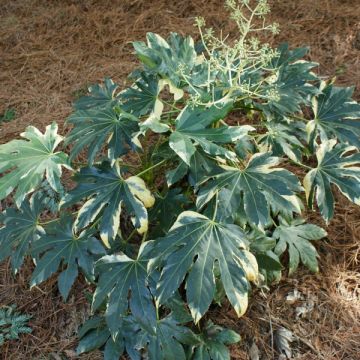
Available in 3 sizes
This plant carries a 24 months recovery warranty
More information
We guarantee the quality of our plants for a full growing cycle, and will replace at our expense any plant that fails to recover under normal climatic and planting conditions.
Does this plant fit my garden?
Set up your Plantfit profile →
Description
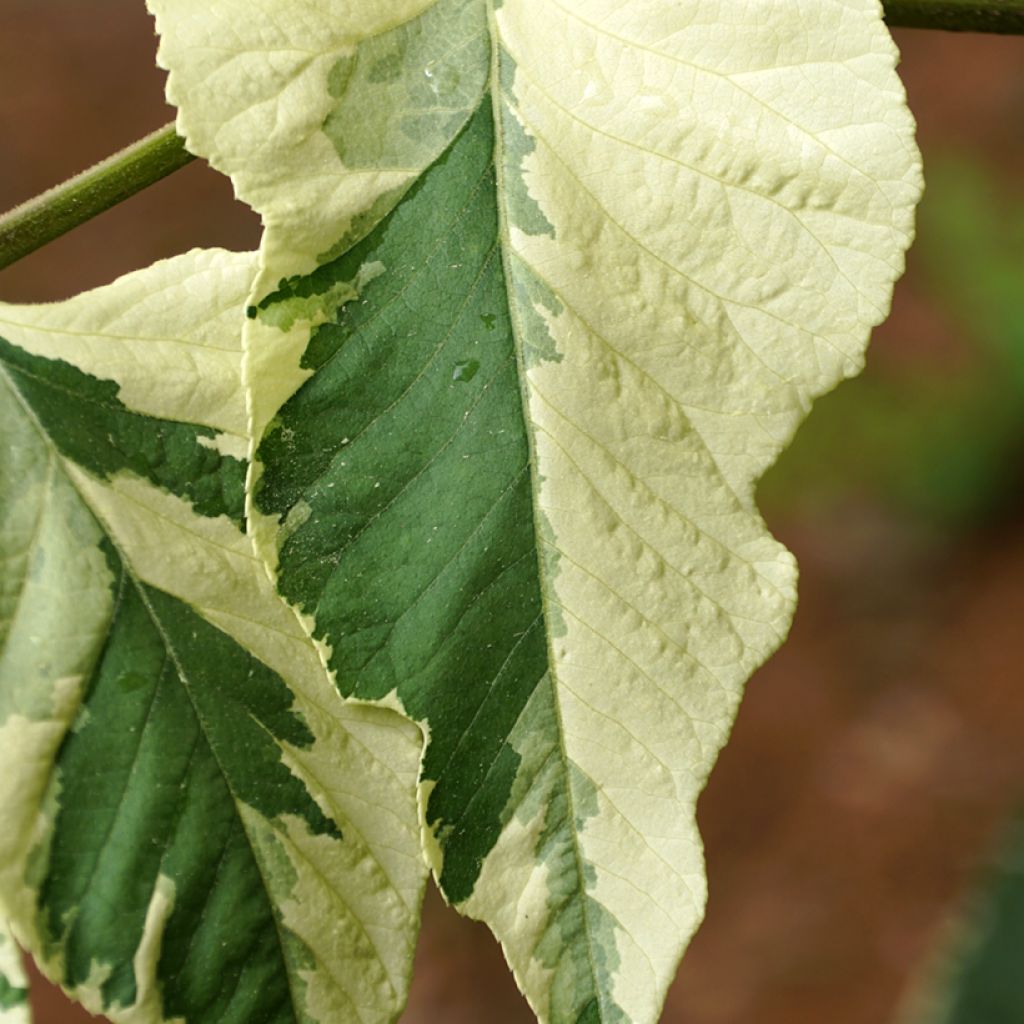
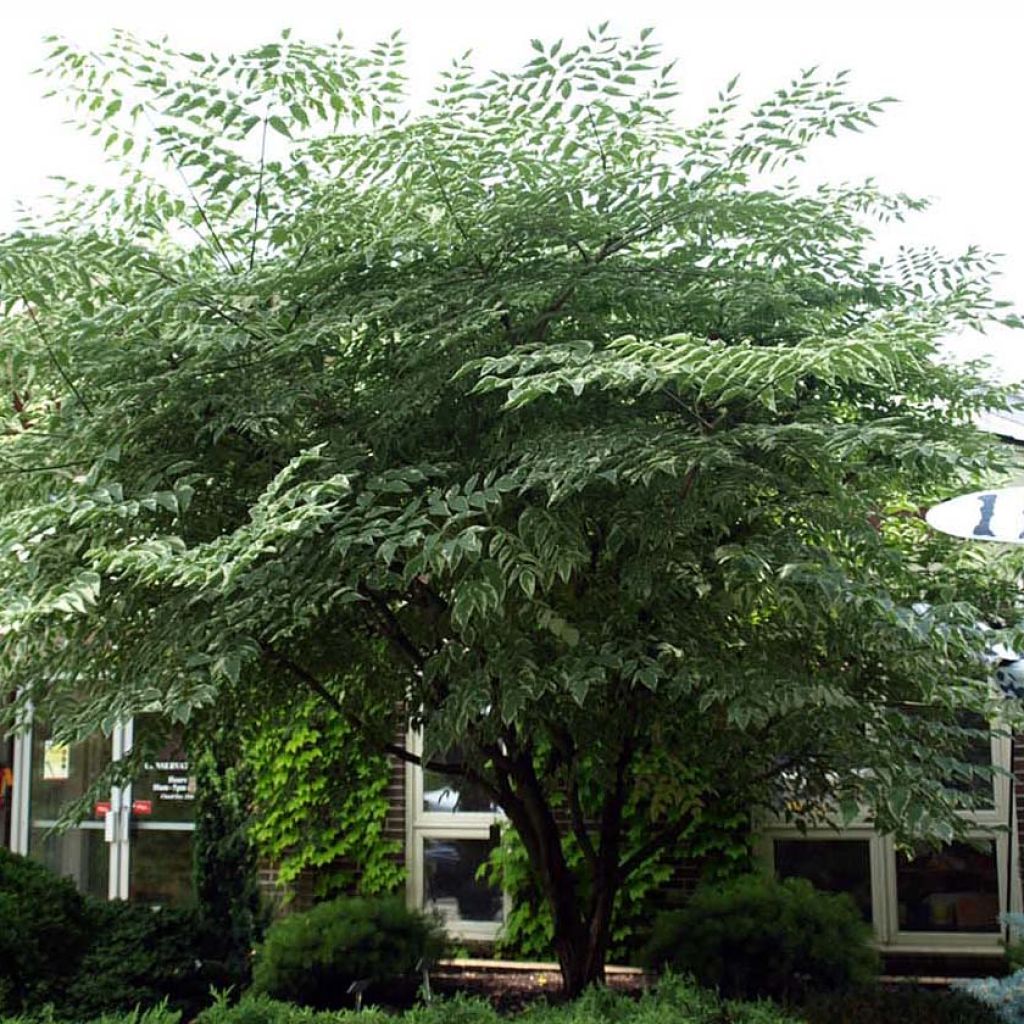
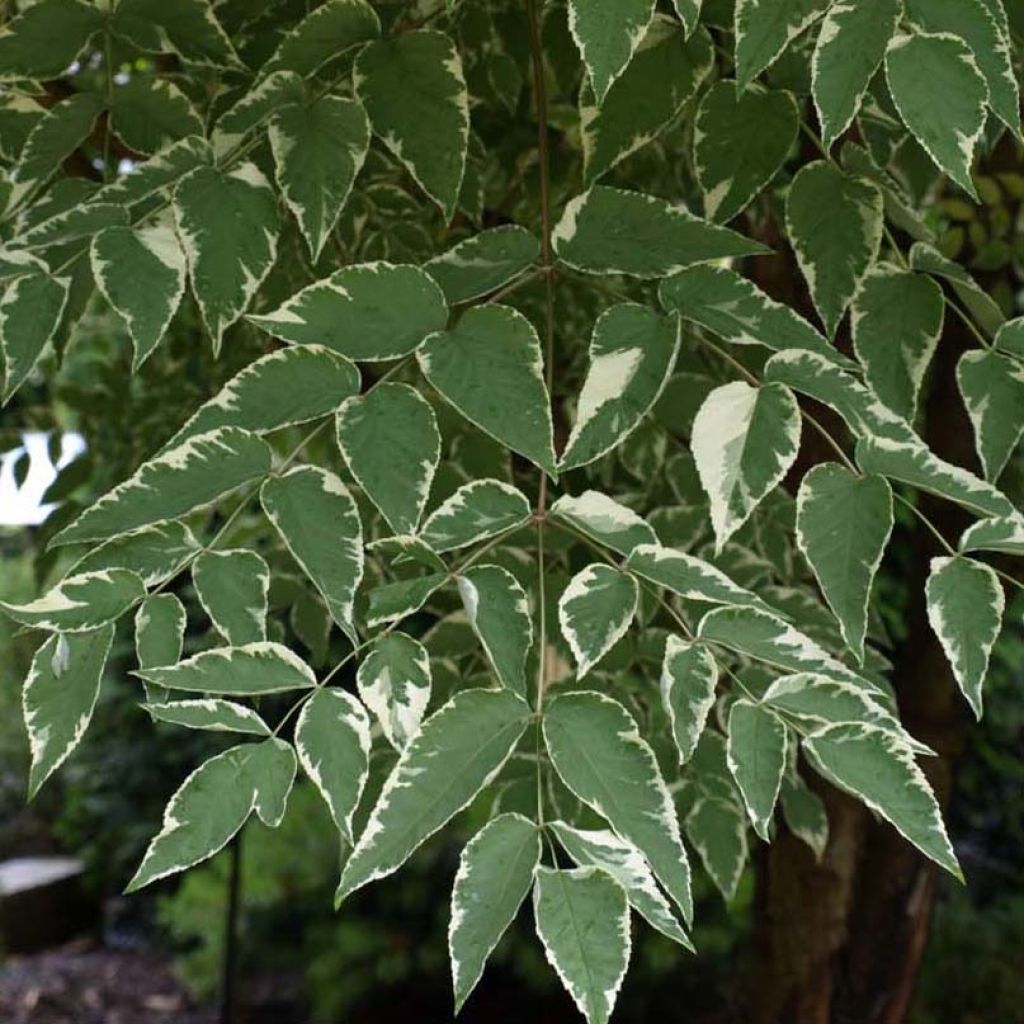
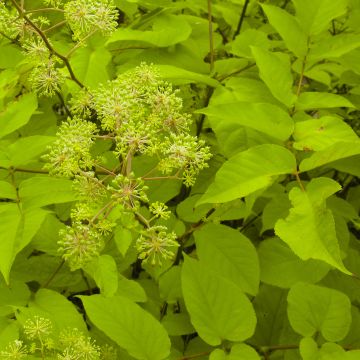
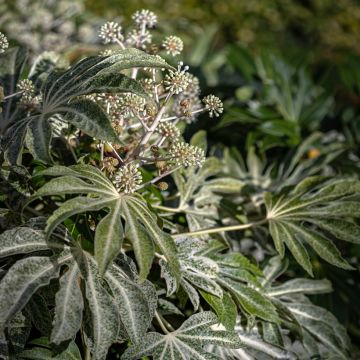
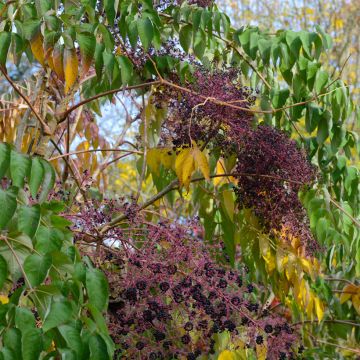
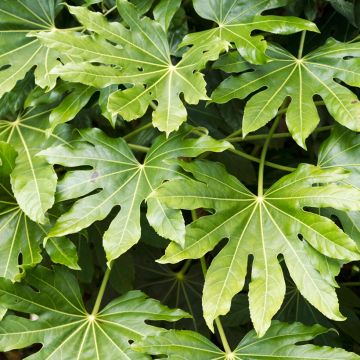
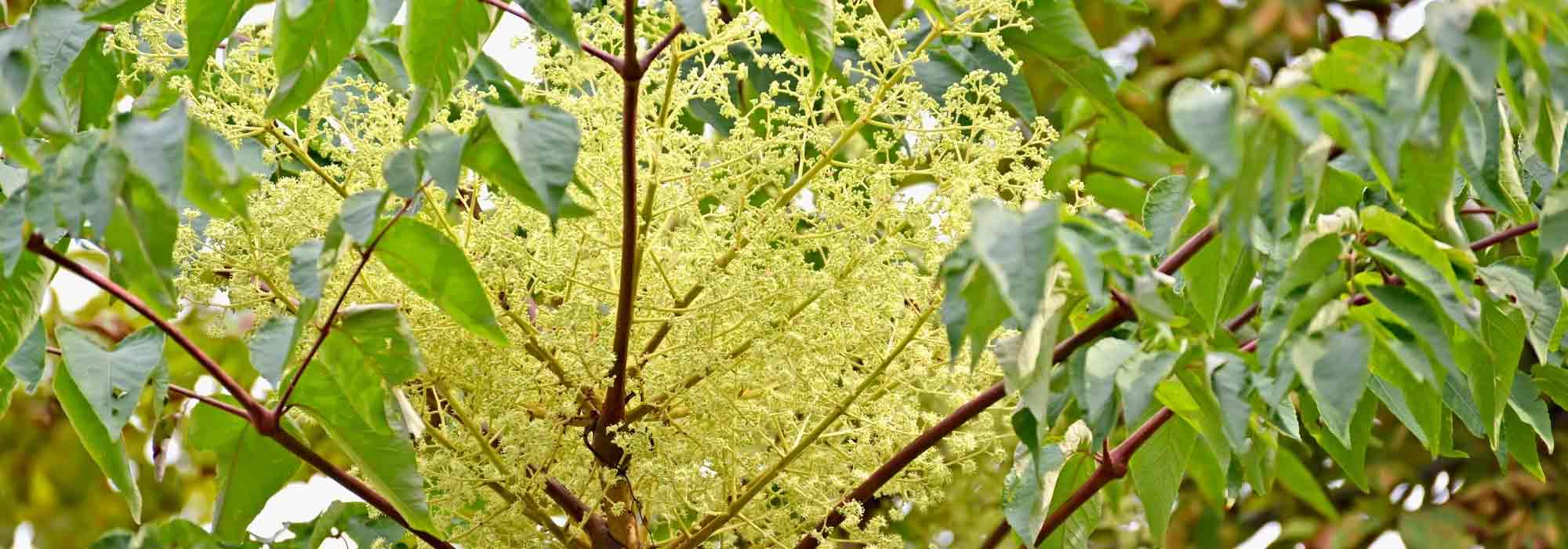
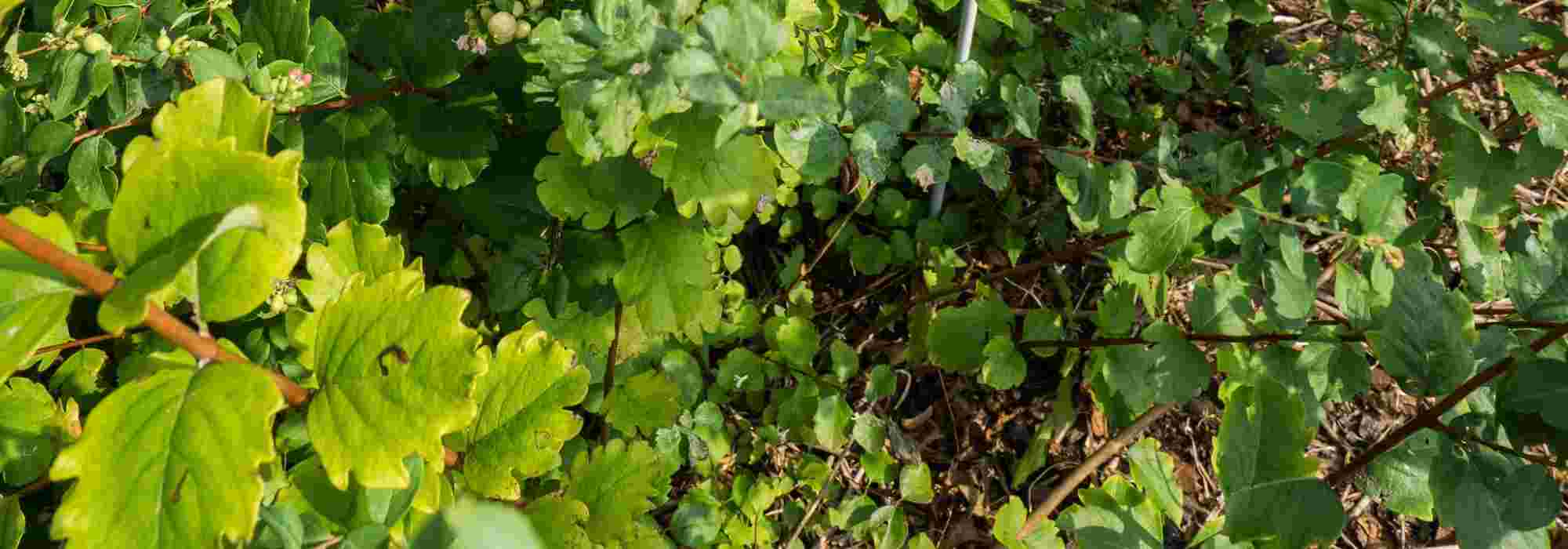
Aralia elata Silver Umbrella is undoubtedly one of the largest and most beautiful varieties of variegated Japanese Angelica tree. This rare bush, also known as Variegated Japanese Aralia, has a generous silhouette and perfect design that lends the garden a highly exotic and very Japanese charm. It forms a large umbrella with multiple trunks, whose branches bear large, deeply cut leaves with white-silver margins on a grey-green background. This absolute wonder is also covered in late summer with large, creamy-white, fluffy and fragrant umbels, followed by shiny blue-black fruits. With time, and with elegance, it asserts its presence, earning a celebrated place in the garden, in ordinary soil, in shade or sun.
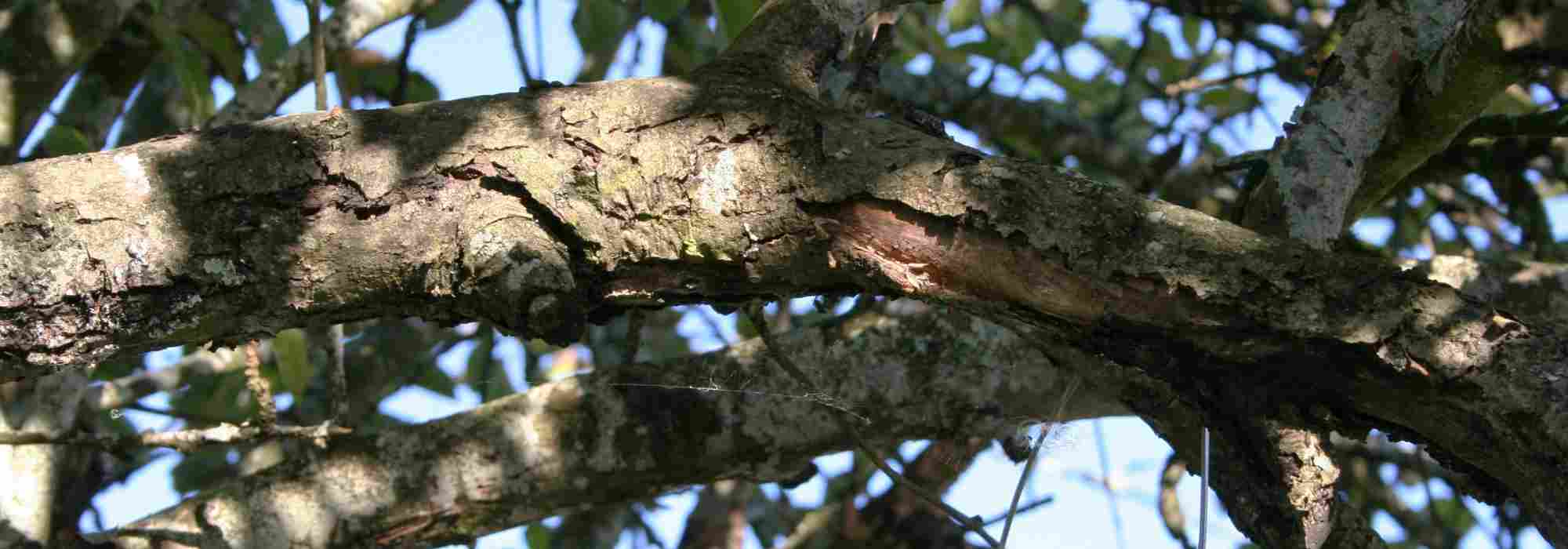
Japanese angelica belongs to the Araliaceae family. It is native to Japan and northeastern Asia. It is a bushy plant that can reach 4 to 5 m (13 to 16 ft) in height, and its spread will exceed 5 m (16 ft ) once mature. The 'Silver Umbrella' variety is mainly distinguished by slightly less developed foliage, but beautifully edged with silver-white. Often grafted onto more hardy green varieties, young plants grow on a single trunk, with leaves only at the top, but as they age, more and more lateral branches appear. The bark is gray, in small prickly plates. These sharp spines can also be found on the branches. The leaves are deciduous. They can sometimes reach 50 cm (20 in) in length, and they are divided into numerous narrow and pointed leaflets that have small spines on the petiole. The flowers appear in late summer and last for several weeks. They are formed of tiny cream-white specks grouped together in a light cloud that evokes a fragrant mist of bees buzzing above the foliage. They are actually grouped in a flexible panicle 20 to 40 cm (8 to 16 in) long. Small blackish fruits then appear, highly sought after by birds. Aralia elata has a tendency to multiply by suckering and forms clumps, which is why it is called the walking tree.
It is a very beautiful bush that is not afraid of the cold or the shade and will adapt to most light and moist soils. Its highly ornamental foliage deserves to be protected from strong winds to preserve all its beauty. Once established, it is stunning when planted alone on a lawn or grouped together in a cluster. It is also interesting combined with trees and shrubs that, like itself, appreciate moist to wet soils - such as alder buckthorn, rosemary-leaved willow, and guelder rose. In a more exotic setting, choose to associate it with other beautiful Asian plants such as the caramel tree, Japanese maple, fatsia, or Arisaema, for example. It creates a stunning spectacle in September; its sparkling mass of snow-white and silver, perhaps reflected on the surface of a pond, can excite the emotions or invite meditation, depending on your mood. The only precaution to take, considering its sharp spines, is with young children, who should not approach it.
Aralia elata is also a medicinal plant. Its berries and bark contain a stimulating principle used in medicine. The bark is used in herbal medicine.
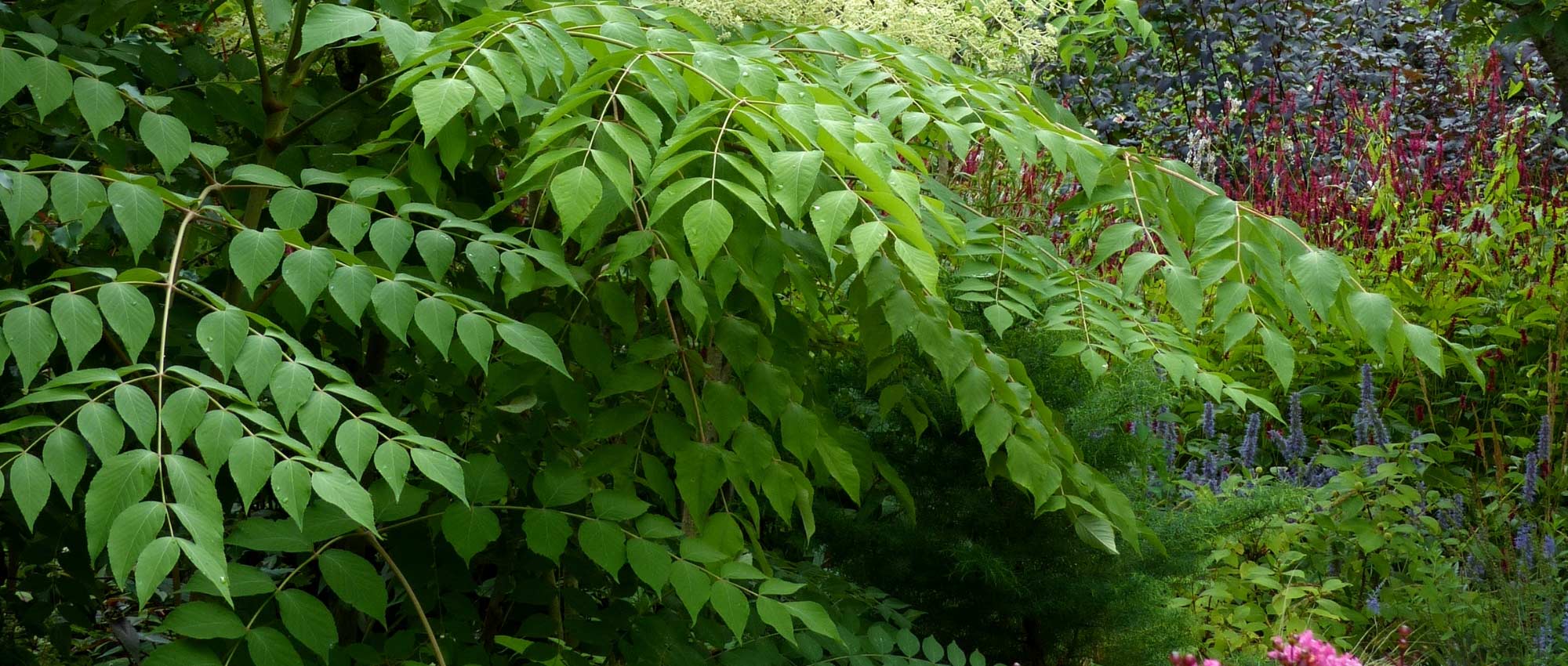
Aralia elata Silver Umbrella in pictures
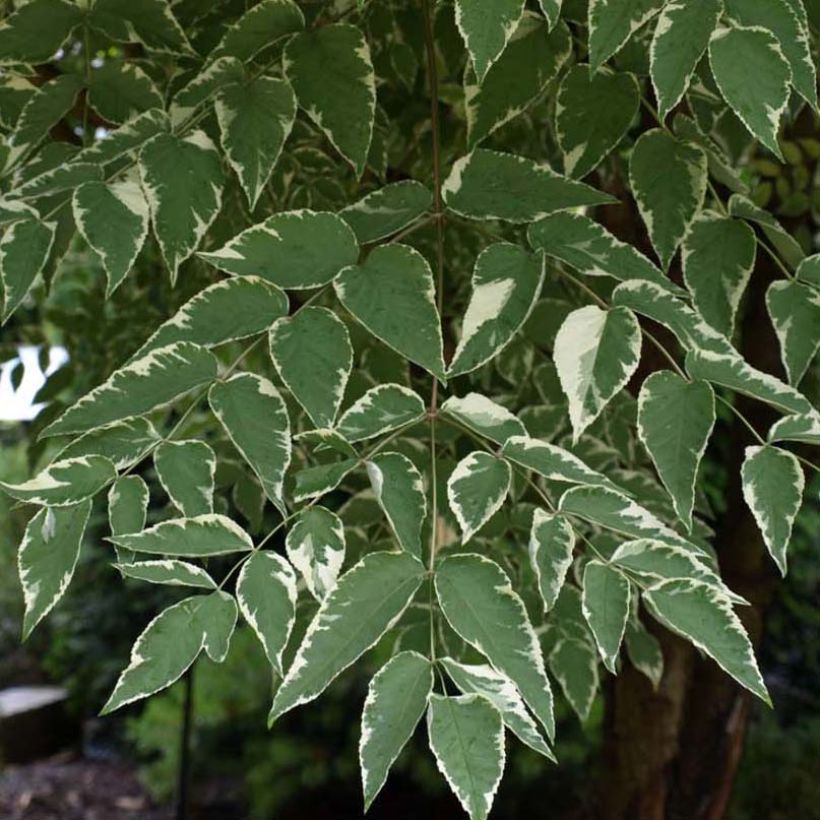
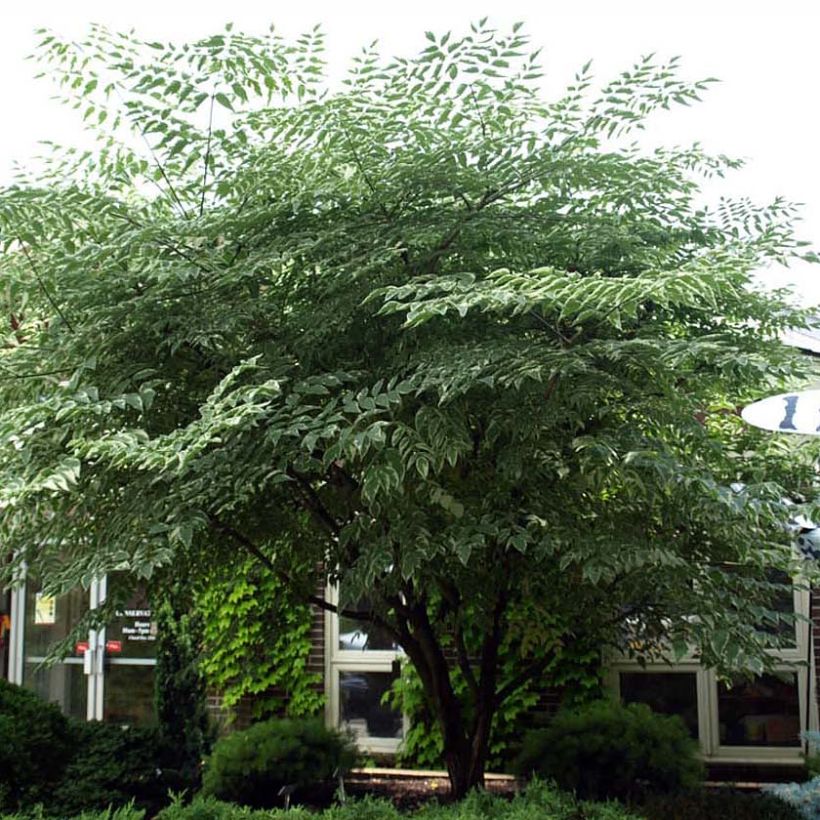
Plant habit
Flowering
Foliage
Botanical data
Aralia
elata
Silver Umbrella
Araliaceae
Japanese Angelica Tree, Devil's Walking Stick
Aralia elata (Variegata)
Cultivar or hybrid
Planting and care
Aralia elata Silver Umbrella prefers a partially shaded site, or morning sun, but it also tolerates shade. Care should be taken to install it sheltered from strong or drying winds to spare its ornamental foliage. This bush thrives in moist to damp, fertile, neutral to slightly alkaline soil, but it seems that poor soil produces hardier subjects with greater longevity. It is not picky about soil type and easily adapts to any ordinary, deep, well-drained, and not too dry soil. This small tree sometimes tends to send shoots out, without being invasive. Simply remove the small shoots as soon as they appear. Remove any regrowth or green branches that could eventually unbalance the overall branching and overshadow the variegated foliage.
Planting period
Intended location
Care
Planting & care advice
-
-

-
-
-
-
-
-

-
, onOrder confirmed
Reply from on Promesse de fleurs
Recently viewed products
Haven't found what you were looking for?
Hardiness is the lowest winter temperature a plant can endure without suffering serious damage or even dying. However, hardiness is affected by location (a sheltered area, such as a patio), protection (winter cover) and soil type (hardiness is improved by well-drained soil).
In temperate climates, pruning of spring-flowering shrubs (forsythia, spireas, etc.) should be done just after flowering.
Pruning of summer-flowering shrubs (Indian Lilac, Perovskia, etc.) can be done in winter or spring.
In cold regions as well as with frost-sensitive plants, avoid pruning too early when severe frosts may still occur.
The harvesting period indicated on our website applies to countries and regions in USDA zone 8 (France, England, Ireland, the Netherlands).
In colder areas (Scandinavia, Poland, Austria...) fruit and vegetable harvests are likely to be delayed by 3-4 weeks.
In warmer areas (Italy, Spain, Greece, etc.), harvesting will probably take place earlier, depending on weather conditions.
The sowing periods indicated on our website apply to countries and regions within USDA Zone 8 (France, UK, Ireland, Netherlands).
In colder areas (Scandinavia, Poland, Austria...), delay any outdoor sowing by 3-4 weeks, or sow under glass.
In warmer climes (Italy, Spain, Greece, etc.), bring outdoor sowing forward by a few weeks.
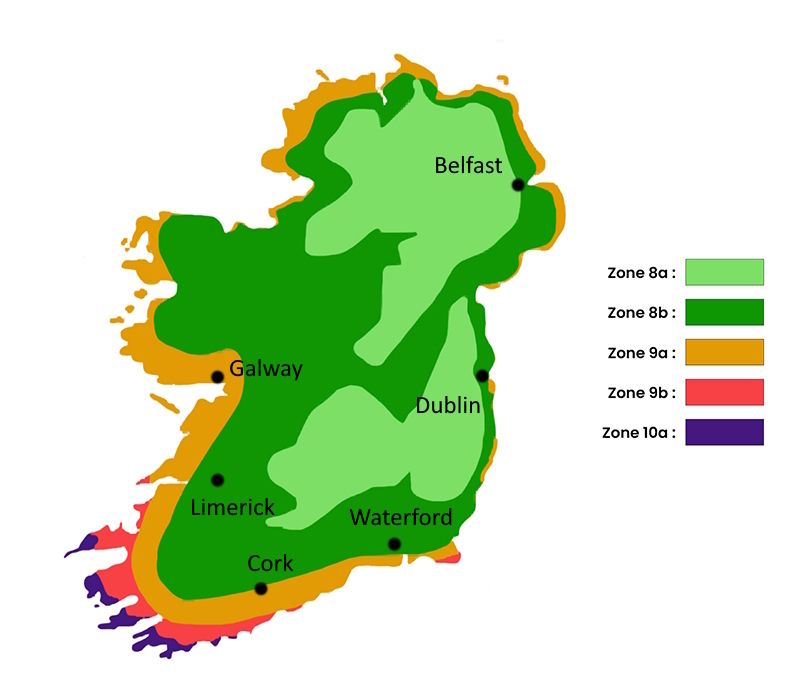
The planting period indicated on our website applies to regions in USDA Zone 9a (East Coast and Midlands: Dublin, Wexford, Waterford, Kilkenny, Portlaoise). It will vary depending on where you live:
- On the west coast and in the north-west (Galway, Limerick, Sligo, Donegal, Westport), delay planting by 1 to 2 weeks in spring and bring it forward by 1 to 2 weeks in autumn compared to the dates given, preferably choosing periods without strong winds.
- In the inland hills and plateaus (Wicklow Mountains, Macgillycuddy’s Reeks, Connemara, Killarney), it is best to plant in spring (April–May) or autumn (September–October), avoiding periods of waterlogged soil in winter and strong winds, which pose the main risk to newly planted trees in these areas.
The flowering period indicated on our website applies to regions in USDA Zone 9a, such as the East Coast and Midlands, including Dublin, Wexford, Waterford, Kilkenny and Portlaoise.
This will vary depending on where you live:
- On the west coast and in the northwest (Galway, Limerick, Sligo, Donegal and Westport), it will be delayed by one to two weeks compared to the given dates, due to stronger Atlantic winds and less spring sunshine.
- In the inland hills and plateaus (the Wicklow Mountains, the Macgillycuddy's Reeks, Connemara and Killarney), flowering will be delayed by two to three weeks. Flowering mainly occurs between May and July, with the limiting factors being less frost and more of the excessive humidity, strong winds and lack of sunshine that are characteristic of these areas.
Shipping country and language
Your country of residence may be:
Your country of residence is:
For a better user experience on our website, you can select:
Your shipping country:
-
 Austria
-
 Belgium
-
 Bosnia & Herzegovina
-
 Bulgaria
-
 Croatia
-
 Cyprus
-
 Czechia
-
 Denmark
-
 Estonia
-
 Finland
-
 France
-
 Germany
-
 Greece
-
 Hungary
-
 Iceland
-
 Ireland
-
 Italy
Italy
-
 Latvia
-
 Liechtenstein
-
 Lithuania
-
 Luxembourg
-
 Malta
Malta
-
 Netherlands
-
 Poland
-
 Portugal
-
 Romania
-
 Serbia
-
 Slovakia
-
 Slovenia
-
 Spain
Spain
-
 Sweden
-
 Switzerland
Language:
-
French
-
 English
-
Spanish
-
Italian
-
German
-
Portuguese
-
Dutch
-
Finnish
My Account
Hello
My wish lists
My cart
Log in / Register
Existing customer?
This form is protected by reCAPTCHA - the Google Privacy Policy and Terms of Service apply.
New customer?
Create an account to track your orders, access our customer service and, if you wish, make the most of our upcoming offers.