Rosa Paul Neyron - Repeat Flowering Rose
Rosa Paul Neyron - Repeat Flowering Rose
Rosa Paul Neyron - Repeat Flowering Rose
Rosa Paul Neyron
Rose
Very disappointed upon arrival of the parcel as the shoots present were dead and dried out on a very small bare-root rose. I planted it carefully and for a week now it has finally produced a very small shoot; I really thought it was dead, I hope it will strengthen and make new shoots..... It's really borderline with your plants.
Fatima , 03/05/2025
Back-to-school special offer!
Get €10 off for every €50 you spend! And get up to €40 off on a single order.
How does it work?
1. Shop your favourites
Add your favourite plants to your basket. For every €50 you spend (excluding delivery charges, store credit and the plastic-free option), you’ll receive a €10 voucher.
€50 spent = €10 voucher
€100 spent = €20 voucher
€150 spent = €30 voucher
€200 spent = €40 voucher
2. Place your order
Once your basket reaches one of the spending thresholds, place your order. You can even choose your delivery date!
3. Receive your voucher
As soon as your order has been shipped, you’ll receive an email containing your personal voucher code and its value.
4. Use it on your next order
Your voucher is valid for 90 days from the date you receive it. It can be used once only, on a new order worth at least the value of the voucher, excluding delivery charges.
Please note: Vouchers can be combined with other offers, but cannot be split or refunded.
Home or relay delivery (depending on size and destination)
Important: You may be charged customs duties by your country’s customs authorities upon delivery.
Schedule delivery date
and select date in basket
This plant carries a 24 months recovery warranty
More information
We guarantee the quality of our plants for a full growing cycle, and will replace at our expense any plant that fails to recover under normal climatic and planting conditions.
Description
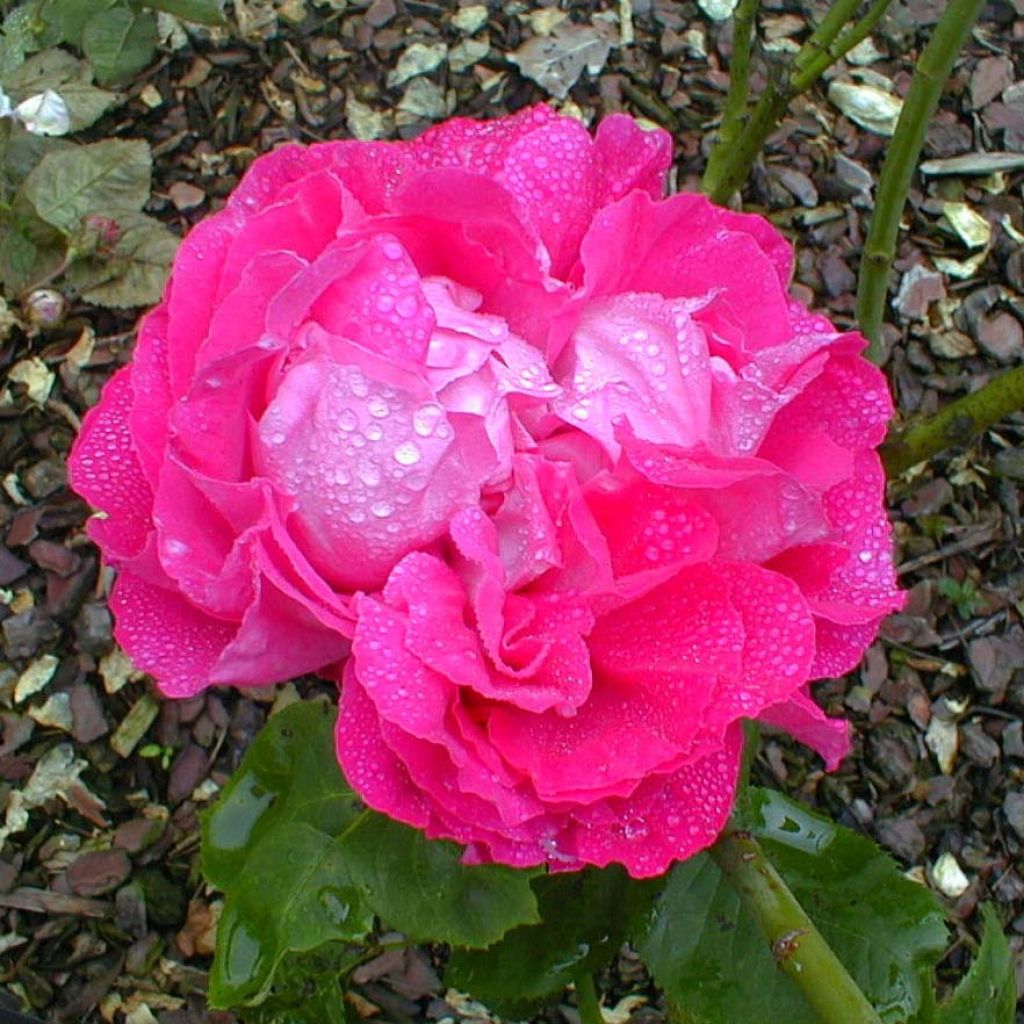
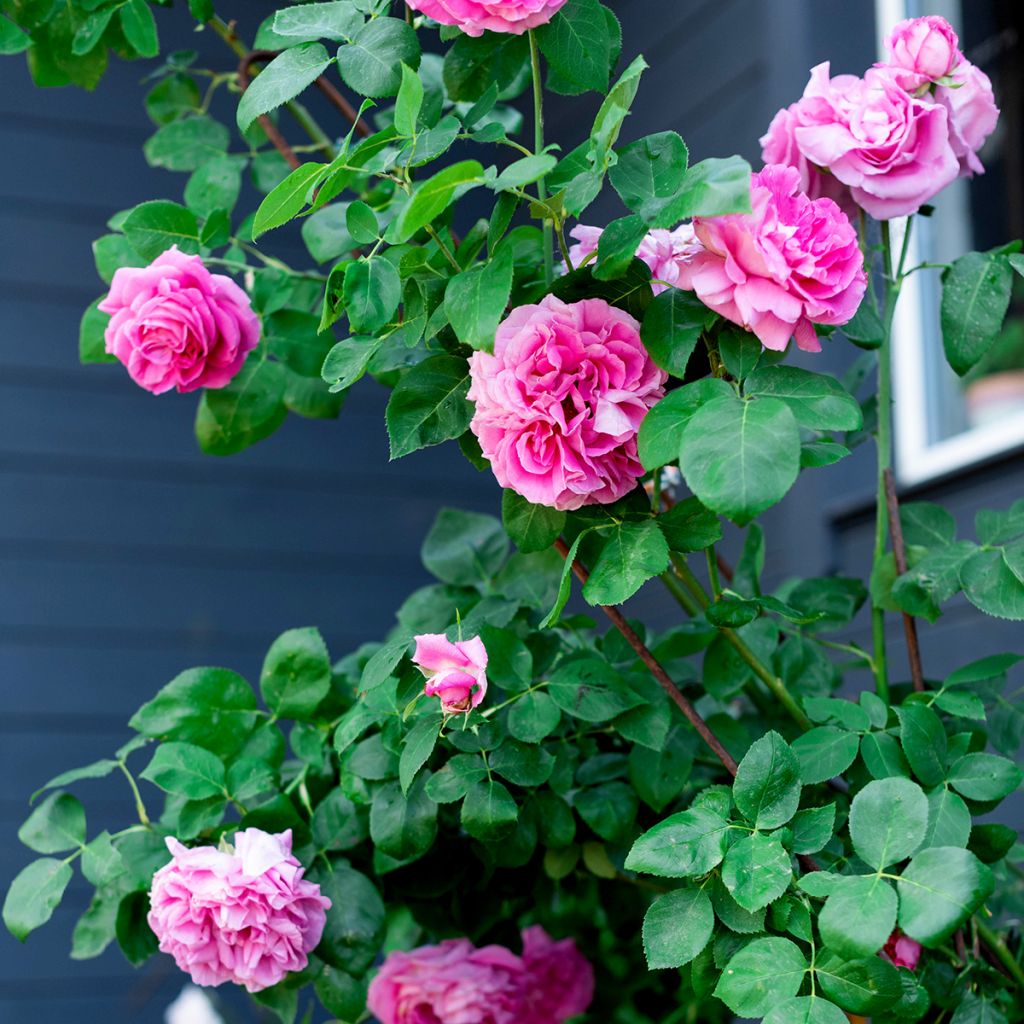
The Old Rose Paul Neyron is a famous repeat flowering hybrid rose known for the size and shape of its flowers, which resemble large double peonies, as well as for its unique colour that has given its name to a specific shade of pink with lilac nuances. Forming an upright bush with almost no thorns, it is sturdy and has fresh green foliage that is shiny and resistant to diseases. 'Paul Neyron' flourishes in good growing conditions and blooms abundantly in early summer and repeat flowers generously in autumn. Its large fragrant flowers are carried by strong stems and are absolutely perfect in bouquets. It is undoubtedly a fantastic rose, in every way!
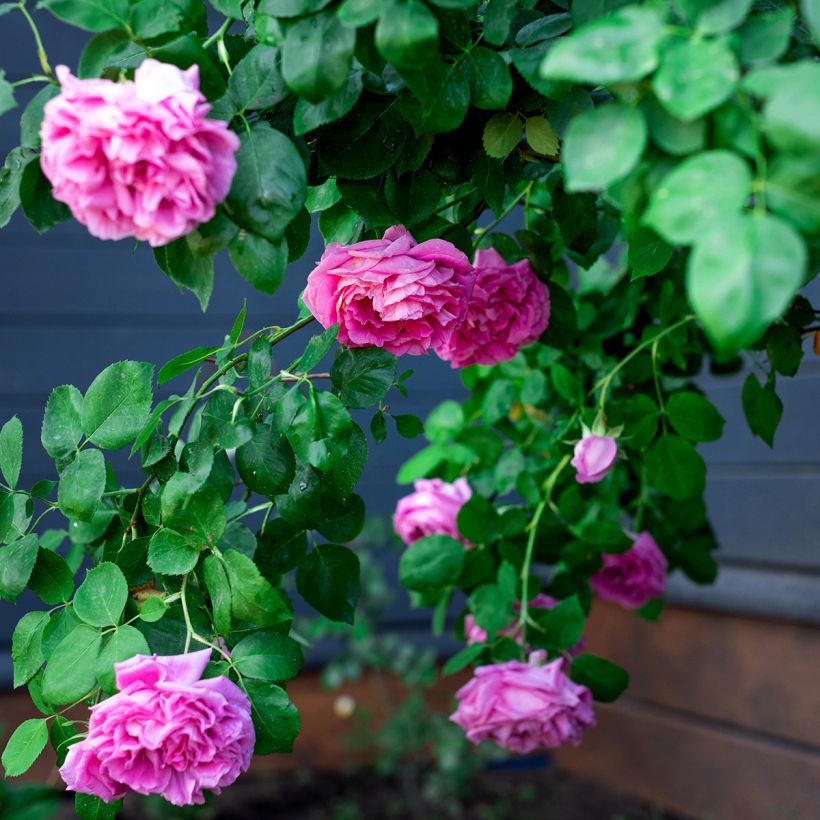
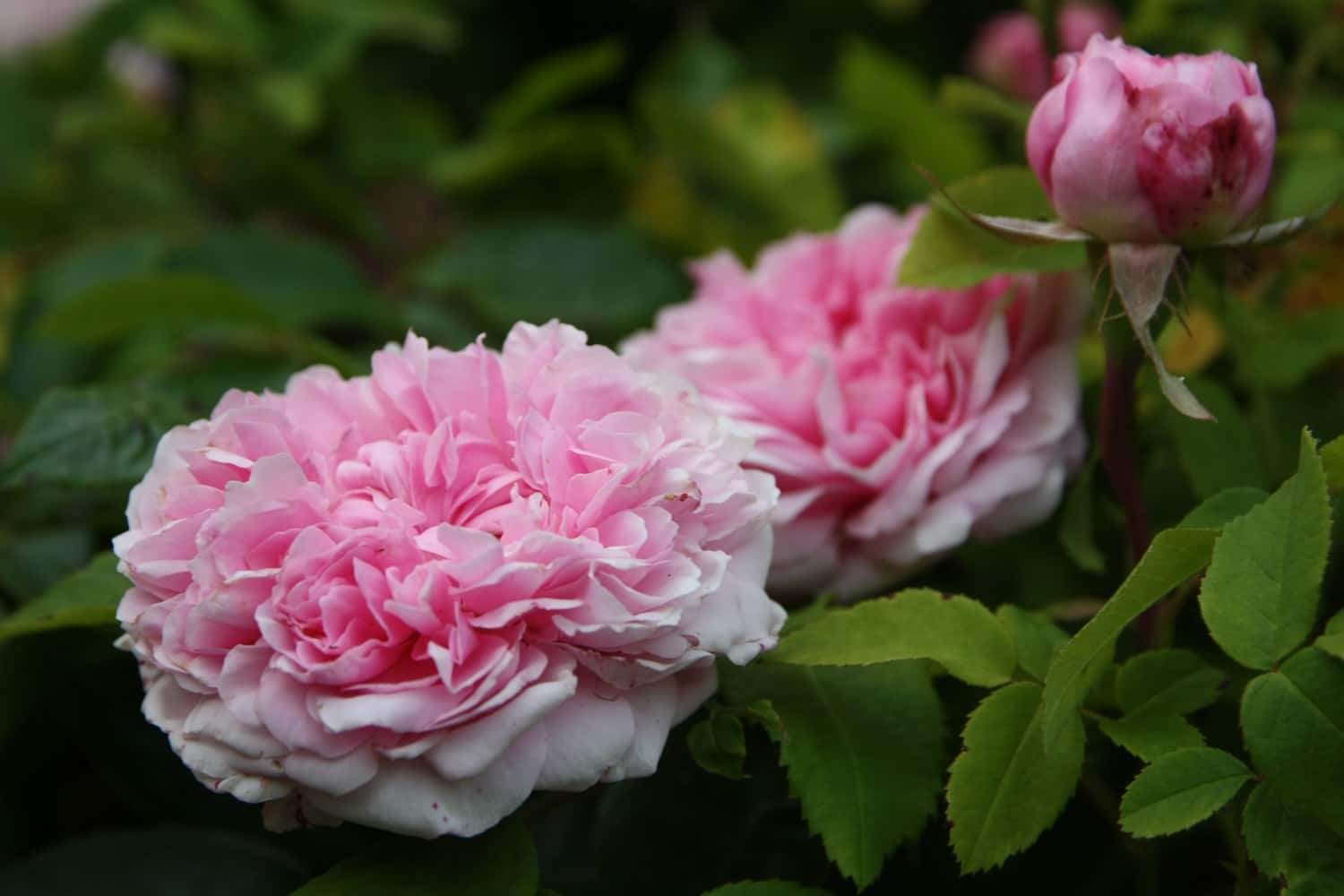
The 'Paul Neyron' rose is an old horticultural variety, bred in France in 1869 by Levet père by crossing the 'Victor Verdier' and 'Anna de Diesbach' varieties. It belongs to the complex family of Repeat Flowering Hybrids. 'Paul Neyron' forms a dense bush with an upright habit, usually reaching 1.50 m (4 ft 11 in) in height and 1.20 m (3 ft 11 in) in width. However, if supported against a wall, it can reach up to 2 m (6 ft 7 in) in height. Its deciduous foliage is fresh green and is carried by strong and almost thornless stems, perfectly supporting the weight of the flowers. It blooms abundantly in mid-June and again in September-October, with generosity, constancy, and regularity if faded flowers are removed. It produces large, round, pink buds. The young flowers are also globular, which then open into wide, double, flat cups measuring 15 cm (5.9 in) in diameter, revealing a pleated, somewhat casual interior. The approximately 50 undulated petals that make up the corolla are a medium pink with a hint of blue, lacking the freshness of candy pink or the warmth of red, while the reverse side is lighter and more silvery. This rose often bears multiple flowers on each particularly long and vigorous peduncle. The fragrance of these roses is light and very pleasant. The plant, sometimes prone to rust in damp soil, has good disease resistance.
In the past, this imposing 'Paul Neyron' rose was a must-have in any reputable rose catalogue. It has received numerous awards and can be found in many gardens, providing beautiful flowers for the home. With its bushy growth and ease of cultivation, it is easy to plant in any garden, in any climate. If you have little experience with roses, opt for this generous and truly undemanding rose. In flower beds, this rose pairs well with all kinds of perennials and bushes without being overpowering, such as catmints, autumn asters, irises, white foxgloves, or lilacs. It will also thrive when planted alone, placed along a path or near the terrace, to enjoy its fragrance until late in the season if the autumn is mild.
If you have enough space, English, Old, or Shrub Roses are beautiful when planted in groups of three. They will grow together to form one single opulent bush that will bloom even more generously.

Rosa Paul Neyron - Repeat Flowering Rose in pictures

Plant habit
Flowering
Foliage
Botanical data
Rosa
Paul Neyron
Rosaceae
Rose
Cultivar or hybrid
Planting and care
Plant your 'Paul Neyron' Rose in a sunny or semi-shade position, which it will tolerate well, especially in hot climates. Old roses are hardy but do not appreciate excessive limestone. They will adapt to any garden as long as the soil is well worked, deep enough, not too heavy, and rich enough. To plant your rose, work the soil by working it well and put a soil improver or fertiliser at the bottom of the planting hole, such as blood, fish and bone. Water generously after planting to remove any air pockets, and during dry weather for the first two years. Water regularly for a few weeks to encourage rooting.
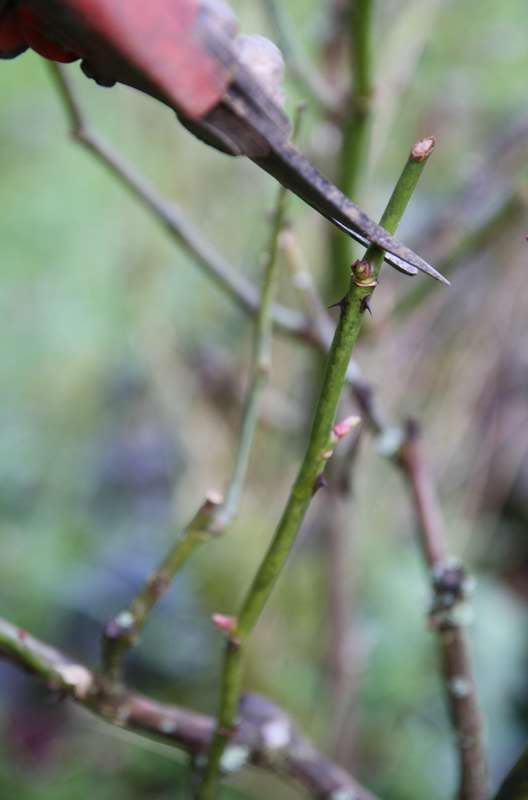
Pruning old roses mainly consists of removing faded flowers gradually, unless you want to keep the decorative hips.
Avoid pruning it to maintain an interesting bushy shape.
However, in late winter (March), you can still remove branches located in the middle of the bush that tend to overwhelm the plant.
Planting period
Intended location
Care
Planting & care advice
-

-

-

-

-
-

-
-

-
, onOrder confirmed
Reply from on Promesse de fleurs
Recently viewed products
Haven't found what you were looking for?
Hardiness is the lowest winter temperature a plant can endure without suffering serious damage or even dying. However, hardiness is affected by location (a sheltered area, such as a patio), protection (winter cover) and soil type (hardiness is improved by well-drained soil).
In temperate climates, pruning of spring-flowering shrubs (forsythia, spireas, etc.) should be done just after flowering.
Pruning of summer-flowering shrubs (Indian Lilac, Perovskia, etc.) can be done in winter or spring.
In cold regions as well as with frost-sensitive plants, avoid pruning too early when severe frosts may still occur.
The harvesting period indicated on our website applies to countries and regions in USDA zone 8 (France, England, Ireland, the Netherlands).
In colder areas (Scandinavia, Poland, Austria...) fruit and vegetable harvests are likely to be delayed by 3-4 weeks.
In warmer areas (Italy, Spain, Greece, etc.), harvesting will probably take place earlier, depending on weather conditions.
The sowing periods indicated on our website apply to countries and regions within USDA Zone 8 (France, UK, Ireland, Netherlands).
In colder areas (Scandinavia, Poland, Austria...), delay any outdoor sowing by 3-4 weeks, or sow under glass.
In warmer climes (Italy, Spain, Greece, etc.), bring outdoor sowing forward by a few weeks.
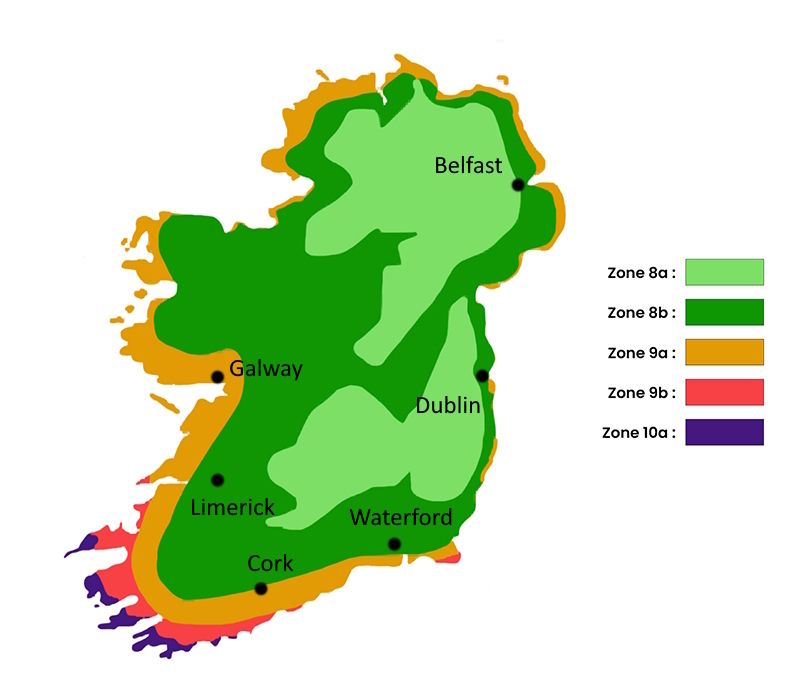
The planting period indicated on our website applies to regions in USDA Zone 9a (East Coast and Midlands: Dublin, Wexford, Waterford, Kilkenny, Portlaoise). It will vary depending on where you live:
- On the west coast and in the north-west (Galway, Limerick, Sligo, Donegal, Westport), delay planting by 1 to 2 weeks in spring and bring it forward by 1 to 2 weeks in autumn compared to the dates given, preferably choosing periods without strong winds.
- In the inland hills and plateaus (Wicklow Mountains, Macgillycuddy’s Reeks, Connemara, Killarney), it is best to plant in spring (April–May) or autumn (September–October), avoiding periods of waterlogged soil in winter and strong winds, which pose the main risk to newly planted trees in these areas.
The flowering period indicated on our website applies to regions in USDA Zone 9a, such as the East Coast and Midlands, including Dublin, Wexford, Waterford, Kilkenny and Portlaoise.
This will vary depending on where you live:
- On the west coast and in the northwest (Galway, Limerick, Sligo, Donegal and Westport), it will be delayed by one to two weeks compared to the given dates, due to stronger Atlantic winds and less spring sunshine.
- In the inland hills and plateaus (the Wicklow Mountains, the Macgillycuddy's Reeks, Connemara and Killarney), flowering will be delayed by two to three weeks. Flowering mainly occurs between May and July, with the limiting factors being less frost and more of the excessive humidity, strong winds and lack of sunshine that are characteristic of these areas.
Shipping country and language
Your country of residence may be:
Your country of residence is:
For a better user experience on our website, you can select:
Your shipping country:
-
 Austria
-
 Belgium
-
 Bosnia & Herzegovina
-
 Bulgaria
-
 Croatia
-
 Cyprus
-
 Czechia
-
 Denmark
-
 Estonia
-
 Finland
-
 France
-
 Germany
-
 Greece
-
 Hungary
-
 Iceland
-
 Ireland
-
 Italy
Italy
-
 Latvia
-
 Liechtenstein
-
 Lithuania
-
 Luxembourg
-
 Malta
Malta
-
 Netherlands
-
 Poland
-
 Portugal
-
 Romania
-
 Serbia
-
 Slovakia
-
 Slovenia
-
 Spain
Spain
-
 Sweden
-
 Switzerland
Language:
-
French
-
 English
-
Spanish
-
Italian
-
German
-
Portuguese
-
Dutch
-
Finnish
My Account
Hello
My wish lists
My cart
Log in / Register
Existing customer?
This form is protected by reCAPTCHA - the Google Privacy Policy and Terms of Service apply.
New customer?
Create an account to track your orders, access our customer service and, if you wish, make the most of our upcoming offers.