
Rosa Pink Paradise

Rosa Pink Paradise

Rosa Pink Paradise
Rosa Pink Paradise
Rosa Pink Paradise
Rosa Pink Paradise
Rosa Pink Paradise® 'Delfluoro'
The rose bush is a bit spindly with 4 branch starts, one of which unfortunately broke despite the careful packaging. Was it broken before packaging? I hope it will recover properly next spring. Nevertheless, I am a little disappointed with the size of the young plant, which seemed very spindly compared to the other rose bush received in the same order.
LaurentD, 04/12/2025
Back-to-school special offer!
Get €10 off for every €50 you spend! And get up to €40 off on a single order.
How does it work?
1. Shop your favourites
Add your favourite plants to your basket. For every €50 you spend (excluding delivery charges, store credit and the plastic-free option), you’ll receive a €10 voucher.
€50 spent = €10 voucher
€100 spent = €20 voucher
€150 spent = €30 voucher
€200 spent = €40 voucher
2. Place your order
Once your basket reaches one of the spending thresholds, place your order. You can even choose your delivery date!
3. Receive your voucher
As soon as your order has been shipped, you’ll receive an email containing your personal voucher code and its value.
4. Use it on your next order
Your voucher is valid for 90 days from the date you receive it. It can be used once only, on a new order worth at least the value of the voucher, excluding delivery charges.
Please note: Vouchers can be combined with other offers, but cannot be split or refunded.
Home or relay delivery (depending on size and destination)
Important: You may be charged customs duties by your country’s customs authorities upon delivery.
Schedule delivery date
and select date in basket
This plant carries a 24 months recovery warranty
More information
We guarantee the quality of our plants for a full growing cycle, and will replace at our expense any plant that fails to recover under normal climatic and planting conditions.

Description
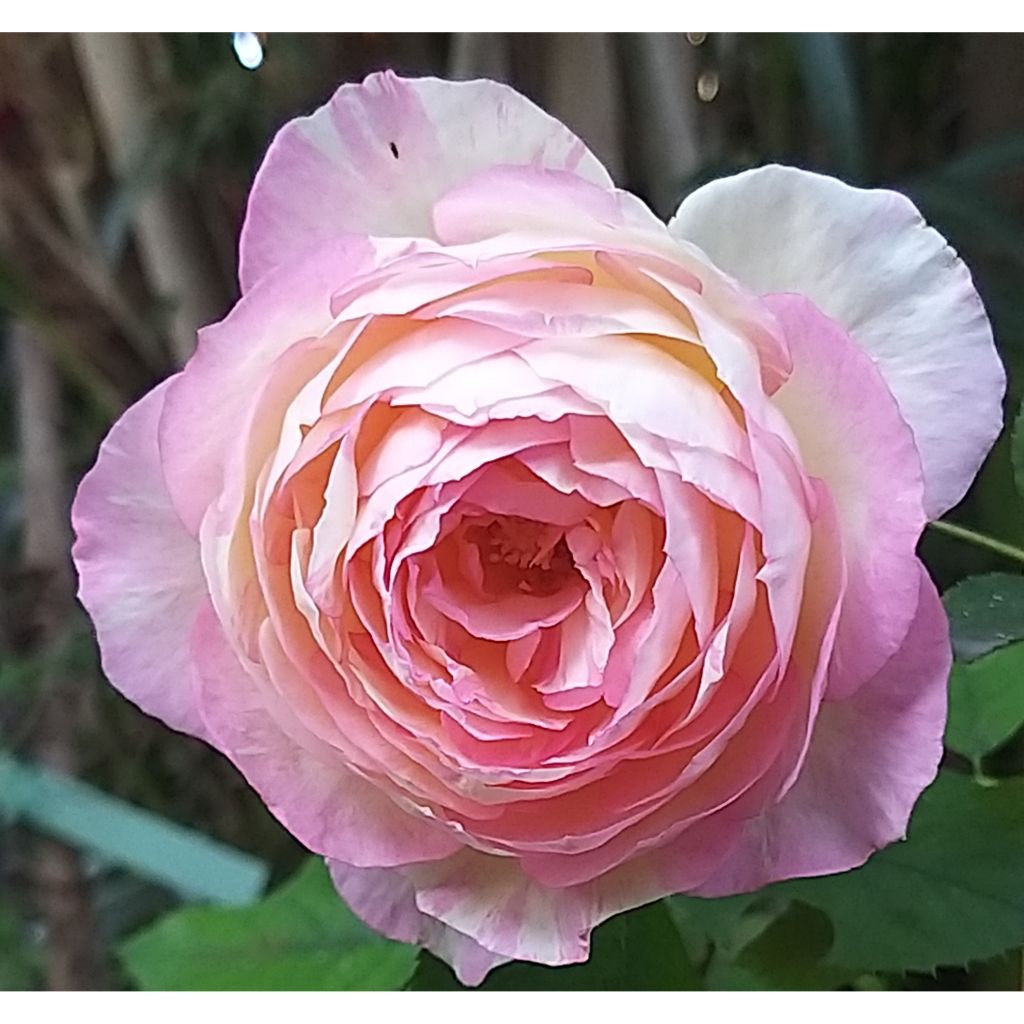
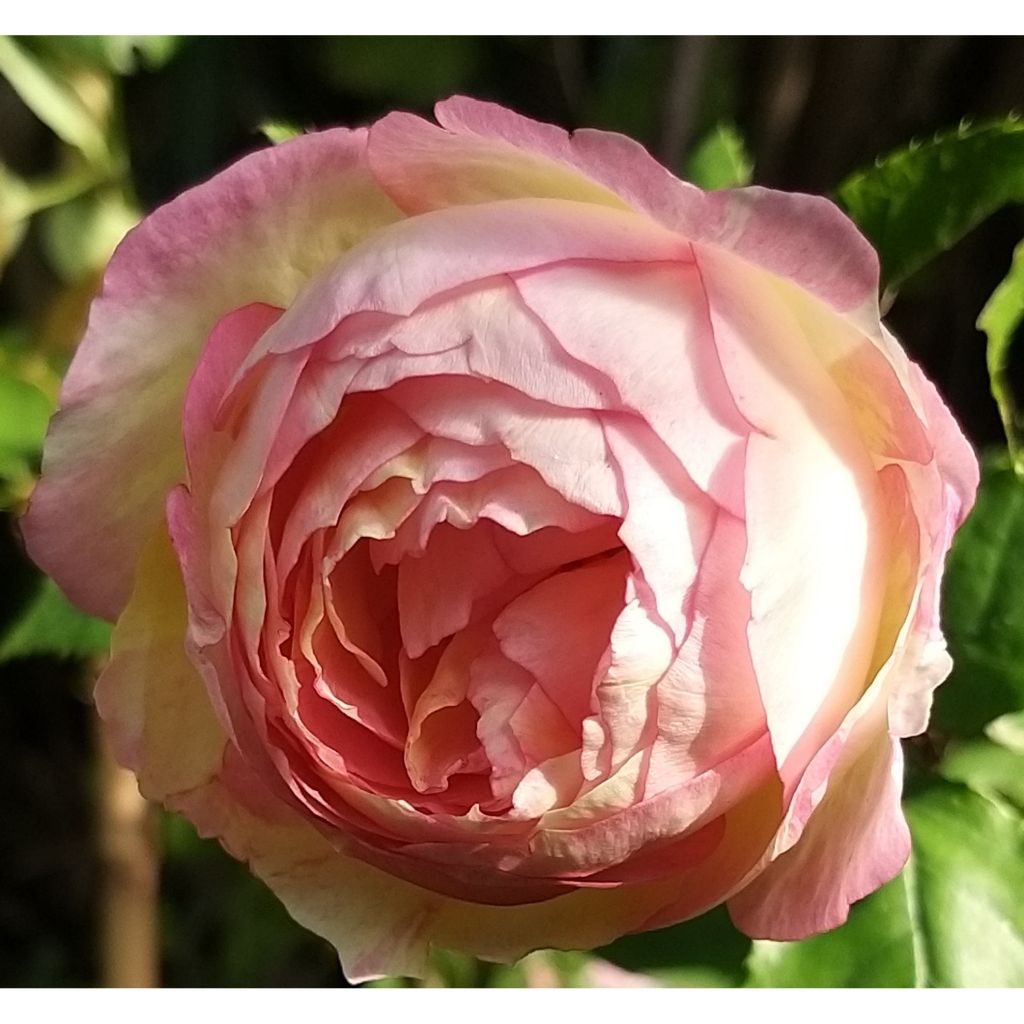
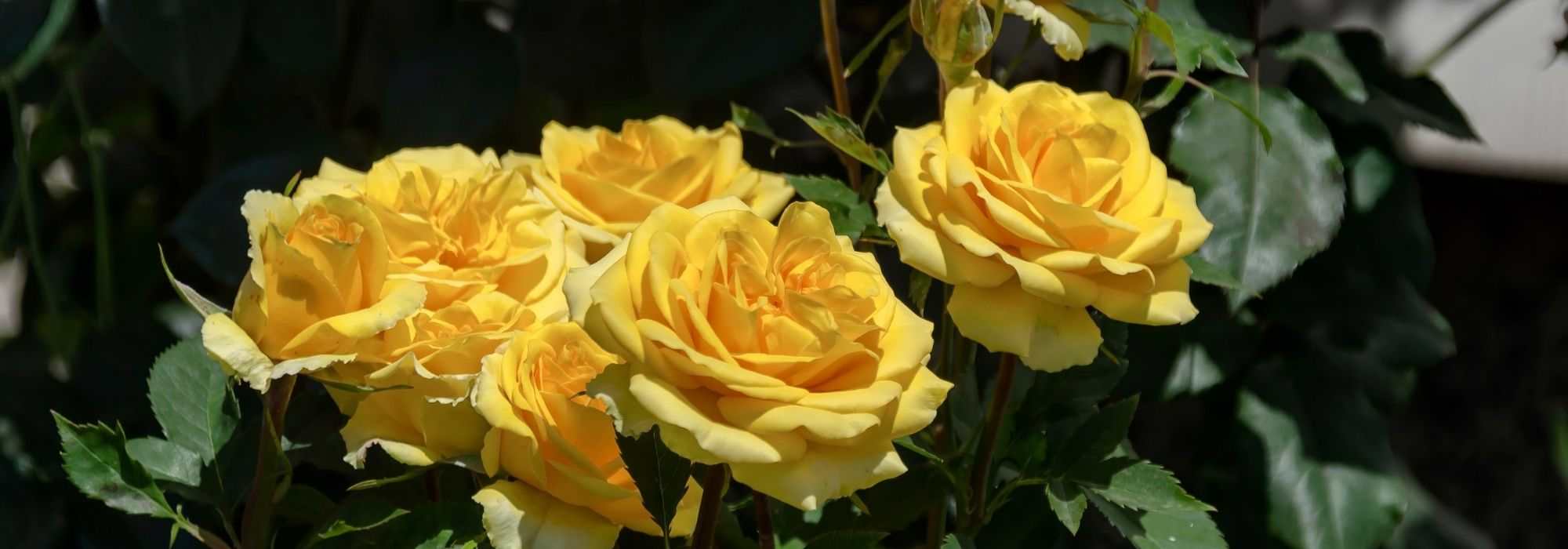
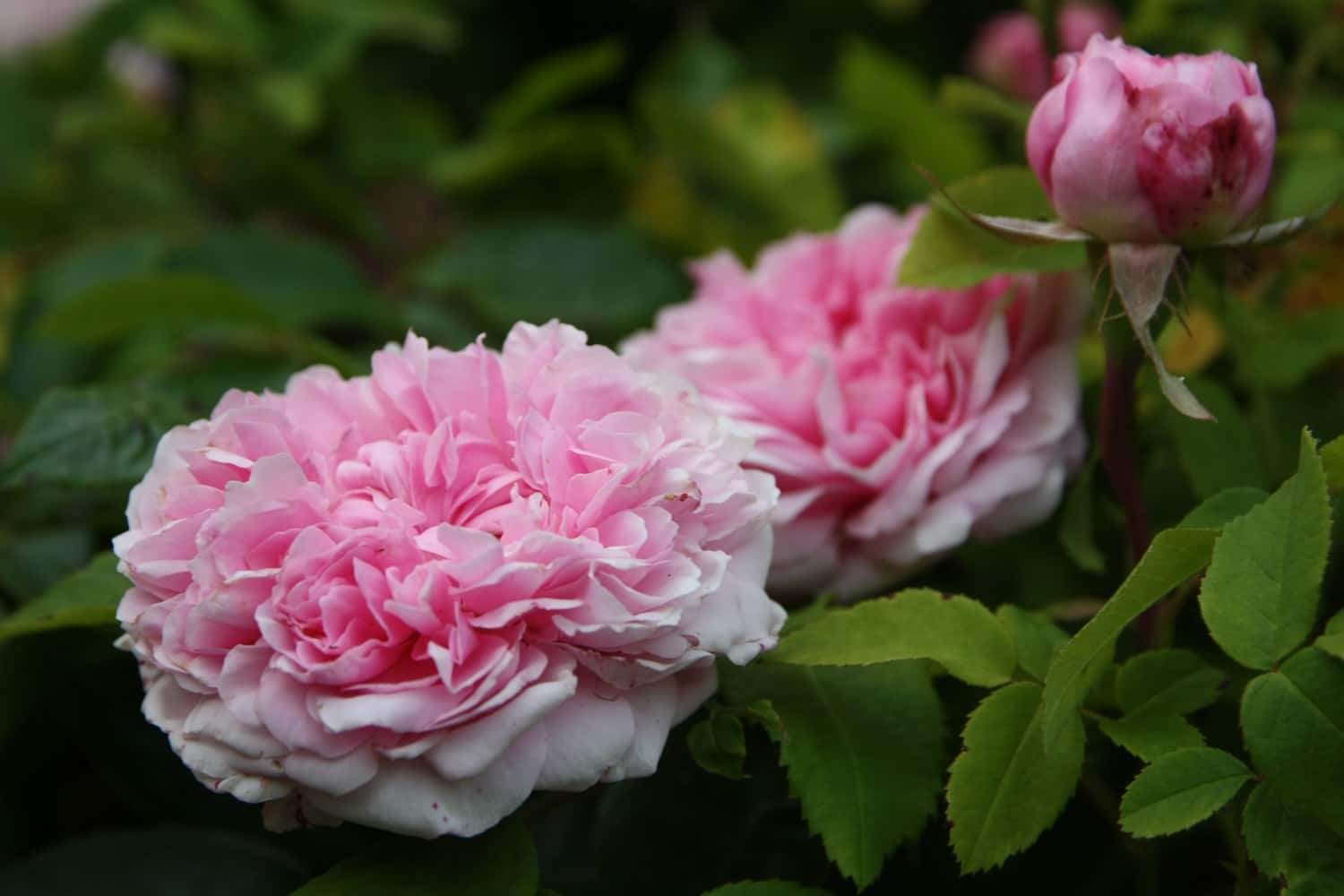
Rosa Pink Paradise is a modern hybrid tea rose named after a famous Parisian club synonymous with voluptuousness and delicacy. It bears radiant roses with fuchsia-pink petals and apricot-yellow reverses that fade over time. These double flowers are beautifully curved. They exude a fragrance with subtle notes of spices and freshly cut grass. The natural disease resistance of this excellent variety has earned it the prestigious German ADR* label. These long-lasting flowers make charming scented bouquets throughout summer.
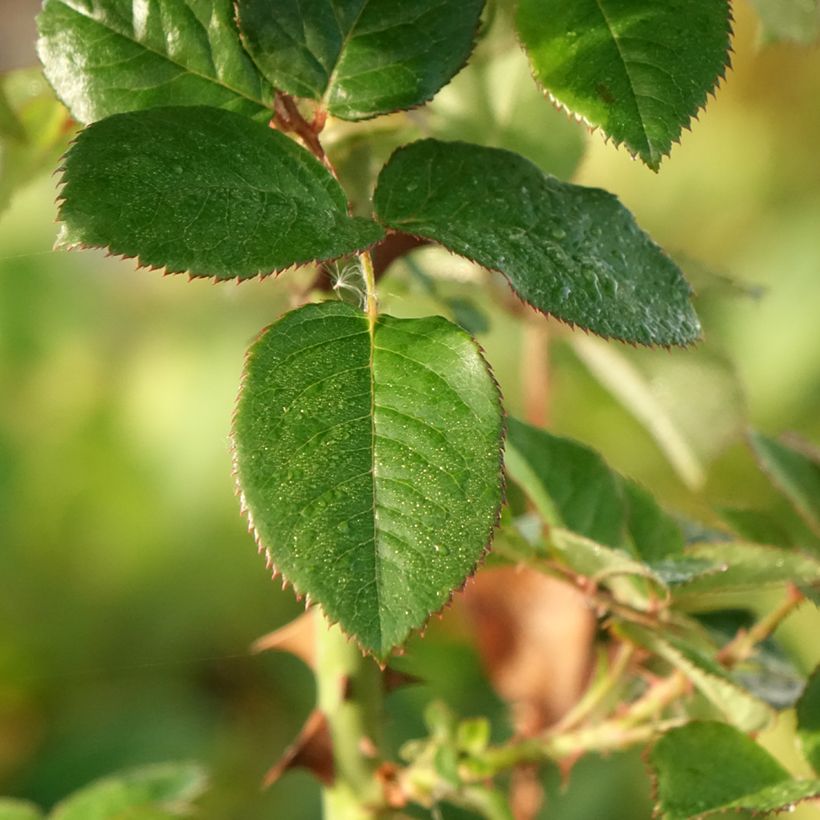
Rosa Pink Paradise was obtained by Delbard in 2011. It already boasts an impressive list of achievements. It holds no less than 7 medals, including the supreme consecration at the international competition in Lyon in 2011 where it was voted 'Rose of the Century', and a second place at the International Perfume Grand Prix in 2012. It is a modern bush rose with large clustered flowers. It is a vigorous shrub with an elegant and slender habit. It reaches about 80 to 90cm (32 to 35in) in height and 60cm (24in) in width at maturity. It has a rapid growth rate. It produces strong, thorny branches that bear dense foliage, with large serrated leaflets of a glossy dark green colour. The foliage is disease-resistant. From late spring to October, the plant produces waves of closely spaced buds with a sunny yellow colour edged in vibrant pink, which open into large, double, iridescent flowers revealing a golden stamen centre. The petals are a vibrant fuchsia-pink with a yellow reverse at first, before fading over time to reveal the romantic side of the flower as it gracefully unfolds. The flowers are gathered in bouquets of 5 to 7 at the end of long shoots from the current year or by those that emerge from 2-year-old stems. The rose will flower continuously if faded blooms are removed.
Rosa Pink Paradise is a voluptuous, seductive, and delicate rose, yet strong and generous. It only requires fertile and consistently moist soil to fully thrive. It can be placed alone in a small garden, integrated into a small flowering hedge, or planted in groups of 3 among low perennials such as violets, carnations, dwarf asters, or aubrietas. With its modest size, it is ideal for cultivation in a large pot. It blends well in low shrub borders with summer or autumn flowering shrubs, or mixed with light perennials and annuals such as sea kale, paniculate phlox, or tall foxgloves. It can be beautifully displayed in front of a boxwood or yew hedge, or surrounded by a miniature hedge or a carefully organised maze, as in Italian or French gardens. In beds or bouquets, its roses can be combined with white, soft yellow, or pink flowers.
* The ADR label is awarded to vigorous and floriferous roses that are resistant to diseases, cold, and parasites. These roses have been evaluated for 3 years in 11 rose gardens in Germany, distributed in various different climatic zones where no treatments are carried out. This label is a guarantee of high quality and hardiness.

Rosa Pink Paradise in pictures

Plant habit
Flowering
Foliage
Botanical data
Rosa
Pink Paradise® 'Delfluoro'
Rosaceae
Cultivar or hybrid
Planting and care
Plant in a sunny or partially shaded location. Modern roses are tolerant, but do not like excessive limestone. They will adapt to any garden as long as the soil is well worked, not too heavy, and sufficiently rich. To plant your rose, work the soil by crumbling it and add fertiliser to the bottom of the planting hole (dried blood or dehydrated horn, for example). Water generously after planting to remove any air pockets. Water regularly for a few weeks to facilitate root growth. Avoid pruning too short in the first two years.
Roses are often stained or unsightly at the end of summer, but this will not hinder their development. These spots are a natural phenomenon and will not harm the rose.
Planting period
Intended location
Care
Planting & care advice
-
-

-

-

-
-

-
-

-
, onOrder confirmed
Reply from on Promesse de fleurs
Recently viewed products
Haven't found what you were looking for?
Hardiness is the lowest winter temperature a plant can endure without suffering serious damage or even dying. However, hardiness is affected by location (a sheltered area, such as a patio), protection (winter cover) and soil type (hardiness is improved by well-drained soil).
In temperate climates, pruning of spring-flowering shrubs (forsythia, spireas, etc.) should be done just after flowering.
Pruning of summer-flowering shrubs (Indian Lilac, Perovskia, etc.) can be done in winter or spring.
In cold regions as well as with frost-sensitive plants, avoid pruning too early when severe frosts may still occur.
The harvesting period indicated on our website applies to countries and regions in USDA zone 8 (France, England, Ireland, the Netherlands).
In colder areas (Scandinavia, Poland, Austria...) fruit and vegetable harvests are likely to be delayed by 3-4 weeks.
In warmer areas (Italy, Spain, Greece, etc.), harvesting will probably take place earlier, depending on weather conditions.
The sowing periods indicated on our website apply to countries and regions within USDA Zone 8 (France, UK, Ireland, Netherlands).
In colder areas (Scandinavia, Poland, Austria...), delay any outdoor sowing by 3-4 weeks, or sow under glass.
In warmer climes (Italy, Spain, Greece, etc.), bring outdoor sowing forward by a few weeks.
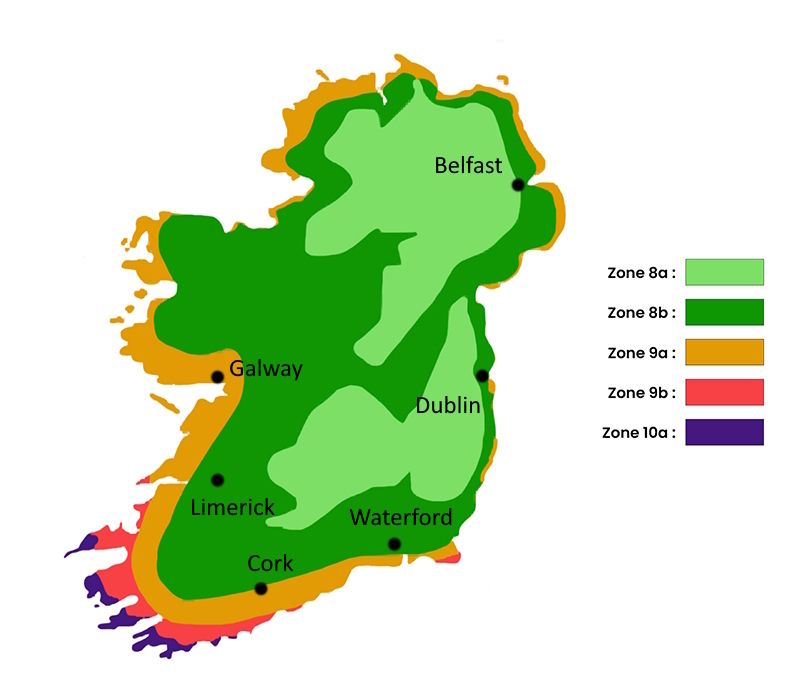
The planting period indicated on our website applies to regions in USDA Zone 9a (East Coast and Midlands: Dublin, Wexford, Waterford, Kilkenny, Portlaoise). It will vary depending on where you live:
- On the west coast and in the north-west (Galway, Limerick, Sligo, Donegal, Westport), delay planting by 1 to 2 weeks in spring and bring it forward by 1 to 2 weeks in autumn compared to the dates given, preferably choosing periods without strong winds.
- In the inland hills and plateaus (Wicklow Mountains, Macgillycuddy’s Reeks, Connemara, Killarney), it is best to plant in spring (April–May) or autumn (September–October), avoiding periods of waterlogged soil in winter and strong winds, which pose the main risk to newly planted trees in these areas.
The flowering period indicated on our website applies to regions in USDA Zone 9a, such as the East Coast and Midlands, including Dublin, Wexford, Waterford, Kilkenny and Portlaoise.
This will vary depending on where you live:
- On the west coast and in the northwest (Galway, Limerick, Sligo, Donegal and Westport), it will be delayed by one to two weeks compared to the given dates, due to stronger Atlantic winds and less spring sunshine.
- In the inland hills and plateaus (the Wicklow Mountains, the Macgillycuddy's Reeks, Connemara and Killarney), flowering will be delayed by two to three weeks. Flowering mainly occurs between May and July, with the limiting factors being less frost and more of the excessive humidity, strong winds and lack of sunshine that are characteristic of these areas.
Shipping country and language
Your country of residence may be:
Your country of residence is:
For a better user experience on our website, you can select:
Your shipping country:
-
 Austria
-
 Belgium
-
 Bosnia & Herzegovina
-
 Bulgaria
-
 Croatia
-
 Cyprus
-
 Czechia
-
 Denmark
-
 Estonia
-
 Finland
-
 France
-
 Germany
-
 Greece
-
 Hungary
-
 Iceland
-
 Ireland
-
 Italy
Italy
-
 Latvia
-
 Liechtenstein
-
 Lithuania
-
 Luxembourg
-
 Malta
Malta
-
 Netherlands
-
 Poland
-
 Portugal
-
 Romania
-
 Serbia
-
 Slovakia
-
 Slovenia
-
 Spain
Spain
-
 Sweden
-
 Switzerland
Language:
-
French
-
 English
-
Spanish
-
Italian
-
German
-
Portuguese
-
Dutch
-
Finnish
My Account
Hello
My wish lists
My cart
Log in / Register
Existing customer?
This form is protected by reCAPTCHA - the Google Privacy Policy and Terms of Service apply.
New customer?
Create an account to track your orders, access our customer service and, if you wish, make the most of our upcoming offers.