
Rosa La France
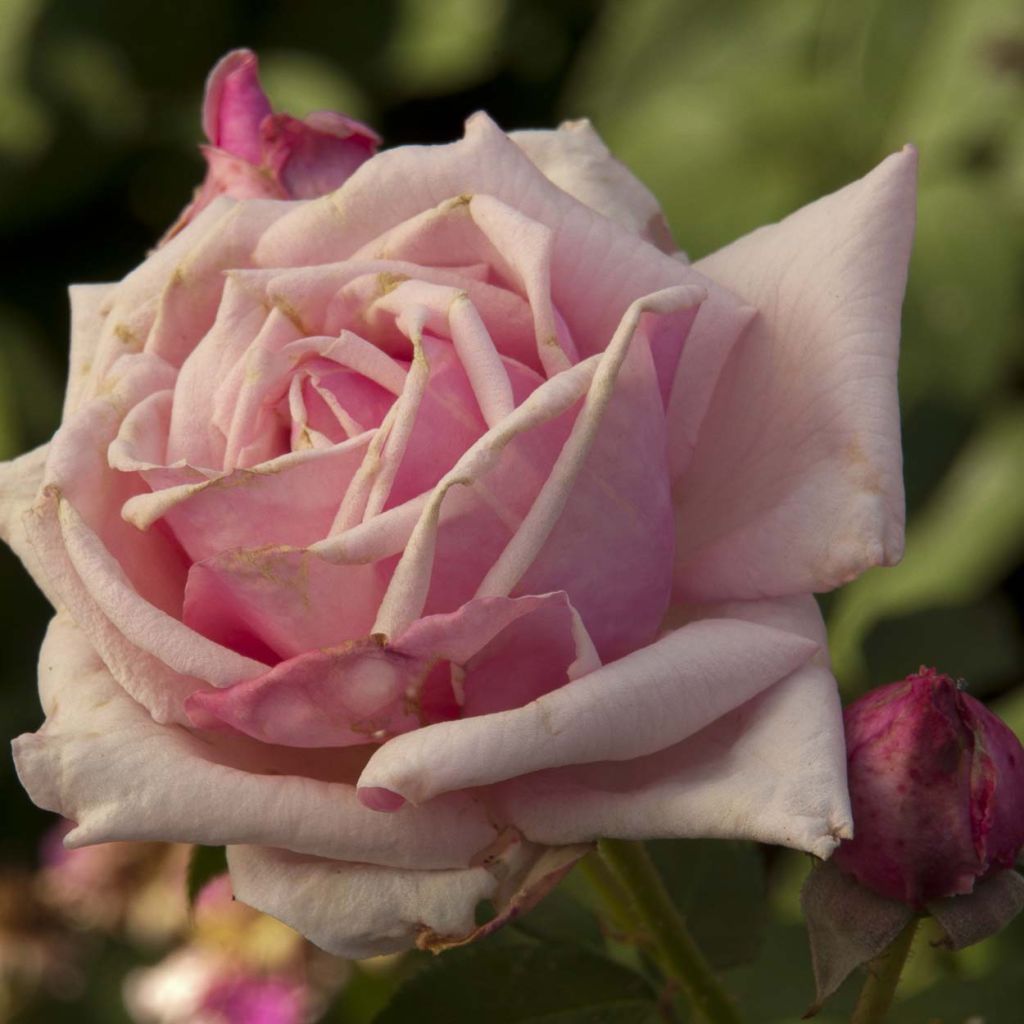
Rosa La France
Rosa La France
Rosa La France
Rose
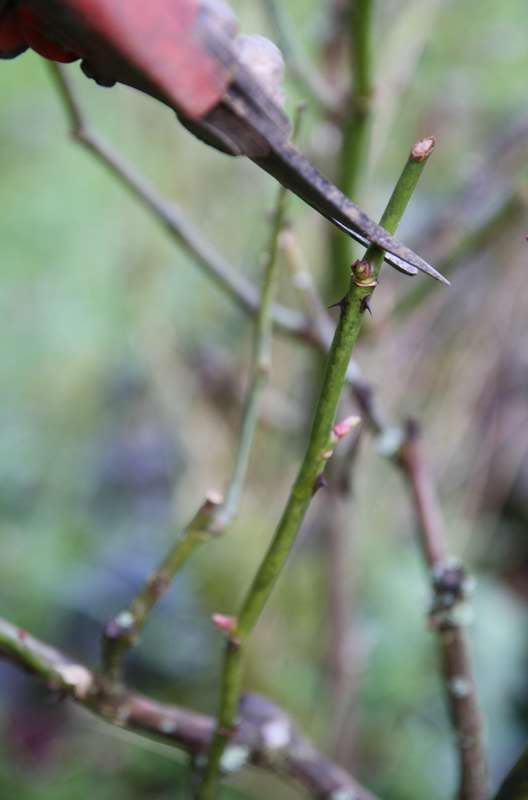
Disappointed with this young plant, dry branches, it stands out compared to the rest of my order, I hope it will recover. In a garden centre, I wouldn't have bought it.
LE GARS, 18/11/2020
Back-to-school special offer!
Get €10 off for every €50 you spend! And get up to €40 off on a single order.
How does it work?
1. Shop your favourites
Add your favourite plants to your basket. For every €50 you spend (excluding delivery charges, store credit and the plastic-free option), you’ll receive a €10 voucher.
€50 spent = €10 voucher
€100 spent = €20 voucher
€150 spent = €30 voucher
€200 spent = €40 voucher
2. Place your order
Once your basket reaches one of the spending thresholds, place your order. You can even choose your delivery date!
3. Receive your voucher
As soon as your order has been shipped, you’ll receive an email containing your personal voucher code and its value.
4. Use it on your next order
Your voucher is valid for 90 days from the date you receive it. It can be used once only, on a new order worth at least the value of the voucher, excluding delivery charges.
Please note: Vouchers can be combined with other offers, but cannot be split or refunded.
Why not try an alternative variety in stock?
View all →
Available in 0 sizes
Available in 2 sizes

Available in 1 sizes
Available in 2 sizes

Available in 2 sizes
Available in 1 sizes

Available in 2 sizes
Available in 2 sizes

Available in 2 sizes

Available in 2 sizes
This plant carries a 6 months recovery warranty
More information
We guarantee the quality of our plants for a full growing cycle, and will replace at our expense any plant that fails to recover under normal climatic and planting conditions.
Description
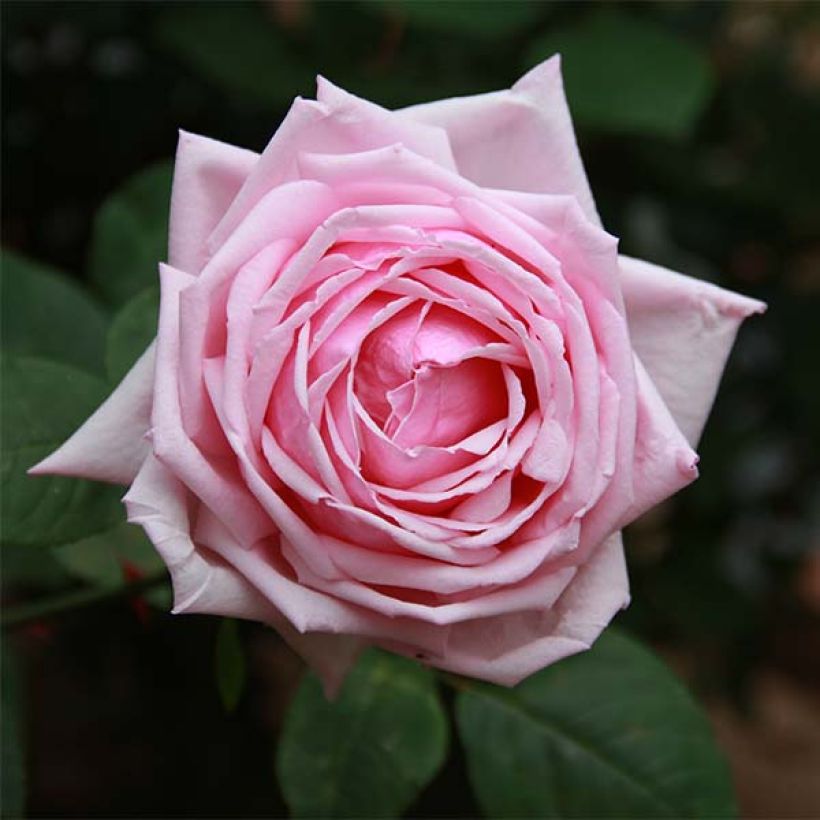
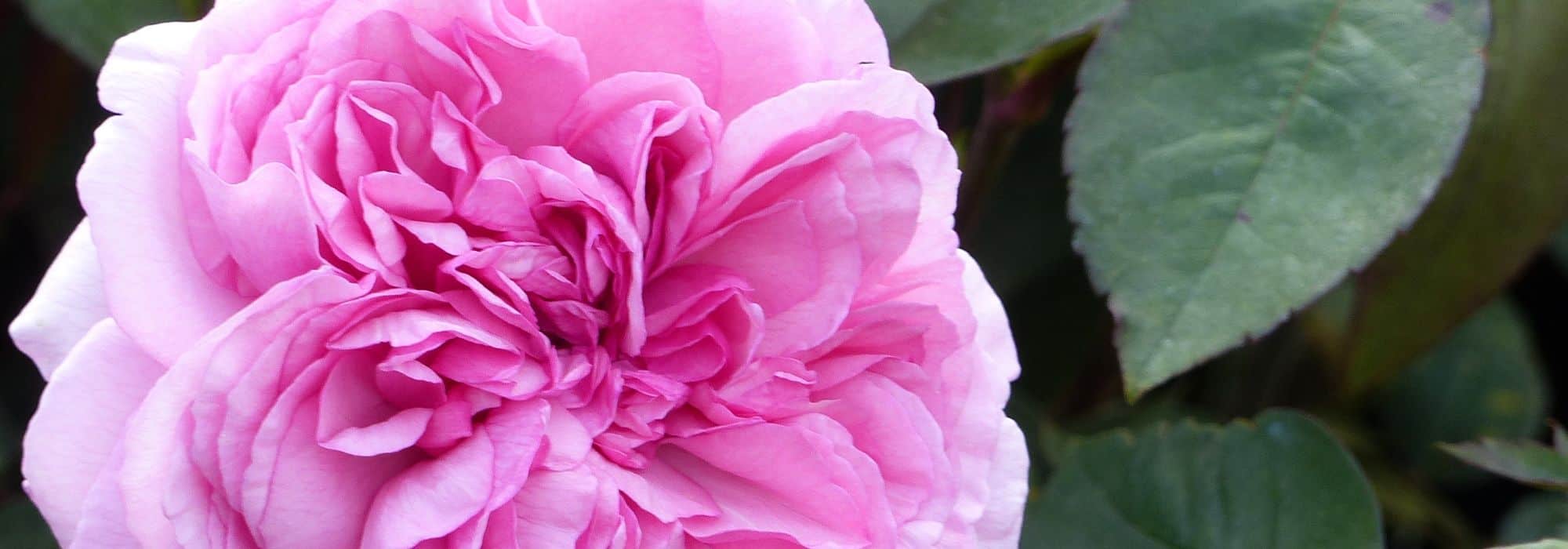
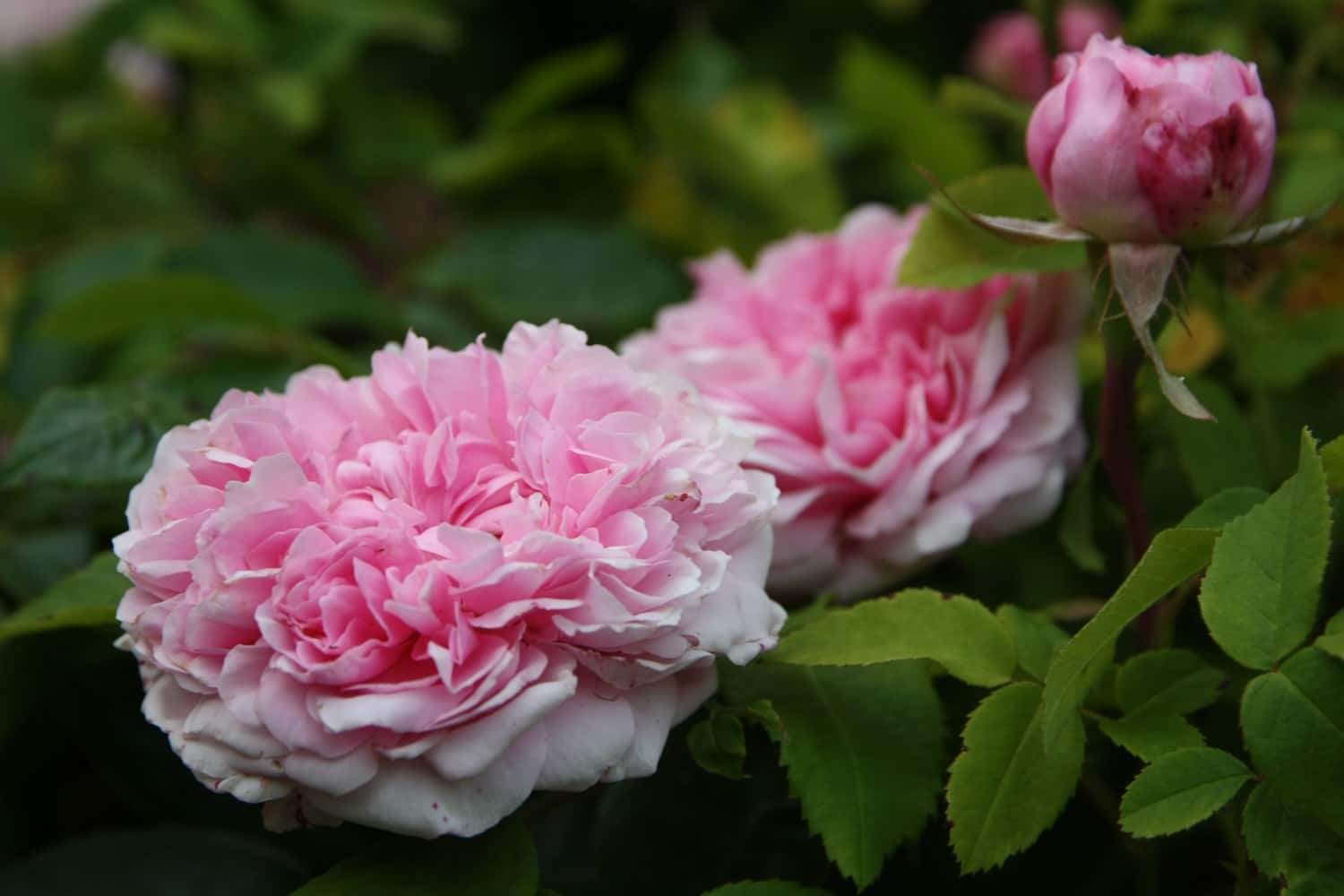
In 1867, with the Rose 'La France', Jean-Baptiste Guillot gave birth to the new category of Hybrid Teas, thus closing the era of old roses invented by the pioneers of cross-breeding. This variety, which once represented the ideal of beauty and fragrance, still graces our gardens, and far beyond our borders, on hectares, for its powerful fragrance. Its long pointed buds open into large globular and very double roses, rich in 60 slightly curved petals, of a light silver pink, doubled with lilac pink. This rather low bush is capable of flowering from June to November. It is a reliable, very hardy variety, accessible to all, and endowed with timeless charm.
Rosa 'La France', of uncertain parentage, but often related to the variety 'Madame Falcot', is considered the flagship of our modern roses commonly called Hybrid Tea or Large-flowered Roses. These roses are the result of multiple crosses between tea-scented roses and remontant hybrids. They share a bushy and erect habit, formed by long straight and upright stems, and produce on long peduncles (sometimes considered a bit stiff), very beautiful elongated buds opening into large solitary flowers, counting at least 60 petals, highly prized in floristry. Most of them have a recurrent flowering, even continuous for some of them, but often devoid of fragrance.
'La France' forms a small vigorous bush, 90cm (35.4in) tall and 70-80cm (27.6 - 31.5in) wide. Its thorny stems, a bit weak but without stiffness, bear a sparsely leafy foliage, dark green, quite sensitive to humidity. The silhouette often bends under the abundance and weight of the large silky pink flowers. Very full and wide, 10 to 11cm (4.3in) in diameter, they exhale a magnificent fragrance, reminiscent of Damask Rose; this rose is actually extensively cultivated in India for the fragrance and perfume industry. It is susceptible to fungal diseases, but thrives better (without treatment) in our dry climates, especially since it lives for very long years on its own roots and is not demanding in terms of soil type and tolerates limestone very well.
Rosa 'La France' is an historic rose, of modern conception, but with an ancient appearance. If it has survived many more recent cultivars, produced abundantly for decades, it is undoubtedly due to its fragrance, its ability to rebloom for 5 to 6 months, and probably to the timeless charm of its large pastel roses, so endearing in bouquets and flower beds. It deserves a place in romantic gardens, scented gardens, alongside Rosa 'Old Blush', with its inexhaustible flowering, or Rosa 'Complicata'. It is beautiful in the company of tall asters (A. laevis, A. turbinellus, Kalimeris mongolica, Solidaster), among shrub peonies, foxgloves, and Penstemons. In spring, the fragrance and roundness of lilacs, the purity of mock oranges will accompany its brand new youth, while in summer, ceanothuses and repeat-flowering roses will take over. Finally, it is a perfectly hardy bush, but it dreads humid and cool summers.
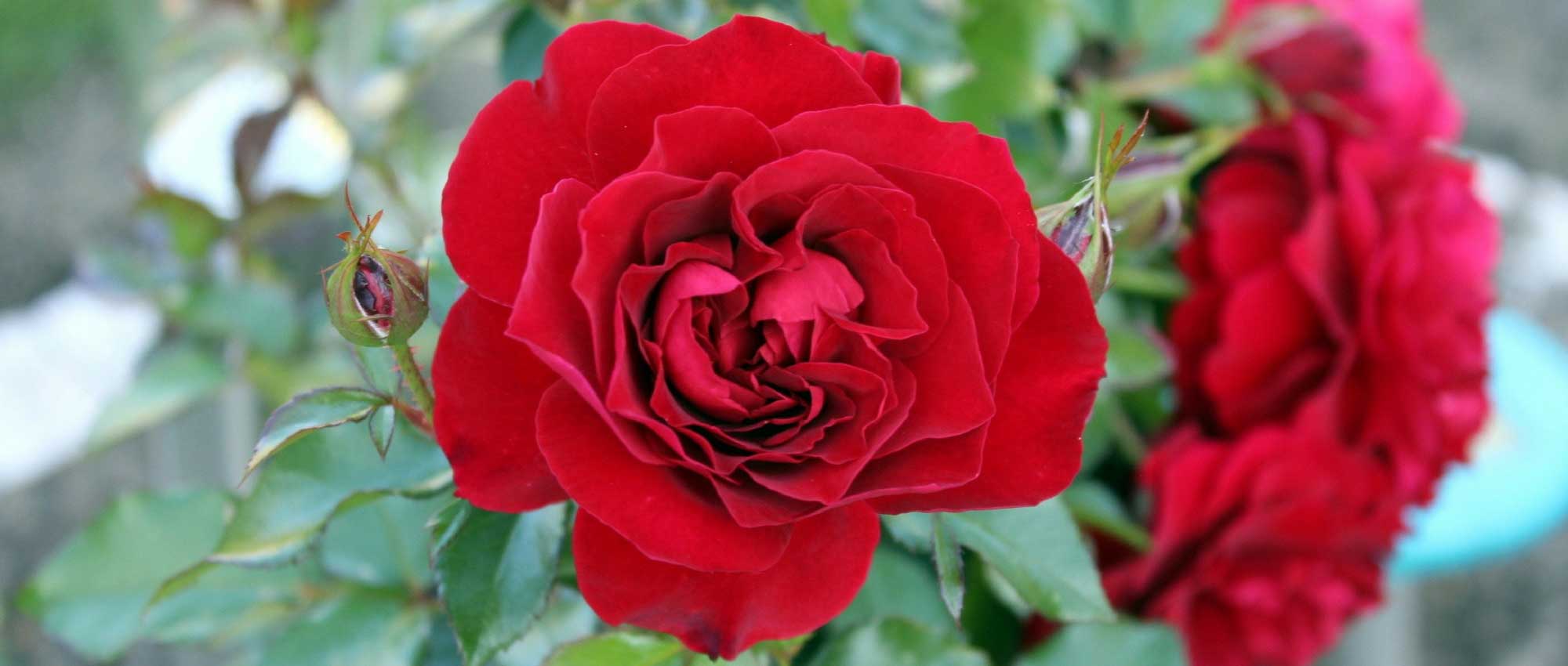
Rosa La France in pictures
Plant habit
Flowering
Foliage
Botanical data
Rosa
La France
Rosaceae
Rose
Cultivar or hybrid
Rosa canina Laxa (4L/5L pot)
Planting and care
The 'La France' rose is not demanding in terms of soil type, as long as it is properly drained and well prepared. It is hardy up to -15°C (5 °F) and beyond. It is not affected by limestone when grown on its own roots or when freed from its graft. It thrives in all sufficiently sunny regions, but is wary of humid and rainy summers, which can lead to fungal diseases that develop on its foliage. A preventive treatment with sulphur and Bordeaux mixture in spring, followed regularly during the growing season, should effectively protect it. Plant it in a sunny or semi-shaded location, which it tolerates well in hot climates.
Roses are often stained or unsightly at the end of summer, but this is not a problem for their development. These spots are not harmful to the rose; it is a natural phenomenon.
Planting period
Intended location
Care
Planting & care advice
-

-
-
-

-
-
-

-

-
, onOrder confirmed
Reply from on Promesse de fleurs
Recently viewed products
Haven't found what you were looking for?
Hardiness is the lowest winter temperature a plant can endure without suffering serious damage or even dying. However, hardiness is affected by location (a sheltered area, such as a patio), protection (winter cover) and soil type (hardiness is improved by well-drained soil).
In temperate climates, pruning of spring-flowering shrubs (forsythia, spireas, etc.) should be done just after flowering.
Pruning of summer-flowering shrubs (Indian Lilac, Perovskia, etc.) can be done in winter or spring.
In cold regions as well as with frost-sensitive plants, avoid pruning too early when severe frosts may still occur.
The harvesting period indicated on our website applies to countries and regions in USDA zone 8 (France, England, Ireland, the Netherlands).
In colder areas (Scandinavia, Poland, Austria...) fruit and vegetable harvests are likely to be delayed by 3-4 weeks.
In warmer areas (Italy, Spain, Greece, etc.), harvesting will probably take place earlier, depending on weather conditions.
The sowing periods indicated on our website apply to countries and regions within USDA Zone 8 (France, UK, Ireland, Netherlands).
In colder areas (Scandinavia, Poland, Austria...), delay any outdoor sowing by 3-4 weeks, or sow under glass.
In warmer climes (Italy, Spain, Greece, etc.), bring outdoor sowing forward by a few weeks.
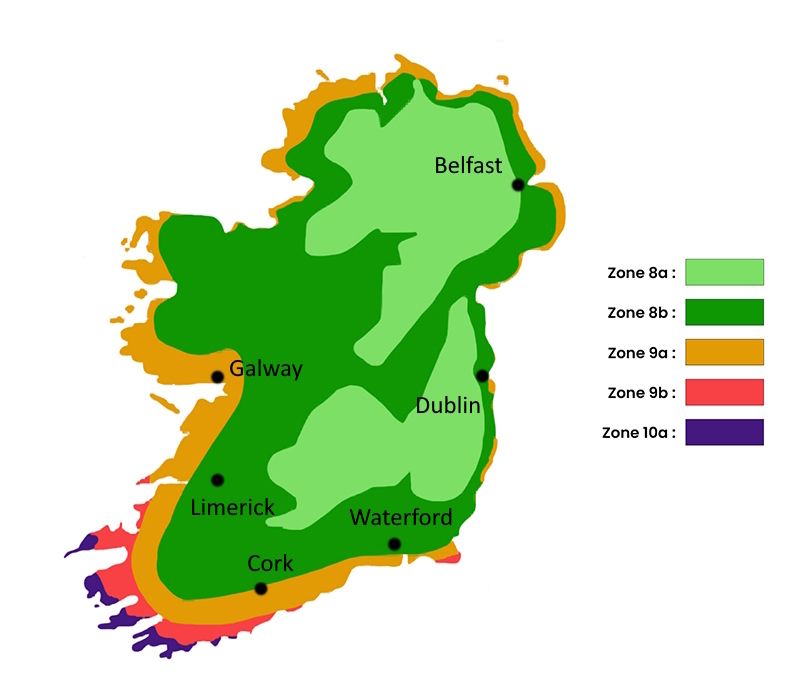
The planting period indicated on our website applies to regions in USDA Zone 9a (East Coast and Midlands: Dublin, Wexford, Waterford, Kilkenny, Portlaoise). It will vary depending on where you live:
- On the west coast and in the north-west (Galway, Limerick, Sligo, Donegal, Westport), delay planting by 1 to 2 weeks in spring and bring it forward by 1 to 2 weeks in autumn compared to the dates given, preferably choosing periods without strong winds.
- In the inland hills and plateaus (Wicklow Mountains, Macgillycuddy’s Reeks, Connemara, Killarney), it is best to plant in spring (April–May) or autumn (September–October), avoiding periods of waterlogged soil in winter and strong winds, which pose the main risk to newly planted trees in these areas.
The flowering period indicated on our website applies to regions in USDA Zone 9a, such as the East Coast and Midlands, including Dublin, Wexford, Waterford, Kilkenny and Portlaoise.
This will vary depending on where you live:
- On the west coast and in the northwest (Galway, Limerick, Sligo, Donegal and Westport), it will be delayed by one to two weeks compared to the given dates, due to stronger Atlantic winds and less spring sunshine.
- In the inland hills and plateaus (the Wicklow Mountains, the Macgillycuddy's Reeks, Connemara and Killarney), flowering will be delayed by two to three weeks. Flowering mainly occurs between May and July, with the limiting factors being less frost and more of the excessive humidity, strong winds and lack of sunshine that are characteristic of these areas.
Shipping country and language
Your country of residence may be:
Your country of residence is:
For a better user experience on our website, you can select:
Your shipping country:
-
 Austria
-
 Belgium
-
 Bosnia & Herzegovina
-
 Bulgaria
-
 Croatia
-
 Cyprus
-
 Czechia
-
 Denmark
-
 Estonia
-
 Finland
-
 France
-
 Germany
-
 Greece
-
 Hungary
-
 Iceland
-
 Ireland
-
 Italy
Italy
-
 Latvia
-
 Liechtenstein
-
 Lithuania
-
 Luxembourg
-
 Malta
Malta
-
 Netherlands
-
 Poland
-
 Portugal
-
 Romania
-
 Serbia
-
 Slovakia
-
 Slovenia
-
 Spain
Spain
-
 Sweden
-
 Switzerland
Language:
-
French
-
 English
-
Spanish
-
Italian
-
German
-
Portuguese
-
Dutch
-
Finnish
My Account
Hello
My wish lists
My cart
Log in / Register
Existing customer?
This form is protected by reCAPTCHA - the Google Privacy Policy and Terms of Service apply.
New customer?
Create an account to track your orders, access our customer service and, if you wish, make the most of our upcoming offers.