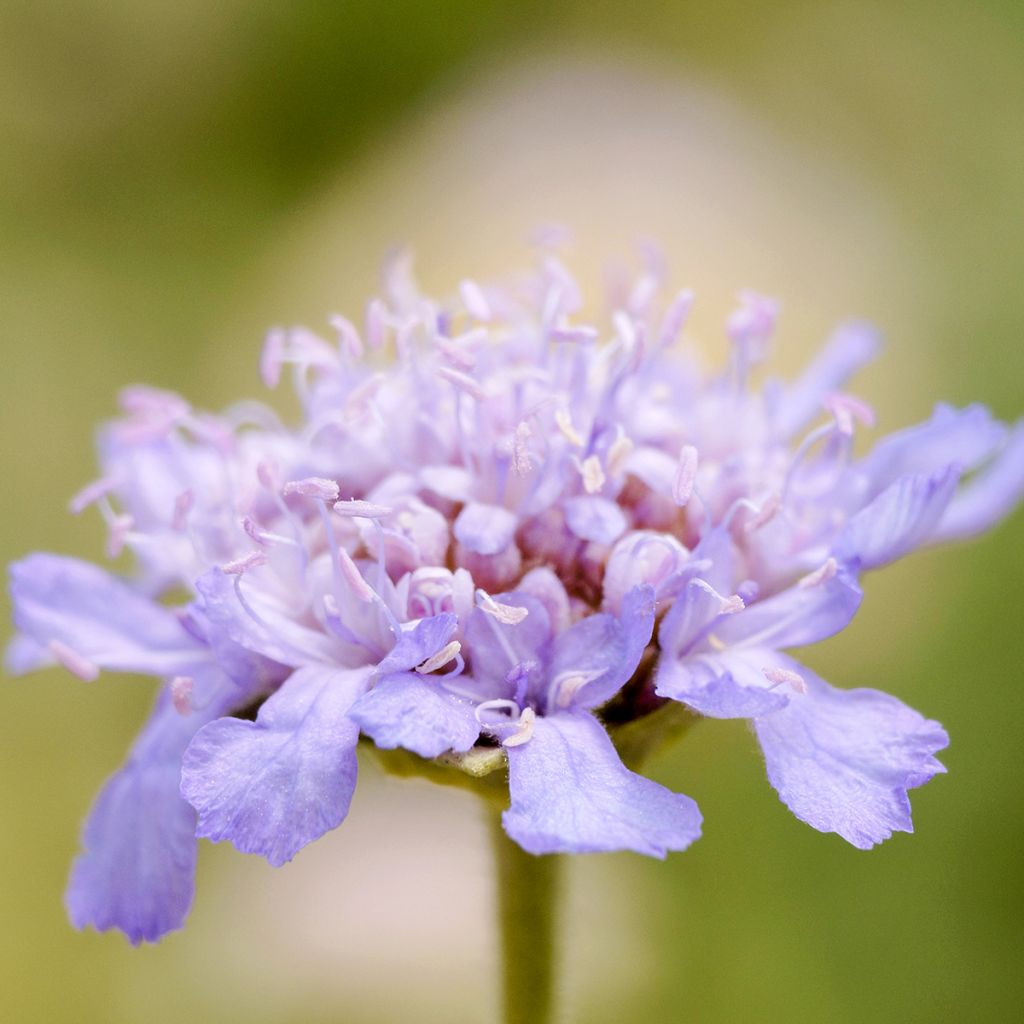
Lomelosia cretica - Scabiosa cretica
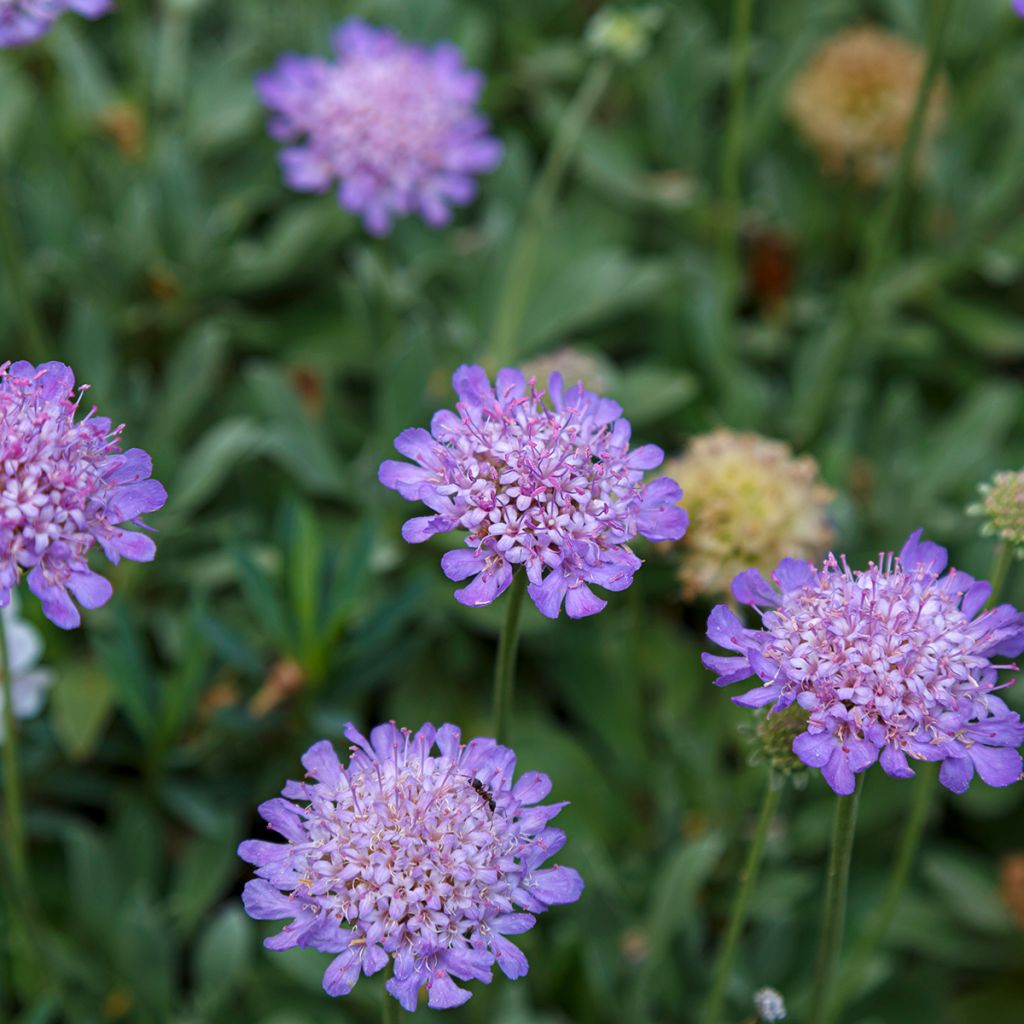
Lomelosia cretica - Scabiosa cretica
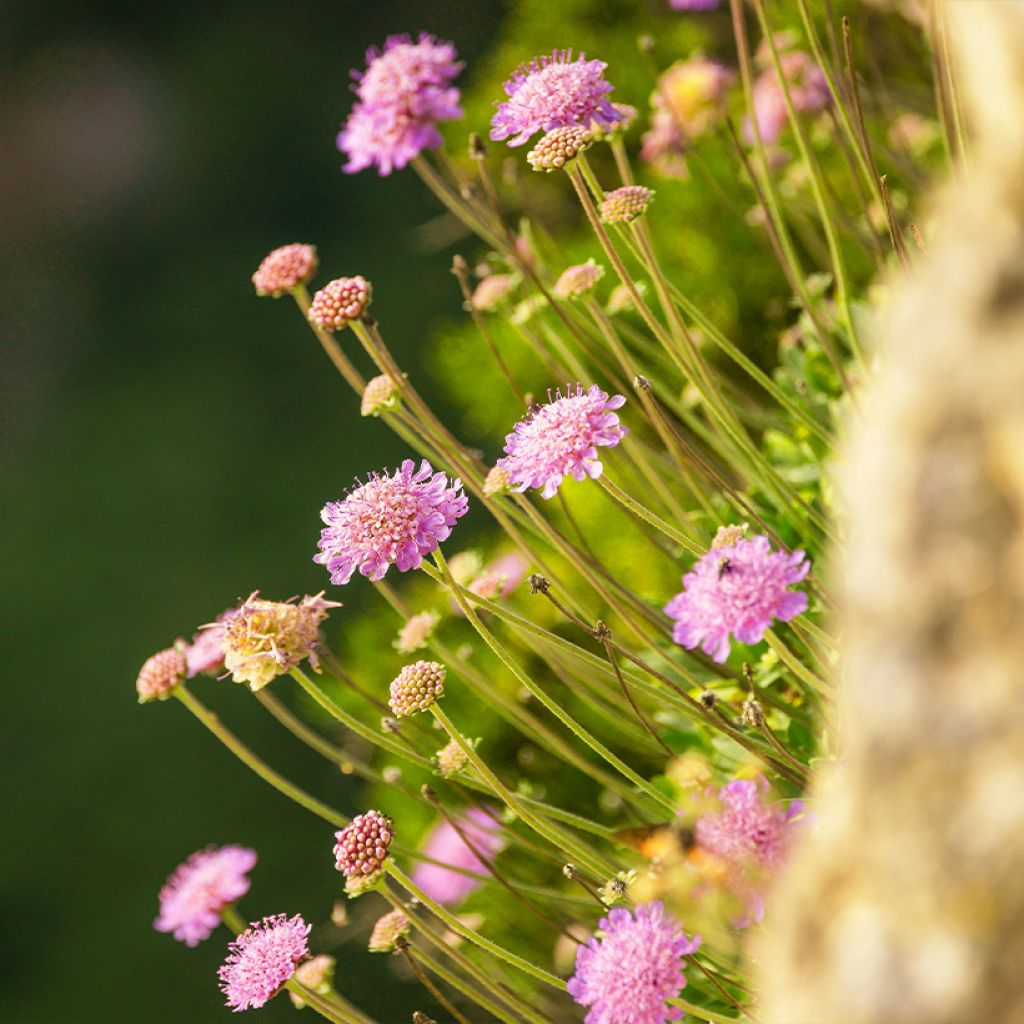
Lomelosia cretica - Scabiosa cretica
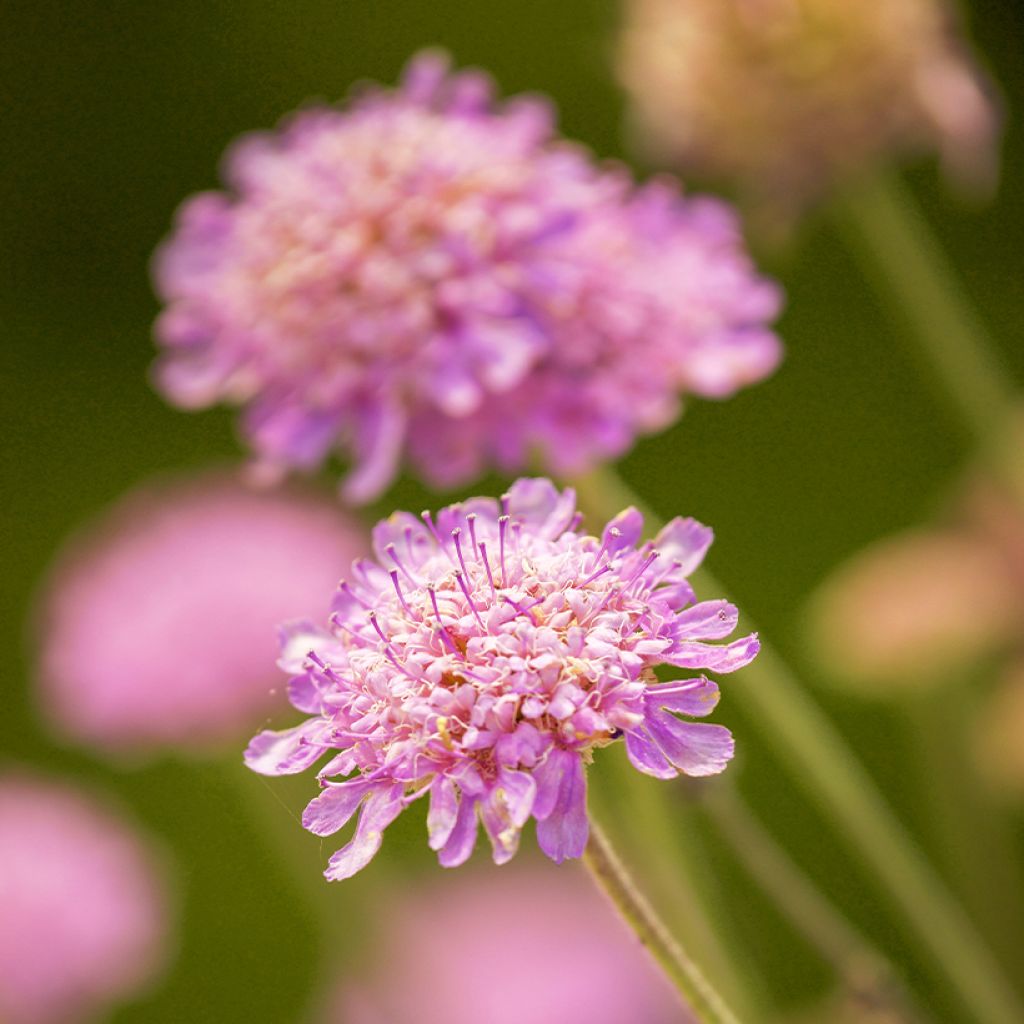
Lomelosia cretica - Scabiosa cretica
Lomelosia cretica - Scabiosa cretica
Lomelosia cretica
Cretian pincushion flower
Back-to-school special offer!
Get €10 off for every €50 you spend! And get up to €40 off on a single order.
How does it work?
1. Shop your favourites
Add your favourite plants to your basket. For every €50 you spend (excluding delivery charges, store credit and the plastic-free option), you’ll receive a €10 voucher.
€50 spent = €10 voucher
€100 spent = €20 voucher
€150 spent = €30 voucher
€200 spent = €40 voucher
2. Place your order
Once your basket reaches one of the spending thresholds, place your order. You can even choose your delivery date!
3. Receive your voucher
As soon as your order has been shipped, you’ll receive an email containing your personal voucher code and its value.
4. Use it on your next order
Your voucher is valid for 90 days from the date you receive it. It can be used once only, on a new order worth at least the value of the voucher, excluding delivery charges.
Please note: Vouchers can be combined with other offers, but cannot be split or refunded.
Home or relay delivery (depending on size and destination)
Important: You may be charged customs duties by your country’s customs authorities upon delivery.
Schedule delivery date
and select date in basket
This plant carries a 12 months recovery warranty
More information
We guarantee the quality of our plants for a full growing cycle, and will replace at our expense any plant that fails to recover under normal climatic and planting conditions.
Does this plant fit my garden?
Set up your Plantfit profile →
Description
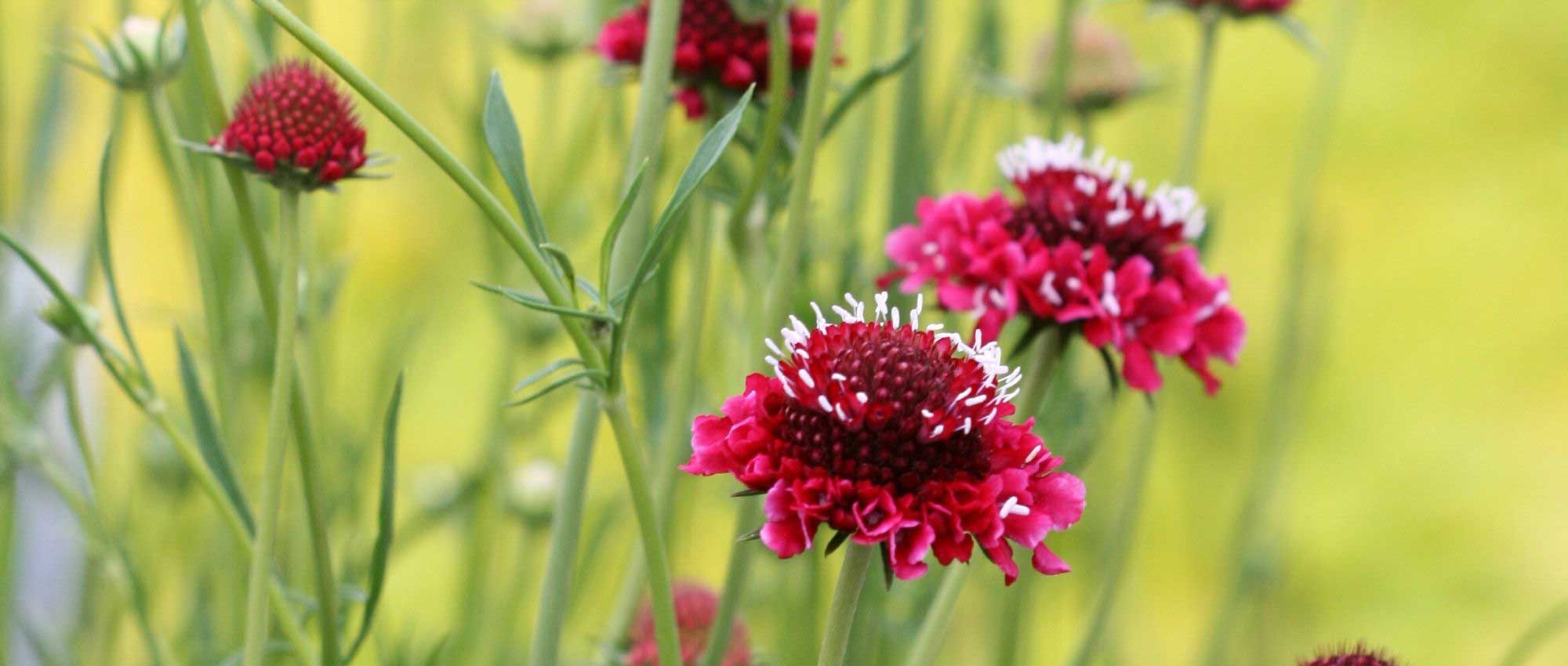
The Scabiosa cretica, recently renamed Lomeliosa cretica, is also known as the Cretan Pincushion Flower, although it is not found there. This shrub, native to the islands of the Mediterranean Basin, forms a beautiful, regular, dense mass that remains evergreen in winter, with an ash-green colour. From spring to summer, it produces an abundance of soft mauve-blue scabious flowers, which provide food for bees and butterflies. Its curious alveolate spherical fruit, which rustles in the wind, adds to its charm. It is an excellent rock garden plant for a dry or seaside garden. It will form a highly decorative ground cover all year round, requiring little maintenance and weeding thanks to its allelopathic properties*.
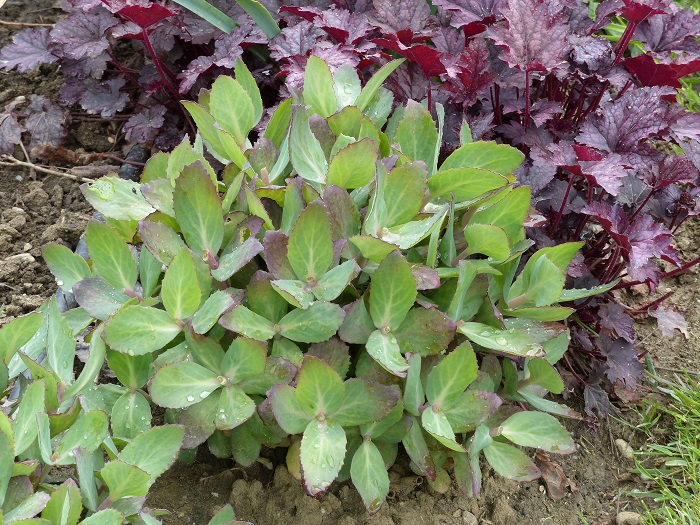
The Scabiosa cretica belongs to the family Dipsacaceae or Caprifoliaceae, depending on the classification. In the wild, this botanical species is found in the cracks of cliffs near the coast. It is a plant that thrives in poor, very dry, and calcareous soil. It grows faster in rich soil, but its lifespan will be shorter and its habit much less dense. The base of this scabious is made up of a sort of small trunk that branches out into quickly lignified stems. The entire vegetation forms a regular cushion, reaching about 60 cm in height when in bloom, and 60 to 80 cm wide, or even more. The leaves tend to be clustered in bouquets at the ends of the stems. They have a spatulate shape, are thick, and measure between 3 and 4 cm in length. Their lamina is covered with a very fine pilosity, giving them a silvery appearance. The abundant flowering begins between March and April, depending on the climate, and continues until July. The light blue-lavender flowers are solitary at the end of the flower stem. Each one is composed of a pompom-like centre surrounded by petals. They sway in the wind at the end of thin stems. This airy appearance makes them lovely flowers for light bouquets. After pollination by insects, spherical fruits form, with a texture reminiscent of tissue paper, in a beige colour. They persist on the plant for a long time and release numerous seeds. Spontaneous seedlings are not uncommon in light and well-drained soils. The hardiness of this species is estimated to be -10°C in dry soil.
Planting scabious plants will attract the sympathy of bees, butterflies, and beautiful burnets. The Cretan Lomeliosa will thrive easily in full sun in any rocky or well-drained gravelly soil. To accompany it in a rock garden or above a wall, you can choose, for example, the creeping baby's breath 'Rosa Schonheit', Thymus capitatus thyme, a maritime germander Teucrium marum, or a 'Pagoda Bells' marjoram.
* allelopathic: describes a plant that releases molecules through its roots or foliage that inhibit the germination and growth of other plants, particularly grasses. Several plants of the garrigue, such as rosemary and thyme, have allelopathic properties.
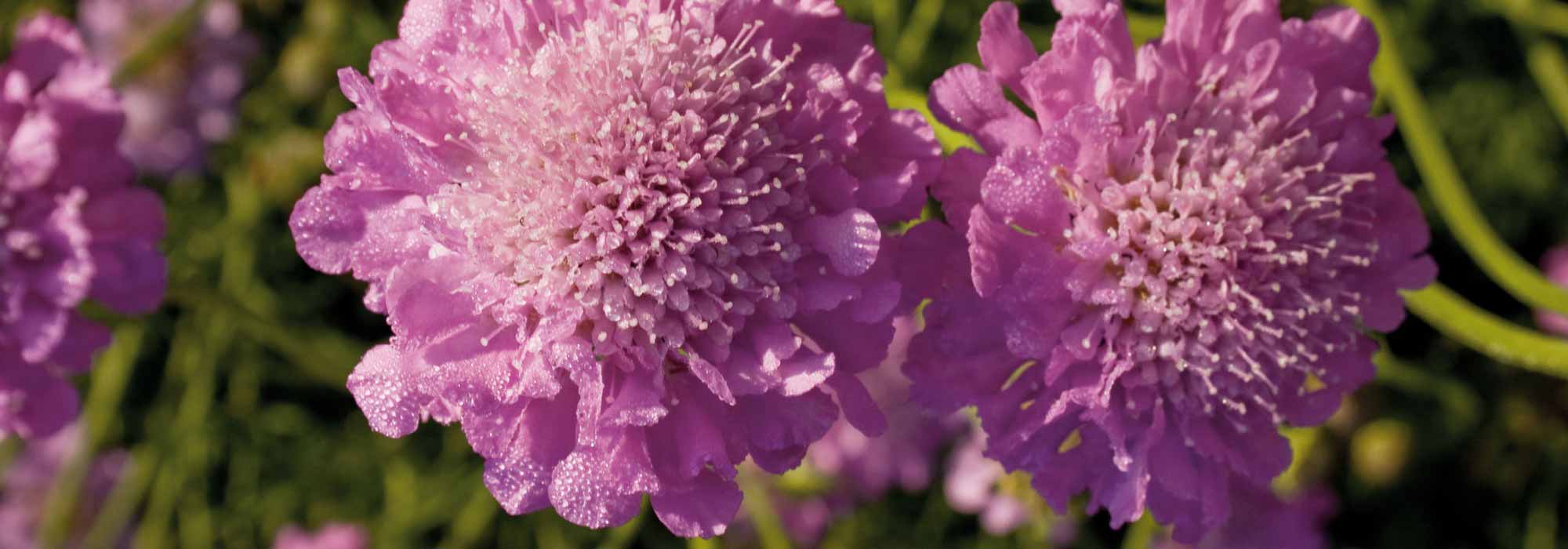
Lomelosia cretica - Scabiosa cretica in pictures
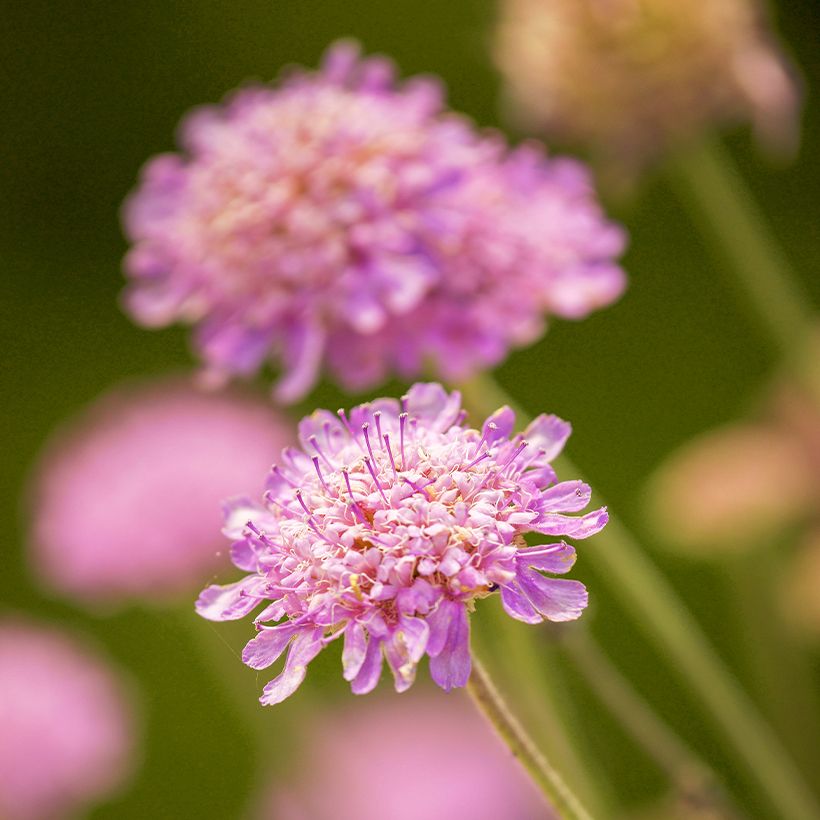
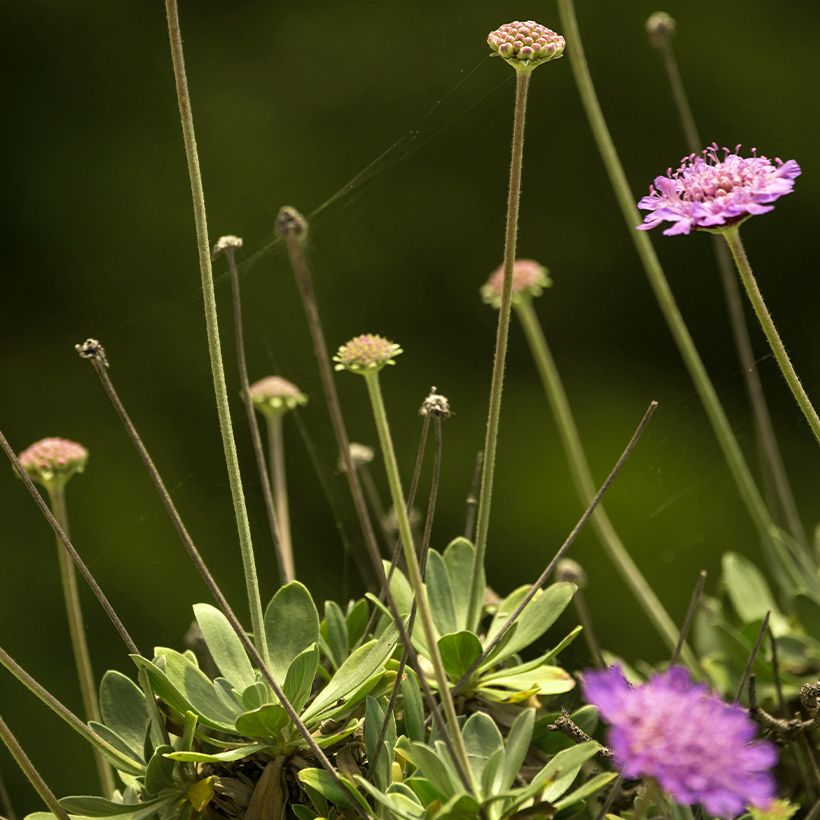
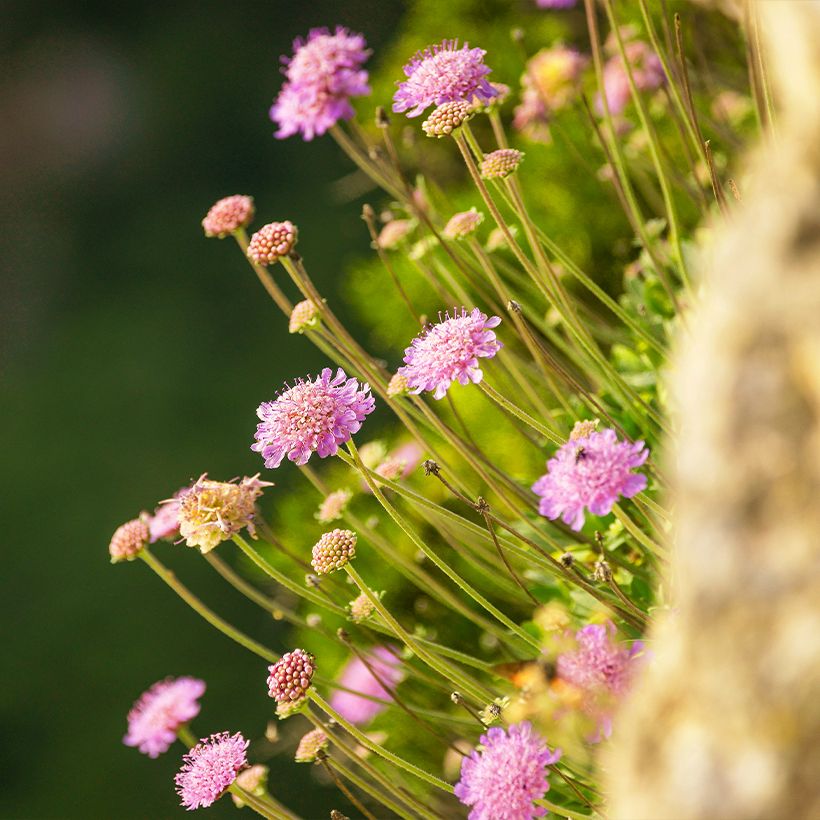
Flowering
Foliage
Plant habit
Botanical data
Lomelosia
cretica
Dipsacaceae
Cretian pincushion flower
Mediterranean
Planting and care
Plant Scabiosa cretica in a sunny location (ideally slightly shaded in hot climates). It prefers chalky, poor, well-drained soils, even rocky or sandy soils. Sandy or slightly acidic soil will also be suitable if it is well-drained. Water regularly in the first year to facilitate establishment and rooting, but not excessively: a thorough but spaced watering is preferable to light and frequent watering. Once well established, the plant can withstand short frosts of around -10 °C in soil that does not retain water. Once properly rooted, Crete scabious requires no summer watering, even in our driest and hottest regions. Spontaneous seedlings are common in light soils or between stones in rockeries.
In overly rich soil, this scabious grows faster, but has a shorter lifespan and less harmonious growth, with stems tending to elongate and become sparse over a significant length.
Planting period
Intended location
Care
Planting & care advice
-
-
-
-
-
-

-

-
This item has not been reviewed yet - be the first to leave a review about it.
Recently viewed products
Haven't found what you were looking for?
Hardiness is the lowest winter temperature a plant can endure without suffering serious damage or even dying. However, hardiness is affected by location (a sheltered area, such as a patio), protection (winter cover) and soil type (hardiness is improved by well-drained soil).
In temperate climates, pruning of spring-flowering shrubs (forsythia, spireas, etc.) should be done just after flowering.
Pruning of summer-flowering shrubs (Indian Lilac, Perovskia, etc.) can be done in winter or spring.
In cold regions as well as with frost-sensitive plants, avoid pruning too early when severe frosts may still occur.
The harvesting period indicated on our website applies to countries and regions in USDA zone 8 (France, England, Ireland, the Netherlands).
In colder areas (Scandinavia, Poland, Austria...) fruit and vegetable harvests are likely to be delayed by 3-4 weeks.
In warmer areas (Italy, Spain, Greece, etc.), harvesting will probably take place earlier, depending on weather conditions.
The sowing periods indicated on our website apply to countries and regions within USDA Zone 8 (France, UK, Ireland, Netherlands).
In colder areas (Scandinavia, Poland, Austria...), delay any outdoor sowing by 3-4 weeks, or sow under glass.
In warmer climes (Italy, Spain, Greece, etc.), bring outdoor sowing forward by a few weeks.
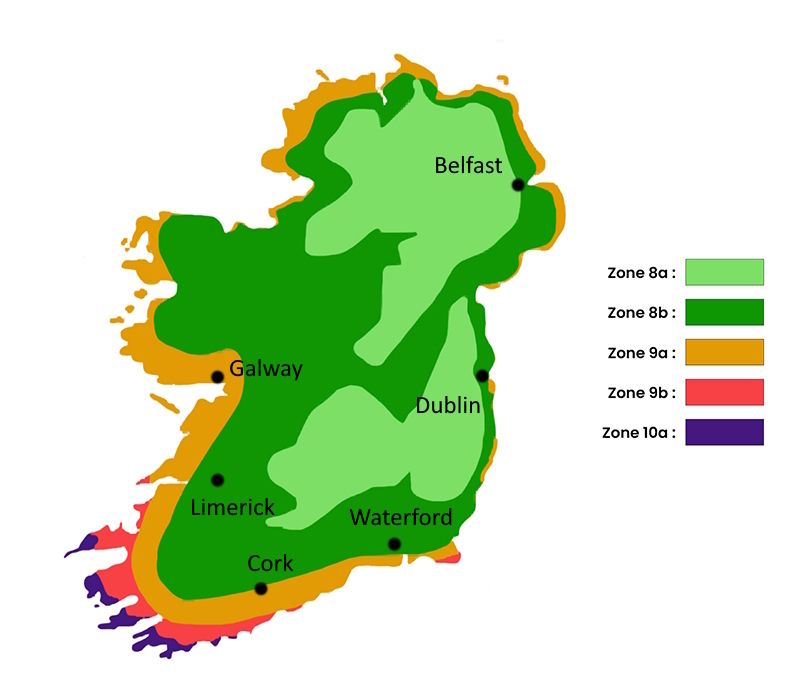
The planting period indicated on our website applies to regions in USDA Zone 9a (East Coast and Midlands: Dublin, Wexford, Waterford, Kilkenny, Portlaoise). It will vary depending on where you live:
- On the west coast and in the north-west (Galway, Limerick, Sligo, Donegal, Westport), delay planting by 1 to 2 weeks in spring and bring it forward by 1 to 2 weeks in autumn compared to the dates given, preferably choosing periods without strong winds.
- In the inland hills and plateaus (Wicklow Mountains, Macgillycuddy’s Reeks, Connemara, Killarney), it is best to plant in spring (April–May) or autumn (September–October), avoiding periods of waterlogged soil in winter and strong winds, which pose the main risk to newly planted trees in these areas.
The flowering period indicated on our website applies to regions in USDA Zone 9a, such as the East Coast and Midlands, including Dublin, Wexford, Waterford, Kilkenny and Portlaoise.
This will vary depending on where you live:
- On the west coast and in the northwest (Galway, Limerick, Sligo, Donegal and Westport), it will be delayed by one to two weeks compared to the given dates, due to stronger Atlantic winds and less spring sunshine.
- In the inland hills and plateaus (the Wicklow Mountains, the Macgillycuddy's Reeks, Connemara and Killarney), flowering will be delayed by two to three weeks. Flowering mainly occurs between May and July, with the limiting factors being less frost and more of the excessive humidity, strong winds and lack of sunshine that are characteristic of these areas.
Shipping country and language
Your country of residence may be:
Your country of residence is:
For a better user experience on our website, you can select:
Your shipping country:
-
 Austria
-
 Belgium
-
 Bosnia & Herzegovina
-
 Bulgaria
-
 Croatia
-
 Cyprus
-
 Czechia
-
 Denmark
-
 Estonia
-
 Finland
-
 France
-
 Germany
-
 Greece
-
 Hungary
-
 Iceland
-
 Ireland
-
 Italy
Italy
-
 Latvia
-
 Liechtenstein
-
 Lithuania
-
 Luxembourg
-
 Malta
Malta
-
 Netherlands
-
 Poland
-
 Portugal
-
 Romania
-
 Serbia
-
 Slovakia
-
 Slovenia
-
 Spain
Spain
-
 Sweden
-
 Switzerland
Language:
-
French
-
 English
-
Spanish
-
Italian
-
German
-
Portuguese
-
Dutch
-
Finnish
My Account
Hello
My wish lists
My cart
Log in / Register
Existing customer?
This form is protected by reCAPTCHA - the Google Privacy Policy and Terms of Service apply.
New customer?
Create an account to track your orders, access our customer service and, if you wish, make the most of our upcoming offers.