
Phlox subulata White Delight - Phlox mousse White Delight, phlox subulé

Phlox subulata White Delight - Phlox mousse White Delight, phlox subulé

Phlox subulata White Delight - Phlox mousse White Delight, phlox subulé

Phlox subulata White Delight - Phlox mousse White Delight, phlox subulé

Phlox subulata White Delight - Phlox mousse White Delight, phlox subulé

Phlox subulata White Delight - Phlox mousse White Delight, phlox subulé
Phlox subulata White Delight - Phlox mousse White Delight, phlox subulé
Phlox subulata White Delight
Moss Phlox, flowering moss, ground pink, moss pink, mountain pink, rock phlox
Plant received with roots protruding from the pot, so it has suffered.
François , 02/02/2026
Back-to-school special offer!
Get €10 off for every €50 you spend! And get up to €40 off on a single order.
How does it work?
1. Shop your favourites
Add your favourite plants to your basket. For every €50 you spend (excluding delivery charges, store credit and the plastic-free option), you’ll receive a €10 voucher.
€50 spent = €10 voucher
€100 spent = €20 voucher
€150 spent = €30 voucher
€200 spent = €40 voucher
2. Place your order
Once your basket reaches one of the spending thresholds, place your order. You can even choose your delivery date!
3. Receive your voucher
As soon as your order has been shipped, you’ll receive an email containing your personal voucher code and its value.
4. Use it on your next order
Your voucher is valid for 90 days from the date you receive it. It can be used once only, on a new order worth at least the value of the voucher, excluding delivery charges.
Please note: Vouchers can be combined with other offers, but cannot be split or refunded.
Home or relay delivery (depending on size and destination)
Important: You may be charged customs duties by your country’s customs authorities upon delivery.
Schedule delivery date
and select date in basket
This plant carries a 12 months recovery warranty
More information
We guarantee the quality of our plants for a full growing cycle, and will replace at our expense any plant that fails to recover under normal climatic and planting conditions.
Does this plant fit my garden?
Set up your Plantfit profile →
Description
Le Phlox subulata ‘White Delight’ forme au printemps un véritable tapis de petites fleurs blanc pur, si nombreuses qu’elles cachent presque entièrement le feuillage. Ce phlox mousse s’étale assez rapidement entre les pierres d'une rocaille ou retombe sur un muret. Très rustique, vigoureux et peu exigeant, son feuillage persistant reste décoratif en hiver et son abondante floraison blanche est un enchantement dès le début de la belle saison.
Le phlox mousse appartient à la famille des Polémoniacées. L'espèce type, Phlox subulata, est un sous-arbrisseau très bas : ses tiges couchées persistent d’une année sur l’autre, se ramifient près du sol et forment progressivement un tapis dense. Son feuillage est persistant, même s’il peut légèrement brunir après un hiver rigoureux. Cette petite plante pousse naturellement dans l’est de l’Amérique du Nord, sur des affleurements rocheux, des pentes sèches, des terrains sableux et dans des bois clairs. 'White Delight’ est une ancienne sélection américaine, connue depuis le milieu du XXᵉ siècle. La plante ne dépasse guère 10 à 15 cm de hauteur mais peut s’étaler sur 50 à 80 cm avec les années. Ses rameaux rampants se glissent facilement dans les interstices et certains s’enracinent au contact de la terre. Les feuilles opposées, longues et très étroites, ressemblent à des petites aiguilles souples et forment un tapis vert foncé bien serré. D’avril à juin, selon le climat, apparaissent de nombreuses fleurs d’environ 2 cm de diamètre. Chacune possède cinq lobes largement étalés et légèrement échancrés, qui dessinent une petite étoile. Cette variété blanc pur se distingue parmi les nombreux phlox mousses roses, mauves ou bicolores. Très rustique (-20/-25°C), la plante supporte bien la sécheresse une fois installée et s’accommode des sols pauvres, caillouteux ou calcaires. Elle redoute surtout les terres lourdes qui restent humides en hiver. Elle réussit bien sous les climats océaniques, montagnards ou continentaux pas trop chauds.
Le Phlox subulata 'White Delight' est une plante robuste intéressante pour fleurir les rocailles et les murets ainsi que les jardins alpins. Vous pouvez l'associer à des aubriètes, des saxifrages ou des tulipes botaniques. Il accompagnera aussi d’autres petites plantes qui poussent en coussins parmi les pierres comme l’Armeria maritima ‘Splendens’, le Dianthus gratianopolitanus ‘Badenia’ et l'Iberis sempervirens 'Snowflake'.

Phlox subulata White Delight - Phlox mousse White Delight, phlox subulé in pictures


Flowering
Foliage
Plant habit
Botanical data
Phlox
subulata
White Delight
Polemoniaceae
Moss Phlox, flowering moss, ground pink, moss pink, mountain pink, rock phlox
Cultivar or hybrid
Planting and care
Phlox subulata ‘White Delight’ should be planted in spring or from September to November, preferably in full sun. Plant it in a light, stony or sandy soil that does not retain water in winter. In clay soil, plant it on a small mound and mix a good proportion of gravel or coarse sand into the soil; however, avoid heavy applications of compost, which it does not need. Water regularly during the first season to allow the roots to establish. A mature plant will then tolerate dry spells, although a few waterings in spring will encourage its growth and flowering. After flowering, lightly shear the carpet to remove faded parts and stimulate the formation of new, tightly packed shoots. Rooted stems can be detached and replanted. In pots or troughs, use a very free-draining growing medium and never let water stand in the saucer.
Planting period
Intended location
Care
Planting & care advice
-

-

-

-
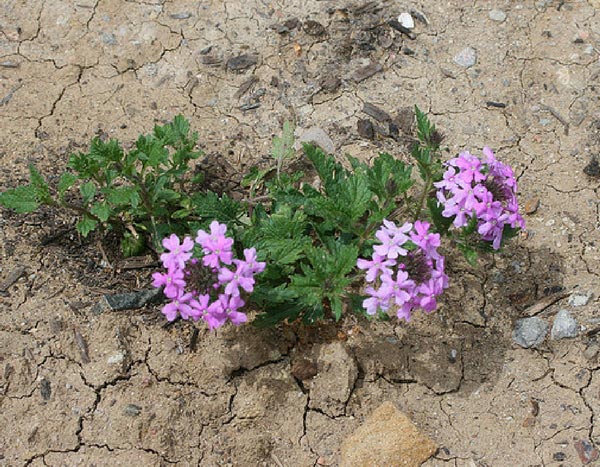
-

-

-

-

-
, onOrder confirmed
Reply from on Promesse de fleurs
Recently viewed products
Haven't found what you were looking for?
Hardiness is the lowest winter temperature a plant can endure without suffering serious damage or even dying. However, hardiness is affected by location (a sheltered area, such as a patio), protection (winter cover) and soil type (hardiness is improved by well-drained soil).
In temperate climates, pruning of spring-flowering shrubs (forsythia, spireas, etc.) should be done just after flowering.
Pruning of summer-flowering shrubs (Indian Lilac, Perovskia, etc.) can be done in winter or spring.
In cold regions as well as with frost-sensitive plants, avoid pruning too early when severe frosts may still occur.
The harvesting period indicated on our website applies to countries and regions in USDA zone 8 (France, England, Ireland, the Netherlands).
In colder areas (Scandinavia, Poland, Austria...) fruit and vegetable harvests are likely to be delayed by 3-4 weeks.
In warmer areas (Italy, Spain, Greece, etc.), harvesting will probably take place earlier, depending on weather conditions.
The sowing periods indicated on our website apply to countries and regions within USDA Zone 8 (France, UK, Ireland, Netherlands).
In colder areas (Scandinavia, Poland, Austria...), delay any outdoor sowing by 3-4 weeks, or sow under glass.
In warmer climes (Italy, Spain, Greece, etc.), bring outdoor sowing forward by a few weeks.
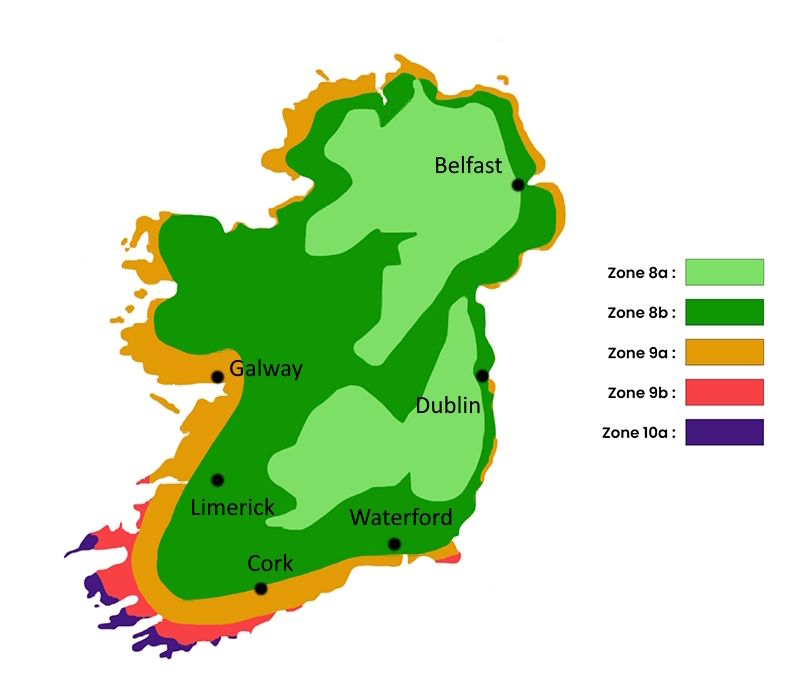
The planting period indicated on our website applies to regions in USDA Zone 9a (East Coast and Midlands: Dublin, Wexford, Waterford, Kilkenny, Portlaoise). It will vary depending on where you live:
- On the west coast and in the north-west (Galway, Limerick, Sligo, Donegal, Westport), delay planting by 1 to 2 weeks in spring and bring it forward by 1 to 2 weeks in autumn compared to the dates given, preferably choosing periods without strong winds.
- In the inland hills and plateaus (Wicklow Mountains, Macgillycuddy’s Reeks, Connemara, Killarney), it is best to plant in spring (April–May) or autumn (September–October), avoiding periods of waterlogged soil in winter and strong winds, which pose the main risk to newly planted trees in these areas.
The flowering period indicated on our website applies to regions in USDA Zone 9a, such as the East Coast and Midlands, including Dublin, Wexford, Waterford, Kilkenny and Portlaoise.
This will vary depending on where you live:
- On the west coast and in the northwest (Galway, Limerick, Sligo, Donegal and Westport), it will be delayed by one to two weeks compared to the given dates, due to stronger Atlantic winds and less spring sunshine.
- In the inland hills and plateaus (the Wicklow Mountains, the Macgillycuddy's Reeks, Connemara and Killarney), flowering will be delayed by two to three weeks. Flowering mainly occurs between May and July, with the limiting factors being less frost and more of the excessive humidity, strong winds and lack of sunshine that are characteristic of these areas.
Shipping country and language
Your country of residence may be:
Your country of residence is:
For a better user experience on our website, you can select:
Your shipping country:
-
 Austria
-
 Belgium
-
 Bosnia & Herzegovina
-
 Bulgaria
-
 Croatia
-
 Cyprus
-
 Czechia
-
 Denmark
-
 Estonia
-
 Finland
-
 France
-
 Germany
-
 Greece
-
 Hungary
-
 Iceland
-
 Ireland
-
 Italy
-
 Latvia
-
 Liechtenstein
-
 Lithuania
-
 Luxembourg
-
 Malta
-
 Netherlands
-
 Poland
-
 Portugal
-
 Romania
-
 Serbia
-
 Slovakia
-
 Slovenia
-
 Spain
-
 Sweden
-
 Switzerland
Language:
-
French
-
 English
-
Spanish
-
Italian
-
German
-
Portuguese
-
Dutch
-
Finnish
My Account
Hello
My wish lists
My cart
Log in / Register
Existing customer?
This form is protected by reCAPTCHA - the Google Privacy Policy and Terms of Service apply.
New customer?
Create an account to track your orders, access our customer service and, if you wish, make the most of our upcoming offers.