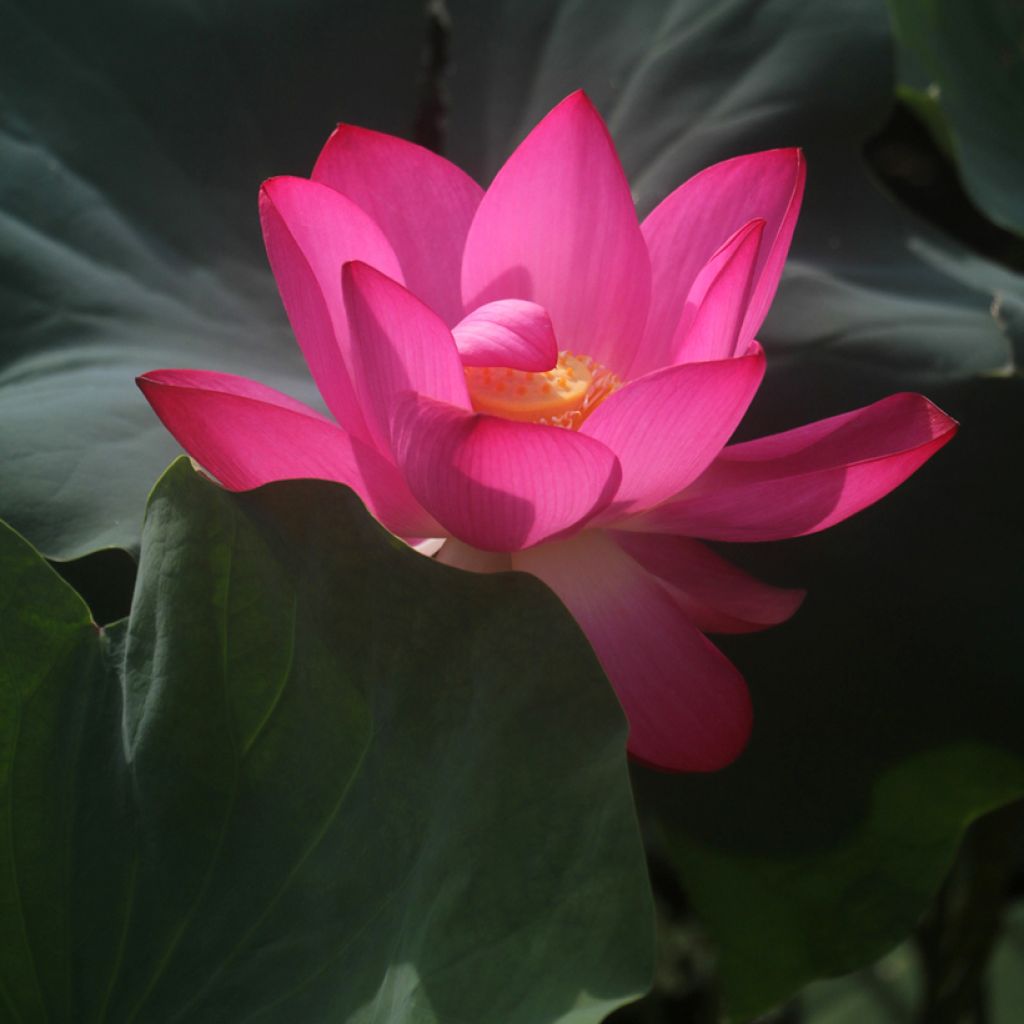
Nelumbo Pygmaea Red - Sacred Lotus
Nelumbo Pygmaea Red - Sacred Lotus
Nelumbo Pygmaea Red (rouge)
Sacred Lotus, Indian Lotus, Lotus
Back-to-school special offer!
Get €10 off for every €50 you spend! And get up to €40 off on a single order.
How does it work?
1. Shop your favourites
Add your favourite plants to your basket. For every €50 you spend (excluding delivery charges, store credit and the plastic-free option), you’ll receive a €10 voucher.
€50 spent = €10 voucher
€100 spent = €20 voucher
€150 spent = €30 voucher
€200 spent = €40 voucher
2. Place your order
Once your basket reaches one of the spending thresholds, place your order. You can even choose your delivery date!
3. Receive your voucher
As soon as your order has been shipped, you’ll receive an email containing your personal voucher code and its value.
4. Use it on your next order
Your voucher is valid for 90 days from the date you receive it. It can be used once only, on a new order worth at least the value of the voucher, excluding delivery charges.
Please note: Vouchers can be combined with other offers, but cannot be split or refunded.
Why not try an alternative variety in stock?
View all →
Available in 1 sizes
Available in 1 sizes
Available in 1 sizes
Available in 1 sizes
Available in 1 sizes
This plant carries a 6 months recovery warranty
More information
We guarantee the quality of our plants for a full growing cycle, and will replace at our expense any plant that fails to recover under normal climatic and planting conditions.
Description
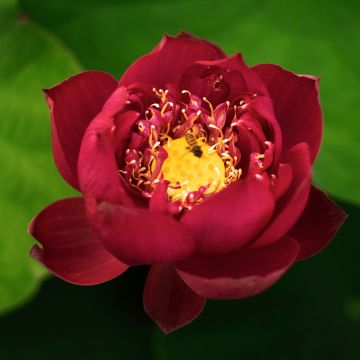
The Nelumbo 'Pygmaea Red', with flowers more pink than red, is a dwarf variety of sacred lotus that adapts well to small bodies of water and container gardening. It possesses all the attributes of the sacred lotus from India, but the plant is shorter and less vigorous. Its round leaves are also attractive, and the flowering extends over several weeks in summer. This dwarf lotus is hardy as long as its rhizome doesn't freeze. It can also be taken out of the water in autumn and kept frost-free, in slightly damp mud.
The Lotus 'Pygmaea Red' is a perennial plant from the Nelumbonaceae family. It is an aquatic plant with foliage and flowers that rise above the water, unlike water lilies. The native range of the species, Nelumbo nucifera, includes Southeast Asia and Northern Australia. In these regions, it inhabits large ponds and muddy canals, standing out majestically.
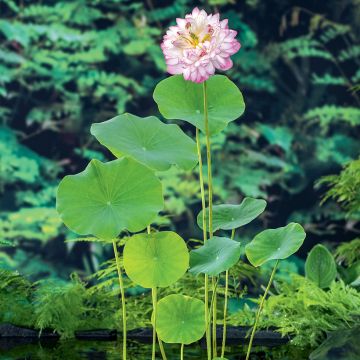
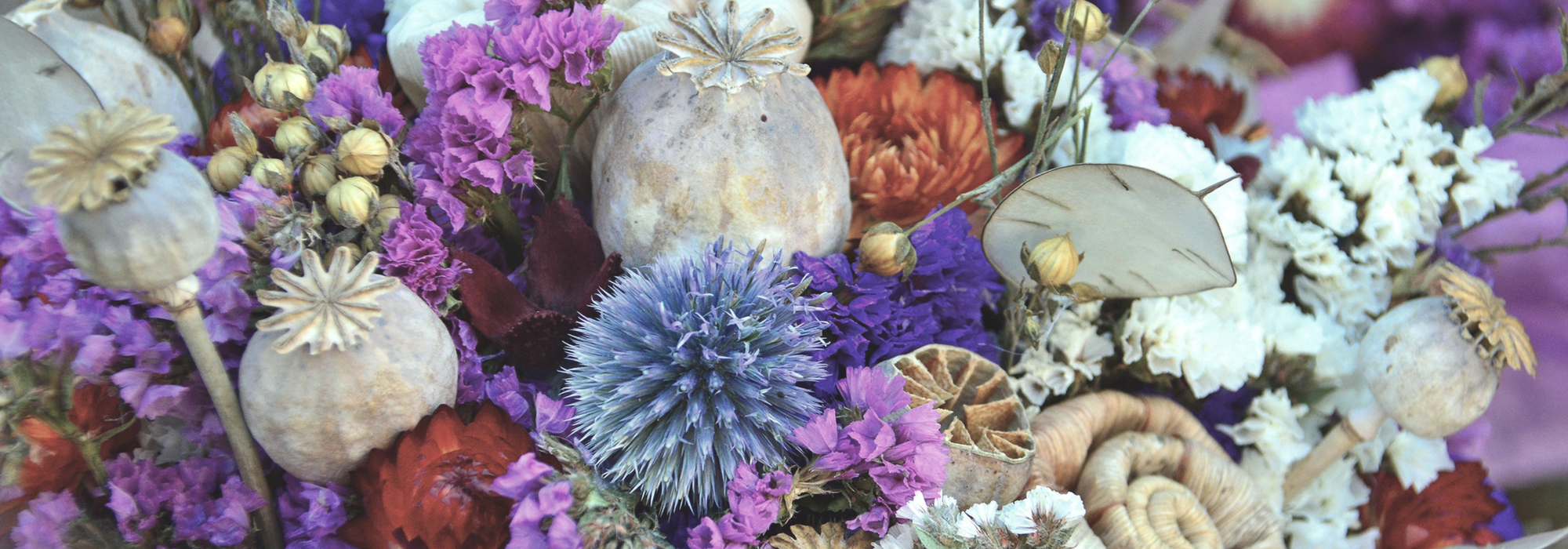
The 'Pygmaea Red' variety develops, starting from spring, green-blue leaves, more or less upright, with a flat or concave surface, slightly undulated along the edges. Water droplets projected on their surface bead up instead of spreading out due to the water-repellent quality of the epidermis. The entire and peltate lamina, measuring between 15 and 20 cm in diameter, attaches to the very brittle rhizome with a thin thorny petiole, fixed under the centre of the leaf. The plant will rise to about 55 cm above the water surface. The flowering begins in June-July and continues until autumn. The flowers, single, with petals in pink-red colour, measuring 10 cm in diameter, are solitary. They persist for several days before wilting and will be replaced by new flower buds. This flowering is followed by the formation of highly decorative fruits shaped like a watering can with small holes releasing the ripe seeds. It is often used in dried bouquets and contains numerous seeds that will eventually sink and germinate in the mud.
The Dwarf Lotus is ideal for small bodies of water and adapts to cultivation in various watertight containers that will decorate the terrace or balcony. The number of flowers produced depends on the size of the growing container. In a container with a diameter of 30 cm, the plant will produce between 3 and 8 flowers, 8 to 15 flowers in a 50 cm container, and up to 25 in a basin or barrel with an 80 cm diameter.
Lotuses and water lilies will be the main attraction of your pond plantings. Most of them bloom from spring until early autumn. The lotus is also an essential plant for maintaining the balance of a garden pond as it contributes to the oxygenation of the water. Its leaves provide shade and shelter for your fish, which, in return, protect them from predatory insects like aphids.
The entire plant is edible. The seeds are consumed candied, and the rhizome is a nutritious starch. The yellow stamens are used to flavour tea in Vietnam. The rhizome and seeds are also used in Chinese cosmetics to fight against ageing, as well as in medicine and the perfume industry.
The perfection of the flower and fruit of the sacred lotus (Nelumbo nucifera) makes this aquatic plant a symbol of purity in several religions. In Buddhism, it derives its sacred character from the belief that Buddha appeared floating on its leaf. In Hinduism, it is perceived as the cradle of the universe.
Report an error about the product description
Nelumbo Pygmaea Red - Sacred Lotus in pictures
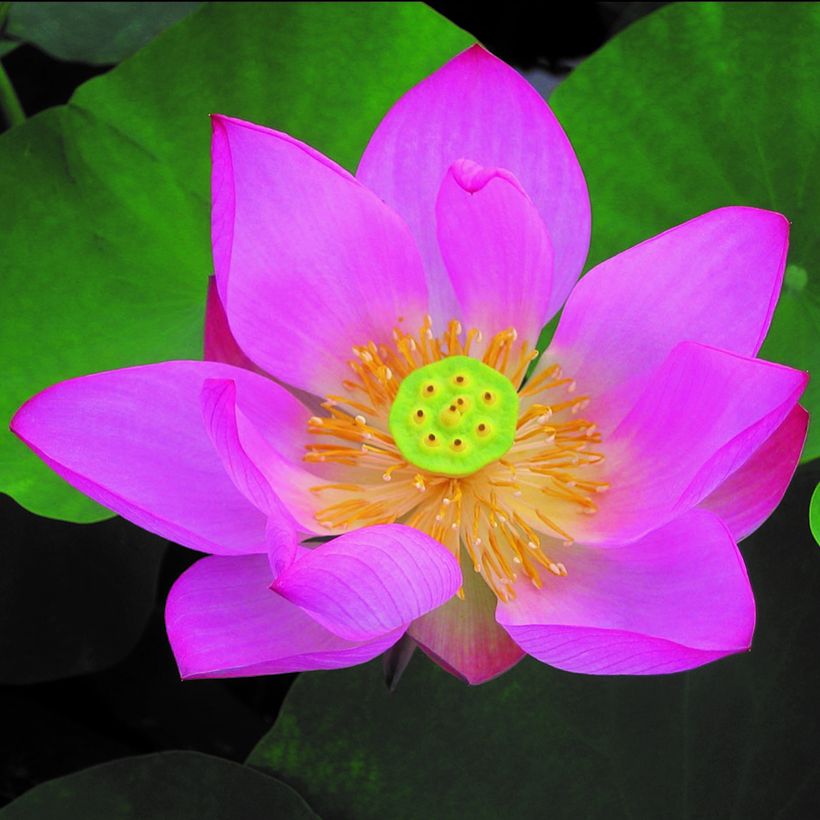
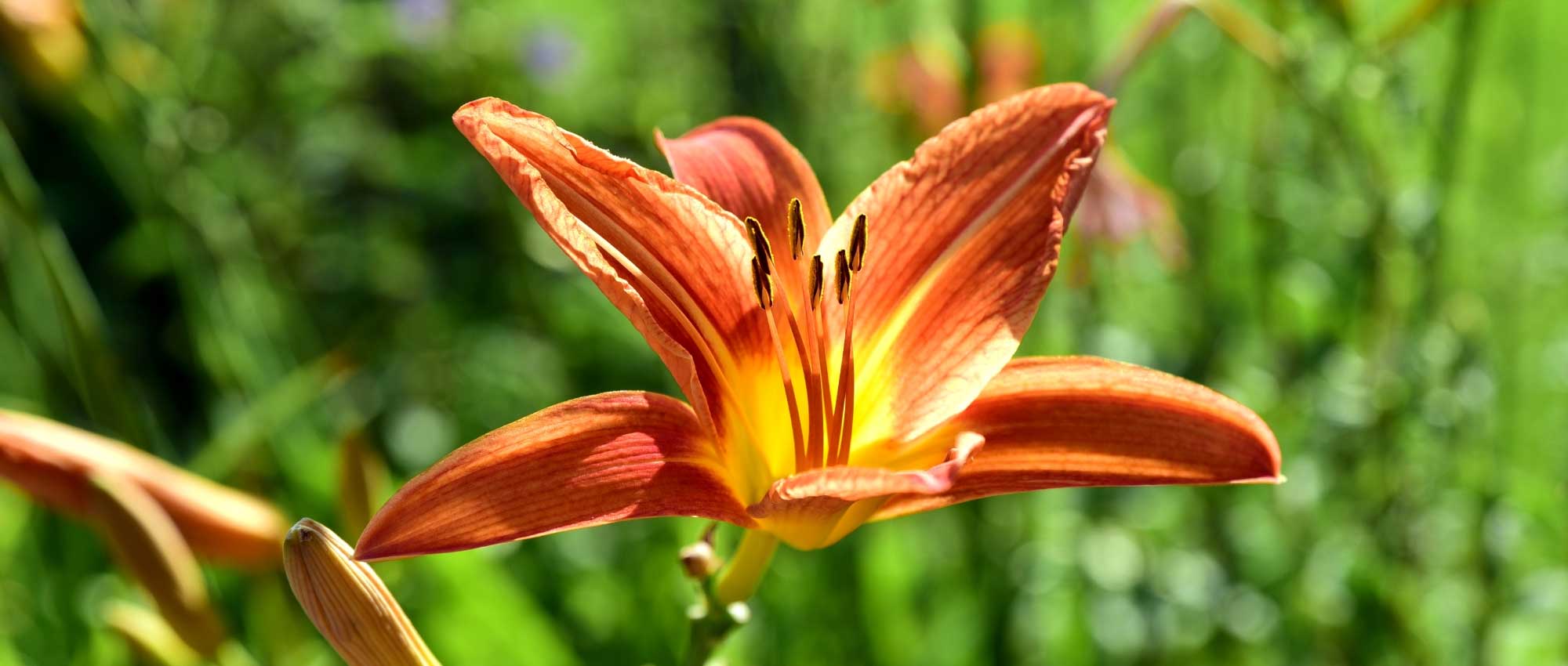
Flowering
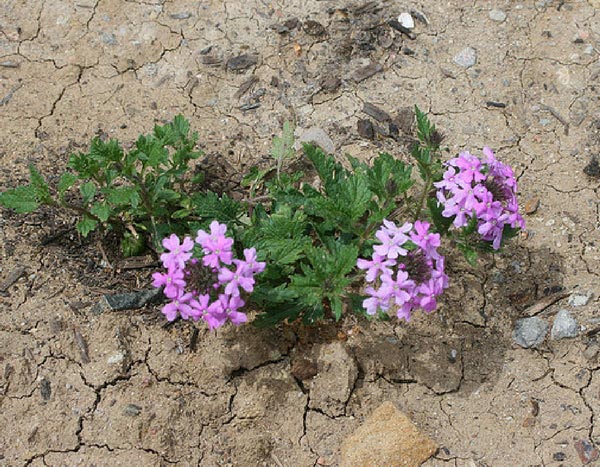
Foliage
Plant habit
Botanical data
Nelumbo
Pygmaea Red (rouge)
Nelumbonaceae
Sacred Lotus, Indian Lotus, Lotus
Nymphaea nelumbo, Nelumbo caspica, Nelumbo speciosum, Nelumbo nelumbo, Nelumbo komarovii
India
Planting and care
Apart from a few precautions, the cultivation of Dwarf Lotus does not require any particular arrangement. The dwarf lotus requires a sunny location. It can tolerate temperatures as low as -12°C, provided it is submerged deep enough. Plant the rhizome horizontally without breaking it, in late spring, in a pot or directly in the mud, between 20 and 50 cm below the water surface. Bury the stump under 15 cm of rich silt or clay (never use potting soil, as it would float to the surface and promote the growth of algae). For shallow ponds, planting in a container is possible, but it will be necessary to overwinter the rhizomes in moist sand protected from frost. Rhizomes can be planted in a wicker basket or a fine mesh basket, 30-40 cm in diameter (wider than it is tall), which is then submerged in the desired location. Provide them with the sunniest spot in the water feature. Space each rhizome at least 50 cm apart.
In regions with harsh winters, it is advisable to keep the rhizome in a moist pot protected from frost from October to May.
The Nelumbo rhizomes should never be left exposed to the sun or air to prevent them from drying out; plant them as soon as you receive or purchase them. If you have fish in your pond, it is preferable to spread a layer of coarse gravel on the surface of the planted pot to discourage them from digging in the soil and thus polluting the water. The development of nelumbos will be optimal if they are planted in containers suitable for their growth. Lotuses are hungry plants: apply a balanced slow-release fertiliser at planting, and every year at the beginning of the growing season (for example: Osmocote 10-11-18-2 with a duration of 5-6 months). During the summer, remove leaves that grow in excessive numbers in the centre of the clump, leaving only the strongest ones. Also remove yellowed or stained leaves, as well as aquatic weeds that emerge from the surface. Be careful, contact with lotus foliage can cause an allergy!
Monitor infestations of aphids on the foliage. Introduce ladybird larvae or spray black soap on the foliage. Remove yellowed leaves at the end of summer.
Planting period
Intended location
Care
Planting & care advice
-
-
-
-
-
-
-
-
This item has not been reviewed yet - be the first to leave a review about it.
Recently viewed products
Haven't found what you were looking for?
Hardiness is the lowest winter temperature a plant can endure without suffering serious damage or even dying. However, hardiness is affected by location (a sheltered area, such as a patio), protection (winter cover) and soil type (hardiness is improved by well-drained soil).
In temperate climates, pruning of spring-flowering shrubs (forsythia, spireas, etc.) should be done just after flowering.
Pruning of summer-flowering shrubs (Indian Lilac, Perovskia, etc.) can be done in winter or spring.
In cold regions as well as with frost-sensitive plants, avoid pruning too early when severe frosts may still occur.
The harvesting period indicated on our website applies to countries and regions in USDA zone 8 (France, England, Ireland, the Netherlands).
In colder areas (Scandinavia, Poland, Austria...) fruit and vegetable harvests are likely to be delayed by 3-4 weeks.
In warmer areas (Italy, Spain, Greece, etc.), harvesting will probably take place earlier, depending on weather conditions.
The sowing periods indicated on our website apply to countries and regions within USDA Zone 8 (France, UK, Ireland, Netherlands).
In colder areas (Scandinavia, Poland, Austria...), delay any outdoor sowing by 3-4 weeks, or sow under glass.
In warmer climes (Italy, Spain, Greece, etc.), bring outdoor sowing forward by a few weeks.
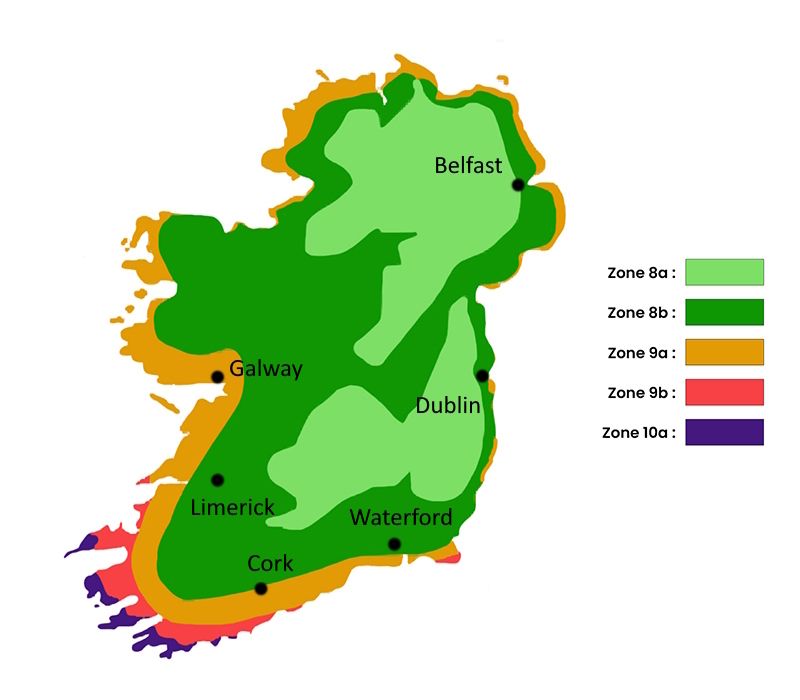
The planting period indicated on our website applies to regions in USDA Zone 9a (East Coast and Midlands: Dublin, Wexford, Waterford, Kilkenny, Portlaoise). It will vary depending on where you live:
- On the west coast and in the north-west (Galway, Limerick, Sligo, Donegal, Westport), delay planting by 1 to 2 weeks in spring and bring it forward by 1 to 2 weeks in autumn compared to the dates given, preferably choosing periods without strong winds.
- In the inland hills and plateaus (Wicklow Mountains, Macgillycuddy’s Reeks, Connemara, Killarney), it is best to plant in spring (April–May) or autumn (September–October), avoiding periods of waterlogged soil in winter and strong winds, which pose the main risk to newly planted trees in these areas.
The flowering period indicated on our website applies to regions in USDA Zone 9a, such as the East Coast and Midlands, including Dublin, Wexford, Waterford, Kilkenny and Portlaoise.
This will vary depending on where you live:
- On the west coast and in the northwest (Galway, Limerick, Sligo, Donegal and Westport), it will be delayed by one to two weeks compared to the given dates, due to stronger Atlantic winds and less spring sunshine.
- In the inland hills and plateaus (the Wicklow Mountains, the Macgillycuddy's Reeks, Connemara and Killarney), flowering will be delayed by two to three weeks. Flowering mainly occurs between May and July, with the limiting factors being less frost and more of the excessive humidity, strong winds and lack of sunshine that are characteristic of these areas.
Shipping country and language
Your country of residence may be:
Your country of residence is:
For a better user experience on our website, you can select:
Your shipping country:
-
 Austria
-
 Belgium
-
 Bosnia & Herzegovina
-
 Bulgaria
-
 Croatia
-
 Cyprus
-
 Czechia
-
 Denmark
-
 Estonia
-
 Finland
-
 France
-
 Germany
-
 Greece
-
 Hungary
-
 Iceland
-
 Ireland
-
 Italy
Italy
-
 Latvia
-
 Liechtenstein
-
 Lithuania
-
 Luxembourg
-
 Malta
Malta
-
 Netherlands
-
 Poland
-
 Portugal
-
 Romania
-
 Serbia
-
 Slovakia
-
 Slovenia
-
 Spain
Spain
-
 Sweden
-
 Switzerland
Language:
-
French
-
 English
-
Spanish
-
Italian
-
German
-
Portuguese
-
Dutch
-
Finnish
My Account
Hello
My wish lists
My cart
Log in / Register
Existing customer?
This form is protected by reCAPTCHA - the Google Privacy Policy and Terms of Service apply.
New customer?
Create an account to track your orders, access our customer service and, if you wish, make the most of our upcoming offers.