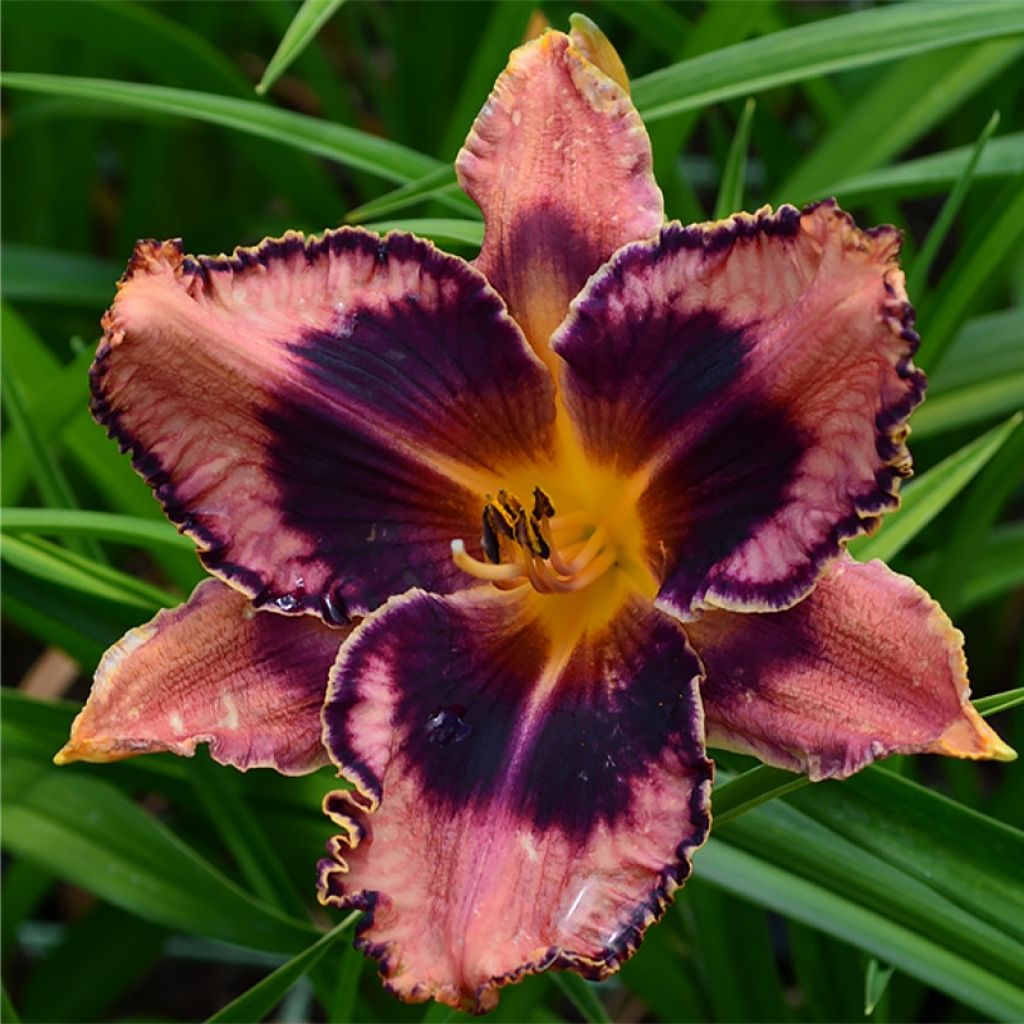
Hemerocallis Exotic Treasure - Daylily
Hemerocallis Exotic Treasure - Daylily
Hemerocallis Exotic Treasure
Daylily
Beautiful plant, seems to be in perfect health, arrived in very good condition, well packaged — now all that’s left is to wait for the flowering.
cris, 11/04/2026
Back-to-school special offer!
Get €10 off for every €50 you spend! And get up to €40 off on a single order.
How does it work?
1. Shop your favourites
Add your favourite plants to your basket. For every €50 you spend (excluding delivery charges, store credit and the plastic-free option), you’ll receive a €10 voucher.
€50 spent = €10 voucher
€100 spent = €20 voucher
€150 spent = €30 voucher
€200 spent = €40 voucher
2. Place your order
Once your basket reaches one of the spending thresholds, place your order. You can even choose your delivery date!
3. Receive your voucher
As soon as your order has been shipped, you’ll receive an email containing your personal voucher code and its value.
4. Use it on your next order
Your voucher is valid for 90 days from the date you receive it. It can be used once only, on a new order worth at least the value of the voucher, excluding delivery charges.
Please note: Vouchers can be combined with other offers, but cannot be split or refunded.
Home or relay delivery (depending on size and destination)
Important: You may be charged customs duties by your country’s customs authorities upon delivery.
Schedule delivery date
and select date in basket
This plant carries a 12 months recovery warranty
More information
We guarantee the quality of our plants for a full growing cycle, and will replace at our expense any plant that fails to recover under normal climatic and planting conditions.

Does this plant fit my garden?
Set up your Plantfit profile →
Description
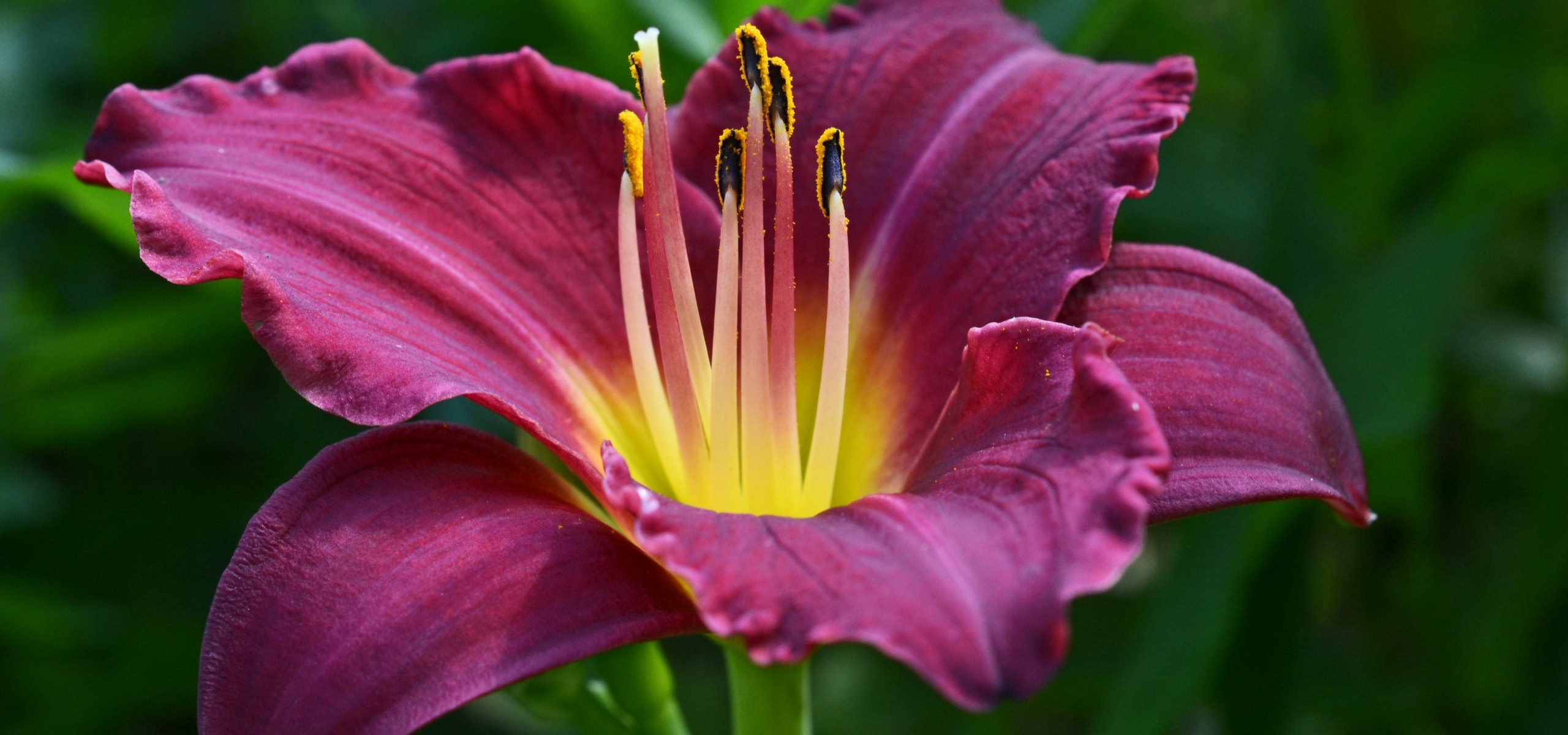
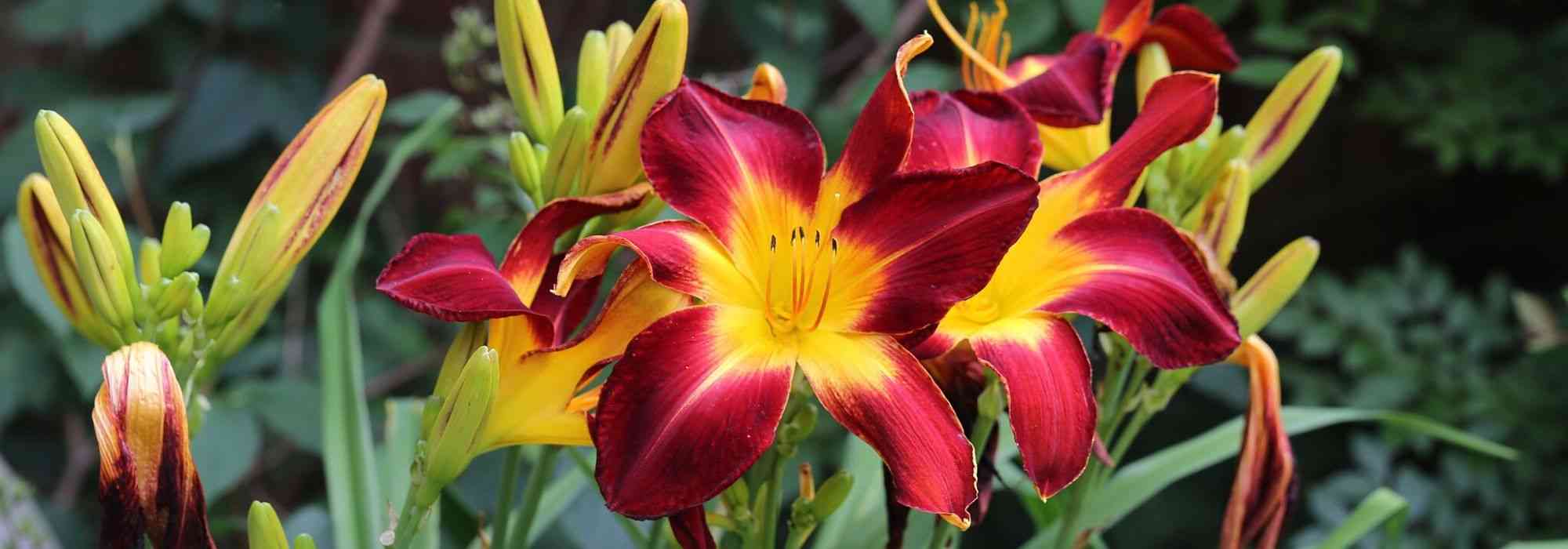
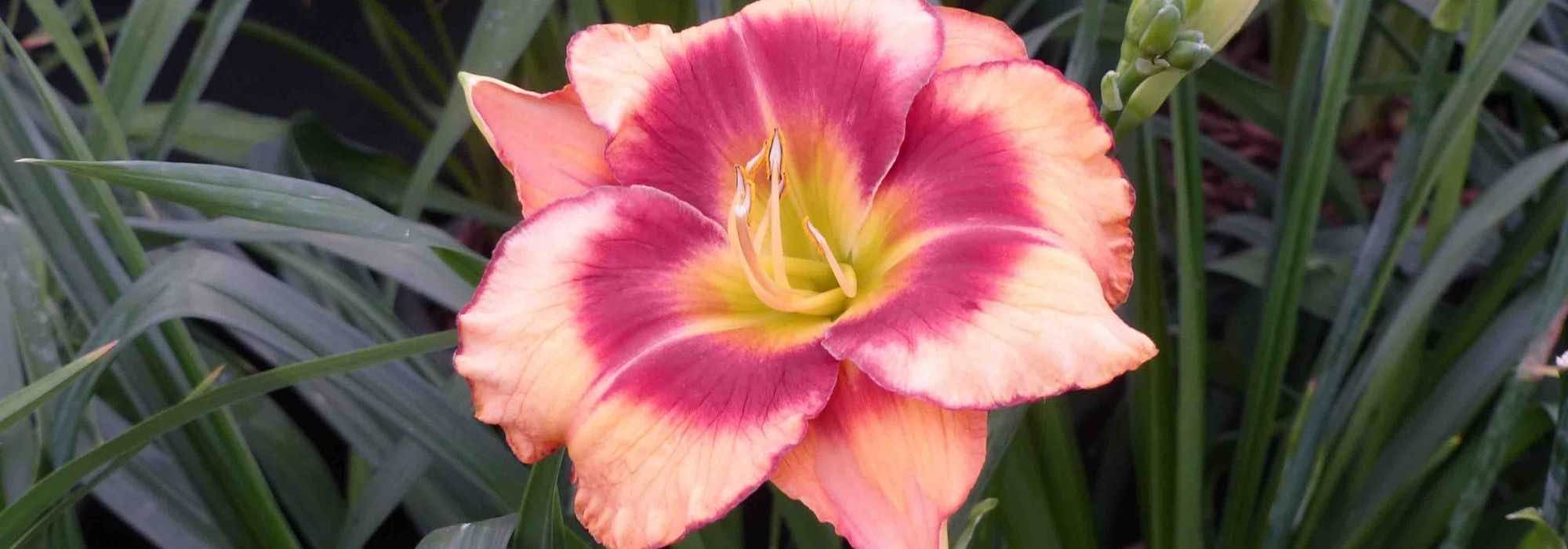
The Daylily or Hemerocallis 'Exotic Treasure' is a perpetual variety that bears numerous round flowers with wide petals, finely frizzed at the edges, superbly bicoloured in soft melon pink and dark purple. With its relatively early, abundant and prolonged flowering, this superb tetraploid cultivar has an exotic charm. The plant quickly forms beautiful clumps of evergreen leaves in winter.
The genus Hemerocallis belongs to the family Liliaceae or Hemerocallidaceae according to classifications. They are perennial and hardy plants with deciduous foliage, sometimes semi-evergreen. 'Exotic Treasure', obtained in 2002 by Salter, has given rise to 38 more recent cultivars. It is a so-called tetraploid variety with a double stock of chromosomes, giving it increased vigour and oversized flowers compared to classic diploid varieties. It forms a fairly dense clump that will reach about 70 cm (28in) in height, with a relative spread of 50 cm (20in); daylilies tend to spread a little when they like the soil. The flowers measure about 13 cm (5in) in diameter. They comprise three large, thick, slightly wavy, rounded petals with undulating edges and three marginally smaller sepals.
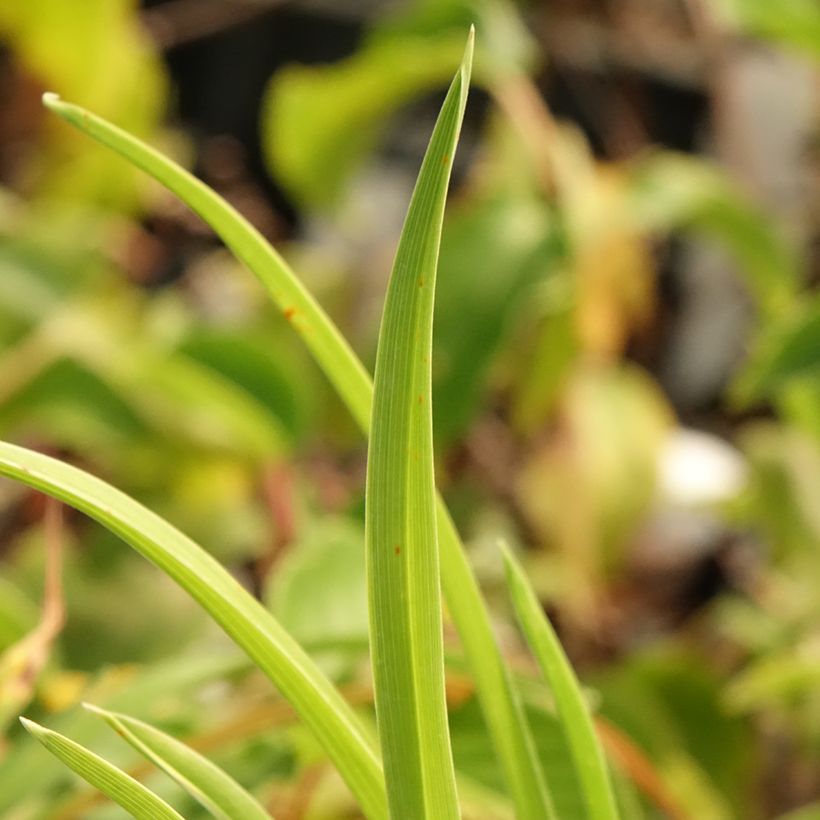
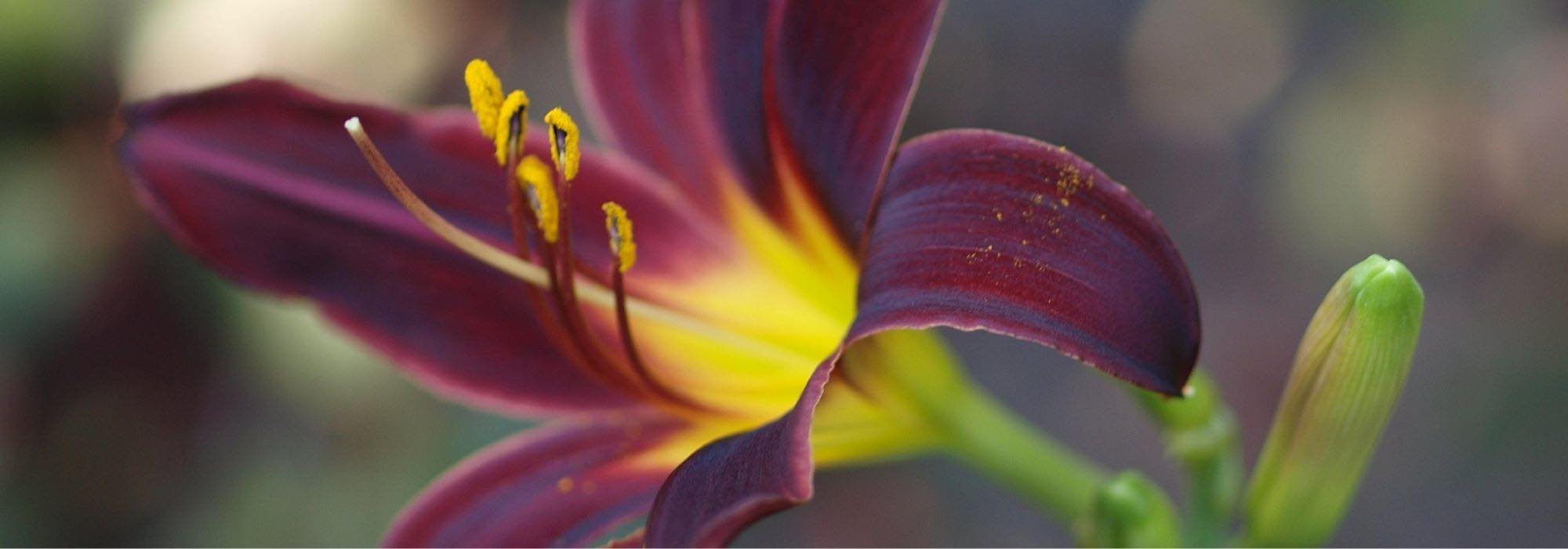
The petals are a pale melon pink with an orange tint; they have a large halo of a very contrasting dark purple colour and a border of the same tone. The sepals are slightly more pink, well undulated, but without any trace of violet on the edges. The throat is yellow and green. Each flower opens in the morning and lasts no more than a day, but the flowering extends from June to the end of September. Each floral stem has four branches and carries between 36 and 40 flower buds. It is not uncommon for four flowers to bloom at the same time. The foliage is linear, bright green and evergreen in winter. Daylilies are plants with short rhizomes and fleshy roots that tolerate dry soils but are more opulent and floriferous in moist soil.
Very easy to grow, these plants thrive in shade and full sun. Some can be invasive, so divide clumps every four or five years, preferably in autumn, after flowering. Daylilies are often called "the perfect perennial" because of their vibrant colours and ability to tolerate any environment, but also because of their lack of modesty; they have a beautiful exuberance that goes well with other perennials. Plant them in generous clumps at the back of your flowerbeds. All summer bulb flowers (lilies, agapanthus and ixias) can be planted alongside daylilies. 'Exotic Treasure' is a particularly floriferous and colourful variety to be showcased alongside pink, white or purple blooms. It goes well with grasses, lavenders and chamomiles. The flowers are edible: they brighten up salads and decorate desserts.
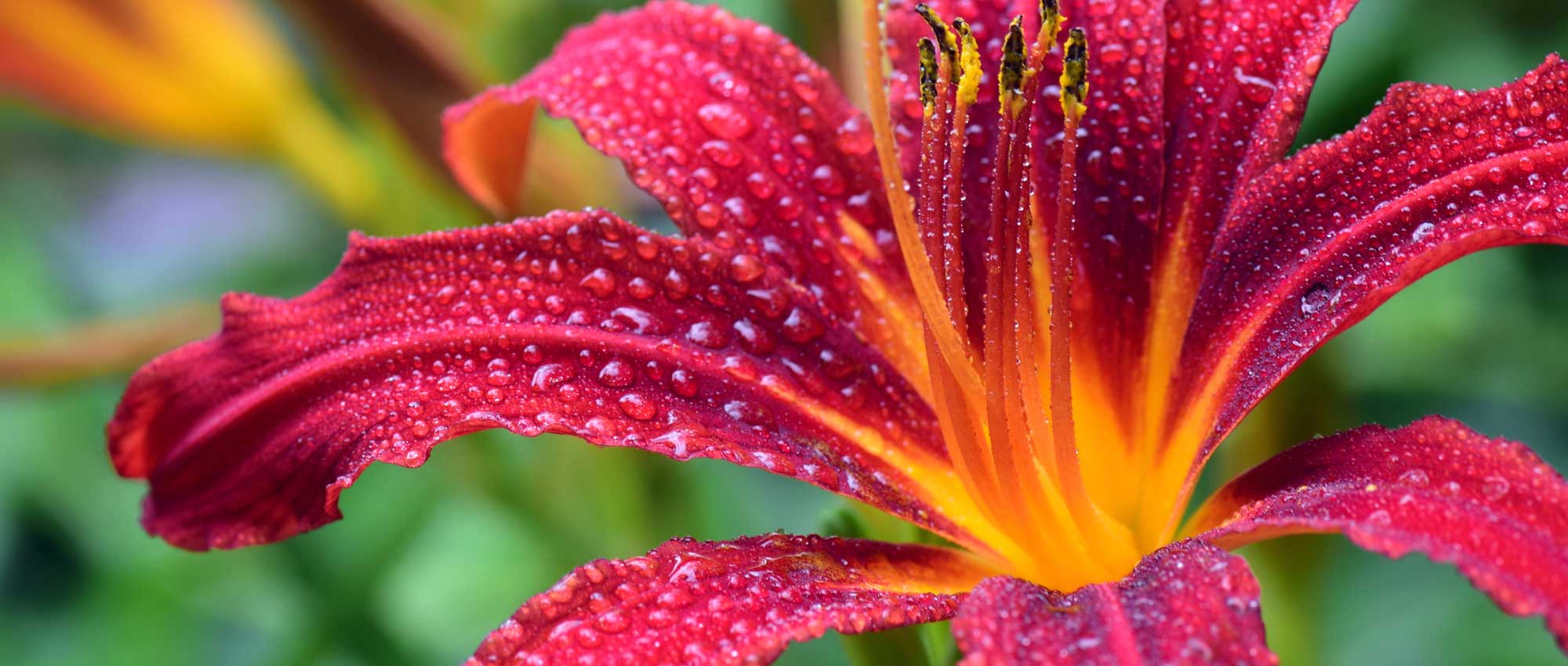
Hemerocallis Exotic Treasure - Daylily in pictures
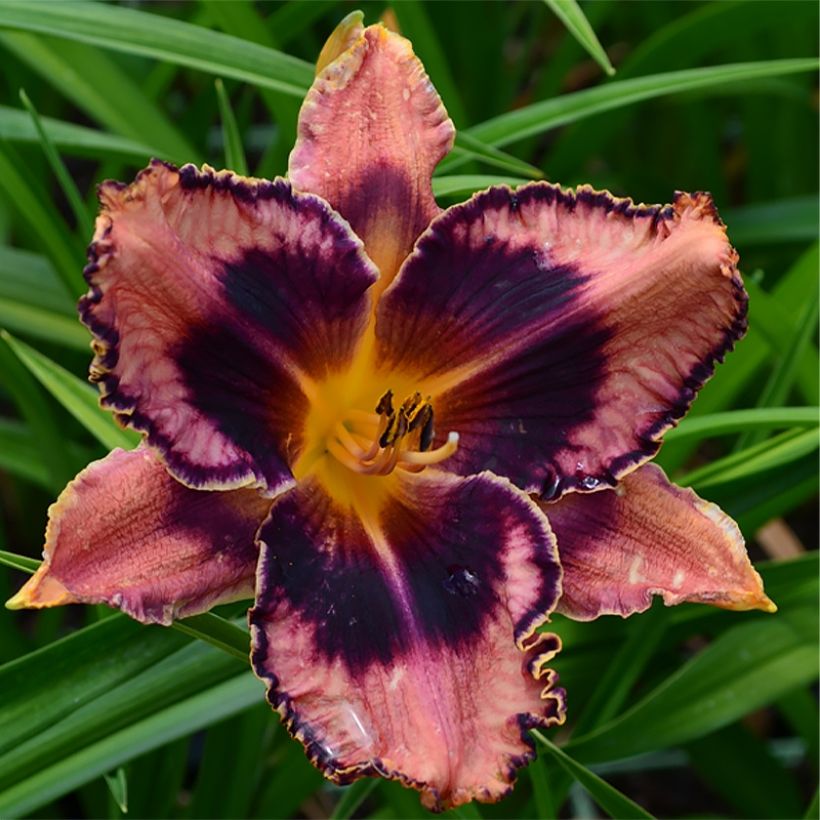
Flowering
Foliage
Plant habit
Botanical data
Hemerocallis
Exotic Treasure
Asphodelaceae
Daylily
Cultivar or hybrid
Planting and care
Plant your Hemerocallis 'Exotic Treasure' in well-draining garden soil that is not too clayey and enriched with humus and compost. This will allow your perennial to withstand summer droughts and winter frosts. This variety is easy to grow and not susceptible to pests or diseases, so no treatment is required, and rodents are not attracted to it. Daylilies can grow both in partial shade and full sun, with 4 to 5 hours of daily sunlight sufficient—plant by burying the base 3 to 4 cm (1 to 2in) below the surface. If planting multiple plants, ensure enough space between them, as the spaces will quickly fill up. For a few weeks after planting, ensure the soil is moderately moist, but do not overwater. It is advisable to divide the plants, preferably in autumn after flowering.
Planting period
Intended location
Care
Planting & care advice


-
, onOrder confirmed
Reply from on Promesse de fleurs
Recently viewed products
Haven't found what you were looking for?
Hardiness is the lowest winter temperature a plant can endure without suffering serious damage or even dying. However, hardiness is affected by location (a sheltered area, such as a patio), protection (winter cover) and soil type (hardiness is improved by well-drained soil).
In temperate climates, pruning of spring-flowering shrubs (forsythia, spireas, etc.) should be done just after flowering.
Pruning of summer-flowering shrubs (Indian Lilac, Perovskia, etc.) can be done in winter or spring.
In cold regions as well as with frost-sensitive plants, avoid pruning too early when severe frosts may still occur.
The harvesting period indicated on our website applies to countries and regions in USDA zone 8 (France, England, Ireland, the Netherlands).
In colder areas (Scandinavia, Poland, Austria...) fruit and vegetable harvests are likely to be delayed by 3-4 weeks.
In warmer areas (Italy, Spain, Greece, etc.), harvesting will probably take place earlier, depending on weather conditions.
The sowing periods indicated on our website apply to countries and regions within USDA Zone 8 (France, UK, Ireland, Netherlands).
In colder areas (Scandinavia, Poland, Austria...), delay any outdoor sowing by 3-4 weeks, or sow under glass.
In warmer climes (Italy, Spain, Greece, etc.), bring outdoor sowing forward by a few weeks.
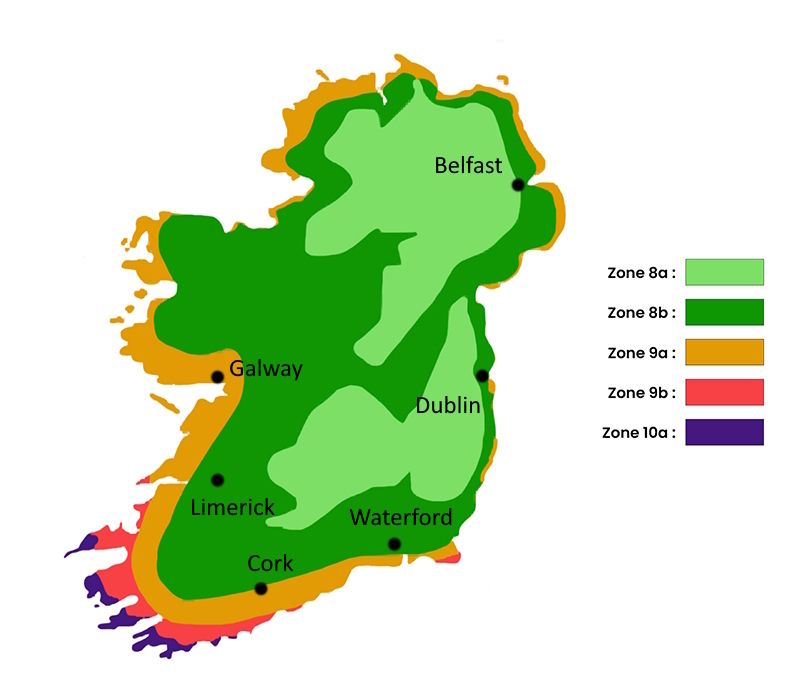
The planting period indicated on our website applies to regions in USDA Zone 9a (East Coast and Midlands: Dublin, Wexford, Waterford, Kilkenny, Portlaoise). It will vary depending on where you live:
- On the west coast and in the north-west (Galway, Limerick, Sligo, Donegal, Westport), delay planting by 1 to 2 weeks in spring and bring it forward by 1 to 2 weeks in autumn compared to the dates given, preferably choosing periods without strong winds.
- In the inland hills and plateaus (Wicklow Mountains, Macgillycuddy’s Reeks, Connemara, Killarney), it is best to plant in spring (April–May) or autumn (September–October), avoiding periods of waterlogged soil in winter and strong winds, which pose the main risk to newly planted trees in these areas.
The flowering period indicated on our website applies to regions in USDA Zone 9a, such as the East Coast and Midlands, including Dublin, Wexford, Waterford, Kilkenny and Portlaoise.
This will vary depending on where you live:
- On the west coast and in the northwest (Galway, Limerick, Sligo, Donegal and Westport), it will be delayed by one to two weeks compared to the given dates, due to stronger Atlantic winds and less spring sunshine.
- In the inland hills and plateaus (the Wicklow Mountains, the Macgillycuddy's Reeks, Connemara and Killarney), flowering will be delayed by two to three weeks. Flowering mainly occurs between May and July, with the limiting factors being less frost and more of the excessive humidity, strong winds and lack of sunshine that are characteristic of these areas.
Shipping country and language
Your country of residence may be:
Your country of residence is:
For a better user experience on our website, you can select:
Your shipping country:
-
 Austria
-
 Belgium
-
 Bosnia & Herzegovina
-
 Bulgaria
-
 Croatia
-
 Cyprus
-
 Czechia
-
 Denmark
-
 Estonia
-
 Finland
-
 France
-
 Germany
-
 Greece
-
 Hungary
-
 Iceland
-
 Ireland
-
 Italy
Italy
-
 Latvia
-
 Liechtenstein
-
 Lithuania
-
 Luxembourg
-
 Malta
Malta
-
 Netherlands
-
 Poland
-
 Portugal
-
 Romania
-
 Serbia
-
 Slovakia
-
 Slovenia
-
 Spain
Spain
-
 Sweden
-
 Switzerland
Language:
-
French
-
 English
-
Spanish
-
Italian
-
German
-
Portuguese
-
Dutch
-
Finnish
My Account
Hello
My wish lists
My cart
Log in / Register
Existing customer?
This form is protected by reCAPTCHA - the Google Privacy Policy and Terms of Service apply.
New customer?
Create an account to track your orders, access our customer service and, if you wish, make the most of our upcoming offers.