
Erica darleyensis Winter Belles Phoebe - Winter Heath
Erica darleyensis Winter Belles Phoebe - Winter Heath
Erica × darleyensis Winter Belles Phoebe
Winter Heath
Flowering vine-plants upon receipt, well-developed root system that foreshadows good establishment.
MARIE, 01/02/2022
Back-to-school special offer!
Get €10 off for every €50 you spend! And get up to €40 off on a single order.
How does it work?
1. Shop your favourites
Add your favourite plants to your basket. For every €50 you spend (excluding delivery charges, store credit and the plastic-free option), you’ll receive a €10 voucher.
€50 spent = €10 voucher
€100 spent = €20 voucher
€150 spent = €30 voucher
€200 spent = €40 voucher
2. Place your order
Once your basket reaches one of the spending thresholds, place your order. You can even choose your delivery date!
3. Receive your voucher
As soon as your order has been shipped, you’ll receive an email containing your personal voucher code and its value.
4. Use it on your next order
Your voucher is valid for 90 days from the date you receive it. It can be used once only, on a new order worth at least the value of the voucher, excluding delivery charges.
Please note: Vouchers can be combined with other offers, but cannot be split or refunded.
Why not try an alternative variety in stock?
View all →
Available in 3 sizes
Available in 1 sizes

Available in 2 sizes
Available in 0 sizes
Available in 3 sizes
Available in 1 sizes
Available in 3 sizes
Available in 1 sizes

Available in 3 sizes

Available in 2 sizes
This plant carries a 24 months recovery warranty
More information
We guarantee the quality of our plants for a full growing cycle, and will replace at our expense any plant that fails to recover under normal climatic and planting conditions.

Does this plant fit my garden?
Set up your Plantfit profile →
Description
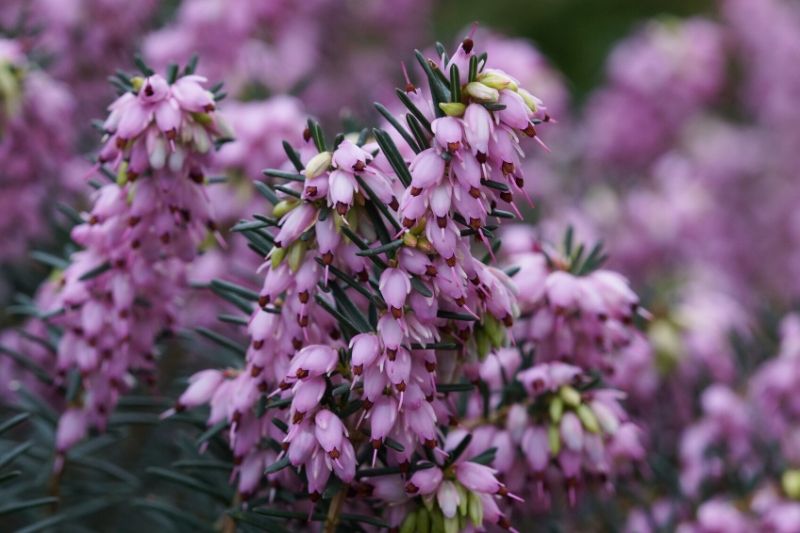
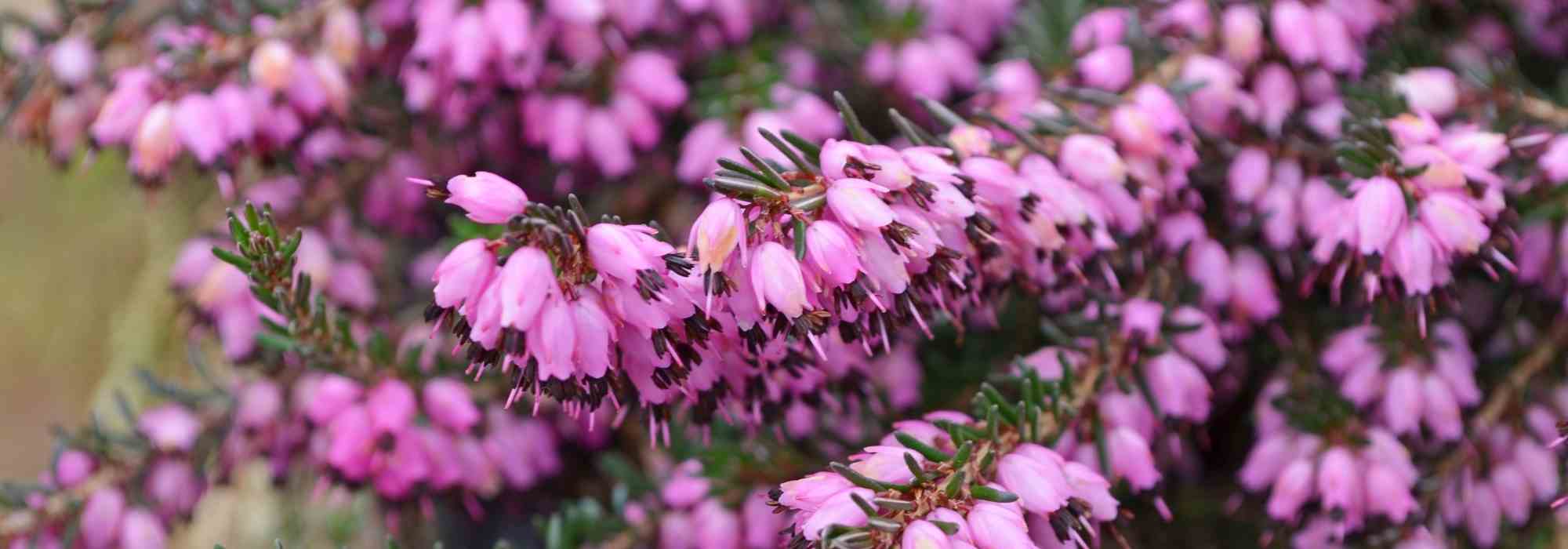
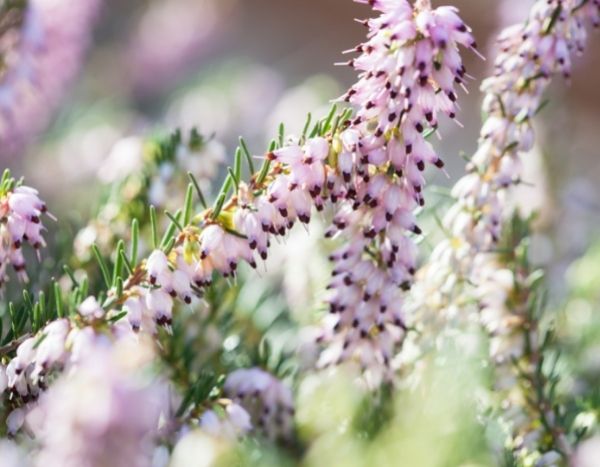
L’Erica × darleyensis WINTER BELLES® ‘Phoebe’ est l’une des bruyères les plus précoces de la série WINTER BELLES®. Ses clochettes rose saumon commencent à s’épanouir dès l’automne, lorsque les fleurs se raréfient, puis restent présentes pendant une grande partie de l’hiver. Son feuillage vert foncé persiste toute l’année. Florifère et facile à cultiver, cette bruyère constitue aussi une source de nourriture appréciable pour les insectes pollinisateurs actifs lors des journées hivernales les plus douces.
La dénomination botanique exacte de cette variété est Erica × darleyensis ‘Phoebe’. WINTER BELLES® désigne la série horticole et commerciale à laquelle elle appartient. La bruyère de Darley est un hybride issu des espèces sauvages Erica carnea et E. erigena. C'est une plante de la famille des Éricacées qui tolère mieux le calcaire que la plupart des bruyères. ‘Phoebe’ est une obtention anglaise découverte en 2003 par David Edge à la pépinière Forest Edge Nurseries, dans le Dorset. Elle serait issue de l'Erica carnea ‘Treasure Trove’ et de l'Erica erigena ‘Irish Dusk’. Le cultivar a été enregistré en 2005. De croissance lente, ‘Phoebe’ forme un petit arbrisseau bas, dense, arrondi et légèrement étalé. Il mesure à terme 30 à 40 cm de hauteur pour 40 à 50 cm d’envergure. Ses tiges fines portent de petites feuilles persistantes, étroites et vert foncé. Les fleurs, de belle taille pour une bruyère, sont des clochettes allongées réunies le long de la partie supérieure des tiges. Leur teinte rose saumon se détache bien sur le feuillage sombre. Les premières s’ouvrent en septembre ou en octobre. La floraison est particulièrement généreuse en automne et au début de l’hiver, puis se poursuit plus modérément jusqu’en mars. Cette bruyère résiste jusqu’à –15 °C dans un sol correctement drainé.
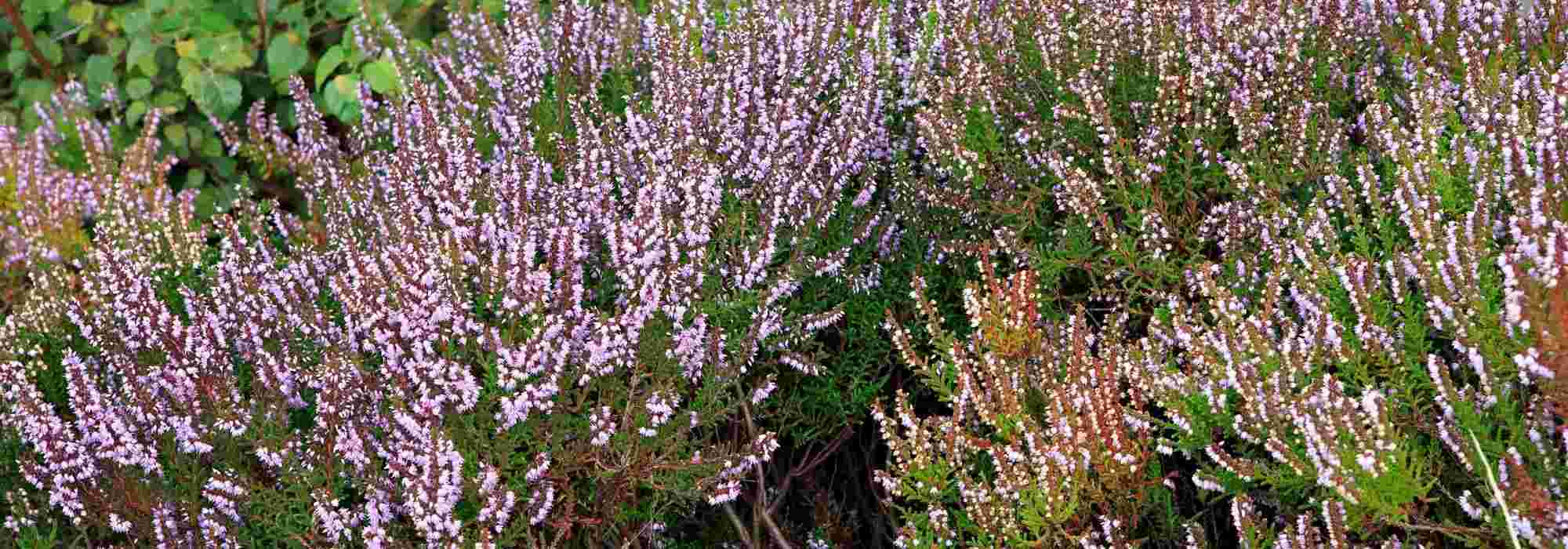
Cette bruyère ‘Phoebe’ se plante en groupes pour installer un couvre-sol persistant dans une bordure, une rocaille, sur un talus ou au premier plan d’un massif. Elle fleurit également les jardinières et les potées durant la saison froide. Au jardin, elle peut être associée à la bruyère WINTER BELLES® ‘Katia’, au Cyclamen coum ‘Album’, à l’hellébore Ice N’ Roses® White et à des conifères nains. Leurs floraisons hivernales et leurs feuillages persistants permettent de créer un décor intéressant pendant plusieurs mois. Si votre terre est acide, elle peut aussi rejoindre une collection de bruyères aux floraisons échelonnées, avec l’Erica cinerea ‘C. D. Eason’ et la Calluna vulgaris ‘Dark Beauty’, qui fleurissent au printemps ou en été.
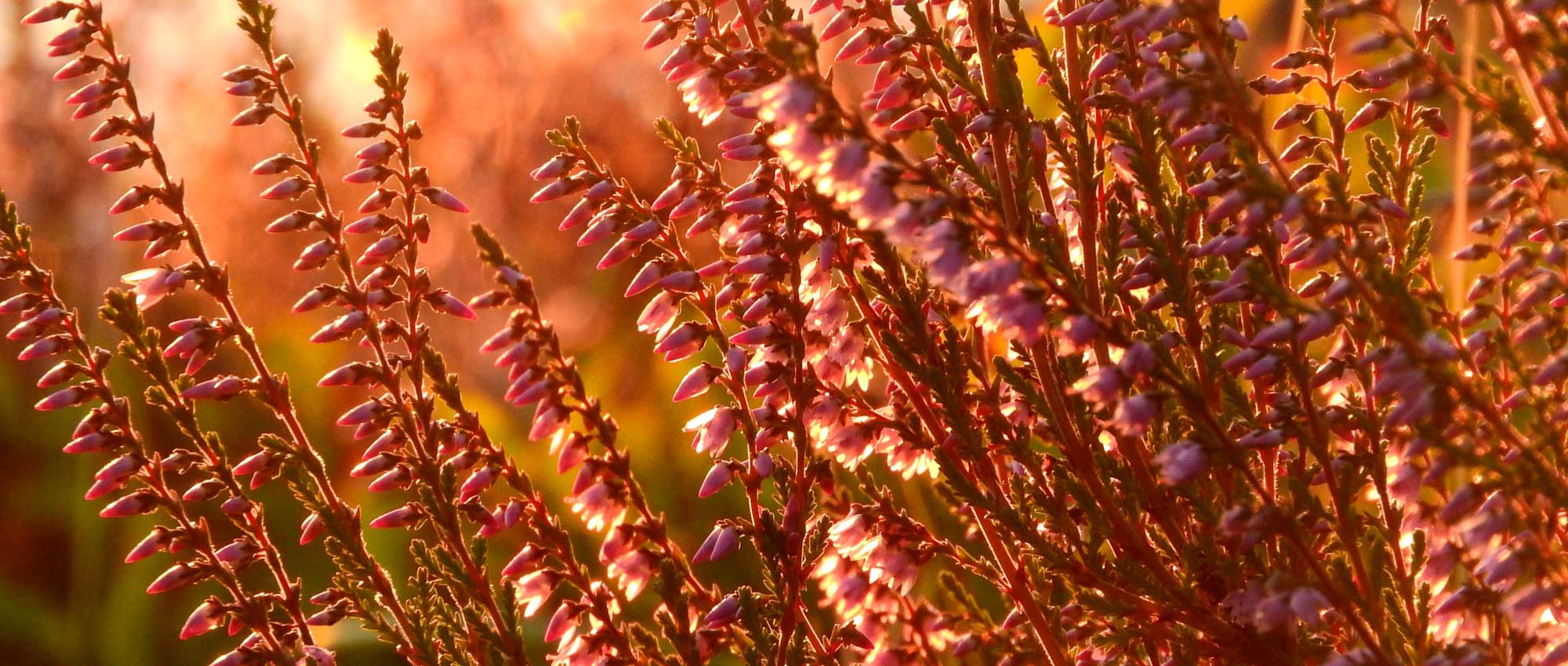
Erica darleyensis Winter Belles Phoebe - Winter Heath in pictures


Plant habit
Flowering
Foliage
Botanical data
Erica
× darleyensis
Winter Belles Phoebe
Ericaceae
Winter Heath
Erica × darleyensis ‘Phoebe’, Erica × darleyensis WINTER BELLES® ‘Phoebe’
Cultivar or hybrid
Planting and care
The Erica × darleyensis WINTER BELLES® ‘Phoebe’ is planted from September to October or from March to April, outside periods of frost. A sunny position allows abundant flowering, while light shade is preferable in regions with hot summers. It grows in a light, humus-bearing, moist and well-drained soil, acid, neutral or slightly chalky: using heather soil is therefore not essential. Compact soils, waterlogged in winter or very dry, are detrimental to it. It also dislikes heatwaves. Spacing each young plant 40 to 50 cm apart will create a continuous carpet. Regular watering is necessary during the first two years and for plants grown in pots.
Planting period
Intended location
Care
Planting & care advice


-
, onOrder confirmed
Reply from on Promesse de fleurs
Recently viewed products
Haven't found what you were looking for?
Hardiness is the lowest winter temperature a plant can endure without suffering serious damage or even dying. However, hardiness is affected by location (a sheltered area, such as a patio), protection (winter cover) and soil type (hardiness is improved by well-drained soil).
In temperate climates, pruning of spring-flowering shrubs (forsythia, spireas, etc.) should be done just after flowering.
Pruning of summer-flowering shrubs (Indian Lilac, Perovskia, etc.) can be done in winter or spring.
In cold regions as well as with frost-sensitive plants, avoid pruning too early when severe frosts may still occur.
The harvesting period indicated on our website applies to countries and regions in USDA zone 8 (France, England, Ireland, the Netherlands).
In colder areas (Scandinavia, Poland, Austria...) fruit and vegetable harvests are likely to be delayed by 3-4 weeks.
In warmer areas (Italy, Spain, Greece, etc.), harvesting will probably take place earlier, depending on weather conditions.
The sowing periods indicated on our website apply to countries and regions within USDA Zone 8 (France, UK, Ireland, Netherlands).
In colder areas (Scandinavia, Poland, Austria...), delay any outdoor sowing by 3-4 weeks, or sow under glass.
In warmer climes (Italy, Spain, Greece, etc.), bring outdoor sowing forward by a few weeks.
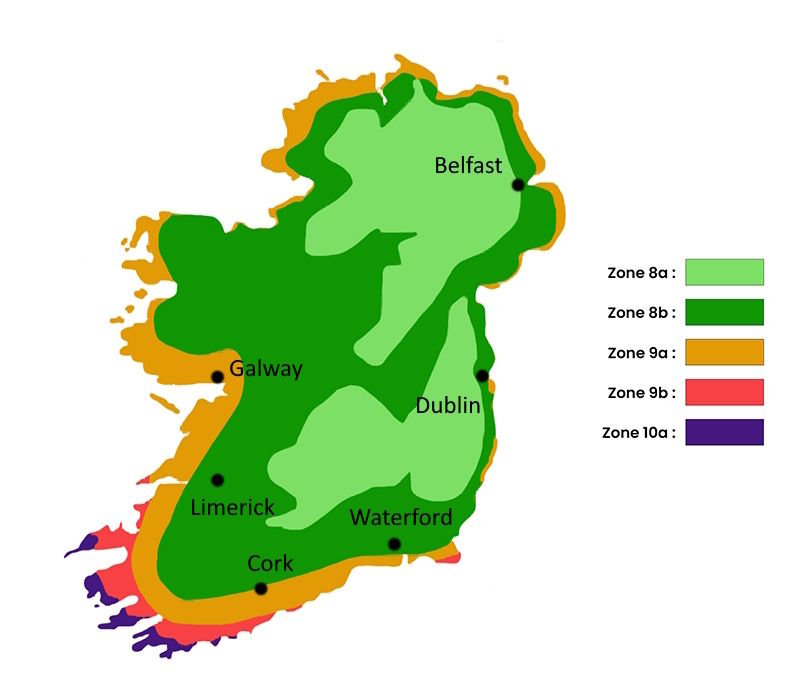
The planting period indicated on our website applies to regions in USDA Zone 9a (East Coast and Midlands: Dublin, Wexford, Waterford, Kilkenny, Portlaoise). It will vary depending on where you live:
- On the west coast and in the north-west (Galway, Limerick, Sligo, Donegal, Westport), delay planting by 1 to 2 weeks in spring and bring it forward by 1 to 2 weeks in autumn compared to the dates given, preferably choosing periods without strong winds.
- In the inland hills and plateaus (Wicklow Mountains, Macgillycuddy’s Reeks, Connemara, Killarney), it is best to plant in spring (April–May) or autumn (September–October), avoiding periods of waterlogged soil in winter and strong winds, which pose the main risk to newly planted trees in these areas.
The flowering period indicated on our website applies to regions in USDA Zone 9a, such as the East Coast and Midlands, including Dublin, Wexford, Waterford, Kilkenny and Portlaoise.
This will vary depending on where you live:
- On the west coast and in the northwest (Galway, Limerick, Sligo, Donegal and Westport), it will be delayed by one to two weeks compared to the given dates, due to stronger Atlantic winds and less spring sunshine.
- In the inland hills and plateaus (the Wicklow Mountains, the Macgillycuddy's Reeks, Connemara and Killarney), flowering will be delayed by two to three weeks. Flowering mainly occurs between May and July, with the limiting factors being less frost and more of the excessive humidity, strong winds and lack of sunshine that are characteristic of these areas.
Shipping country and language
Your country of residence may be:
Your country of residence is:
For a better user experience on our website, you can select:
Your shipping country:
-
 Austria
-
 Belgium
-
 Bosnia & Herzegovina
-
 Bulgaria
-
 Croatia
-
 Cyprus
-
 Czechia
-
 Denmark
-
 Estonia
-
 Finland
-
 France
-
 Germany
-
 Greece
-
 Hungary
-
 Iceland
-
 Ireland
-
 Italy
-
 Latvia
-
 Liechtenstein
-
 Lithuania
-
 Luxembourg
-
 Malta
-
 Netherlands
-
 Poland
-
 Portugal
-
 Romania
-
 Serbia
-
 Slovakia
-
 Slovenia
-
 Spain
-
 Sweden
-
 Switzerland
Language:
-
French
-
 English
-
Spanish
-
Italian
-
German
-
Portuguese
-
Dutch
-
Finnish
My Account
Hello
My wish lists
My cart
Log in / Register
Existing customer?
This form is protected by reCAPTCHA - the Google Privacy Policy and Terms of Service apply.
New customer?
Create an account to track your orders, access our customer service and, if you wish, make the most of our upcoming offers.