Eryngium Lapis Blue - Panicaut maritime
Eryngium Lapis Blue - Panicaut maritime
Eryngium Lapis Blue - Panicaut maritime
Eryngium Lapis Blue - Panicaut maritime
Eryngium maritimum Lapis Blue
Sea Holly
Leaves but no flowers.
Marine, 02/08/2025
Back-to-school special offer!
Get €10 off for every €50 you spend! And get up to €40 off on a single order.
How does it work?
1. Shop your favourites
Add your favourite plants to your basket. For every €50 you spend (excluding delivery charges, store credit and the plastic-free option), you’ll receive a €10 voucher.
€50 spent = €10 voucher
€100 spent = €20 voucher
€150 spent = €30 voucher
€200 spent = €40 voucher
2. Place your order
Once your basket reaches one of the spending thresholds, place your order. You can even choose your delivery date!
3. Receive your voucher
As soon as your order has been shipped, you’ll receive an email containing your personal voucher code and its value.
4. Use it on your next order
Your voucher is valid for 90 days from the date you receive it. It can be used once only, on a new order worth at least the value of the voucher, excluding delivery charges.
Please note: Vouchers can be combined with other offers, but cannot be split or refunded.
Home or relay delivery (depending on size and destination)
Important: You may be charged customs duties by your country’s customs authorities upon delivery.
Schedule delivery date
and select date in basket
This plant carries a 12 months recovery warranty
More information
We guarantee the quality of our plants for a full growing cycle, and will replace at our expense any plant that fails to recover under normal climatic and planting conditions.
Does this plant fit my garden?
Set up your Plantfit profile →
Description
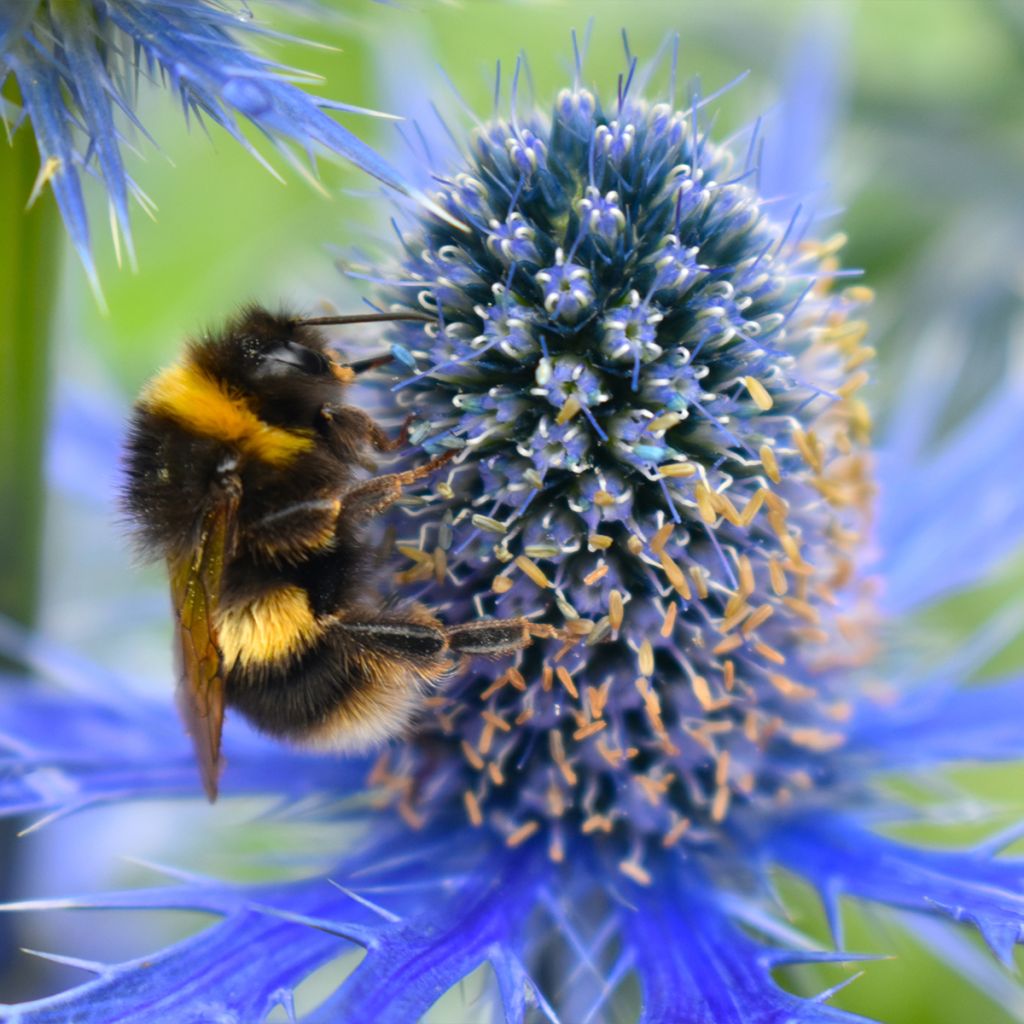
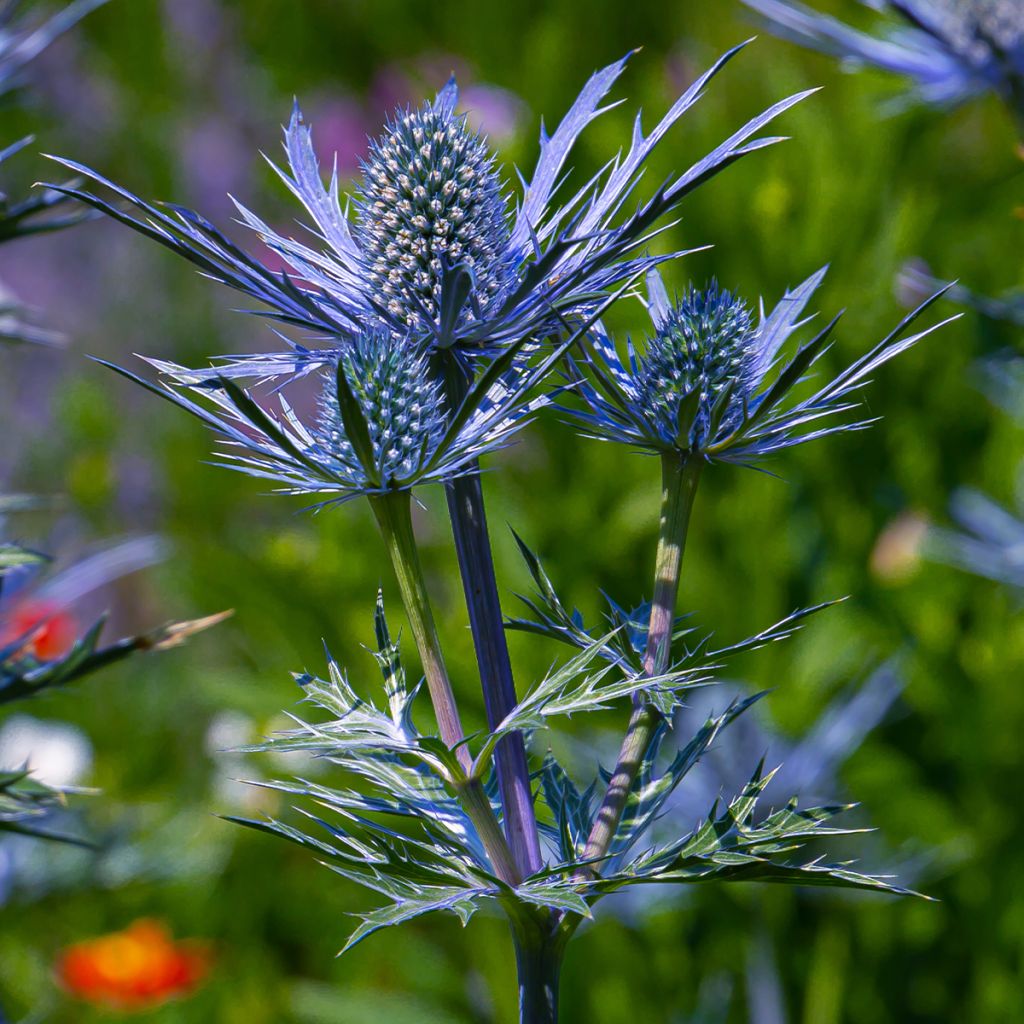
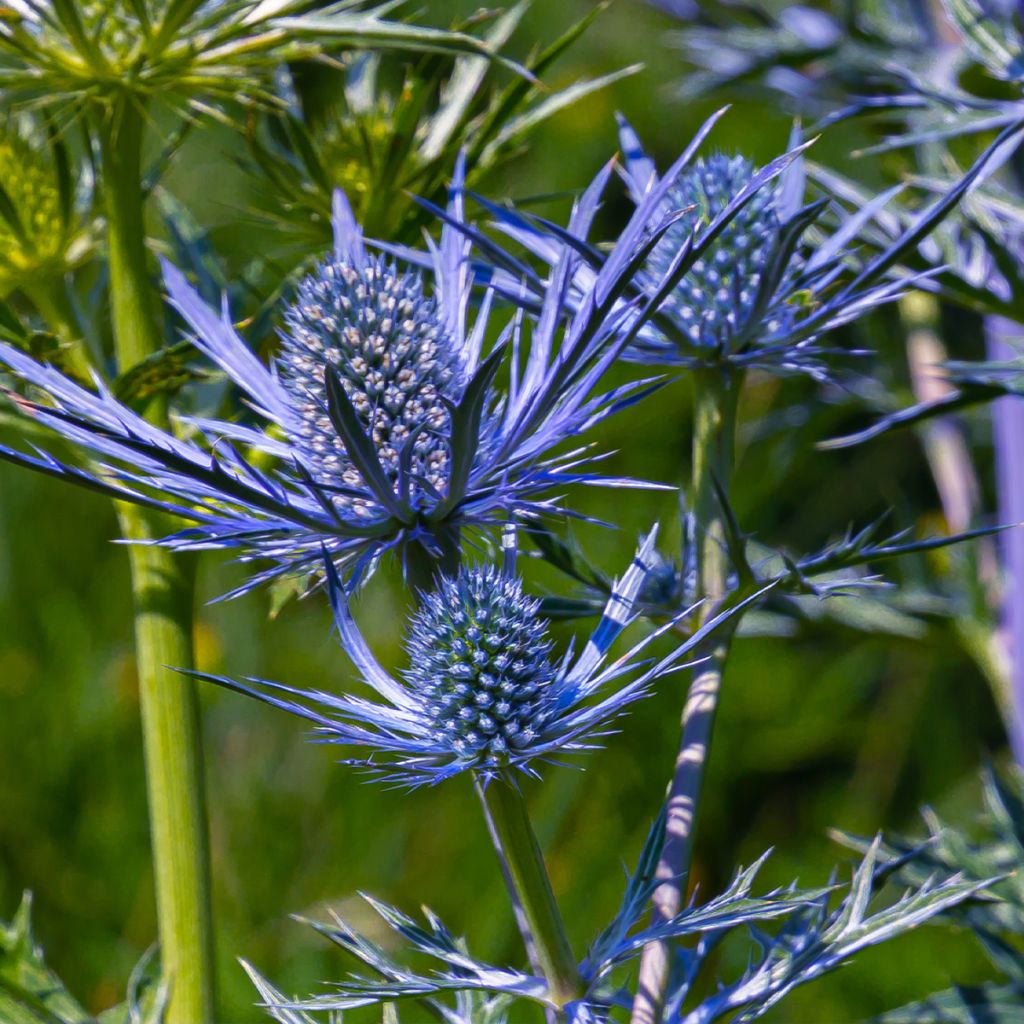
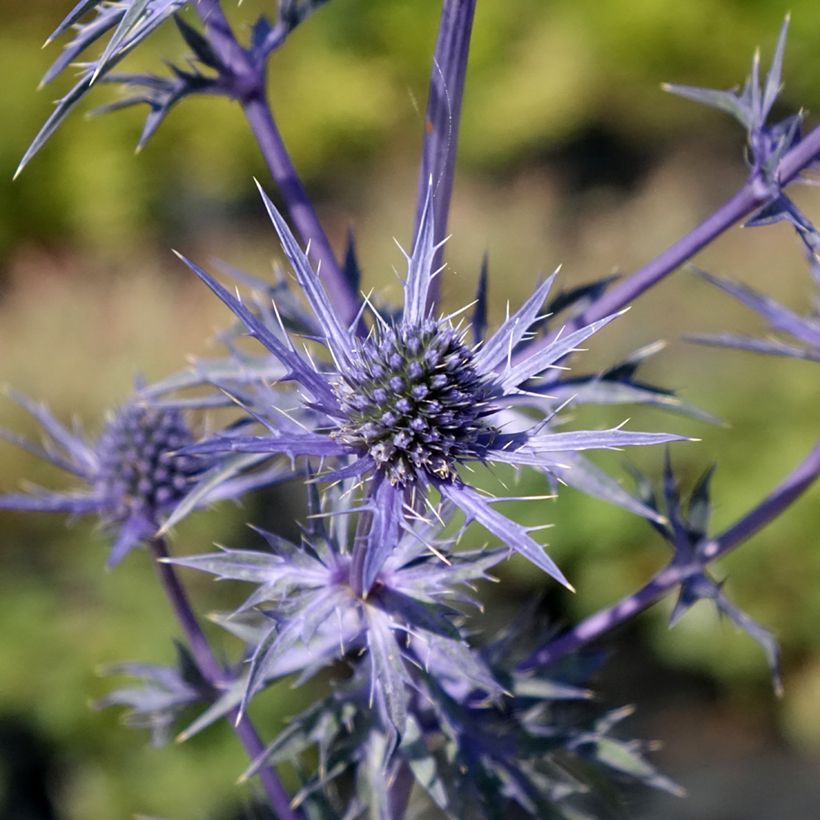
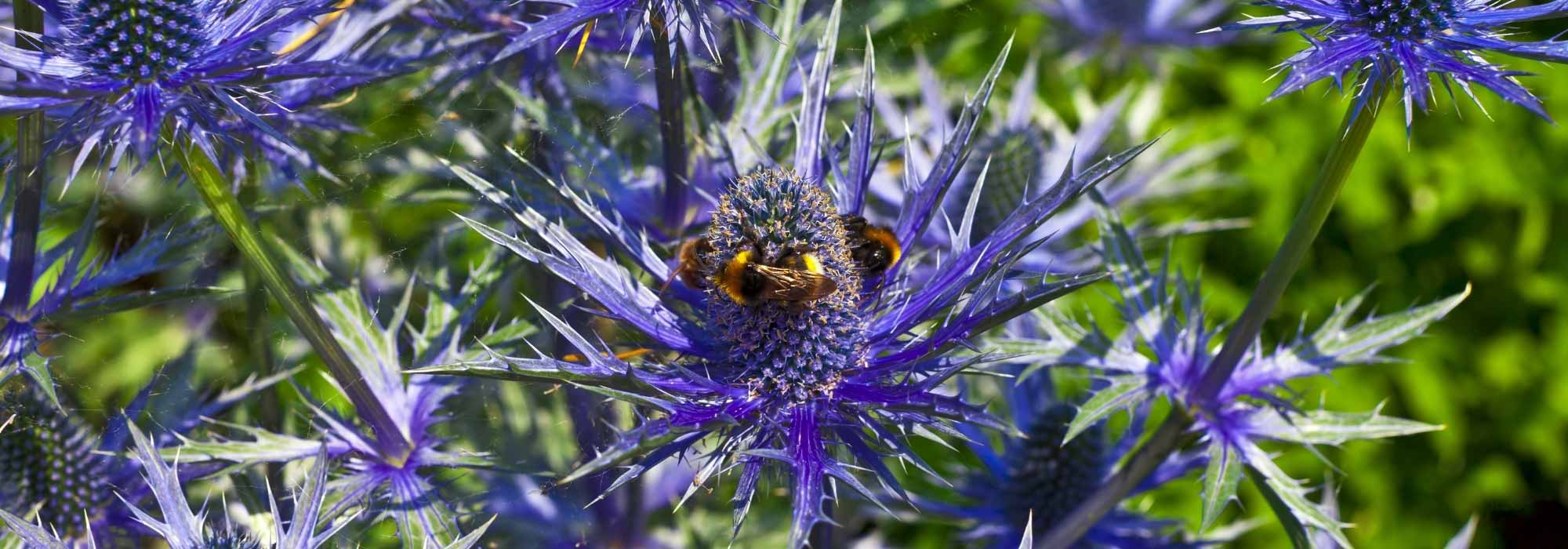
L'Eryngium Lapis Blue est une variété de panicaut maritime compacte qui forme une touffe d'un bleu violacé étonnant tout au long de l'été. Il attire le regard, couvert de fleurs à bractées épineuses, passant du bleu acier au bleu violacé foncé, portées par des tiges de la même couleur. Cette floraison, nectarifère et mellifère, domine largement le feuillage découpé, coriace, très épineux, marbré de blanc-gris argenté. Un très beau chardon bleu, magnifique planté parmi d'autres plantes sauvages de terres maigres et drainantes. Les fleurs de ce panicaut sont intéressantes dans les bouquets frais ou secs.
L’Eryngium maritimum, communément appelé Panicaut maritime, est un Chardon botanique originaire des côtes d’Europe occidentale et des pays méditerranéens. Peut-être l’avez-vous déjà rencontré, car cette merveille très "piquante" pousse dans les dunes et les galets de notre littoral. La cueillette de ce chardon vivace est interdite dans de nombreux départements français, parce qu'il a tendance à se raréfier dans la nature. Le panicaut de mer appartient à la famille des Apiacées (anciennement appelées les Ombellifères), tout comme la carotte et le céleri.
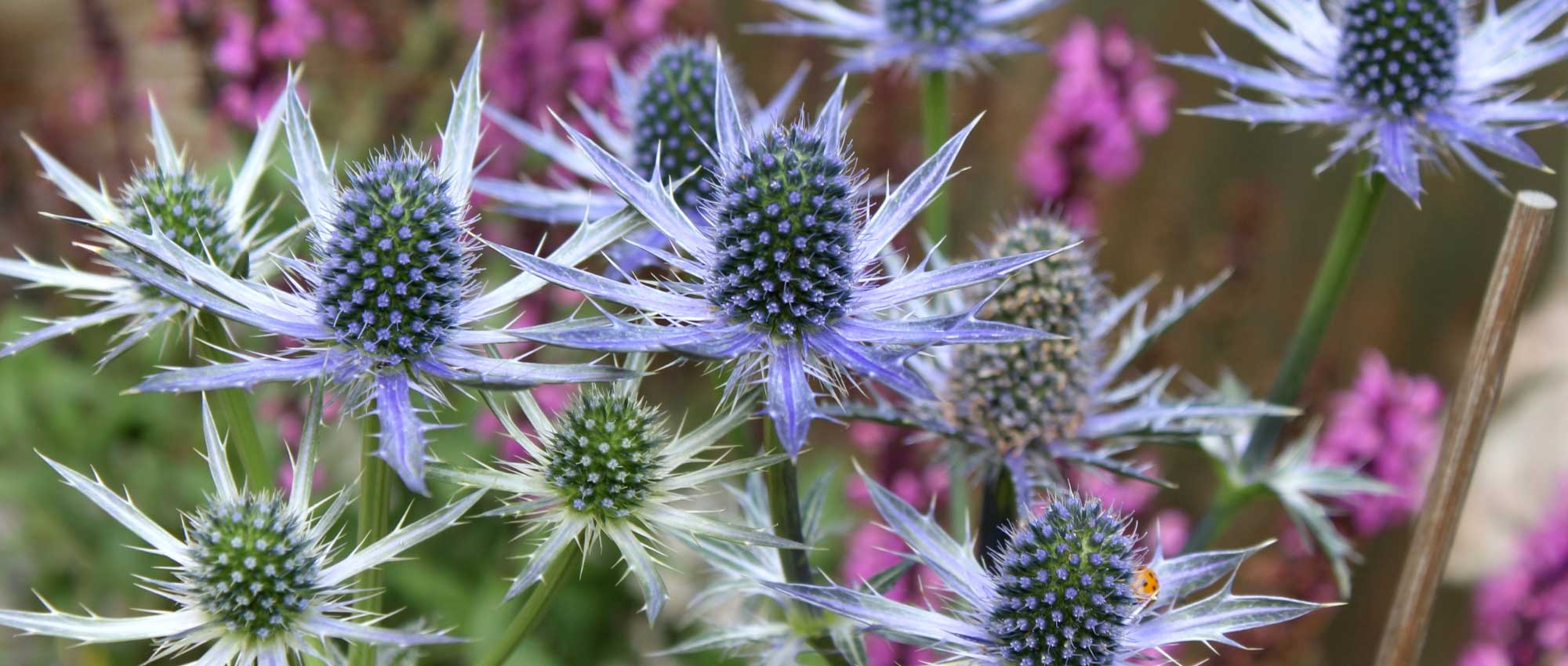
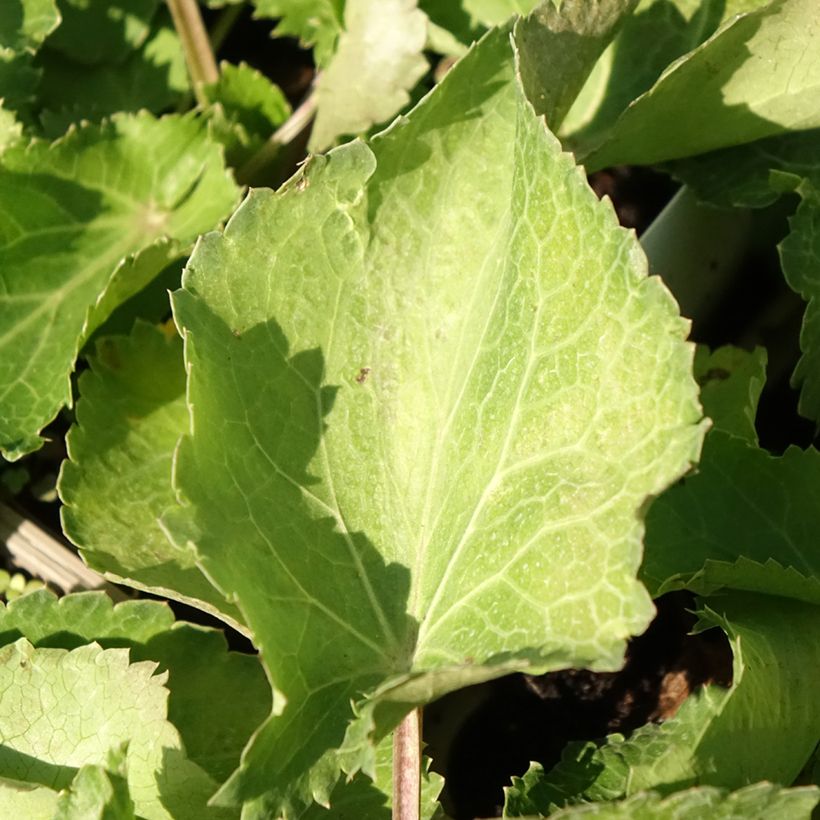
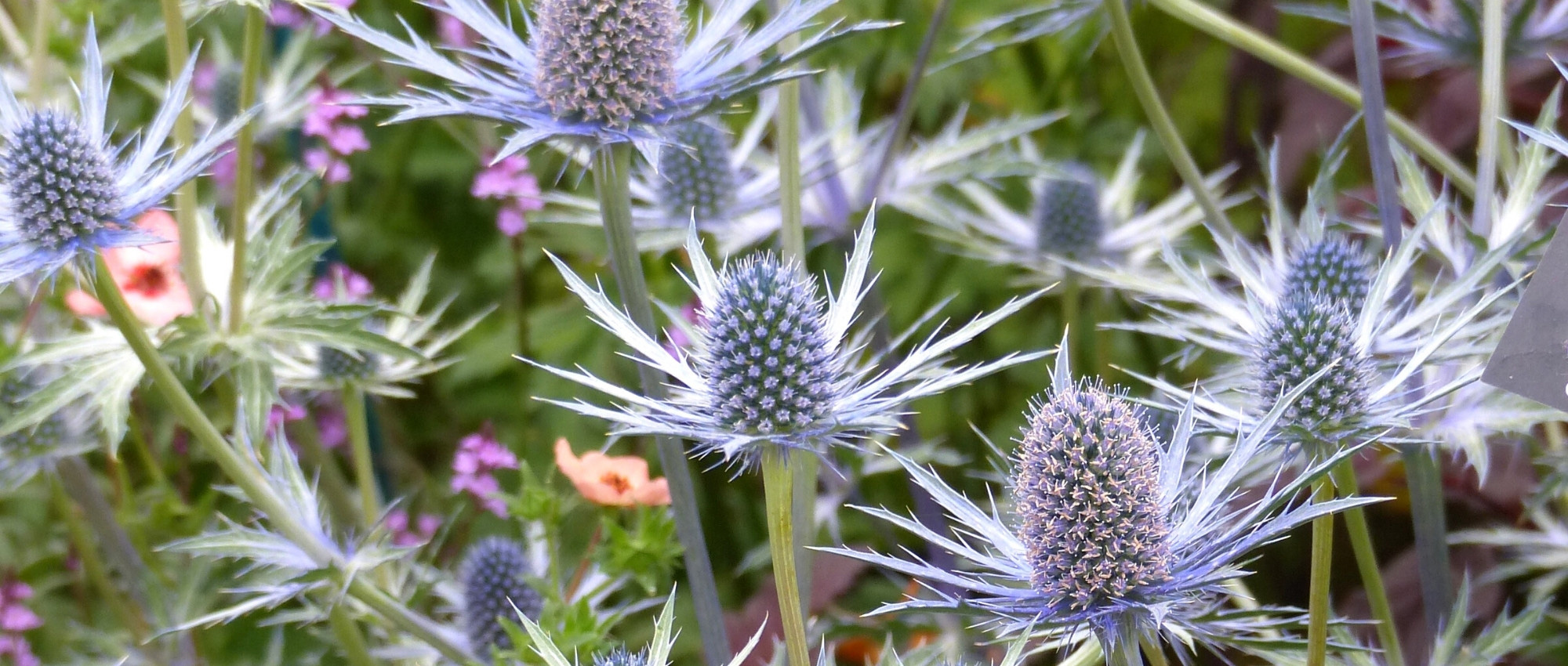
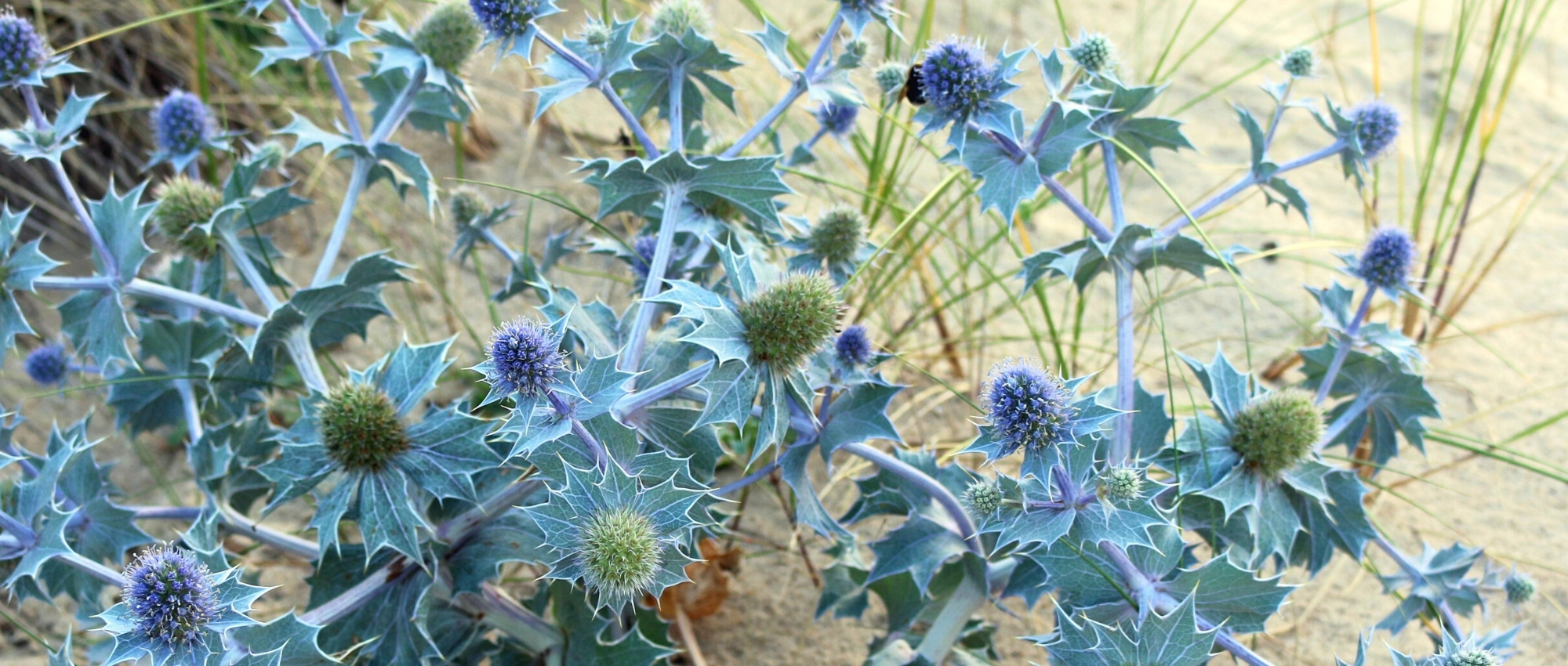
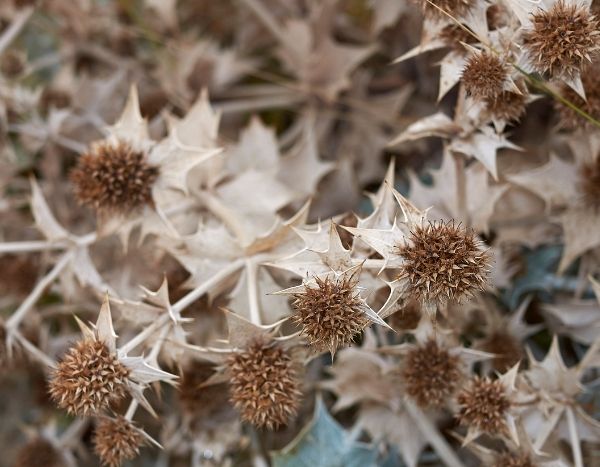
Le cultivar Lapis Blue forme une touffe buissonnante d'environ 50 cm de hauteur pour 45 cm de large. Sa souche émet des stolons souterrains. Très ramifié, ce Chardon bleu maritime présente un feuillage persistant en hiver. Il est composé de feuilles coriaces et épineuses, profondément découpées et aux nervures argentées spectaculaires. Il fleurit de juin à septembre. À l'extrémité des ramifications éclosent des fleurs organisées en capitules coniques denses, entourées de bractées découpées et épineuses. Le capitule change de couleur au fil du temps : d'un bleu argenté pâle à l'éclosion, ils se teintent progressivement de bleu violacé intense. Ils fanent ensuite en beige, mais restent décoratifs par leur structure jusqu'en hiver. C'est une plante rustique jusqu'à -15 ° C au moins.
Ce Chardon bleu maritime Lapis Blue apprécie le soleil et les sols pauvres, sableux et caillouteux, bien drainés, se rapprochant le plus possible des conditions du bord de mer. Il sera donc idéal dans un jardin côtier, mais s'adaptera aussi à l'intérieur des terres. Plante très décorative par sa très longue floraison bleu intense et son beau feuillage, il sera le compagnon parfait de plantes de terrains pauvres telles que les knautia, scabieuses, gauras, lychnis… Créez facilement une jolie scène en l'associant aussi à des Graminées, Armoises, Euphorbes, Lavandes, dans une ambiance grise, bleue et violette. Il est cependant conseillé de le planter en second plan des massifs pour ne pas avoir à côtoyer de trop près ses épines ! Le Chardon bleu est une des meilleures plantes pour la réalisation de splendides bouquets secs. Il suffit de couper les tiges avant le plein épanouissement des fleurs, et de les faire sécher la tête en bas.
Eryngium Lapis Blue - Panicaut maritime in pictures
Flowering
Foliage
Plant habit
Botanical data
Eryngium
maritimum
Lapis Blue
Apiaceae
Sea Holly
Cultivar or hybrid
Planting and care
The Eryngium Lapis Blue, an easy perennial plant in good growing conditions, is hardy up to -15°C. It is best planted in spring or early autumn in dry climates. Plant it in full sun, in ordinary, light, sandy or gravelly soil, especially well-drained. It does not tolerate heavy and wet soils, especially during the winter season. In case of heavy soil or in a region that is too humid, it will be necessary to mix compost, sand, and gravel with the garden soil and plant it on a raised bed. To ensure good drainage, it will be necessary to place a good layer of gravel at the bottom of the planting hole. Once well rooted, the sea holly is quite resistant to summer drought. After flowering, remove the faded flowers, unless you want the seeds to scatter in the garden, thus obtaining spontaneous sowing and new young plants.
Sea hollies can be attacked by aphids on the stems and inflorescences, as well as on their roots, weakening the plants and sometimes causing their wilting (root rot). On the other hand, they can be susceptible to powdery mildew and attacked by snails and slugs.
Planting period
Intended location
Care
Planting & care advice
-
-
-
-
-
-
-
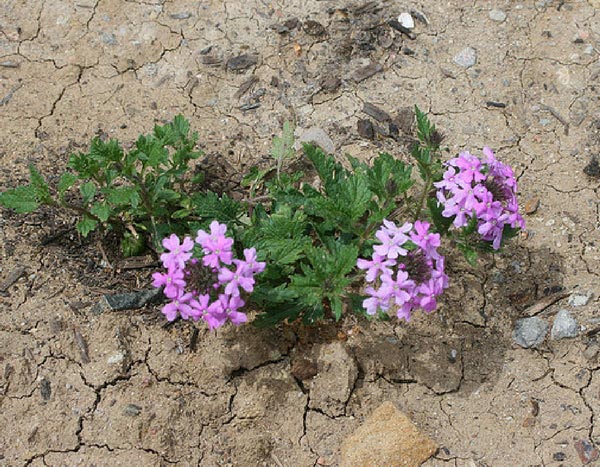
-
-
, onOrder confirmed
Reply from on Promesse de fleurs
Recently viewed products
Haven't found what you were looking for?
Hardiness is the lowest winter temperature a plant can endure without suffering serious damage or even dying. However, hardiness is affected by location (a sheltered area, such as a patio), protection (winter cover) and soil type (hardiness is improved by well-drained soil).
In temperate climates, pruning of spring-flowering shrubs (forsythia, spireas, etc.) should be done just after flowering.
Pruning of summer-flowering shrubs (Indian Lilac, Perovskia, etc.) can be done in winter or spring.
In cold regions as well as with frost-sensitive plants, avoid pruning too early when severe frosts may still occur.
The harvesting period indicated on our website applies to countries and regions in USDA zone 8 (France, England, Ireland, the Netherlands).
In colder areas (Scandinavia, Poland, Austria...) fruit and vegetable harvests are likely to be delayed by 3-4 weeks.
In warmer areas (Italy, Spain, Greece, etc.), harvesting will probably take place earlier, depending on weather conditions.
The sowing periods indicated on our website apply to countries and regions within USDA Zone 8 (France, UK, Ireland, Netherlands).
In colder areas (Scandinavia, Poland, Austria...), delay any outdoor sowing by 3-4 weeks, or sow under glass.
In warmer climes (Italy, Spain, Greece, etc.), bring outdoor sowing forward by a few weeks.
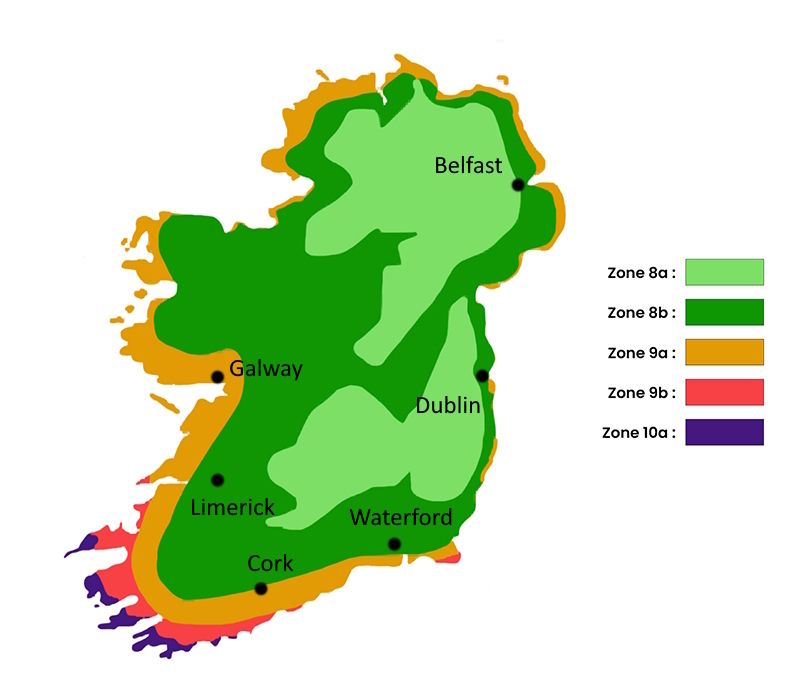
The planting period indicated on our website applies to regions in USDA Zone 9a (East Coast and Midlands: Dublin, Wexford, Waterford, Kilkenny, Portlaoise). It will vary depending on where you live:
- On the west coast and in the north-west (Galway, Limerick, Sligo, Donegal, Westport), delay planting by 1 to 2 weeks in spring and bring it forward by 1 to 2 weeks in autumn compared to the dates given, preferably choosing periods without strong winds.
- In the inland hills and plateaus (Wicklow Mountains, Macgillycuddy’s Reeks, Connemara, Killarney), it is best to plant in spring (April–May) or autumn (September–October), avoiding periods of waterlogged soil in winter and strong winds, which pose the main risk to newly planted trees in these areas.
The flowering period indicated on our website applies to regions in USDA Zone 9a, such as the East Coast and Midlands, including Dublin, Wexford, Waterford, Kilkenny and Portlaoise.
This will vary depending on where you live:
- On the west coast and in the northwest (Galway, Limerick, Sligo, Donegal and Westport), it will be delayed by one to two weeks compared to the given dates, due to stronger Atlantic winds and less spring sunshine.
- In the inland hills and plateaus (the Wicklow Mountains, the Macgillycuddy's Reeks, Connemara and Killarney), flowering will be delayed by two to three weeks. Flowering mainly occurs between May and July, with the limiting factors being less frost and more of the excessive humidity, strong winds and lack of sunshine that are characteristic of these areas.
Shipping country and language
Your country of residence may be:
Your country of residence is:
For a better user experience on our website, you can select:
Your shipping country:
-
 Austria
-
 Belgium
-
 Bosnia & Herzegovina
-
 Bulgaria
-
 Croatia
-
 Cyprus
-
 Czechia
-
 Denmark
-
 Estonia
-
 Finland
-
 France
-
 Germany
-
 Greece
-
 Hungary
-
 Iceland
-
 Ireland
-
 Italy
Italy
-
 Latvia
-
 Liechtenstein
-
 Lithuania
-
 Luxembourg
-
 Malta
Malta
-
 Netherlands
-
 Poland
-
 Portugal
-
 Romania
-
 Serbia
-
 Slovakia
-
 Slovenia
-
 Spain
Spain
-
 Sweden
-
 Switzerland
Language:
-
French
-
 English
-
Spanish
-
Italian
-
German
-
Portuguese
-
Dutch
-
Finnish
My Account
Hello
My wish lists
My cart
Log in / Register
Existing customer?
This form is protected by reCAPTCHA - the Google Privacy Policy and Terms of Service apply.
New customer?
Create an account to track your orders, access our customer service and, if you wish, make the most of our upcoming offers.