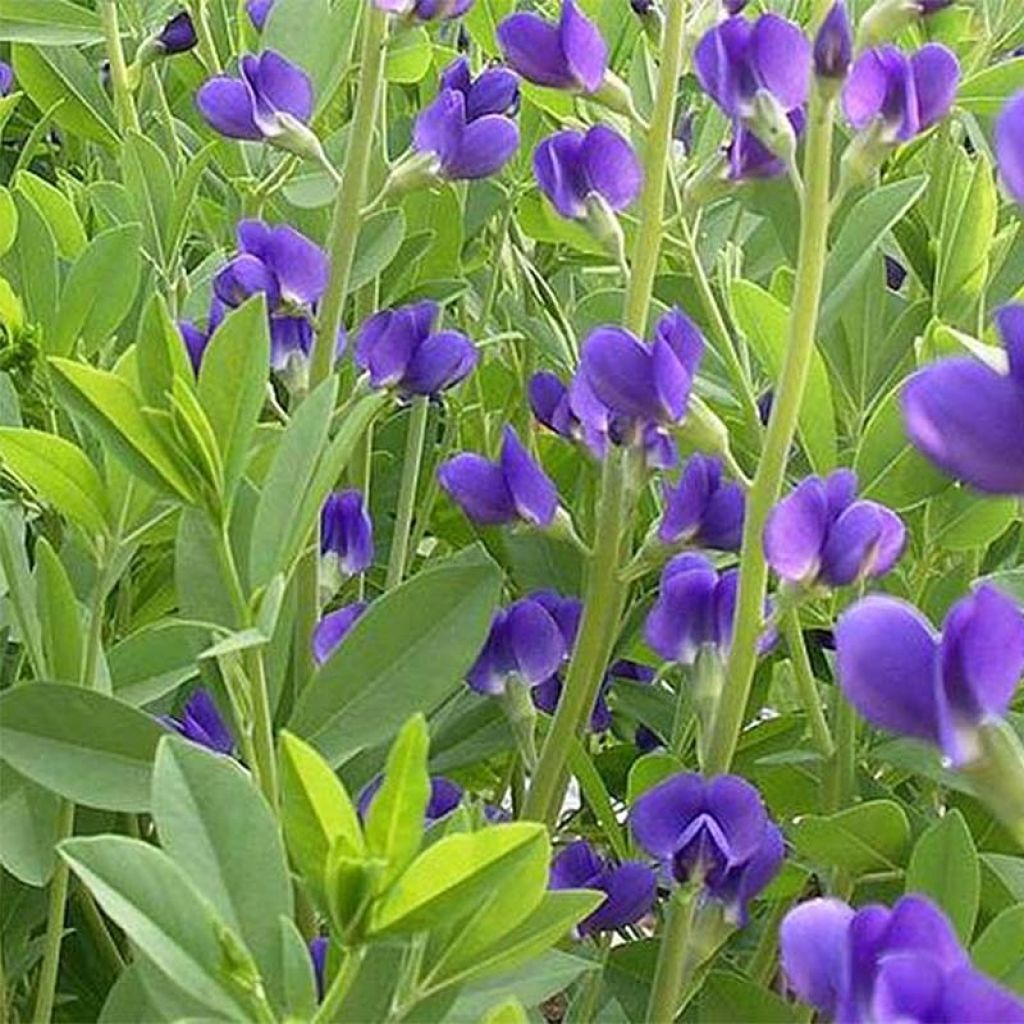
Baptisia australis Caspian Blue - False Indigo
Baptisia australis Caspian Blue - False Indigo
Baptisia australis Caspian Blue
False Indigo, Blue Wild Indigo
Nice sized plant. Looking forward to next summer.
pascale, 21/08/2024
Back-to-school special offer!
Get €10 off for every €50 you spend! And get up to €40 off on a single order.
How does it work?
1. Shop your favourites
Add your favourite plants to your basket. For every €50 you spend (excluding delivery charges, store credit and the plastic-free option), you’ll receive a €10 voucher.
€50 spent = €10 voucher
€100 spent = €20 voucher
€150 spent = €30 voucher
€200 spent = €40 voucher
2. Place your order
Once your basket reaches one of the spending thresholds, place your order. You can even choose your delivery date!
3. Receive your voucher
As soon as your order has been shipped, you’ll receive an email containing your personal voucher code and its value.
4. Use it on your next order
Your voucher is valid for 90 days from the date you receive it. It can be used once only, on a new order worth at least the value of the voucher, excluding delivery charges.
Please note: Vouchers can be combined with other offers, but cannot be split or refunded.
Why not try an alternative variety in stock?
View all →
Available in 1 sizes
Available in 1 sizes
Available in 1 sizes
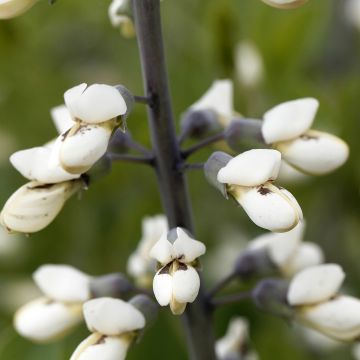
Available in 1 sizes
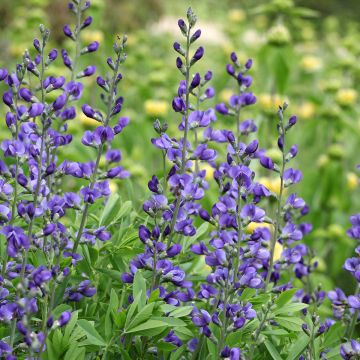
Available in 1 sizes

Available in 0 sizes
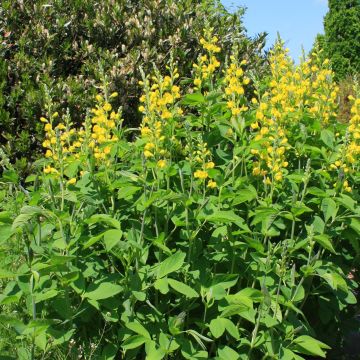
Available in 1 sizes
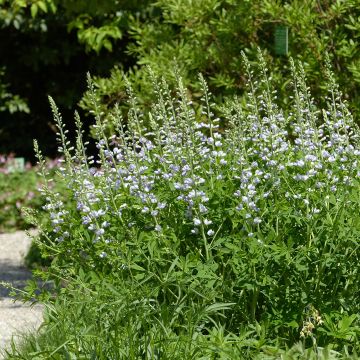
Available in 1 sizes
Available in 2 sizes
Available in 2 sizes
This plant carries a 12 months recovery warranty
More information
We guarantee the quality of our plants for a full growing cycle, and will replace at our expense any plant that fails to recover under normal climatic and planting conditions.
Does this plant fit my garden?
Set up your Plantfit profile →
Description
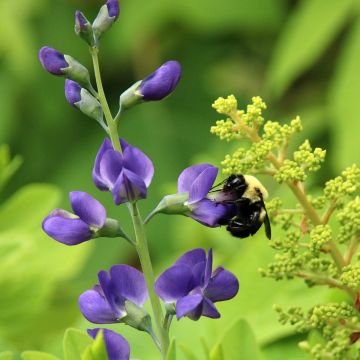
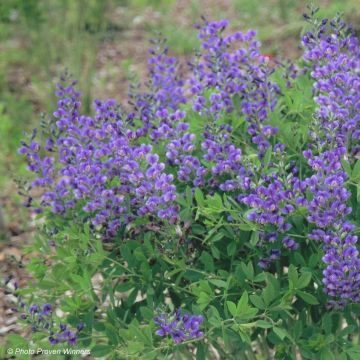
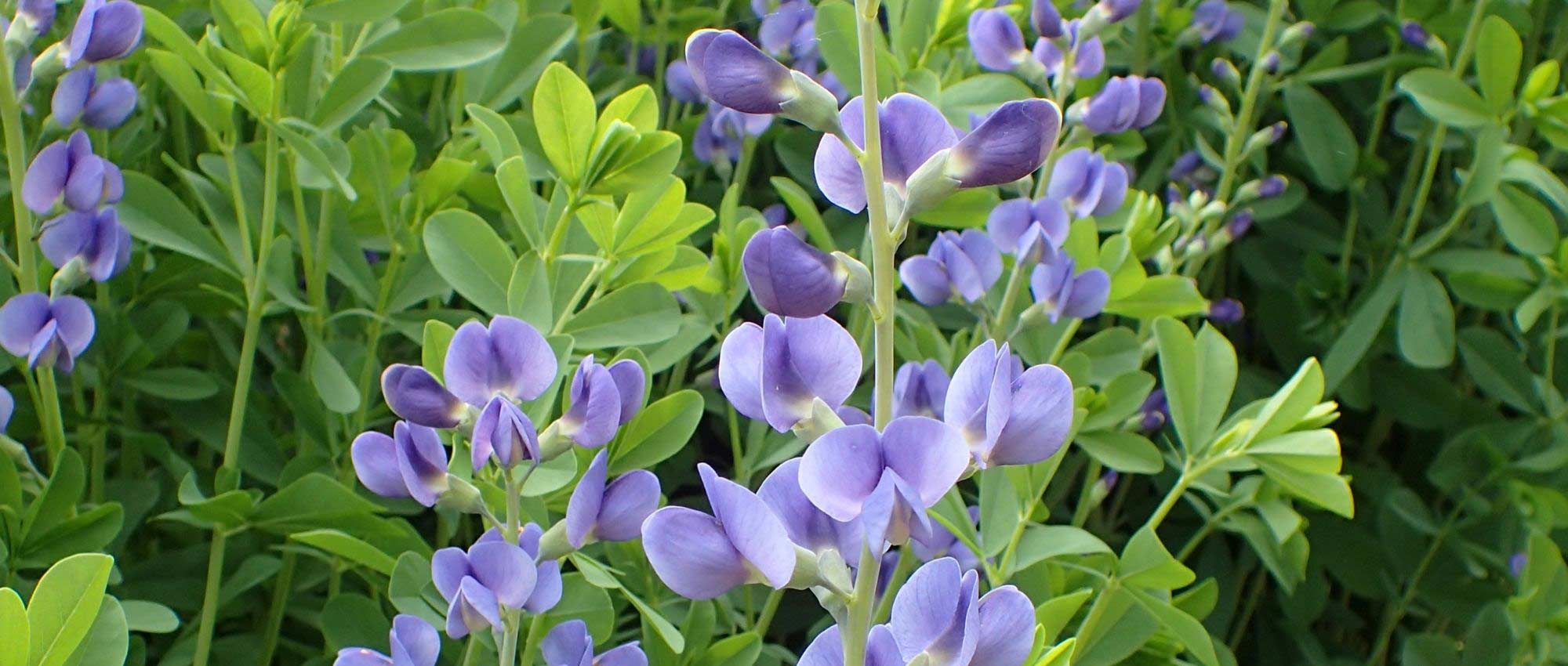
Baptisia 'Caspian Blue' is a rare variety of Indigo Lupin available for sale, which combines the vigour of its North American ancestor, the Indigo Lupin, with a abundant flowering, of a fantastic blue, almost a Gentian blue. This particularly bushy and lively plant is adorned with beautiful floral spikes adorned with very blue pea flowers, but also with a clover foliage whose texture is interesting even outside the flowering period. Baptisia australis takes its time to settle, but it is undemanding, very perennial, and proves to be very water-efficient once well established.
The 'Caspian Blue' Baptisia is a perennial plant of the Fabaceae family derived from the Baptisia australis, native to the centre of the United States. All Baptisias grow spontaneously in meadows and woods, mostly on poor, non-limestone soil, among tall grasses, without any care, perfectly tolerating frost and dry summers. They can live up to 100 years.
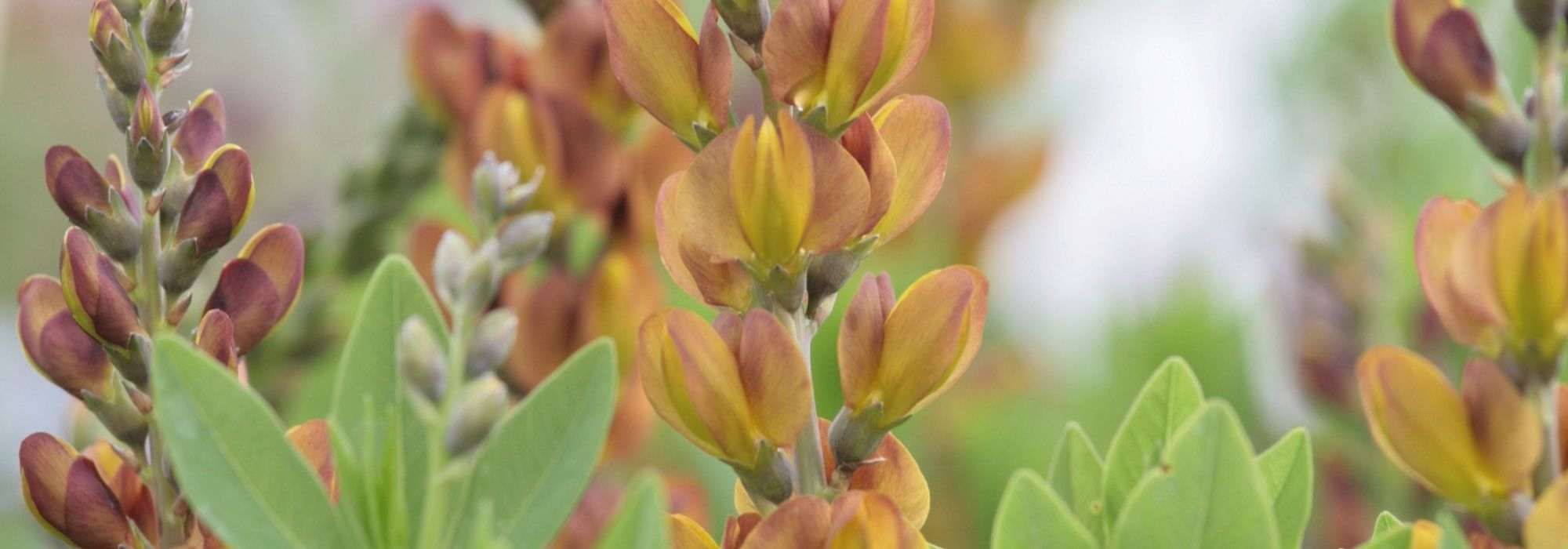
The 'Caspian Blue' variety has a rather spreading habit in its young age, then forms over time a well-bushy clump reaching an average height of 1m (3ft), with a similar spread. Its growth is quite slow. The flowering takes place in June-July, in the form of spikes of papilionaceous flowers reaching about 35cm (14in). Each one blooms from a dark blue bud, then it blossoms in ultramarine blue, with a keel (the lower petal) barely spotted with white. The fruit of this Baptisia, quite decorative, is a green pod that turns black when ripe. The deciduous foliage, which disappears in winter, is also very ornamental when swaying in the wind. It is composed of leaves divided into three rounded leaflets, resembling those of alfalfa or clover. This plant develops from a particular root system, which dives very deeply into the soil to extract and transform nutrients thanks to the presence of symbiotic bacteria lodged in small nodules. Like all Fabaceae, this Baptisia contributes to enriching the soil that welcomes it.
Baptisias are close cousins of lupins, which are much better known in Europe. But they are much less demanding in terms of humidity, even though they share a preference for acidic soils. Anchored on very robust stumps, they can live long in our gardens but take time to settle. The 'Caspian Blue' false indigo can perfectly replace a small bush in a sunny border. It will find its place in a romantic garden, a dry garden, or in natural areas, for example with Linaria 'Peachy', sainfoin, and Indigofera gerardiana. It is also very useful for decorating a degraded plot, which often surrounds a recently built house. It is also superb in the company of pastel blooms in late spring, such as roses or peonies, or conversely with the bright pink flowers of Salvia grahamii. Very vertical perennials, like irises or tall alliums, are very complementary to Baptisias, both in terms of colour and texture. Finally, its very blue flowers highlight the chartreuse blooms of lady's mantle.
The vernacular name 'false indigo' comes from the use that some Native American peoples made of these dye plants. Indeed, they provide dye pigments comparable to those of true indigos (from the Antillean genus Indigofera), but of lesser quality.
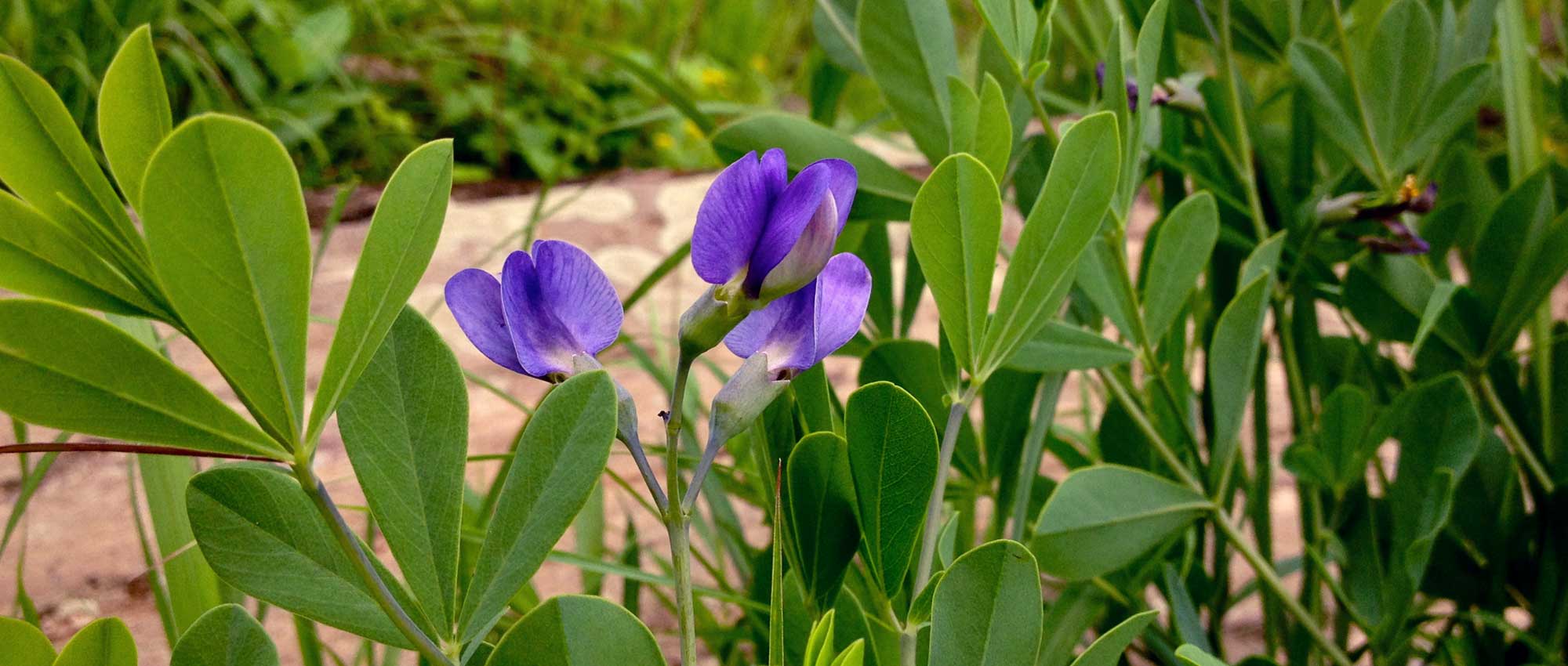
Baptisia australis Caspian Blue - False Indigo in pictures
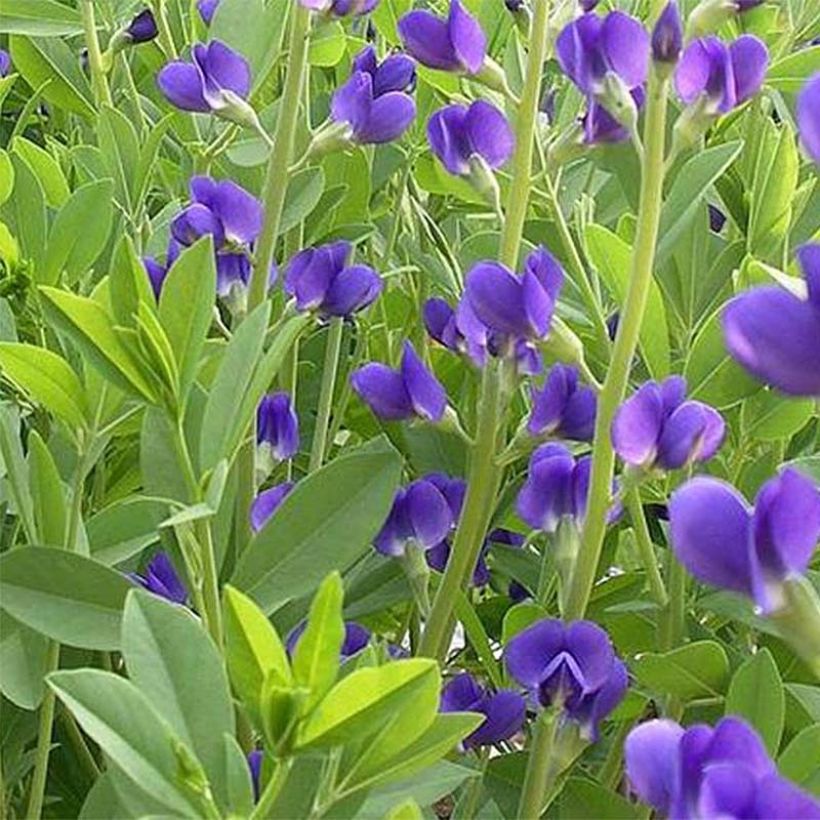
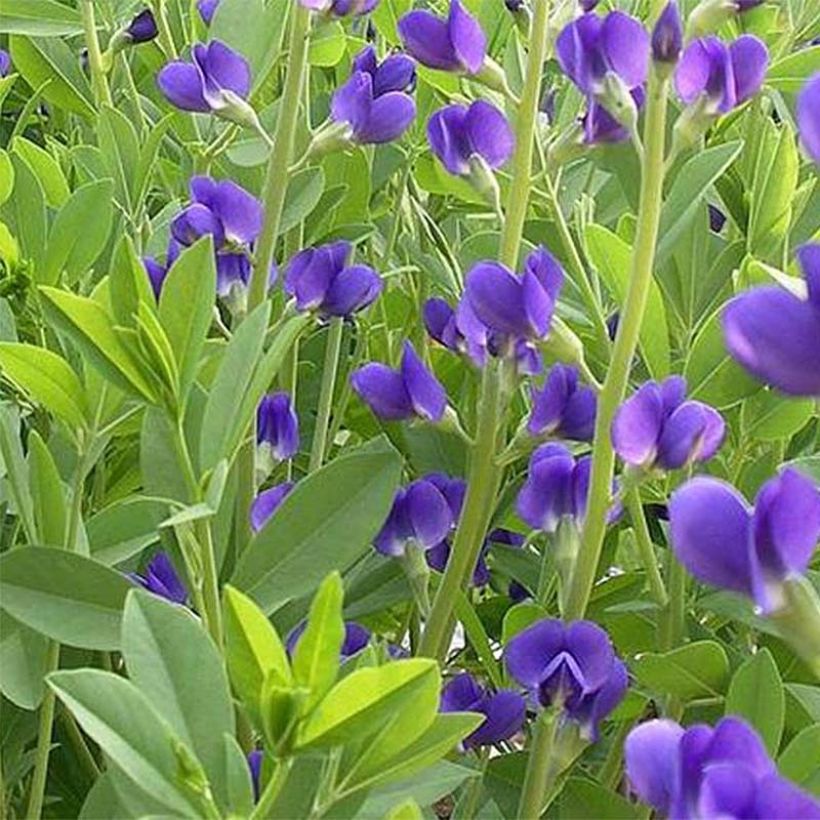
Flowering
Foliage
Plant habit
Safety measures
Botanical data
Baptisia
australis
Caspian Blue
Fabaceae
False Indigo, Blue Wild Indigo
Cultivar or hybrid
ingestion
Cette plante est toxique si elle est ingérée volontairement ou involontairement.
Ne la plantez pas là où de jeunes enfants peuvent évoluer, et lavez-vous les mains après l'avoir manipulée.
Pensez à conserver l'étiquette de la plante, à la photographier ou à noter son nom, afin de faciliter le travail des professionnels de santé.
Davantage d'informations sur https://plantes-risque.info
Planting and care
The cultivation of Baptisia 'Caspian Blue' requires a bit of skill to succeed smoothly:
Not very tolerant to limestone soils, this tall perennial appreciates light and well-drained soils, but tolerates summer drought.
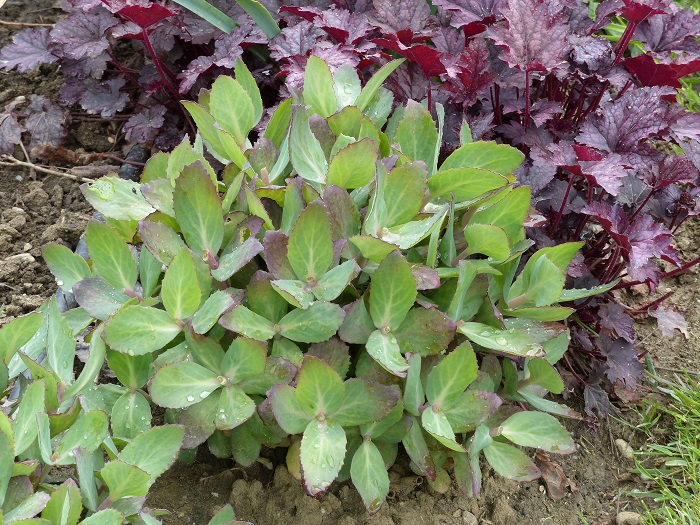
In the first year of cultivation, the plant seems to vegetate, it's normal. Young Baptisia are plants with very slow growth, and their taproot is particularly fragile until it is deeply anchored in the soil. Make sure not to damage it during planting! Also, do not leave a young plant in its bucket for too long: the taproot could bend when it reaches the bottom.
Possibly add a small handful of phosphate fertilizer (it's a root stimulant) that you will mix with the soil at the time of planting. Add 1/3 sand and 1/3 gravel to heavy soil to ensure good drainage, which is essential. Water moderately in the first year.
In the second or third year, the plant will be established, will not require special care, and can flower abundantly for many years!
Be careful, voles also seem to be fond of its fleshy roots...
Planting period
Intended location
Care
Planting & care advice
-
-
-
-
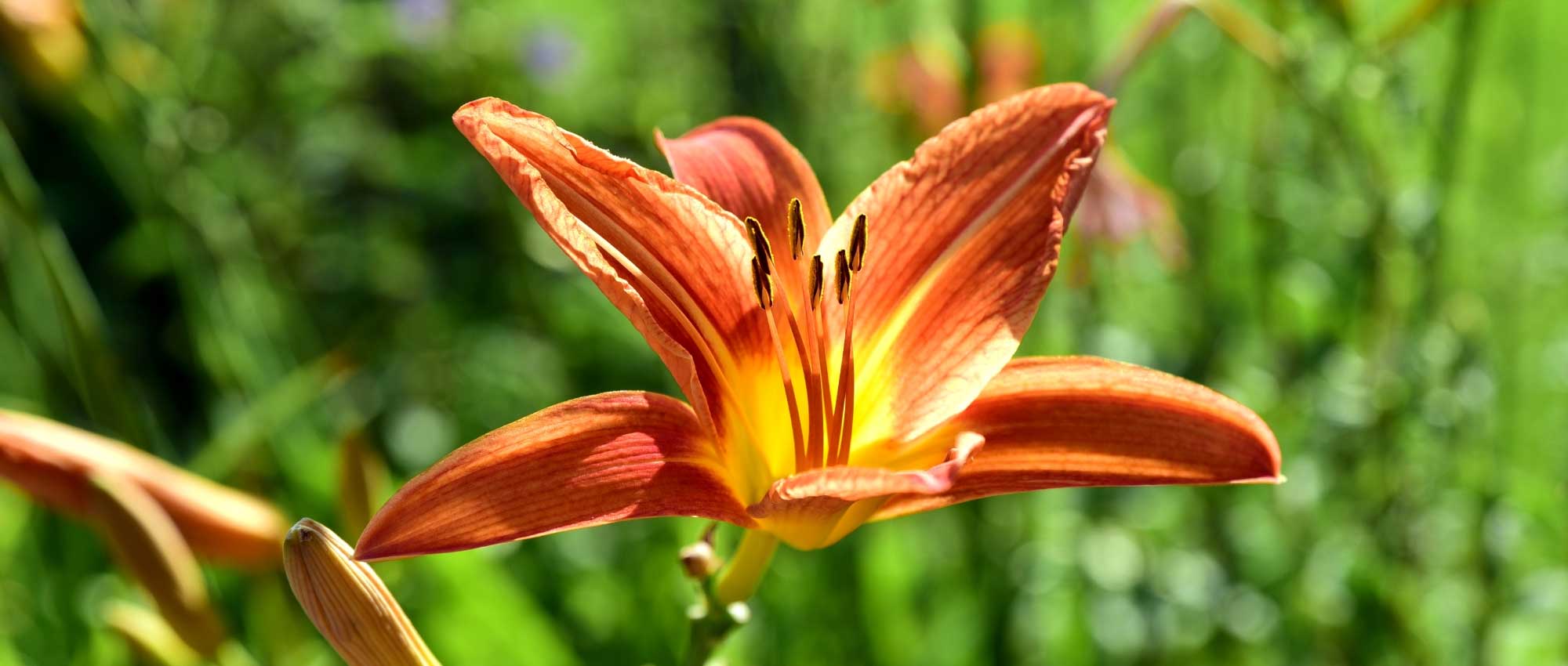
-
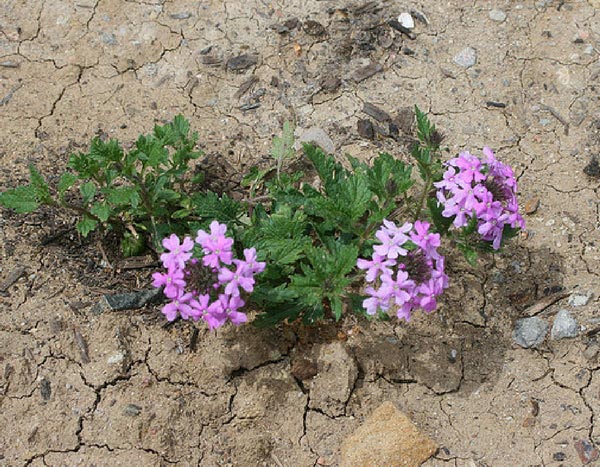
-
-
-
-
, onOrder confirmed
Reply from on Promesse de fleurs
Recently viewed products
Haven't found what you were looking for?
Hardiness is the lowest winter temperature a plant can endure without suffering serious damage or even dying. However, hardiness is affected by location (a sheltered area, such as a patio), protection (winter cover) and soil type (hardiness is improved by well-drained soil).
In temperate climates, pruning of spring-flowering shrubs (forsythia, spireas, etc.) should be done just after flowering.
Pruning of summer-flowering shrubs (Indian Lilac, Perovskia, etc.) can be done in winter or spring.
In cold regions as well as with frost-sensitive plants, avoid pruning too early when severe frosts may still occur.
The harvesting period indicated on our website applies to countries and regions in USDA zone 8 (France, England, Ireland, the Netherlands).
In colder areas (Scandinavia, Poland, Austria...) fruit and vegetable harvests are likely to be delayed by 3-4 weeks.
In warmer areas (Italy, Spain, Greece, etc.), harvesting will probably take place earlier, depending on weather conditions.
The sowing periods indicated on our website apply to countries and regions within USDA Zone 8 (France, UK, Ireland, Netherlands).
In colder areas (Scandinavia, Poland, Austria...), delay any outdoor sowing by 3-4 weeks, or sow under glass.
In warmer climes (Italy, Spain, Greece, etc.), bring outdoor sowing forward by a few weeks.
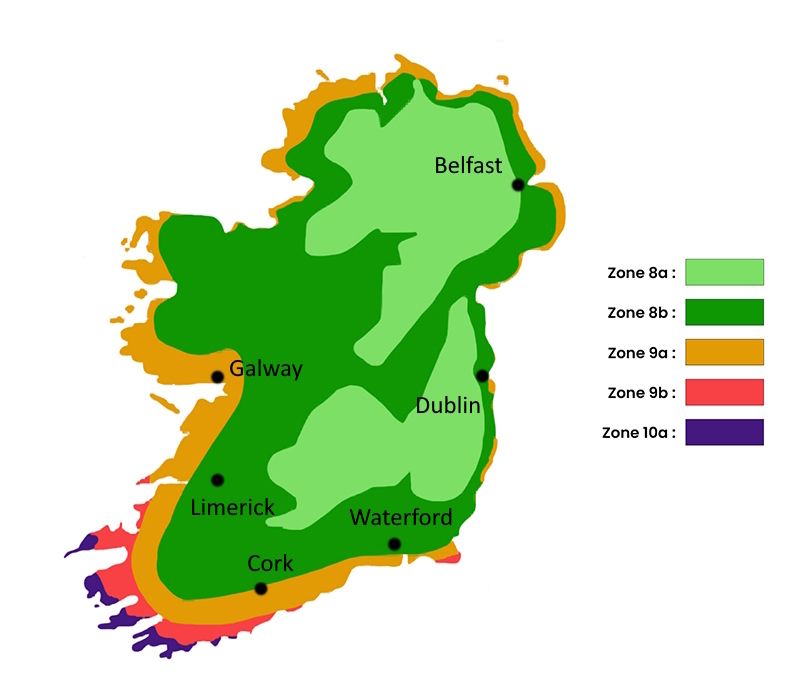
The planting period indicated on our website applies to regions in USDA Zone 9a (East Coast and Midlands: Dublin, Wexford, Waterford, Kilkenny, Portlaoise). It will vary depending on where you live:
- On the west coast and in the north-west (Galway, Limerick, Sligo, Donegal, Westport), delay planting by 1 to 2 weeks in spring and bring it forward by 1 to 2 weeks in autumn compared to the dates given, preferably choosing periods without strong winds.
- In the inland hills and plateaus (Wicklow Mountains, Macgillycuddy’s Reeks, Connemara, Killarney), it is best to plant in spring (April–May) or autumn (September–October), avoiding periods of waterlogged soil in winter and strong winds, which pose the main risk to newly planted trees in these areas.
The flowering period indicated on our website applies to regions in USDA Zone 9a, such as the East Coast and Midlands, including Dublin, Wexford, Waterford, Kilkenny and Portlaoise.
This will vary depending on where you live:
- On the west coast and in the northwest (Galway, Limerick, Sligo, Donegal and Westport), it will be delayed by one to two weeks compared to the given dates, due to stronger Atlantic winds and less spring sunshine.
- In the inland hills and plateaus (the Wicklow Mountains, the Macgillycuddy's Reeks, Connemara and Killarney), flowering will be delayed by two to three weeks. Flowering mainly occurs between May and July, with the limiting factors being less frost and more of the excessive humidity, strong winds and lack of sunshine that are characteristic of these areas.
Shipping country and language
Your country of residence may be:
Your country of residence is:
For a better user experience on our website, you can select:
Your shipping country:
-
 Austria
-
 Belgium
-
 Bosnia & Herzegovina
-
 Bulgaria
-
 Croatia
-
 Cyprus
-
 Czechia
-
 Denmark
-
 Estonia
-
 Finland
-
 France
-
 Germany
-
 Greece
-
 Hungary
-
 Iceland
-
 Ireland
-
 Italy
Italy
-
 Latvia
-
 Liechtenstein
-
 Lithuania
-
 Luxembourg
-
 Malta
Malta
-
 Netherlands
-
 Poland
-
 Portugal
-
 Romania
-
 Serbia
-
 Slovakia
-
 Slovenia
-
 Spain
Spain
-
 Sweden
-
 Switzerland
Language:
-
French
-
 English
-
Spanish
-
Italian
-
German
-
Portuguese
-
Dutch
-
Finnish
My Account
Hello
My wish lists
My cart
Log in / Register
Existing customer?
This form is protected by reCAPTCHA - the Google Privacy Policy and Terms of Service apply.
New customer?
Create an account to track your orders, access our customer service and, if you wish, make the most of our upcoming offers.