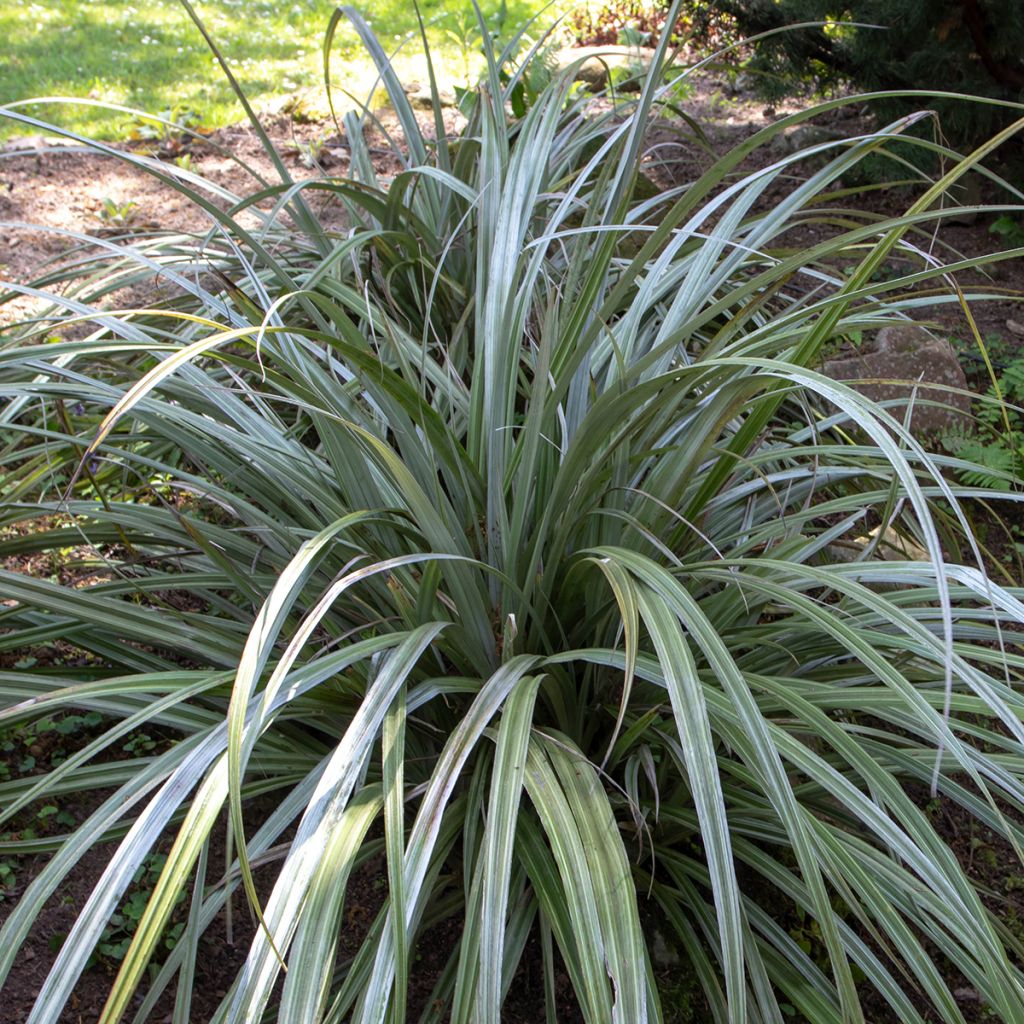
Astelia chathamica Silver Shadow
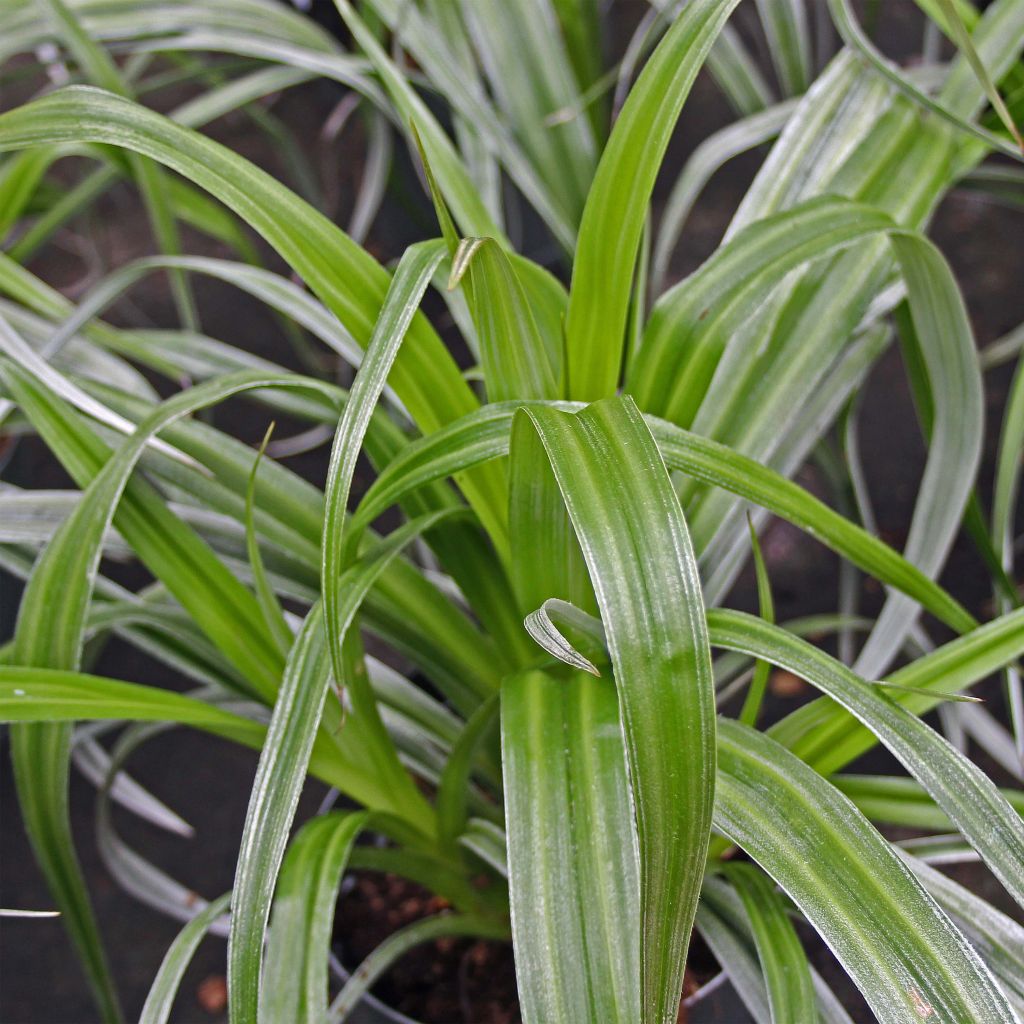
Astelia chathamica Silver Shadow
Astelia chathamica Silver Shadow
Astelia chathamica Silver Shadow®
Silver Spear, Chatham Island Astelia, Chatham Islands kakaha, Maori flax
Started well
Phil IAM, 15/06/2024
Back-to-school special offer!
Get €10 off for every €50 you spend! And get up to €40 off on a single order.
How does it work?
1. Shop your favourites
Add your favourite plants to your basket. For every €50 you spend (excluding delivery charges, store credit and the plastic-free option), you’ll receive a €10 voucher.
€50 spent = €10 voucher
€100 spent = €20 voucher
€150 spent = €30 voucher
€200 spent = €40 voucher
2. Place your order
Once your basket reaches one of the spending thresholds, place your order. You can even choose your delivery date!
3. Receive your voucher
As soon as your order has been shipped, you’ll receive an email containing your personal voucher code and its value.
4. Use it on your next order
Your voucher is valid for 90 days from the date you receive it. It can be used once only, on a new order worth at least the value of the voucher, excluding delivery charges.
Please note: Vouchers can be combined with other offers, but cannot be split or refunded.
Home or relay delivery (depending on size and destination)
Important: You may be charged customs duties by your country’s customs authorities upon delivery.
Schedule delivery date
and select date in basket
This plant carries a 12 months recovery warranty
More information
We guarantee the quality of our plants for a full growing cycle, and will replace at our expense any plant that fails to recover under normal climatic and planting conditions.

Does this plant fit my garden?
Set up your Plantfit profile →
Description
The Astelia chathamica Silver Shadow is a striking perennial plant that resembles a Phormium in its habit and favours fairly similar growing conditions. This recent horticultural creation stands out for its denser habit, forming a tightly-packed large clump, but also for its stunning silver foliage of an almost metallic appearance. Its broad linear leaves slightly trail at their tips and are completely covered in bristles that shimmer in the light. This evergreen plant is a marvel with its own requirements: it clearly prefers acidic to neutral soil that remains moist in summer and abhors severe frosts. Magnificent in central European climates, it will also be a centerpiece when placed in a very large pot on the terrace during the warmer season in colder regions.
The Chatham Island Astelia belongs to the Asteliaceae family or the Liliaceae family according to classification. It is a horticultural hybrid dating back to 2004, resulting from cross-breeding between the Astelia chathamica Silver Spear originating from the Chatham Islands, with its large and silky foliage, and the A. nervosa, native to the peat meadows of North Island in New Zealand, with its fine and very silvery foliage. The 'Silver Shadow' leaves reach an intermediate width between that of their two parents, which are covered in bristles on both sides. This superb rhizomatous perennial grows in a large non-trailing clump. With an upright and arching habit, it reaches about 1.10 m (3 ft 7 in) in height depending on growing conditions, with a spread of 80-90 cm (31.5-35.4 in). Its very long, slightly stiff leaves are slightly arched and pointed at their tips, displaying a green colour masked by numerous bristles, giving the overall plant different shades of steel grey to white to almond green, which are iridescent in the sun. Flowering stems appear in spring, depending on the climate, emerging from within the foliage. They bear discreet but fragrant brown flowers, followed by the formation of small fruits on female plants, which are drupes of a beautiful bright orange colour. Its relatively undeveloped root system allows it to adapt well to container cultivation.
This Astelia chathamica Silver Shadow is a plant of great ornamental value, suitable for large beds or large rockeries, preferably in mild oceanic climates, as it dislikes the heat and prolonged drought of Mediterranean summers, as well as calcareous soils. Whether used as a solitary plant or planted in groups, it brings structure to space and brings a very exotic charm to the garden. In cold regions, it will thrive in a very large pot on the terrace or balcony, to admire its presence during the warmer season, and can be overwintered frost-free in a lightly heated greenhouse or conservatory. In urban gardens, it will soften concrete structures. For an exotic and contrasting atmosphere, it can be combined, for example, with Leptospermum scoparium, a pink to red ball-shaped plant that bloom in summer, Helichrysum rosmarinifolium 'Silver Jubilee', Pittosporum tenuifolium Tom Thumb, or even Olearia macrodonta 'Major', plants also from Oceania, likewise perfect for coastal areas. Like tall grasses, it is also a wonderful perennial for a modern garden with defined lines: a clump of Muhlenbergia capillaris, a veritable pink cloud in late summer, or Eragrostis trichodes Summer Train, resembling a golden to copper mist, should, with this Astelia, create a trio of great beauty.
Report an error about the product description
Astelia chathamica Silver Shadow in pictures
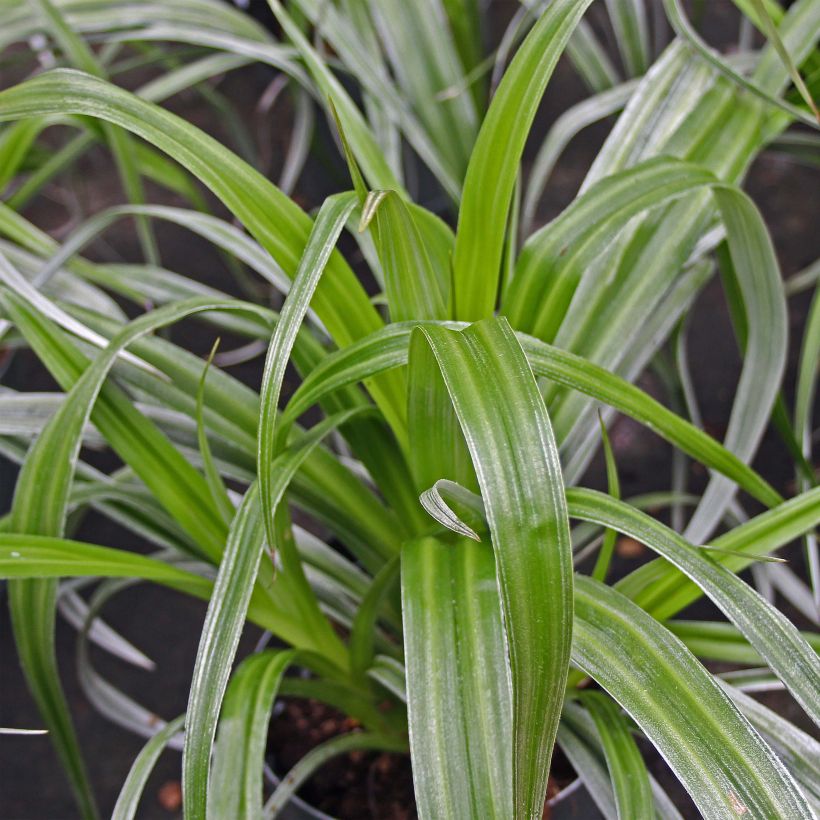
Flowering
Foliage
Plant habit
Botanical data
Astelia
chathamica
Silver Shadow®
Asteliaceae (Liliaceae)
Silver Spear, Chatham Island Astelia, Chatham Islands kakaha, Maori flax
Cultivar or hybrid
Planting and care
The Astelia Silver Shadow is a hardy plant best grown in open ground mainly in regions where frosts do not go below -7°C (19.4 °F). Everywhere else, pot cultivation is more suitable, which will allow control over the nature of the substrate, watering, and wintering sheltered from frost, in a cool and bright enclosure.
Plant your Astelia in a container or a large pot with the bottom filled with gravel, pottery shards, or clay balls. The mixture it is planted in should be fertile and well-drained (1/3 leaf compost, 1/3 compost, and 1/3 heathland soil, enriched with a handful of crushed horn).
Place the plant in full sun if you live in a less sunny region, or preferably in partial shade, which it favours. Water during the growth period, preferably with non-limestone water, so that the soil never completely dries out. Feed the plant with diluted liquid green plant-specific fertiliser once a month. In winter, reduce watering and fertiliser inputs, and let the soil dry superficially in-between watering.
In mild climates with light frosts, plant the Astelia in open ground in the sun, in very well-drained, chalk-free, and sufficiently fertile soil.
In summer, make sure the plant does not lack water. In winter, it can rely on rainwater.
In case of a severe frost warning, spread a thick layer of mulch at the base of the plant and cover it with a winter protection fleece.
In the coldest regions, a thick mulch will help protect the roots from winter frosts. Under these conditions, the foliage will be damaged as soon as the temperature drops below -5°C (23 °F), but in such an event, (down to -15°C (5 °F), the plant will sprout again from the stump in spring.
Planting period
Intended location
Care
Planting & care advice
-
-
-
-
-

-
-

-

-
, onOrder confirmed
Reply from on Promesse de fleurs
Recently viewed products
Haven't found what you were looking for?
Hardiness is the lowest winter temperature a plant can endure without suffering serious damage or even dying. However, hardiness is affected by location (a sheltered area, such as a patio), protection (winter cover) and soil type (hardiness is improved by well-drained soil).
In temperate climates, pruning of spring-flowering shrubs (forsythia, spireas, etc.) should be done just after flowering.
Pruning of summer-flowering shrubs (Indian Lilac, Perovskia, etc.) can be done in winter or spring.
In cold regions as well as with frost-sensitive plants, avoid pruning too early when severe frosts may still occur.
The harvesting period indicated on our website applies to countries and regions in USDA zone 8 (France, England, Ireland, the Netherlands).
In colder areas (Scandinavia, Poland, Austria...) fruit and vegetable harvests are likely to be delayed by 3-4 weeks.
In warmer areas (Italy, Spain, Greece, etc.), harvesting will probably take place earlier, depending on weather conditions.
The sowing periods indicated on our website apply to countries and regions within USDA Zone 8 (France, UK, Ireland, Netherlands).
In colder areas (Scandinavia, Poland, Austria...), delay any outdoor sowing by 3-4 weeks, or sow under glass.
In warmer climes (Italy, Spain, Greece, etc.), bring outdoor sowing forward by a few weeks.
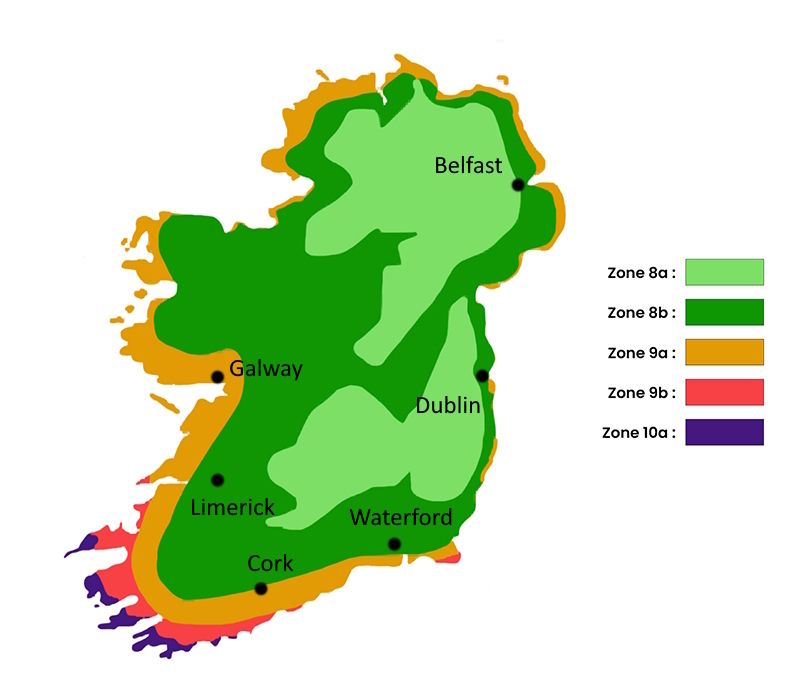
The planting period indicated on our website applies to regions in USDA Zone 9a (East Coast and Midlands: Dublin, Wexford, Waterford, Kilkenny, Portlaoise). It will vary depending on where you live:
- On the west coast and in the north-west (Galway, Limerick, Sligo, Donegal, Westport), delay planting by 1 to 2 weeks in spring and bring it forward by 1 to 2 weeks in autumn compared to the dates given, preferably choosing periods without strong winds.
- In the inland hills and plateaus (Wicklow Mountains, Macgillycuddy’s Reeks, Connemara, Killarney), it is best to plant in spring (April–May) or autumn (September–October), avoiding periods of waterlogged soil in winter and strong winds, which pose the main risk to newly planted trees in these areas.
The flowering period indicated on our website applies to regions in USDA Zone 9a, such as the East Coast and Midlands, including Dublin, Wexford, Waterford, Kilkenny and Portlaoise.
This will vary depending on where you live:
- On the west coast and in the northwest (Galway, Limerick, Sligo, Donegal and Westport), it will be delayed by one to two weeks compared to the given dates, due to stronger Atlantic winds and less spring sunshine.
- In the inland hills and plateaus (the Wicklow Mountains, the Macgillycuddy's Reeks, Connemara and Killarney), flowering will be delayed by two to three weeks. Flowering mainly occurs between May and July, with the limiting factors being less frost and more of the excessive humidity, strong winds and lack of sunshine that are characteristic of these areas.
Shipping country and language
Your country of residence may be:
Your country of residence is:
For a better user experience on our website, you can select:
Your shipping country:
-
 Austria
-
 Belgium
-
 Bosnia & Herzegovina
-
 Bulgaria
-
 Croatia
-
 Cyprus
-
 Czechia
-
 Denmark
-
 Estonia
-
 Finland
-
 France
-
 Germany
-
 Greece
-
 Hungary
-
 Iceland
-
 Ireland
-
 Italy
Italy
-
 Latvia
-
 Liechtenstein
-
 Lithuania
-
 Luxembourg
-
 Malta
Malta
-
 Netherlands
-
 Poland
-
 Portugal
-
 Romania
-
 Serbia
-
 Slovakia
-
 Slovenia
-
 Spain
Spain
-
 Sweden
-
 Switzerland
Language:
-
French
-
 English
-
Spanish
-
Italian
-
German
-
Portuguese
-
Dutch
-
Finnish
My Account
Hello
My wish lists
My cart
Log in / Register
Existing customer?
This form is protected by reCAPTCHA - the Google Privacy Policy and Terms of Service apply.
New customer?
Create an account to track your orders, access our customer service and, if you wish, make the most of our upcoming offers.