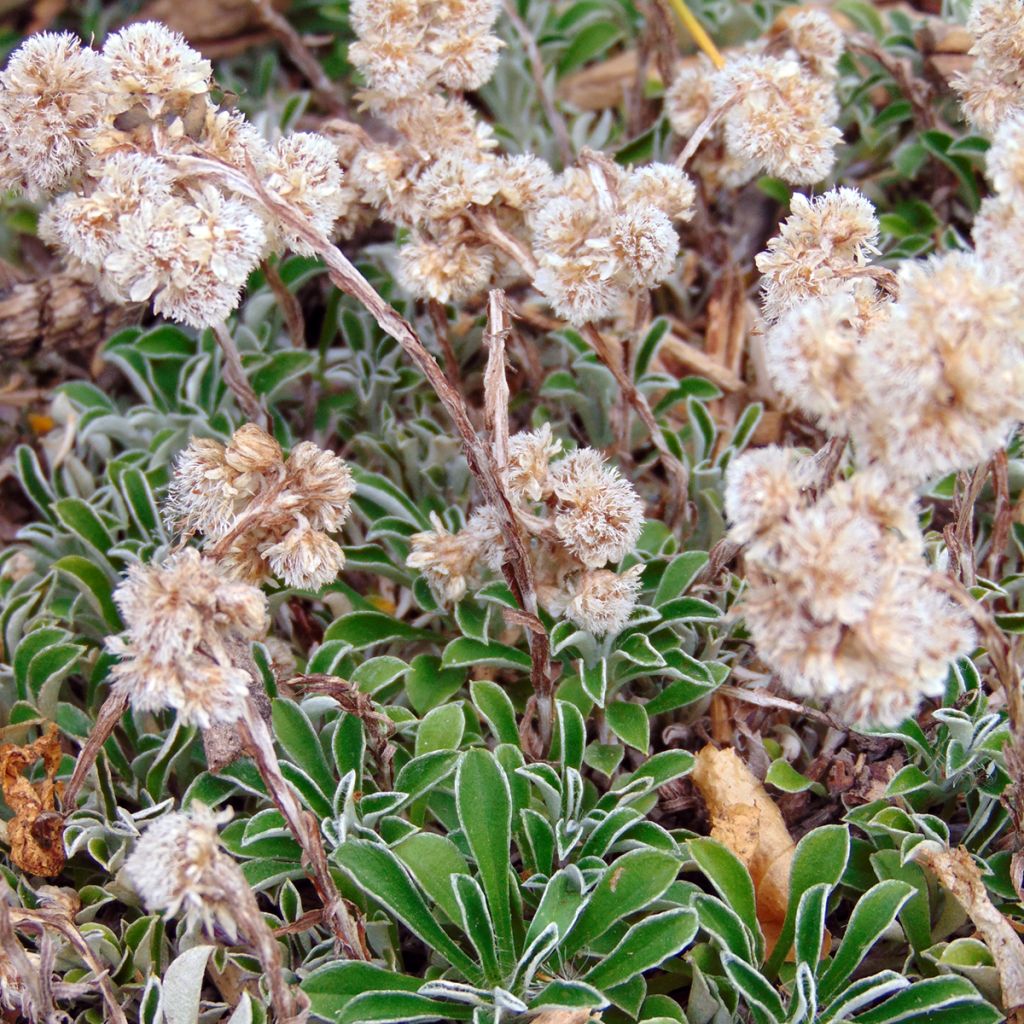
Antennaria dioica var. borealis
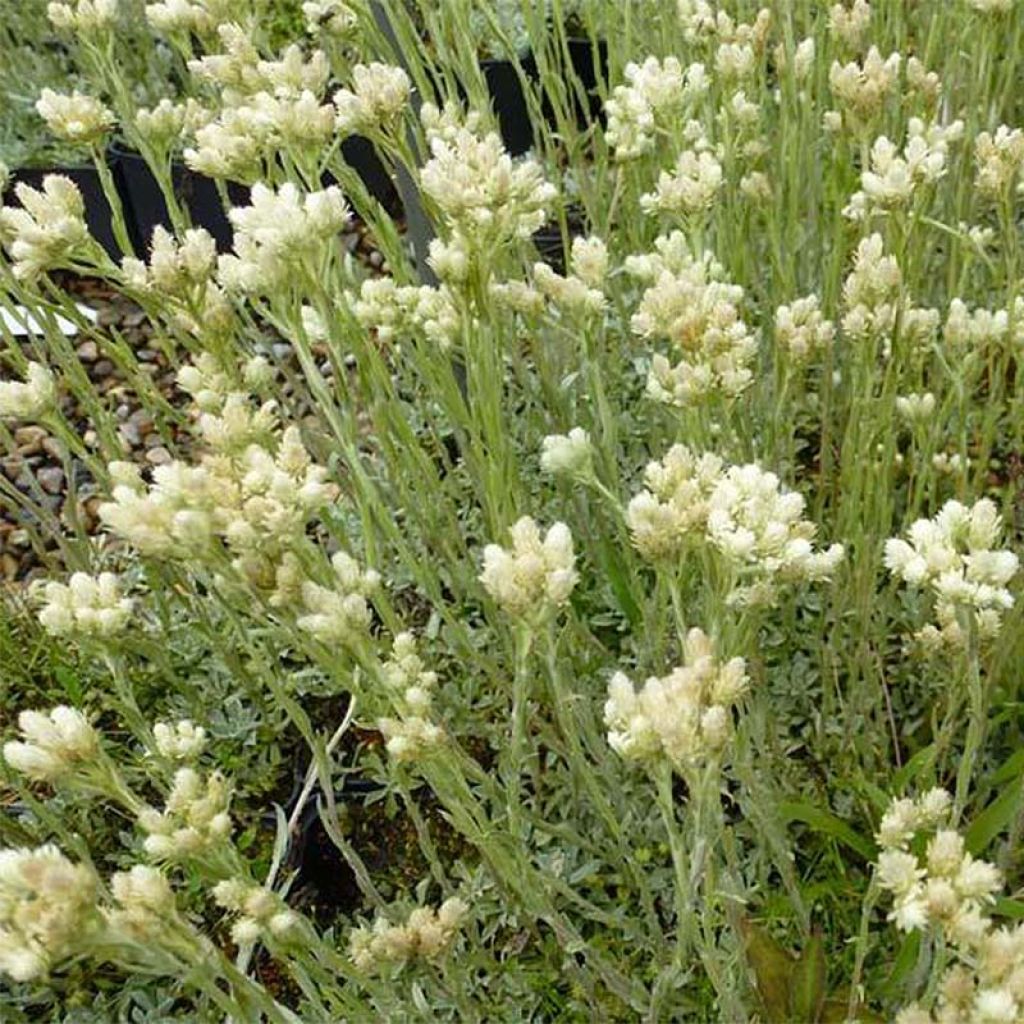
Antennaria dioica var. borealis
Antennaria dioica var. borealis
Antennaria dioica var. borealis
Mountain everlasting, Cats foot, Cudweed
Doing very well, in good health
Marie T., 08/06/2023
Back-to-school special offer!
Get €10 off for every €50 you spend! And get up to €40 off on a single order.
How does it work?
1. Shop your favourites
Add your favourite plants to your basket. For every €50 you spend (excluding delivery charges, store credit and the plastic-free option), you’ll receive a €10 voucher.
€50 spent = €10 voucher
€100 spent = €20 voucher
€150 spent = €30 voucher
€200 spent = €40 voucher
2. Place your order
Once your basket reaches one of the spending thresholds, place your order. You can even choose your delivery date!
3. Receive your voucher
As soon as your order has been shipped, you’ll receive an email containing your personal voucher code and its value.
4. Use it on your next order
Your voucher is valid for 90 days from the date you receive it. It can be used once only, on a new order worth at least the value of the voucher, excluding delivery charges.
Please note: Vouchers can be combined with other offers, but cannot be split or refunded.
Home or relay delivery (depending on size and destination)
Important: You may be charged customs duties by your country’s customs authorities upon delivery.
Schedule delivery date,
and select date in basket
This plant carries a 12 months recovery warranty
More information
We guarantee the quality of our plants for a full growing cycle, and will replace at our expense any plant that fails to recover under normal climatic and planting conditions.
Does this plant fit my garden?
Set up your Plantfit profile →
Description
Considered as a valuable wild perennial plant, Antennaria dioica var. borealis, sometimes called diocious pussytoes, forms semi-evergreen and velvety grey-green carpets that are covered with clustered white heads in spring. Its beautiful tomentose foliage is arranged in soft rosettes of leaves that are pleasing to the eye and touch, implanted on stoloniferous stems that allow the plant to spread over time. Descending rocky scree slopes or lining dry wooded areas, this cold-hardy perennial is not afraid of intense cold, drought, or poor soils. It is perfect in rock gardens, thrives on the top of walls, and happily creeps between paving stones.
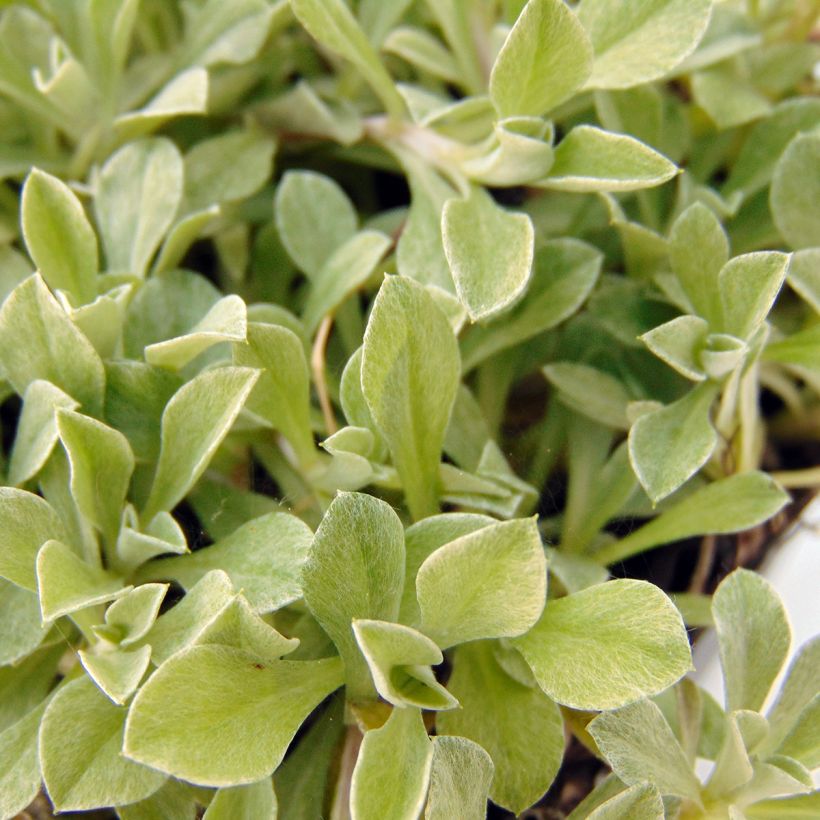
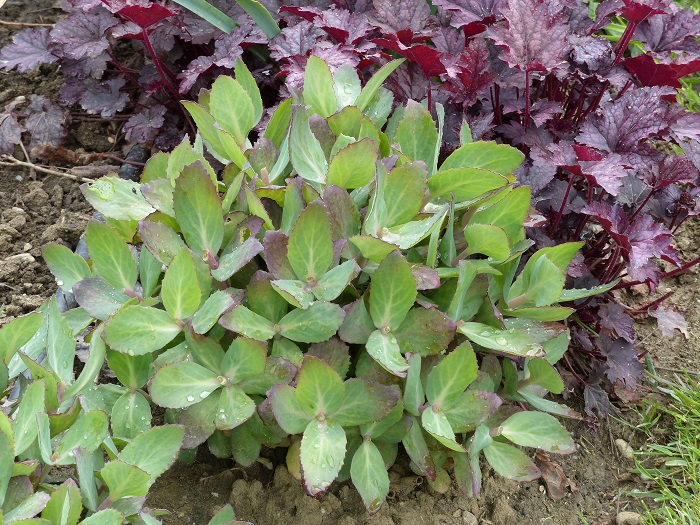
Antennaria dioica var. borealis is a perennial plant from the Asteraceae family, native to subarctic regions of the globe; it is a specific research area, intermediate between cold temperate and polar climates. It grows in taiga, or at the edge of boreal forests. This plant develops from a branching stoloniferous stump, which produces prostrate and slender stems carrying rosettes of narrow leaves measuring 5cm (2in) in length. They are spatulate to lanceolate, covered in a thick down. The foliage is yellowish-green to silvery on the upper surface, with a white woolly pubescence on the lower surface. Over time, it forms a carpet that can cover more than one square metre. Flowering takes place in May-June. Tall peduncles measuring 12 to 15cm (5 to 6in) in height, adorned with tiny leaves applied along their entire length, emerge above the carpet of leaves. Each one bears at its tip a cluster of 3 to 8 white pompom-like heads, which are topped with a collar of scale-like bracts with a woolly base. Male plants bear smaller heads, while female plants have broader inflorescences with large oval bracts. Flowering is followed by the formation of smooth fruits topped with a tuft.
Antennaria dioica var. borealis is a boon for gardens with thin soil. It is still little known and underutilised in our gardens, but Antennaria dioica var. borealis is an ideal plant for spartan conditions, just like Sedum spectabile, dwarf mugworts, or creeping gypsophiles. Combine it with grasses and grey-foliaged plants that often accept these difficult living conditions. You can create an unforgettable and low-maintenance scene by planting it with dwarf asters, small grasses like Molinia 'Edith Dudszus', and the curry plant (Helichrysum italicum). To cover a large area, it can be paired with dry ground cover plants such as Lippia nodiflora, Frankenia laevis, or creeping thyme. Magnificent in rock gardens or along a border in a wild garden, it is also an excellent plant for walls or green roofs.
Report an error about the product description
Antennaria dioica var. borealis in pictures
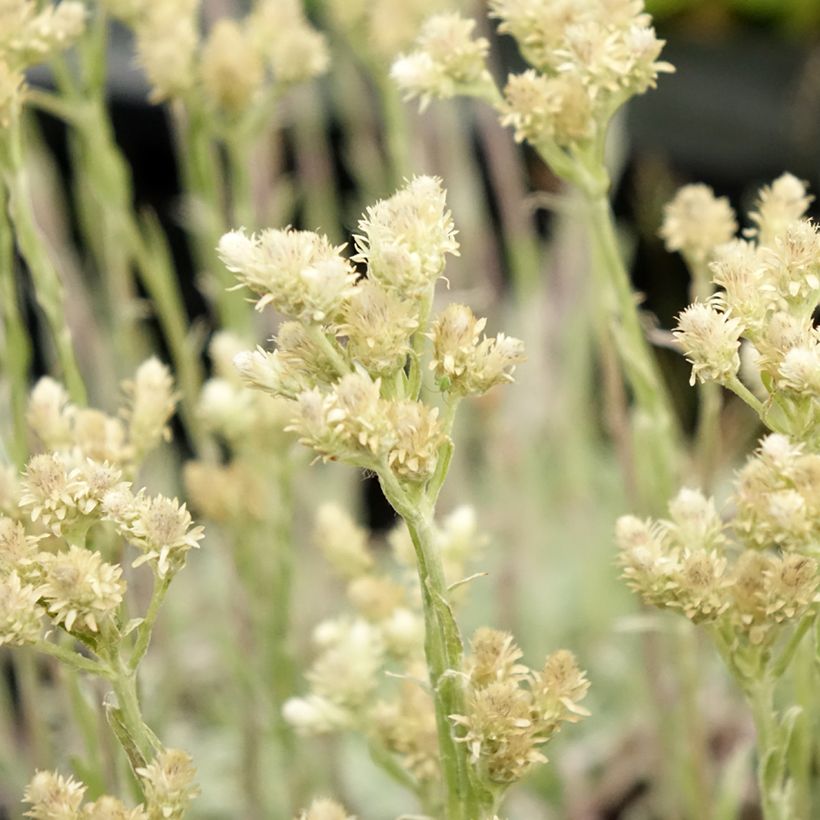
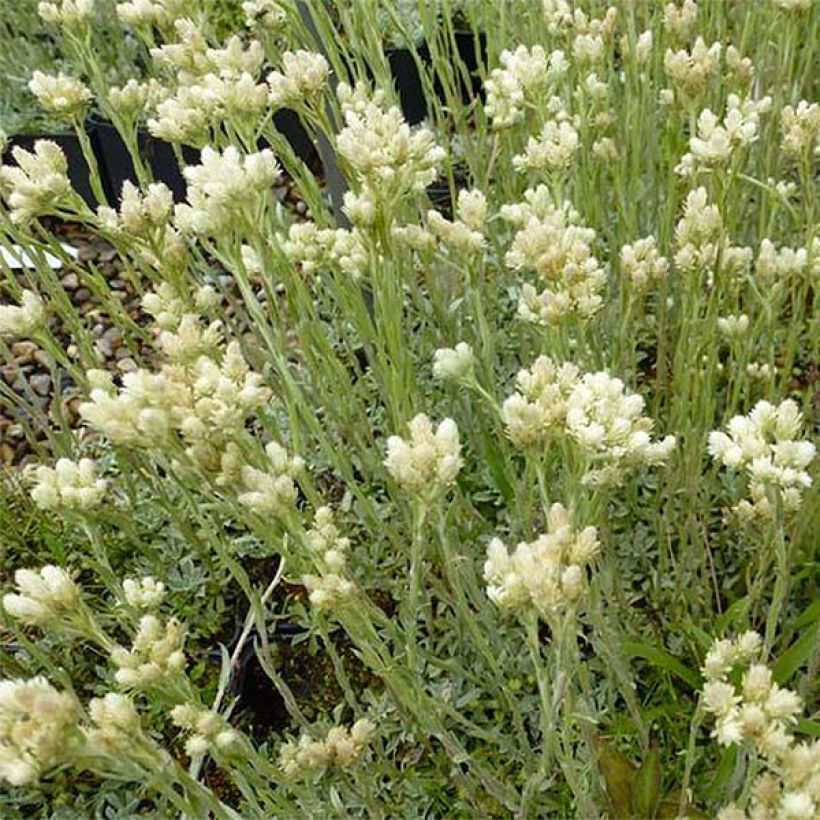
Flowering
Foliage
Plant habit
Botanical data
Antennaria
dioica
var. borealis
Asteraceae
Mountain everlasting, Cats foot, Cudweed
Northern Europe
Planting and care
With its cotton-like appearance, this flower thrives in rocky prairies and is not afraid of drought, cold, or dry and poor soil. It tolerates limestone well. It prefers sunny exposures and requires very well-drained soil. However, it is sensitive to combined heat and humidity. This perennial is perfect for rock gardens, gravel gardens, and dry or alpine gardens.
Planting period
Intended location
Care
Planting & care advice
-
-
-
-
-

-

-

-

-
, onOrder confirmed
Reply from on Promesse de fleurs
Recently viewed products
Haven't found what you were looking for?
Hardiness is the lowest winter temperature a plant can endure without suffering serious damage or even dying. However, hardiness is affected by location (a sheltered area, such as a patio), protection (winter cover) and soil type (hardiness is improved by well-drained soil).
In temperate climates, pruning of spring-flowering shrubs (forsythia, spireas, etc.) should be done just after flowering.
Pruning of summer-flowering shrubs (Indian Lilac, Perovskia, etc.) can be done in winter or spring.
In cold regions as well as with frost-sensitive plants, avoid pruning too early when severe frosts may still occur.
The harvesting period indicated on our website applies to countries and regions in USDA zone 8 (France, England, Ireland, the Netherlands).
In colder areas (Scandinavia, Poland, Austria...) fruit and vegetable harvests are likely to be delayed by 3-4 weeks.
In warmer areas (Italy, Spain, Greece, etc.), harvesting will probably take place earlier, depending on weather conditions.
The sowing periods indicated on our website apply to countries and regions within USDA Zone 8 (France, UK, Ireland, Netherlands).
In colder areas (Scandinavia, Poland, Austria...), delay any outdoor sowing by 3-4 weeks, or sow under glass.
In warmer climes (Italy, Spain, Greece, etc.), bring outdoor sowing forward by a few weeks.
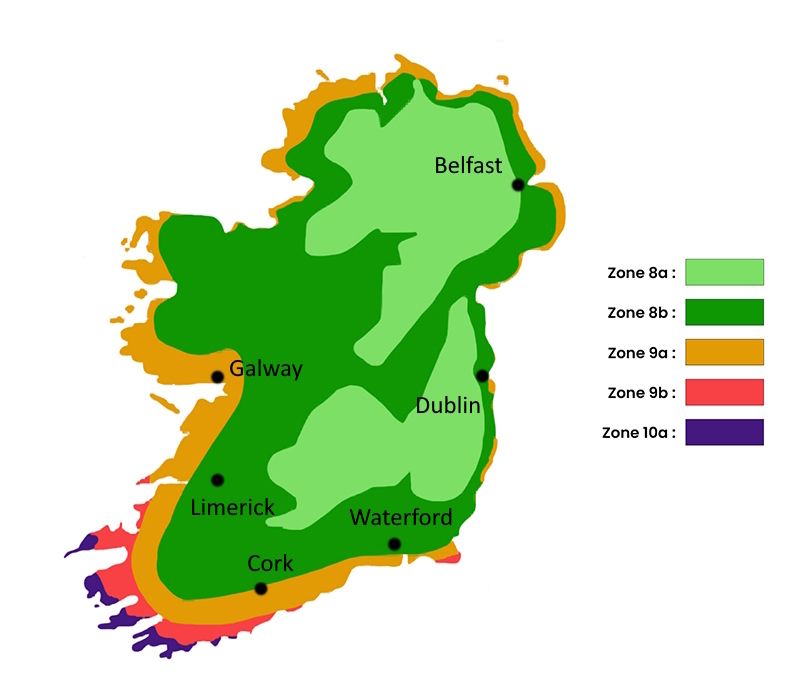
The planting period indicated on our website applies to regions in USDA Zone 9a (East Coast and Midlands: Dublin, Wexford, Waterford, Kilkenny, Portlaoise). It will vary depending on where you live:
- On the west coast and in the north-west (Galway, Limerick, Sligo, Donegal, Westport), delay planting by 1 to 2 weeks in spring and bring it forward by 1 to 2 weeks in autumn compared to the dates given, preferably choosing periods without strong winds.
- In the inland hills and plateaus (Wicklow Mountains, Macgillycuddy’s Reeks, Connemara, Killarney), it is best to plant in spring (April–May) or autumn (September–October), avoiding periods of waterlogged soil in winter and strong winds, which pose the main risk to newly planted trees in these areas.
The flowering period indicated on our website applies to regions in USDA Zone 9a, such as the East Coast and Midlands, including Dublin, Wexford, Waterford, Kilkenny and Portlaoise.
This will vary depending on where you live:
- On the west coast and in the northwest (Galway, Limerick, Sligo, Donegal and Westport), it will be delayed by one to two weeks compared to the given dates, due to stronger Atlantic winds and less spring sunshine.
- In the inland hills and plateaus (the Wicklow Mountains, the Macgillycuddy's Reeks, Connemara and Killarney), flowering will be delayed by two to three weeks. Flowering mainly occurs between May and July, with the limiting factors being less frost and more of the excessive humidity, strong winds and lack of sunshine that are characteristic of these areas.
Shipping country and language
Your country of residence may be:
Your country of residence is:
For a better user experience on our website, you can select:
Your shipping country:
-
 Austria
-
 Belgium
-
 Bosnia & Herzegovina
-
 Bulgaria
-
 Croatia
-
 Cyprus
-
 Czechia
-
 Denmark
-
 Estonia
-
 Finland
-
 France
-
 Germany
-
 Greece
-
 Hungary
-
 Iceland
-
 Ireland
-
 Italy
Italy
-
 Latvia
-
 Liechtenstein
-
 Lithuania
-
 Luxembourg
-
 Malta
Malta
-
 Netherlands
-
 Poland
-
 Portugal
-
 Romania
-
 Serbia
-
 Slovakia
-
 Slovenia
-
 Spain
Spain
-
 Sweden
-
 Switzerland
Language:
-
French
-
 English
-
Spanish
-
Italian
-
German
-
Portuguese
-
Dutch
-
Finnish
My Account
Hello
My wish lists
My cart
Log in / Register
Existing customer?
This form is protected by reCAPTCHA - the Google Privacy Policy and Terms of Service apply.
New customer?
Create an account to track your orders, access our customer service and, if you wish, make the most of our upcoming offers.