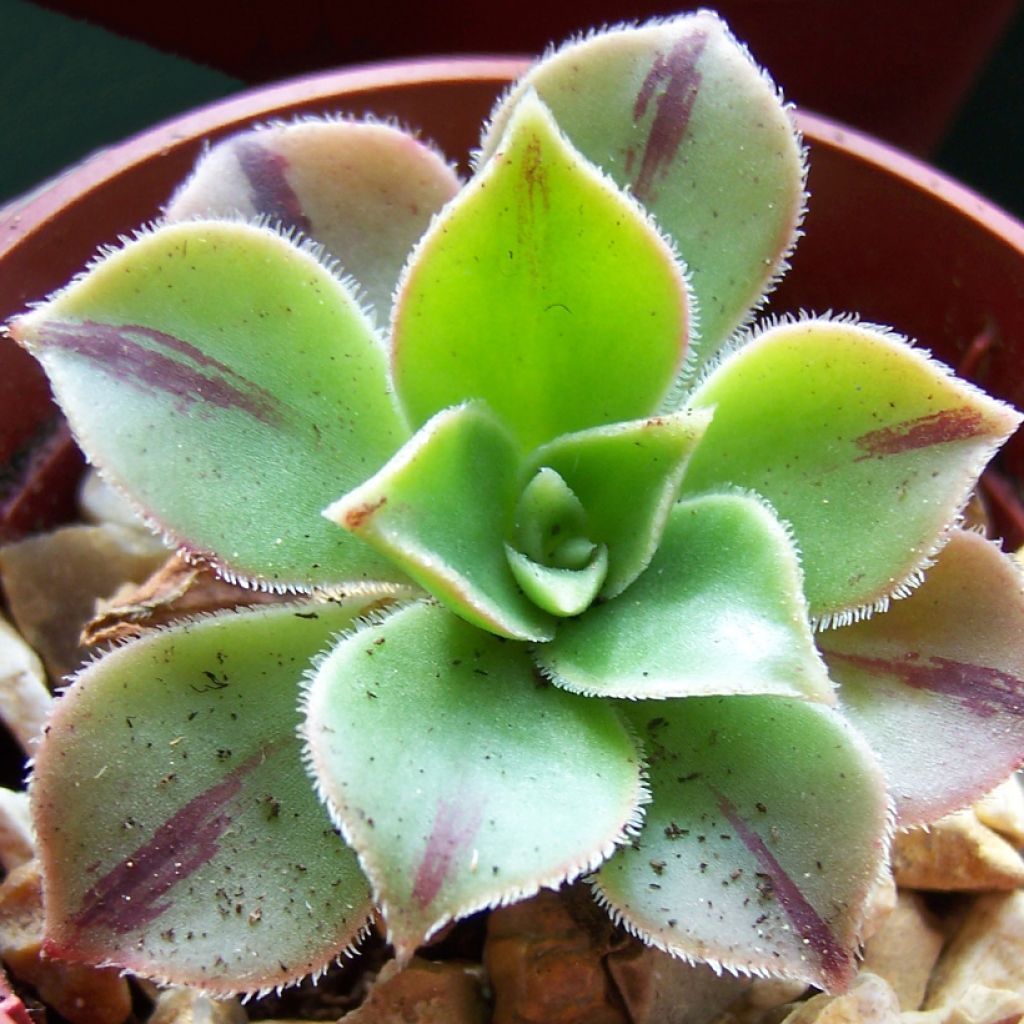
Aeonium leucoblepharum
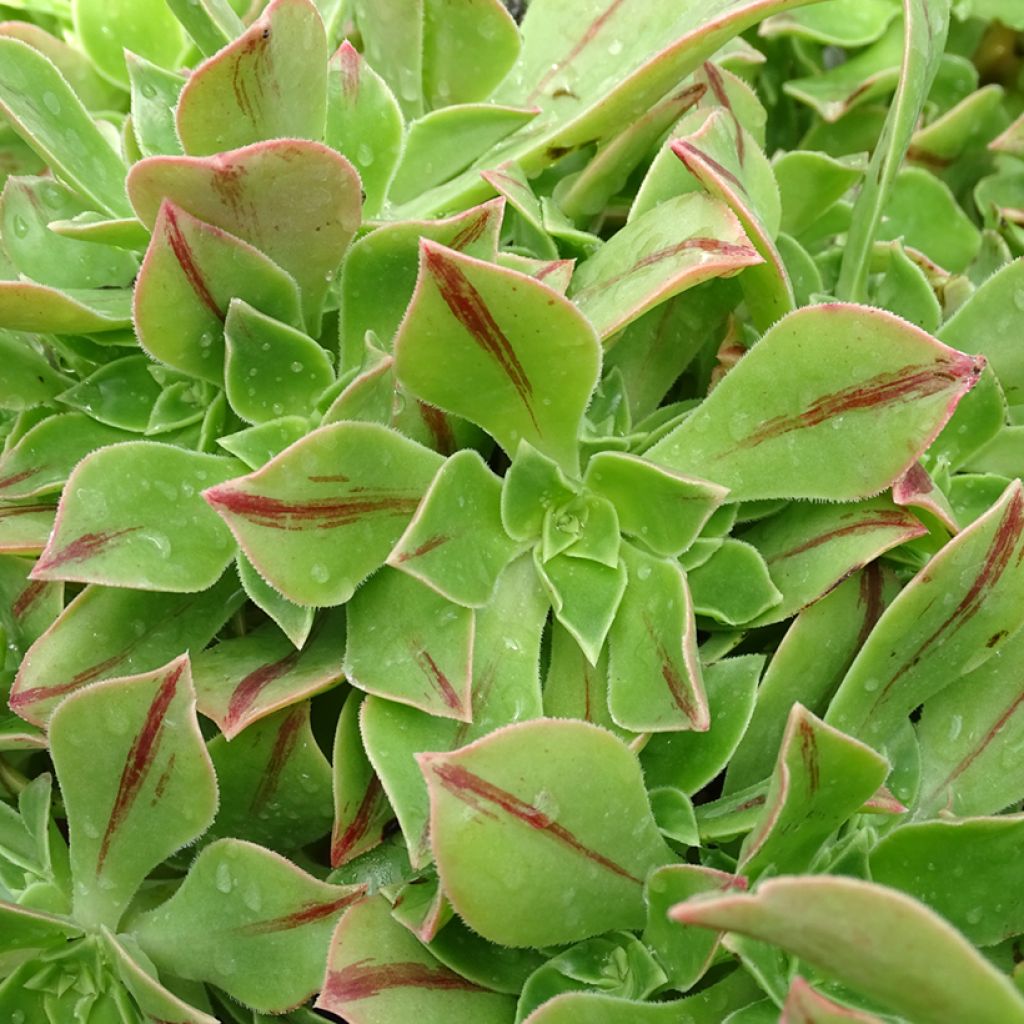
Aeonium leucoblepharum
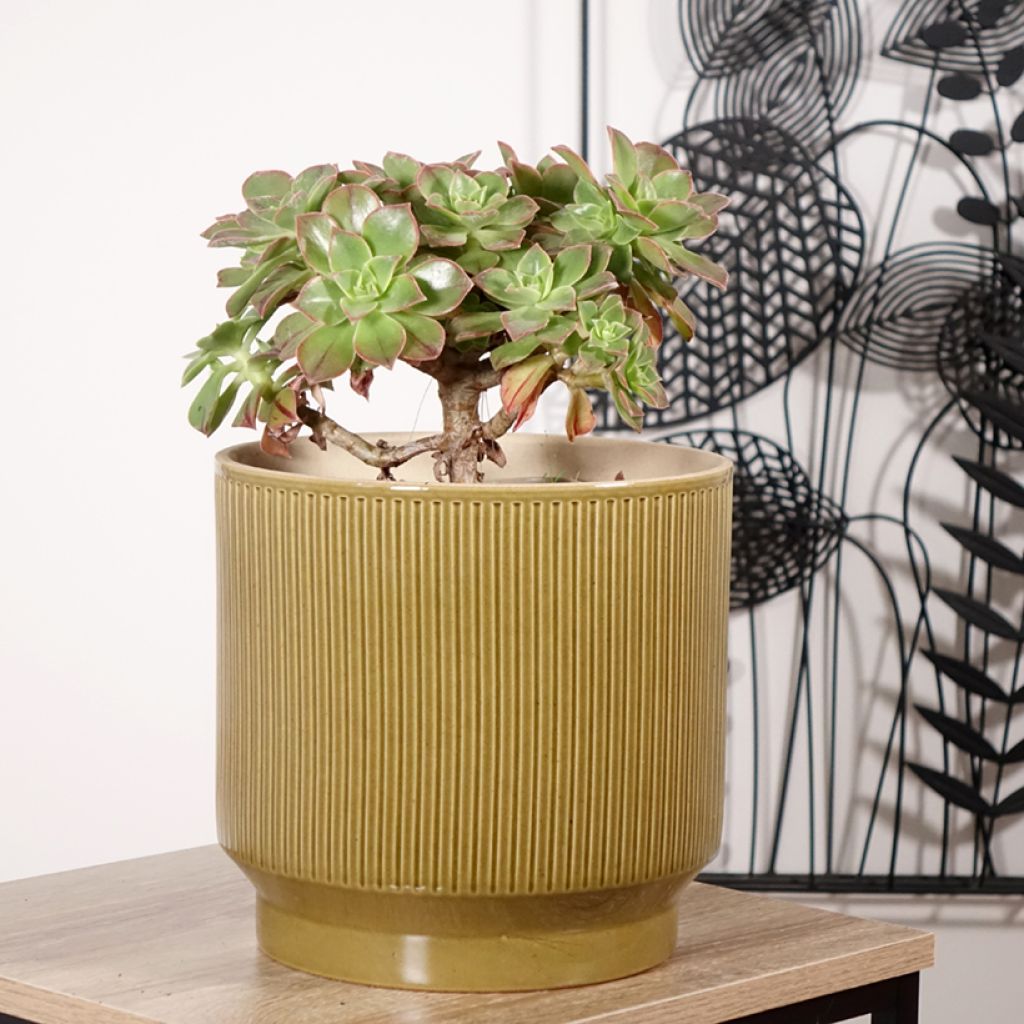
Aeonium leucoblepharum
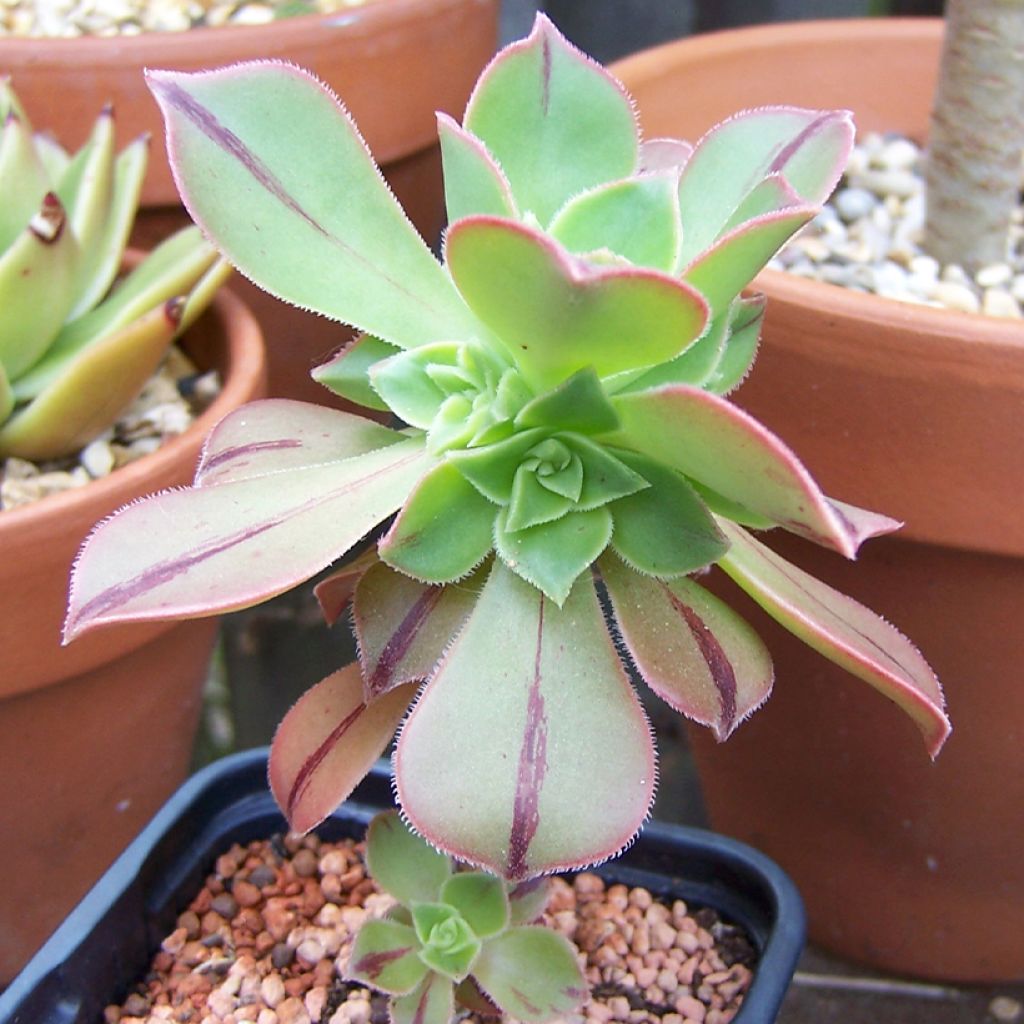
Aeonium leucoblepharum
Aeonium leucoblepharum
Aeonium leucoblepharum
Aeonium leucoblepharum
Aeonium leucoblepharum Yemen
East African Tree Houseleek
Magnificent
Annie , 29/06/2024
Back-to-school special offer!
Get €10 off for every €50 you spend! And get up to €40 off on a single order.
How does it work?
1. Shop your favourites
Add your favourite plants to your basket. For every €50 you spend (excluding delivery charges, store credit and the plastic-free option), you’ll receive a €10 voucher.
€50 spent = €10 voucher
€100 spent = €20 voucher
€150 spent = €30 voucher
€200 spent = €40 voucher
2. Place your order
Once your basket reaches one of the spending thresholds, place your order. You can even choose your delivery date!
3. Receive your voucher
As soon as your order has been shipped, you’ll receive an email containing your personal voucher code and its value.
4. Use it on your next order
Your voucher is valid for 90 days from the date you receive it. It can be used once only, on a new order worth at least the value of the voucher, excluding delivery charges.
Please note: Vouchers can be combined with other offers, but cannot be split or refunded.
Home or relay delivery (depending on size and destination)
Important: You may be charged customs duties by your country’s customs authorities upon delivery.
Schedule delivery date
and select date in basket
This plant carries a 24 months recovery warranty
More information
We guarantee the quality of our plants for a full growing cycle, and will replace at our expense any plant that fails to recover under normal climatic and planting conditions.
Does this plant fit my garden?
Set up your Plantfit profile →
Description
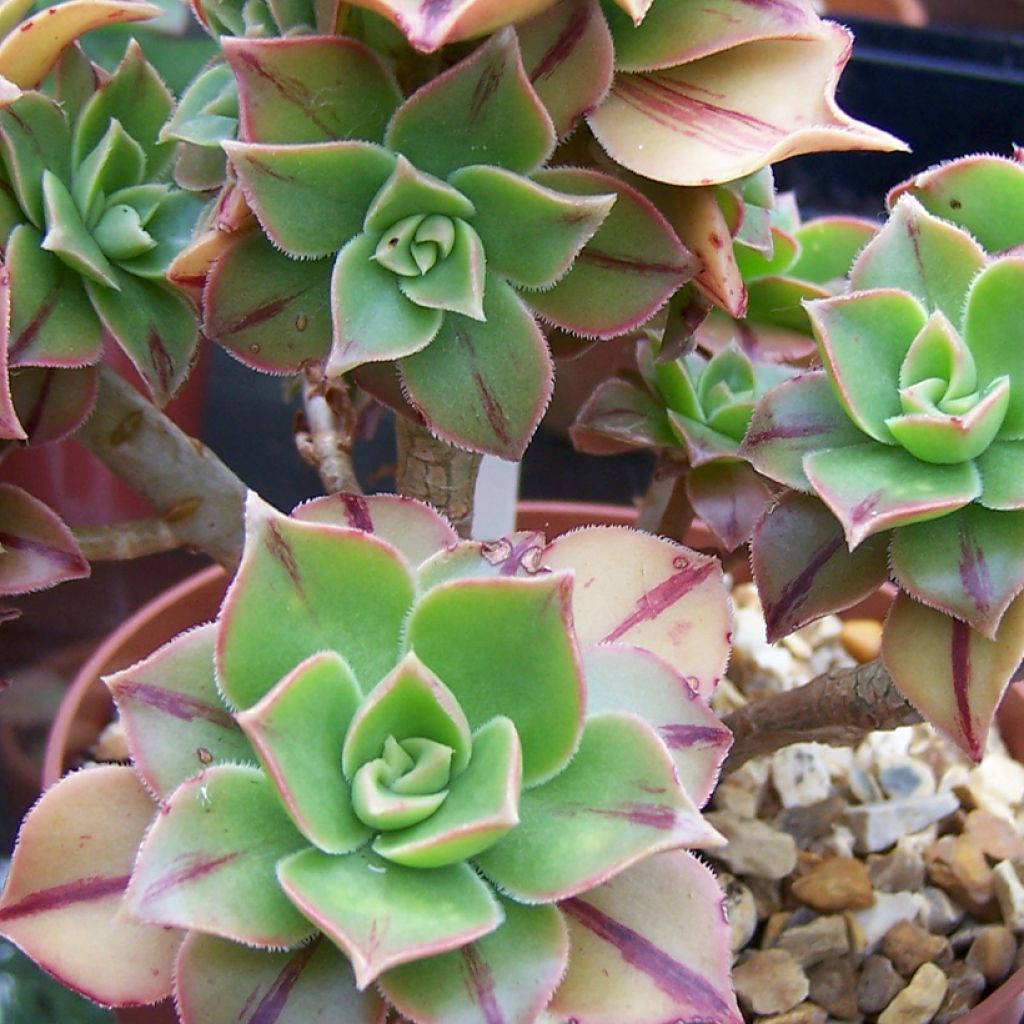
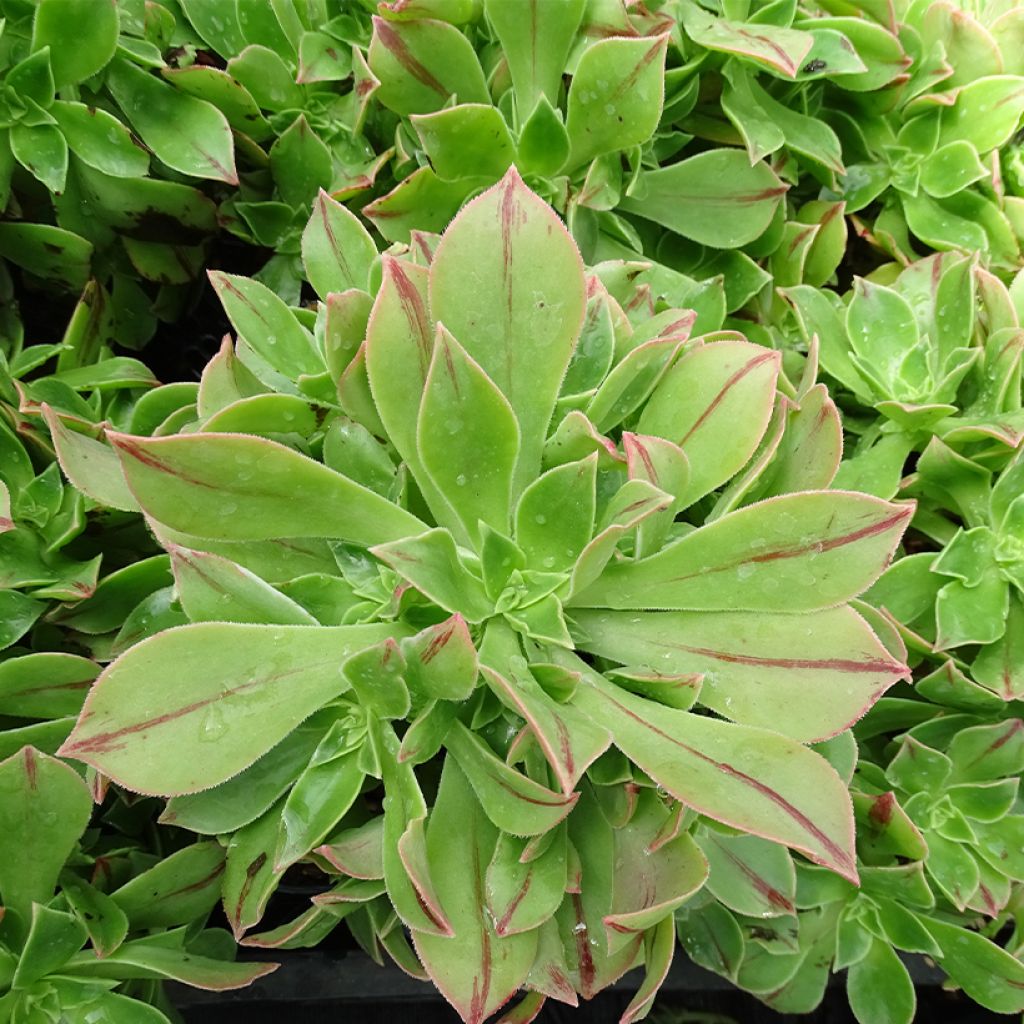
Aeonium leucoblepharum stands out in the large tribe of Aeoniums. It is one of only two species from East Africa, where there are different forms depending on the country of origin. It thus forms a small compact bush, generally 70-80cm (27.6-31.5 in) tall, or even a bit taller, particularly decorative with its rosettes of geometrically-shaped leaves. These leaves are green with a reddish streak in the middle, and can turn pink or have an orange margin depending on the strains. Native to high-altitude forests, it is one of the few Aeoniums that thrives in semi-shade and even fears direct summer sunlight in Mediterranean climates! Not very hardy, it can easily be grown in a pot anywhere in France.
Aeoniums are succulent plants in the Crassulaceae family, which comprises about 1500 species, many of which have ornamental value. Everyone knows the popular Kalanchoes with their vibrant flower bouquets that brighten up our interiors, or Echeverias that have had their heyday in mosaic art, while Sedums are essential for green roofs... We could also mention the friendly Joubarbes, or Sempervivum, which are part of our spontaneous flora despite their exotic appearance, and many others.
Aeoniums have a family resemblance that makes them easy to identify, at least as a genus, but when it comes to species or variety, it becomes more difficult. And in the case of Aeonium leucoblepharum, it is even less obvious, because there are different strains depending on the geographic origin of the mother plant. Unlike most native species of the Canary Islands, this one is one of only two that live in East Africa. It is found in countries such as Ethiopia, Yemen, Somalia, or Kenya, where it grows in mountainous and forested regions at medium altitudes (1500 to 3500 metres (4921 feet 4 inches to 11482 feet 11 inches)). This diversity of origin is reflected in variable morphologies, both in terms of habit, which can range from 50cm (19.7in) to two metres tall, more or less erect or rather trailing, or slightly creeping, and in terms of leaf colours.
Depending on the strain of origin, the leaves of this branched succulent, organized in rosettes (with a very decorative appearance), have more or less acuminate tips and variable colours. They can be predominantly green or yellow-green, then turn pink afterwards, or be ornamented with orange, almost always with a reddish streak in the middle. The leaves can be relatively large, up to 12cm (4.7in) long and 3.5cm (1.4in) wide, and are extremely decorative due to the juxtaposition of colours. This Aeonium also produces small decorative flowers, about 1.5cm (0.6in) in diameter, grouped in yellow, or even reddish, inflorescences.
Another uniqueness of Aeonium leucoblepharum lies in its original habitat, which allows it to tolerate a certain atmospheric humidity and even appreciate receiving some regular watering in summer. In the Mediterranean, where the sun is scorching, it is best to avoid direct exposure, and it is better to place it in semi-shade. Compact enough in cultivation, it will easily accept being grown in a pot so that it can be brought indoors in a frost-free room in winter.
Aeoniums are a choice for succulent enthusiasts, and this colourful species will delight them with its geometric foliage with a very graphic design. Planted in a pot, it will fit perfectly in a contemporary environment, and in climates mild enough to accommodate it in the ground, such as the French Riviera, it will be a point of interest in a dry garden. Combine it with other "desert" plants that also stand out for their particular geometry, such as Opuntia microdasys with its small grey-green prickly pear pads punctuated by whitish cushions of spines. The sculptural Agave victoriae-reginae with its perfect geometry will also be an excellent companion, as well as Cylindropuntia imbricata, which unlike the others is very resistant to cold and especially remarkable for its unique graphic habit, thanks to its branched "branches" made of cylindrical segments that visually differ from the classic pads of Opuntias.
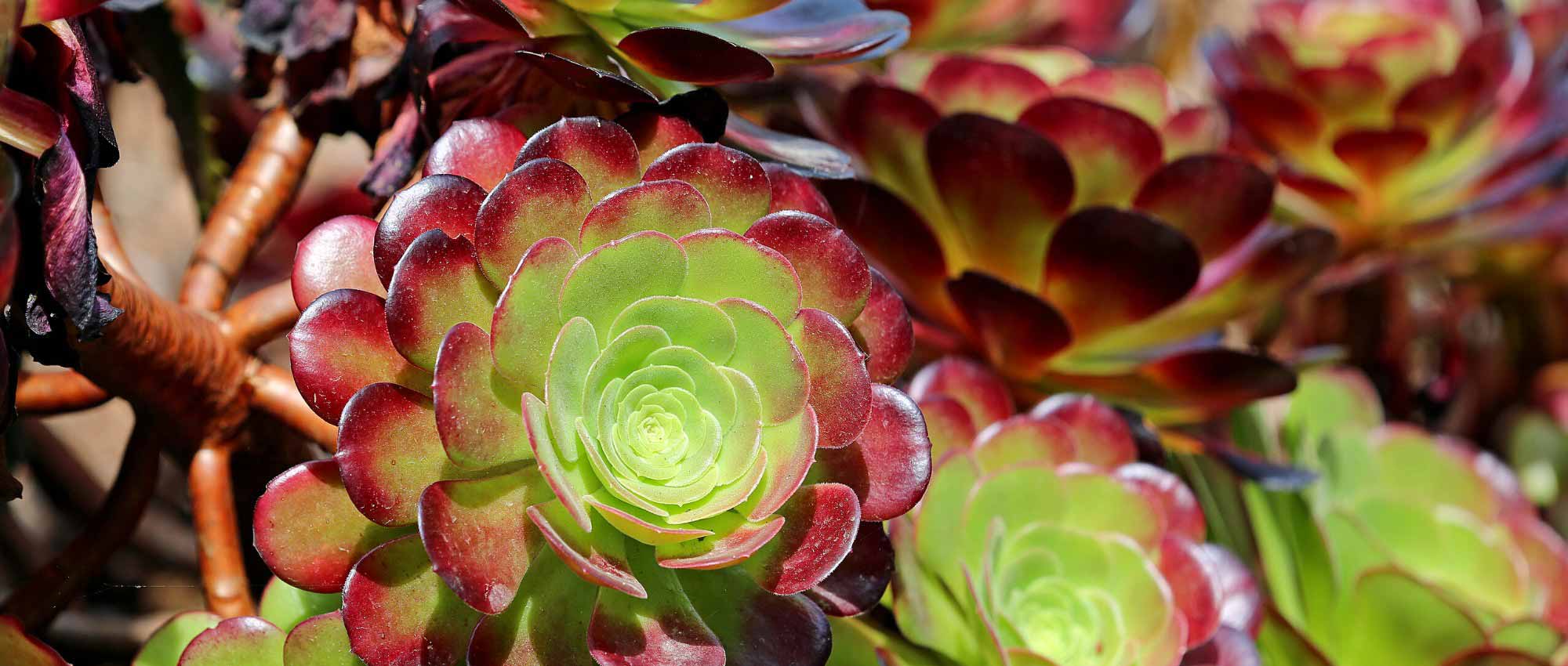
Aeonium leucoblepharum in pictures
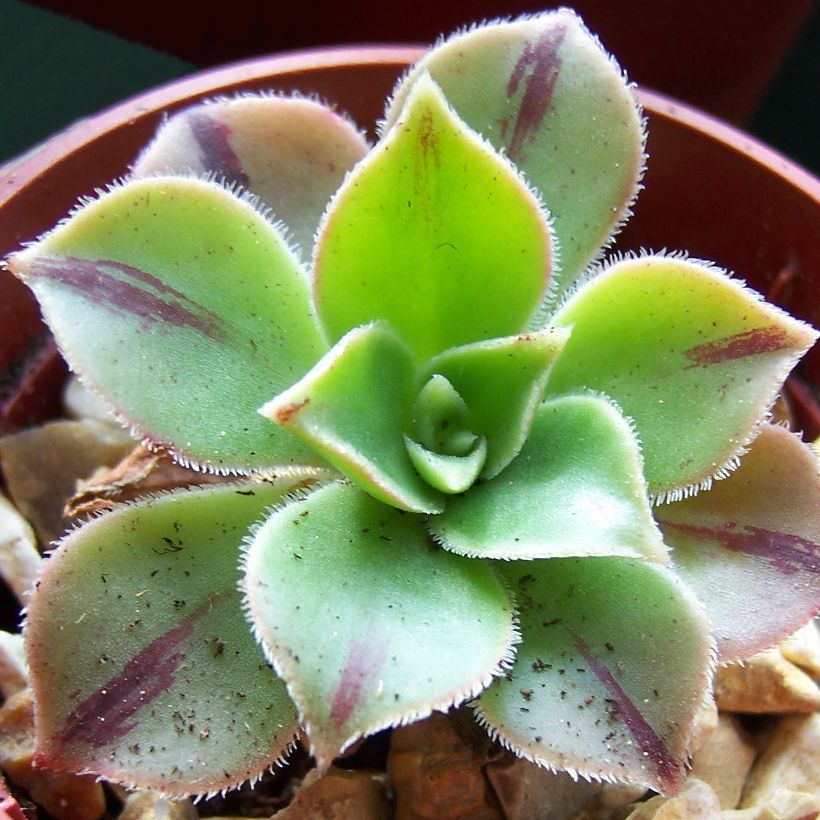
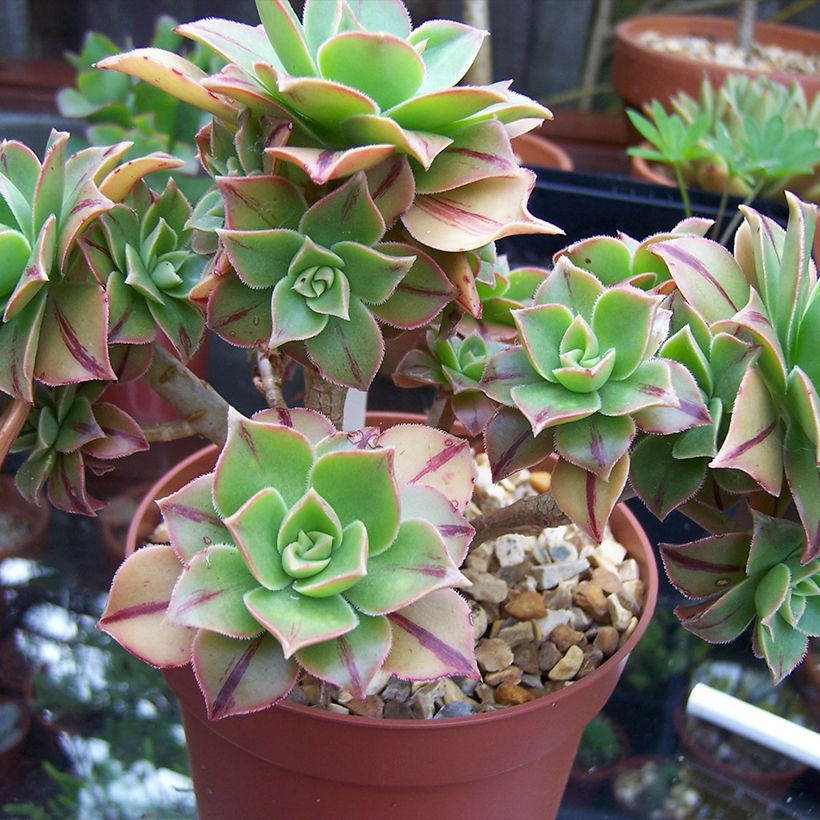
Plant habit
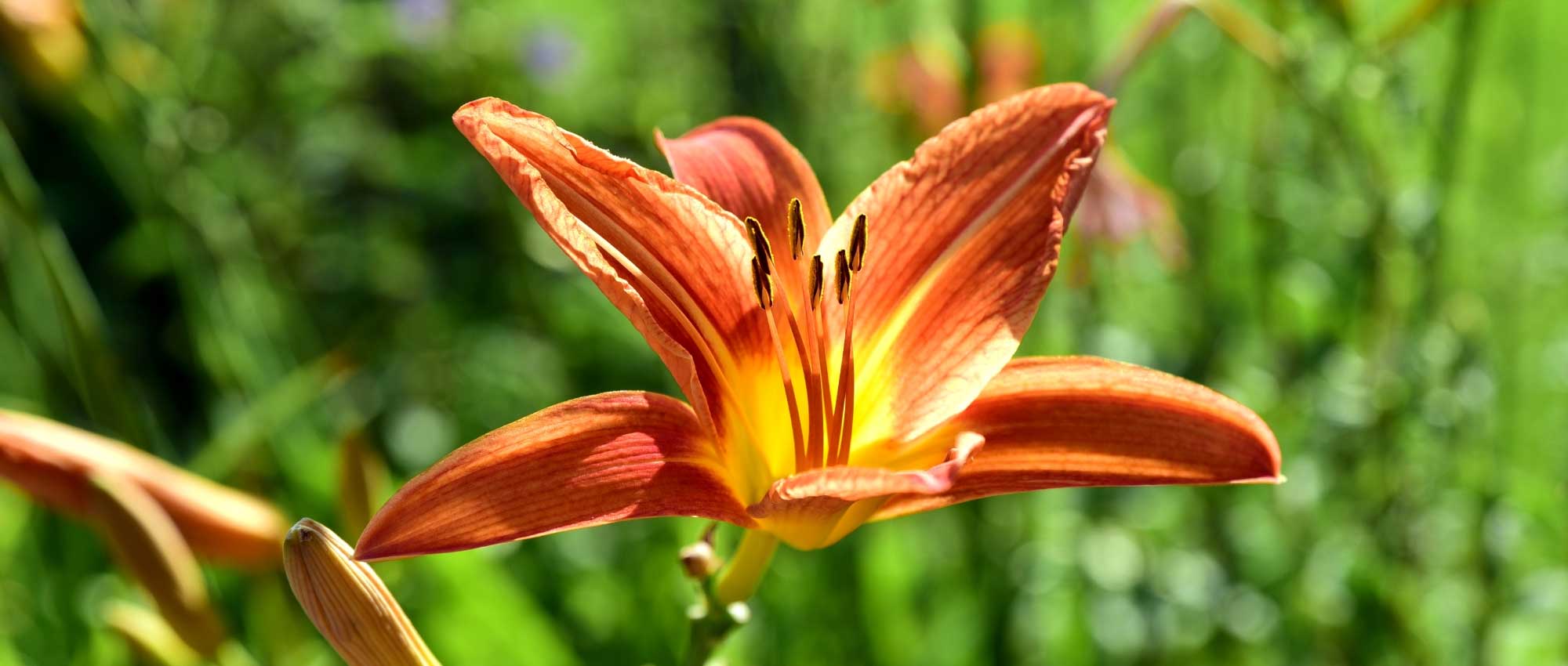
Flowering
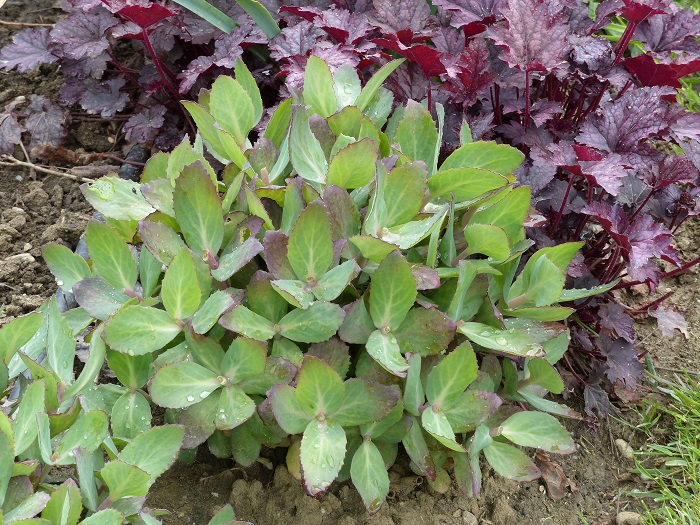
Foliage
Botanical data
Aeonium
leucoblepharum
Yemen
Crassulaceae
East African Tree Houseleek
Sempervivum leucoblepharum Yemen form
East Africa
Planting and care
Aeonium leucoblepharum is quite heat and drought resistant, but due to its origin (mountain forests), it also tolerates some atmospheric humidity, especially in winter, and appreciates occasional watering in summer. For the same reason, it can also grow in partial shade and in hot regions, it is best to avoid direct summer sunlight. It prefers a light, well-drained soil, even sandy. Plant it after the last frost in open ground in coastal or hot and dry climates. Planting in pots is possible throughout the year, obviously protected from frost. It thrives in full sun or partial shade in hot climates, and likes to have warm roots. Under these conditions, it is hardy up to -4°C (24.8 °F), and will live for a long time. Overwinter this plant in an unheated but frost-free location, and preferably very bright. Water moderately from autumn to spring. Remove faded inflorescences and dead branches.
Planting period
Intended location
Care
Planting & care advice
-
-
-
-
-

-
-
-
-
, onOrder confirmed
Reply from on Promesse de fleurs
Recently viewed products
Haven't found what you were looking for?
Hardiness is the lowest winter temperature a plant can endure without suffering serious damage or even dying. However, hardiness is affected by location (a sheltered area, such as a patio), protection (winter cover) and soil type (hardiness is improved by well-drained soil).
In temperate climates, pruning of spring-flowering shrubs (forsythia, spireas, etc.) should be done just after flowering.
Pruning of summer-flowering shrubs (Indian Lilac, Perovskia, etc.) can be done in winter or spring.
In cold regions as well as with frost-sensitive plants, avoid pruning too early when severe frosts may still occur.
The harvesting period indicated on our website applies to countries and regions in USDA zone 8 (France, England, Ireland, the Netherlands).
In colder areas (Scandinavia, Poland, Austria...) fruit and vegetable harvests are likely to be delayed by 3-4 weeks.
In warmer areas (Italy, Spain, Greece, etc.), harvesting will probably take place earlier, depending on weather conditions.
The sowing periods indicated on our website apply to countries and regions within USDA Zone 8 (France, UK, Ireland, Netherlands).
In colder areas (Scandinavia, Poland, Austria...), delay any outdoor sowing by 3-4 weeks, or sow under glass.
In warmer climes (Italy, Spain, Greece, etc.), bring outdoor sowing forward by a few weeks.
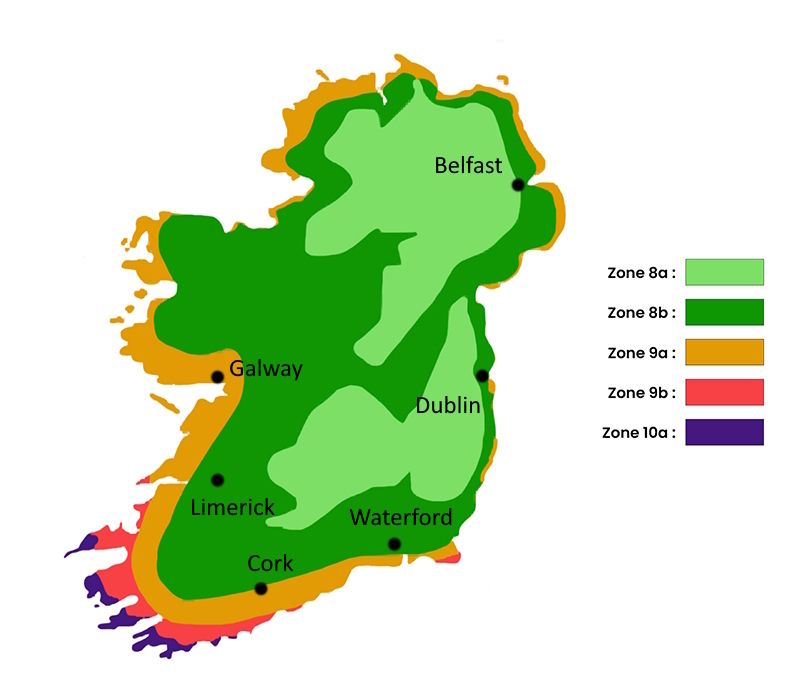
The planting period indicated on our website applies to regions in USDA Zone 9a (East Coast and Midlands: Dublin, Wexford, Waterford, Kilkenny, Portlaoise). It will vary depending on where you live:
- On the west coast and in the north-west (Galway, Limerick, Sligo, Donegal, Westport), delay planting by 1 to 2 weeks in spring and bring it forward by 1 to 2 weeks in autumn compared to the dates given, preferably choosing periods without strong winds.
- In the inland hills and plateaus (Wicklow Mountains, Macgillycuddy’s Reeks, Connemara, Killarney), it is best to plant in spring (April–May) or autumn (September–October), avoiding periods of waterlogged soil in winter and strong winds, which pose the main risk to newly planted trees in these areas.
The flowering period indicated on our website applies to regions in USDA Zone 9a, such as the East Coast and Midlands, including Dublin, Wexford, Waterford, Kilkenny and Portlaoise.
This will vary depending on where you live:
- On the west coast and in the northwest (Galway, Limerick, Sligo, Donegal and Westport), it will be delayed by one to two weeks compared to the given dates, due to stronger Atlantic winds and less spring sunshine.
- In the inland hills and plateaus (the Wicklow Mountains, the Macgillycuddy's Reeks, Connemara and Killarney), flowering will be delayed by two to three weeks. Flowering mainly occurs between May and July, with the limiting factors being less frost and more of the excessive humidity, strong winds and lack of sunshine that are characteristic of these areas.
Shipping country and language
Your country of residence may be:
Your country of residence is:
For a better user experience on our website, you can select:
Your shipping country:
-
 Austria
-
 Belgium
-
 Bosnia & Herzegovina
-
 Bulgaria
-
 Croatia
-
 Cyprus
-
 Czechia
-
 Denmark
-
 Estonia
-
 Finland
-
 France
-
 Germany
-
 Greece
-
 Hungary
-
 Iceland
-
 Ireland
-
 Italy
Italy
-
 Latvia
-
 Liechtenstein
-
 Lithuania
-
 Luxembourg
-
 Malta
Malta
-
 Netherlands
-
 Poland
-
 Portugal
-
 Romania
-
 Serbia
-
 Slovakia
-
 Slovenia
-
 Spain
Spain
-
 Sweden
-
 Switzerland
Language:
-
French
-
 English
-
Spanish
-
Italian
-
German
-
Portuguese
-
Dutch
-
Finnish
My Account
Hello
My wish lists
My cart
Log in / Register
Existing customer?
This form is protected by reCAPTCHA - the Google Privacy Policy and Terms of Service apply.
New customer?
Create an account to track your orders, access our customer service and, if you wish, make the most of our upcoming offers.