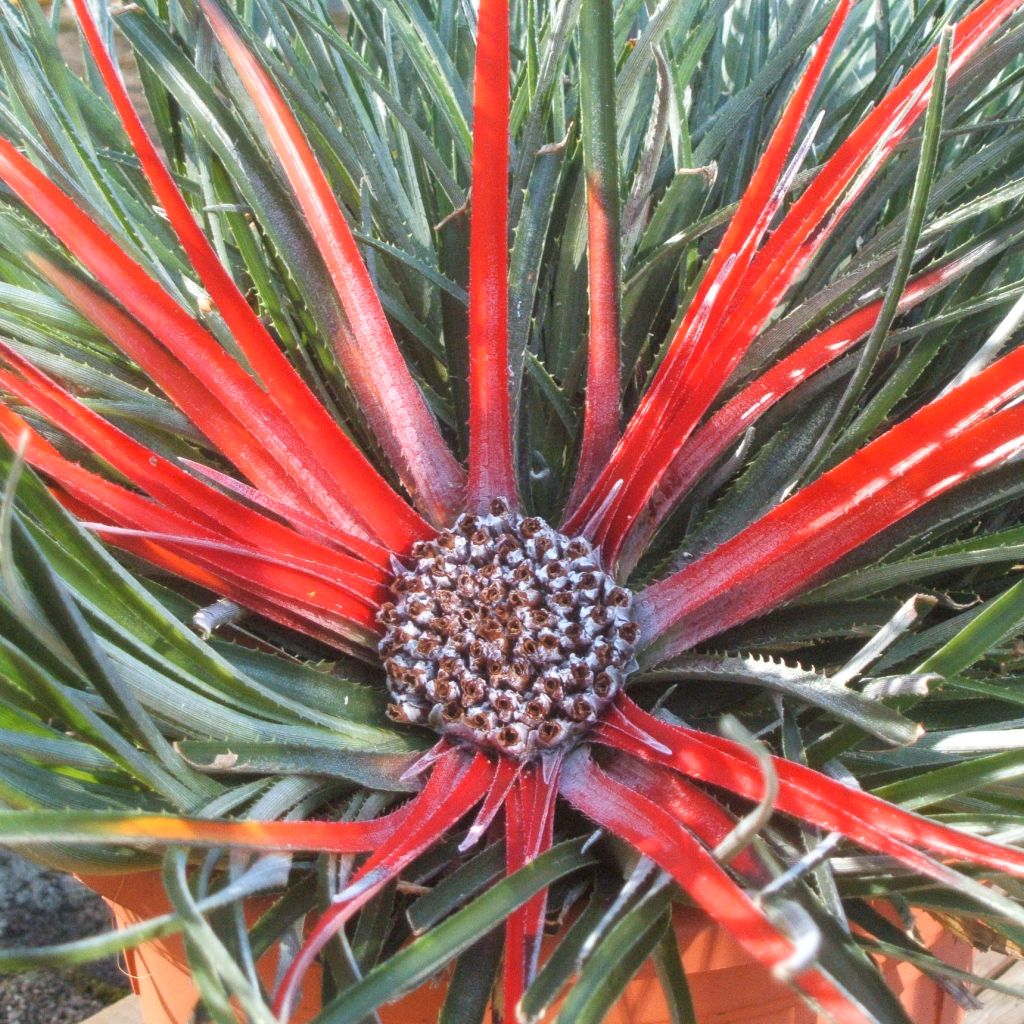
Fascicularia bicolor
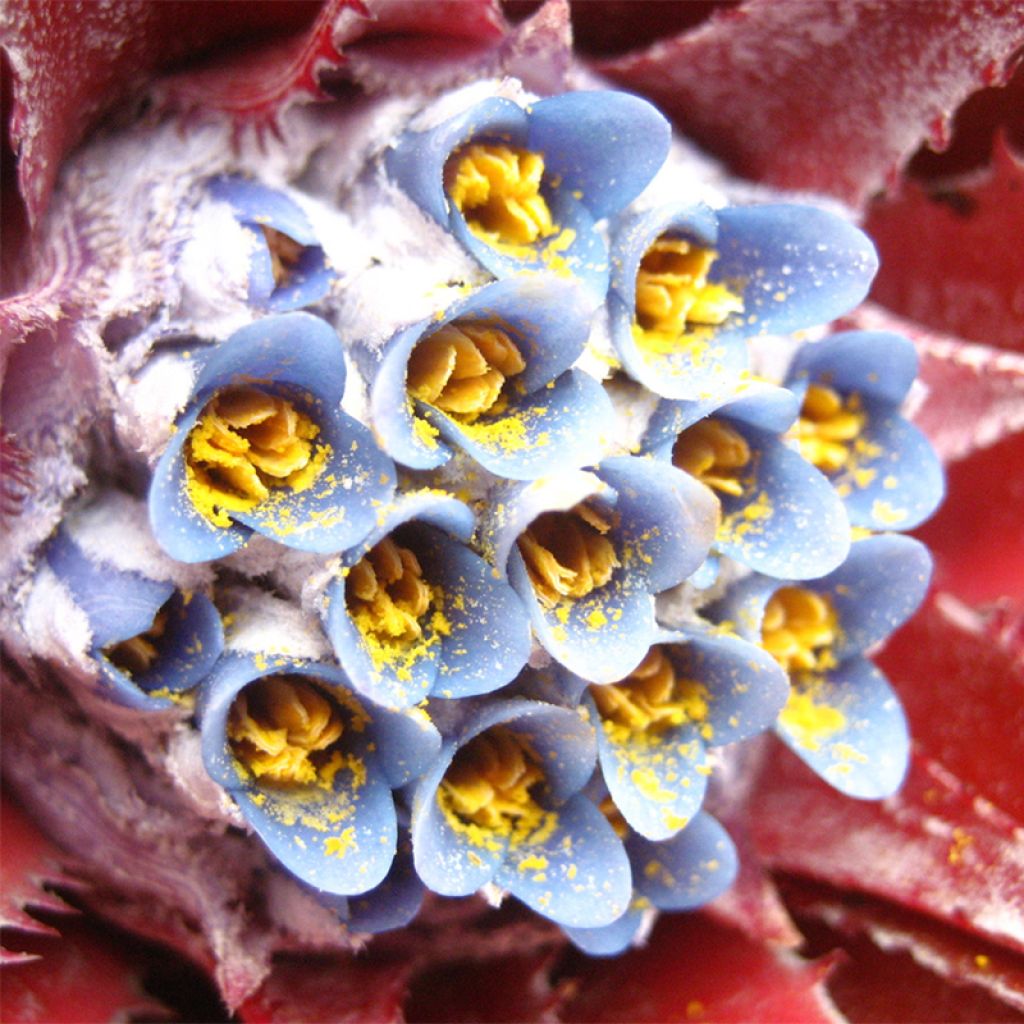
Fascicularia bicolor
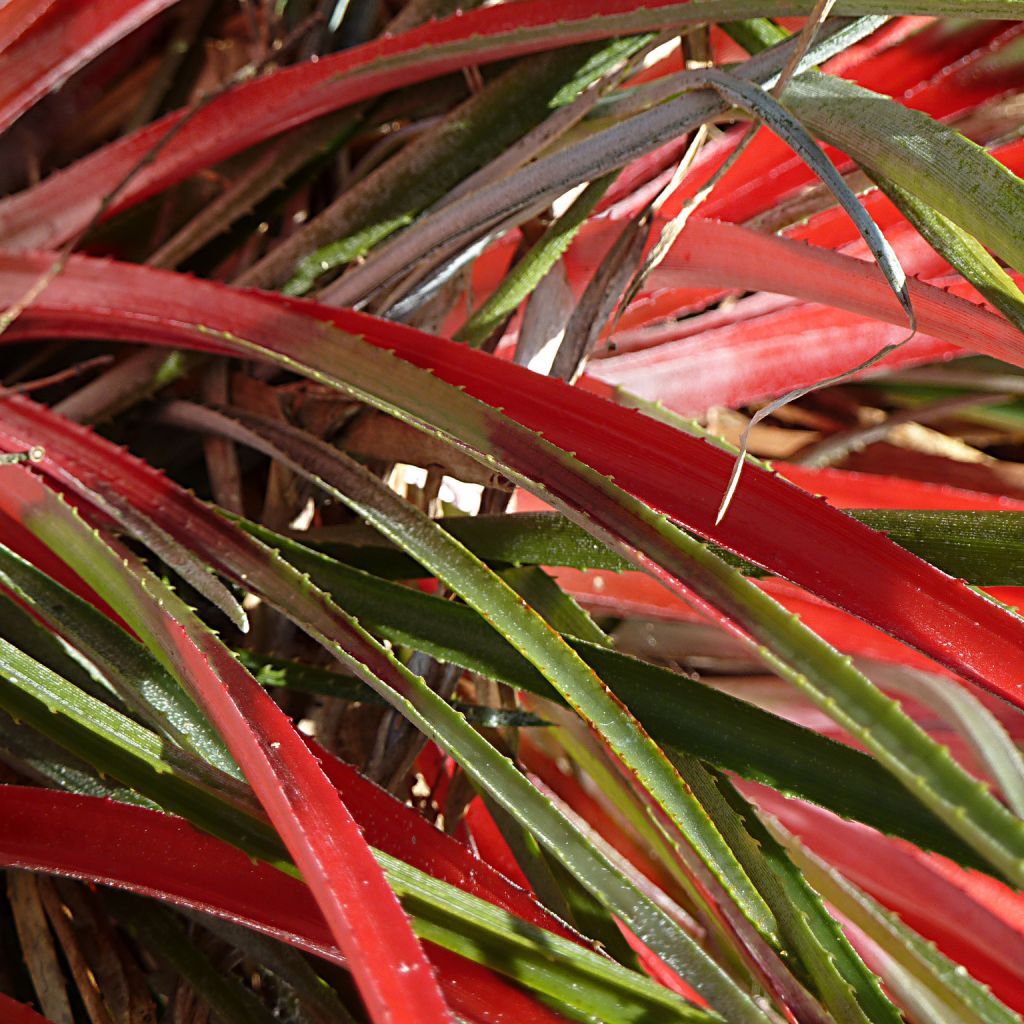
Fascicularia bicolor
Fascicularia bicolor
Fascicularia bicolor
Crimson Bromeliad
I have been growing this plant for about fifteen years as the sole representative of the Bromeliaceae family in my field of plants. Situated at the base of the house facing southeast, the bush has become enormous (2 x 1 x 0.8 m (3ft)). I bought it in bloom during the plant day at Kervignac in a 5 l pot. It has never bloomed again. ( ! ? ) It's a shame because the flowering is splendid. It receives little water under the roof overhang. Could this be the reason for its failure to flower?
Akebia , 22/07/2020
Back-to-school special offer!
Get €10 off for every €50 you spend! And get up to €40 off on a single order.
How does it work?
1. Shop your favourites
Add your favourite plants to your basket. For every €50 you spend (excluding delivery charges, store credit and the plastic-free option), you’ll receive a €10 voucher.
€50 spent = €10 voucher
€100 spent = €20 voucher
€150 spent = €30 voucher
€200 spent = €40 voucher
2. Place your order
Once your basket reaches one of the spending thresholds, place your order. You can even choose your delivery date!
3. Receive your voucher
As soon as your order has been shipped, you’ll receive an email containing your personal voucher code and its value.
4. Use it on your next order
Your voucher is valid for 90 days from the date you receive it. It can be used once only, on a new order worth at least the value of the voucher, excluding delivery charges.
Please note: Vouchers can be combined with other offers, but cannot be split or refunded.
Why not try an alternative variety in stock?
View all →
Available in 2 sizes

Available in 1 sizes

Available in 1 sizes

Available in 1 sizes

Available in 1 sizes
Available in 1 sizes

Available in 1 sizes

Available in 0 sizes

Available in 1 sizes
Available in 2 sizes
This plant carries a 12 months recovery warranty
More information
We guarantee the quality of our plants for a full growing cycle, and will replace at our expense any plant that fails to recover under normal climatic and planting conditions.

Does this plant fit my garden?
Set up your Plantfit profile →
Description
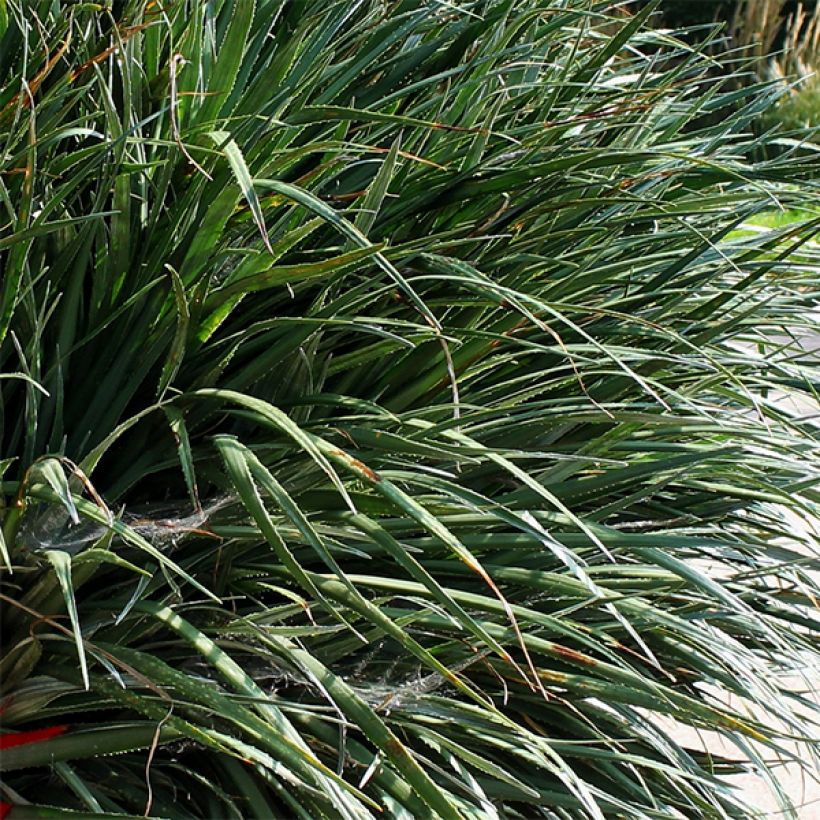
The Fascicularia bicolor is a vigorous perennial, cousin of the billbergias, which is among the most beautiful plants of Chilean origin. It forms a sometimes wide and tall clump of 80 centimetres (32 inches), made up of rosettes of ribbon-like, evergreen leaves. At the end of summer, the central leaves turn a blood red color, while a corymb inflorescence of small pale blue flowers surrounded by white bracts appears in the heart of the rosette. This spectacular plant offers a particularly exotic aspect to the garden throughout the year. Hardy down to -7°C (19.4°F), it thrives in mild climates. As an isolated plant or in a mass planting, in a rockery, this very graphic plant is ideal for mild climate regions. It will also thrive in a large container, to be overwintered in cooler regions.
The Fascicularia bicolor, also known as the andina species, belongs to the bromeliad family, like the pineapple or the guzmania for example. It is native to the Chilean mountains. It is a terrestrial perennial plant, which forms numerous juxtaposed rosettes, with a clump reaching over 1m (3ft) in height and 2m (7ft) in width under optimal conditions. Each rosette is composed of long, dentate and evergreen leaves, glaucous green in color. Its flowering, offering a tricolored spectacle of red, orange and blue, is truly spectacular: at the end of summer or more often in autumn, the leaves located inside the rosettes turn a bright red color, while an inflorescence composed of pale blue flowers mixed with white bracts appears in their heart.
This Fascicularia is a plant that is still little used in our gardens, but of great ornamental value. It is suited for mild climates and well-drained soils, planted in large mass plantings or in a sizable rockery. Used as an isolated plant or planted in groups, the Fascicularia andina structures the space and gives a very exotic charm to the garden. Like large grasses, it is also a wonderful perennial for a modern garden with clean lines. In cold regions, it can be installed in a very large pot on the terrace or balcony, to admire its extraordinary flowering at the end of the season, and overwintered frost-free, in a cold greenhouse or a lightly heated conservatory. In an urban garden, it softens concrete structures. For an exotic and contrasting atmosphere, it can be associated, for example, with the Embothrium coccineum, a small tree with red flowers, the Eccremocarpus scaber (Chilean glory flower), the Pittosporum tenuifolium 'Tom Thumb', proteas, or even the Daturas, plants that, like it, thrive in mild climates.
Report an error about the product description
Fascicularia bicolor in pictures
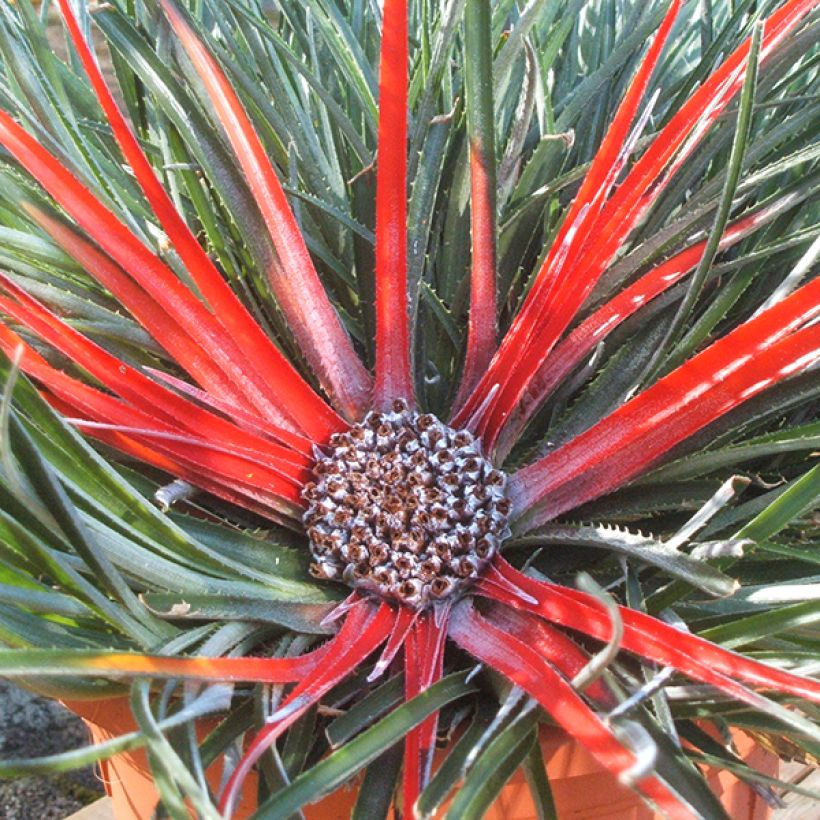
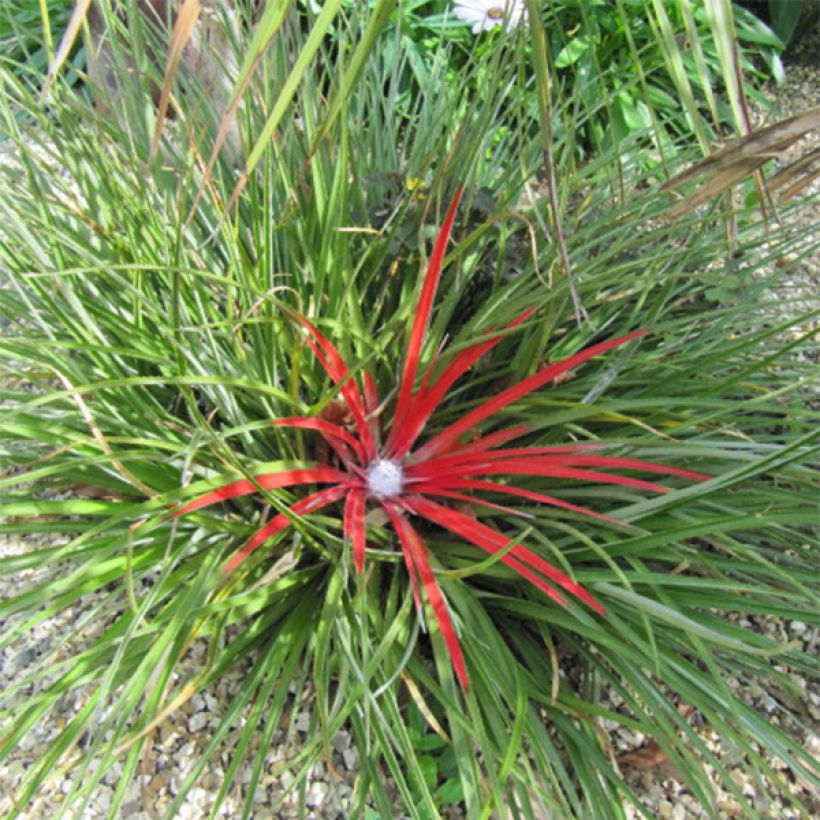
Flowering
Foliage
Plant habit
Botanical data
Fascicularia
bicolor
Bromeliaceae
Crimson Bromeliad
South America
Planting and care
The Fascicularia bicolor is a hardy plant that will be grown in the ground mainly in regions where frost does not go below -7°. Everywhere else, pot cultivation is more suitable, which will allow wintering sheltered from frost, in a cool and bright room.
Install your Fascicularia in a container or a large pot whose bottom has been filled with gravel, shards of pottery or clay balls. The mix that accommodates it should be fertile and well-drained (1/3 leaf soil, 1/3 compost and 1/3 ordinary garden soil, enriched with a handful of crushed horn).
Place the plant in full sun. Water abundantly during the growth period so that the soil never completely dries out. Feed the plant with "special bromelliad plant" fertiliser diluted in the watering can, once a month. In winter, reduce water and fertiliser inputs, and let the soil dry superficially between waterings.
In regions where the climate is mild and frost is light, plant it in the ground, in the sun, in a very well-drained, even sandy or rocky, and fertile soil. In summer, make sure the plant does not lack water. In winter, it can rely on rainwater.
In case of severe frost forecast, install a thick mulch at the base of the plant, and cover it with a winter veil.
Planting period
Intended location
Care
Planting & care advice
-
-
-
-
-
-
-
-
-
, onOrder confirmed
Reply from on Promesse de fleurs
Recently viewed products
Haven't found what you were looking for?
Hardiness is the lowest winter temperature a plant can endure without suffering serious damage or even dying. However, hardiness is affected by location (a sheltered area, such as a patio), protection (winter cover) and soil type (hardiness is improved by well-drained soil).
In temperate climates, pruning of spring-flowering shrubs (forsythia, spireas, etc.) should be done just after flowering.
Pruning of summer-flowering shrubs (Indian Lilac, Perovskia, etc.) can be done in winter or spring.
In cold regions as well as with frost-sensitive plants, avoid pruning too early when severe frosts may still occur.
The harvesting period indicated on our website applies to countries and regions in USDA zone 8 (France, England, Ireland, the Netherlands).
In colder areas (Scandinavia, Poland, Austria...) fruit and vegetable harvests are likely to be delayed by 3-4 weeks.
In warmer areas (Italy, Spain, Greece, etc.), harvesting will probably take place earlier, depending on weather conditions.
The sowing periods indicated on our website apply to countries and regions within USDA Zone 8 (France, UK, Ireland, Netherlands).
In colder areas (Scandinavia, Poland, Austria...), delay any outdoor sowing by 3-4 weeks, or sow under glass.
In warmer climes (Italy, Spain, Greece, etc.), bring outdoor sowing forward by a few weeks.
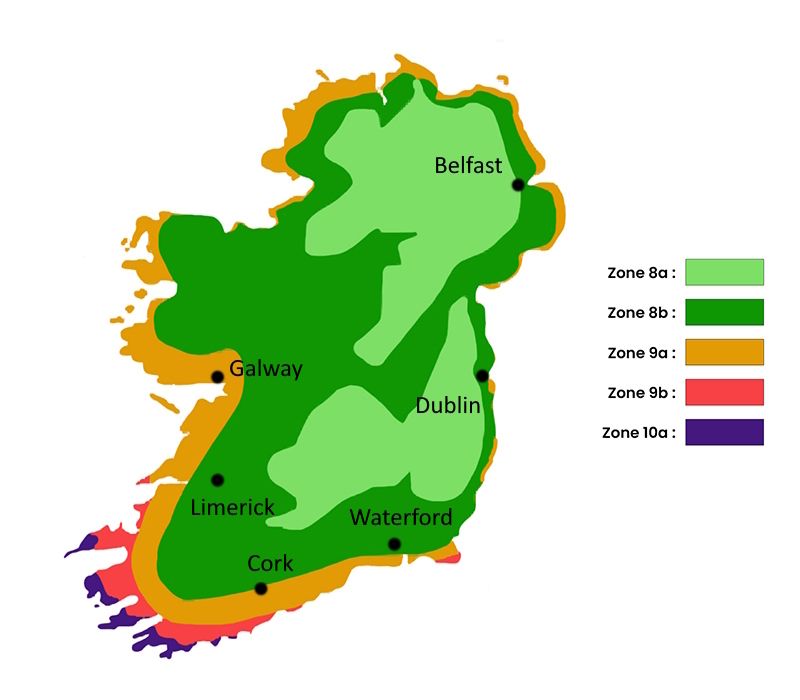
The planting period indicated on our website applies to regions in USDA Zone 9a (East Coast and Midlands: Dublin, Wexford, Waterford, Kilkenny, Portlaoise). It will vary depending on where you live:
- On the west coast and in the north-west (Galway, Limerick, Sligo, Donegal, Westport), delay planting by 1 to 2 weeks in spring and bring it forward by 1 to 2 weeks in autumn compared to the dates given, preferably choosing periods without strong winds.
- In the inland hills and plateaus (Wicklow Mountains, Macgillycuddy’s Reeks, Connemara, Killarney), it is best to plant in spring (April–May) or autumn (September–October), avoiding periods of waterlogged soil in winter and strong winds, which pose the main risk to newly planted trees in these areas.
The flowering period indicated on our website applies to regions in USDA Zone 9a, such as the East Coast and Midlands, including Dublin, Wexford, Waterford, Kilkenny and Portlaoise.
This will vary depending on where you live:
- On the west coast and in the northwest (Galway, Limerick, Sligo, Donegal and Westport), it will be delayed by one to two weeks compared to the given dates, due to stronger Atlantic winds and less spring sunshine.
- In the inland hills and plateaus (the Wicklow Mountains, the Macgillycuddy's Reeks, Connemara and Killarney), flowering will be delayed by two to three weeks. Flowering mainly occurs between May and July, with the limiting factors being less frost and more of the excessive humidity, strong winds and lack of sunshine that are characteristic of these areas.
Shipping country and language
Your country of residence may be:
Your country of residence is:
For a better user experience on our website, you can select:
Your shipping country:
-
 Austria
-
 Belgium
-
 Bosnia & Herzegovina
-
 Bulgaria
-
 Croatia
-
 Cyprus
-
 Czechia
-
 Denmark
-
 Estonia
-
 Finland
-
 France
-
 Germany
-
 Greece
-
 Hungary
-
 Iceland
-
 Ireland
-
 Italy
Italy
-
 Latvia
-
 Liechtenstein
-
 Lithuania
-
 Luxembourg
-
 Malta
Malta
-
 Netherlands
-
 Poland
-
 Portugal
-
 Romania
-
 Serbia
-
 Slovakia
-
 Slovenia
-
 Spain
Spain
-
 Sweden
-
 Switzerland
Language:
-
French
-
 English
-
Spanish
-
Italian
-
German
-
Portuguese
-
Dutch
-
Finnish
My Account
Hello
My wish lists
My cart
Log in / Register
Existing customer?
This form is protected by reCAPTCHA - the Google Privacy Policy and Terms of Service apply.
New customer?
Create an account to track your orders, access our customer service and, if you wish, make the most of our upcoming offers.