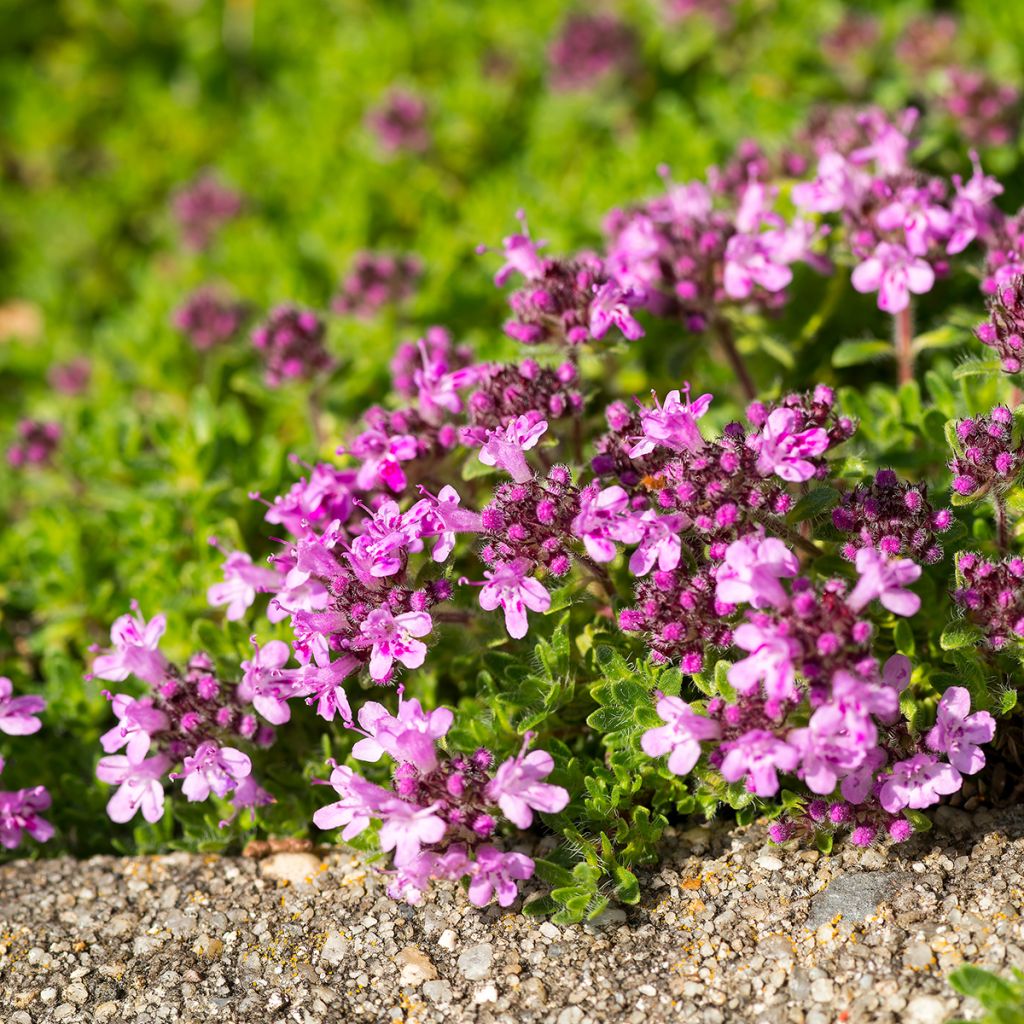
Thymus serpyllum Elfin - Thyme
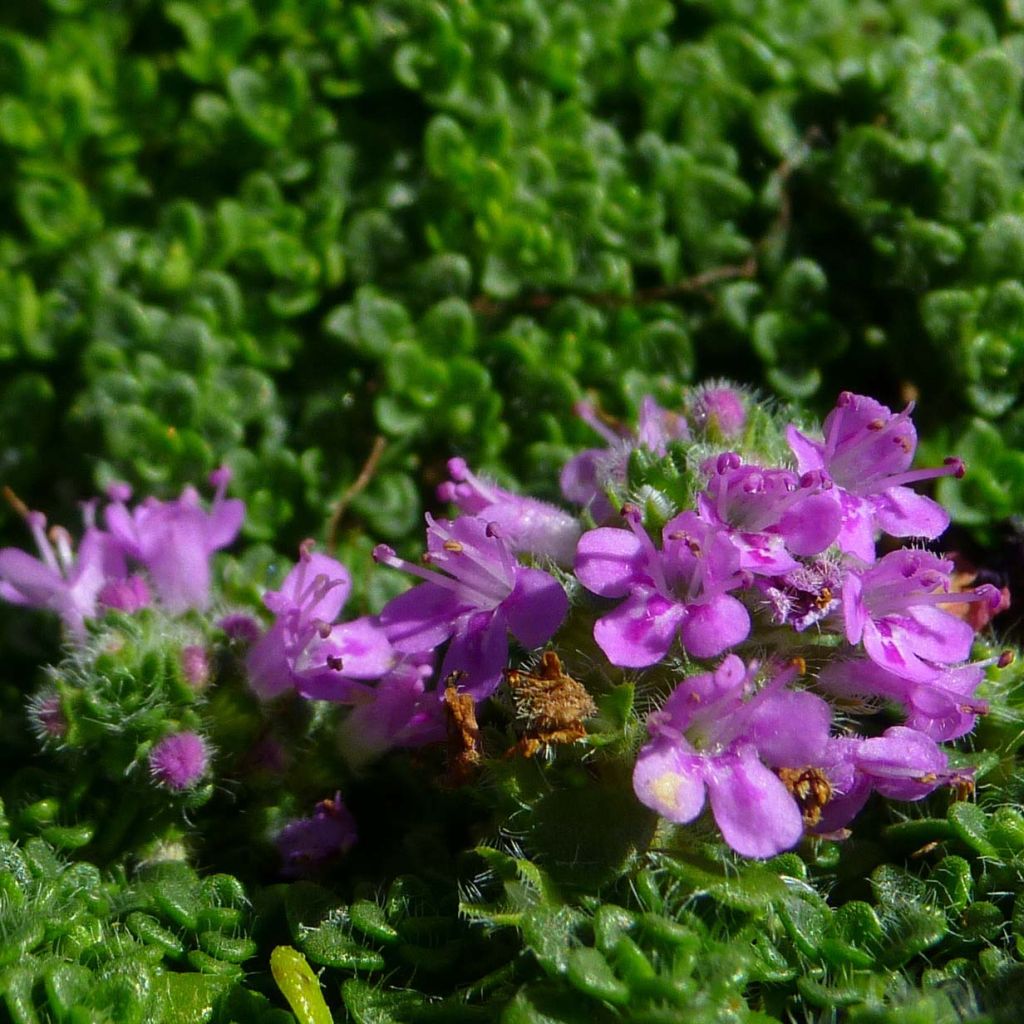
Thymus serpyllum Elfin - Thyme
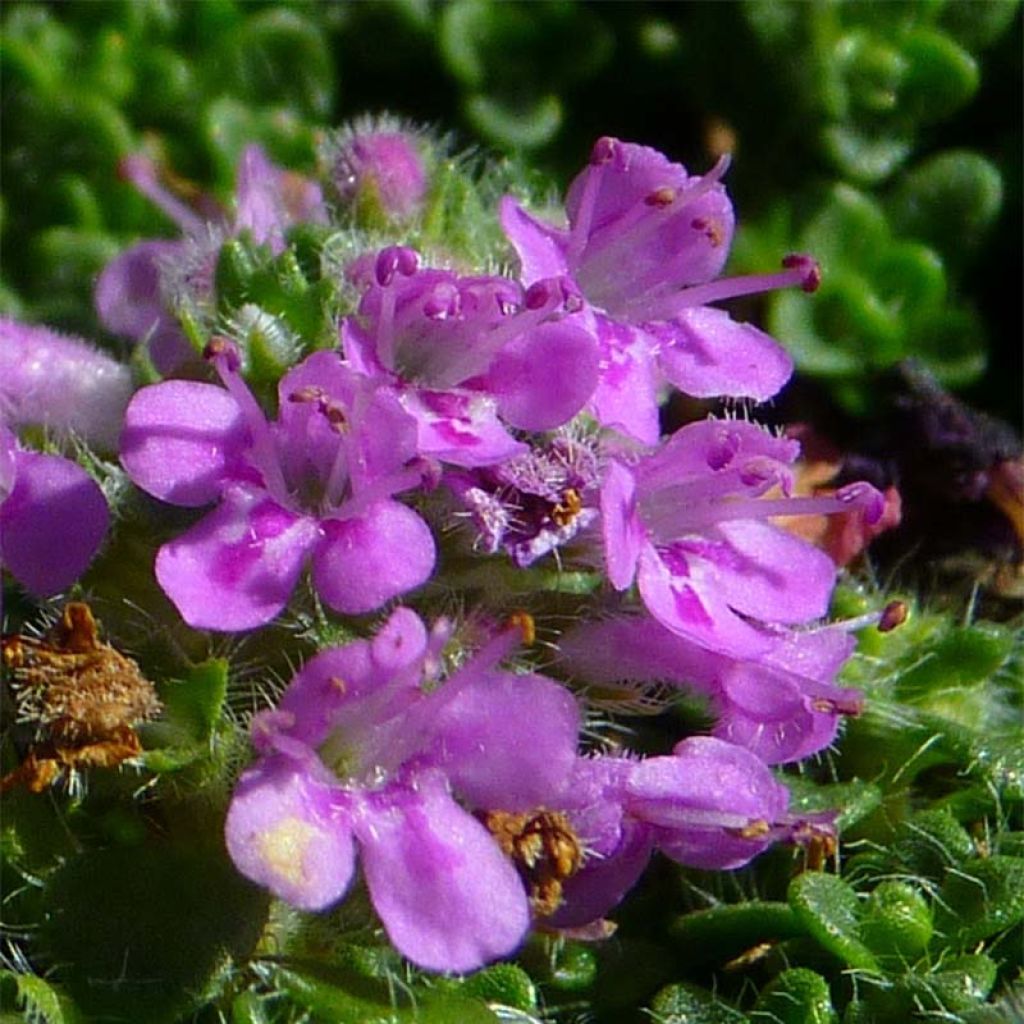
Thymus serpyllum Elfin - Thyme
Thymus serpyllum Elfin - Thyme
Thymus serpyllum Elfin
Thyme, Wild Thyme, Creeping Thyme, Breckland Thyme
They're dropping one after the other. I don't have many left and I don't think they'll survive the autumn.
Eric, 03/09/2025
Back-to-school special offer!
Get €10 off for every €50 you spend! And get up to €40 off on a single order.
How does it work?
1. Shop your favourites
Add your favourite plants to your basket. For every €50 you spend (excluding delivery charges, store credit and the plastic-free option), you’ll receive a €10 voucher.
€50 spent = €10 voucher
€100 spent = €20 voucher
€150 spent = €30 voucher
€200 spent = €40 voucher
2. Place your order
Once your basket reaches one of the spending thresholds, place your order. You can even choose your delivery date!
3. Receive your voucher
As soon as your order has been shipped, you’ll receive an email containing your personal voucher code and its value.
4. Use it on your next order
Your voucher is valid for 90 days from the date you receive it. It can be used once only, on a new order worth at least the value of the voucher, excluding delivery charges.
Please note: Vouchers can be combined with other offers, but cannot be split or refunded.
Home or relay delivery (depending on size and destination)
Important: You may be charged customs duties by your country’s customs authorities upon delivery.
Schedule delivery date
and select date in basket
This plant carries a 12 months recovery warranty
More information
We guarantee the quality of our plants for a full growing cycle, and will replace at our expense any plant that fails to recover under normal climatic and planting conditions.
Does this plant fit my garden?
Set up your Plantfit profile →
Description
Thymus serpyllum 'Elfin', better known as wild thyme, is a particularly compact variety with slow growth, forming a very low carpet, similar to moss, with creeping stems dressed in small, shiny, fragrant and evergreen green foliage. Its clusters of pale-pink flowers bloom abundantly just above the foliage in late spring or summer. This variety is ideal for filling gaps in paving stones and walls, but can also be used as a condiment. This hardy perennial prefers full sun and well-drained, sandy soil.
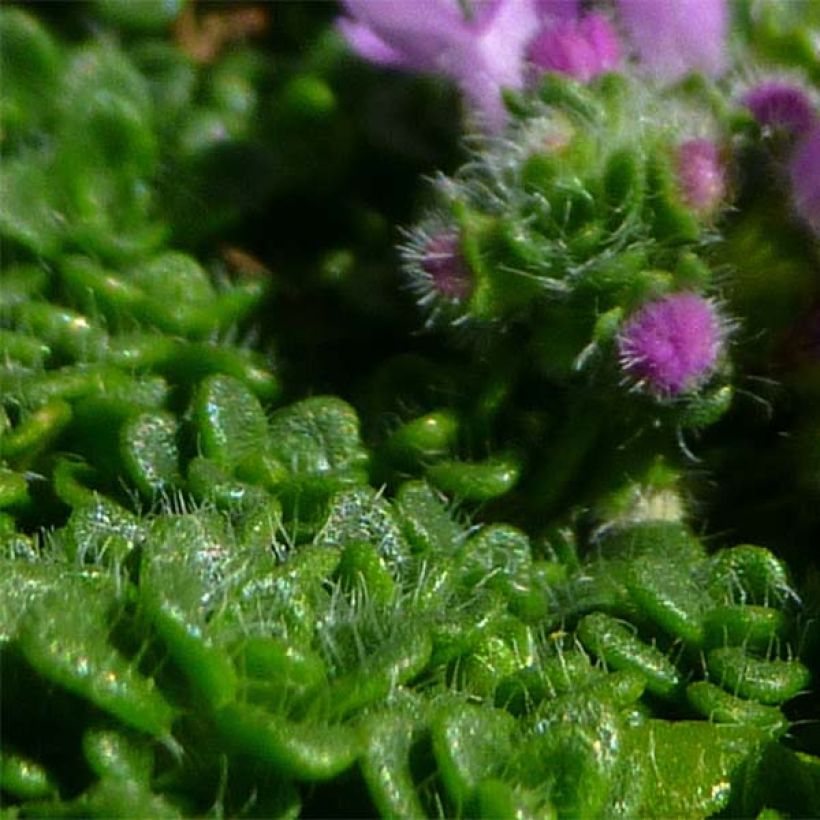
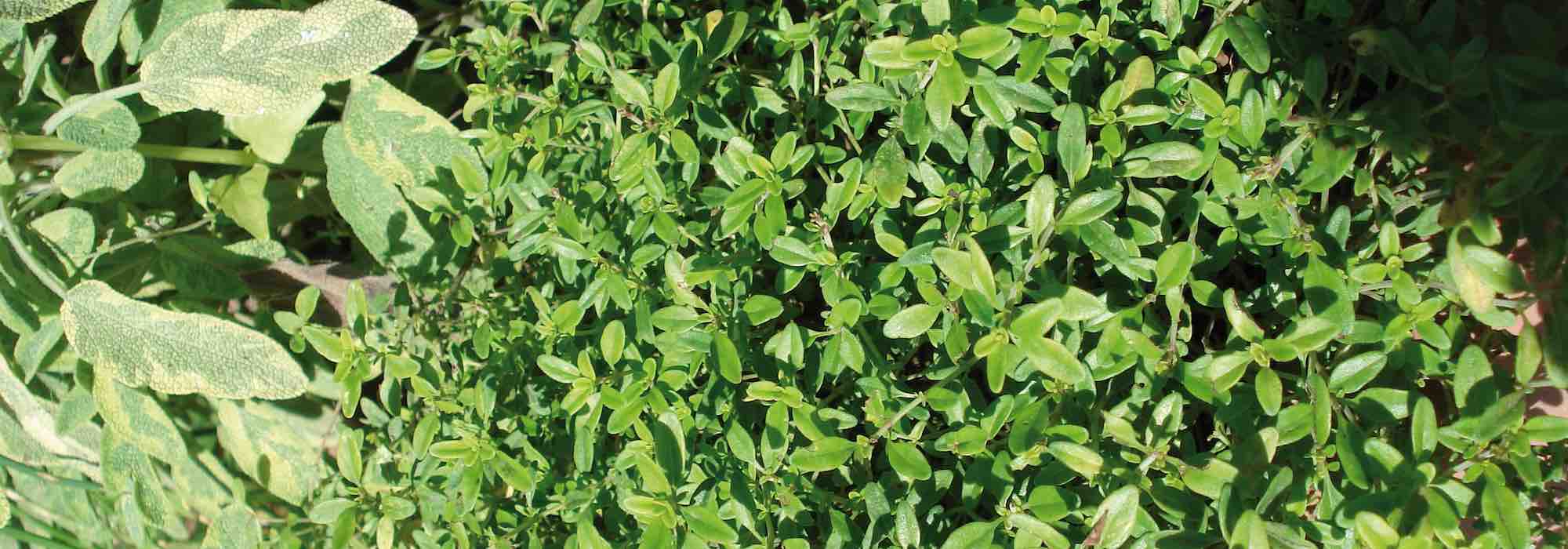
Native to Europe, North Africa, Western and Central Asia, Thymus serpyllum is a botanical species belonging to the Lamiaceae family. In the wild, it is found in dry and arid places, especially in limestone and sandy soils. Thymus 'Elfin' is a horticultural selection derived from this medicinal and aromatic plant. This variety has a very spreading habit and forms a dense foliage mat that is 5 to 10cm (2 to 4in) high and 30 to 50cm (12 to 20in) wide. Its tiny, oval, leathery, villous foliage covers flexible, prostrate, and rooting stems at the nodes, allowing the plant to spread laterally. Numerous essential oil glands are visible under a magnifying glass on the 3mm (1in) long leaves. The scent of wild thymes is slightly less pronounced than that of common thyme, but it is finer and more balsamic. The flowering period is from June to July-August depending on the climate. Very small tubular and bilabiate flowers in pink-purple or lilac colour, grouped in dense whorls, bloom in cymes at the ends of the current year's shoots, attracting many pollinating insects. Like many Mediterranean plants adapted to drought, thyme develops a double root system, consisting of a central taproot, which plays a fundamental role by penetrating deeply into the soil or rock crevices, and a superficial network of very long rootlets capable of capturing the slightest surface moisture.
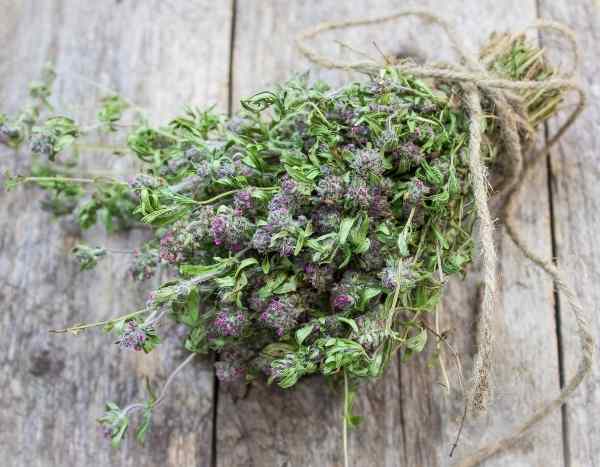
Thymus 'Elfin' is decorative all year round and is very hardy when planted in perfectly drained or even arid soil. Its spreading habit makes it an ideal plant to elegantly fill gaps in pavements, cracks and the tops of walls, or the edges of a stone staircase, especially since it tolerates moderate trampling. It will complement a dry plant bed with lavender, rockroses, shrubby salvias, dwarf artemisias, cotton lavenders, or rosemary. It will thrive in a very sunny rockery, keeping company with Aubrieta canescens, golden or silver thistles, creeping germander, and ceanothus. It is also used as a condiment; its garlicky-scented leaves are highly appreciated in cooking. Used alone or in a bouquet garni, combined with bay leaves, parsley, and rosemary, thyme leaves flavour stews, sauces, marinades, and fish stock. They are also used in herbal tea, known for relieving digestive ailments. As a sun-loving plant, thyme can also be planted in dry borders or in pots, which allows it to be kept close to the kitchen.
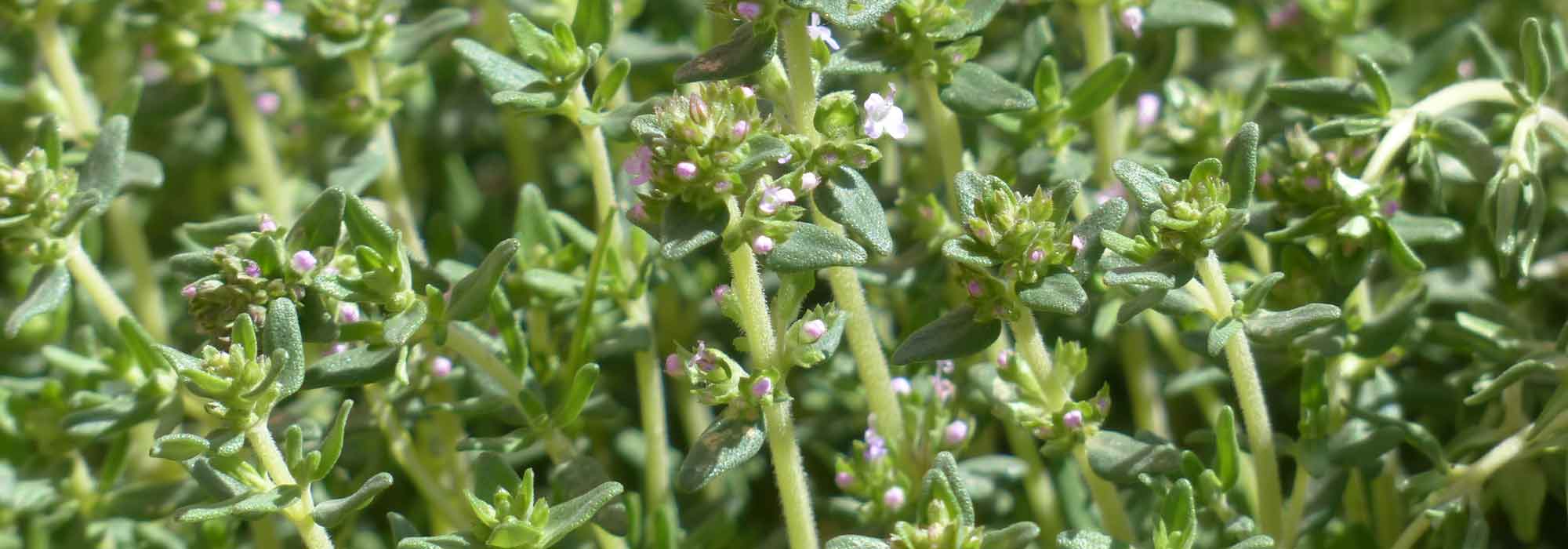
Thymus serpyllum Elfin - Thyme in pictures
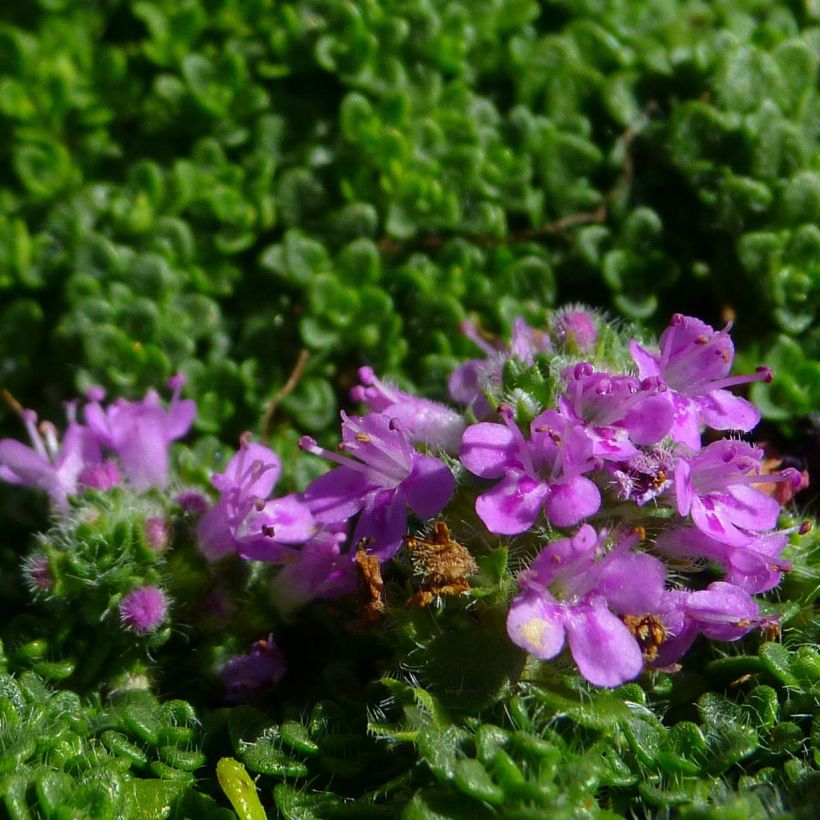
Flowering
Foliage
Plant habit
Botanical data
Thymus
serpyllum
Elfin
Lamiaceae
Thyme, Wild Thyme, Creeping Thyme, Breckland Thyme
Mediterranean
Planting and care
It requires preferably sandy, poor, even limestone and stony, perfectly drained soil to withstand the rigors of winter. It is not very demanding but dreads excessively hot climates in summer. Plant it after the last frost in cool regions, and in September-October in hot and dry climates. It cannot thrive without sunlight and likes to have warm roots. When planted in overly rich soil, it becomes sad and lacks fragrance. In poor and well-drained soil, it is hardy to at least -15°C (5°F) and will live longer. Plant it in a raised bed enriched with gravel, in a rock garden, in full sun against a south-facing wall, or in a stony or sandy embankment. Use any substrate that does not retain moisture. Excess moisture would be fatal to it in winter. Prune the stems after flowering to maintain a compact habit. It may be necessary to replant it every 3 years, as the centre tends to become bare, especially in fertile soil.
Thyme can resist grazing by sheep and goats; regular pruning (on young wood) helps the plant age well.
Planting period
Intended location
Care
Planting & care advice
-
-
-

-
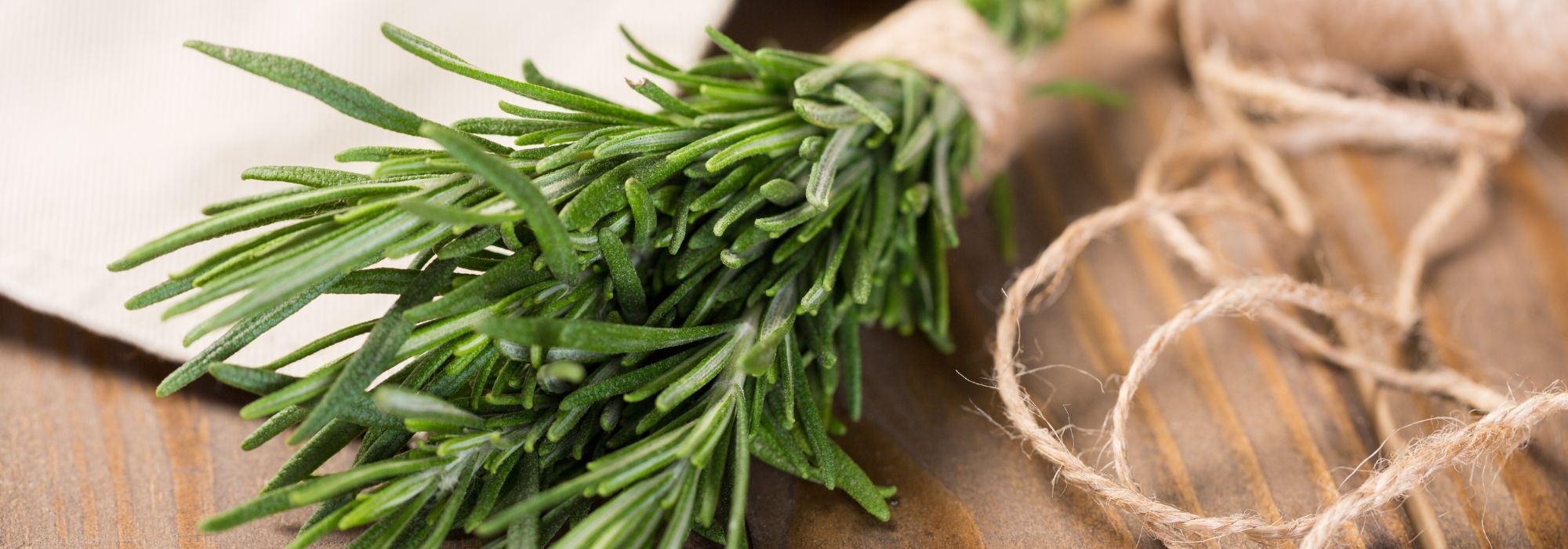
-
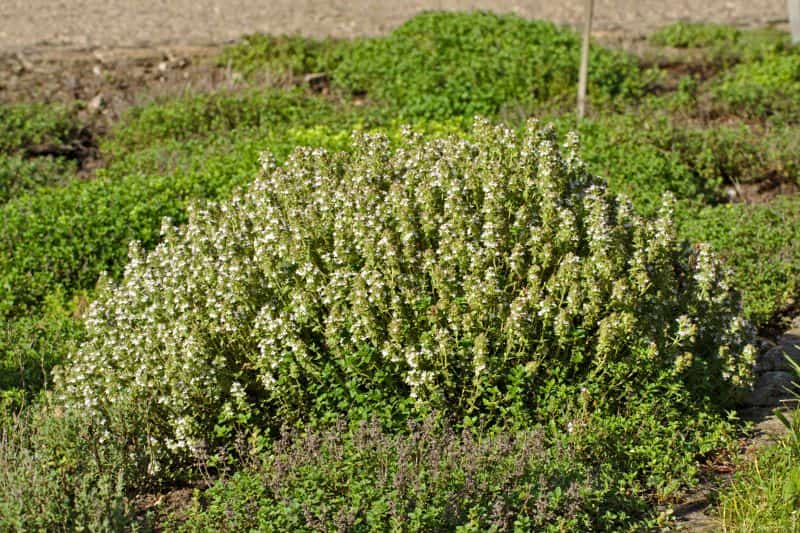
-
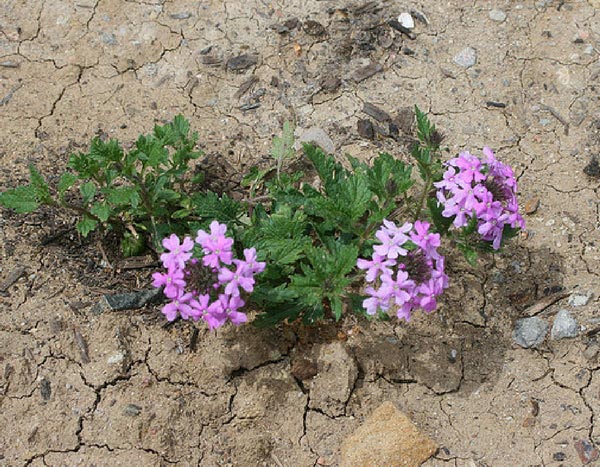
-
-

-
, onOrder confirmed
Reply from on Promesse de fleurs
Recently viewed products
Haven't found what you were looking for?
Hardiness is the lowest winter temperature a plant can endure without suffering serious damage or even dying. However, hardiness is affected by location (a sheltered area, such as a patio), protection (winter cover) and soil type (hardiness is improved by well-drained soil).
In temperate climates, pruning of spring-flowering shrubs (forsythia, spireas, etc.) should be done just after flowering.
Pruning of summer-flowering shrubs (Indian Lilac, Perovskia, etc.) can be done in winter or spring.
In cold regions as well as with frost-sensitive plants, avoid pruning too early when severe frosts may still occur.
The harvesting period indicated on our website applies to countries and regions in USDA zone 8 (France, England, Ireland, the Netherlands).
In colder areas (Scandinavia, Poland, Austria...) fruit and vegetable harvests are likely to be delayed by 3-4 weeks.
In warmer areas (Italy, Spain, Greece, etc.), harvesting will probably take place earlier, depending on weather conditions.
The sowing periods indicated on our website apply to countries and regions within USDA Zone 8 (France, UK, Ireland, Netherlands).
In colder areas (Scandinavia, Poland, Austria...), delay any outdoor sowing by 3-4 weeks, or sow under glass.
In warmer climes (Italy, Spain, Greece, etc.), bring outdoor sowing forward by a few weeks.
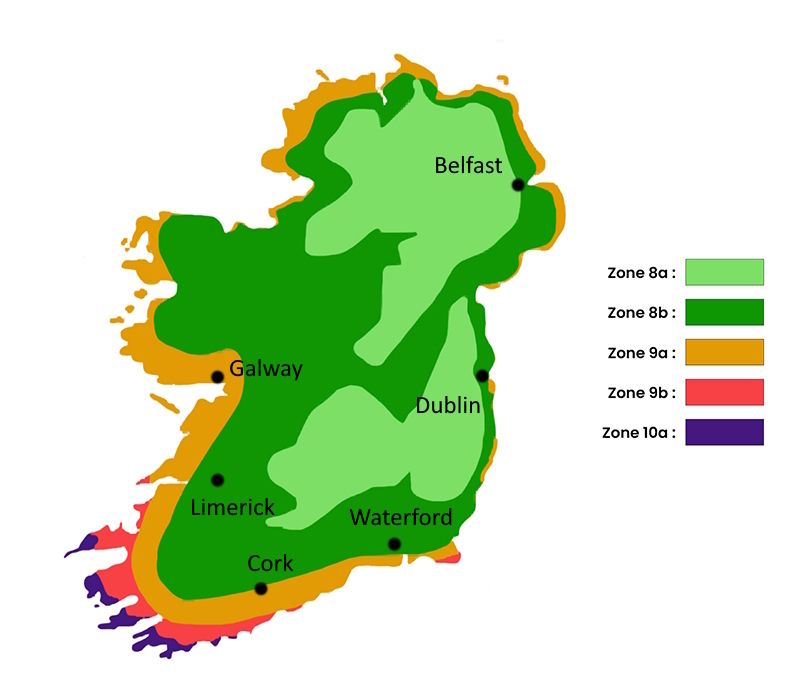
The planting period indicated on our website applies to regions in USDA Zone 9a (East Coast and Midlands: Dublin, Wexford, Waterford, Kilkenny, Portlaoise). It will vary depending on where you live:
- On the west coast and in the north-west (Galway, Limerick, Sligo, Donegal, Westport), delay planting by 1 to 2 weeks in spring and bring it forward by 1 to 2 weeks in autumn compared to the dates given, preferably choosing periods without strong winds.
- In the inland hills and plateaus (Wicklow Mountains, Macgillycuddy’s Reeks, Connemara, Killarney), it is best to plant in spring (April–May) or autumn (September–October), avoiding periods of waterlogged soil in winter and strong winds, which pose the main risk to newly planted trees in these areas.
The flowering period indicated on our website applies to regions in USDA Zone 9a, such as the East Coast and Midlands, including Dublin, Wexford, Waterford, Kilkenny and Portlaoise.
This will vary depending on where you live:
- On the west coast and in the northwest (Galway, Limerick, Sligo, Donegal and Westport), it will be delayed by one to two weeks compared to the given dates, due to stronger Atlantic winds and less spring sunshine.
- In the inland hills and plateaus (the Wicklow Mountains, the Macgillycuddy's Reeks, Connemara and Killarney), flowering will be delayed by two to three weeks. Flowering mainly occurs between May and July, with the limiting factors being less frost and more of the excessive humidity, strong winds and lack of sunshine that are characteristic of these areas.
Shipping country and language
Your country of residence may be:
Your country of residence is:
For a better user experience on our website, you can select:
Your shipping country:
-
 Austria
-
 Belgium
-
 Bosnia & Herzegovina
-
 Bulgaria
-
 Croatia
-
 Cyprus
-
 Czechia
-
 Denmark
-
 Estonia
-
 Finland
-
 France
-
 Germany
-
 Greece
-
 Hungary
-
 Iceland
-
 Ireland
-
 Italy
Italy
-
 Latvia
-
 Liechtenstein
-
 Lithuania
-
 Luxembourg
-
 Malta
Malta
-
 Netherlands
-
 Poland
-
 Portugal
-
 Romania
-
 Serbia
-
 Slovakia
-
 Slovenia
-
 Spain
Spain
-
 Sweden
-
 Switzerland
Language:
-
French
-
 English
-
Spanish
-
Italian
-
German
-
Portuguese
-
Dutch
-
Finnish
My Account
Hello
My wish lists
My cart
Log in / Register
Existing customer?
This form is protected by reCAPTCHA - the Google Privacy Policy and Terms of Service apply.
New customer?
Create an account to track your orders, access our customer service and, if you wish, make the most of our upcoming offers.