If roses or vegetables are overrun with aphids, don’t reach for chemical artillery! Rhubarb leaves contain oxalic acid, a powerful substance against destructive insects. Here’s how to turn kitchen waste into effective garden protection.
Why use rhubarb?
Using rhubarb in the garden relies on the high concentration of oxalic acid in its leaves, a natural compound that acts as a repellent and a rapid insecticide against vegetable garden pests. This organic solution is particularly effective at eradicating colonies of green or black aphids and at stopping leek moth attacks.
By recycling leaves that are normally discarded at harvest, you benefit from a completely free, zero-waste treatment. Unlike synthetic chemical products, this decoction is fully biodegradable, preserving soil health and the balance of the local ecosystem.
While rhubarb decoction is obtained quickly by boiling the leaves to extract oxalic acid, rhubarb manure results from natural fermentation in water over several days, providing fertilising properties in addition to insecticidal action.
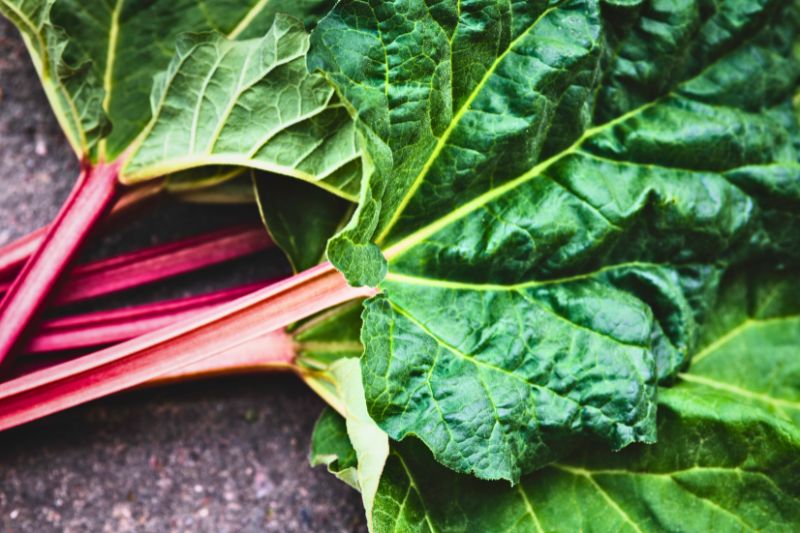
Equipment and ingredients
To prepare about 5 litres of decoction, you need:
- 500 g rhubarb leaves
- 5 litres water: rainwater if possible, less hard
- Large pot: avoid aluminium, which can react with the acid
- Clean sprayer
- Filter: fine sieve or an old pair of tights
- Knife
Preparation steps
1. Preparing the leaves
Roughly chop rhubarb leaves using pruning shear or a knife. The smaller the pieces, the better the active compounds will be released.
2. Soaking
Place leaf pieces in the pot and pour the 5 litres water over them. Leave to stand for 24 hours at room temperature. This softens plant tissues: maceration.
3. Boiling
Bring the mixture to the boil. Once boiling, cover and simmer gently for 30 minutes.
Tip: keep lid on to avoid excessive evaporation of active compounds.
4. Resting and filtering
Allow liquid to cool completely. Once cold, filter mixture to remove all leaf residues. It is crucial that liquid is clear so as not to block sprayer nozzle.
Decoction keeps for about 1 month if stored in an opaque container, in a cool, dark place.
How to use in garden
- Dosage: unlike manure, which often requires dilution, decoction is used neat.
- Targets: green aphids, black aphids (on broad beans) and leek moth.
- Application: spray directly onto infested areas, remembering underside of leaves.
- Timing: always apply in the evening, after sunset, to avoid burning plant leaves and to spare beneficial insects, which are less active at that time.
Important precautions
Rhubarb leaves are toxic if ingested (for humans and pets). Label storage bottles clearly and keep out of reach of children.
Wash pot thoroughly after use!

































Comments