
How to keep beautiful pansies in planters all winter?
7 tips for overwintering pansies in pots, containers or window boxes
Contents
Our winter planters showcase pansies alongside a few other graceful flowers, such as cyclamens. These delicate little flowers need specific care if you want them to sail happily through the winter. Let’s look at how to keep your pansies flowering over the months, right through to the end of winter, in a container or planter.

Plant them with love
This is the first condition for seeing them grow well for many months.
In a small container such as a window box, a plant has less substrate available. Pansies are generally planted in a small container, pot or window box. Although they are tough and withstand cold weather and snow without complaint, pansies need careful planting to get through autumn and winter without any problems.
Get started from mid to late September, when they are widely available in garden centres (and from Promesse de fleurs!): they will have time to establish before the first cold spells. Plant them as soon as you buy them, without leaving them to wait. Soak the rootball thoroughly to ensure good establishment and reduce stress, whether you have bought pots or plug plants.
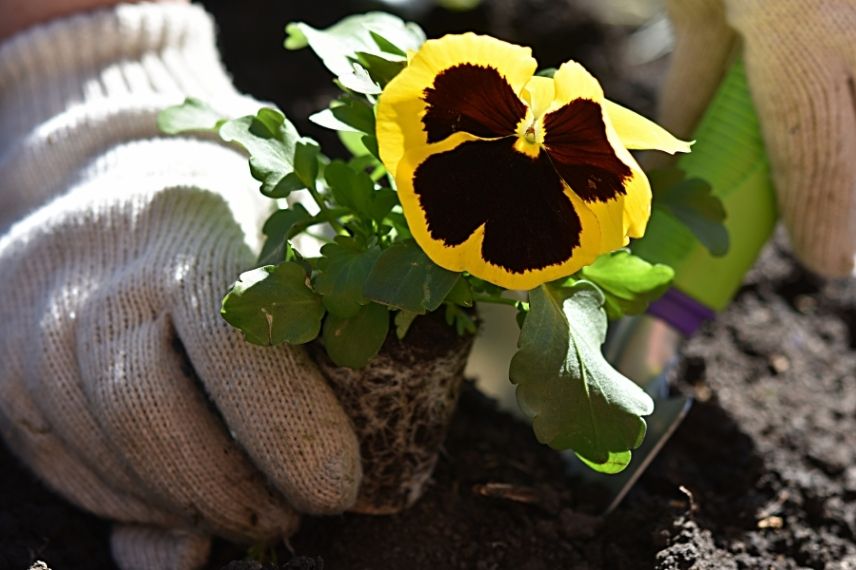
As the good annual that it is, the pansy will appreciate a rich substrate. Empty your old window boxes completely if the potting compost has dried out, and replace it with good general-purpose potting compost mixed with garden soil and, ideally, a good handful of homemade compost. That will be more than enough… If your soil is acidic, even better, as pansies appreciate it, especially Viola x wittrockiana, garden pansies. Do not forget to add a drainage layer of clay pebbles or gravel.
During the first few weeks after planting, keep a close eye on watering: this is a milder period, sometimes without rain depending on the region, so keep the compost in your window box moist. This will help the pansies to establish. Finally, position your window box where it will receive at least 6 hours of sunshine a day, which is essential for abundant flowering.
→ Read our feature on potting compost for window boxes and balconies.
Brush against your thoughts!
It is certainly this action that is the most important for keeping your pansies flowering for a long time and helping them get through autumn and winter without difficulty.
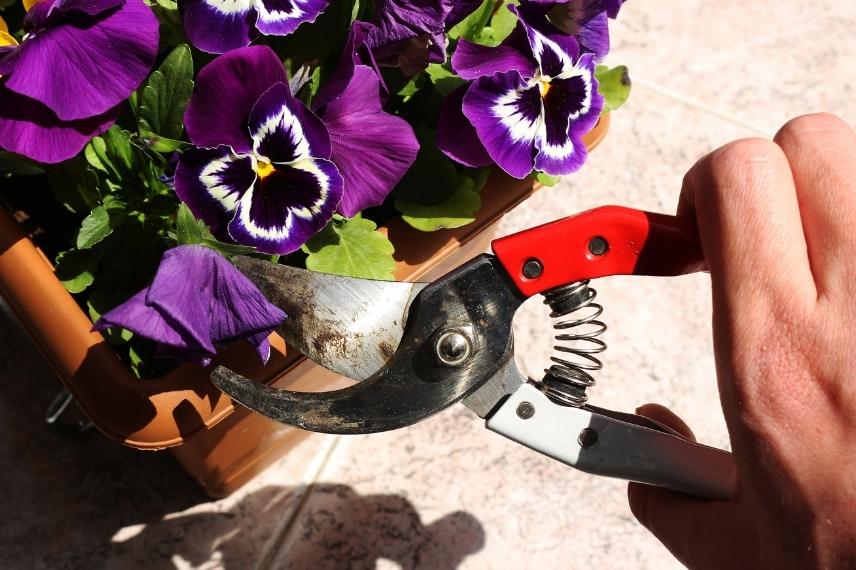
Deadheading consists of pinching out and removing flowers that have just faded. Firstly, because faded flowers do not look very attractive on planters that are generally highly visible from indoors. But above all because this stimulates pansies to produce new flowers. Deadheading (or pinching out, as it is also called) should above all be carried out regularly, so that the plant keeps producing new flowers right through to winter. Do it with your fingernail, thumb and forefinger, as the stems are easy to cut this way, or with a pair of scissors, cutting at the base of the stem.
Water them properly
Not too much… nor too little. Autumn rains normally provide the moisture pansies need if the window box receives rainwater. But when planting, water thoroughly, without allowing the growing medium to dry out, so that the roots develop quickly. And as is often the case with window boxes on a balcony that do not receive rain, remember to keep the compost sufficiently moist, but never waterlogged or completely dry.
→ Read also Watering potted plants.
Feed them.
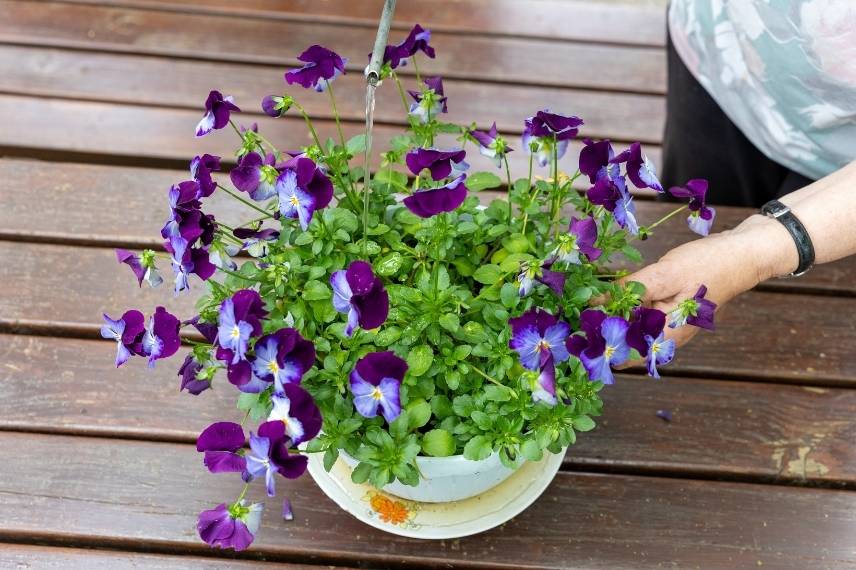
From planting onwards and about once a month, do not hesitate to feed your pansies, especially large-flowered varieties. A liquid fertiliser will be the most convenient, with a good phosphorus content (for example, an NPK 15-30-15).
Move the planter according to the season.
In partial shade in autumn, move your planter into full sun if possible for December and January, where the pansies will receive as much light as possible at this time of year, when light levels are lower.
During snowy spells
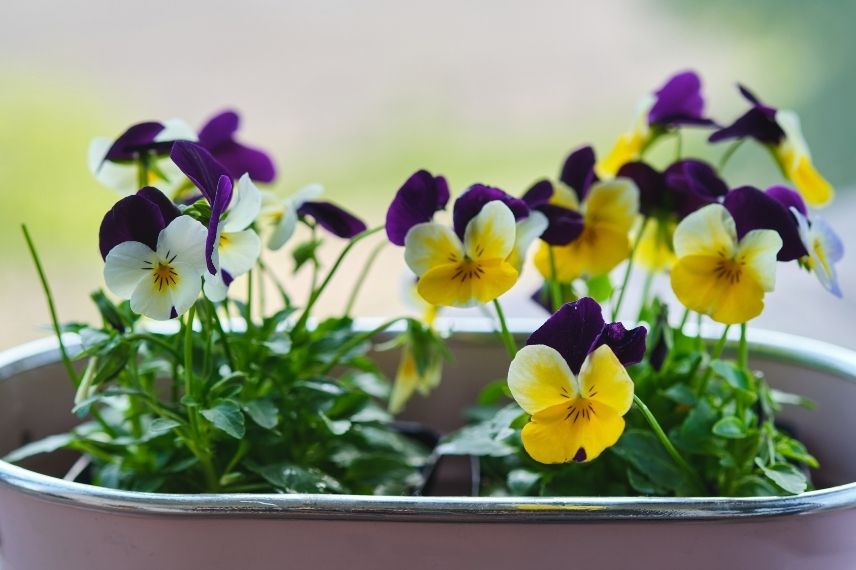
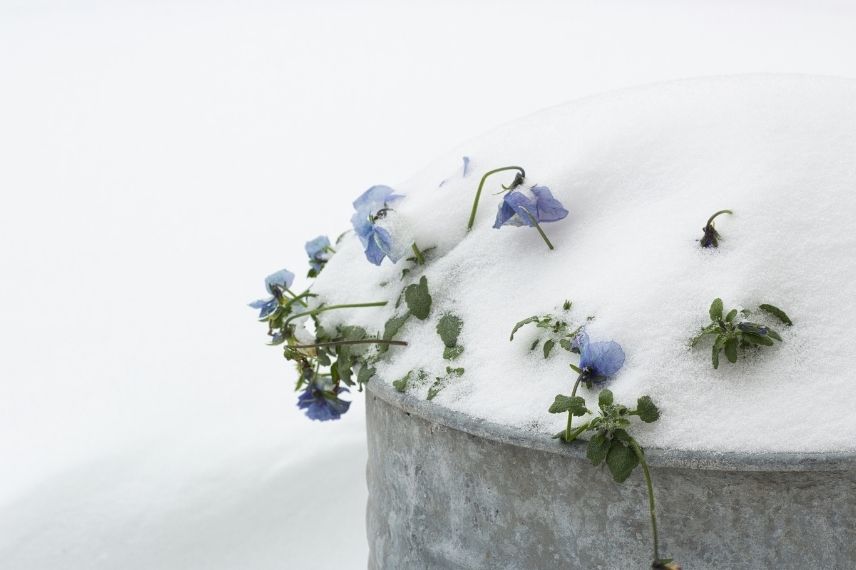
Delicate, pansies? Like their primrose companions, they brave the cold and snow without batting an eyelid, down to -9 °C. They are plants that thrive in cool temperatures and flower freely between 5 °C and 20 °C. Above that, they begin to slow down and flower less and less.
If they look a little limp during the coldest days, there is no need to worry: as soon as the snow disappears and the sun returns, they perk up as if by magic and become cheerful and vigorous once more.
The most cold-hardy pansies
Unusually, it is wild species that adapt to frost and sub-zero temperatures, including Viola hiemalis and Viola cornuta.
Garden pansies, Viola x Wittrockiana, the ones widely available in garden centres, are also very hardy, especially those in the Matrix and XP series. These horticultural varieties have been specifically bred for their hardiness and ability to flower again quickly after periods of severe cold. Matrix pansies (such as ‘Matrix White’, pure white, or ‘Lavender Shades‘) have the advantage of being resistant both to cold weather and to the warmth of spring.
- Subscribe!
- Contents
This form is protected by reCAPTCHA - the Google Privacy Policy and Terms of Service apply.

































Comments