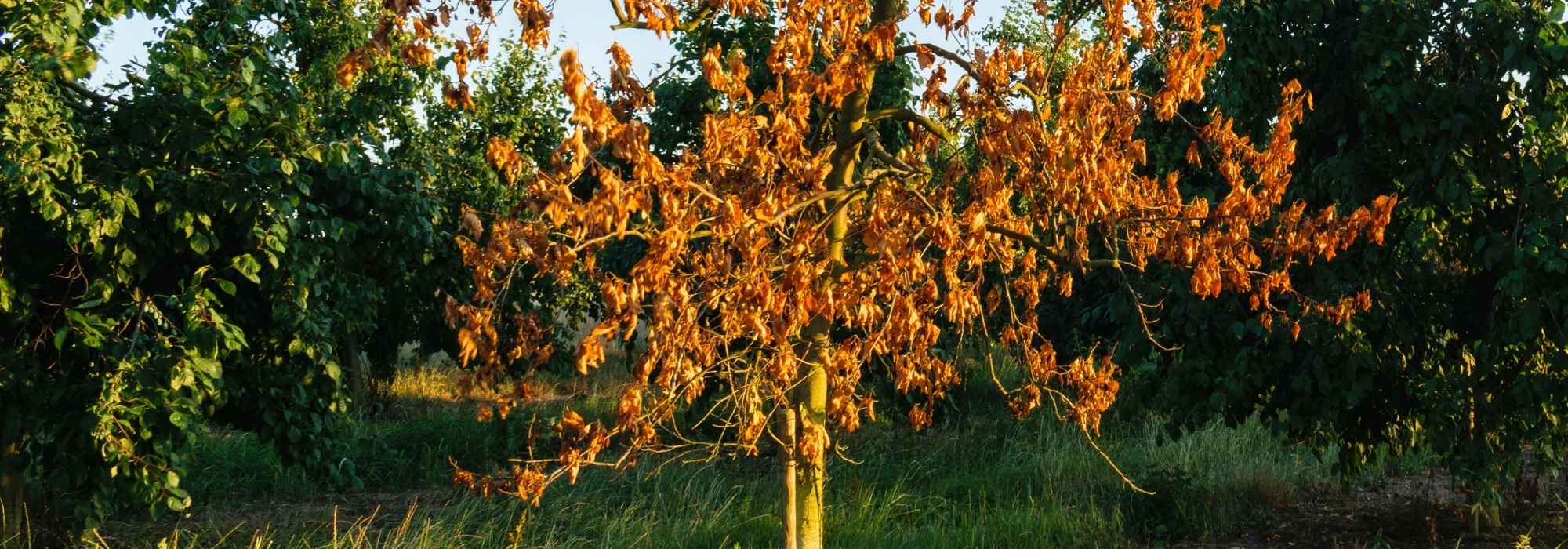
How to tell if a plant has survived the heatwave?
Tests to carry out to avoid condemning them prematurely!
Contents
Heatwaves are occurring every summer, becoming more intense and devastating, leaving some of our plants seemingly doomed. Nature’s resilience means that some plants manage to recover from these episodes of drought. How can you tell whether a plant will survive and how can you support its return to life? Here is our advice on saving them!

Recognising and testing the outward signs of survival
Finding out whether a shrub or tree can recover despite its sorry, dry or even scorched appearance involves two steps:
1- Spotting the signs visually is within everyone’s reach in the garden and is the first thing to do: a plant affected by one or more heatwaves displays common characteristics:
- foliage that is brown or completely scorched
- dry, brown or drooping stems
- completely defoliated branches.
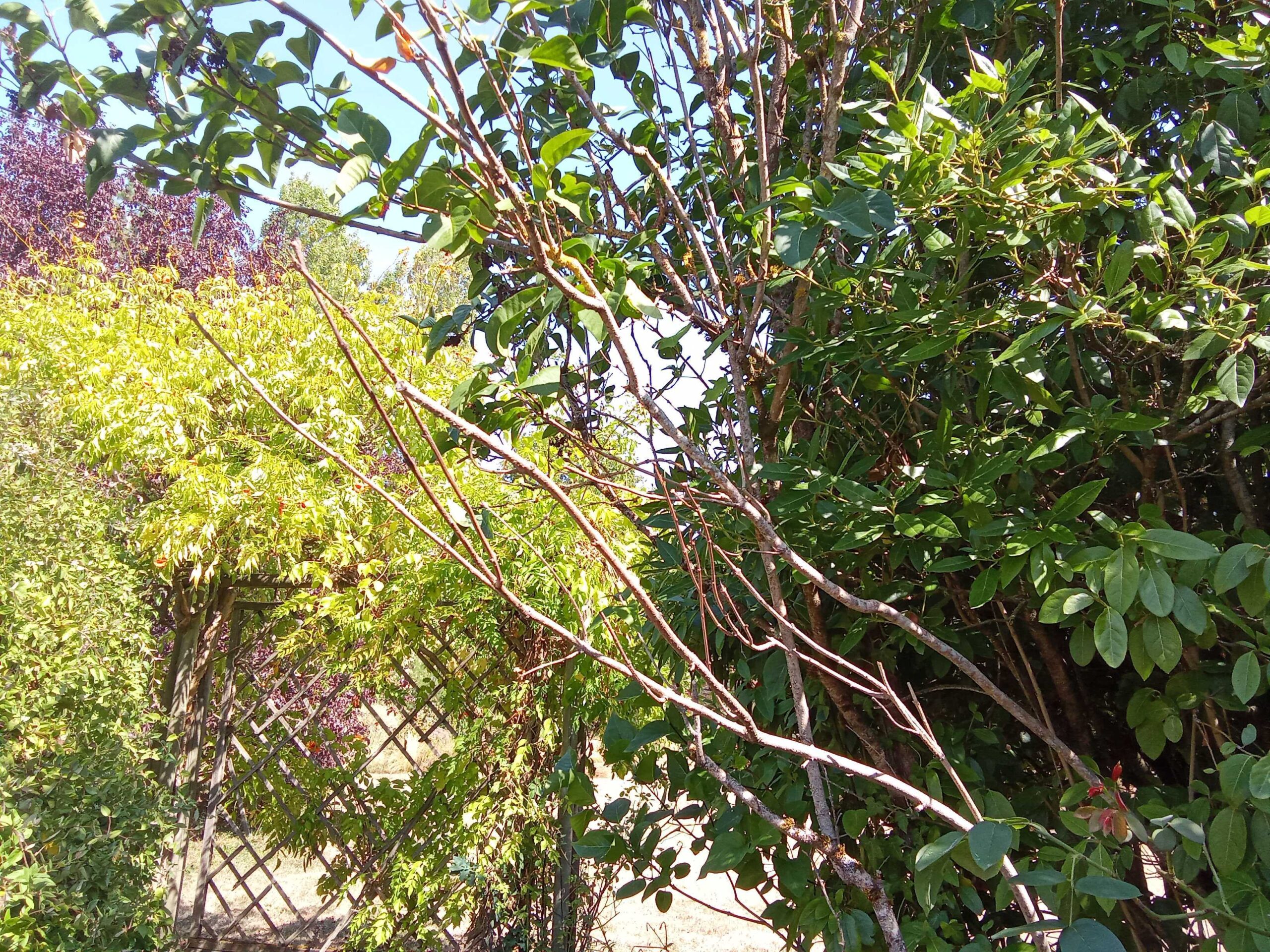
Only part of this lilac is dry; it should recover after suitable pruning later on
2- Testing the plant means, after the visual examination, making sure that it is still alive, that only part of it is dead, or that it has truly died!
To do this, three very simple tests can be used:
- The fingernail test or scratching: gently scratch the bark of the branch with your fingernail. If the wood is green underneath, everything is fine: the plant or this part of it is alive; if it is brown, there is no hope: the plant or this part of the plant is dead. You then need to move further down the branch and check the condition of the wood beneath the bark at different points (Olivier shows this in detail in this video: );
- Stem flexibility: if they snap completely, there is little hope; if they are flexible, everything is fine;
- Examining the roots: this is less easy, as you need to dig them up at least partially. Brown or black, soft or dry, or smelly roots often indicate a lost plant. Conversely, healthy roots that are white or beige, moist and firm indicate that the plant is still very much alive.
N.B.: the presence of buds (even small or dormant ones) and new shoots is an excellent sign of survival, especially on shrubs and trees. Examine your weakened plants carefully to see whether they are present.
Warning: shedding some or all of their foliage very early in summer is simply a survival strategy for many trees and shrubs. Do not condemn them; they will normally start growing again the following spring. See our following articles for more details: Drought: how do plants adapt? and My tree is losing its leaves: what is happening?
Tips for recovering or saving a plant that appears to be beyond saving
If one or more signs give us information about a plant’s viability, it is often still time to come to its rescue, as plants are much stronger and more resilient than their physical appearance would suggest in mid-summer, after severe heatwaves.
Three actions are essential:
- very generous watering, early in the morning (at dawn) or late in the evening (after 10 pm). This copious watering at the base (– 10 to 20 litres for a shrub, 5 litres for a large pot) normally allows any plant to recover. Above all, do not water every day thinking you are doing the right thing: the opposite is what you need to do, especially with shrubs and all woody plants. In any case, a herbaceous plant will let you know by its limp appearance (a Farfugium or common Rose mallow drooping its head, for example);
- Move potted plants into the shade when possible, to help them recover more quickly;
- Mulch the substrate again
In addition to these three first-aid measures, avoid pruning dry parts immediately, as another episode of drought and water stress cannot now be ruled out throughout the summer until September. I discuss this in more detail in Should branches scorched by the sun be pruned?, and Ingrid shows you how to prune the dried-out parts of a plant after heat stress? Pruning carried out at the right time and according to the rules of the art will allow the shrub or tree to produce new shoots.
→ Read also: how to rehydrate the root ball of a completely dry plant? and
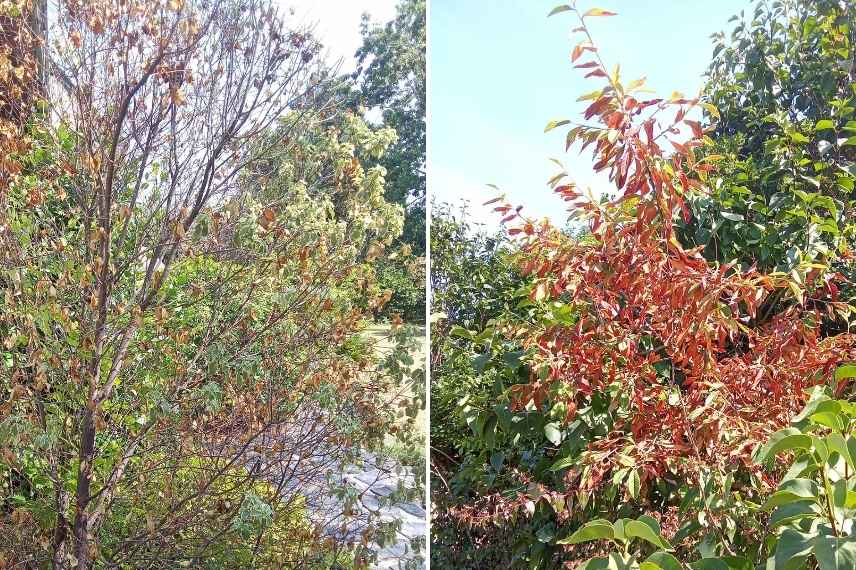
Pittosporum that has completely shed its foliage on the left, a gingerbread-coloured Cotoneaster on the right (photo Gwenaëlle Authier)
Mistakes to avoid
However, absolutely avoid:
- Ripping them out in haste, thinking that the plant is already dead. By waiting until the following spring, you may sometimes get a pleasant surprise, as the resilience of plants reminds us every day in the garden. Patience remains, unusually enough, the gardener’s watchword.
- using fertilisers, which will be more harmful at this stage, namely just after a period of drought or a heatwave.
- Subscribe!
- Contents
This form is protected by reCAPTCHA - the Google Privacy Policy and Terms of Service apply.

































Comments