Lycium barbarum Sweet Lifeberry
Lycium barbarum Sweet Lifeberry
Lycium barbarum Sweet Lifeberry®
Goji Berry, Wolfberry
First of all, thank you for the order which arrived in 2 days instead of 5/6 days. The young plant of Goji is great and already planted. It is a good size and already full of small leaves. Thank you.
Sabrina17, 02/03/2026
Back-to-school special offer!
Get €10 off for every €50 you spend! And get up to €40 off on a single order.
How does it work?
1. Shop your favourites
Add your favourite plants to your basket. For every €50 you spend (excluding delivery charges, store credit and the plastic-free option), you’ll receive a €10 voucher.
€50 spent = €10 voucher
€100 spent = €20 voucher
€150 spent = €30 voucher
€200 spent = €40 voucher
2. Place your order
Once your basket reaches one of the spending thresholds, place your order. You can even choose your delivery date!
3. Receive your voucher
As soon as your order has been shipped, you’ll receive an email containing your personal voucher code and its value.
4. Use it on your next order
Your voucher is valid for 90 days from the date you receive it. It can be used once only, on a new order worth at least the value of the voucher, excluding delivery charges.
Please note: Vouchers can be combined with other offers, but cannot be split or refunded.
Home or relay delivery (depending on size and destination)
Important: You may be charged customs duties by your country’s customs authorities upon delivery.
Schedule delivery date
and select date in basket
This plant carries a 12 months recovery warranty
More information
We guarantee the quality of our plants for a full growing cycle, and will replace at our expense any plant that fails to recover under normal climatic and planting conditions.
Description
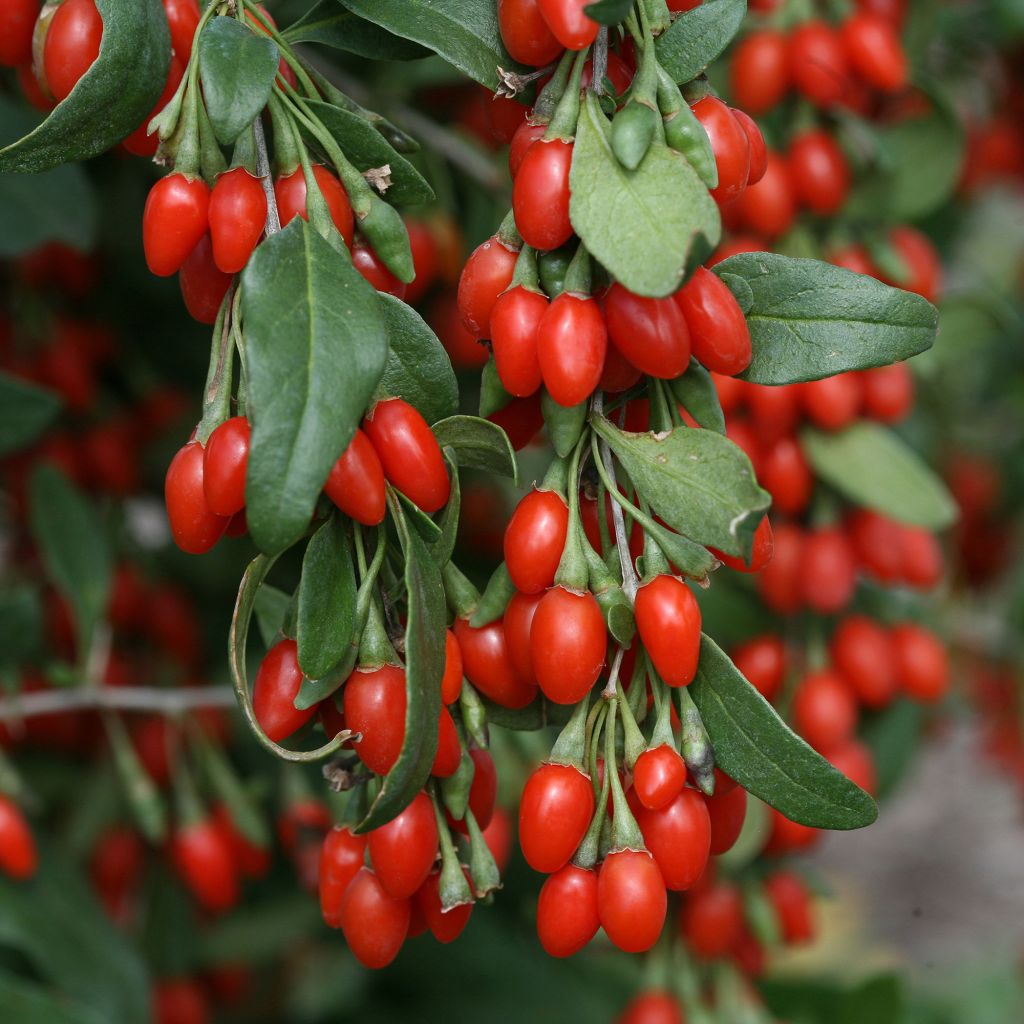
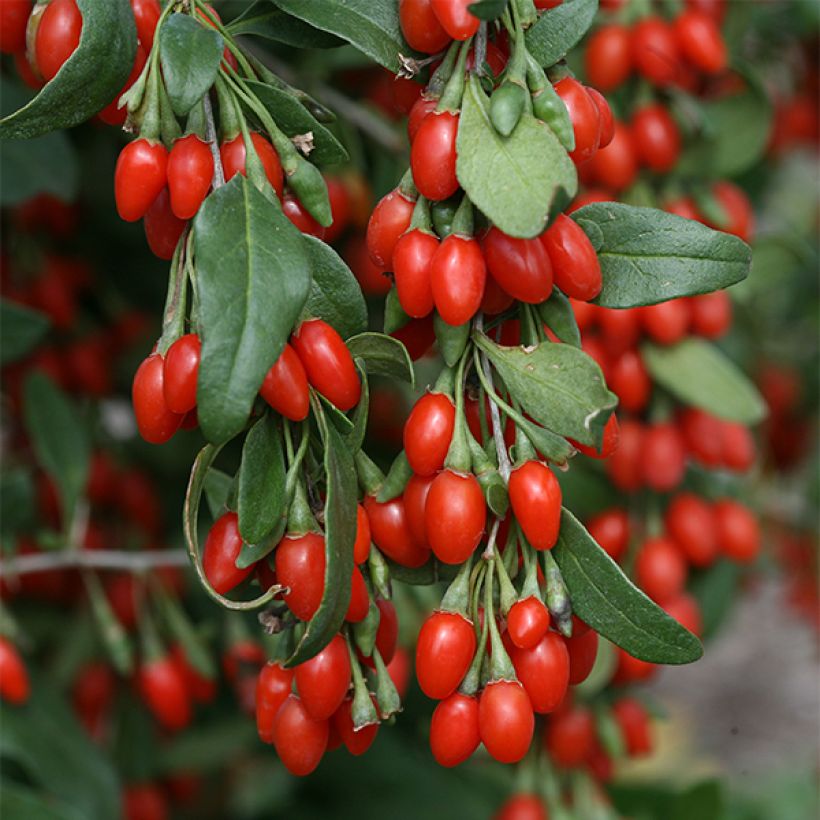
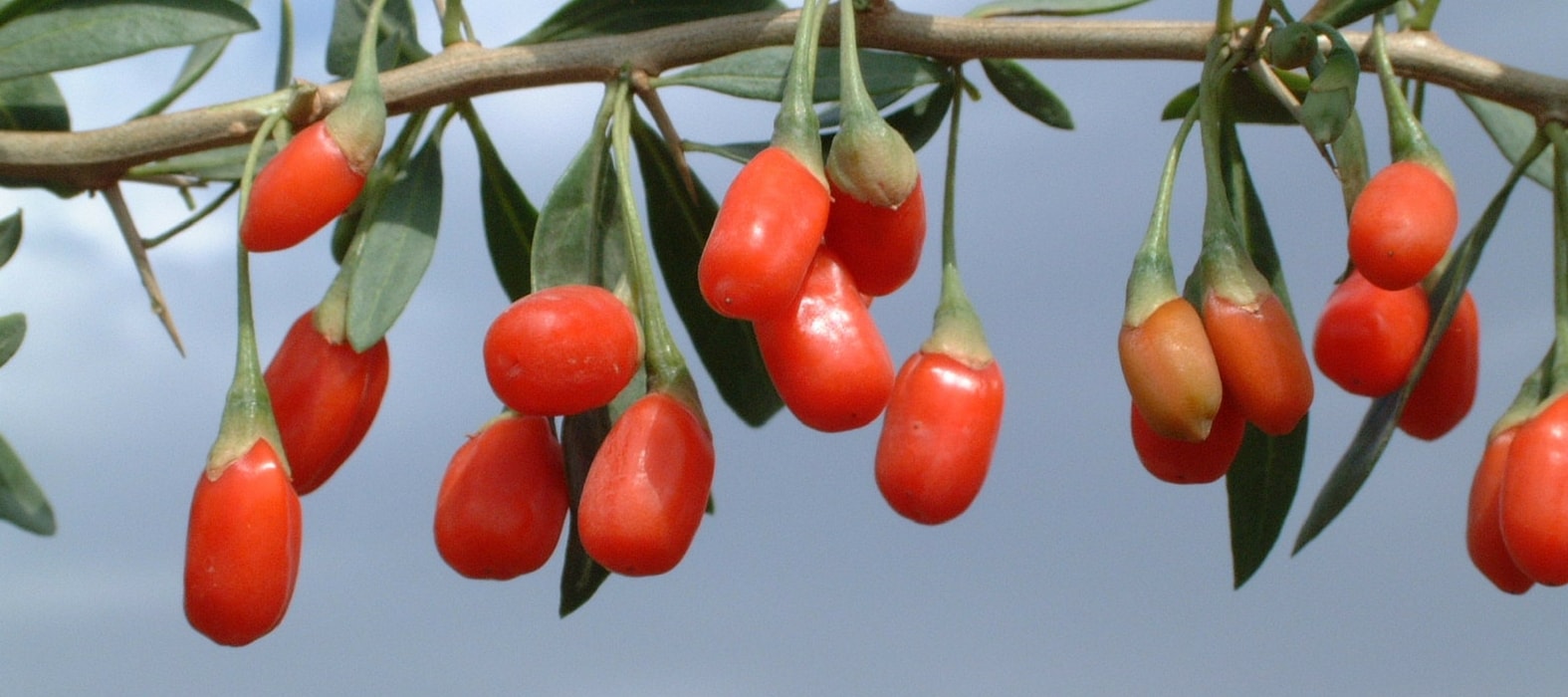
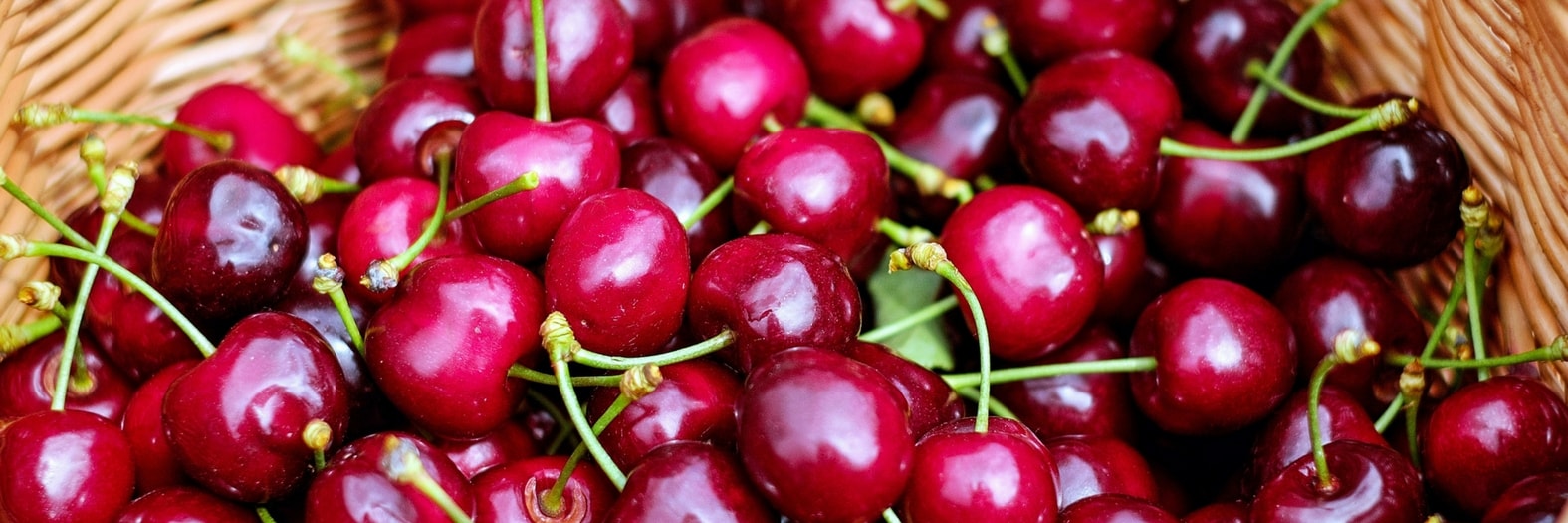
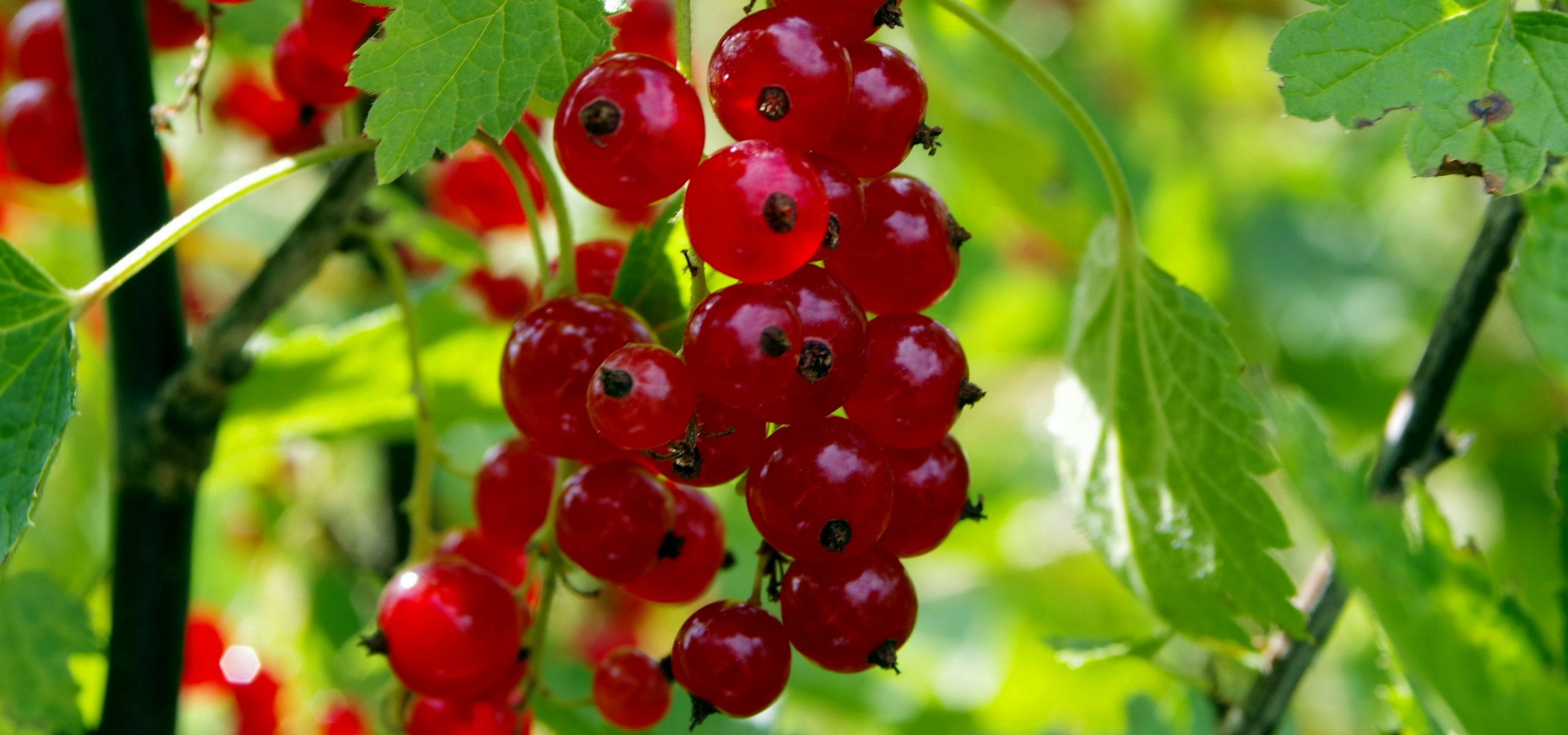
Goji (Lycium barbarum) 'Sweet Lifeberry'® is a compact variety, offering small violet flowers, followed by the formation of elongated berries, with a delicately sweet taste, and red in colour. These berries have nutritional properties known for millennia and are exceptionally rich in vitamins, minerals, and antioxidants. Planting in autumn or spring, harvest in August.
Goji (Lycium barbarum) belongs to the Solanaceae family, just like tomatoes and potatoes. It is a deciduous bush with a controversial origin. It was long considered to come from China, but recent research has shown that it could be native to the Mediterranean basin, which tends to be proven by the species name 'barbarum', the Barbarian, which was assimilated in Linnaeus' time to North Africa.
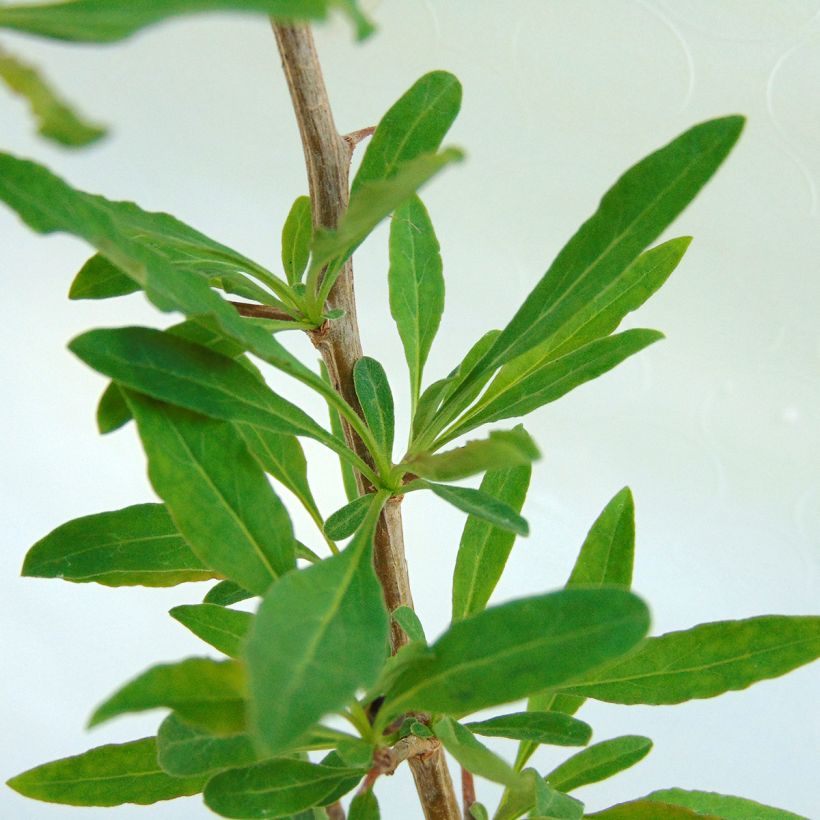
The Common Lycium is a woody bush, with an upright, widely spreading, ramified habit, reaching a height of 1.50 to 3m (4ft 11in to 9ft 10in) at maturity, depending on the growing conditions. Its growth is moderately fast. The numerous branches are flexible and trailing, with a few long sharp spines. The foliage is deciduous, thick, leathery, fairly bright green in juvenile leaves, evolving to a greyish green in mature leaves. The latter, of modest size, are elliptical and elongated, wider towards the base, and measure 2 to 3cm (0.8 to 1.2in) in length and 6mm (0.2in) in width. The very nectariferous and nectar-rich flowering takes place from June to July, in the form of small flowers, 10mm (0.4in) in diameter, tubular, campanulate, and star-shaped, hermaphroditic, of a violet colour for this variety. It is followed by the formation of ovoid berries, initially green and then orange-red at maturity, about 18mm (0.7in) in length. These berries are edible when ripe: it is preferable to consume well-ripened picked berries when the solanine content has decreased in the pulp. The fruits contain about twenty small seeds. The rooting of this bush is shallow.
This small fruit is rich in carbohydrates and proteins, low in lipids. It is very rich in calcium, potassium, iron, selenium, vitamins E, B2, beta-carotene (which gives it its orange colour), and vitamin C (which makes iron particularly assimilable by our body). The Lycium pulp has been the subject of numerous studies in recent years, which tend to prove that it has antioxidant properties.
Goji integrates perfectly into the ornamental garden. With its long branches, it can easily be trained against a support. It is a beautiful bush that can be included in a countryside hedge, in the company of currants and flowering shrubs, or trained with thornless garden blackberries. Resistant to drought and very hardy, Goji adapts to the climate and can be planted across a wide climatic range. It will simply be more productive in rich and moist soil.
In France, there are three species of Lycium that grow in the wild: Lycium europeanum, Lycium chinense, and our Lycium barbarum. Two of them are native to southern Europe and L. chinense has been brought from eastern Asia. The latter has naturalized in many places. Lyciums were used in Roman and Greek pharmacopoeias, they fell into oblivion, then reappeared with us, in the form of 'Goji berries', in the late 90s, when China opened up to the world and experienced rapid development.
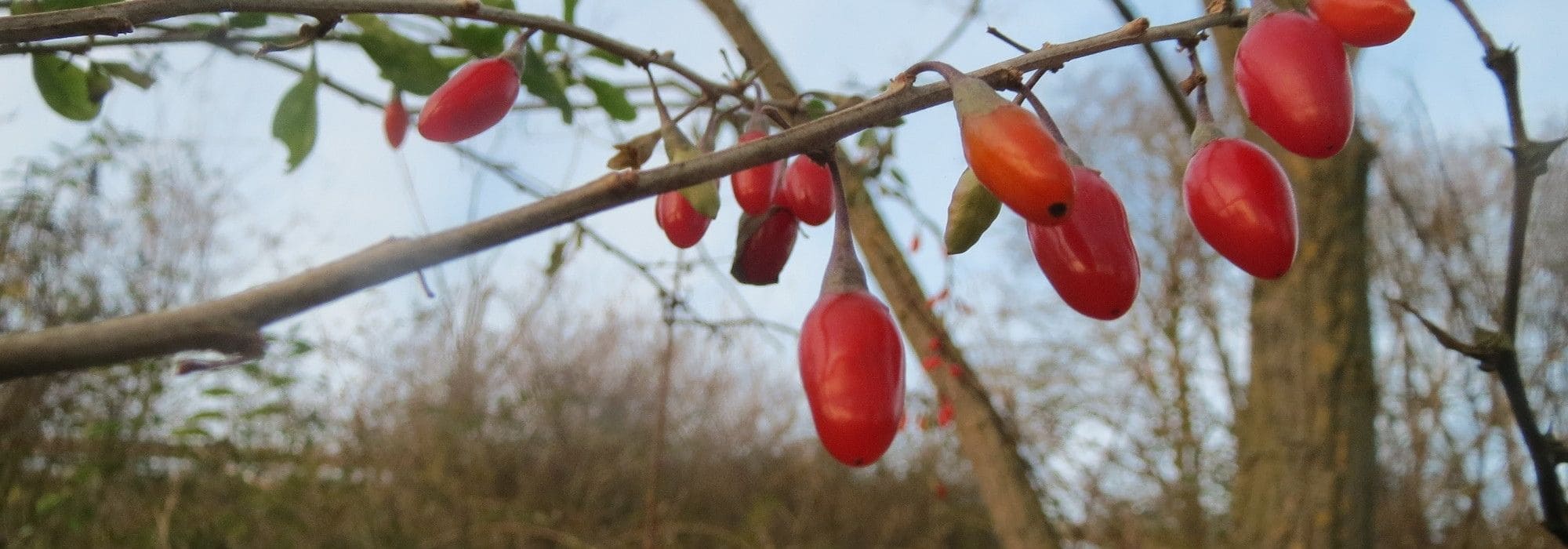
Lycium barbarum Sweet Lifeberry in pictures
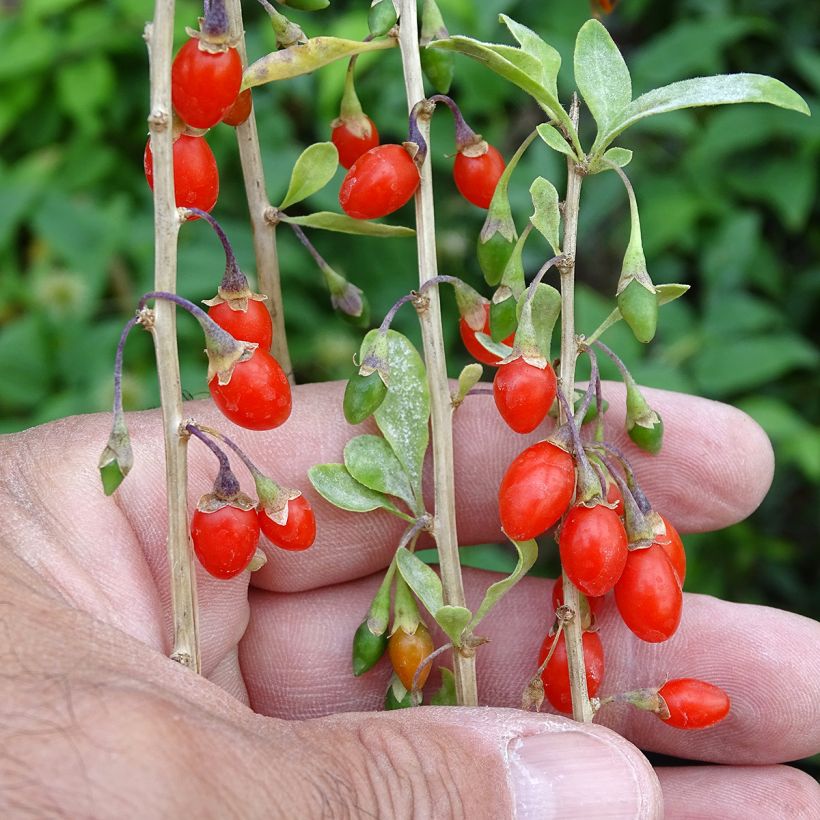
Plant habit
Fruit
Flowering
Foliage
Botanical data
Lycium
barbarum
Sweet Lifeberry®
Solanaceae
Goji Berry, Wolfberry
Cultivar or hybrid
Planting and care
Goji (Lycium barbarum) prefers dry to moist, rather chalky soils, and requires a very sunny exposure to fruit well. It is a very hardy plant, which can tolerate temperatures as low as -22 °C, but is sensitive to frost when still green and has not formed wood. When planting, dig a hole 50 cm (19.7 in) in all directions. In heavy soil, place a layer of gravel or coarse sand at the bottom of the planting hole, then add a mixture of compost, crushed horn, and garden soil. This plant can be grown as a bush, in the ground or in a large pot, or can be trained as an espalier. Regularly water after planting to ensure good establishment.
The plant is self-fertile, meaning it does not require the presence of a mate of the opposite sex to fruit. Goji can be attacked by powdery mildew, a microscopic fungus that forms light, whitish spots on the leaves. Young plants of the Common Boxthorn show rapid growth in full sun, often several centimetres per week. Initially appearing to become elongated, sometimes with deformed leaves, they grow and take on their final, long and slender form. To promote branching, it can be useful to pinch the top of the plant a few centimeters below the apex. This will strengthen the plant's trunk and allow the appearance of several secondary branches, either at the base of the plant or at the pinching point.
Routine maintenance: water in case of prolonged drought, once a week, abundantly. If the plant is grown in a pot, it should be watered every two or three days in summer, depending on the heat and dryness. Apply organic fertilizer or well-decomposed compost once a year, in March.
Planting period
Intended location
Care
Planting & care advice
-
-
-
-
-
-

-

-
-
, onOrder confirmed
Reply from on Promesse de fleurs
Recently viewed products
Haven't found what you were looking for?
Hardiness is the lowest winter temperature a plant can endure without suffering serious damage or even dying. However, hardiness is affected by location (a sheltered area, such as a patio), protection (winter cover) and soil type (hardiness is improved by well-drained soil).
In temperate climates, pruning of spring-flowering shrubs (forsythia, spireas, etc.) should be done just after flowering.
Pruning of summer-flowering shrubs (Indian Lilac, Perovskia, etc.) can be done in winter or spring.
In cold regions as well as with frost-sensitive plants, avoid pruning too early when severe frosts may still occur.
The harvesting period indicated on our website applies to countries and regions in USDA zone 8 (France, England, Ireland, the Netherlands).
In colder areas (Scandinavia, Poland, Austria...) fruit and vegetable harvests are likely to be delayed by 3-4 weeks.
In warmer areas (Italy, Spain, Greece, etc.), harvesting will probably take place earlier, depending on weather conditions.
The sowing periods indicated on our website apply to countries and regions within USDA Zone 8 (France, UK, Ireland, Netherlands).
In colder areas (Scandinavia, Poland, Austria...), delay any outdoor sowing by 3-4 weeks, or sow under glass.
In warmer climes (Italy, Spain, Greece, etc.), bring outdoor sowing forward by a few weeks.
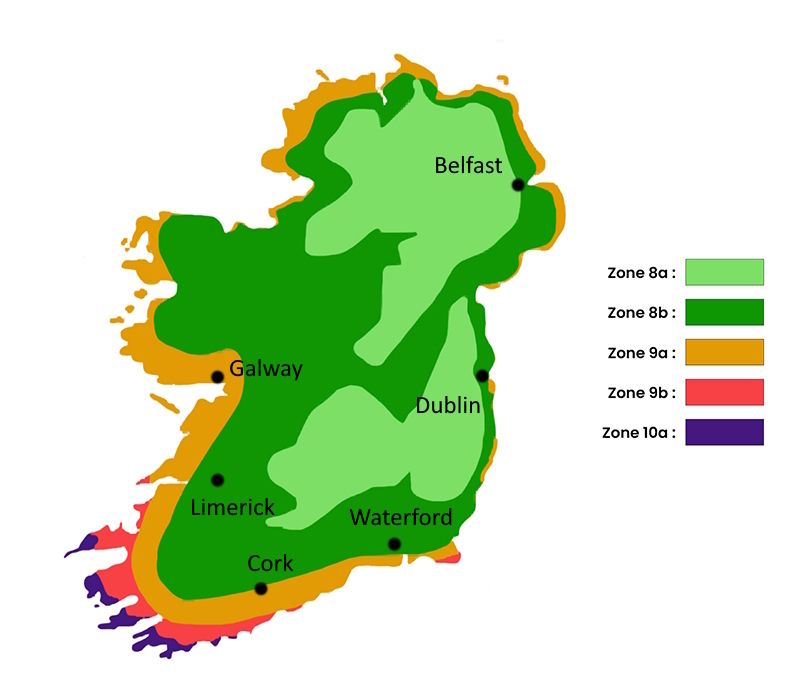
The planting period indicated on our website applies to regions in USDA Zone 9a (East Coast and Midlands: Dublin, Wexford, Waterford, Kilkenny, Portlaoise). It will vary depending on where you live:
- On the west coast and in the north-west (Galway, Limerick, Sligo, Donegal, Westport), delay planting by 1 to 2 weeks in spring and bring it forward by 1 to 2 weeks in autumn compared to the dates given, preferably choosing periods without strong winds.
- In the inland hills and plateaus (Wicklow Mountains, Macgillycuddy’s Reeks, Connemara, Killarney), it is best to plant in spring (April–May) or autumn (September–October), avoiding periods of waterlogged soil in winter and strong winds, which pose the main risk to newly planted trees in these areas.
The flowering period indicated on our website applies to regions in USDA Zone 9a, such as the East Coast and Midlands, including Dublin, Wexford, Waterford, Kilkenny and Portlaoise.
This will vary depending on where you live:
- On the west coast and in the northwest (Galway, Limerick, Sligo, Donegal and Westport), it will be delayed by one to two weeks compared to the given dates, due to stronger Atlantic winds and less spring sunshine.
- In the inland hills and plateaus (the Wicklow Mountains, the Macgillycuddy's Reeks, Connemara and Killarney), flowering will be delayed by two to three weeks. Flowering mainly occurs between May and July, with the limiting factors being less frost and more of the excessive humidity, strong winds and lack of sunshine that are characteristic of these areas.
Shipping country and language
Your country of residence may be:
Your country of residence is:
For a better user experience on our website, you can select:
Your shipping country:
-
 Austria
-
 Belgium
-
 Bosnia & Herzegovina
-
 Bulgaria
-
 Croatia
-
 Cyprus
-
 Czechia
-
 Denmark
-
 Estonia
-
 Finland
-
 France
-
 Germany
-
 Greece
-
 Hungary
-
 Iceland
-
 Ireland
-
 Italy
Italy
-
 Latvia
-
 Liechtenstein
-
 Lithuania
-
 Luxembourg
-
 Malta
Malta
-
 Netherlands
-
 Poland
-
 Portugal
-
 Romania
-
 Serbia
-
 Slovakia
-
 Slovenia
-
 Spain
Spain
-
 Sweden
-
 Switzerland
Language:
-
French
-
 English
-
Spanish
-
Italian
-
German
-
Portuguese
-
Dutch
-
Finnish
My Account
Hello
My wish lists
My cart
Log in / Register
Existing customer?
This form is protected by reCAPTCHA - the Google Privacy Policy and Terms of Service apply.
New customer?
Create an account to track your orders, access our customer service and, if you wish, make the most of our upcoming offers.