Wisteria brachybotrys White Silk
Wisteria brachybotrys White Silk
Wisteria brachybotrys White Silk
Silky wisteria, Silken wisteria
Back-to-school special offer!
Get €10 off for every €50 you spend! And get up to €40 off on a single order.
How does it work?
1. Shop your favourites
Add your favourite plants to your basket. For every €50 you spend (excluding delivery charges, store credit and the plastic-free option), you’ll receive a €10 voucher.
€50 spent = €10 voucher
€100 spent = €20 voucher
€150 spent = €30 voucher
€200 spent = €40 voucher
2. Place your order
Once your basket reaches one of the spending thresholds, place your order. You can even choose your delivery date!
3. Receive your voucher
As soon as your order has been shipped, you’ll receive an email containing your personal voucher code and its value.
4. Use it on your next order
Your voucher is valid for 90 days from the date you receive it. It can be used once only, on a new order worth at least the value of the voucher, excluding delivery charges.
Please note: Vouchers can be combined with other offers, but cannot be split or refunded.
Home or relay delivery (depending on size and destination)
Important: You may be charged customs duties by your country’s customs authorities upon delivery.
Schedule delivery date,
and select date in basket
This plant carries a 12 months recovery warranty
More information
We guarantee the quality of our plants for a full growing cycle, and will replace at our expense any plant that fails to recover under normal climatic and planting conditions.
Does this plant fit my garden?
Set up your Plantfit profile →
Description
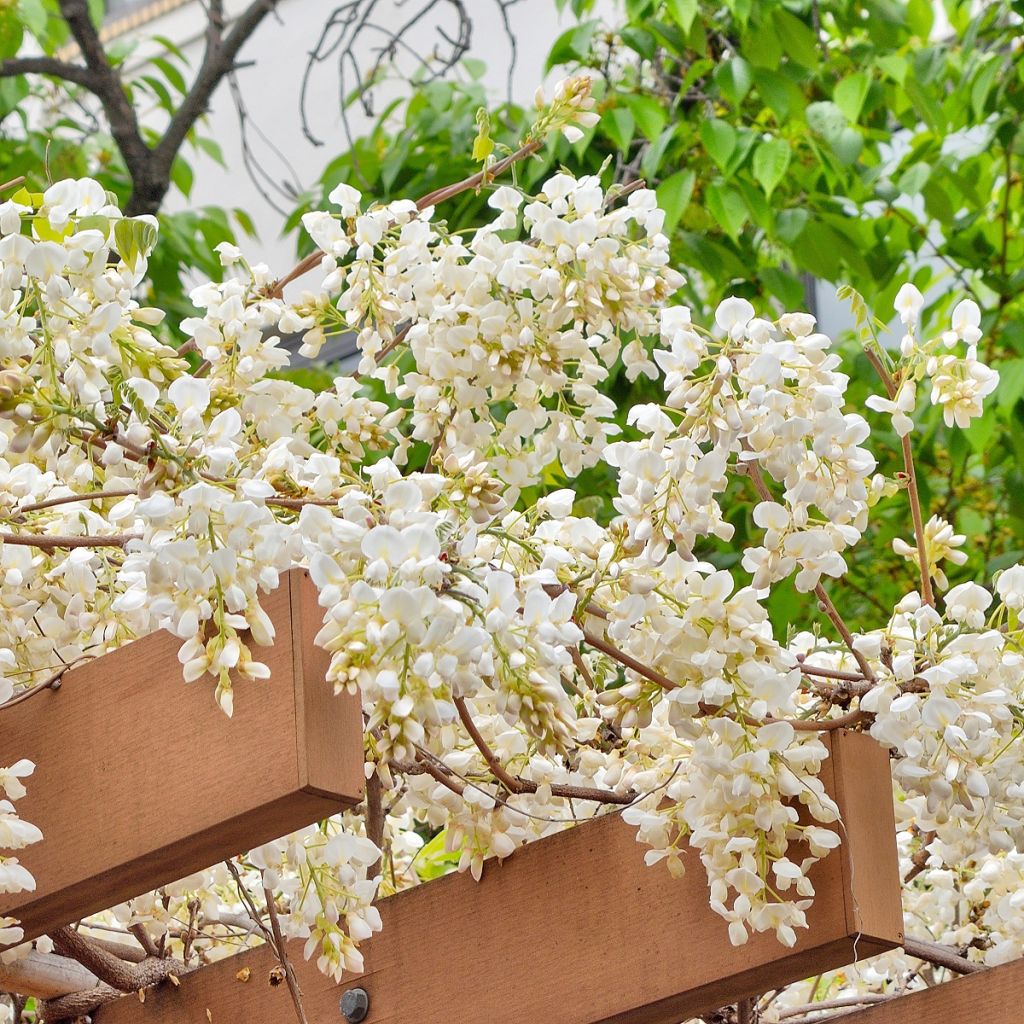
Wisteria brachybotrys 'White Silk' is derived from a highly floriferous species recognisable by its short but divinely scented clusters of pure white flowers. They bloom abundantly in spring, among the young leaves, even on young plants. This highly voluble and vigorous climbing plant is much less exuberant than its Chinese cousin, making it suitable for smaller gardens. It is hardy and thrives in most non-calcareous soils, in sunny locations.
Wisterias belong to the Fabaceae family, formerly known as Leguminosae, a group so vast that it has been divided into three subfamilies: Mimosoideae (acacia, commonly and mistakenly called mimosa, inga, calliandra), Caesalpinioideae (including the well-known cercis and gleditsia in temperate climates), and Fabaceae, recognisable by their papilionaceous flowers (colutea, caragana, genista, etc).
Wisteria brachybotrys (synonym W. venusta) is commonly known as silky wisteria, due to its young silky grey foliage. It is a climbing plant native to the Far East, but less vigorous than its Chinese cousin (W. sinensis) or Japanese wisteria (W. floribunda). This makes it ideal for small gardens or to adorn more compact pergolas without the risk of invasion.
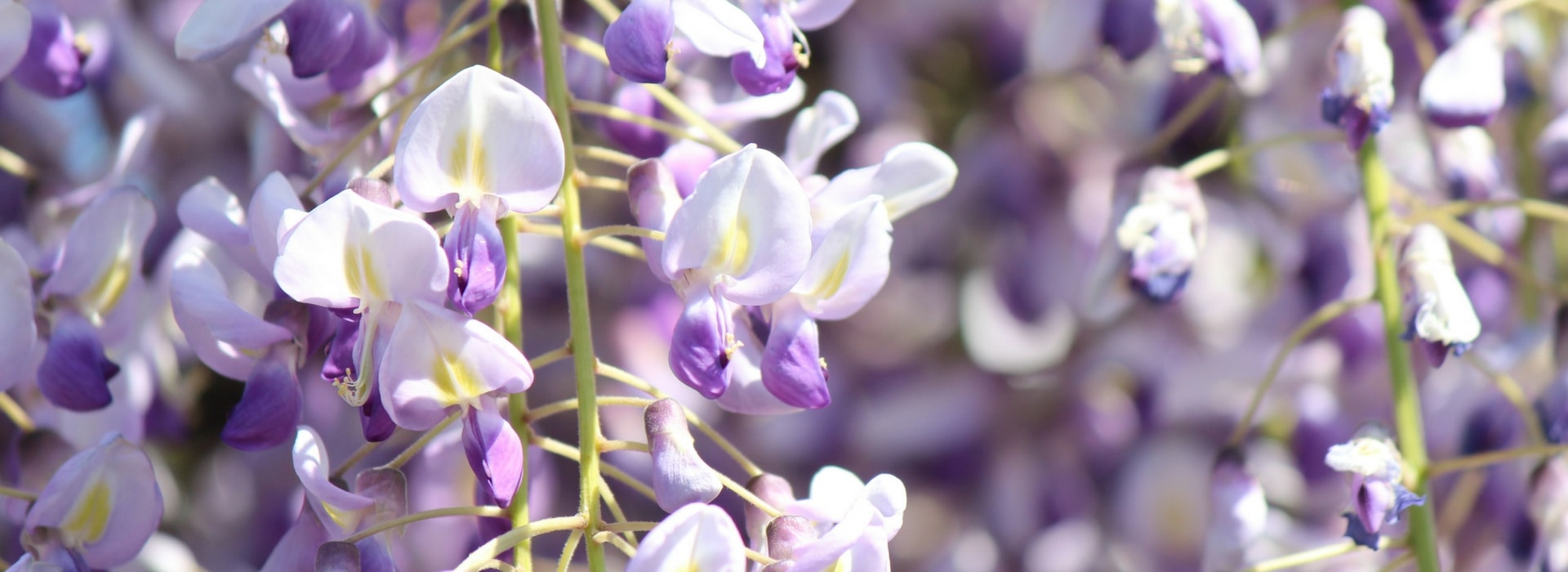
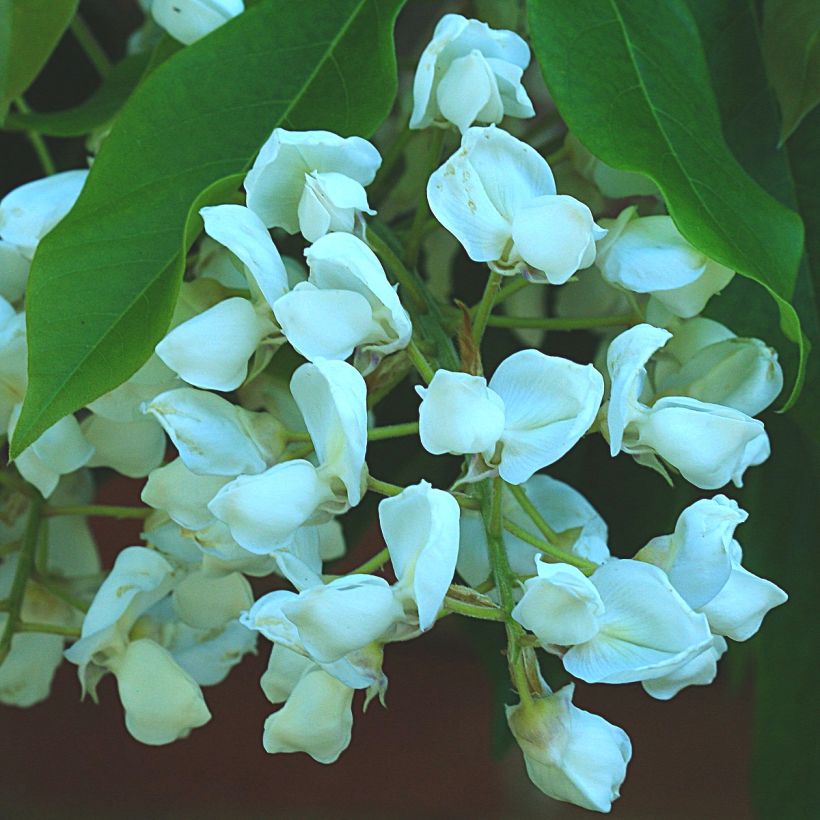
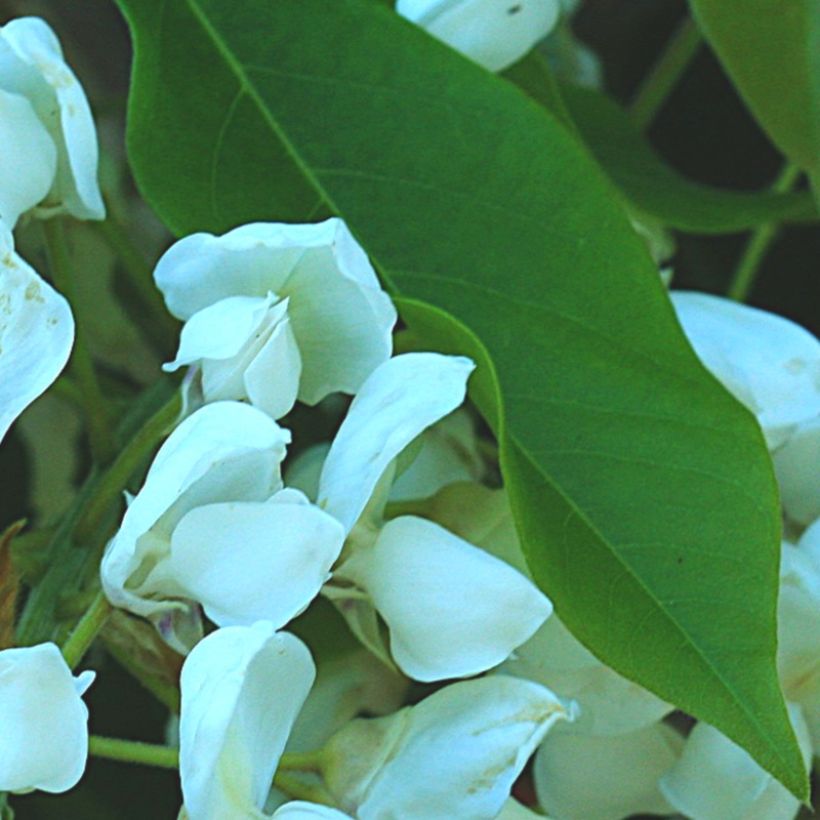
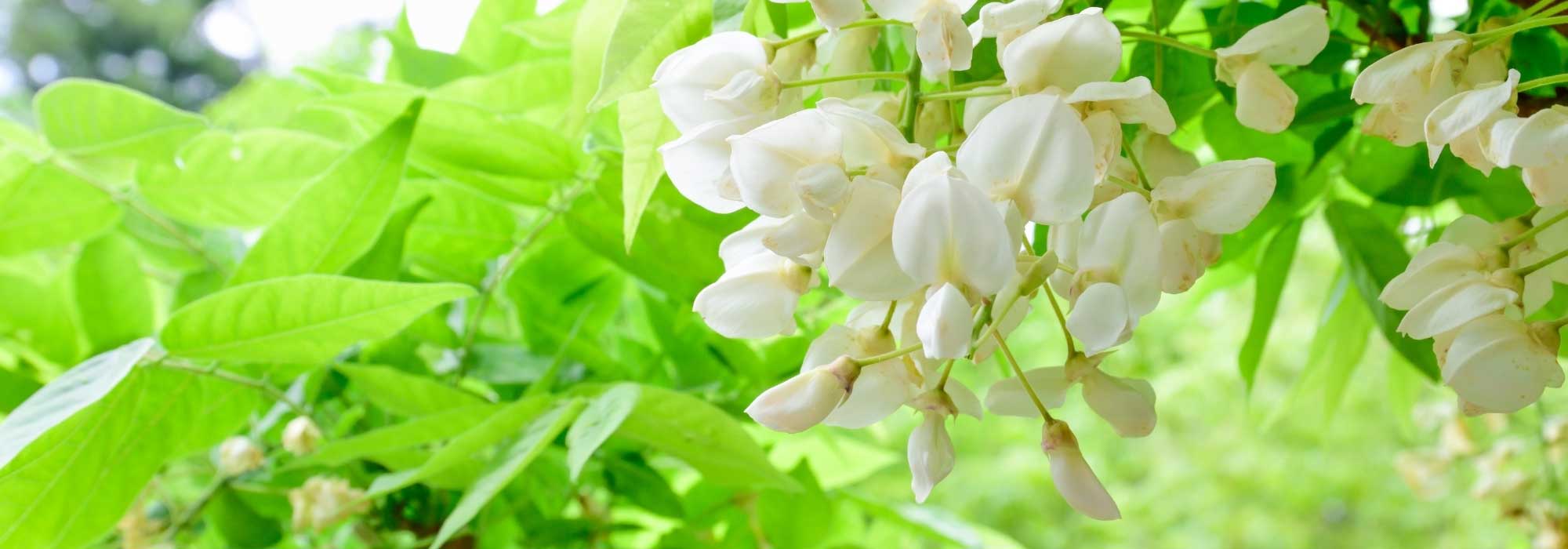
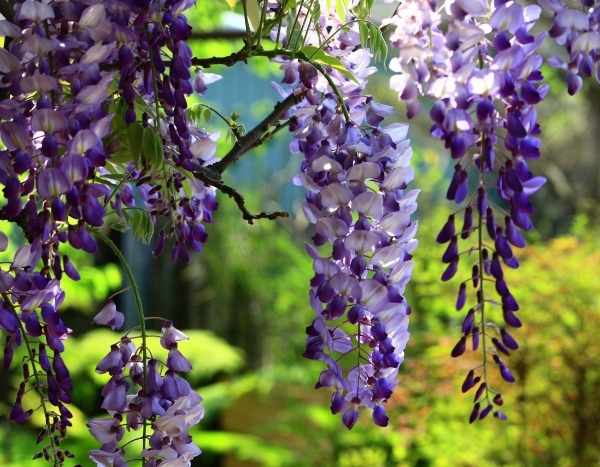
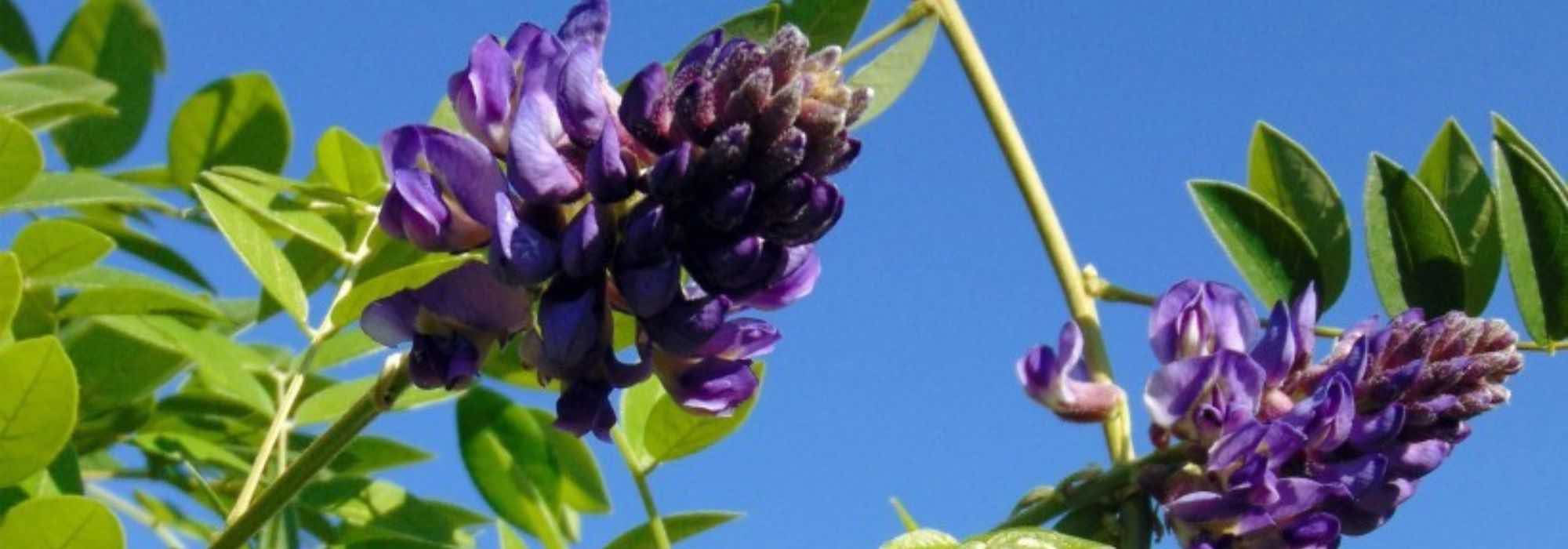
'White Silk' generally reaches a height of 5 to 6m (16 to 20ft) and a width of 4 to 5m (13 to 16ft), but can grow beyond that if it is never pruned. Its voluble stems bear bright green leaves divided into 9 to 13 ovate leaflets, measuring 4 to 7cm (2 to 3in) in length. Its stems twist anti-clockwise around solid supports. The abundant flowering takes place in May-June, at the same time as the soft and touchable young foliage unfolds. It takes the form of pendant clusters, 15 to 20cm (6 to 8in) long. They are highly fragrant and attractive to bees. The clusters are shorter and more compact than those of Chinese wisteria, but are equally decorative with their beautiful pure white colour. The upper petal, called the "standard" due to its larger size, bears a discreet yellow spot in its centre. The flowers develop into toxic fruits in the form of flat pods that eventually open, expelling large dark seeds. The mature foliage turns yellow in autumn before falling.
This wisteria grows well in most acidic to neutral soils, and even slightly calcareous ones (in this case, dig a planting hole large enough to mix compost and topsoil with the existing soil). It is very hardy (down to -20°C (-4°F) or even lower). It blooms from a young age, especially when lateral shoots are pruned to 2 to 3 leaves to encourage floral clusters. Prune after flowering and later, if necessary, to limit its growth.
This wisteria is perfect for covering a wall, railing, pergola, arbour, or porch in a romantic garden, including smaller ones. While wisteria branches can often twist even the strongest support, this variety is much more "respectful". Few people know that it is possible to train Wisterias brachybotrys "as a tree". Simply plant a hollow galvanised steel tube in the ground, place 3 or 4 "petals" made of twisted reinforcing steel at its upper end, pushing them into the tube to hold them in place, thus forming a support that resembles a flower. Then plant 'White Silk' and the purple-flowered W. 'Okayama' at the base of this support. In the first year, weave the shoots of both plants around the support until they reach the reinforcing steel, then guide them to cover the support you have created. After 3 to 4 years, the metal structure will disappear under the stems and foliage, and passersby will stop in awe to contemplate the magnificent scene you have created!
Wisteria brachybotrys White Silk in pictures
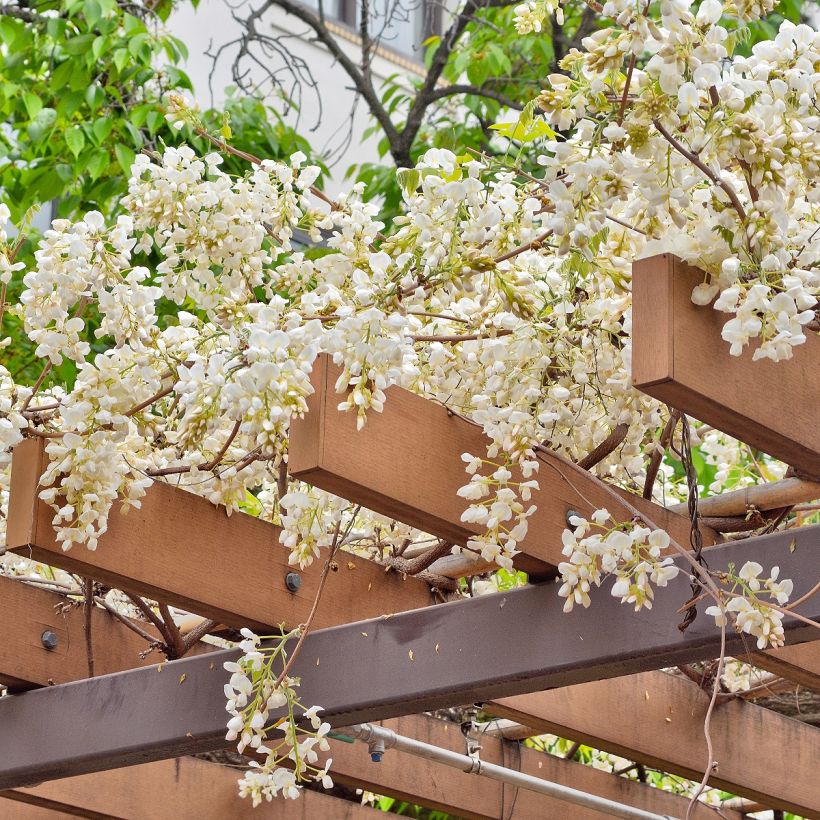
Plant habit
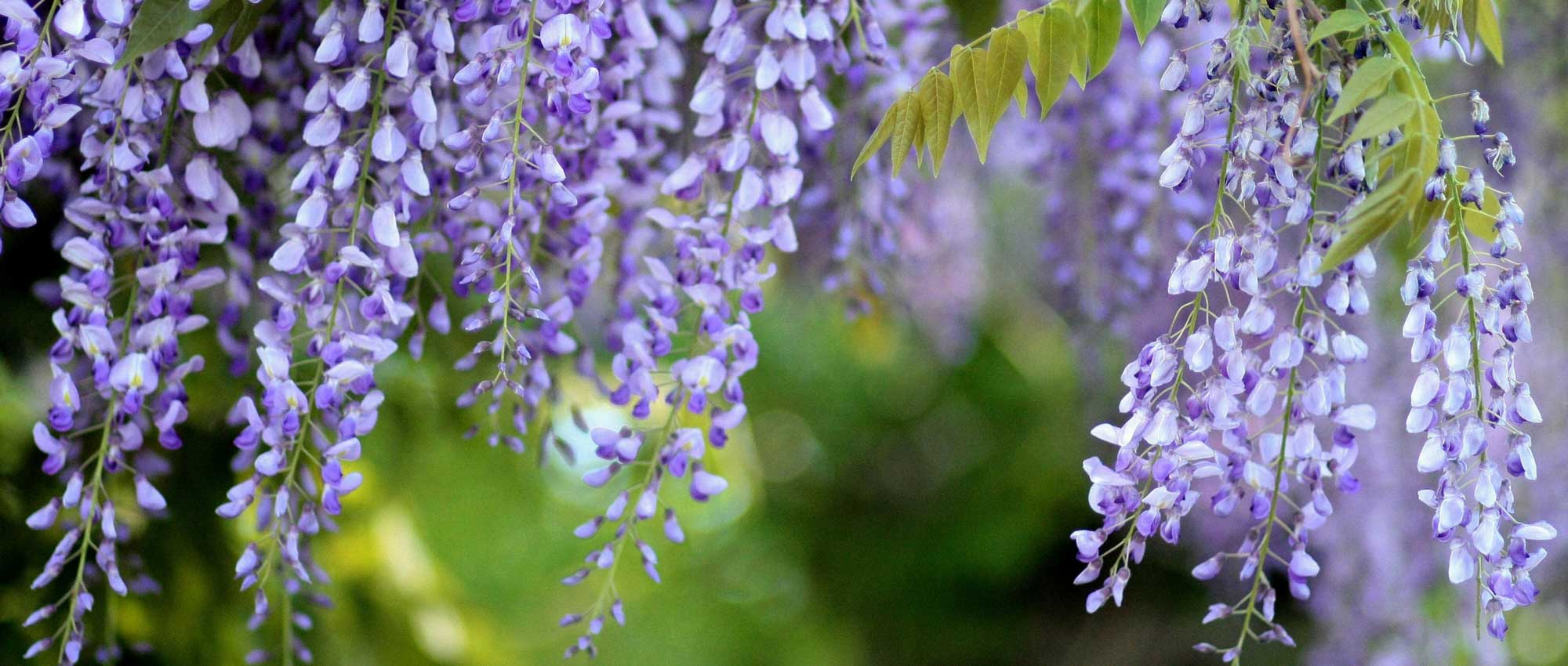
Flowering
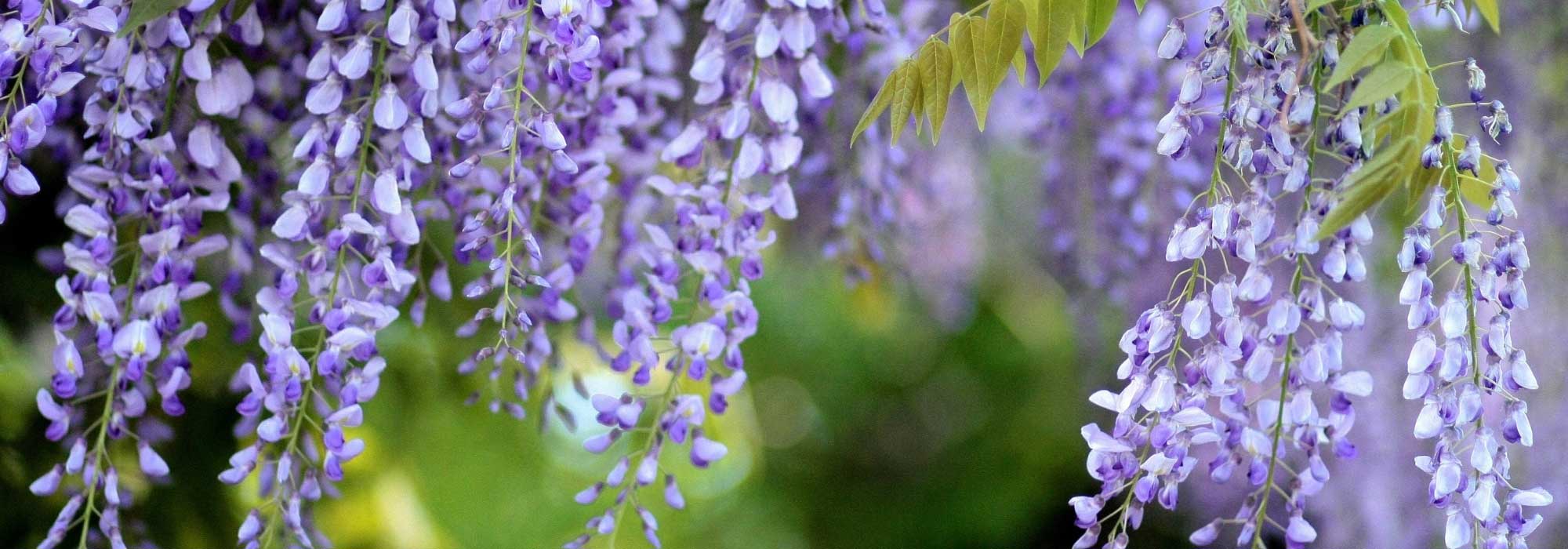
Foliage
Safety measures
Botanical data
Wisteria
brachybotrys
White Silk
Fabaceae
Silky wisteria, Silken wisteria
Cultivar or hybrid
ingestion
Cette plante est toxique si elle est ingérée volontairement ou involontairement.
Ne la plantez pas là où de jeunes enfants peuvent évoluer, et lavez-vous les mains après l'avoir manipulée.
Pensez à conserver l'étiquette de la plante, à la photographier ou à noter son nom, afin de faciliter le travail des professionnels de santé.
Davantage d'informations sur https://plantes-risque.info
Planting and care
Wisteria 'White Silk' should be planted in autumn (October) or spring (March) in fertile, deep, and well-drained soil in a sunny location. Dig a hole 50x50x50cm (20x20x20in) and mix some compost with the existing soil. Soak the root ball in a bucket before planting to moisten it well, and water thoroughly after planting. It may be necessary to guide the young shoots to help the plant climb.
Do not apply any fertilisers, as this would promote vegetative growth at the expense of flowering. Nitrogen in particular should be avoided, as wisterias generally rely on soil reserves. In any case, they tend to flower better under slightly challenging conditions.
Planting period
Intended location
Care
Planting & care advice



This item has not been reviewed yet - be the first to leave a review about it.
Recently viewed products
Haven't found what you were looking for?
Hardiness is the lowest winter temperature a plant can endure without suffering serious damage or even dying. However, hardiness is affected by location (a sheltered area, such as a patio), protection (winter cover) and soil type (hardiness is improved by well-drained soil).
In temperate climates, pruning of spring-flowering shrubs (forsythia, spireas, etc.) should be done just after flowering.
Pruning of summer-flowering shrubs (Indian Lilac, Perovskia, etc.) can be done in winter or spring.
In cold regions as well as with frost-sensitive plants, avoid pruning too early when severe frosts may still occur.
The harvesting period indicated on our website applies to countries and regions in USDA zone 8 (France, England, Ireland, the Netherlands).
In colder areas (Scandinavia, Poland, Austria...) fruit and vegetable harvests are likely to be delayed by 3-4 weeks.
In warmer areas (Italy, Spain, Greece, etc.), harvesting will probably take place earlier, depending on weather conditions.
The sowing periods indicated on our website apply to countries and regions within USDA Zone 8 (France, UK, Ireland, Netherlands).
In colder areas (Scandinavia, Poland, Austria...), delay any outdoor sowing by 3-4 weeks, or sow under glass.
In warmer climes (Italy, Spain, Greece, etc.), bring outdoor sowing forward by a few weeks.
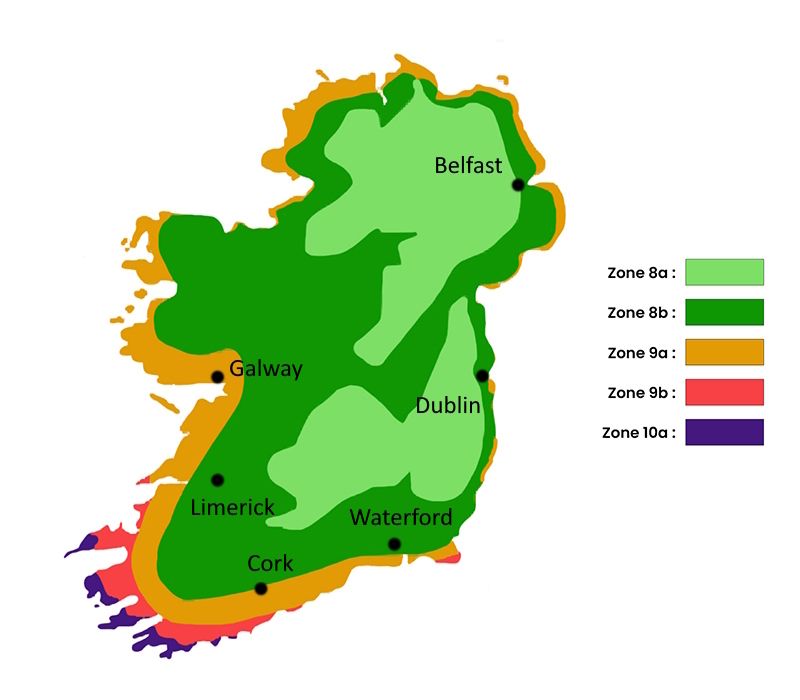
The planting period indicated on our website applies to regions in USDA Zone 9a (East Coast and Midlands: Dublin, Wexford, Waterford, Kilkenny, Portlaoise). It will vary depending on where you live:
- On the west coast and in the north-west (Galway, Limerick, Sligo, Donegal, Westport), delay planting by 1 to 2 weeks in spring and bring it forward by 1 to 2 weeks in autumn compared to the dates given, preferably choosing periods without strong winds.
- In the inland hills and plateaus (Wicklow Mountains, Macgillycuddy’s Reeks, Connemara, Killarney), it is best to plant in spring (April–May) or autumn (September–October), avoiding periods of waterlogged soil in winter and strong winds, which pose the main risk to newly planted trees in these areas.
The flowering period indicated on our website applies to regions in USDA Zone 9a, such as the East Coast and Midlands, including Dublin, Wexford, Waterford, Kilkenny and Portlaoise.
This will vary depending on where you live:
- On the west coast and in the northwest (Galway, Limerick, Sligo, Donegal and Westport), it will be delayed by one to two weeks compared to the given dates, due to stronger Atlantic winds and less spring sunshine.
- In the inland hills and plateaus (the Wicklow Mountains, the Macgillycuddy's Reeks, Connemara and Killarney), flowering will be delayed by two to three weeks. Flowering mainly occurs between May and July, with the limiting factors being less frost and more of the excessive humidity, strong winds and lack of sunshine that are characteristic of these areas.
Shipping country and language
Your country of residence may be:
Your country of residence is:
For a better user experience on our website, you can select:
Your shipping country:
-
 Austria
-
 Belgium
-
 Bosnia & Herzegovina
-
 Bulgaria
-
 Croatia
-
 Cyprus
-
 Czechia
-
 Denmark
-
 Estonia
-
 Finland
-
 France
-
 Germany
-
 Greece
-
 Hungary
-
 Iceland
-
 Ireland
-
 Italy
Italy
-
 Latvia
-
 Liechtenstein
-
 Lithuania
-
 Luxembourg
-
 Malta
Malta
-
 Netherlands
-
 Poland
-
 Portugal
-
 Romania
-
 Serbia
-
 Slovakia
-
 Slovenia
-
 Spain
Spain
-
 Sweden
-
 Switzerland
Language:
-
French
-
 English
-
Spanish
-
Italian
-
German
-
Portuguese
-
Dutch
-
Finnish
My Account
Hello
My wish lists
My cart
Log in / Register
Existing customer?
This form is protected by reCAPTCHA - the Google Privacy Policy and Terms of Service apply.
New customer?
Create an account to track your orders, access our customer service and, if you wish, make the most of our upcoming offers.