Chèvrefeuille - Lonicera Caprilia Impérial cov
Chèvrefeuille - Lonicera Caprilia Impérial cov
Lonicera periclymenum Caprilia Impérial cov
Chèvrefeuille des bois, Chèvrefeuille périclymène, Cranquillier
Order not received. After a second attempt, I got a refund from Promesse de Fleurs. Next time I'll opt for home delivery, as I think the issue is with Chronopost.
Marie France , 06/05/2025
Back-to-school special offer!
Get €10 off for every €50 you spend! And get up to €40 off on a single order.
How does it work?
1. Shop your favourites
Add your favourite plants to your basket. For every €50 you spend (excluding delivery charges, store credit and the plastic-free option), you’ll receive a €10 voucher.
€50 spent = €10 voucher
€100 spent = €20 voucher
€150 spent = €30 voucher
€200 spent = €40 voucher
2. Place your order
Once your basket reaches one of the spending thresholds, place your order. You can even choose your delivery date!
3. Receive your voucher
As soon as your order has been shipped, you’ll receive an email containing your personal voucher code and its value.
4. Use it on your next order
Your voucher is valid for 90 days from the date you receive it. It can be used once only, on a new order worth at least the value of the voucher, excluding delivery charges.
Please note: Vouchers can be combined with other offers, but cannot be split or refunded.
Home or relay delivery (depending on size and destination)
Important: You may be charged customs duties by your country’s customs authorities upon delivery.
Schedule delivery date
and select date in basket
This plant carries a 12 months recovery warranty
More information
We guarantee the quality of our plants for a full growing cycle, and will replace at our expense any plant that fails to recover under normal climatic and planting conditions.

Does this plant fit my garden?
Set up your Plantfit profile →
Description
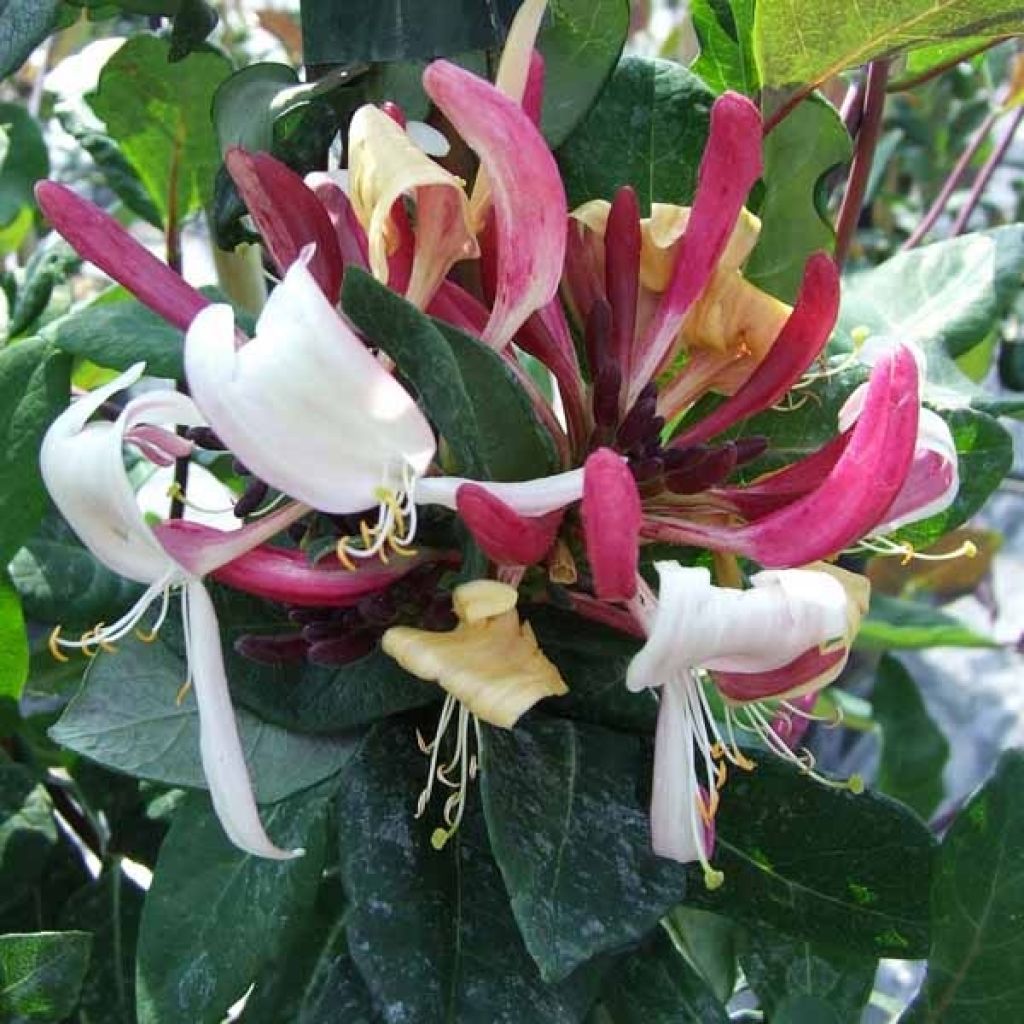
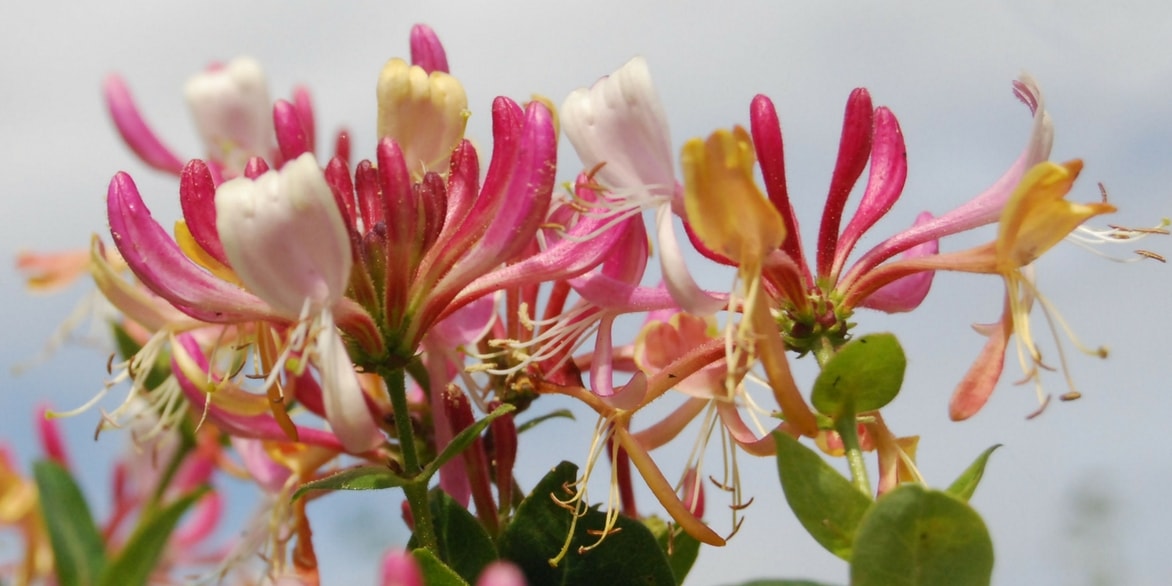
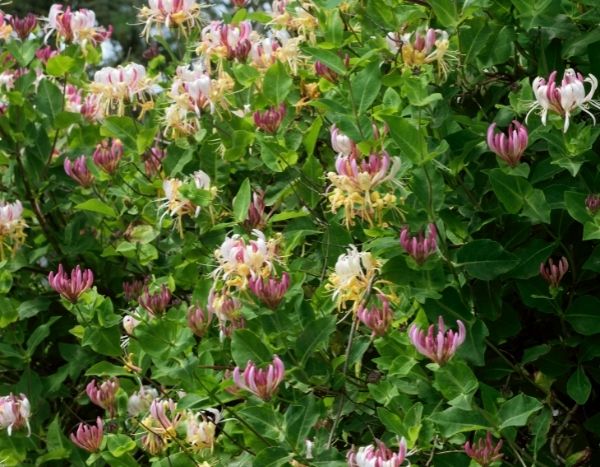
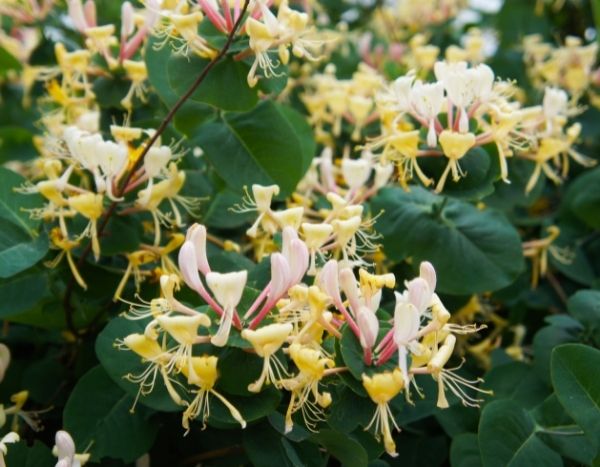
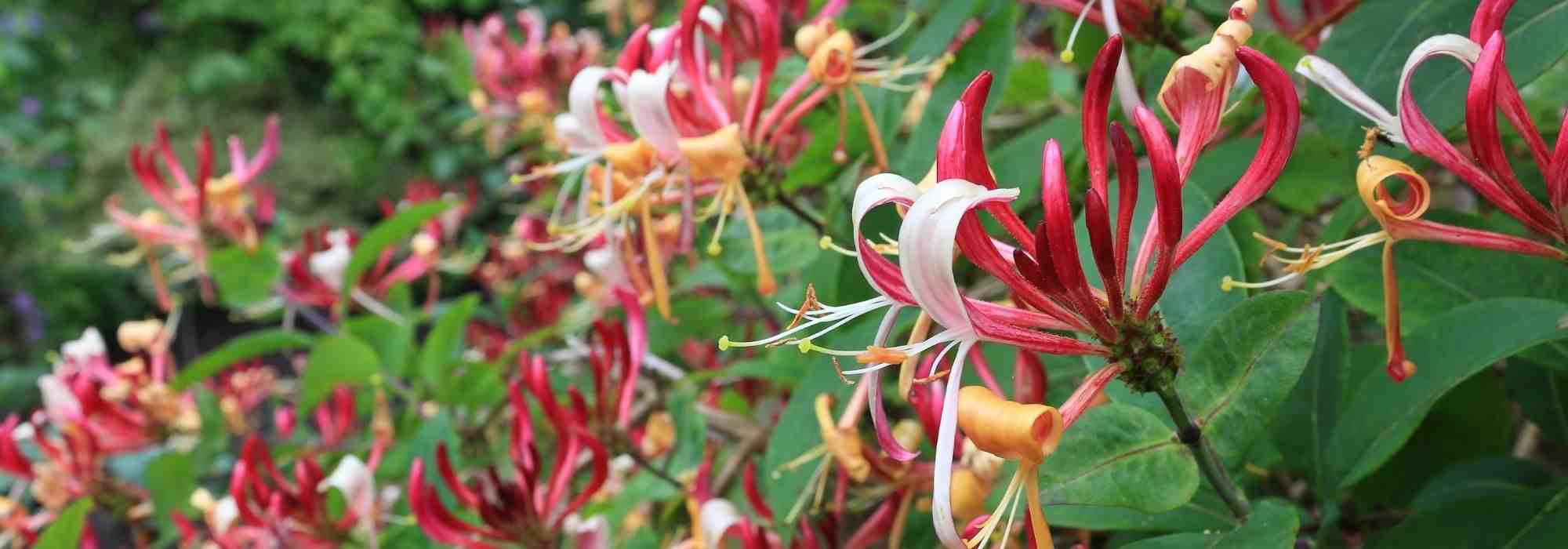
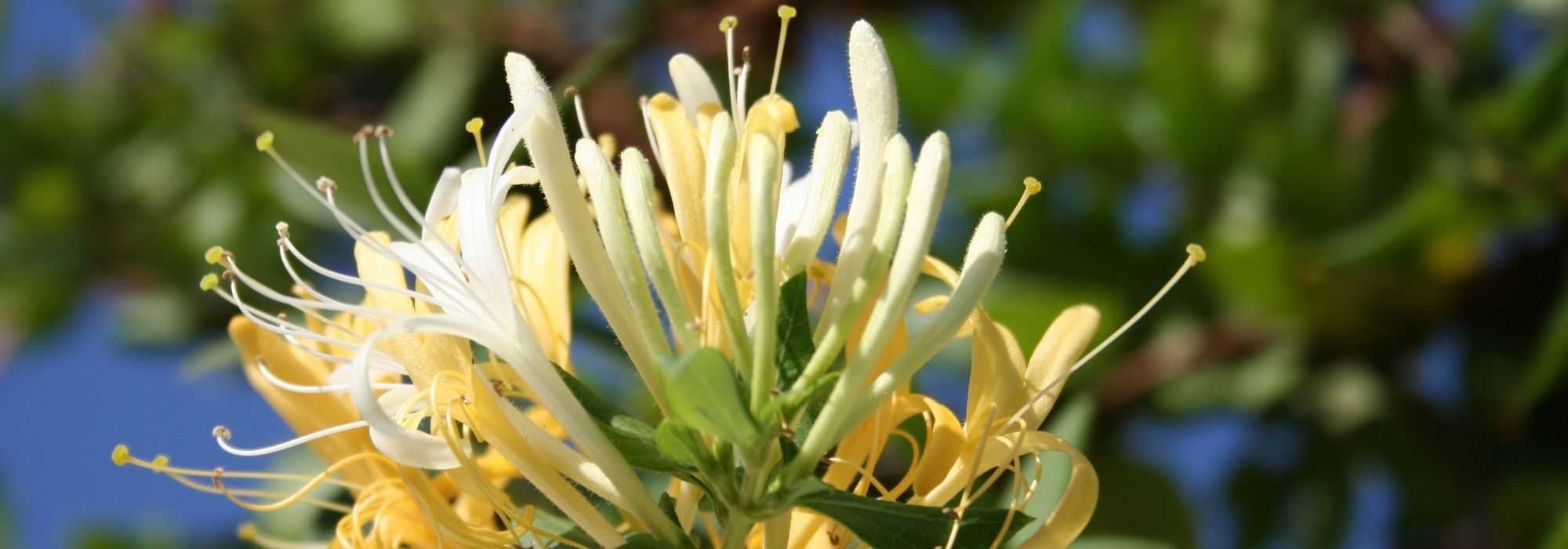
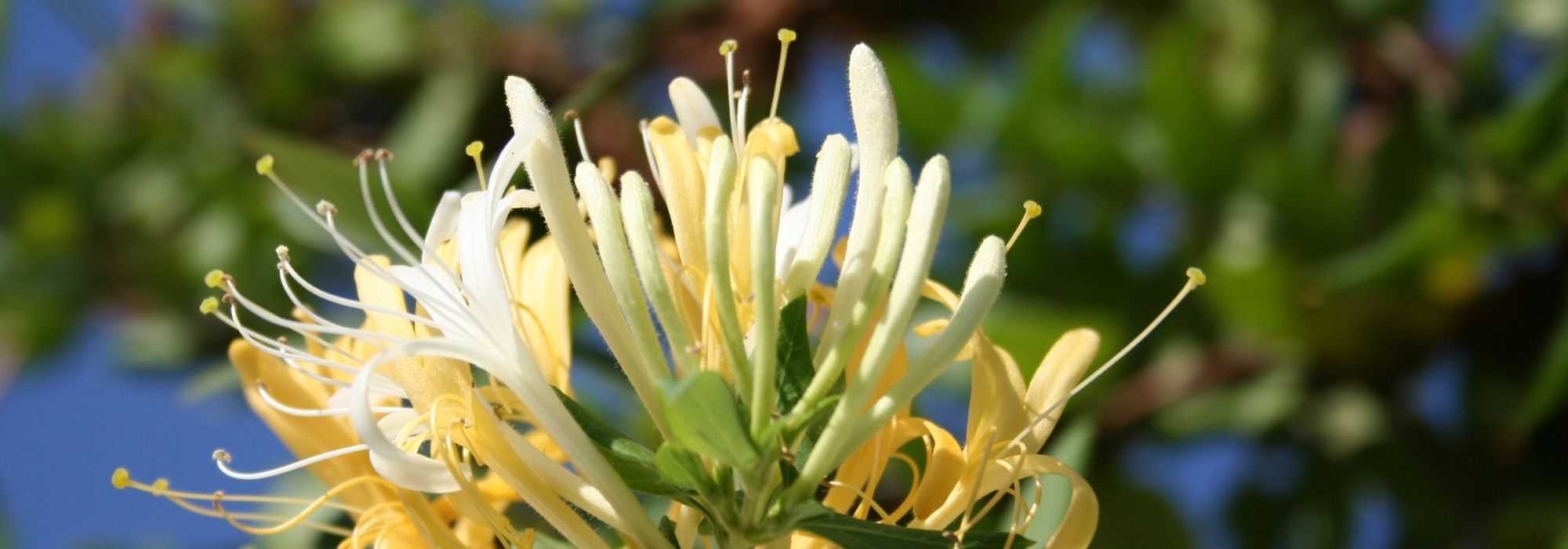
Le Lonicera 'Caprilia Imperial cov' est une variété de chèvrefeuille grimpante à buissonnante particulièrement florifère mais dotée d'un développement modeste, bien adapté aux petits jardins. Cette jolie plante se distingue par les très gros fleurons qui se forment sur toute sa hauteur et changent de couleur au fil des jours, passant du rouge carmin foncé en boutons au rose foncé, puis au crème et enfin au jaune avant de faner. Très parfumées, elles offrent un beau dégradé multicolore, mis en valeur par un feuillage vert foncé. Peu sensible aux pucerons et aux maladies, ce chèvrefeuille peu exigeant supporte le calcaire. Sa floraison sera plus abondante en exposition très lumineuse, voire ensoleillée.
Le Lonicera periclymenum appartient à la famille des caprifoliacées. Il s'agit du chèvrefeuille des bois très répandu en Europe, surtout centrale, et jusqu'en Suède. On le retrouve aussi en Afrique du Nord. En France, il pousse spontanément dans les haies et les bois, de préférence sur les sols siliceux, riches en sable et en humus. Présent dans presque toutes nos régions, il est rare dans le sud-est de notre pays. Dans la nature, il développe des tiges volubiles solides de 3 m ou plus qui s'enroulent spontanément autour des arbustes et arbres voisins.
Ce chèvrefeuille a donné naissance à de nombreux cultivars, dont 'Caprilia Imperial cov', belle amélioration de la variété 'Florida', a été sélectionné en 2008 pour l'abondance et la taille de ses fleurs, mais aussi pour son port plus compact. Il s'agit d'une belle introduction française de l'INRA/SAPHINOV qui s'avère également peu sensible aux maladies et aux attaques des pucerons.
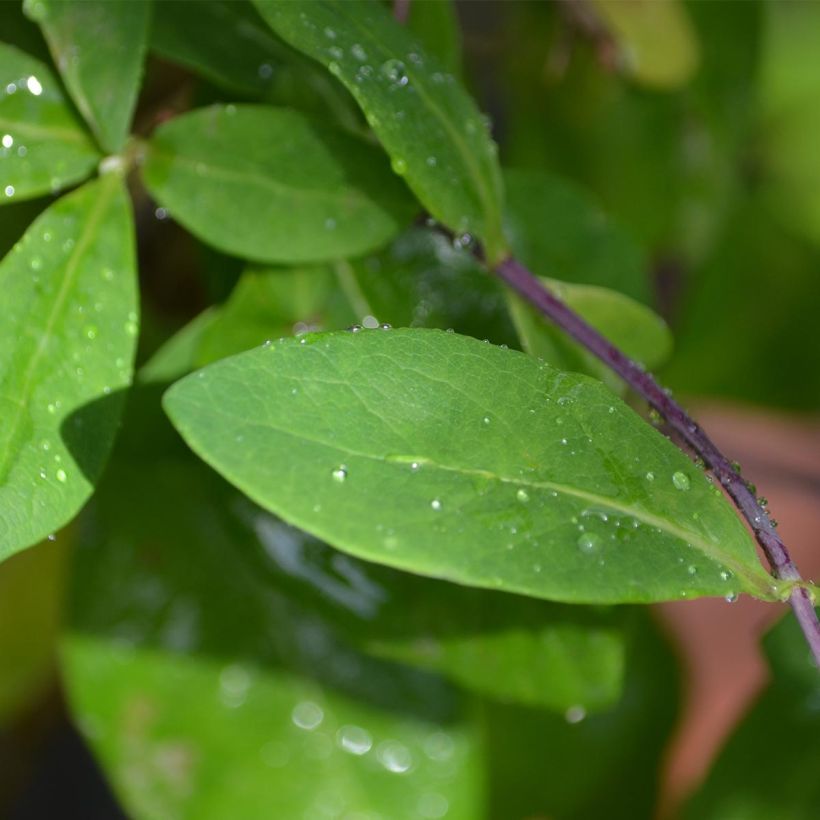
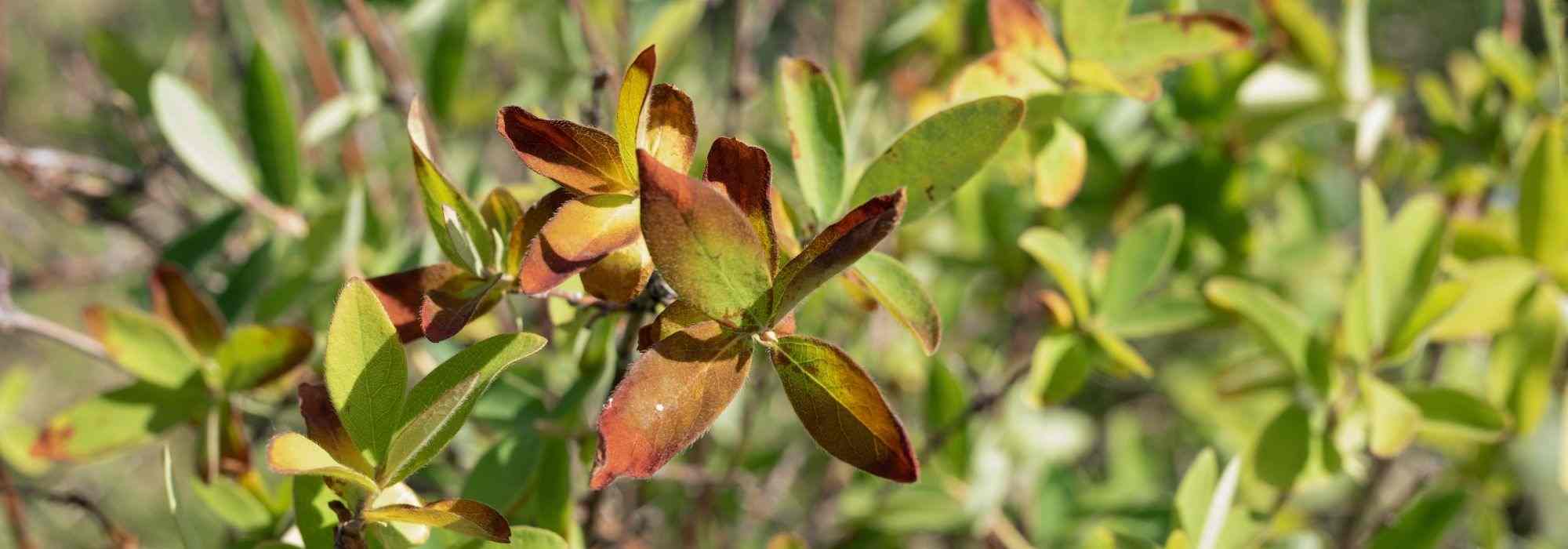
Le Lonicera 'Caprilia Imperial Cov' ne dépasse pas 2 à 3 m de hauteur. Il peut même être formé par la taille en gros buisson touffu de 2 m de hauteur par 1.50 m de largeur. Ses tiges robustes de couleur brun-pourpré portent un feuillage caduc, d'un vert assez foncé, qui tombe en automne. La floraison, abondante et spectaculaire, a lieu de la mi-juin jusqu'au mois de juillet. Ses fleurs tubulaires se forment à l’extrémité des pousses de l'année, rassemblées en gros bouquets bien parfumés. Très visitées par les insectes butineurs, elles sont suivies par la formation de baies rouge vif très décoratives en septembre et très appréciés par les oiseaux. Les feuilles sont disposées par paires sur des tiges ligneuses vigoureuses. Cette variété, non envahissante, s'adaptera à une vaste gamme de sols pour peu qu'ils soient correctement drainés.
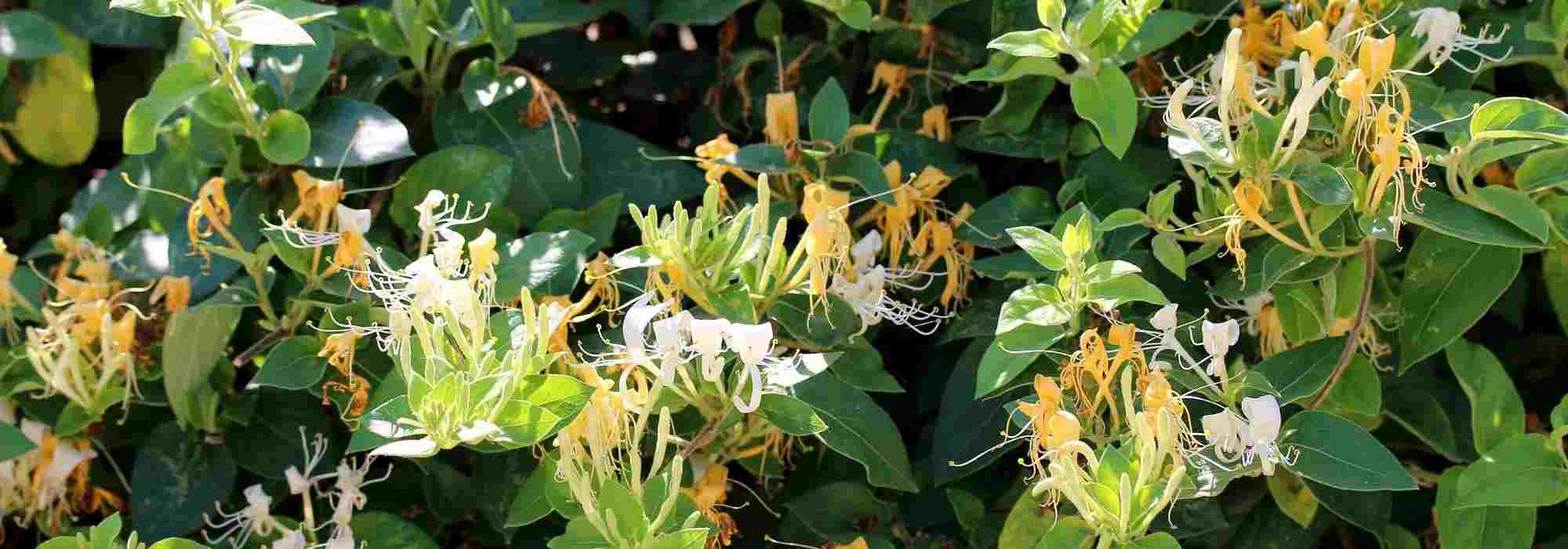
'Caprilia Imperial' sera superbe palissé contre un mur, sur une palissade ou une clôture, sur une arche ou une pergola, de préférence à proximité de la terrasse, de l’entrée de la maison ou d’une porte fenêtre pour profiter le plus possible de son parfum, particulièrement capiteux en soirée. Il peut aussi faire un bon couvre-sol dans un coin sauvage du jardin ou être cultivé en bac sur terrasse ou balcon. Il s'associe bien à des petites clématites du groupe viticella, peu exigeantes, qui fleurissent à la même période. Faites-le aussi grimper sur des arbustes à floraison simultanée (Buddleia, rosiers grimpants ou arbustifs, céanothes caducs...) ou décalée (cognassiers du Japon, Abeliophyllum, spirées blanches de printemps...). Facile à conduire en arbuste, il trouve également sa place dans un massif arbustif ou dans une haie fleurie.
Chèvrefeuille - Lonicera Caprilia Impérial cov in pictures
Plant habit
Flowering
Foliage
Botanical data
Lonicera
periclymenum
Caprilia Impérial cov
Caprifoliaceae
Chèvrefeuille des bois, Chèvrefeuille périclymène, Cranquillier
Cultivar or hybrid
Planting and care
Planting period
Intended location
Care
Planting & care advice

-
, onOrder confirmed
Reply from on Promesse de fleurs
Recently viewed products
Haven't found what you were looking for?
Hardiness is the lowest winter temperature a plant can endure without suffering serious damage or even dying. However, hardiness is affected by location (a sheltered area, such as a patio), protection (winter cover) and soil type (hardiness is improved by well-drained soil).
In temperate climates, pruning of spring-flowering shrubs (forsythia, spireas, etc.) should be done just after flowering.
Pruning of summer-flowering shrubs (Indian Lilac, Perovskia, etc.) can be done in winter or spring.
In cold regions as well as with frost-sensitive plants, avoid pruning too early when severe frosts may still occur.
The harvesting period indicated on our website applies to countries and regions in USDA zone 8 (France, England, Ireland, the Netherlands).
In colder areas (Scandinavia, Poland, Austria...) fruit and vegetable harvests are likely to be delayed by 3-4 weeks.
In warmer areas (Italy, Spain, Greece, etc.), harvesting will probably take place earlier, depending on weather conditions.
The sowing periods indicated on our website apply to countries and regions within USDA Zone 8 (France, UK, Ireland, Netherlands).
In colder areas (Scandinavia, Poland, Austria...), delay any outdoor sowing by 3-4 weeks, or sow under glass.
In warmer climes (Italy, Spain, Greece, etc.), bring outdoor sowing forward by a few weeks.
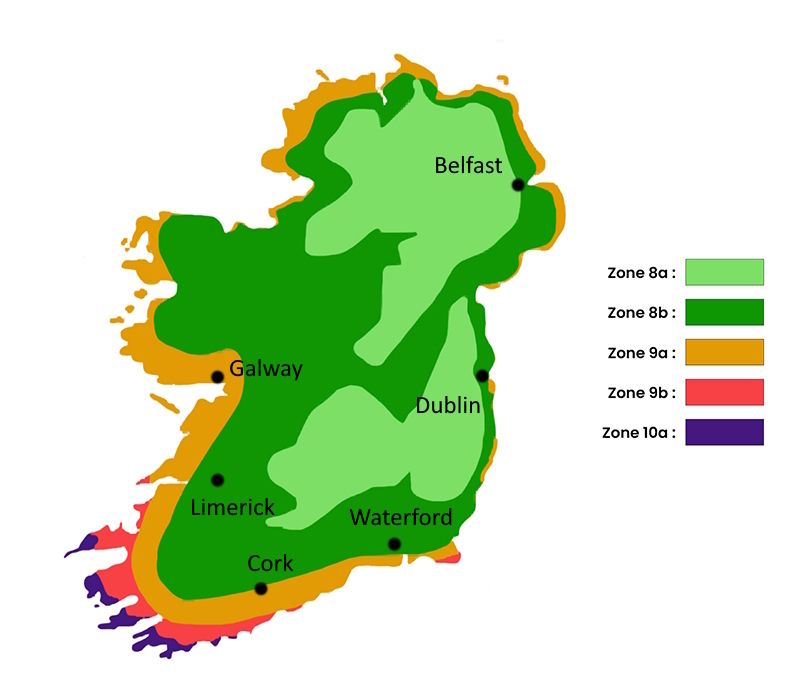
The planting period indicated on our website applies to regions in USDA Zone 9a (East Coast and Midlands: Dublin, Wexford, Waterford, Kilkenny, Portlaoise). It will vary depending on where you live:
- On the west coast and in the north-west (Galway, Limerick, Sligo, Donegal, Westport), delay planting by 1 to 2 weeks in spring and bring it forward by 1 to 2 weeks in autumn compared to the dates given, preferably choosing periods without strong winds.
- In the inland hills and plateaus (Wicklow Mountains, Macgillycuddy’s Reeks, Connemara, Killarney), it is best to plant in spring (April–May) or autumn (September–October), avoiding periods of waterlogged soil in winter and strong winds, which pose the main risk to newly planted trees in these areas.
The flowering period indicated on our website applies to regions in USDA Zone 9a, such as the East Coast and Midlands, including Dublin, Wexford, Waterford, Kilkenny and Portlaoise.
This will vary depending on where you live:
- On the west coast and in the northwest (Galway, Limerick, Sligo, Donegal and Westport), it will be delayed by one to two weeks compared to the given dates, due to stronger Atlantic winds and less spring sunshine.
- In the inland hills and plateaus (the Wicklow Mountains, the Macgillycuddy's Reeks, Connemara and Killarney), flowering will be delayed by two to three weeks. Flowering mainly occurs between May and July, with the limiting factors being less frost and more of the excessive humidity, strong winds and lack of sunshine that are characteristic of these areas.
Shipping country and language
Your country of residence may be:
Your country of residence is:
For a better user experience on our website, you can select:
Your shipping country:
-
 Austria
-
 Belgium
-
 Bosnia & Herzegovina
-
 Bulgaria
-
 Croatia
-
 Cyprus
-
 Czechia
-
 Denmark
-
 Estonia
-
 Finland
-
 France
-
 Germany
-
 Greece
-
 Hungary
-
 Iceland
-
 Ireland
-
 Italy
Italy
-
 Latvia
-
 Liechtenstein
-
 Lithuania
-
 Luxembourg
-
 Malta
Malta
-
 Netherlands
-
 Poland
-
 Portugal
-
 Romania
-
 Serbia
-
 Slovakia
-
 Slovenia
-
 Spain
Spain
-
 Sweden
-
 Switzerland
Language:
-
French
-
 English
-
Spanish
-
Italian
-
German
-
Portuguese
-
Dutch
-
Finnish
My Account
Hello
My wish lists
My cart
Log in / Register
Existing customer?
This form is protected by reCAPTCHA - the Google Privacy Policy and Terms of Service apply.
New customer?
Create an account to track your orders, access our customer service and, if you wish, make the most of our upcoming offers.