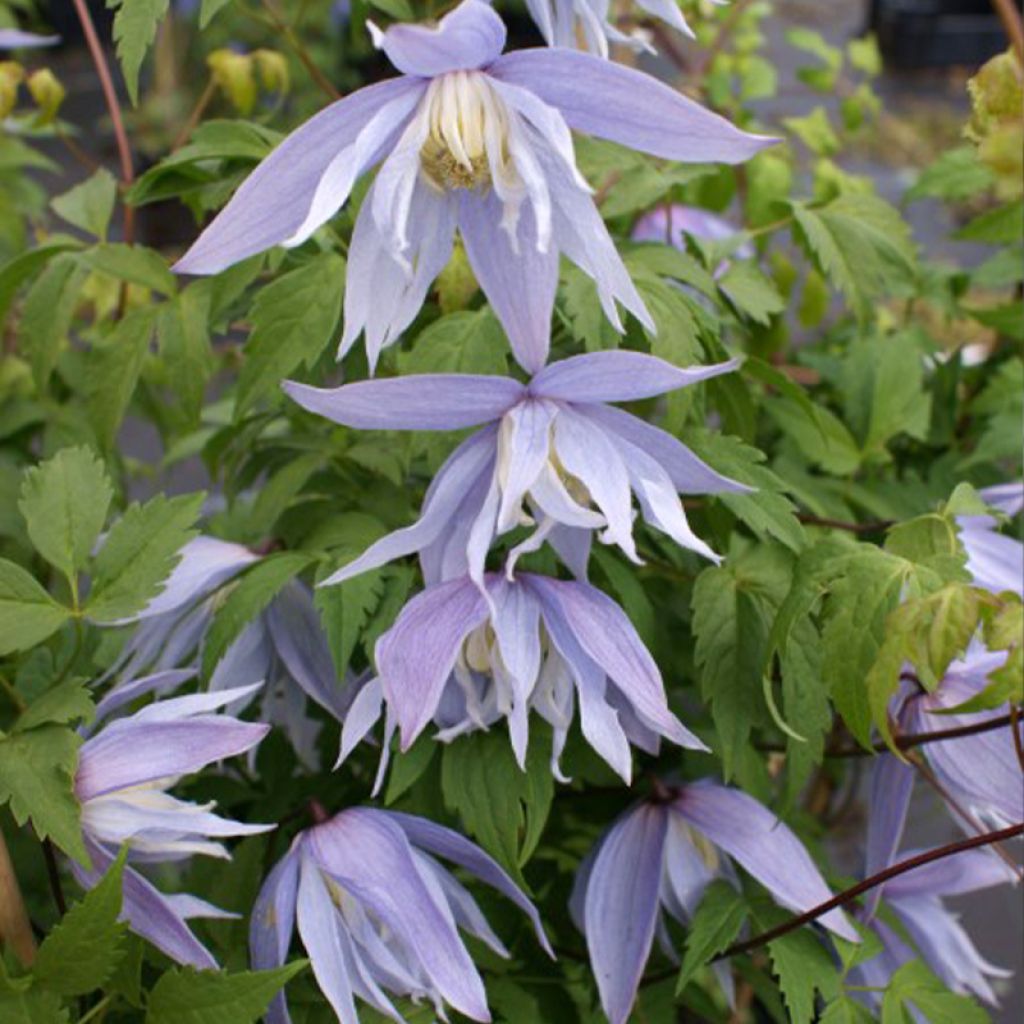
Clematis macropetala ‘Ballerina in Blue’ Eximia - Clématite à grands pétales Eximia
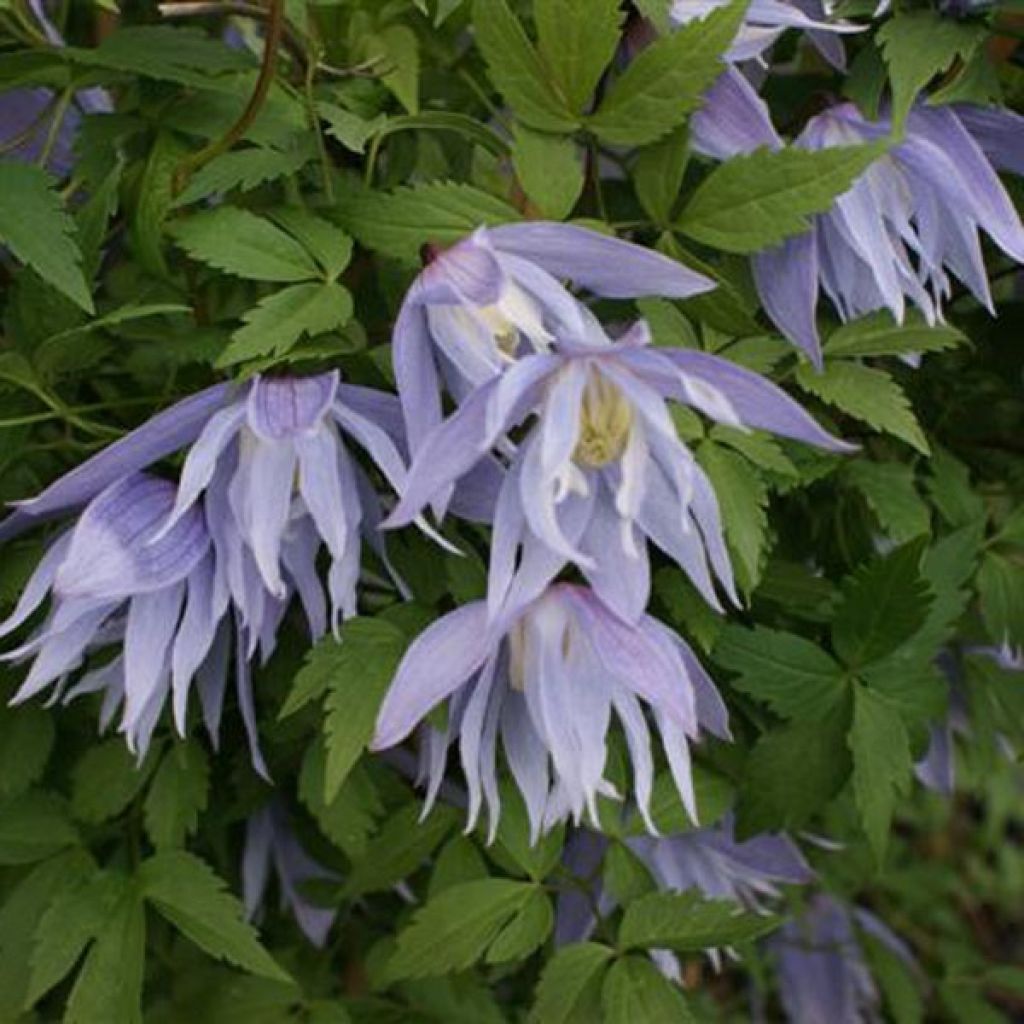
Clematis macropetala ‘Ballerina in Blue’ Eximia - Clématite à grands pétales Eximia
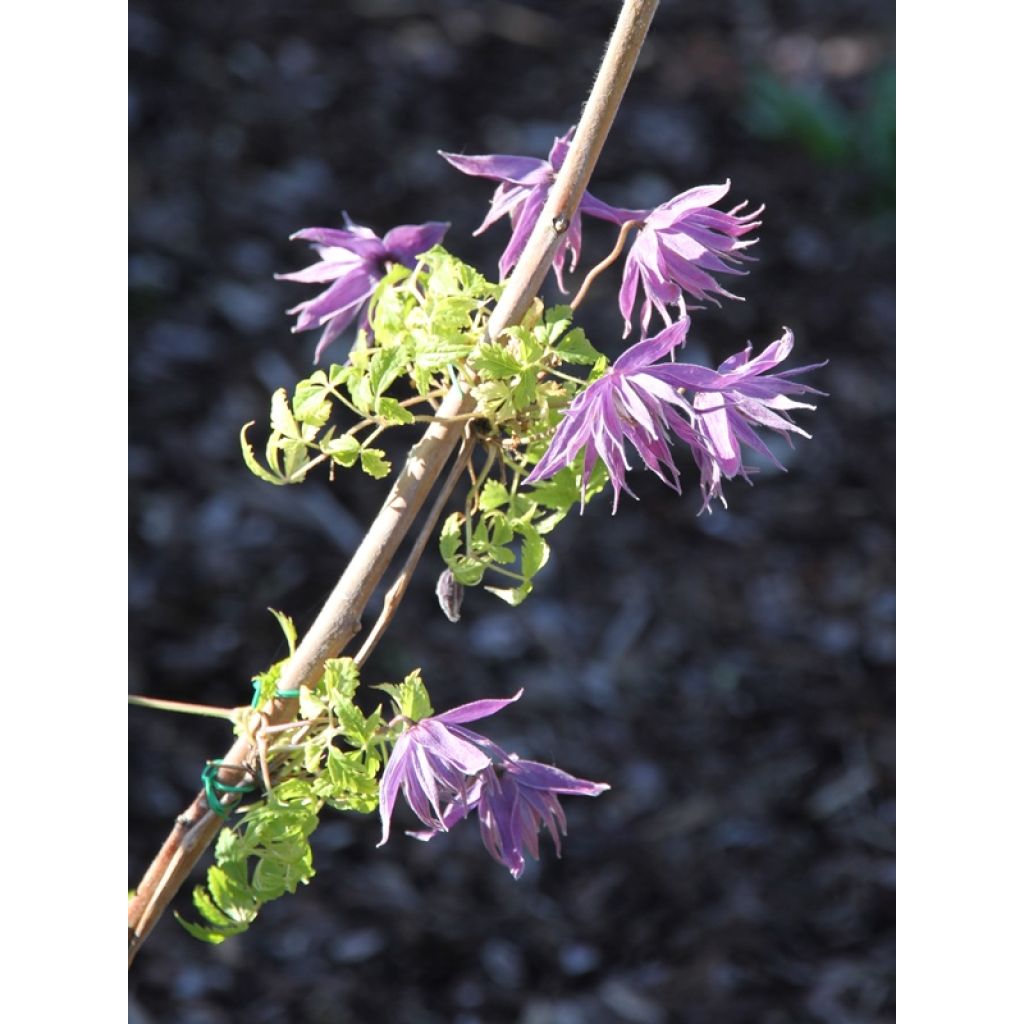
Clematis macropetala ‘Ballerina in Blue’ Eximia - Clématite à grands pétales Eximia
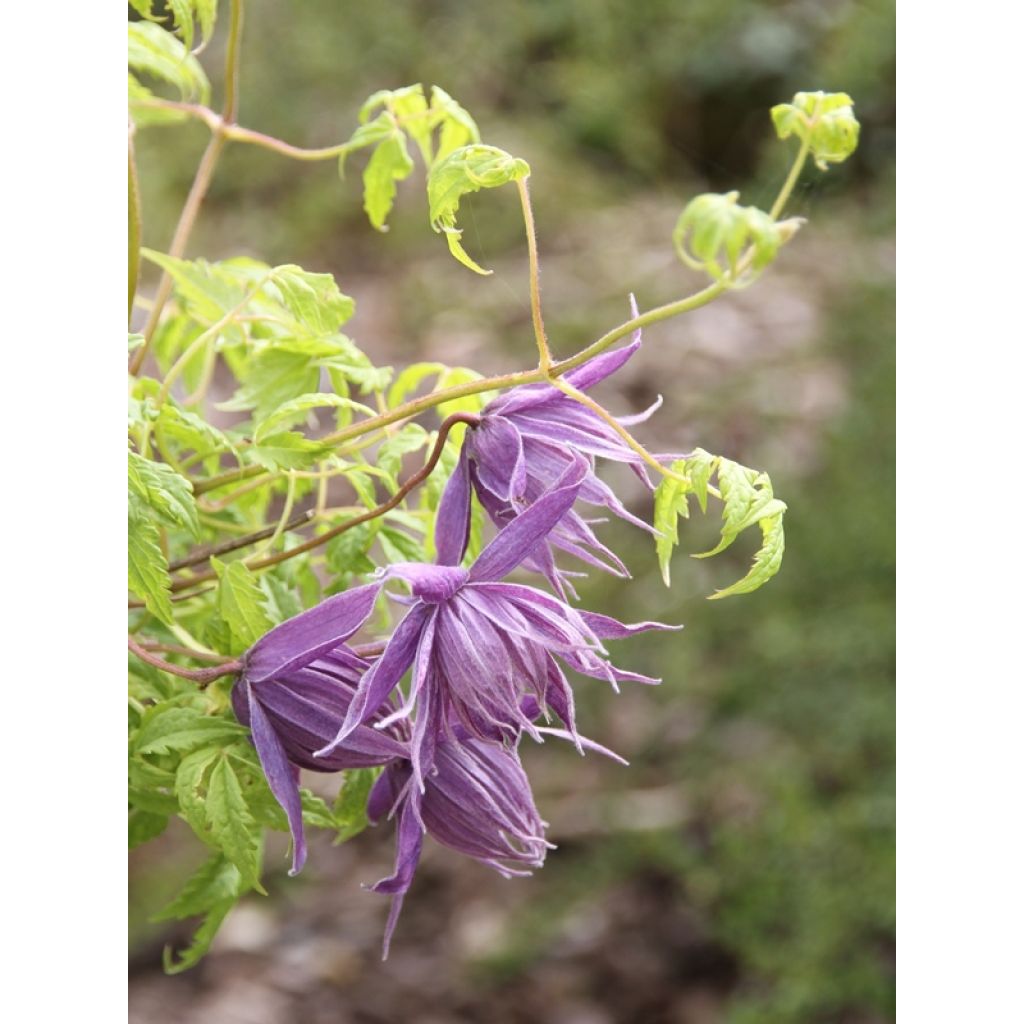
Clematis macropetala ‘Ballerina in Blue’ Eximia - Clématite à grands pétales Eximia
Clematis macropetala ‘Ballerina in Blue’ Eximia - Clématite à grands pétales Eximia
Clematis macropetala ‘Ballerina in Blue’ Eximia - Clématite à grands pétales Eximia
Clematis macropetala ‘Ballerina in Blue’ Eximia - Clématite à grands pétales Eximia
Clematis macropetala ‘Ballerina in Blue’ Eximia
Thanks to Jenny for preparing the order and ? from the shipping department, the plant I received is dormant but appears to be healthy. I've planted it near an arch, next to the 'Golden Age' rose and 'Brunette' clematis. Now I am patiently waiting for it to start growing again in spring (or not)...
Thierry, 15/01/2022
Back-to-school special offer!
Get €10 off for every €50 you spend! And get up to €40 off on a single order.
How does it work?
1. Shop your favourites
Add your favourite plants to your basket. For every €50 you spend (excluding delivery charges, store credit and the plastic-free option), you’ll receive a €10 voucher.
€50 spent = €10 voucher
€100 spent = €20 voucher
€150 spent = €30 voucher
€200 spent = €40 voucher
2. Place your order
Once your basket reaches one of the spending thresholds, place your order. You can even choose your delivery date!
3. Receive your voucher
As soon as your order has been shipped, you’ll receive an email containing your personal voucher code and its value.
4. Use it on your next order
Your voucher is valid for 90 days from the date you receive it. It can be used once only, on a new order worth at least the value of the voucher, excluding delivery charges.
Please note: Vouchers can be combined with other offers, but cannot be split or refunded.
Home or relay delivery (depending on size and destination)
Important: You may be charged customs duties by your country’s customs authorities upon delivery.
Schedule delivery date,
and select date in basket
This plant carries a 12 months recovery warranty
More information
We guarantee the quality of our plants for a full growing cycle, and will replace at our expense any plant that fails to recover under normal climatic and planting conditions.

Does this plant fit my garden?
Set up your Plantfit profile →
Description
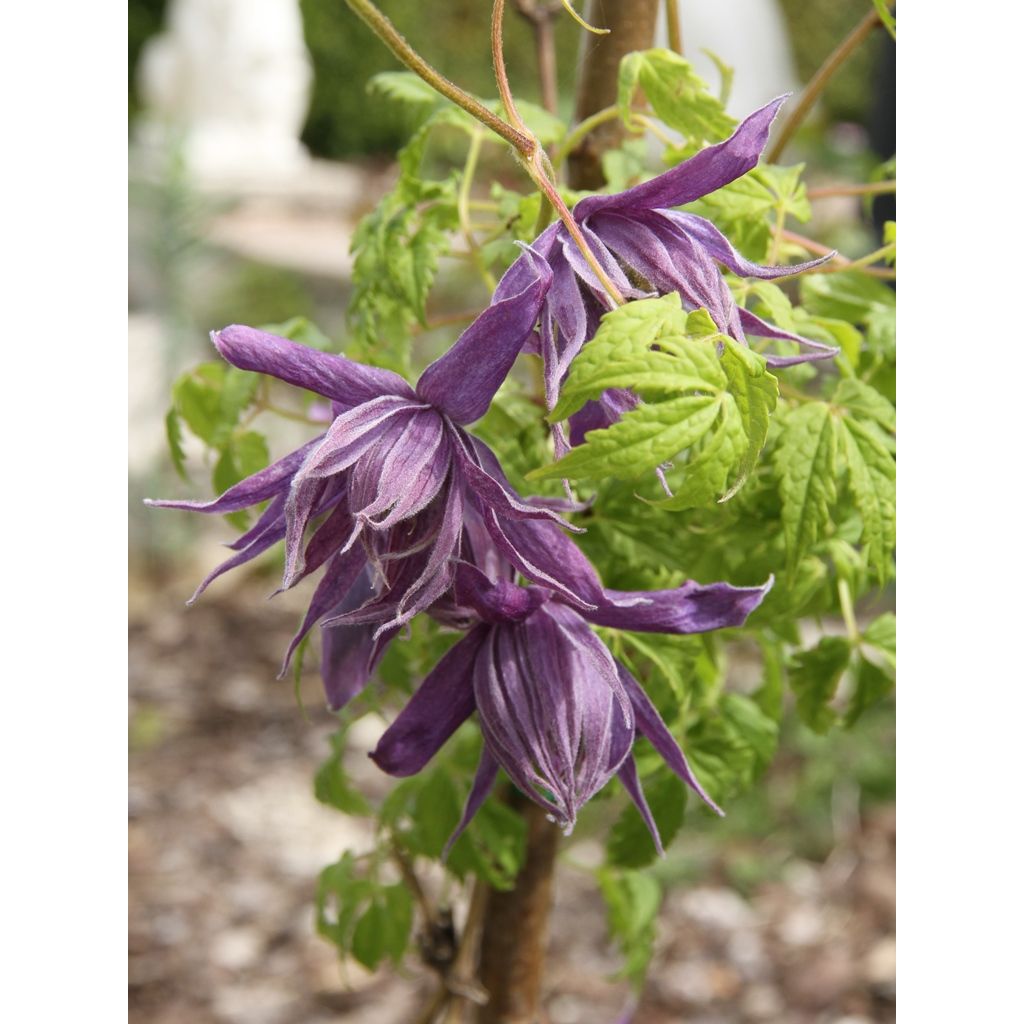
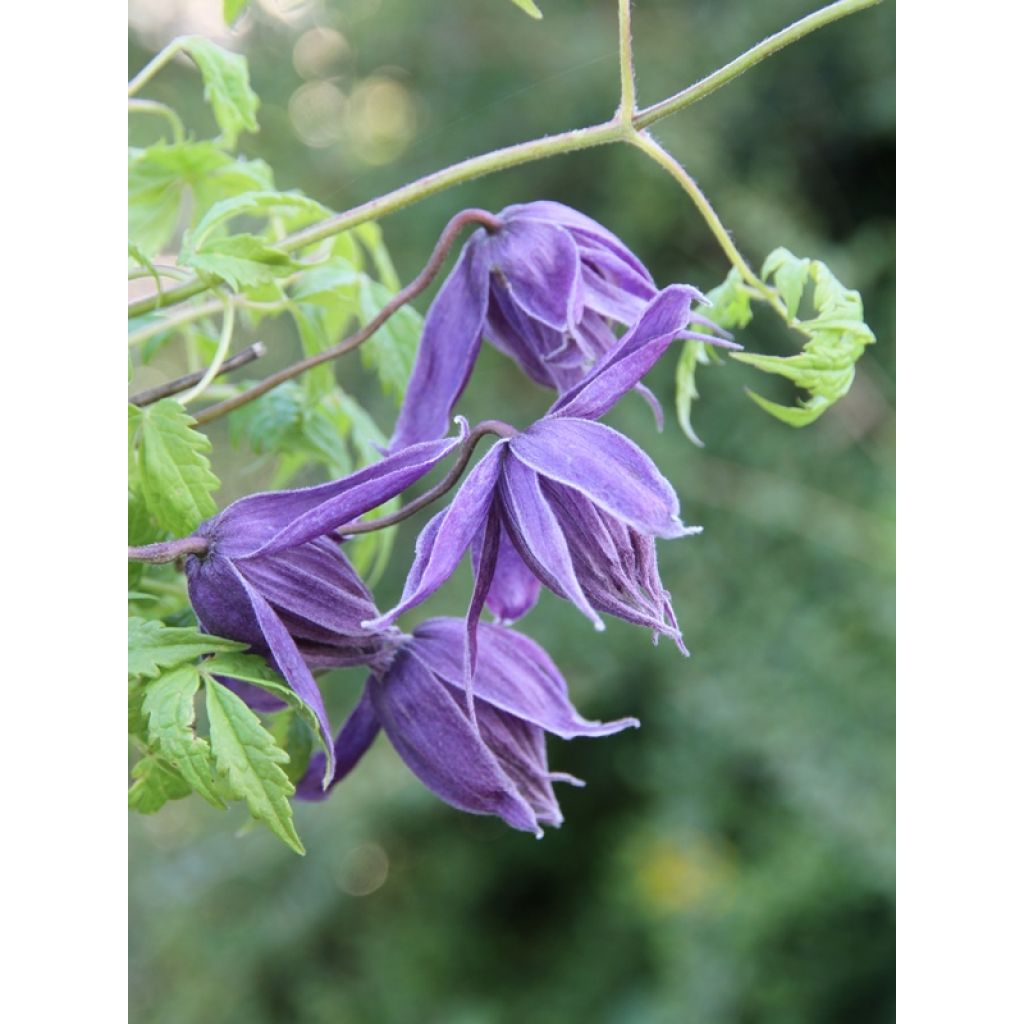
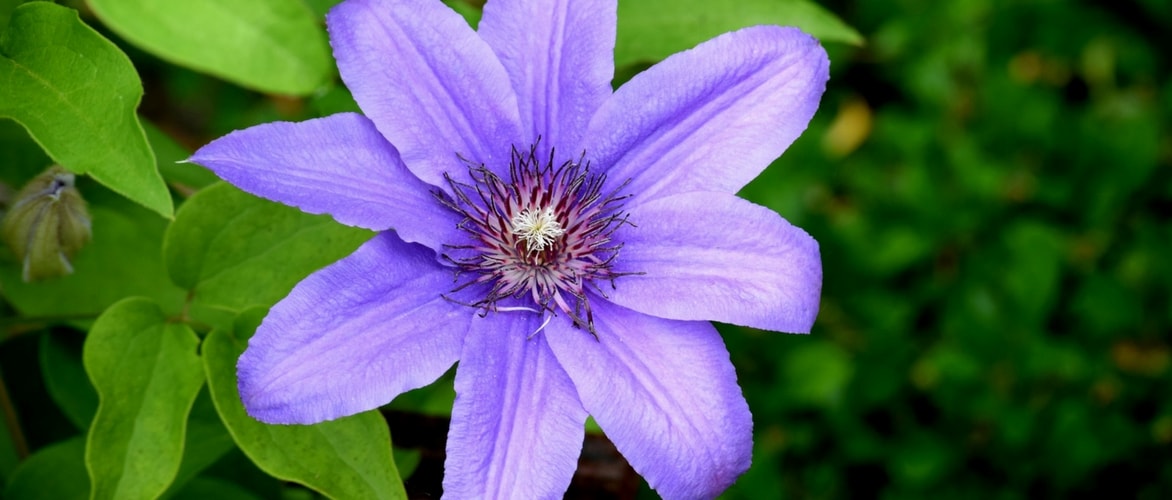
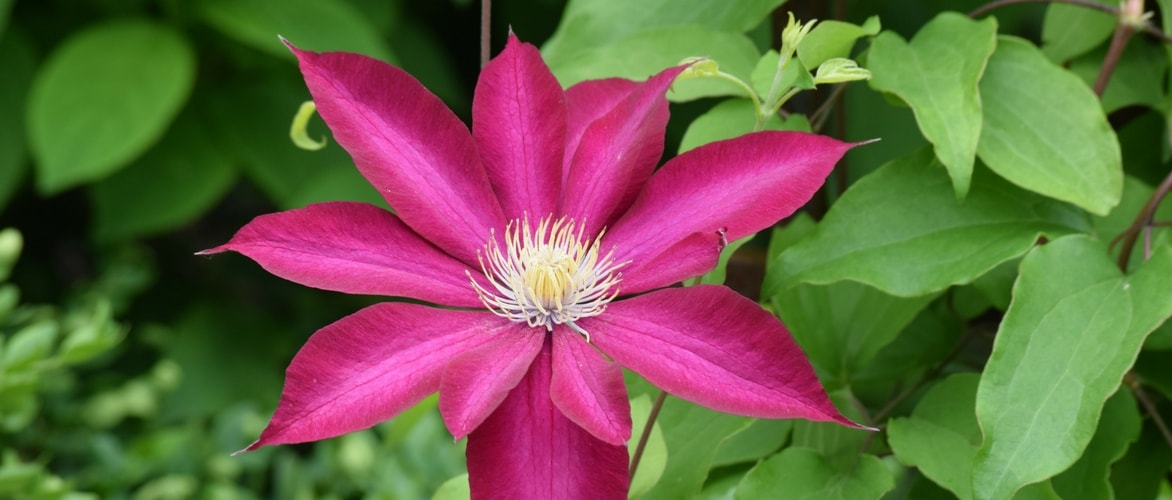
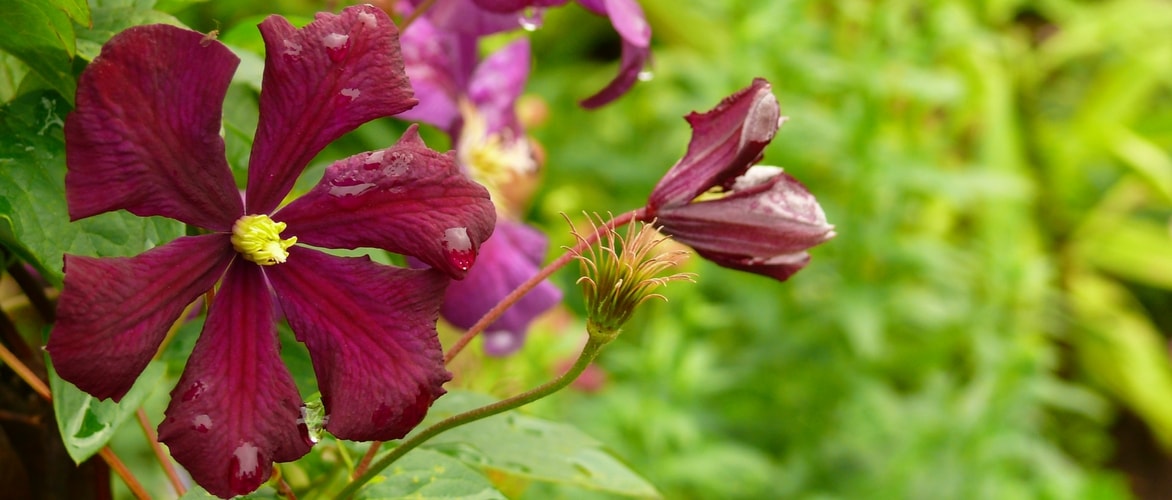
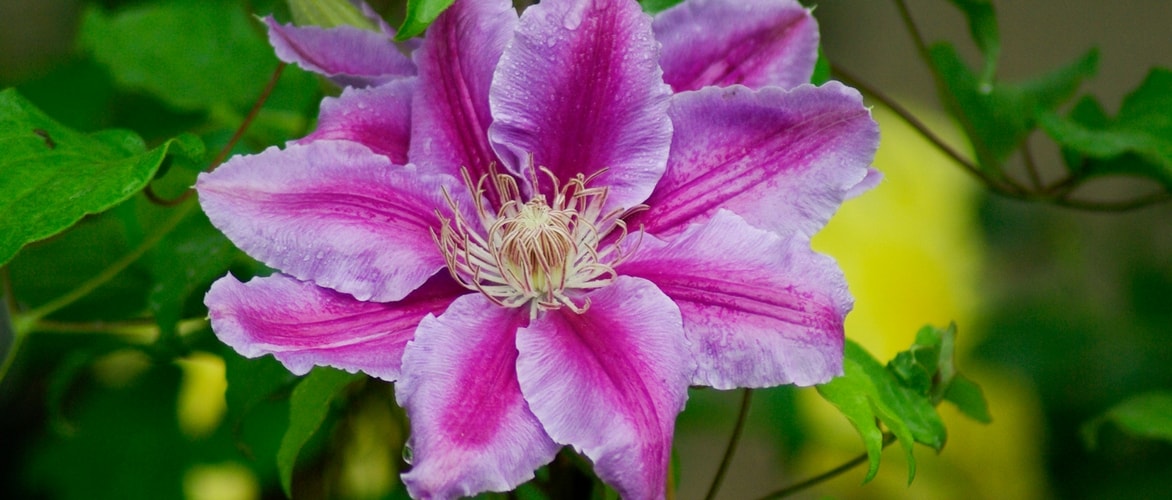
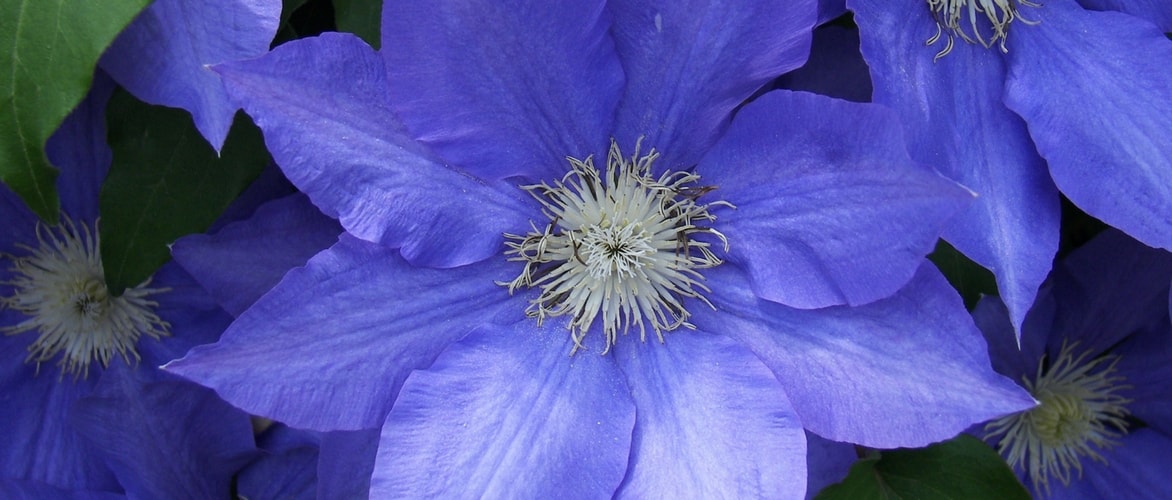
The Clematis ‘Ballerina in Blue’, still widely sold under the name Clematis ‘Eximia’, flowers in early spring, well before the classic large-flowered clematis. Its double, ruffled, pendulous bell-shaped flowers are a medium violet-blue at the base, becoming paler towards the tips. Very hardy, compact and requiring no annual pruning, this climbing plant easily finds its place on a trellis, in a shrub or on a small tree. It tolerates non-scorching sun, but its flowering retains its blue hues better in partial shade.
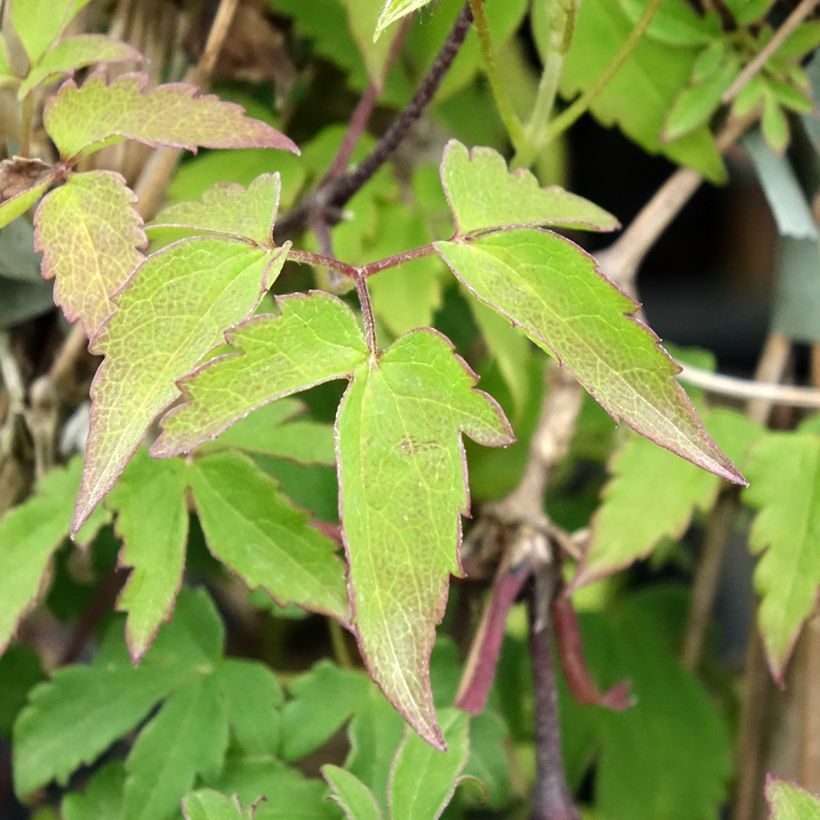
This clematis belongs to the Ranunculaceae family and the Atragene horticultural group, which brings together woody climbers derived notably from Clematis alpina and C. macropetala. 'Ballerina in Blue' is the officially accepted name for the cultivar formerly distributed as ‘Eximia’. It was selected in Sweden around 1980 by Magnus Johnson, a great specialist in Nordic clematis, from seedlings of Clematis macropetala. The botanical species grows naturally in open woods and thickets of southern Siberia, Mongolia and northern China, under climates marked by harsh winters. The plant forms flexible stems that turn brown and become woody over the months. It has neither tendrils nor climbing roots: the petioles of its leafren twine around elements that are not too thick. It needs to be provided with a trellis, a wire mesh or the small branches of a shrub to cling to. Its vegetation reaches 2 to 2.50 m in height for 1.50 to 2 m of spread. The deciduous foliage appears early in spring and falls in autumn. It consists of medium green, narrow and dentate leaflets, forming a light cover. The flower buds, borne singly on long peduncles, open mainly in April and May, sometimes a little later in cold regions. The pendulous flowers measure 8 to 10 cm in diameter when fully open. Each has four long violet-blue sepals surrounding numerous sterile stamens transformed into narrow floral pieces. Paler and slightly recurved at their tips, these give the corolla its irregular, almost spider-like bell shape. A few flowers may reappear during the summer, but this repeat flowering remains more discreet than the spring flowering. The plant flowers on stems formed the previous year. Winter or spring pruning would therefore remove most of the buds. This clematis is among the most cold-resistant varieties and tolerates temperatures close to –20 °C in well-drained soil. It fears heavy, waterlogged soil in winter more than dry cold.
The Clematis macropetala 'Eximia' is ideal for large pots or for flowering a small bamboo structure. You can pair it with other varieties from the Atragene group, but also let it climb into the branches of the Viburnum plicatum ‘Mariesii’ which flowers at the same time. To shade its base, you can plant the Brunnera ‘Jack Frost’ which offers small blue flowers on broadly silvered foliage. A few ‘Black Barlow’ columbines will then raise their dark purple pom-poms above this groundcover. When the clematis finishes flowering, the Astrantia major ‘Shaggy’ will take over with its large greenish-white flowers. All appreciate a slightly shaded position and humus-bearing soil that does not dry out too much in spring and summer.
Advice: avoid excessive fertiliser which stimulates foliage at the expense of flowers. Do not mulch, to avoid excessive moisture which promotes dieback disease.
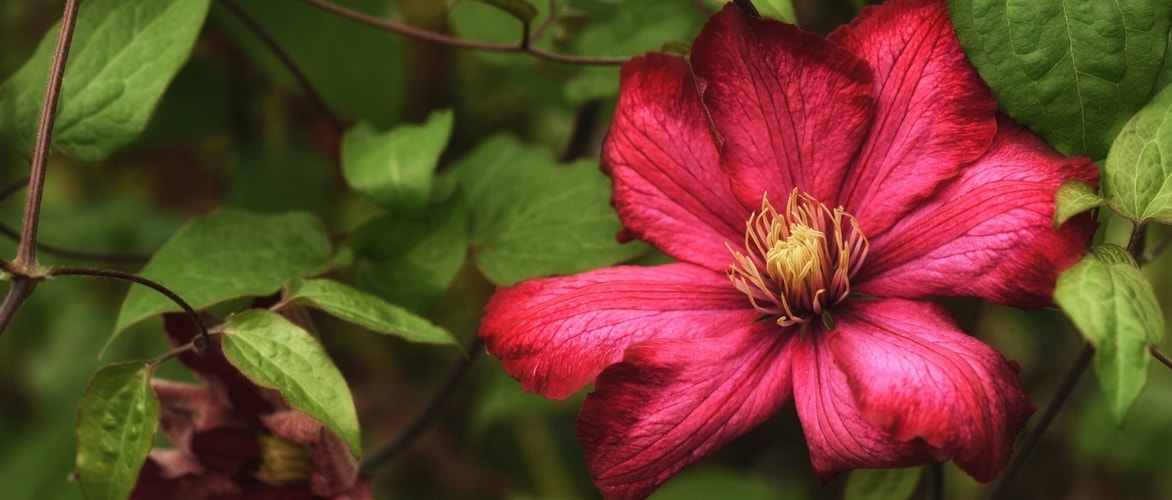
Clematis macropetala ‘Ballerina in Blue’ Eximia - Clématite à grands pétales Eximia in pictures
Plant habit
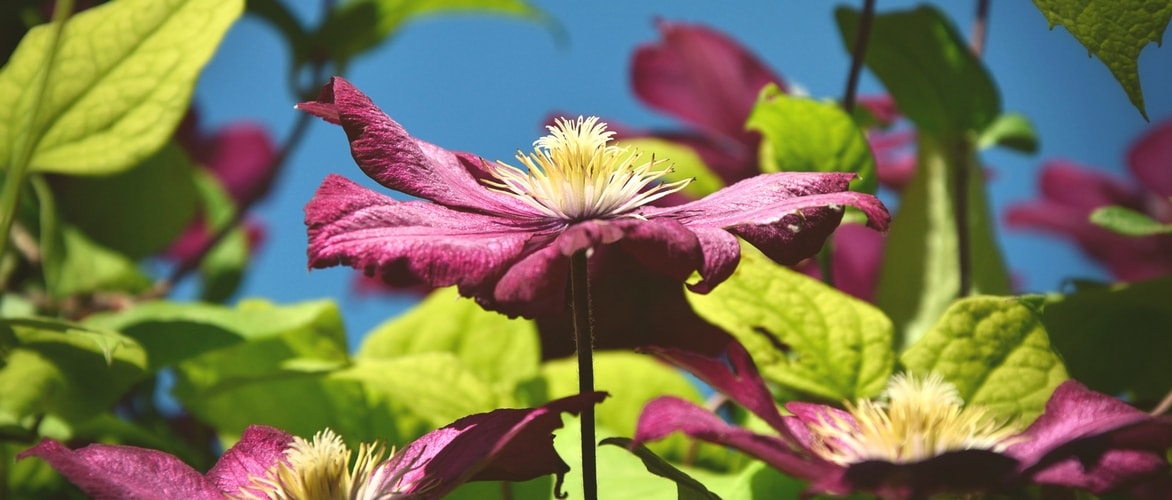
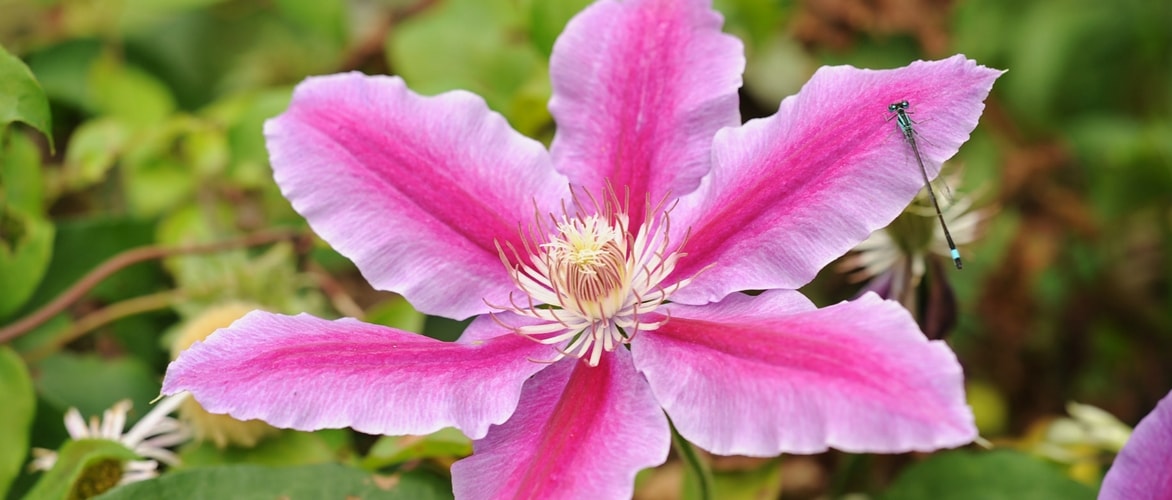
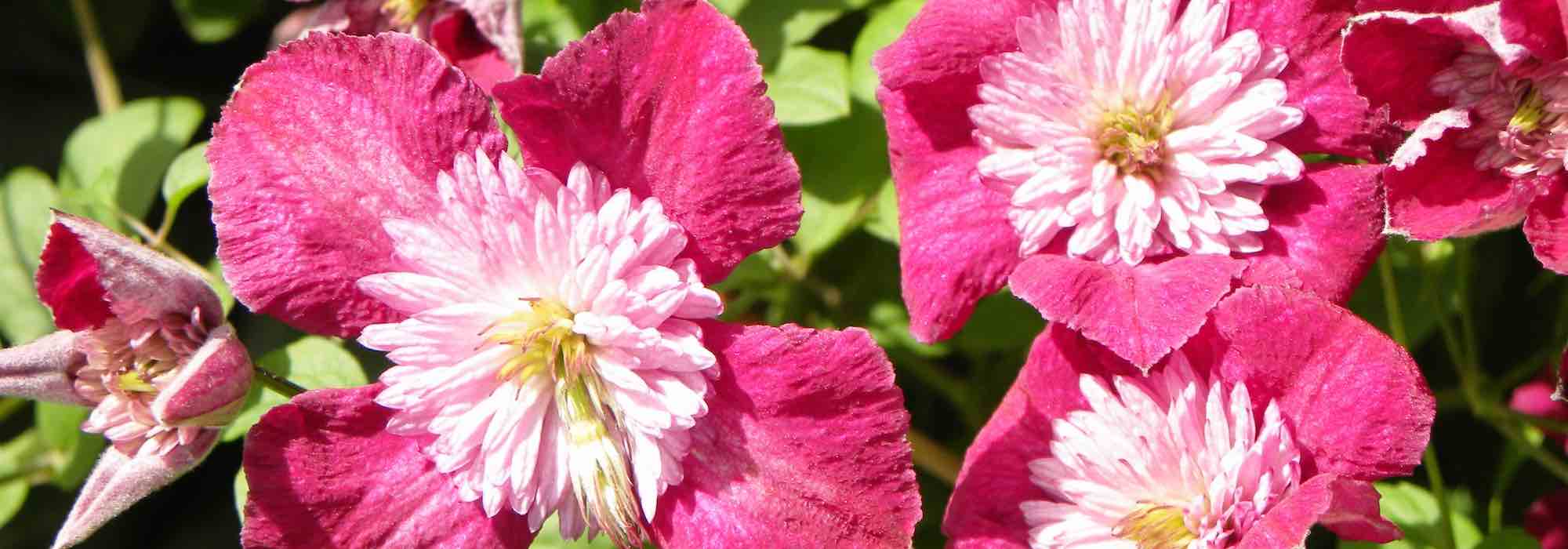
Flowering
Foliage
Botanical data
Clematis
macropetala
‘Ballerina in Blue’ Eximia
Ranunculaceae
Clematis ‘Ballerina in Blue’, Clematis Eximia, Clematis macropetala ‘Eximia’
Cultivar or hybrid
Planting and care
The clematis 'Eximia' should be planted from March to May or from September to November, in a position sheltered from scorching sun. An east or west-facing aspect suits it particularly well. It grows in ordinary soil enriched with humus, slightly acidic, neutral or lime-bearing, provided that water drains away quickly. In clay soil, widen the hole and mix the soil with well-rotted compost and draining materials. Plant the root ball at soil level or just slightly deeper, then guide the first shoots towards a support made of fine elements. Water regularly during the first two years. Once established, the plant tolerates short periods of less watering, but spring drought reduces flowering and prematurely dries out the foliage. In a container, use a pot at least 45 cm deep and wide, filled with a substrate based on loam, humus-rich and aerated.
Planting period
Intended location
Care
Planting & care advice
-
, onOrder confirmed
Reply from on Promesse de fleurs
Recently viewed products
Haven't found what you were looking for?
Hardiness is the lowest winter temperature a plant can endure without suffering serious damage or even dying. However, hardiness is affected by location (a sheltered area, such as a patio), protection (winter cover) and soil type (hardiness is improved by well-drained soil).
In temperate climates, pruning of spring-flowering shrubs (forsythia, spireas, etc.) should be done just after flowering.
Pruning of summer-flowering shrubs (Indian Lilac, Perovskia, etc.) can be done in winter or spring.
In cold regions as well as with frost-sensitive plants, avoid pruning too early when severe frosts may still occur.
The harvesting period indicated on our website applies to countries and regions in USDA zone 8 (France, England, Ireland, the Netherlands).
In colder areas (Scandinavia, Poland, Austria...) fruit and vegetable harvests are likely to be delayed by 3-4 weeks.
In warmer areas (Italy, Spain, Greece, etc.), harvesting will probably take place earlier, depending on weather conditions.
The sowing periods indicated on our website apply to countries and regions within USDA Zone 8 (France, UK, Ireland, Netherlands).
In colder areas (Scandinavia, Poland, Austria...), delay any outdoor sowing by 3-4 weeks, or sow under glass.
In warmer climes (Italy, Spain, Greece, etc.), bring outdoor sowing forward by a few weeks.
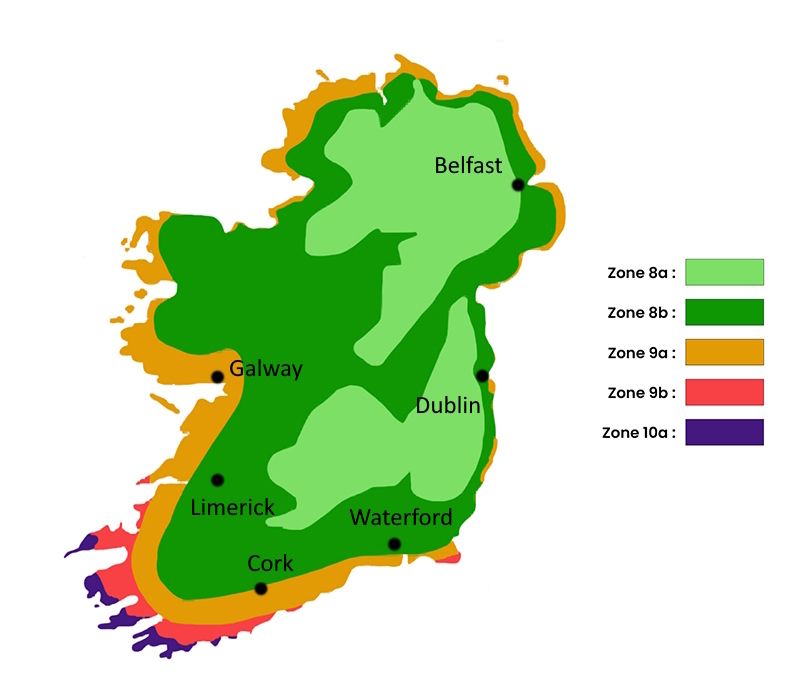
The planting period indicated on our website applies to regions in USDA Zone 9a (East Coast and Midlands: Dublin, Wexford, Waterford, Kilkenny, Portlaoise). It will vary depending on where you live:
- On the west coast and in the north-west (Galway, Limerick, Sligo, Donegal, Westport), delay planting by 1 to 2 weeks in spring and bring it forward by 1 to 2 weeks in autumn compared to the dates given, preferably choosing periods without strong winds.
- In the inland hills and plateaus (Wicklow Mountains, Macgillycuddy’s Reeks, Connemara, Killarney), it is best to plant in spring (April–May) or autumn (September–October), avoiding periods of waterlogged soil in winter and strong winds, which pose the main risk to newly planted trees in these areas.
The flowering period indicated on our website applies to regions in USDA Zone 9a, such as the East Coast and Midlands, including Dublin, Wexford, Waterford, Kilkenny and Portlaoise.
This will vary depending on where you live:
- On the west coast and in the northwest (Galway, Limerick, Sligo, Donegal and Westport), it will be delayed by one to two weeks compared to the given dates, due to stronger Atlantic winds and less spring sunshine.
- In the inland hills and plateaus (the Wicklow Mountains, the Macgillycuddy's Reeks, Connemara and Killarney), flowering will be delayed by two to three weeks. Flowering mainly occurs between May and July, with the limiting factors being less frost and more of the excessive humidity, strong winds and lack of sunshine that are characteristic of these areas.
Shipping country and language
Your country of residence may be:
Your country of residence is:
For a better user experience on our website, you can select:
Your shipping country:
-
 Austria
-
 Belgium
-
 Bosnia & Herzegovina
-
 Bulgaria
-
 Croatia
-
 Cyprus
-
 Czechia
-
 Denmark
-
 Estonia
-
 Finland
-
 France
-
 Germany
-
 Greece
-
 Hungary
-
 Iceland
-
 Ireland
-
 Italy
Italy
-
 Latvia
-
 Liechtenstein
-
 Lithuania
-
 Luxembourg
-
 Malta
Malta
-
 Netherlands
-
 Poland
-
 Portugal
-
 Romania
-
 Serbia
-
 Slovakia
-
 Slovenia
-
 Spain
Spain
-
 Sweden
-
 Switzerland
Language:
-
French
-
 English
-
Spanish
-
Italian
-
German
-
Portuguese
-
Dutch
-
Finnish
My Account
Hello
My wish lists
My cart
Log in / Register
Existing customer?
This form is protected by reCAPTCHA - the Google Privacy Policy and Terms of Service apply.
New customer?
Create an account to track your orders, access our customer service and, if you wish, make the most of our upcoming offers.