Crocus sativus - Saffron
Crocus sativus - Saffron
Crocus sativus - Saffron
Crocus sativus - Saffron
Crocus sativus - Saffron
Crocus sativus - Saffron
Crocus sativus - Saffron
Crocus sativus
Saffron Crocus
I bought and planted them straight away in September. The bulbs all sprouted quickly, but I haven't had any flowers so far. I think I'll have to wait until next year.
Natacha, 25/02/2026
Back-to-school special offer!
Get €10 off for every €50 you spend! And get up to €40 off on a single order.
How does it work?
1. Shop your favourites
Add your favourite plants to your basket. For every €50 you spend (excluding delivery charges, store credit and the plastic-free option), you’ll receive a €10 voucher.
€50 spent = €10 voucher
€100 spent = €20 voucher
€150 spent = €30 voucher
€200 spent = €40 voucher
2. Place your order
Once your basket reaches one of the spending thresholds, place your order. You can even choose your delivery date!
3. Receive your voucher
As soon as your order has been shipped, you’ll receive an email containing your personal voucher code and its value.
4. Use it on your next order
Your voucher is valid for 90 days from the date you receive it. It can be used once only, on a new order worth at least the value of the voucher, excluding delivery charges.
Please note: Vouchers can be combined with other offers, but cannot be split or refunded.
Why not try an alternative variety in stock?
View all →
Available in 1 sizes
This plant carries a 6 months recovery warranty
More information
We guarantee the quality of our plants for a full growing cycle, and will replace at our expense any plant that fails to recover under normal climatic and planting conditions.


Does this plant fit my garden?
Set up your Plantfit profile →
Description
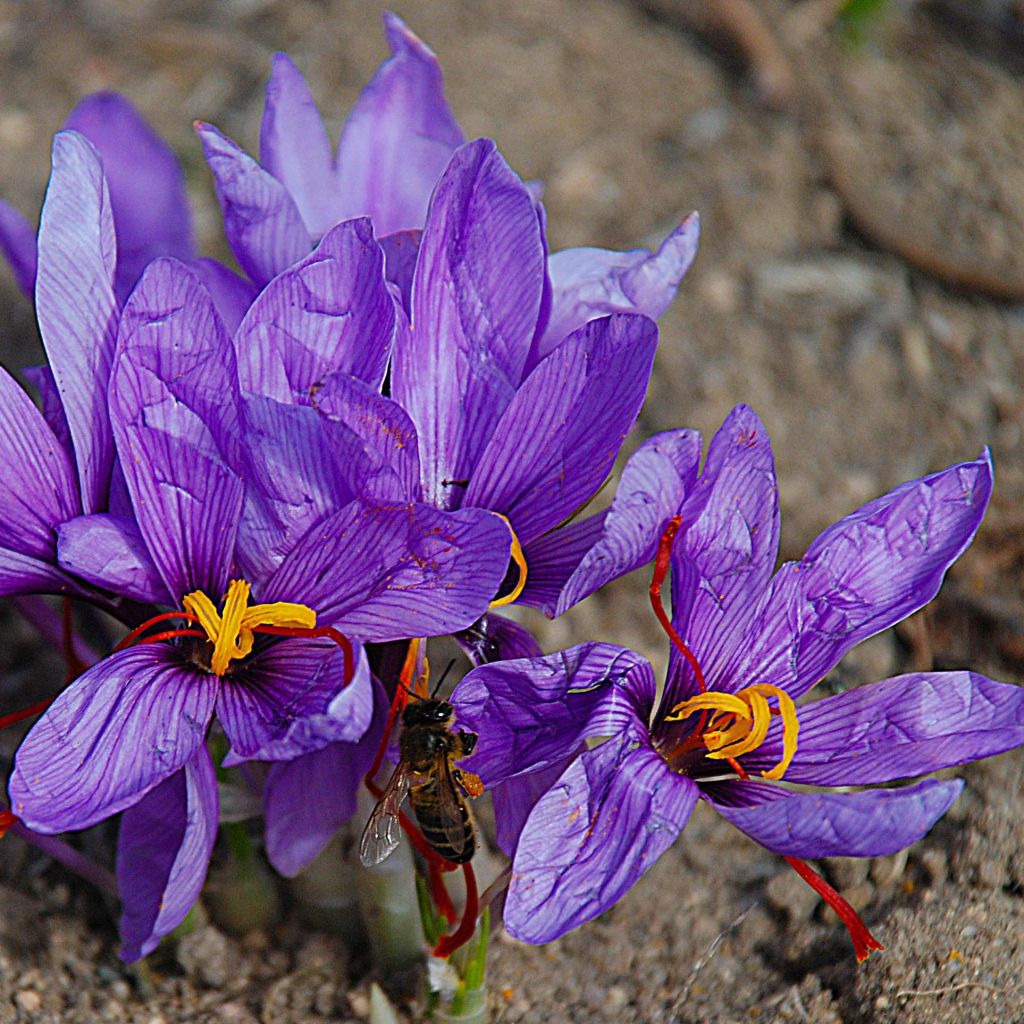
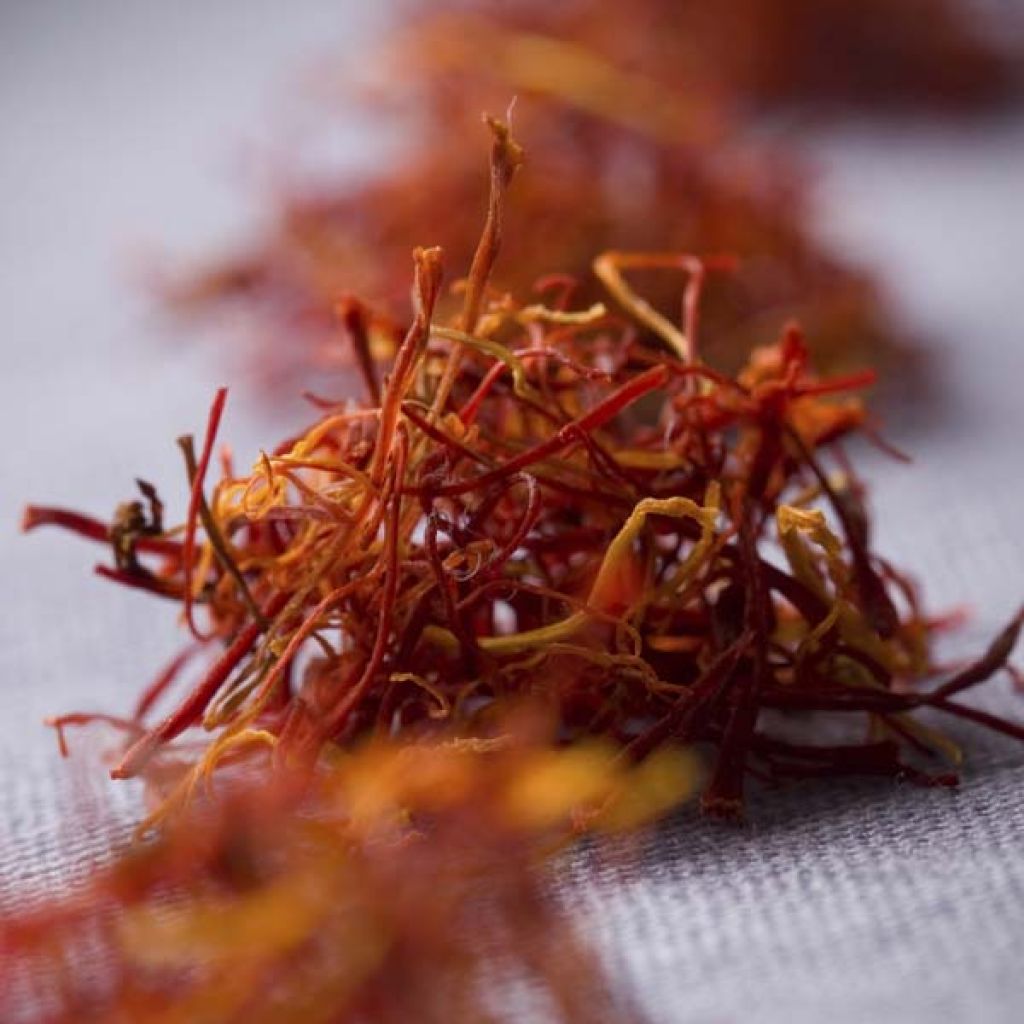
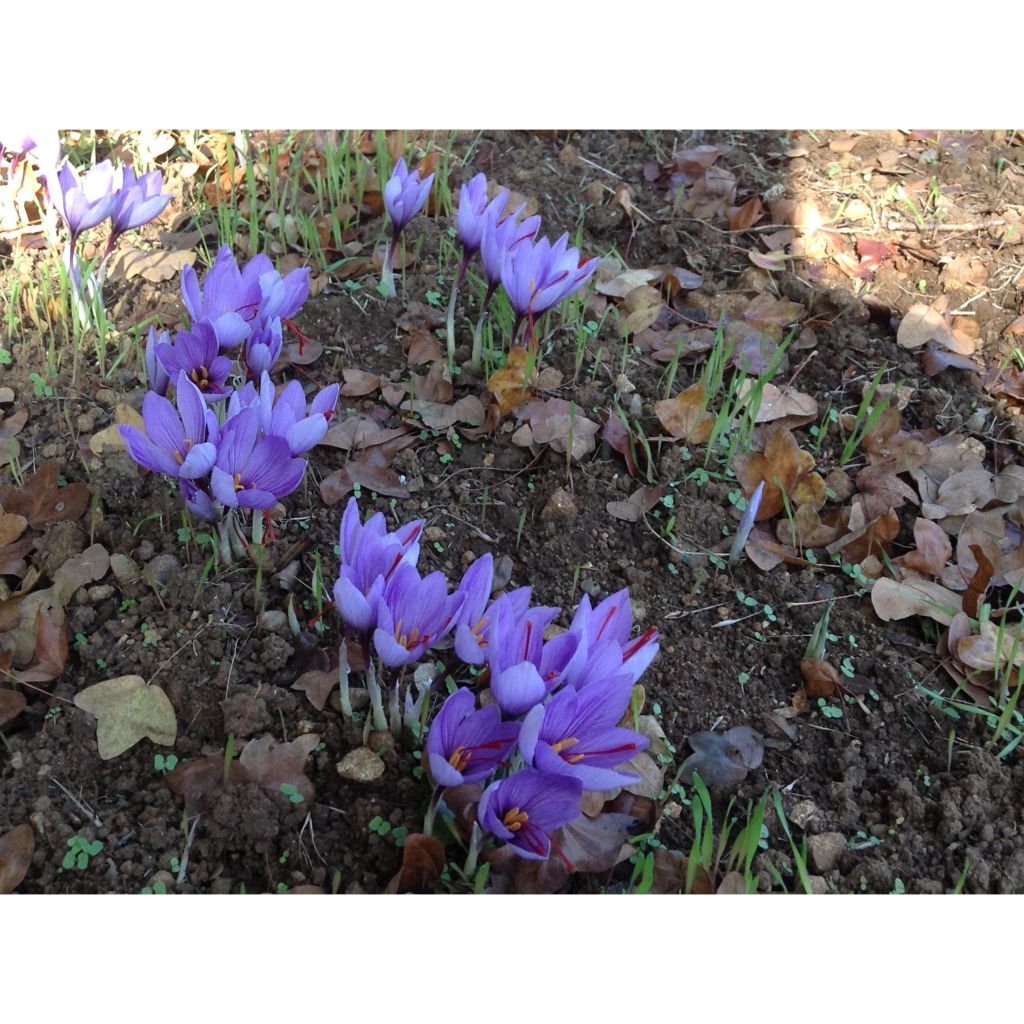
Crocus sativus, commonly known as Saffron, is a small bulbous plant of uncertain origin, cultivated since ancient times for the harvest of its precious, highly aromatic, bright red female floral parts called stigmas. This perfectly hardy crocus is also a very pretty flower for autumn, with each corm producing one to two large cup-shaped flowers in shades of lilac, veined with purple, serving as a backdrop for the red stigmas and golden-yellow stamens. It can be grown in the vegetable garden as well as in sunny borders and rock gardens, scattered among ground-covering plants whose beautiful flowers will pierce through the vegetation.
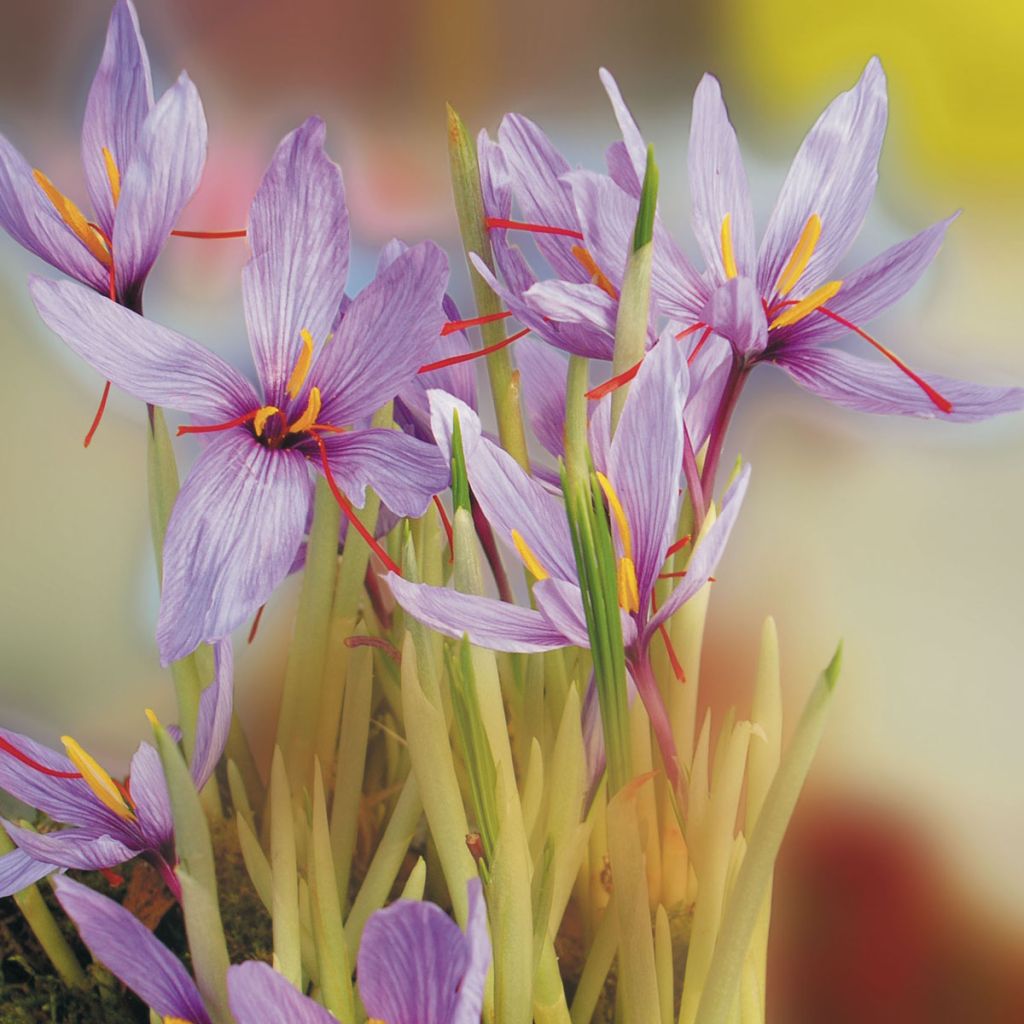
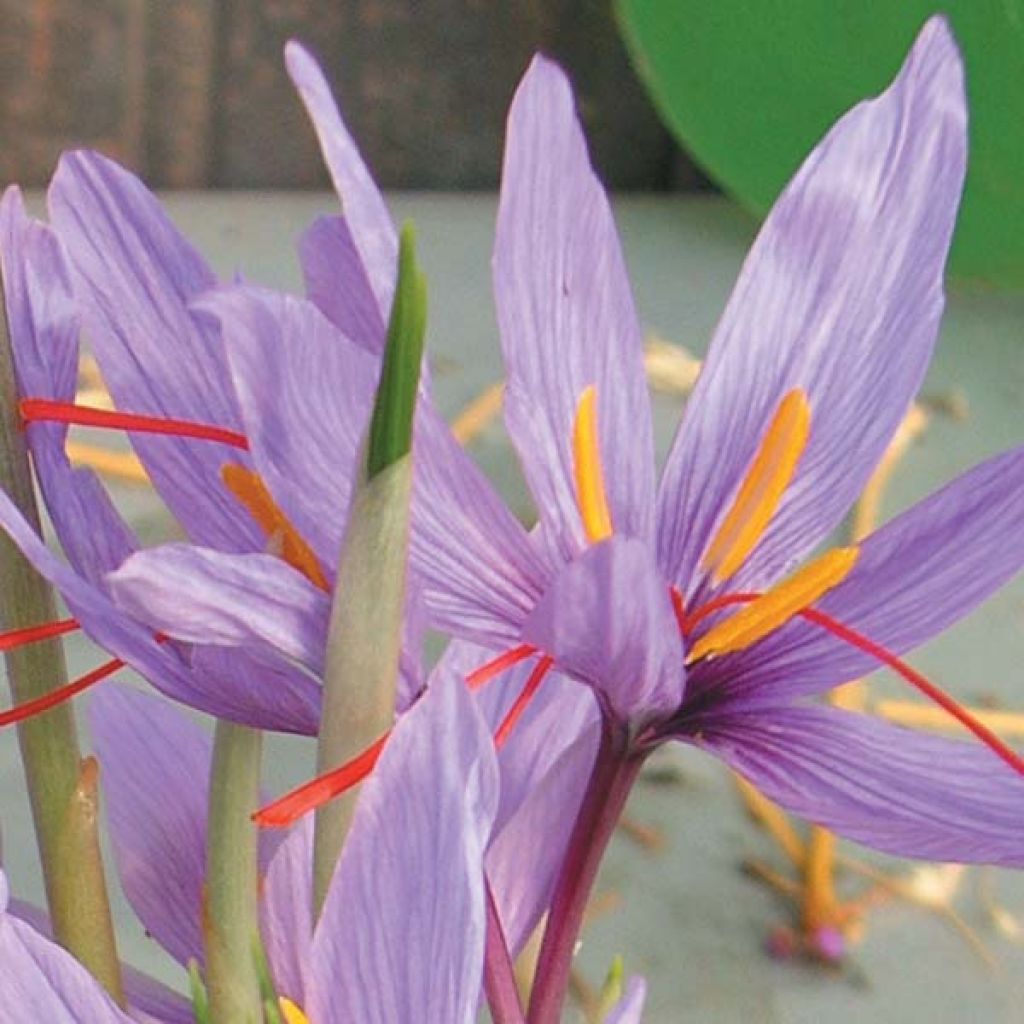
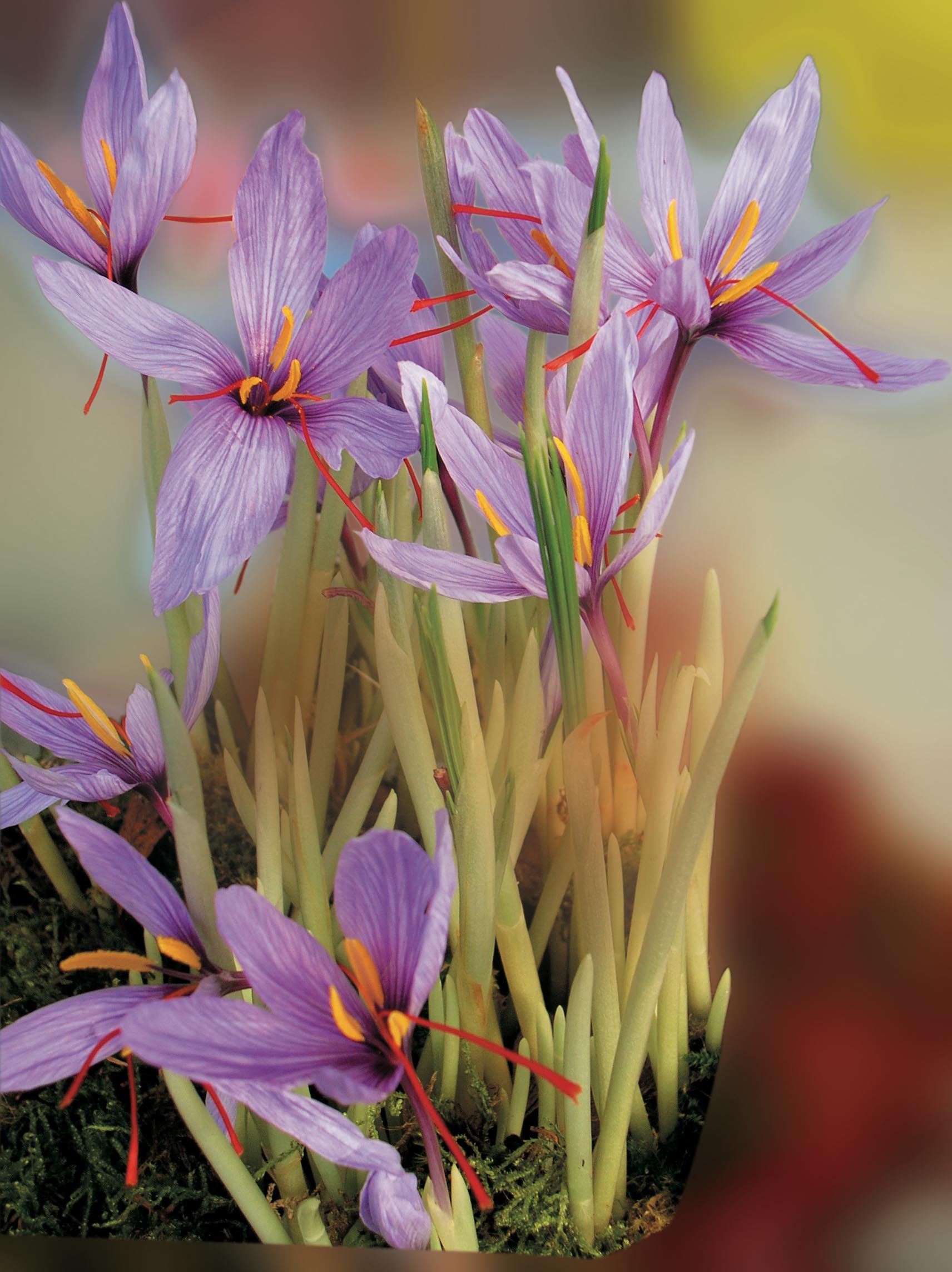
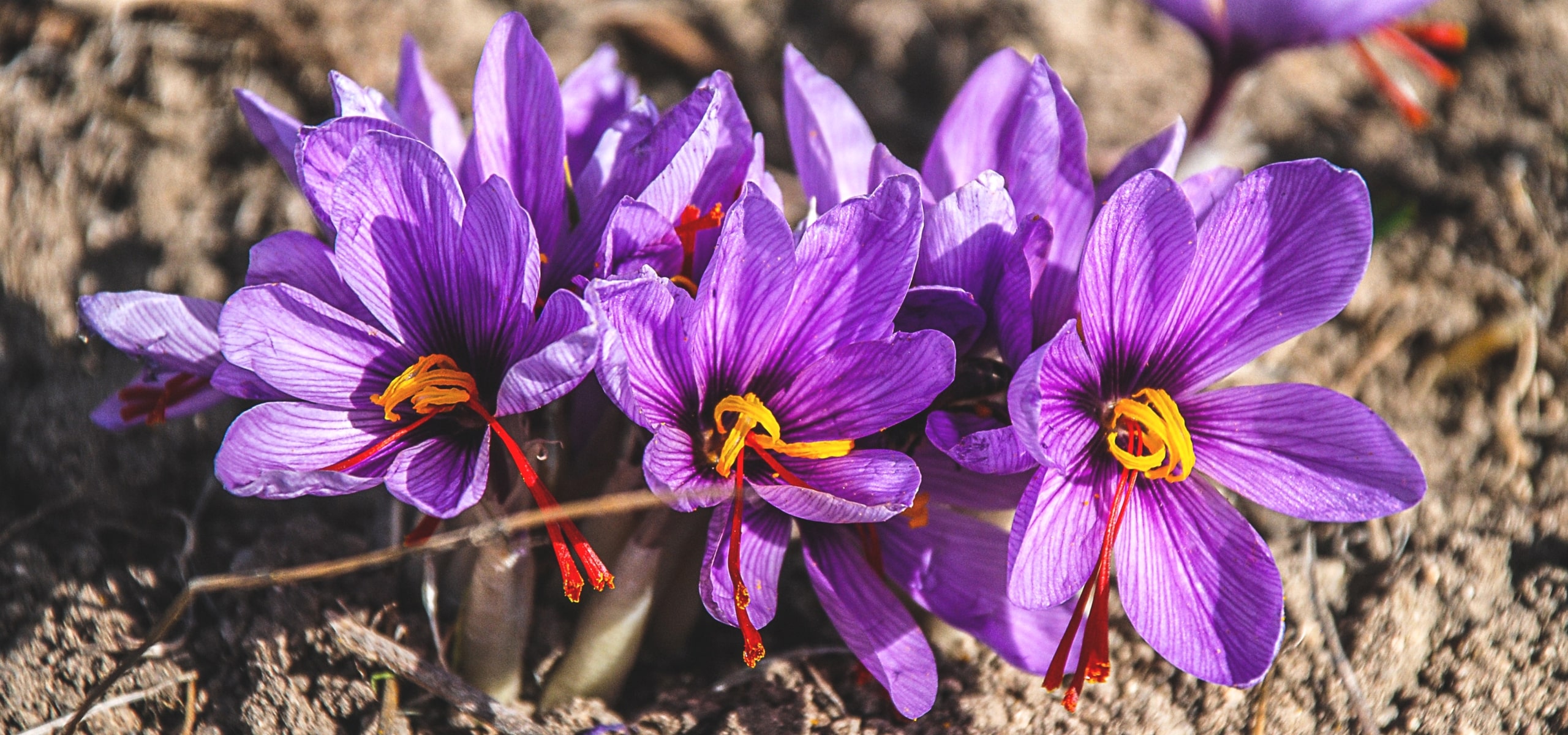
The saffron is a perennial geophyte plant (having an underground storage organ called a corm) of the Iridaceae family. It is a sterile plant, not producing viable seeds, likely resulting from the hybridization of two wild crocuses that appeared several thousand years ago somewhere in Greece or Turkey, according to experts. Crocus sativus has a corm (swollen base of the stem) that allows it to go into a state of dormancy during the summer, thereby escaping the summer drought. Its foliage, composed of 6 to 10 very thin linear leaves, measuring 15 to 20cm in length, slightly leathery, with fringed edges, dark green in colour, develops in autumn, persists throughout winter, and disappears in early summer. Flowering generally occurs in October, before the appearance of the foliage. The spectacular large flowers, measuring 10cm in diameter, emerge directly from the ground. They are of great beauty, with a corolla of 6 petals, the centre of which is occupied by 3 yellow-gold stamens covered in pollen and 3 long red filaments called stigmas, which are harvested and dried for use in cooking as a spice or colouring agent. Unlike most crocus species, its flowers remain open even in darkness.
Crocus sativus is used in the vegetable garden, of course, but also in ornamental gardens, as it is as decorative as it is useful. It can be planted in borders, rock gardens, or even in pots for autumn crocuses. In the garden, it can be planted along the edge of a border or in a rock garden, always in a sunny and well-drained soil, and can be associated with pretty ground-covering perennials for dry soil: Artemisia lanata, wild thyme, Stachys byzantina, Phyla nodiflora, or even Cerastostigma plumbaginoides, with its red foliage in autumn, and many others. Ornamental garlics such as Allium christophii, as well as the Peruvian scilla, Amaryllis belladonna, or other bulbs that prefer dry soil in summer, also make good companions for saffron.
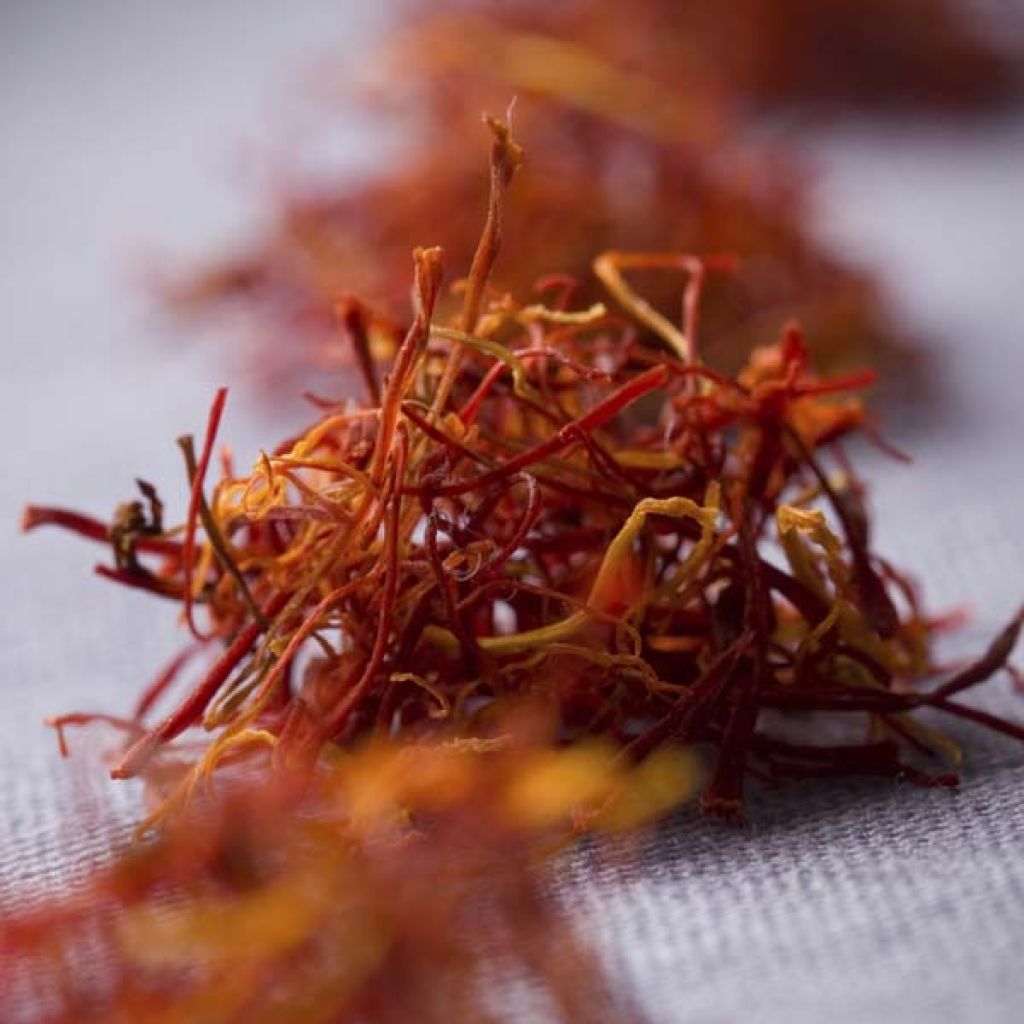
Saffron is mainly produced in Iran and is harvested every day as soon as the flowers bloom (the flowers have a short lifespan, approximately 48 hours), ideally at sunrise to preserve its taste qualities. Once harvested, the stigmas are dehydrated, let them dry for about twenty minutes in a slightly warm oven (60°C) and then store them in airtight containers. It takes 150 flowers to produce one gram of saffron.
We deliver saffron crocus, and we offer wholesale prices upon request.
Report an error about the product description
Crocus sativus - Saffron in pictures
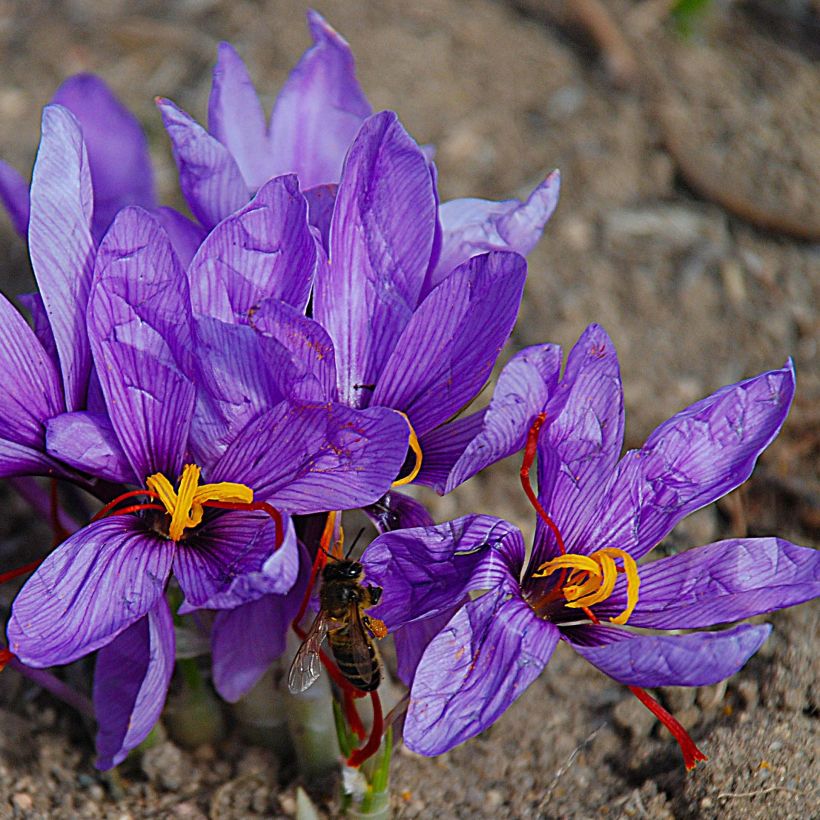
Plant habit
Flowering
Foliage
Botanical data
Crocus
sativus
Iridaceae
Saffron Crocus
Middle East
Planting and care
Plant Crocus sativus in the summer for flowering in autumn (late October).
The bulbs are planted in a warm location, south or west exposure, 15cm deep and spaced 8cm apart. They prefer a well-drained soil, worked deep, light, permeable and enriched. Sandy or clay-limestone soil that is not too wet will be perfect.
If your soil is too heavy, simply incorporate sand or turf when planting. The plant does not need to be watered until the first vegetation appears, the first cold will make the flowers appear.
Leave it in place for several years to obtain beautiful flowers without any special care. The bulbs can be divided every summer to increase production. This crocus prefers to be grown in groups. To obtain saffron, cut the "saffron stigmas" from your crocus when each flower blooms, ideally at sunrise to preserve their taste quality and let them dry, ideally for about twenty minutes in a slightly warm oven (60°C): there you have your saffron!
Planting period
Intended location
Care
Planting & care advice

-
, onOrder confirmed
Reply from on Promesse de fleurs
Recently viewed products
Haven't found what you were looking for?
Hardiness is the lowest winter temperature a plant can endure without suffering serious damage or even dying. However, hardiness is affected by location (a sheltered area, such as a patio), protection (winter cover) and soil type (hardiness is improved by well-drained soil).
In temperate climates, pruning of spring-flowering shrubs (forsythia, spireas, etc.) should be done just after flowering.
Pruning of summer-flowering shrubs (Indian Lilac, Perovskia, etc.) can be done in winter or spring.
In cold regions as well as with frost-sensitive plants, avoid pruning too early when severe frosts may still occur.
The harvesting period indicated on our website applies to countries and regions in USDA zone 8 (France, England, Ireland, the Netherlands).
In colder areas (Scandinavia, Poland, Austria...) fruit and vegetable harvests are likely to be delayed by 3-4 weeks.
In warmer areas (Italy, Spain, Greece, etc.), harvesting will probably take place earlier, depending on weather conditions.
The sowing periods indicated on our website apply to countries and regions within USDA Zone 8 (France, UK, Ireland, Netherlands).
In colder areas (Scandinavia, Poland, Austria...), delay any outdoor sowing by 3-4 weeks, or sow under glass.
In warmer climes (Italy, Spain, Greece, etc.), bring outdoor sowing forward by a few weeks.
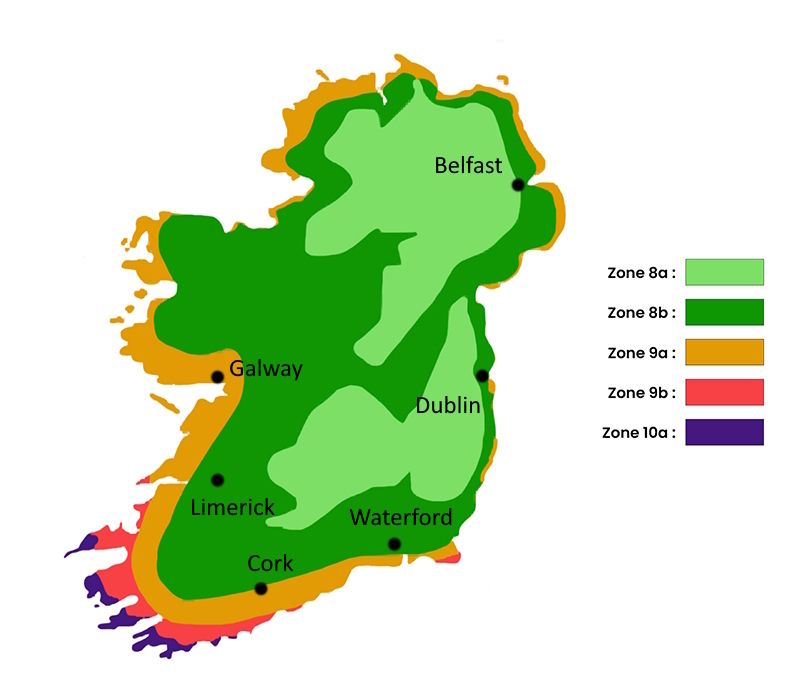
The planting period indicated on our website applies to regions in USDA Zone 9a (East Coast and Midlands: Dublin, Wexford, Waterford, Kilkenny, Portlaoise). It will vary depending on where you live:
- On the west coast and in the north-west (Galway, Limerick, Sligo, Donegal, Westport), delay planting by 1 to 2 weeks in spring and bring it forward by 1 to 2 weeks in autumn compared to the dates given, preferably choosing periods without strong winds.
- In the inland hills and plateaus (Wicklow Mountains, Macgillycuddy’s Reeks, Connemara, Killarney), it is best to plant in spring (April–May) or autumn (September–October), avoiding periods of waterlogged soil in winter and strong winds, which pose the main risk to newly planted trees in these areas.
The flowering period indicated on our website applies to regions in USDA Zone 9a, such as the East Coast and Midlands, including Dublin, Wexford, Waterford, Kilkenny and Portlaoise.
This will vary depending on where you live:
- On the west coast and in the northwest (Galway, Limerick, Sligo, Donegal and Westport), it will be delayed by one to two weeks compared to the given dates, due to stronger Atlantic winds and less spring sunshine.
- In the inland hills and plateaus (the Wicklow Mountains, the Macgillycuddy's Reeks, Connemara and Killarney), flowering will be delayed by two to three weeks. Flowering mainly occurs between May and July, with the limiting factors being less frost and more of the excessive humidity, strong winds and lack of sunshine that are characteristic of these areas.
Shipping country and language
Your country of residence may be:
Your country of residence is:
For a better user experience on our website, you can select:
Your shipping country:
-
 Austria
-
 Belgium
-
 Bosnia & Herzegovina
-
 Bulgaria
-
 Croatia
-
 Cyprus
-
 Czechia
-
 Denmark
-
 Estonia
-
 Finland
-
 France
-
 Germany
-
 Greece
-
 Hungary
-
 Iceland
-
 Ireland
-
 Italy
Italy
-
 Latvia
-
 Liechtenstein
-
 Lithuania
-
 Luxembourg
-
 Malta
Malta
-
 Netherlands
-
 Poland
-
 Portugal
-
 Romania
-
 Serbia
-
 Slovakia
-
 Slovenia
-
 Spain
Spain
-
 Sweden
-
 Switzerland
Language:
-
French
-
 English
-
Spanish
-
Italian
-
German
-
Portuguese
-
Dutch
-
Finnish
My Account
Hello
My wish lists
My cart
Log in / Register
Existing customer?
This form is protected by reCAPTCHA - the Google Privacy Policy and Terms of Service apply.
New customer?
Create an account to track your orders, access our customer service and, if you wish, make the most of our upcoming offers.