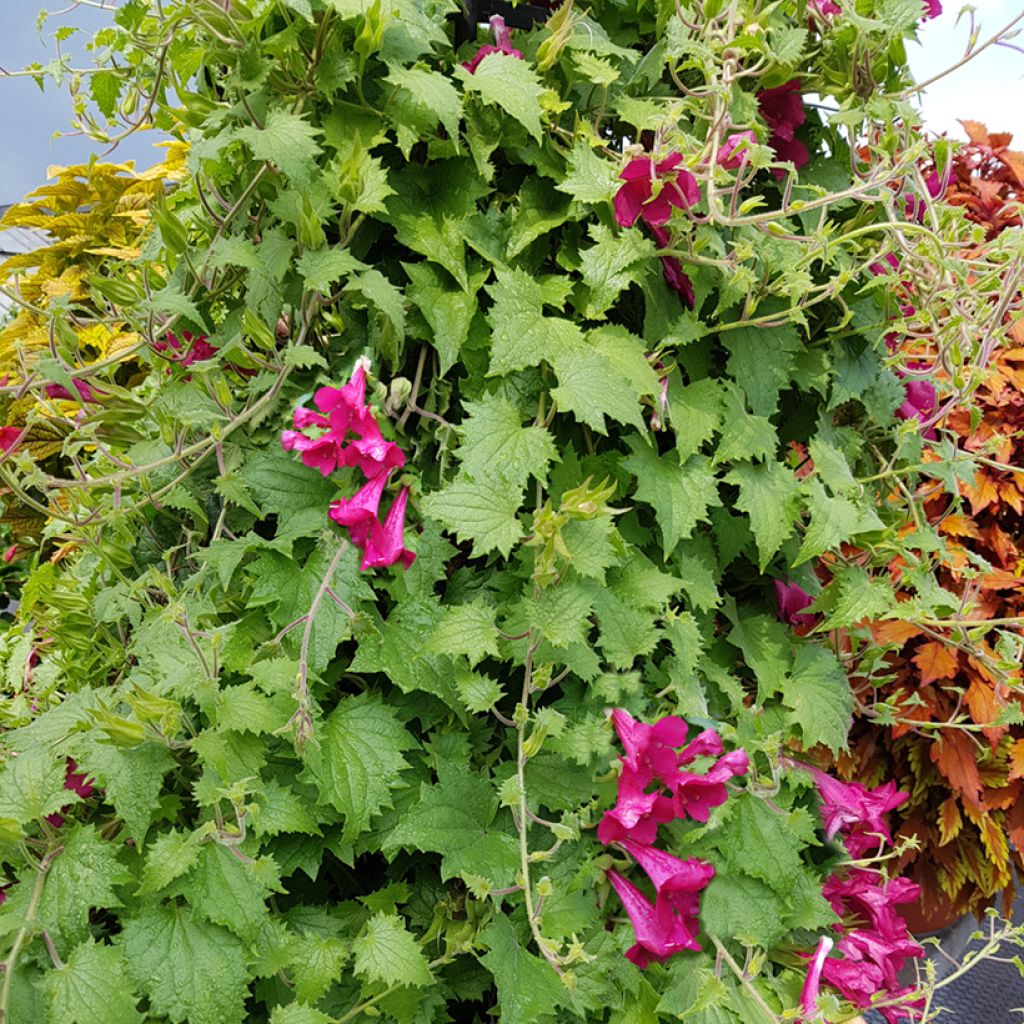
Lophospermum scandens Rosea - Climbing Gloxinia
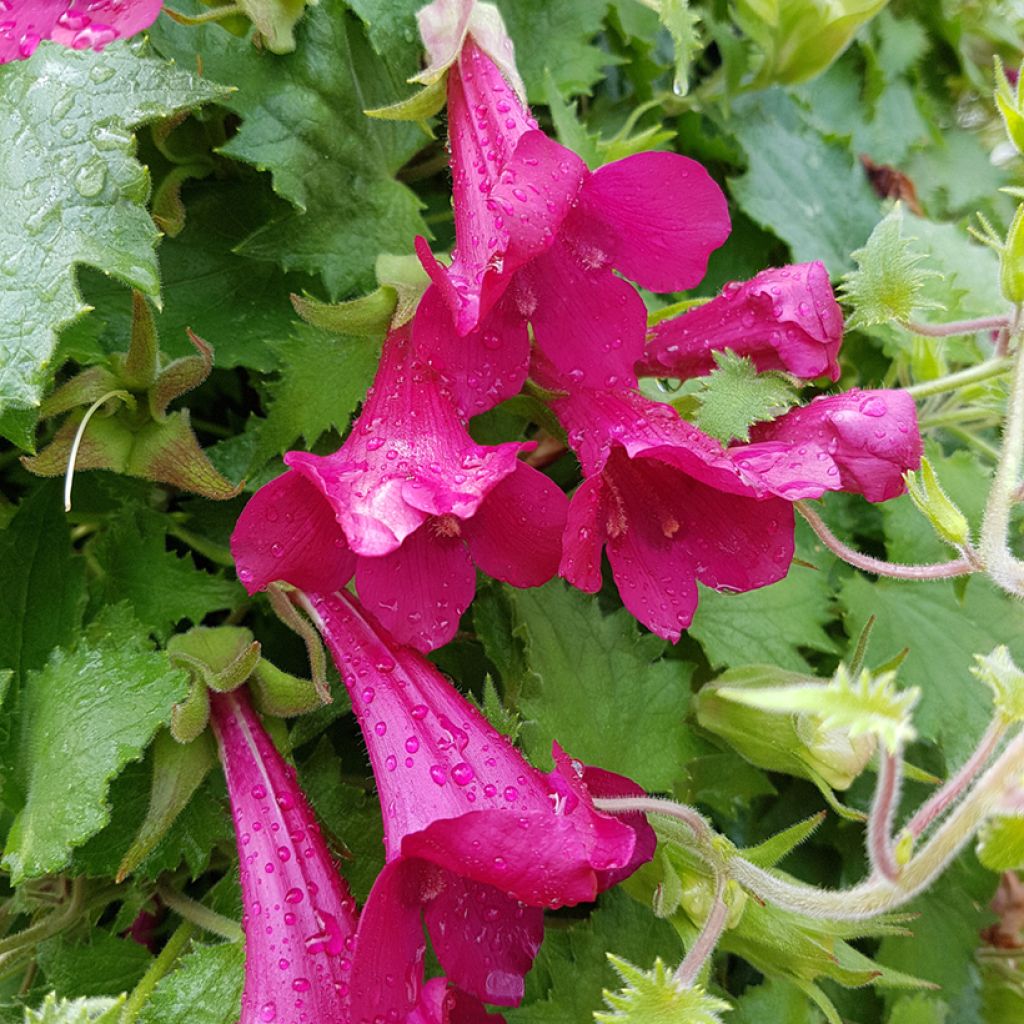
Lophospermum scandens Rosea - Climbing Gloxinia
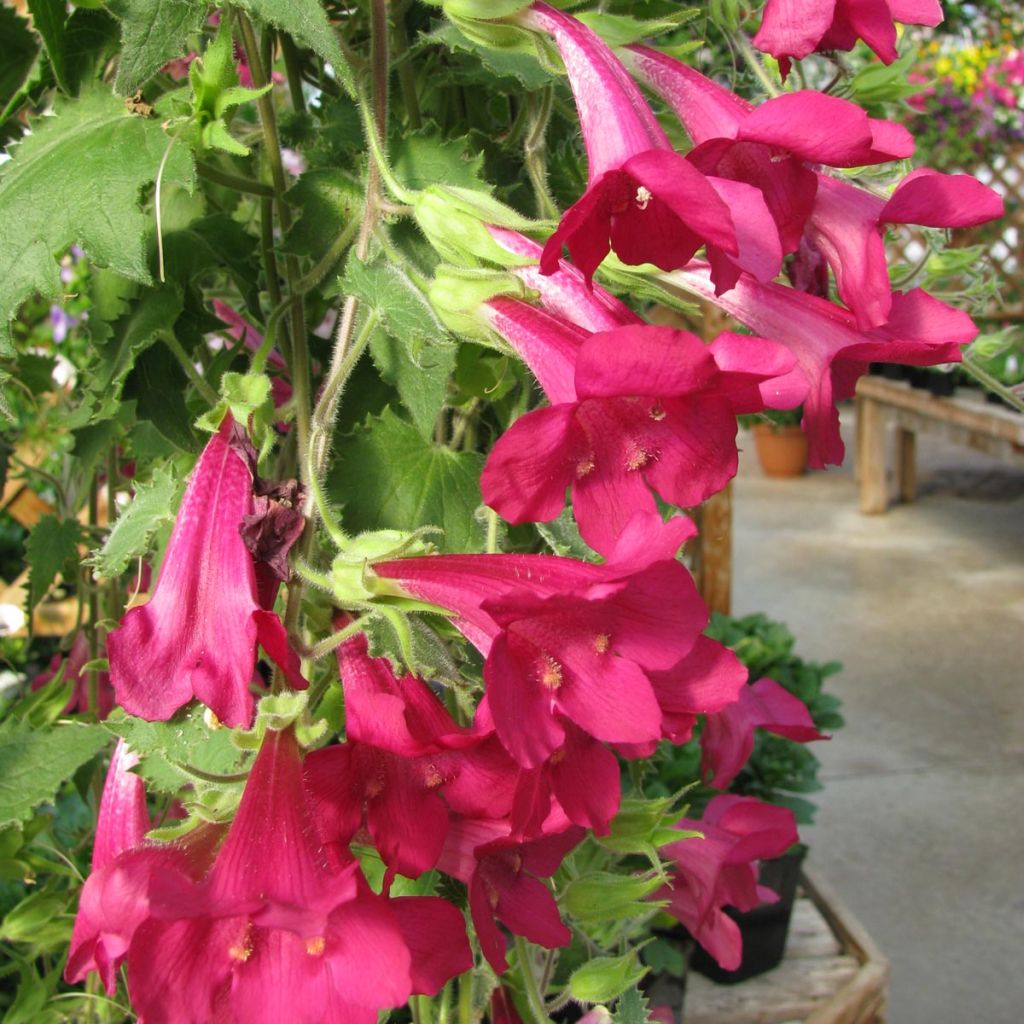
Lophospermum scandens Rosea - Climbing Gloxinia
Lophospermum scandens Rosea - Climbing Gloxinia
Lophospermum scandens Rosea
Climbing Gloxinia, Creeping Gloxinia
The stem of one of the 3 young plants was broken. A shame. I hope the other 2 young plants will grow well. Could you please send me another young plant?
Erna, 08/06/2025
Back-to-school special offer!
Get €10 off for every €50 you spend! And get up to €40 off on a single order.
How does it work?
1. Shop your favourites
Add your favourite plants to your basket. For every €50 you spend (excluding delivery charges, store credit and the plastic-free option), you’ll receive a €10 voucher.
€50 spent = €10 voucher
€100 spent = €20 voucher
€150 spent = €30 voucher
€200 spent = €40 voucher
2. Place your order
Once your basket reaches one of the spending thresholds, place your order. You can even choose your delivery date!
3. Receive your voucher
As soon as your order has been shipped, you’ll receive an email containing your personal voucher code and its value.
4. Use it on your next order
Your voucher is valid for 90 days from the date you receive it. It can be used once only, on a new order worth at least the value of the voucher, excluding delivery charges.
Please note: Vouchers can be combined with other offers, but cannot be split or refunded.
This plant carries a 12 months recovery warranty
More information
We guarantee the quality of our plants for a full growing cycle, and will replace at our expense any plant that fails to recover under normal climatic and planting conditions.
Does this plant fit my garden?
Set up your Plantfit profile →
Description
The Lophospermum scandens 'Rosea', also known as Lophos rose, is a wonderful herbaceous vine plant with voluble stems, perfect for quickly covering supports, which it wraps around. Both light and exuberant, this plant displays from summer to autumn, until frost, dark pink flowers in long tubes, similar to foxgloves and which bloom on narrow heart-shaped leaves, strongly dentate, medium green with greyish nuances. Like clematis, its petioles grasp the supporting structure. In cool climates, the aboveground parts disappear completely, and the roots require winter protection. This plant will thrive in well-drained, moist to dry soil, in mild sun or partial shade. If grown in large containers, where it excels, this plant can be cultivated anywhere.
The Lophospermum scandens is a plant native to the central zone of southern Mexico, and belongs to the Plantaginaceae family. In nature, it often grows on volcanic soils, in oak forests, scrub vegetation, cliffs and canyon walls, on rocky outcrops including recent lava flows, but always in dry habitats.
The 'Rosea' variety is a form of the wild plant with deep pink flowers. This plant is a perennial herbaceous vine with fibrous roots, forming a tangle of long ramified stems becoming woody at the base, eventually developing a caudex, which is a swollen structure at the base of the stems, serving as a reserve organ for the plant. This plant will spread 3 m (10ft) in all directions in our climates, but much more in its native habitat where it is not cut back by the cold. The stems are adorned with heart-shaped and narrow leaves, measuring 3 to 11 cm (1 to 4in) long and 1.6 to 2 cm (1in) wide, ending in a tapered tip. They are attached to the stem by a petiole capable of twisting to wrap itself around the support. The edge of the leaves is strongly dentate, stems and leaves are slightly pubescent, of a medium green colour with a slightly greyish tint.
Flowering takes place from June-July to October-November, until frost. The solitary flowers are tubular and campanulate, resembling those of foxgloves or trumpet vines. They measure 4 to 5 cm (2in) in length and are formed by 5 fused petals in a flared dark pink tube, revealing the throat with prominent stamens and a cone-shaped stigma. The flowering is followed by the formation of an ovoid capsule filled with brown seeds.
The Lophospermum scandens is often used on terraces, planted in a large pot to cover a pergola or trellis. In the ground, this plant is superb when allowed to cascade down slopes and rockeries, or invade small trees, and it will generously spill over walls, cascading with flowers for a long time. When planting, place near to a support which it can cling to as soon as vegetation starts; this plant will then find its way to the light. It is also a good plant for hanging baskets, but its growth will be more limited.
Note: Please be aware that our young plug plants are professional products intended for experienced gardeners: upon receipt, transplant and store them under shelter (veranda, greenhouse, cold frame) at a temperature above 14°C (57.2°F) for a few weeks before installing outdoors once the risk of frost has definitively passed.
Report an error about the product description
Plant habit
Flowering
Foliage
Botanical data
Lophospermum
scandens
Rosea
Plantaginaceae
Climbing Gloxinia, Creeping Gloxinia
South America
Planting and care
Plant your Lophospermum scandens in the ground after the last frost, in a sunny but not scorching location. You can also plant them in pots placed in a sheltered spot, which you can bring out when the weather is nice. If you plant them in the ground, wait until the frost has passed. Lophospermum plants require a well-drained, rather dry soil, but not necessarily very rich. Water moderately. In pots, regular water during summer, allowing the soil to dry between waterings. You can keep your lophospermum plants by bringing them indoors under a veranda or a cold greenhouse in winter. They do not well tolerate temperatures below -5°C (23°F). In the ground, in mild climates, plant them against a well-exposed wall, but with some shade in the summer. The foliage will be destroyed by frost, but by protecting the stump with a thick layer of dry turf, the plant will regrow in spring.
Planting period
Intended location
Care
Planting & care advice
-
-
-

-
-
-
-
-
-
, onOrder confirmed
Reply from on Promesse de fleurs
Recently viewed products
Haven't found what you were looking for?
Hardiness is the lowest winter temperature a plant can endure without suffering serious damage or even dying. However, hardiness is affected by location (a sheltered area, such as a patio), protection (winter cover) and soil type (hardiness is improved by well-drained soil).
In temperate climates, pruning of spring-flowering shrubs (forsythia, spireas, etc.) should be done just after flowering.
Pruning of summer-flowering shrubs (Indian Lilac, Perovskia, etc.) can be done in winter or spring.
In cold regions as well as with frost-sensitive plants, avoid pruning too early when severe frosts may still occur.
The harvesting period indicated on our website applies to countries and regions in USDA zone 8 (France, England, Ireland, the Netherlands).
In colder areas (Scandinavia, Poland, Austria...) fruit and vegetable harvests are likely to be delayed by 3-4 weeks.
In warmer areas (Italy, Spain, Greece, etc.), harvesting will probably take place earlier, depending on weather conditions.
The sowing periods indicated on our website apply to countries and regions within USDA Zone 8 (France, UK, Ireland, Netherlands).
In colder areas (Scandinavia, Poland, Austria...), delay any outdoor sowing by 3-4 weeks, or sow under glass.
In warmer climes (Italy, Spain, Greece, etc.), bring outdoor sowing forward by a few weeks.
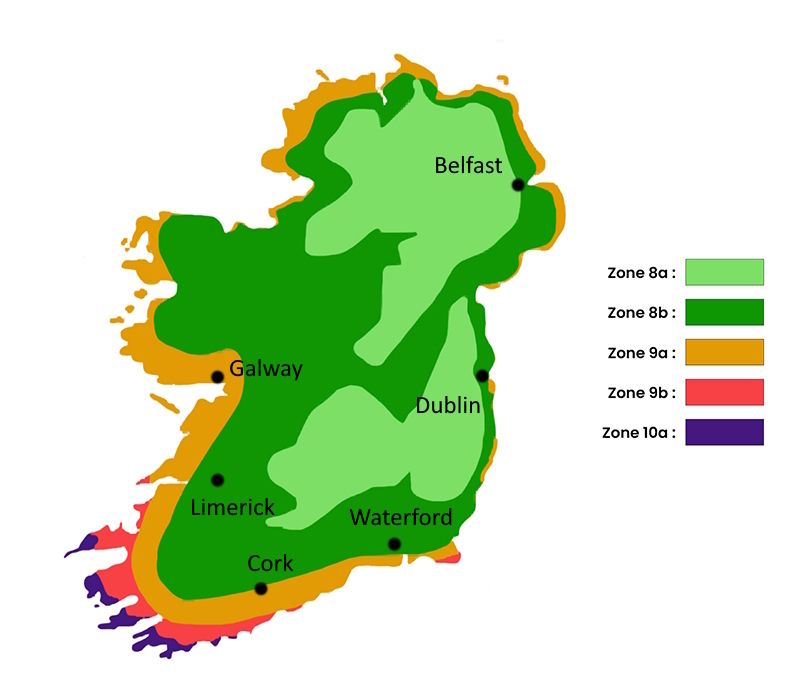
The planting period indicated on our website applies to regions in USDA Zone 9a (East Coast and Midlands: Dublin, Wexford, Waterford, Kilkenny, Portlaoise). It will vary depending on where you live:
- On the west coast and in the north-west (Galway, Limerick, Sligo, Donegal, Westport), delay planting by 1 to 2 weeks in spring and bring it forward by 1 to 2 weeks in autumn compared to the dates given, preferably choosing periods without strong winds.
- In the inland hills and plateaus (Wicklow Mountains, Macgillycuddy’s Reeks, Connemara, Killarney), it is best to plant in spring (April–May) or autumn (September–October), avoiding periods of waterlogged soil in winter and strong winds, which pose the main risk to newly planted trees in these areas.
The flowering period indicated on our website applies to regions in USDA Zone 9a, such as the East Coast and Midlands, including Dublin, Wexford, Waterford, Kilkenny and Portlaoise.
This will vary depending on where you live:
- On the west coast and in the northwest (Galway, Limerick, Sligo, Donegal and Westport), it will be delayed by one to two weeks compared to the given dates, due to stronger Atlantic winds and less spring sunshine.
- In the inland hills and plateaus (the Wicklow Mountains, the Macgillycuddy's Reeks, Connemara and Killarney), flowering will be delayed by two to three weeks. Flowering mainly occurs between May and July, with the limiting factors being less frost and more of the excessive humidity, strong winds and lack of sunshine that are characteristic of these areas.
Shipping country and language
Your country of residence may be:
Your country of residence is:
For a better user experience on our website, you can select:
Your shipping country:
-
 Austria
-
 Belgium
-
 Bosnia & Herzegovina
-
 Bulgaria
-
 Croatia
-
 Cyprus
-
 Czechia
-
 Denmark
-
 Estonia
-
 Finland
-
 France
-
 Germany
-
 Greece
-
 Hungary
-
 Iceland
-
 Ireland
-
 Italy
Italy
-
 Latvia
-
 Liechtenstein
-
 Lithuania
-
 Luxembourg
-
 Malta
Malta
-
 Netherlands
-
 Poland
-
 Portugal
-
 Romania
-
 Serbia
-
 Slovakia
-
 Slovenia
-
 Spain
Spain
-
 Sweden
-
 Switzerland
Language:
-
French
-
 English
-
Spanish
-
Italian
-
German
-
Portuguese
-
Dutch
-
Finnish
My Account
Hello
My wish lists
My cart
Log in / Register
Existing customer?
This form is protected by reCAPTCHA - the Google Privacy Policy and Terms of Service apply.
New customer?
Create an account to track your orders, access our customer service and, if you wish, make the most of our upcoming offers.