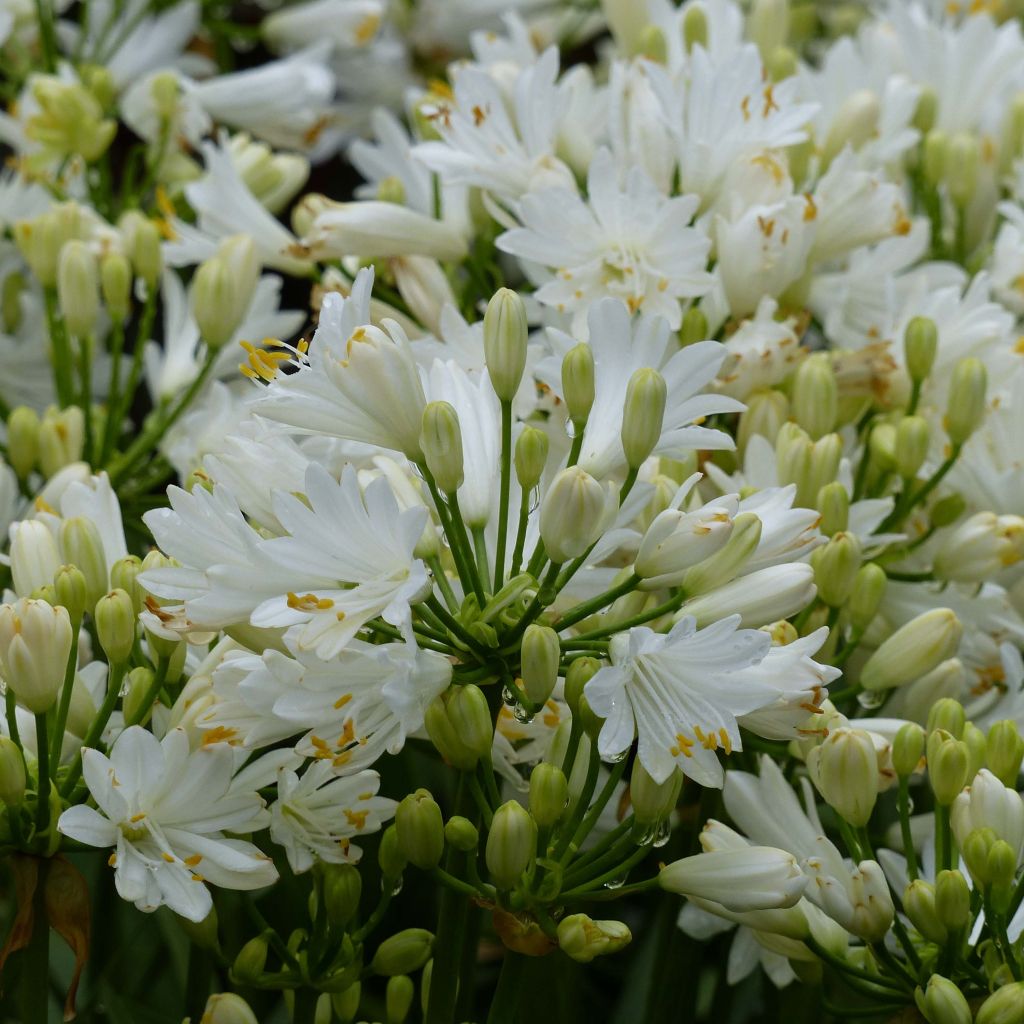
Agapanthus Double Diamond
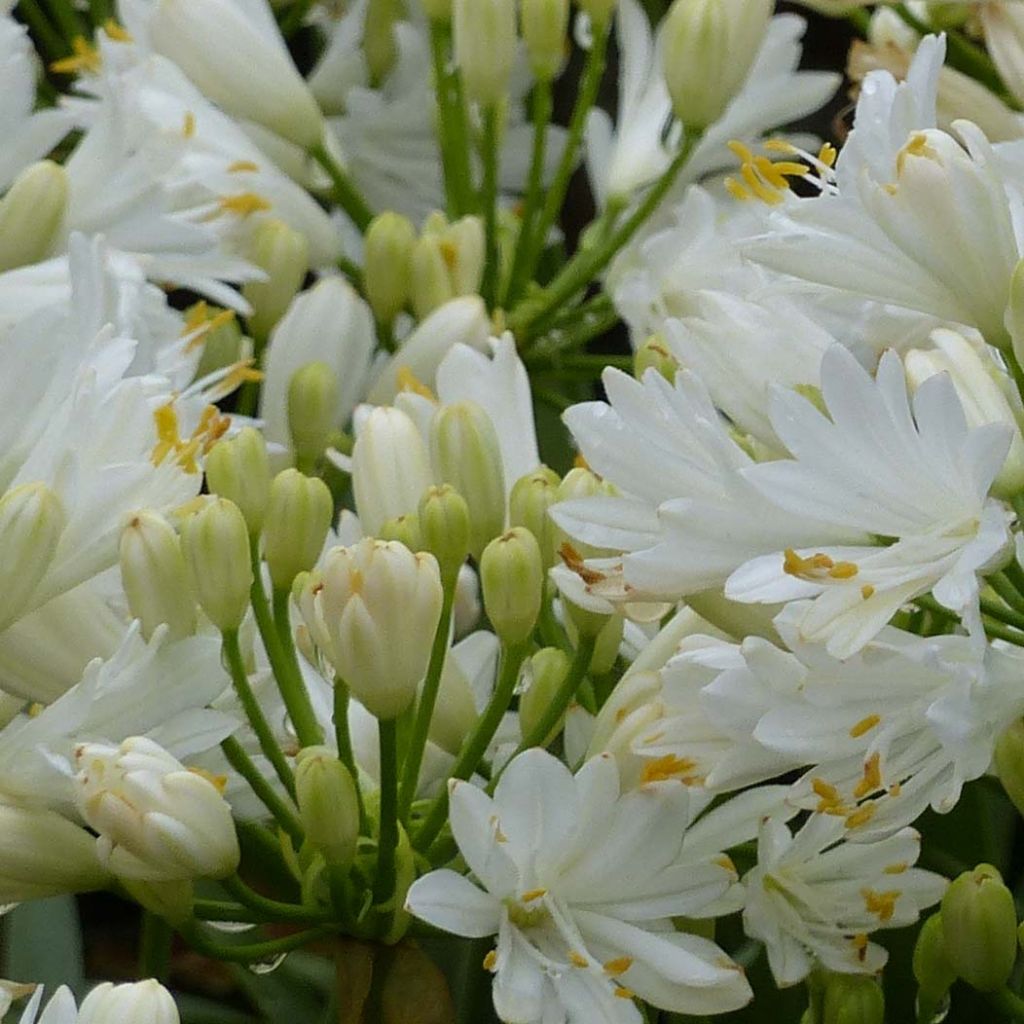
Agapanthus Double Diamond
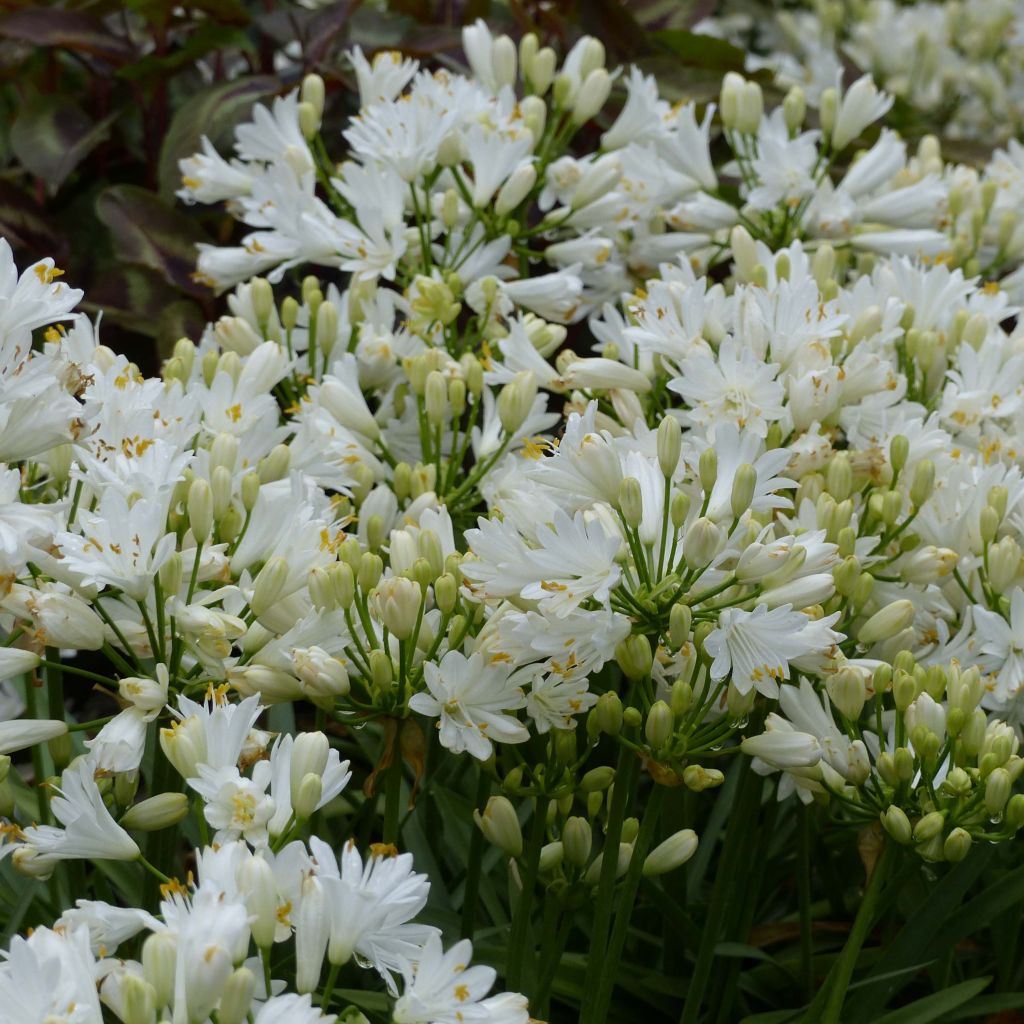
Agapanthus Double Diamond
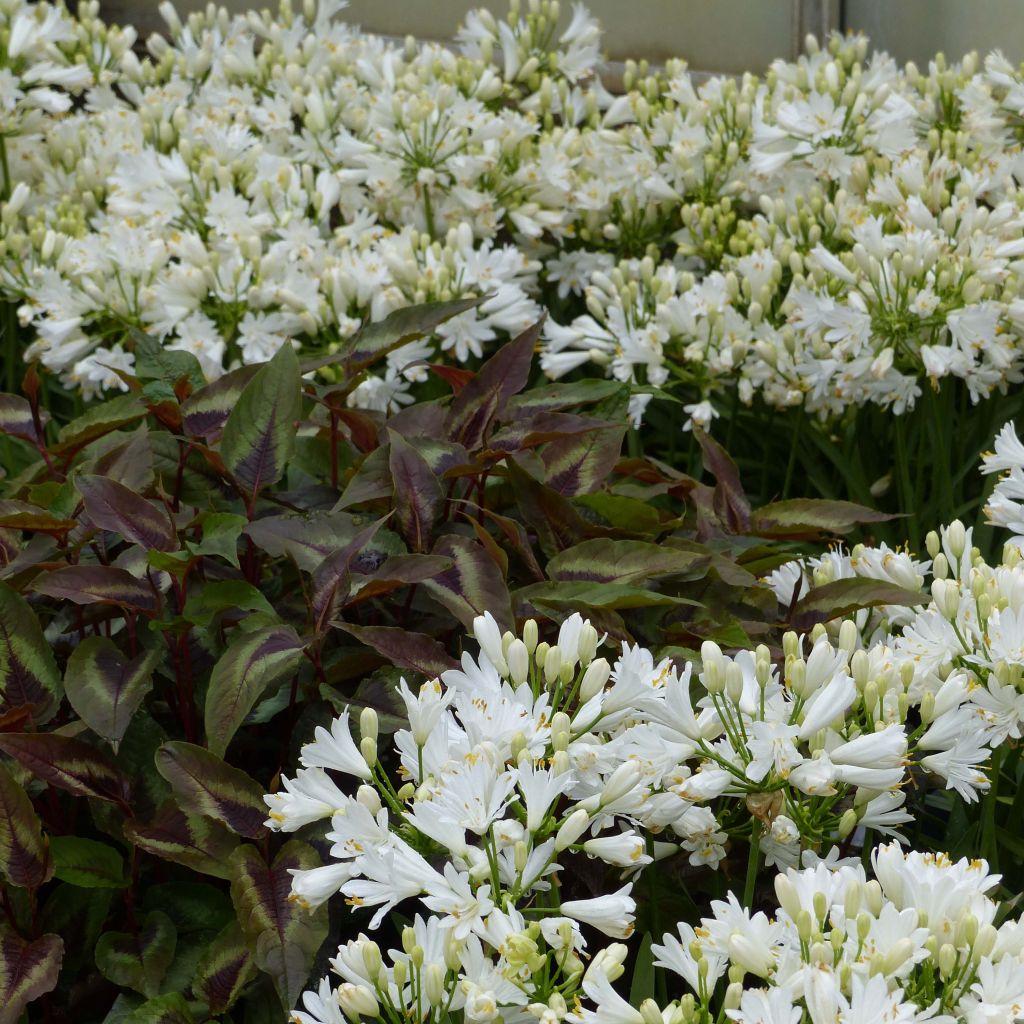
Agapanthus Double Diamond
Agapanthus Double Diamond
Agapanthus Naines Double Diamond® ‘Rfdd’
African Lily, Lily of the Nile
Very good!
Marie, 02/07/2025
Back-to-school special offer!
Get €10 off for every €50 you spend! And get up to €40 off on a single order.
How does it work?
1. Shop your favourites
Add your favourite plants to your basket. For every €50 you spend (excluding delivery charges, store credit and the plastic-free option), you’ll receive a €10 voucher.
€50 spent = €10 voucher
€100 spent = €20 voucher
€150 spent = €30 voucher
€200 spent = €40 voucher
2. Place your order
Once your basket reaches one of the spending thresholds, place your order. You can even choose your delivery date!
3. Receive your voucher
As soon as your order has been shipped, you’ll receive an email containing your personal voucher code and its value.
4. Use it on your next order
Your voucher is valid for 90 days from the date you receive it. It can be used once only, on a new order worth at least the value of the voucher, excluding delivery charges.
Please note: Vouchers can be combined with other offers, but cannot be split or refunded.
Home or relay delivery (depending on size and destination)
Important: You may be charged customs duties by your country’s customs authorities upon delivery.
Schedule delivery date
and select date in basket
This plant carries a 12 months recovery warranty
More information
We guarantee the quality of our plants for a full growing cycle, and will replace at our expense any plant that fails to recover under normal climatic and planting conditions.

Does this plant fit my garden?
Set up your Plantfit profile →
Description
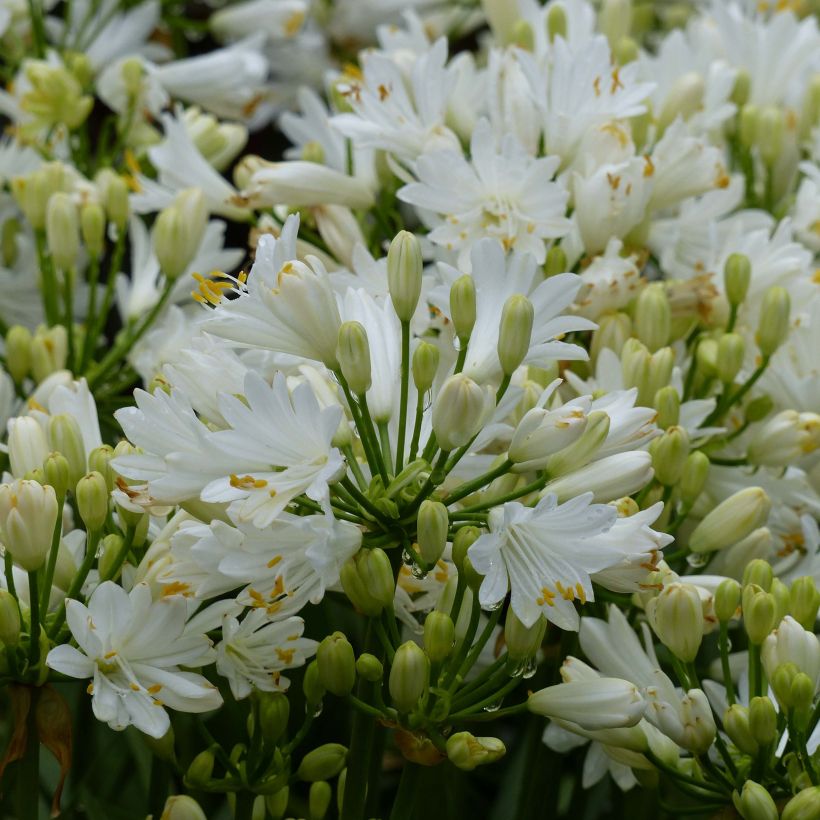
L’Agapanthe Double Diamond® se distingue par sa petite taille et ses fleurs doubles, une caractéristique assez rare parmi les agapanthes. En été, ses nombreuses ombelles toutes blanches se dressent juste au-dessus d’une touffe de feuilles étroites, au sommet de hampes courtes. Particulièrement adaptée aux potées et aux petits jardins, cette variété a reçu l’Award of Garden Merit de la Royal Horticultural Society en 2018. Sa souche résiste à –5/–6 °C en sol drainé et en situation protégée.
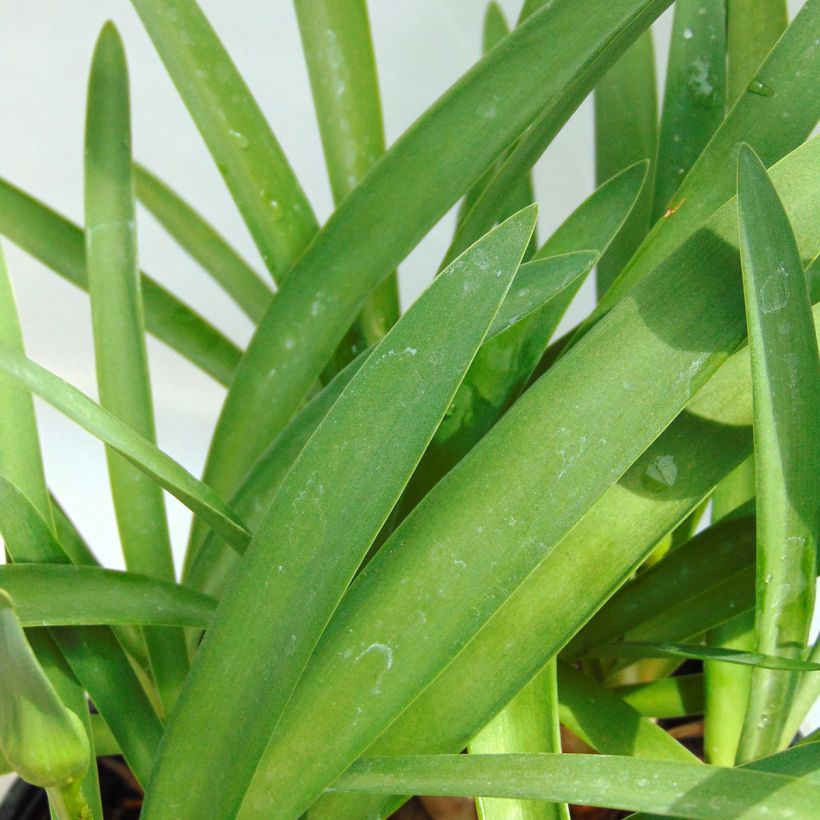
Le nom de ce cultivar est Agapanthus ‘Rfdd’ ; Double Diamond® est sa dénomination commerciale. C'est une obtention sud-africaine de Rijk Danckwerts, pour Cape Seed & Bulb. Il s'agit d'une plante de la famille des Amaryllidacées. Cette variété a été sélectionnée pour son port compact, sa floraison abondante et ses fleurs stériles, qui ne produisent pas de graines. La plante se développe à partir d’un court rhizome pourvu de racines épaisses et charnues. Elle forme une touffe dense, haute de 20 à 25 cm avant la floraison. Les hampes florales atteignent 35 à 45 cm de hauteur et la souche peut s'étaler sur 40 à 55 cm de large. Les feuilles vertes, étroites et rubanées, sont légèrement arquées. Le feuillage est persistant sous un climat doux, mais il peut être partiellement ou entièrement détruit par le gel dans les autres régions. La floraison a lieu principalement en juillet et août ; les premières hampes peuvent apparaître dès la fin de juin en climat chaud. Chacune porte une ombelle arrondie d’une dizaine de centimètres de diamètre. Les boutons floraux d'un blanc verdâtre s’ouvrent en fleurs doubles, blanc pur, larges de 2 à 3 cm. Les étamines jaune orangé apportent une discrète touche de couleur au centre des corolles.
Pas très haute, cette variété Double Diamond® s’utilise en bordure, dans une rocaille ensoleillée, le long d’une terrasse ou dans une grande potée. Elle peut être associée à d’autres petites agapanthes, comme ‘Peter Pan’ et Pitchoune® Blue, ainsi qu’aux Tulbaghia. L’hémérocalle naine ‘Mini Stella’ et le Kniphofia ‘Lemon Popsicle’, tous deux à fleurs jaunes, apportent une note plus vive à cet ensemble. Cette plante s’intègre particulièrement bien dans les jardins contemporains, exotiques ou méditerranéens. Tolérante aux embruns, peu sensible au vent, elle a toute sa place dans les jardins de bord de mer.

Agapanthus Double Diamond in pictures
Flowering
Foliage
Plant habit
Botanical data
Agapanthus
Double Diamond® ‘Rfdd’
Amaryllidaceae
African Lily, Lily of the Nile
Agapanthus ‘Rfdd’, Agapanthus Double Diamond®
Cultivar or hybrid
Planting and care
The Agapanthus Double Diamond® is planted in spring, after the last hard frosts. In oceanic and Mediterranean regions, planting in early autumn is also possible, as long as the soil is still warm. The stump is placed in full sun, in a warm spot, at a depth of 5 to 10 cm in the soil. A fertile, loose and perfectly drained soil is favourable to it. It can be acid, neutral or chalky. The soil must retain a little moisture during the growth and flowering period, but must not be too wet in winter.
Watering is regular from spring until the end of flowering, particularly in pots. It is greatly reduced during the resting period. A fertiliser rich in potash can be applied in spring, then in early summer.
In the open ground, a thick protective mulch of dead leaves or straw should be put in place before the first frosts. In regions where temperatures regularly fall below –5 °C, growing in pots allows the plant to be overwintered in a bright, cool, frost-free place. Division is also carried out in spring, every three or four years, when the clump becomes too congested.
Planting period
Intended location
Care
Planting & care advice
-

-

-

-

-

-

-

-

-
, onOrder confirmed
Reply from on Promesse de fleurs
Haven't found what you were looking for?
Hardiness is the lowest winter temperature a plant can endure without suffering serious damage or even dying. However, hardiness is affected by location (a sheltered area, such as a patio), protection (winter cover) and soil type (hardiness is improved by well-drained soil).
In temperate climates, pruning of spring-flowering shrubs (forsythia, spireas, etc.) should be done just after flowering.
Pruning of summer-flowering shrubs (Indian Lilac, Perovskia, etc.) can be done in winter or spring.
In cold regions as well as with frost-sensitive plants, avoid pruning too early when severe frosts may still occur.
The sowing periods indicated on our website apply to countries and regions within USDA Zone 8 (France, UK, Ireland, Netherlands).
In colder areas (Scandinavia, Poland, Austria...), delay any outdoor sowing by 3-4 weeks, or sow under glass.
In warmer climes (Italy, Spain, Greece, etc.), bring outdoor sowing forward by a few weeks.
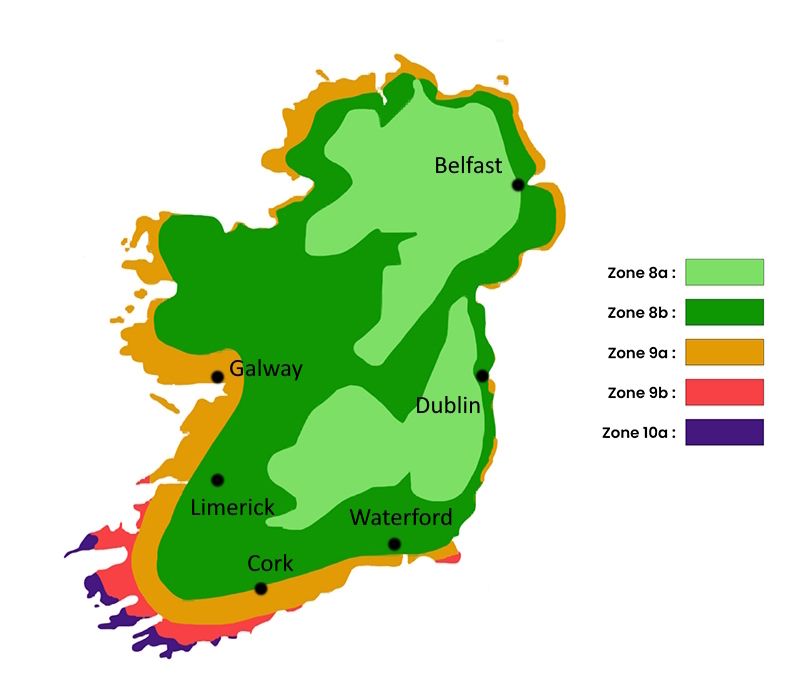
The planting period indicated on our website applies to regions in USDA Zone 9a (East Coast and Midlands: Dublin, Wexford, Waterford, Kilkenny, Portlaoise). It will vary depending on where you live:
- On the west coast and in the north-west (Galway, Limerick, Sligo, Donegal, Westport), delay planting by 1 to 2 weeks in spring and bring it forward by 1 to 2 weeks in autumn compared to the dates given, preferably choosing periods without strong winds.
- In the inland hills and plateaus (Wicklow Mountains, Macgillycuddy’s Reeks, Connemara, Killarney), it is best to plant in spring (April–May) or autumn (September–October), avoiding periods of waterlogged soil in winter and strong winds, which pose the main risk to newly planted trees in these areas.
The flowering period indicated on our website applies to regions in USDA Zone 9a, such as the East Coast and Midlands, including Dublin, Wexford, Waterford, Kilkenny and Portlaoise.
This will vary depending on where you live:
- On the west coast and in the northwest (Galway, Limerick, Sligo, Donegal and Westport), it will be delayed by one to two weeks compared to the given dates, due to stronger Atlantic winds and less spring sunshine.
- In the inland hills and plateaus (the Wicklow Mountains, the Macgillycuddy's Reeks, Connemara and Killarney), flowering will be delayed by two to three weeks. Flowering mainly occurs between May and July, with the limiting factors being less frost and more of the excessive humidity, strong winds and lack of sunshine that are characteristic of these areas.
The harvest period stated on our website applies to regions in USDA zones 8b to 9a (East, South-East and southern coast: Eastern Leinster, County Wexford and County Waterford, Cork region: Dublin, Wexford, Waterford, Kilkenny, Cork). It will vary depending on where you live:
- In the Midlands and the inland plains: the Middle Shannon Valley, Westmeath, Offaly, Longford, Cavan and Monaghan (Athlone, Mullingar, Tullamore, Longford, Cavan, Monaghan), in USDA zones 8a to 8b, the harvest will be delayed by 1 to 2 weeks compared with the dates given. Far from the moderating influence of the sea, these plains experience late frosts right up until the end of spring. The heavy, peaty soils warm slowly here, and damp patches form pockets of frost. Wait until the soil has dried out and warmed up before planting, and protect young plants with a fleece on clear nights.
- In the Atlantic West and North-West: Kerry, Clare, Galway, Connemara, Mayo, Sligo and Donegal (Killarney, Ennis, Galway, Westport, Sligo, Letterkenny), in USDA zones 8b to 10a, the harvest will be delayed by 1 to 3 weeks compared with the dates given. Summers here are cloudier, rainier and windier than in the east, which slows down ripening and encourages late blight and other fungal diseases. Kerry and Clare are at the lower end of the range, whilst Mayo and Donegal, which are cooler and more exposed, are at the upper end. However, the mild coastal winters mean that leafy vegetables and root vegetables can be harvested at dates close to those indicated, or even earlier: shelter crops from the wind with hedges and grow heat-loving plants in greenhouses or polytunnels.
- In the highlands, above 200 m: the Wicklow Mountains, Macgillycuddy’s Reeks, the Galtee and Comeragh ranges, the Twelve Bens in Connemara and the Donegal highlands, in USDA zones 7b to 8a, the harvest will be delayed by 2 to 4 weeks compared with the dates given, depending on the altitude, taking care to beat the first early frosts, which may occur as early as the start of autumn. Wind, constant damp and late frosts lasting into early summer significantly shorten the growing season. Opt for sheltered, south-facing slopes, early-maturing varieties and growing under cover.
Depending on your garden’s aspect, these variations can range from one to two weeks. A frost-prone valley floor delays the harvest, whilst a south-facing wall brings it forward.
Shipping country and language
Your country of residence may be:
Your country of residence is:
For a better user experience on our website, you can select:
Your shipping country:
-
 Austria
-
 Belgium
-
 Bosnia & Herzegovina
-
 Bulgaria
-
 Croatia
-
 Cyprus
-
 Czechia
-
 Denmark
-
 Estonia
-
 Finland
-
 France
-
 Germany
-
 Greece
-
 Hungary
-
 Iceland
-
 Ireland
-
 Italy
-
 Latvia
-
 Liechtenstein
-
 Lithuania
-
 Luxembourg
-
 Malta
-
 Netherlands
-
 Poland
-
 Portugal
-
 Romania
-
 Serbia
-
 Slovakia
-
 Slovenia
-
 Spain
-
 Sweden
-
 Switzerland
Language:
-
French
-
 English
-
Spanish
-
Italian
-
German
-
Portuguese
-
Dutch
-
Finnish
-
[pl]
My Account
Hello
My wish lists
My cart
Log in / Register
Existing customer?
This form is protected by reCAPTCHA - the Google Privacy Policy and Terms of Service apply.
New customer?
Create an account to track your orders, access our customer service and, if you wish, make the most of our upcoming offers.