
Manual hedge trimmer: which shear to choose?
The right equipment for perfect hedges
Contents
Whether you are putting the finishing touches to pruning after using a petrol hedge trimmer or working on your entire hedge, manual hedge trimmers or hand shears are essential for every gardener. Ecological, durable and, above all, effective, these tools provide a clean and precise cut for your trees and shrubs. Let’s not forget to choose the most suitable tool, both to avoid injuring your plants unnecessarily and to protect yourself. Which shears should you use for a perfect cut, and for what purpose? We tell you everything in this advice guide.

What is a hedge shear used for?
To be cut! Certainly. But not just anything, nor anyhow!
Hand shears are rather like a large pair of scissors. They are mainly used for cutting woody growth. The shape of the blades and their size determine the diameter of the branches to be cut. Hedge trimmers or shears are therefore ideal for trimming hedges, as their name suggests.
These manual hedge trimmers can also be used to shape topiary or Niwaki (a cloud-pruning technique used for certain trees and shrubs).
Shears are also very useful for helping you make your way through the sometimes luxuriant vegetation in the garden, particularly in areas used for walking. A stem from a rambling rose sticking out, a hazel branch crossing the path, a twig that falls straight into your eyes as soon as you venture into the garden… One snip with the shears and the problem is solved!

Let’s not forget that these tools can also be used at the end of the season, or even better in late winter, to cut back the dry stems of perennials or trim the culms of certain grasses. It is worth noting that clearing flower beds in late winter has two major advantages: it preserves decorative elements throughout winter and protects the crowns from the cold, while providing garden wildlife with food and shelter.
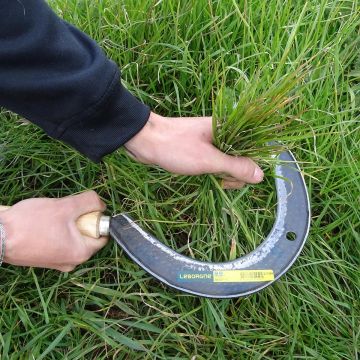
Finally, on small areas, hand shears can replace a brushcutter for quickly cutting down a patch of nettles (to make nettle manure, for example) or tree and shrub suckers, for instance.
Read also
Garden tools: essentialsShears with straight or undulate blades?
There are mainly two types of blades for manual hedge shears.
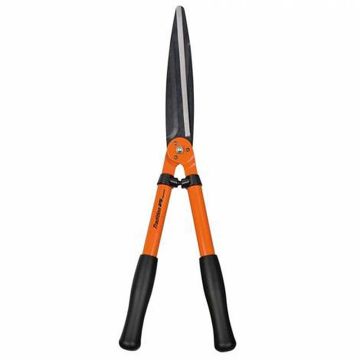
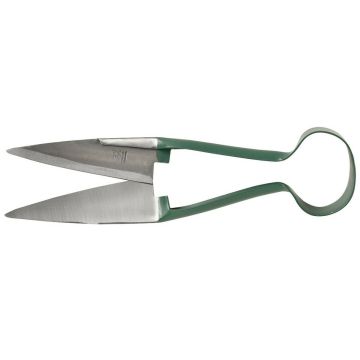
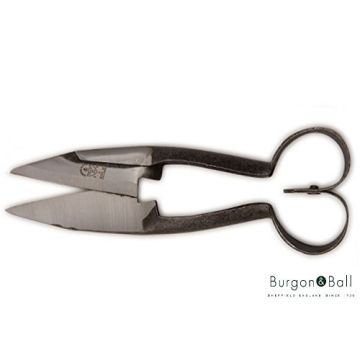
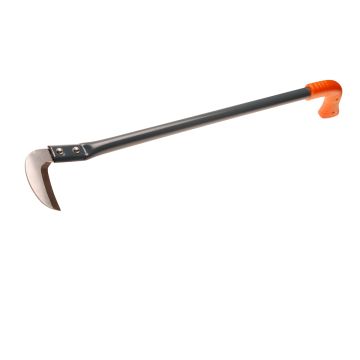
- Straight-bladed shears: these shears are designed for cutting soft, small-diameter plants. They are ideal for cutting grass around the base of trees, cutting back perennials at the end of winter and pruning shrubs with soft wood or very slender branches. They are the ideal tool for caring for low hedges and topiary, or for tidying up after using a powered hedge trimmer. It is worth noting that some models have blades aligned with the handles, while others have offset blades, allowing you to cut grass at ground level without straining your back, for example.
-
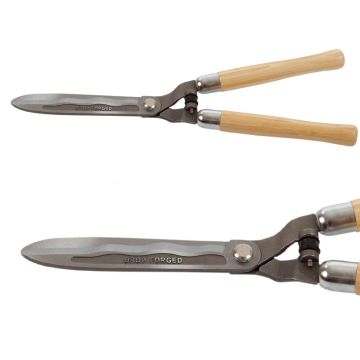
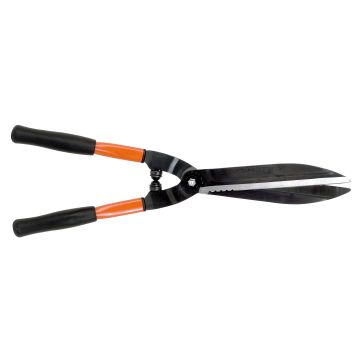
Shears with undulate blades: the blades are wider and have a serrated section. This type of shear is used for cutting hard wood and thicker branches. It is the ideal tool for informal natural hedges or for quickly making your way through a slightly wild area of the garden. Here too, the blades may be aligned with the handles or offset.

Two different blades: straight or undulate
Discover other Shears and hedge trimmers
View all →
Available in 1 sizes
Available in 1 sizes
Available in 1 sizes
Available in 1 sizes
Available in 1 sizes

Available in 1 sizes
Available in 1 sizes
Available in 1 sizes
Available in 1 sizes
Available in 1 sizes
Which materials make long-lasting hedge shears?
- For the blades: choose hardened, rust-resistant carbon-steel blades. A non-stick Teflon coating is definitely a bonus.
- For the handles: wood is a noble and durable material, but it is becoming increasingly difficult to find shears with wooden handles. To make tools that are both light and strong, manufacturers have opted for various materials: tubular steel, aluminium, resin, plastic… Ultimately, they are all much the same, so it is up to you to decide which suits you best. For your information: telescopic-handled shears are available.
Let’s talk ergonomics...
Gardening should be a pleasure, not a chore. It is therefore important to choose your tools carefully, according to the task in hand and your own build. Here are the points to consider before buying a hand shear:
- A tool that is not too heavy and suited to your build;
- Ergonomic, non-slip handles so that the tool does not slip from your hands if you perspire;
- A shock absorber to cushion impacts and reduce vibration in the tool;
- High-quality, sharp blades made from hardened stainless steel with a non-stick coating (or non-stick blades);
- As with pruning shears, some shears are fitted with a gearing system that allows you to cut larger-diameter branches without using more effort.

Please note: as with all gardening tasks, wear gloves and protective goggles! Do not hesitate to stop or slow down if you feel tired or experience any pain!
Care for your manual hedge trimmers
- Sharpening: light sharpening may be considered if your shear starts to show signs of wear. Do this carefully with a whetstone or diamond file, working from the outside of the blades towards the inside;
- Disinfection: to prevent the spread of diseases, you can soak the blades in a disinfectant solution or wipe them with a cloth soaked in 90° alcohol;
- Oil: a few drops of oil on the blade axis once or twice a year will ensure smooth cutting throughout the year;
- Rust: brushing with a wire brush is often enough to remove rust. Otherwise, consider giving your tool a 24-hour soak beforehand in an acidic solution, such as vinegar.
- Tightening the axis: from time to time, you may need to tighten the screw or tightening bolt if you notice a slight amount of play between the blades. But do not overtighten it!
- In winter: if the handles are made of wood, you can remove any dirt with a stiff brush (avoid sandpaper!), then apply a little linseed oil to nourish and protect the wood. If the handles are made from another material, a simple damp sponge will be enough to remove the dirt. The blades and all metal parts should be given a good coating of tool grease, oil or paraffin in autumn to protect them from rust over winter.
For more information on tool care, see our advice sheet: Cleaning, caring for and protecting your garden tools.
For further reading...
Discover our range of hedge-cutting tools in our online nursery.
- Subscribe!
- Contents
This form is protected by reCAPTCHA - the Google Privacy Policy and Terms of Service apply.


































Comments