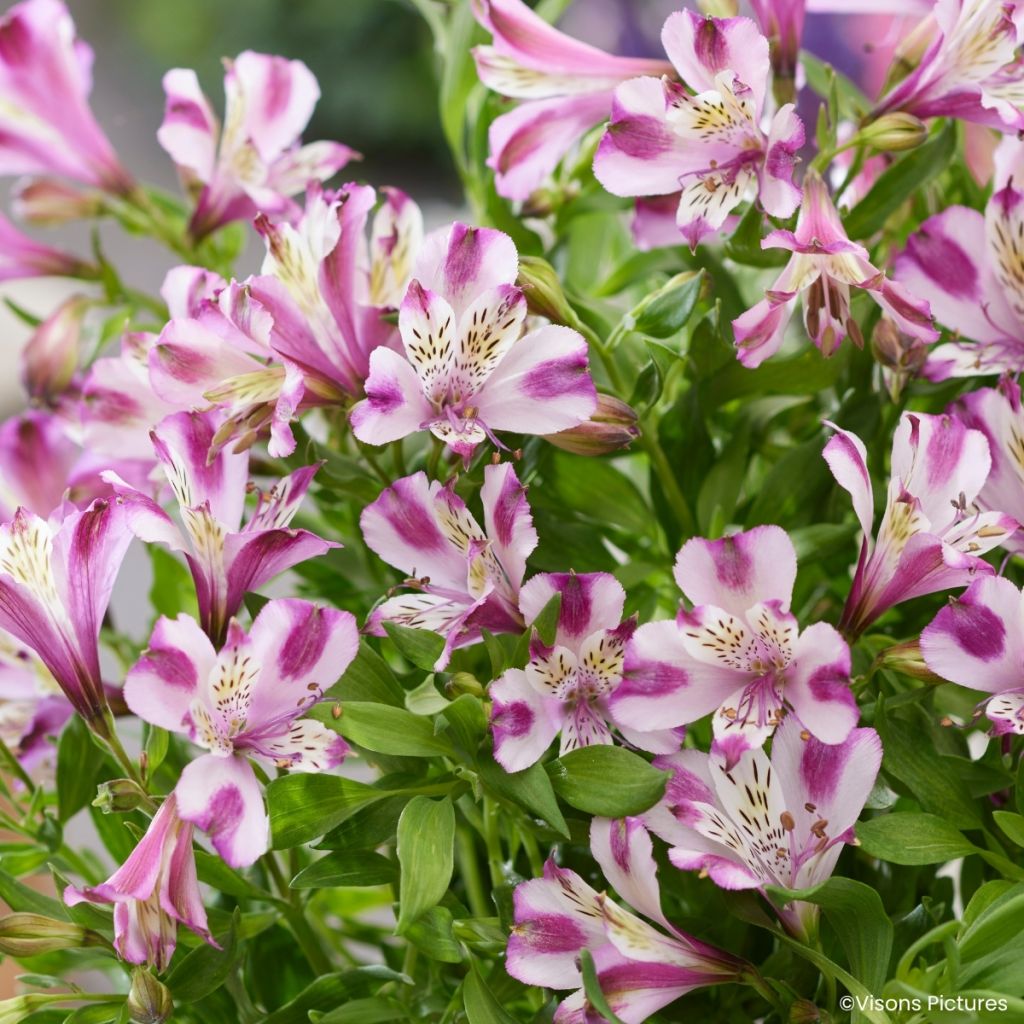
Alstroemeria Duchesses d'Anjou Valentine
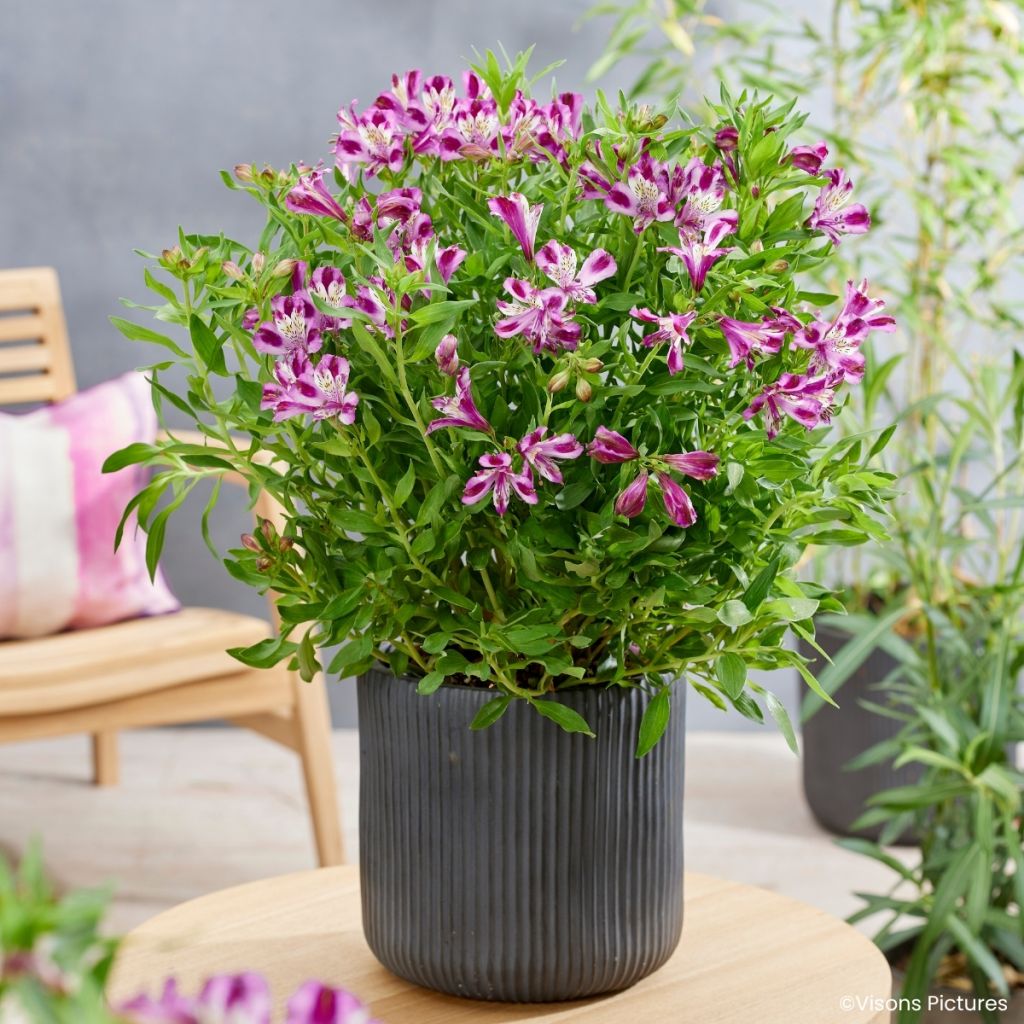
Alstroemeria Duchesses d'Anjou Valentine

Alstroemeria Duchesses d'Anjou Valentine
Alstroemeria Duchesses d'Anjou Valentine
Alstroemeria (Duchesses d'Anjou series) Duchesses d'Anjou Valentine
Peruvian Lily, Lily of the Incas
To succeed with this Peruvian lily in the garden, you need to prepare the planting site well (preferably in full sun or possibly in partial shade: 4 hours of sun per day) to a depth of 30–40 centimetres and the same width, dig it over well and crumble the soil, then mix in one-third to one-half river sand or Rhine sand (definitely no other sand). Then plant the Peruvian lily at a depth of 20 centimetres, water it well and apply a surface mulch of 4–5 centimetres of chestnut bark. When a flower stem has faded, cut it at its base; another flower stem will take over, so the flowering of these Peruvian lilies can extend from June until the first frosts.
Patrick (Belgique), 18/09/2026
Back-to-school special offer!
Get €10 off for every €50 you spend! And get up to €40 off on a single order.
How does it work?
1. Shop your favourites
Add your favourite plants to your basket. For every €50 you spend (excluding delivery charges, store credit and the plastic-free option), you’ll receive a €10 voucher.
€50 spent = €10 voucher
€100 spent = €20 voucher
€150 spent = €30 voucher
€200 spent = €40 voucher
2. Place your order
Once your basket reaches one of the spending thresholds, place your order. You can even choose your delivery date!
3. Receive your voucher
As soon as your order has been shipped, you’ll receive an email containing your personal voucher code and its value.
4. Use it on your next order
Your voucher is valid for 90 days from the date you receive it. It can be used once only, on a new order worth at least the value of the voucher, excluding delivery charges.
Please note: Vouchers can be combined with other offers, but cannot be split or refunded.
Home or relay delivery (depending on size and destination)
Important: You may be charged customs duties by your country’s customs authorities upon delivery.
Schedule delivery date
and select date in basket
This plant carries a 12 months recovery warranty
More information
We guarantee the quality of our plants for a full growing cycle, and will replace at our expense any plant that fails to recover under normal climatic and planting conditions.

Does this plant fit my garden?
Set up your Plantfit profile →
Description
Alstroemeria 'Valentine' is a rather compact Peruvian Lily, selected for its summer and autumn flowering in shades of mauve, pink and violet. This variety from the Duchesses D’Anjou series is characterised by moderate growth and sturdy stems; it is well-suited for cut-flower arrangements, small gardens and especially for container growing. You will appreciate the freshness of its colouring, enhanced by a light centre finely streaked with dark purple.
This plant belongs to the Alstroemeriaceae family. Its scientific name is Alstroemeria 'Valentine' (DUCHESSES D'ANJOU series). It is a horticultural cultivar obtained by Turcieflor, in France, and launched in 2024. The Duchesses d’Anjou series brings together compact alstroemerias, adapted to small spaces and container cultivation, whose flowering is well showcased on plants of moderate size.
Like other alstroemerias, 'Valentine' is a perennial with a fleshy rhizome that regrows from the base each year. Its foliage is deciduous: the aerial growth disappears during winter, then reappears with the return of fine weather. The plant has a bushy, dense, rather upright habit, and reaches about 40 cm in all directions. The lanceolate, bright green leaves cover the stems. The 4-5 cm diameter flowers are produced continuously from May-June until early autumn in shades of purple, pink and violet, with a white centre streaked with dark purple. The petals are finely speckled at the centre, similar to the refined pattern of miniature lilies. This elegant flower is also suitable for cut flower arrangements, due to its good vase life. The hardiness of this variety is around -5 °C: it can overwinter in the ground in mild regions, but should be protected by a thick mulch. In colder climates, grow it in a pot to be overwintered frost-free.
Alstroemeria Duchesses d'Anjou 'Valentine' is primarily used in flowering pots, on a terrace, balcony or near an entrance, where the delicacy of its flowers can be appreciated up close. In a border, place it in the foreground, avoiding competition from overly vigorous perennials. In a container, it pairs very well with Scaevola aemula Surdiva Blue, Euphorbia ‘Diamond Frost’, Angelonia Angelface Blue and Verbena Estrella Pink Ballet. These plants create a light, floriferous and very summery collection.

Alstroemeria Duchesses d'Anjou Valentine in pictures

Flowering
Foliage
Plant habit
Botanical data
Alstroemeria
Duchesses d'Anjou Valentine
Alstroemeriaceae
Peruvian Lily, Lily of the Incas
Cultivar or hybrid
Planting and care
Plant Alstroemeria Duchesses d'Anjou Valentine in spring, choosing a location in full sun or partial shade, in a light, well-drained, well-worked soil with a sandy or silty tendency and low in lime, enriched with compost. Watering during dry periods will support their flowering in summer. These plants are moderately hardy, down to -5°C, provided the soil remains dry in winter. The crown can be protected with a thick mulch of leaves or fern fronds in autumn. Slugs are particularly fond of young shoots; be sure to protect them. Growing in pots allows the plants to be sheltered from frost by storing them in a bright, airy, and very minimally heated room.
Planting period
Intended location
Care
Planting & care advice
-

-

-

-

-
-

-

-

-
, onOrder confirmed
Reply from on Promesse de fleurs
Haven't found what you were looking for?
Hardiness is the lowest winter temperature a plant can endure without suffering serious damage or even dying. However, hardiness is affected by location (a sheltered area, such as a patio), protection (winter cover) and soil type (hardiness is improved by well-drained soil).
In temperate climates, pruning of spring-flowering shrubs (forsythia, spireas, etc.) should be done just after flowering.
Pruning of summer-flowering shrubs (Indian Lilac, Perovskia, etc.) can be done in winter or spring.
In cold regions as well as with frost-sensitive plants, avoid pruning too early when severe frosts may still occur.
The sowing periods indicated on our website apply to countries and regions within USDA Zone 8 (France, UK, Ireland, Netherlands).
In colder areas (Scandinavia, Poland, Austria...), delay any outdoor sowing by 3-4 weeks, or sow under glass.
In warmer climes (Italy, Spain, Greece, etc.), bring outdoor sowing forward by a few weeks.
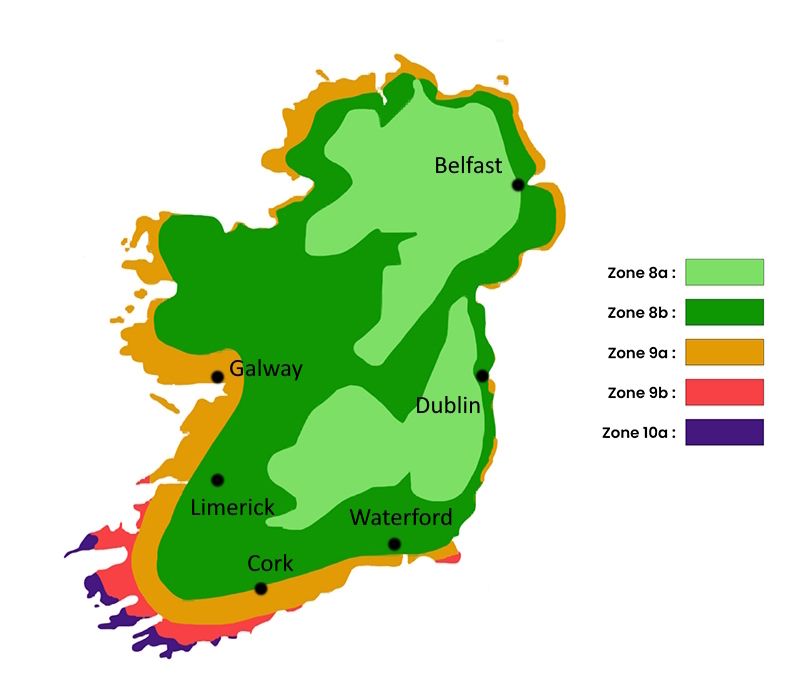
The planting period indicated on our website applies to regions in USDA Zone 9a (East Coast and Midlands: Dublin, Wexford, Waterford, Kilkenny, Portlaoise). It will vary depending on where you live:
- On the west coast and in the north-west (Galway, Limerick, Sligo, Donegal, Westport), delay planting by 1 to 2 weeks in spring and bring it forward by 1 to 2 weeks in autumn compared to the dates given, preferably choosing periods without strong winds.
- In the inland hills and plateaus (Wicklow Mountains, Macgillycuddy’s Reeks, Connemara, Killarney), it is best to plant in spring (April–May) or autumn (September–October), avoiding periods of waterlogged soil in winter and strong winds, which pose the main risk to newly planted trees in these areas.
The flowering period indicated on our website applies to regions in USDA Zone 9a, such as the East Coast and Midlands, including Dublin, Wexford, Waterford, Kilkenny and Portlaoise.
This will vary depending on where you live:
- On the west coast and in the northwest (Galway, Limerick, Sligo, Donegal and Westport), it will be delayed by one to two weeks compared to the given dates, due to stronger Atlantic winds and less spring sunshine.
- In the inland hills and plateaus (the Wicklow Mountains, the Macgillycuddy's Reeks, Connemara and Killarney), flowering will be delayed by two to three weeks. Flowering mainly occurs between May and July, with the limiting factors being less frost and more of the excessive humidity, strong winds and lack of sunshine that are characteristic of these areas.
The harvest period stated on our website applies to regions in USDA zones 8b to 9a (East, South-East and southern coast: Eastern Leinster, County Wexford and County Waterford, Cork region: Dublin, Wexford, Waterford, Kilkenny, Cork). It will vary depending on where you live:
- In the Midlands and the inland plains: the Middle Shannon Valley, Westmeath, Offaly, Longford, Cavan and Monaghan (Athlone, Mullingar, Tullamore, Longford, Cavan, Monaghan), in USDA zones 8a to 8b, the harvest will be delayed by 1 to 2 weeks compared with the dates given. Far from the moderating influence of the sea, these plains experience late frosts right up until the end of spring. The heavy, peaty soils warm slowly here, and damp patches form pockets of frost. Wait until the soil has dried out and warmed up before planting, and protect young plants with a fleece on clear nights.
- In the Atlantic West and North-West: Kerry, Clare, Galway, Connemara, Mayo, Sligo and Donegal (Killarney, Ennis, Galway, Westport, Sligo, Letterkenny), in USDA zones 8b to 10a, the harvest will be delayed by 1 to 3 weeks compared with the dates given. Summers here are cloudier, rainier and windier than in the east, which slows down ripening and encourages late blight and other fungal diseases. Kerry and Clare are at the lower end of the range, whilst Mayo and Donegal, which are cooler and more exposed, are at the upper end. However, the mild coastal winters mean that leafy vegetables and root vegetables can be harvested at dates close to those indicated, or even earlier: shelter crops from the wind with hedges and grow heat-loving plants in greenhouses or polytunnels.
- In the highlands, above 200 m: the Wicklow Mountains, Macgillycuddy’s Reeks, the Galtee and Comeragh ranges, the Twelve Bens in Connemara and the Donegal highlands, in USDA zones 7b to 8a, the harvest will be delayed by 2 to 4 weeks compared with the dates given, depending on the altitude, taking care to beat the first early frosts, which may occur as early as the start of autumn. Wind, constant damp and late frosts lasting into early summer significantly shorten the growing season. Opt for sheltered, south-facing slopes, early-maturing varieties and growing under cover.
Depending on your garden’s aspect, these variations can range from one to two weeks. A frost-prone valley floor delays the harvest, whilst a south-facing wall brings it forward.
Shipping country and language
Your country of residence may be:
Your country of residence is:
For a better user experience on our website, you can select:
Your shipping country:
-
 Austria
-
 Belgium
-
 Bosnia & Herzegovina
-
 Bulgaria
-
 Croatia
-
 Cyprus
-
 Czechia
-
 Denmark
-
 Estonia
-
 Finland
-
 France
-
 Germany
-
 Greece
-
 Hungary
-
 Iceland
-
 Ireland
-
 Italy
-
 Latvia
-
 Liechtenstein
-
 Lithuania
-
 Luxembourg
-
 Malta
-
 Netherlands
-
 Poland
-
 Portugal
-
 Romania
-
 Serbia
-
 Slovakia
-
 Slovenia
-
 Spain
-
 Sweden
-
 Switzerland
Language:
-
French
-
 English
-
Spanish
-
Italian
-
German
-
Portuguese
-
Dutch
-
Finnish
-
[pl]
My Account
Hello
My wish lists
My cart
Log in / Register
Existing customer?
This form is protected by reCAPTCHA - the Google Privacy Policy and Terms of Service apply.
New customer?
Create an account to track your orders, access our customer service and, if you wish, make the most of our upcoming offers.