Duo of Rose bushes for rose hip jam
Duo of Rose bushes for rose hip jam
Rosa (x) rugosa SAVORANOVA® White® Uhlsylt, SAVORANOVA® Smart® Uhlrutida
Back-to-school special offer!
Get €10 off for every €50 you spend! And get up to €40 off on a single order.
How does it work?
1. Shop your favourites
Add your favourite plants to your basket. For every €50 you spend (excluding delivery charges, store credit and the plastic-free option), you’ll receive a €10 voucher.
€50 spent = €10 voucher
€100 spent = €20 voucher
€150 spent = €30 voucher
€200 spent = €40 voucher
2. Place your order
Once your basket reaches one of the spending thresholds, place your order. You can even choose your delivery date!
3. Receive your voucher
As soon as your order has been shipped, you’ll receive an email containing your personal voucher code and its value.
4. Use it on your next order
Your voucher is valid for 90 days from the date you receive it. It can be used once only, on a new order worth at least the value of the voucher, excluding delivery charges.
Please note: Vouchers can be combined with other offers, but cannot be split or refunded.
This plant carries a 6 months recovery warranty
More information
We guarantee the quality of our plants for a full growing cycle, and will replace at our expense any plant that fails to recover under normal climatic and planting conditions.

Description
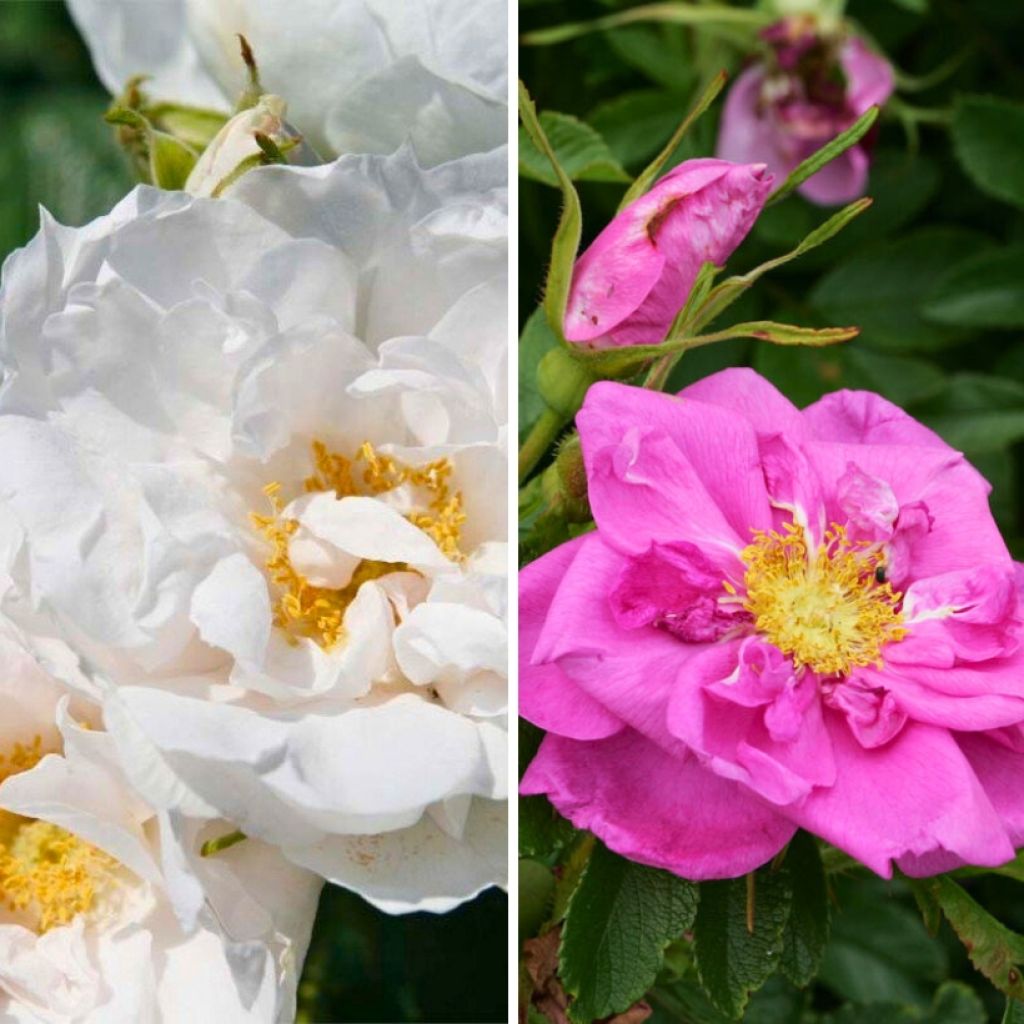
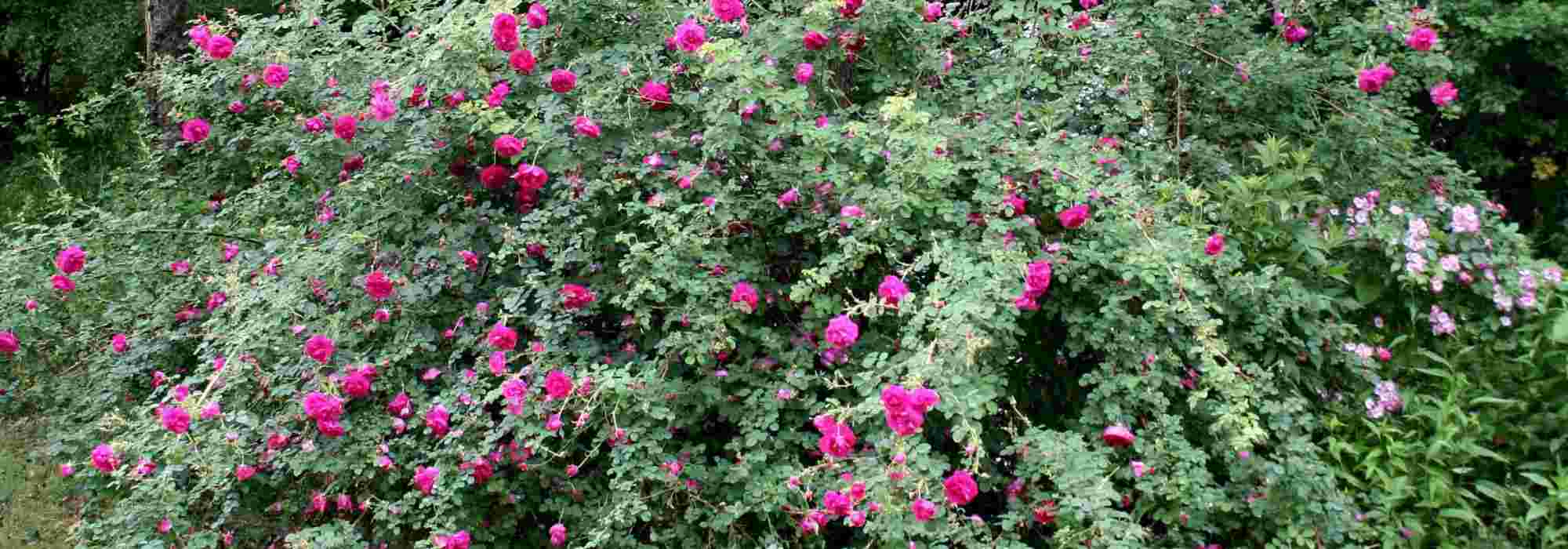
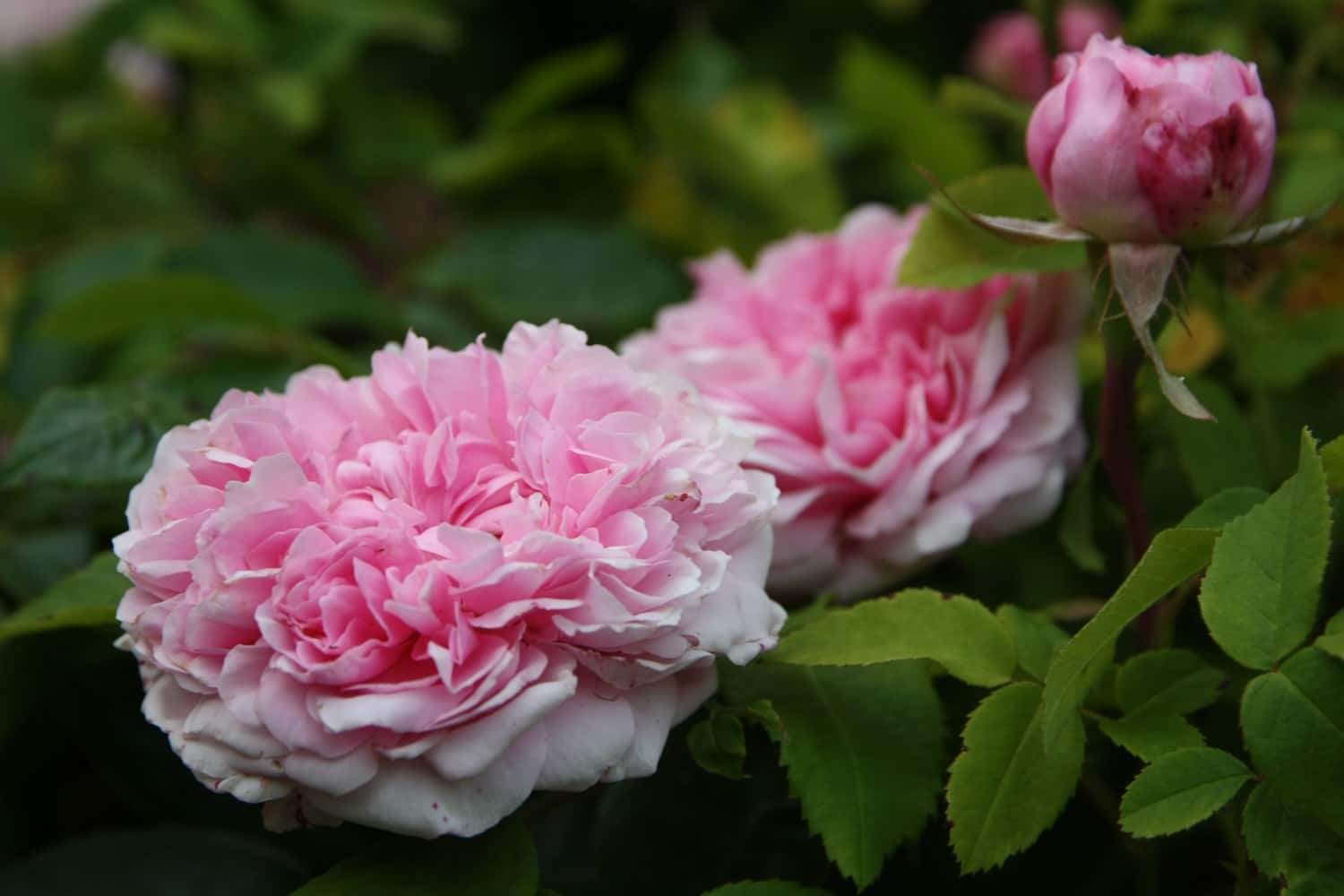
This Duo of Rose Hips Jam Roses brings together two roses 'Savoranova White' and 'Savoranova Smart' selected for their abundant, decorative, tasty and fragrant fruiting. They are part of a new series of hybrids of the wild rose that have all received the ADR* label for their hardiness and natural disease resistance. These small bushes, 70 cm tall, bloom all summer. Their semi-double corollas exhale a light scent of wild rose and are highly visited by pollinators. Each one gives birth to a large, pulpy, orange-red rose hip, very rich in vitamin C. In the garden, this duo is perfect in a small flowering hedge or in a flower bed. The Savoranova roses, with their compact size, are also very well-suited for container gardening.
The duo consists of:
1 Rose 'SAVORANOVA White Uhlsylt': semi-double white flowers measuring 6 cm in diameter
1 Rose 'SAVORANOVA Smart Uhlrutida': also semi-double flowers, with a soft pinkish-purple colour, measuring 5-6 cm in diameter.
*The German ADR label is awarded according to specific criteria to exceptional rose varieties that are particularly disease-resistant and very hardy.
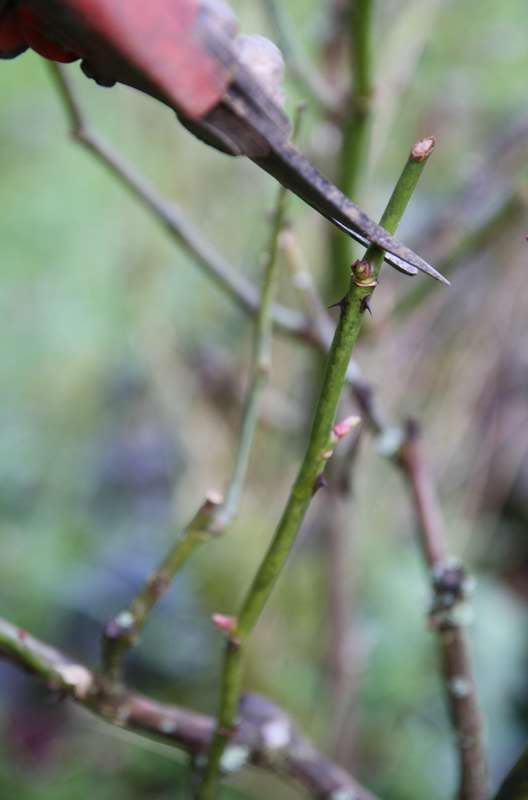
The Savoranova roses, very hardy and almost maintenance-free, are simply pruned into a ball shape in March. They are planted in early spring or early autumn in well-prepared and loosened garden soil enriched with compost. They can be used in a small low hedge or mixed with other flowering or fruiting shrubs such as the Strandperle 'Norderney' rose or the Street Colours La Grande Motte Meimeigea rose, which attract pollinators with their blooms. A distance of 50 cm should be respected between each plant. Rose hips can be used in many delicious recipes such as jam, jelly, macarons, tea, herbal infusions, and unusual cuisine.
Recipe for SavoraNova® rose fruit jam (source Globe Planter):
- Harvest the rose fruits after the first frost.
- Remove the black tip of the rose fruit, then cut each fruit in half and scrape out the seeds and urticating hairs. Then put the fruits in a bowl and cover them with water.
- Mix a little and then, using a sieve, remove the remaining hairs on the surface. Rinse the fruits again with running water. Cook them in water (the volume of water should exceed the fruits) until the flesh of the fruits falls apart (making sure to add water during cooking to prevent the pulp from burning).
- When the pulp is very tender and the juice is well-coloured, remove from heat and strain through a sieve to remove large pieces of peel. Crush against the sides to obtain as much pulp as possible.
- Measure the amount of pulp obtained and add an equal weight of sugar.
- Gently bring this mixture to a boil and let it cook for about 15 minutes. Pour the still-hot preparation into a jar. Then wipe the jar with a damp cloth to remove any spills on the edges, and close it with the lid. Then simply turn the jar upside down to create a vacuum (the vacuum is created as the preparation cools). You will obtain a beautiful red jam with an original taste and a high vitamin C content that withstands the cooking process of the fruit.

Plant habit
Flowering
Foliage
Planting and care
Roses prefer a sunny location (at least 4 to 5 hours of sun per day) but sheltered from the scorching midday rays and strong winds. Roses appreciate loose, permeable, and humus-rich soils. They prefer slightly acidic soil, but will adapt to any garden as long as the soil is well worked and sufficiently rich. To plant your rose in a pot, work the soil in a 25 cm cube, crumble the soil well, and place a bottom amendment such as blood, fish and bone in the planting hole. Position your plant, remove it from its pot, and cover the top of the root ball with 3 cm of soil. Fill in the hole and water generously to eliminate air pockets. During dry weather, it is necessary to water regularly for a few weeks to facilitate root growth. Also, remember to provide your rose with special rose fertiliser that stimulates plant flowering.
Planting period
Intended location
Care
Planting & care advice
-

-
-

-

-
-

-
-

This item has not been reviewed yet - be the first to leave a review about it.
Recently viewed products
Haven't found what you were looking for?
Hardiness is the lowest winter temperature a plant can endure without suffering serious damage or even dying. However, hardiness is affected by location (a sheltered area, such as a patio), protection (winter cover) and soil type (hardiness is improved by well-drained soil).
In temperate climates, pruning of spring-flowering shrubs (forsythia, spireas, etc.) should be done just after flowering.
Pruning of summer-flowering shrubs (Indian Lilac, Perovskia, etc.) can be done in winter or spring.
In cold regions as well as with frost-sensitive plants, avoid pruning too early when severe frosts may still occur.
The harvesting period indicated on our website applies to countries and regions in USDA zone 8 (France, England, Ireland, the Netherlands).
In colder areas (Scandinavia, Poland, Austria...) fruit and vegetable harvests are likely to be delayed by 3-4 weeks.
In warmer areas (Italy, Spain, Greece, etc.), harvesting will probably take place earlier, depending on weather conditions.
The sowing periods indicated on our website apply to countries and regions within USDA Zone 8 (France, UK, Ireland, Netherlands).
In colder areas (Scandinavia, Poland, Austria...), delay any outdoor sowing by 3-4 weeks, or sow under glass.
In warmer climes (Italy, Spain, Greece, etc.), bring outdoor sowing forward by a few weeks.
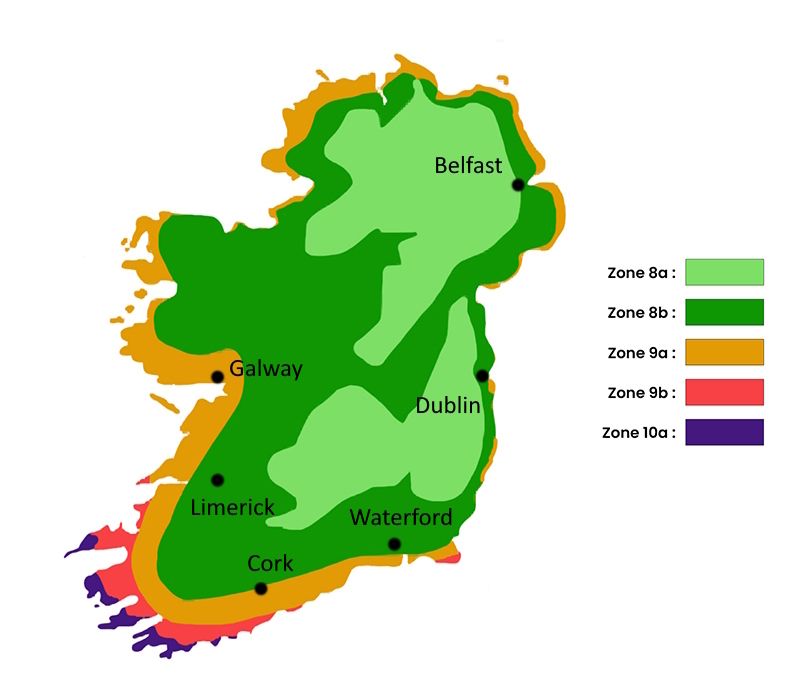
The planting period indicated on our website applies to regions in USDA Zone 9a (East Coast and Midlands: Dublin, Wexford, Waterford, Kilkenny, Portlaoise). It will vary depending on where you live:
- On the west coast and in the north-west (Galway, Limerick, Sligo, Donegal, Westport), delay planting by 1 to 2 weeks in spring and bring it forward by 1 to 2 weeks in autumn compared to the dates given, preferably choosing periods without strong winds.
- In the inland hills and plateaus (Wicklow Mountains, Macgillycuddy’s Reeks, Connemara, Killarney), it is best to plant in spring (April–May) or autumn (September–October), avoiding periods of waterlogged soil in winter and strong winds, which pose the main risk to newly planted trees in these areas.
The flowering period indicated on our website applies to regions in USDA Zone 9a, such as the East Coast and Midlands, including Dublin, Wexford, Waterford, Kilkenny and Portlaoise.
This will vary depending on where you live:
- On the west coast and in the northwest (Galway, Limerick, Sligo, Donegal and Westport), it will be delayed by one to two weeks compared to the given dates, due to stronger Atlantic winds and less spring sunshine.
- In the inland hills and plateaus (the Wicklow Mountains, the Macgillycuddy's Reeks, Connemara and Killarney), flowering will be delayed by two to three weeks. Flowering mainly occurs between May and July, with the limiting factors being less frost and more of the excessive humidity, strong winds and lack of sunshine that are characteristic of these areas.
Shipping country and language
Your country of residence may be:
Your country of residence is:
For a better user experience on our website, you can select:
Your shipping country:
-
 Austria
-
 Belgium
-
 Bosnia & Herzegovina
-
 Bulgaria
-
 Croatia
-
 Cyprus
-
 Czechia
-
 Denmark
-
 Estonia
-
 Finland
-
 France
-
 Germany
-
 Greece
-
 Hungary
-
 Iceland
-
 Ireland
-
 Italy
Italy
-
 Latvia
-
 Liechtenstein
-
 Lithuania
-
 Luxembourg
-
 Malta
Malta
-
 Netherlands
-
 Poland
-
 Portugal
-
 Romania
-
 Serbia
-
 Slovakia
-
 Slovenia
-
 Spain
Spain
-
 Sweden
-
 Switzerland
Language:
-
French
-
 English
-
Spanish
-
Italian
-
German
-
Portuguese
-
Dutch
-
Finnish
My Account
Hello
My wish lists
My cart
Log in / Register
Existing customer?
This form is protected by reCAPTCHA - the Google Privacy Policy and Terms of Service apply.
New customer?
Create an account to track your orders, access our customer service and, if you wish, make the most of our upcoming offers.